
Reviewed · WORKSHOPS
Tokyo’s Authentic and Finest Taiko Drumming Workshop
Taiko hits different when you see it up close. This small-group class in Tokyo is all about hands-on technique with expert instruction, plus you leave with a personalized video of your drumming. The one real consideration is that it is a physical, loud experience, so wear comfy clothes and plan for a bit of leg and hand fatigue.
Led by Eva Kestner International Taiko Drum Academy, the workshop uses English (with Japanese support) to take you from basic rhythm training to playing a traditional or contemporary taiko piece. If you are expecting a quiet cultural lecture, you might feel a mismatch, but if you want something you can feel in your body, you are in the right place.
Key highlights I’d target
- All equipment provided so you can show up empty-handed (except your water and comfy clothes).
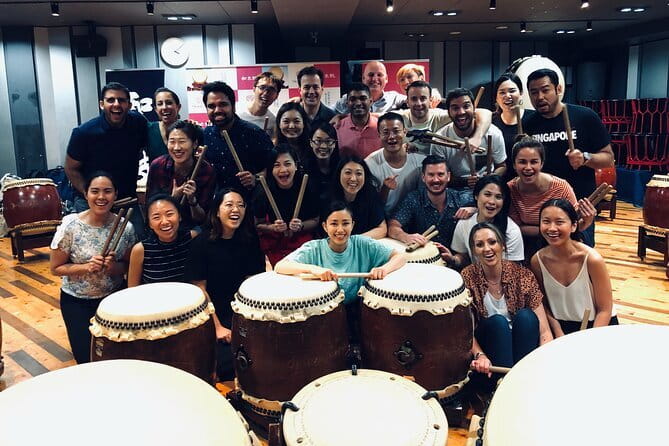
- Small-group format (max 15) for real feedback and personal attention.
- English instruction with Japanese support, built for beginners through intermediate rhythm practice.
- Live demonstration plus a class history explain-it-fast so you get context while you play.
- Personalized video so you can remember how you actually sounded, not just what you learned.
A 90-Minute Taiko Workout in Shibuya’s Orbit
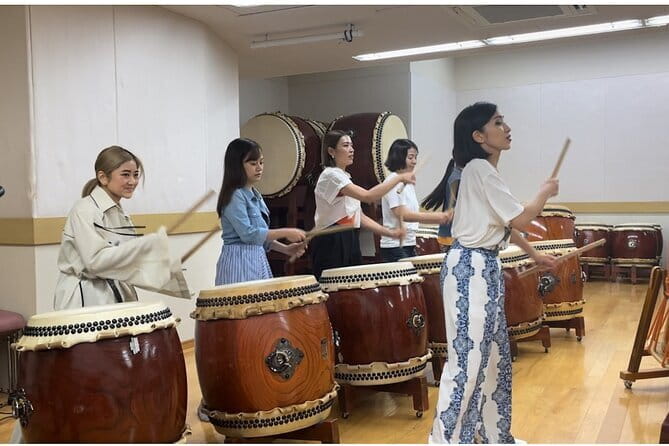
Taiko drumming is one of those Japan experiences that can be hard to understand from photos. The point is the rhythm, the body mechanics, and the group energy you build together. Here, you get that in about 1 hour 30 minutes, not half a day, and not “watch first, do later.”
What makes this workshop especially worth your time is that it is structured for real beginners while still delivering that authentic taiko feel. You start with foundation training and rhythm drills, then you move into performing a traditional or contemporary piece. You are not just learning a beat, you are learning how Japanese drumming actually trains timing, power, and teamwork.
Price check: it is $120 per person. That sounds like a “premium workshop,” and it is. The value comes from the full gear setup, the small-group attention, and the personalized video keepsake. You are paying for hands-on coaching from a professional instructor, not just entry to a demonstration.
Meet Eva Kestner and the Academy Style
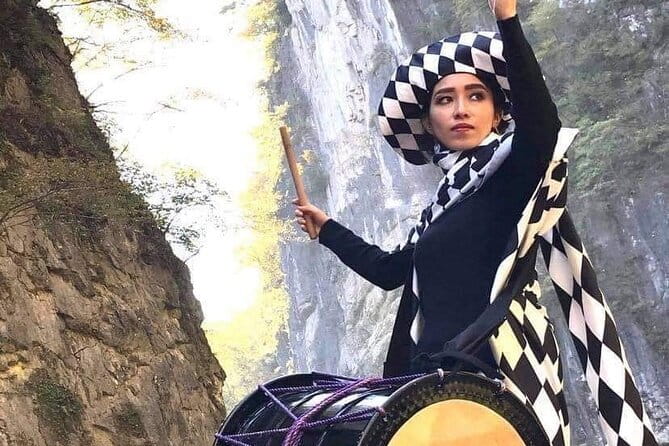
This class is taught by Eva Kestner, a professional drummer and instructor with a strong résumé. She founded and was first musical director of Cornell University’s Taiko Drumming group, received an excellency award from the Tokyo University of Arts New Artists Competition, and has original music published by Harper Collins and Cambridge International Curriculum.
Why that matters to you: taiko teaching is part performance and part training. You want someone who can break down rhythm clearly, keep energy high, and still respect tradition. The workshop is presented as boutique and family-style, meaning you should expect a friendly, personal atmosphere rather than a factory-style “everyone follow the leader” class.
The session is also designed to work in English. The info says she teaches in English, and the class includes English and Japanese support. That combo is useful if your Japanese is basic, but you still want to feel connected to the culture without struggling to translate every instruction.
A few more Tokyo days worth comparing
- Mt Fuji and Hakone 1-Day Bus Tour Return by Bullet Train
★ 5.0 · 26,383 reviews - 1-Day Tokyo Bus Tour
★ 5.0 · 14,250 reviews - Tokyo: TOKYO SKYTREE® Admission ticket
★ 4.5 · 11,192 reviews
What You’ll Learn: Rhythm Foundations and Real Pieces
The workshop content is built around three learning steps:
1) Foundation training
2) Rhythm training
3) Learning and performing a traditional or contemporary taiko piece
In practical terms, foundation training is where you learn how to hold the sticks, how your body connects to the drum, and how to hit with control rather than flailing. Rhythm training is about timing and getting your ears and muscles on the same page. Then you put it together for a piece, which is where the class starts to feel like performance.
A nice bonus is that you also get a demonstration performance, plus a brief explanation of taiko drum history. That history bit is short, which is good. You are not trapped in a lecture before you play. You get just enough context to understand what you are doing and why taiko is treated as more than noise.
Your Class Flow: From First Beats to a Group Performance
You’re looking at about 90 minutes, and the structure matters because you start playing early. The class is described as teaching you how to train rhythm and then learn a traditional or contemporary number. In other words, you are not only practicing drills in isolation.
Here is the kind of flow this workshop follows:
- Start at the academy and get into your warm-up and basic handling of sticks and drum setup.
- Foundation beats and technique so your body knows what to do.
- Rhythm drills to sharpen timing. This is where concentration really counts, because taiko rhythm rewards accuracy.
- Demonstration and mini context from Eva during the session, plus a history explanation that helps the rhythms feel meaningful.
- Learning the selected piece and rehearsing it as a group.
- Performing and video capture, so you end with something tangible you can share or remember.
The biggest takeaway for you as a participant is that the class is paced so you have time for questions. The info also signals that this is an intimate setting. With a maximum of 15 travelers, you are not lost in the crowd, which makes troubleshooting your rhythm far easier.
Equipment, Volume, and the Surprising Physical Side
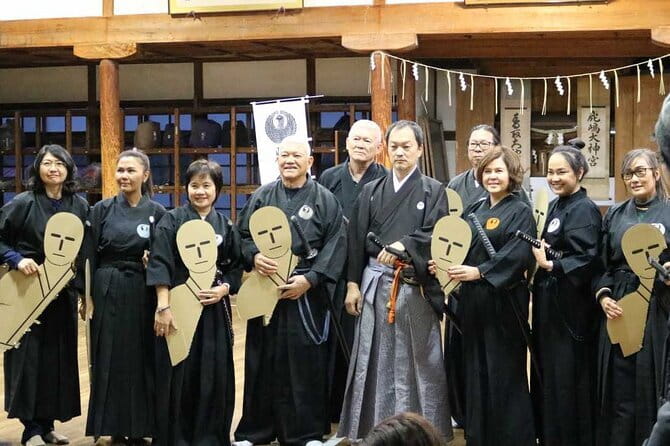
You do not need to bring taiko drums or sticks. The workshop provides both. That lowers friction. It also keeps the experience consistent, so each person has the same drum and setup, which helps the group stay together.
Do bring your own comfort, though. The class has a moderate physical fitness level requirement, and the experience is described as physical. Expect leg and hand effort as you practice coordinated strikes and group rhythm. One practical tip that comes up clearly: the workshop can get loud, and hands can get sore.
Here is what I recommend you plan for:
- Wear comfortable, breathable clothing that lets you move.
- Bring water if you tend to dehydrate easily.
- Consider band-aids or a small blister kit. Even if you have great technique, beginner strikes can be rough on skin.
- If you have sensitive hearing, think about ear protection. The class is loud, and the drumming is part of the point.
The upside is that taiko can feel meditative for some people, even while it is physical. When rhythm locks in, your brain shifts from thinking to doing, and that mental switch is part of the appeal.
Same corner of Japan, a different kind of day:
- Tokyo: teamLab Planets TOKYO Digital Art Museum Entry Ticket
★ 4.6 · 9,779 reviews - Mt Fuji & Hakone Cruise, Drum Show Bullet Train 1 Day from Tokyo
★ 4.0 · 7,413 reviews - Tokyo: Sumo Show Experience with Chicken Hot Pot and a Photo
★ 4.8 · 6,678 reviews - Tokyo: Shinjuku Food Tour (13 Dishes at 4 Local Eateries)
★ 5.0 · 6,603 reviews
The Central Meeting Point and Finding the Place
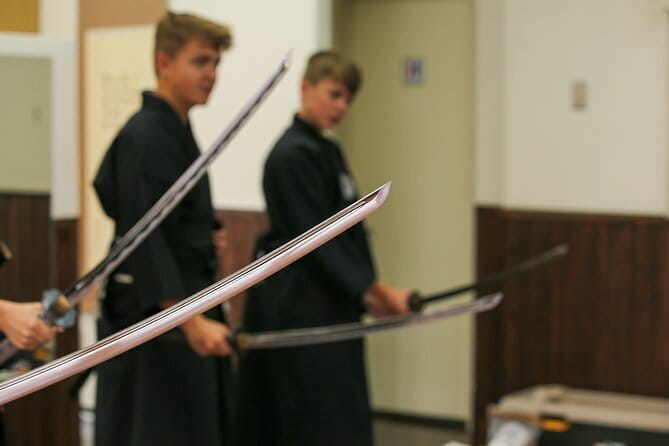
The workshop meeting point is in Shibuya, near public transportation:
- Japan, 150-0032 Tokyo, Shibuya, Uguisudanichō, 111 太洋レジデンス代官山
It ends back at the same meeting point. That simple routing means you can plan the rest of your day without complicated transfers.
One caution: addresses in Tokyo can be easy to misread if you copy them wrong or rely only on vague directions. If you are the type who likes to arrive early, give yourself extra time to confirm the entrance. The location is searchable on common map apps, and that is the easiest way to avoid stress.
Also note the group logistics: the standard workshop is for a maximum of 15 travelers. For groups larger than 20, it uses a large-group slot, and the location is 20 minutes from Shibuya. If you are booking as a bigger group, confirm which slot you are assigned so your arrival plan stays accurate.
Price and Value: Why $120 Can Make Sense
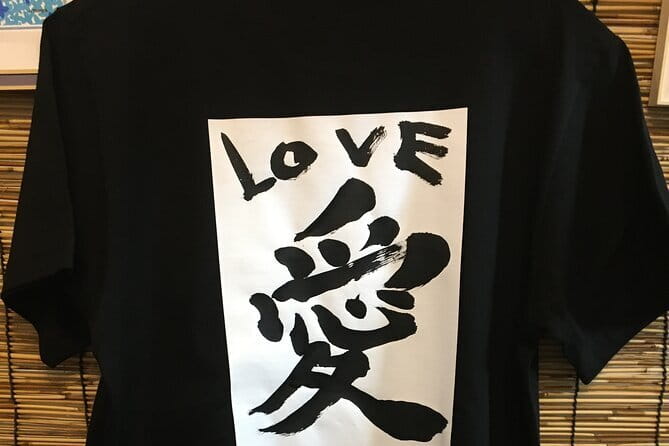
At $120 per person, this is not a bargain workshop. So why would I call it good value?
You are paying for:
- Full equipment provided (drum and sticks), which cuts down on hassle.
- Small-group coaching with lots of personal attention.
- English instruction with Japanese support, reducing the stress of language barriers.
- Professional-level instruction from Eva Kestner, including a demonstration and brief taiko history.
- A personalized video of you playing, which turns the class into a keepsake rather than a quick memory.
A personalized video is a big deal because it gives you something you can look at later and compare to what you thought you did. For beginners, that helps you improve if you want to keep practicing.
If you are deciding between this and a more general cultural activity, choose this if you want an active skill. Choose something else if you want mostly passive viewing. Taiko rewards participation.
Who This Workshop Is Best For
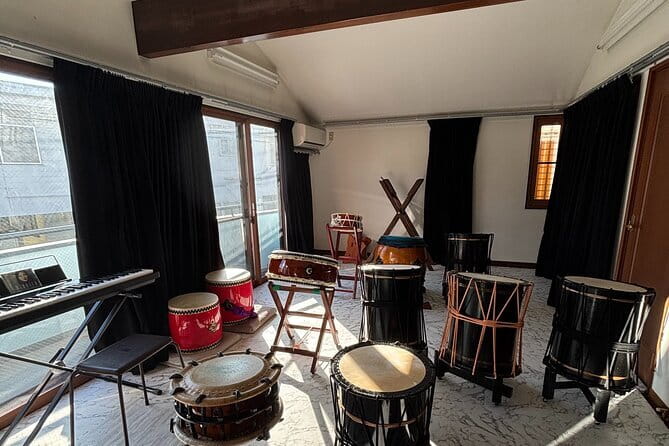
This workshop is designed for broad participation because:
- The instruction is in English.
- The coaching starts with basics.
- The session is suited for novice through intermediate rhythm practice.
- It works for different ages, including families with teenagers.
You should especially consider it if:
- You are a beginner and want a structured rhythm path.
- You want something more interactive than a show.
- You like learning cultural context through doing, not only hearing.
- You want a workout that feels like art and teamwork.
You may want to think twice if:
- You have strict hearing needs, since it gets loud.
- You dislike physical activity, because the session involves coordinated striking and body movement.
- You are expecting a calm, quiet environment.
That said, the class is friendly and patient, with support for different needs listed under accessibility support (visual, audio, mobility, and neurodivergents). If you need accommodations, it is worth reaching out and being specific.
Tips That Actually Help Before You Go
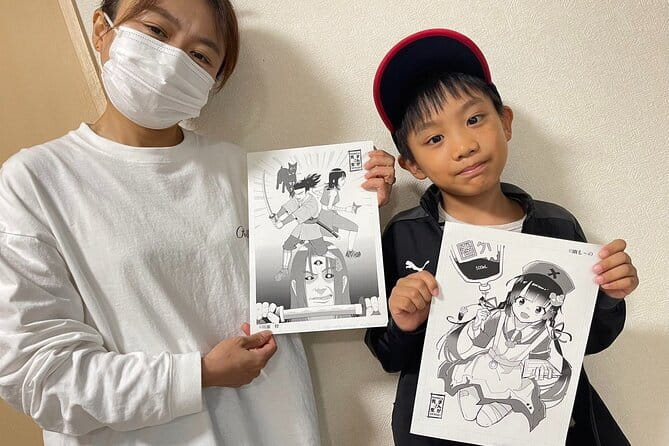
These are the practical points that will make your day smoother:
- Wear comfy clothes you can move in. You do not want stiff shoes or restrictive outfits.
- Bring water. The class can feel like a workout.
- Expect hand soreness. If you bruise easily or get blisters, prepare lightly.
- Plan for concentration. Taiko can feel simple at first, but keeping timing takes focus.
- Use the map app to locate the meeting point with confidence.
If you are coming from central Tokyo, plan your route around public transportation. The workshop is near it, and you will likely find it easiest to arrive early enough to settle in.
Should You Book This Taiko Workshop?
My honest take: you should book if you want a genuine, hands-on slice of Japanese culture and you are happy to trade comfort for energy. The combination of professional teaching, small group size, and a personalized video pushes it beyond a casual try-it class.
I would skip it only if you want something quiet and low physical demand, or if loud sound will stress you. Otherwise, this is the kind of experience that gives you a skill you can remember, not just a photo.
If you do book, try to plan ahead. The info says it is booked on average 31 days in advance, so waiting can limit your options.
FAQ
How long is the taiko drumming workshop?
It lasts about 1 hour 30 minutes.
How much does the workshop cost?
The price is $120.00 per person.
Is the workshop taught in English?
Yes. The instructor teaches in English, and there is English and Japanese support.
Do I need to bring taiko drums or drumsticks?
No. The workshop provides the taiko drums and taiko drumming sticks.
How large is the group?
The maximum group size is 15 travelers.
Do I receive any recording or souvenir?
Yes. You receive a personalized video of you playing the taiko drums.
Where does the workshop meet in Tokyo?
The meeting point is in Shibuya, Uguisudanichō, at 111 太洋レジデンス代官山 (150-0032).
Is the workshop physical?
It requires a moderate physical fitness level, and it can be physically demanding, so wear comfortable clothing.
What is the free cancellation window?
You can cancel up to 24 hours in advance for a full refund.
FAQ
Is accessibility support available?
Yes. Accessibility support is listed for visual, audio, mobility, and neurodivergents.
Fresh options around Tokyo
- Japanese Sweets (Mochi & Nerikiri) making at a Private studio★ 5.0 · 22 reviews
- Tokyo Shibuya Walking tour With A Guide★ 4.4 · 22 reviews
- Mt. Fuji and Hakone Private Tour with English Speaking Driver★ 5.0 · 22 reviews
- Mt Fuji & Hakone Private Tour from Tokyo: Return by Bullet Train★ 5.0 · 22 reviews
- For Narita Airport Users: Layover or Transit Guided Private Tour★ 5.0 · 22 reviews
- All-You-Can-Drink Bar Hopping Tour in Ueno★ 5.0 · 22 reviews
- Nikko Toshogu, Kegon waterfall, Lake Chuzenji One Day Pvt. Tour★ 5.0 · 22 reviews
- Private Tokyo Local Food and Drink Tour with a Bar Hopping Master★ 5.0 · 22 reviews
Workshops, compared.
Sushi Making Tokyo Roll and Authentic Japanese Sushi Class
Read our review →
Roll and Authentic Sushi Making Class in Asakusa
Read our review →
Ramen Cooking Class at Ramen Factory in Kyoto
Read our review →
Sushi Making Class in a Happi Coat near a Famous Spot
Read our review →
Sushi Making Osaka Roll and Authentic Japanese Sushi Class
Read our review →Browse the lists this tour appears in