
Reviewed · SAMURAI & NINJA EXPERIENCES
Kanazawa: Samurai, Matcha, Gardens and Geisha Full-Day Tour
Kanazawa turns legends into places you can touch. I especially love the Nagamachi Samurai District for its lived-in feel, and the Gyokusen-an matcha stop for how calmly the whole experience slows down. One drawback to plan for up front: this is a long day outdoors, so weather and foot comfort matter.
You also get a guided thread that connects the sights into a single story. In the same day you pass from samurai homes to the castle grounds, then into the tea districts, and guides like Adeline, Gareth, and Mike are often praised for making that history click without making the day feel like a lecture. Still, your schedule depends on the order of stops and what’s happening on the day, so build in flexibility.
Finally, value is solid if you want multiple paid sights plus a culture-heavy itinerary without spending your time figuring tickets out. The tour includes Kenroku-en entry and the Shima geisha house visit, and it includes the matcha experience, but lunch is not included, so you’ll want to decide where you’ll eat when you get the breaks.
Key tour takeaways
- Nagamachi Samurai District lets you see how lower-ranking samurai lived, not just museum facades
- Oyama Shrine blends Japanese and Western elements, including stained glass
- Gyokusen-an tea ceremony pairs matcha with wagashi, guided on how to drink properly
- Kenroku-en gets context from a guide about Edo-era design created over 200 years ago
- Higashi-chaya plus Shima gives street atmosphere and actual interior time in a geisha house
Kanazawa Station start, Tsuzumi-mon gate, and how the day flows
The tour meets outside the Shinkansen ticket gates at Kanazawa Station, in front of the information center. If you’re standing in the usual direction people enter the station area, the “four large sumo wrestlers” are a landmark, and your guide will be wearing a Snow Monkey Resorts tour tag. It typically starts at 9:00 AM, which is nice because you get to beat some of the day’s crowds and heat.
The route is built like a loop you can actually follow on foot. After you leave the station, the first big thing you’ll see is the Tsuzumi-mon gate, a modern interpretation of a traditional style and a Kanazawa symbol. That matters more than it sounds, because it sets up the theme of the day: old and new living side by side in the same city.
Once you start walking, you’ll keep moving through neighborhoods first, then you’ll hit the major cultural anchors. You do get free time at certain points, so the day is not only “march and listen.” But the structure still takes you through multiple major stops, so treat it like a full-day culture walk, not a casual stroll.
More Samurai & Ninja Experiences in Kanazawa
- Kanazawa: Samurai Residence Remains Nomura Family admission
★ 4.4 · 111 reviews - Full-Day Tour from Kanazawa: Samurai, Matcha, Gardens and Geisha
★ 5.0 · 68 reviews - Try Mindful Calligraphy Near Kanazawa’s Ninja Temple
★ 5.0 · 50 reviews
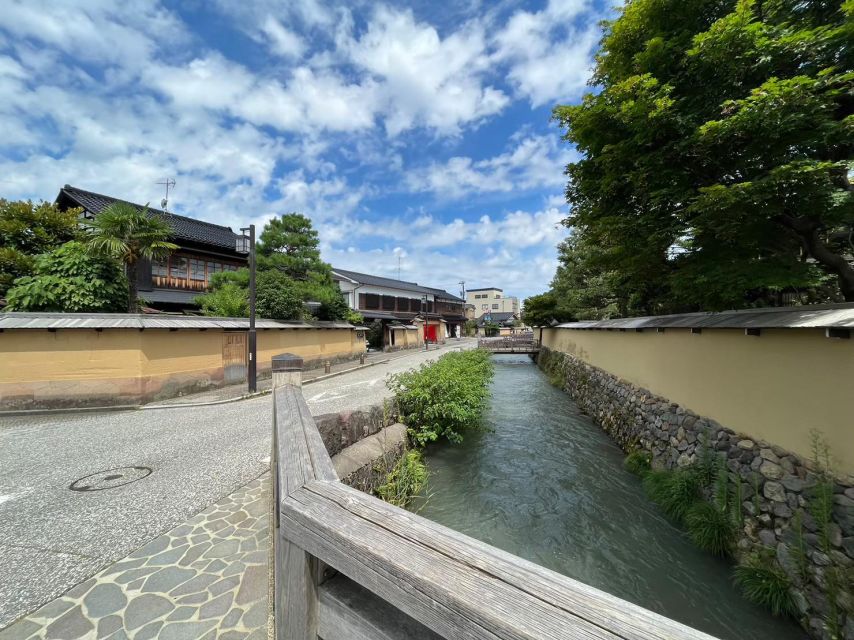
Nagamachi Samurai District: crooked lanes and modest samurai homes
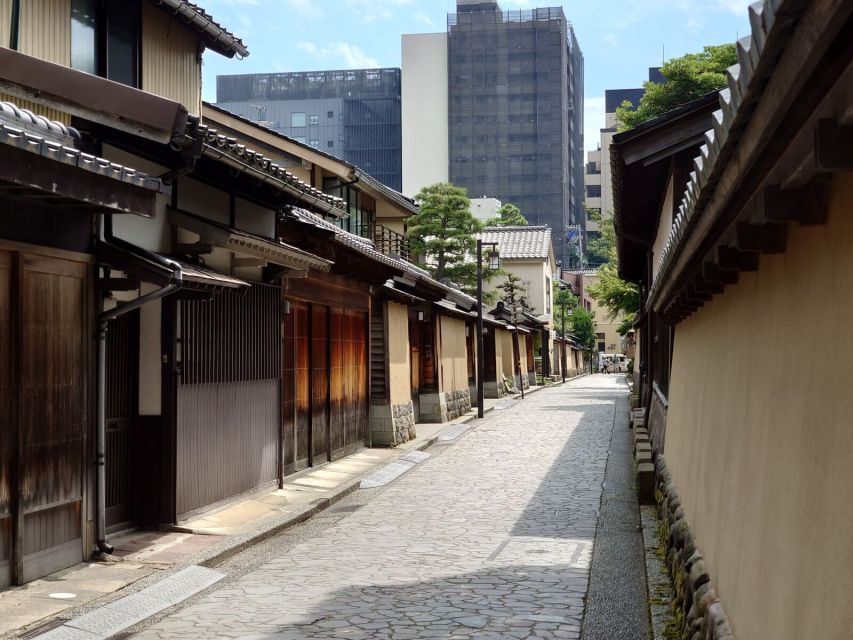
Nagamachi Samurai District is one of those places where the layout does half the storytelling for you. The streets are crooked, the area feels preserved, and you’ll walk through a neighborhood that once belonged to lower-ranking samurai. That detail is important. Big, flashy samurai images are common in Japan. This district focuses on daily life, modest means, and how communities functioned below the top tier.
You usually start outside and then move into the district itself, where the guide helps you make sense of what you’re seeing. Depending on timing, you may also get a chance to enter small houses associated with the samurai residents. Those interiors are the best part of this stop, because you can picture routines and priorities instead of only seeing the exterior “look.”
You also get free time to explore at your own pace. This is when I’d slow down and look for small crafts and local wares, because Nagamachi is one of the places where those purchases feel like a cultural souvenir, not just a shop stop. If you want to buy something, do it here when you still have energy.
Possible drawback: this is an area where walking on older streets and uneven sidewalks is normal. Wear shoes that won’t punish you after a few hours.
Oyama Shrine: the Japanese-Western fusion with stained glass
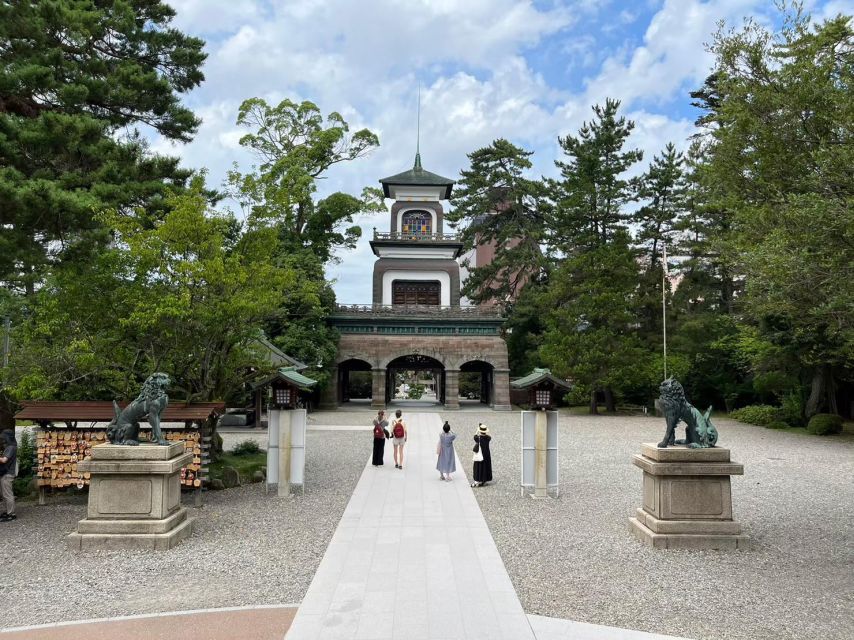
Oyama Shrine is the surprise turn in the itinerary, and it works for a simple reason: it interrupts the usual pattern of “temple, garden, castle, tea district.” The shrine is known for mixing Japanese and Western elements, including stained glass.
From a visitor perspective, it helps you understand how Japan’s modernization period showed up in everyday spaces, not only in big political events. The guide’s explanations here tend to connect the architectural choices to what was changing around the 19th century. Even if you already know the headlines, seeing the result in stone and glass feels more concrete.
After the front area, you move toward the back to find a koi pond and a small garden. There’s also a path leading to a large wooden bridge. That bridge crossing is one of those practical photo moments, but it also functions like a transition, easing you from the shrine atmosphere toward the next stop, Kanazawa Castle grounds.
Gyokusen-an matcha: ceremony, wagashi, and what to look for
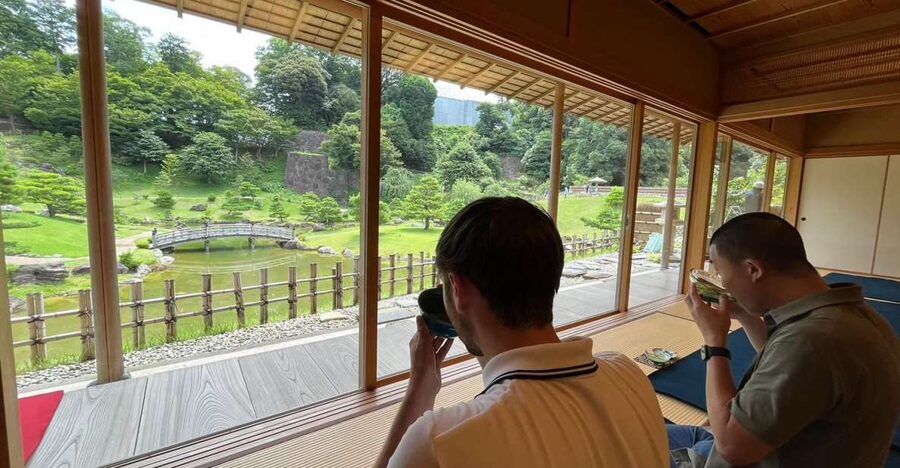
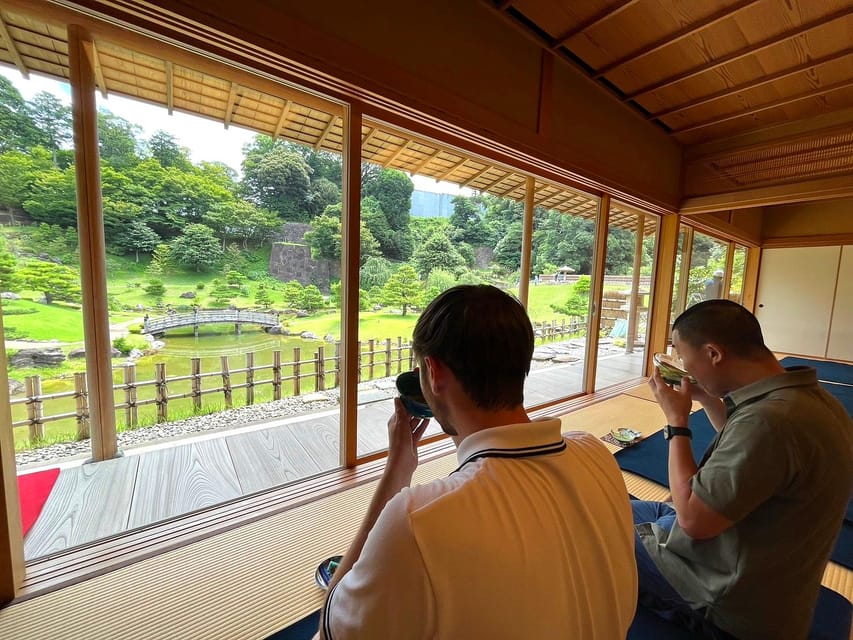
Your matcha experience happens at Gyokusen-an tea house. It’s a tea-house setting with views over a fabulous garden at the base of some enormous castle stone walls. That combination matters. A matcha tea ceremony can feel very “ritual-only” in some places, but here you’re pairing it with a landscape frame and a sense of place at the castle edge.
The interior is described as purely Japanese, with a refined feel that makes the tea moment feel intentional. During your visit, you’ll get matcha along with artistic wagashi sweets served by kimono-clad staff. Your guide also shows you the proper way to drink matcha, which is useful because it turns a tasting into a small skill you can remember.
One detail worth noting: occasionally there are special events at Gyokusen-an, and the matcha tasting location may change. If you’re the type who likes everything to be exactly as planned, that’s the only “possible shake-up” in this stop. Still, the tour is structured so you still get the tea experience.
This is also a good moment to recharge before you move into Kenroku-en. Even if your feet are tired, the tea stop gives your day a breath, and the sweet plus matcha combo helps you keep going without needing to commit to lunch yet.
More samurai and ninja experiences in Kanazawa:
- Kanazawa Private Tour: Highlights of an Old Samurai Town
★ 5.0 · 46 reviews - Kanazawa: Samurai Swordsmanship Lesson at a rented temple
★ 5.0 · 21 reviews - Tokyo: Samurai Restaurant Show Ticket with 2 Drinks
★ 4.5 · 1,307 reviews - Kyoto Samurai Experience
★ 5.0 · 1,294 reviews
Kanazawa Castle grounds and the path into Kenroku-en
After Oyama Shrine and the matcha break, you re-enter the flow toward Kanazawa Castle grounds. You’ll cross through impressive gates and move through the castle area with your guide. You’re not only “passing by walls.” The guide helps you connect the castle’s role to the garden and to the broader era when Kanazawa was one of Japan’s wealthier domains.
From a practical point of view, the castle grounds are a good buffer stop. They give you spacious walking time and sight lines, which can feel different from the tight lanes of Nagamachi or the more controlled interiors of tea houses.
Then you head into Kenroku-en garden.
Kenroku-en: Edo-era design you can actually understand
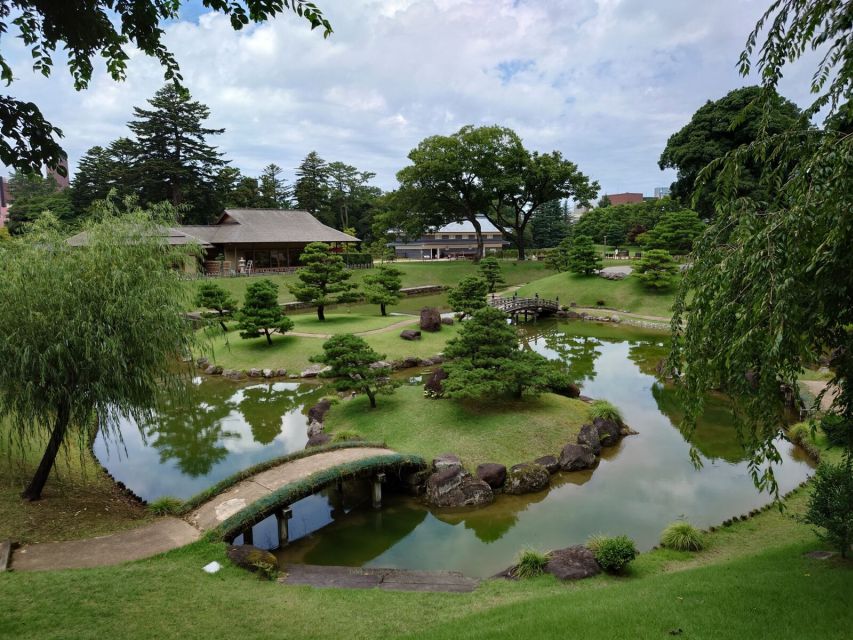
Kenroku-en is often listed among Japan’s best gardens, and it’s easy to see why. The guided part is the key, because a garden can be “pretty” without being memorable. Here, the guide explains how Kenroku-en was designed and created over 200 years ago, on the order of the Lord of Kanazawa Castle.
That’s the difference between looking at trees and seeing the thinking behind them. With a guide, you learn how paths, viewpoints, and seasonal choices are meant to shape how you experience the space. You also get help noticing why certain structures and layouts feel intentional, even when they look effortless.
The garden time is generous too, around 1.5 hours with a guided visit. That length means you can pause, take photos, and still follow the narrative the guide is sharing. If you love gardens, this is the stop that makes the day feel like more than “just checking landmarks.”
Possible drawback: if it’s raining or misty, some parts can feel slippery or less comfortable to move through. Bring shoes that handle damp ground and slow down on steps.
Higashi-chaya Tea District: red tea houses and free-time street wandering
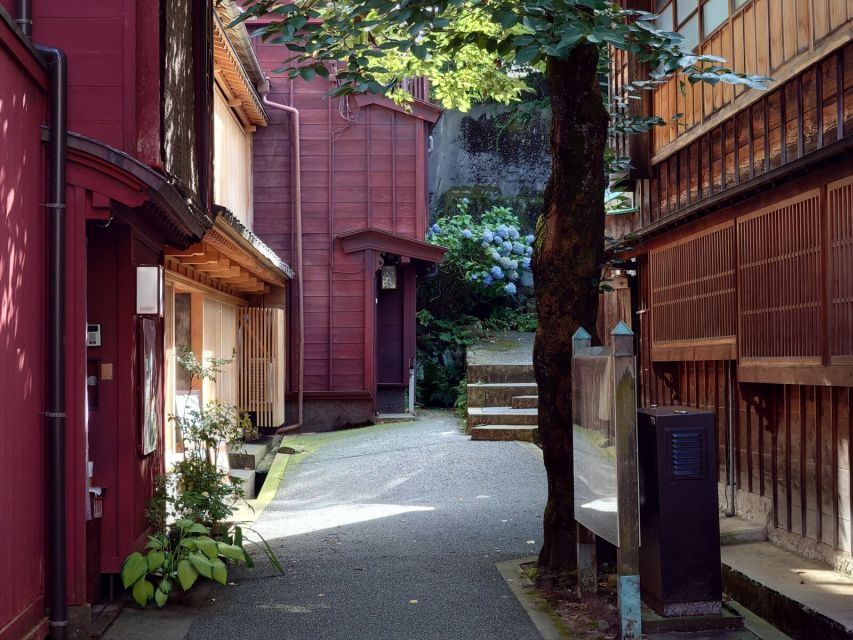
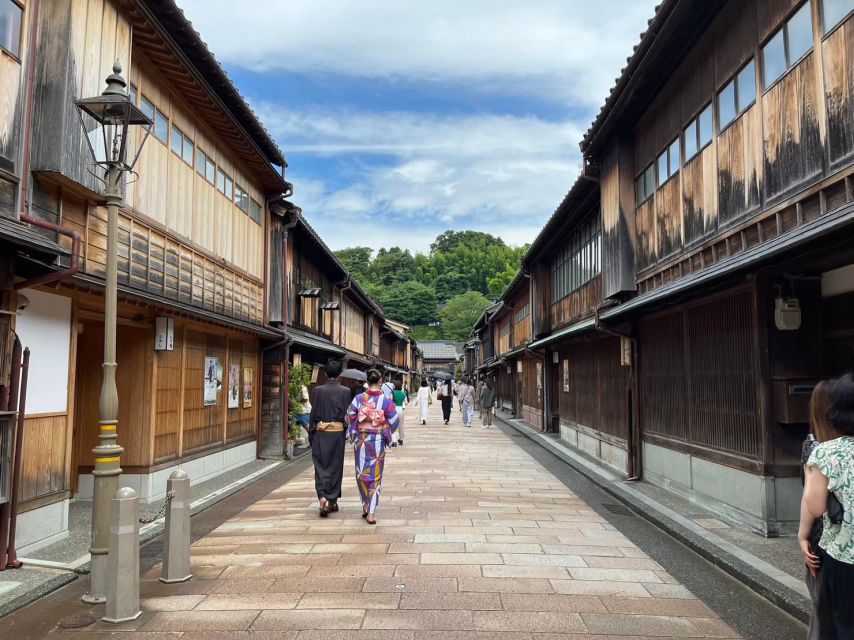
After Kenroku-en, the tour heads into Higashi-chaya Tea District, a symbol of Kanazawa and one of the most famous tea districts outside Kyoto. The immediate shift here is atmosphere. The streets are lined with tall, two-story wooden tea houses, and some are painted red, a design feature found only in Kanazawa.
This is also where your schedule includes free time. That’s your chance to wander, shop for small gifts, and take in the street textures at your own pace. I like having that breathing room here because Higashi-chaya rewards quiet attention. The best photos come when you’re not rushing and when you’re willing to look down side streets.
The guide’s role is still important, though. With the right context, you start to understand why these streets look the way they do, and how the tea district functioned in the social world of the city.
Geisha House Shima: inside access beyond the street look
The later stop is Geisha House Shima. This is where the tour earns a lot of its value because you’re not limited to exterior views. You’ll get a guided visit for about an hour, which gives you time to see how the building is arranged and how the tea district life is represented through the interior layout.
If you’re curious about geisha culture, this is one of the most practical ways to get beyond surface impressions. A guide can explain details that you might otherwise miss, like how different spaces are used and why certain design choices matter.
Possible consideration: this is a stop where you should listen carefully and move slowly. Interior visits can have rules about where to stand and how to take photos, and the group pace is there for a reason.
Walking, timing, and how to handle breaks without losing the day
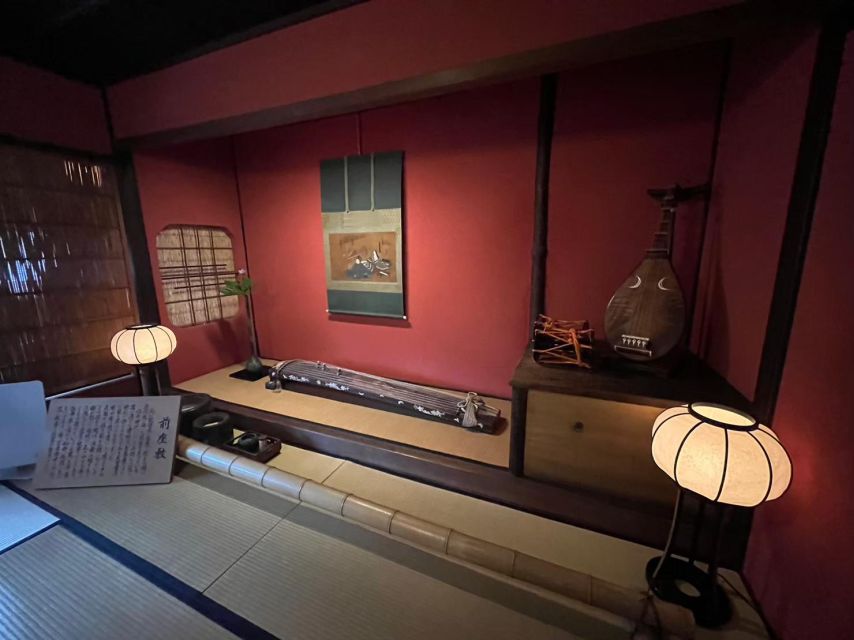
This tour is built for a full-day rhythm: multiple guided segments and multiple walking segments. The listed walking times include short on-foot stretches between main stops, plus a full day outdoors. People do log substantial steps, including days around 12 km, so plan like it’s a hike, not a museum circuit.
The good news is the itinerary is spaced with actual stops that reset your energy. You have a matcha break, a long garden segment, tea district wandering time, and lunch is not included but you do get the chance to eat near markets or along the way. If you want a specific lunch strategy, I’d look around Omicho Market, because it has come up as a strong option in this style of schedule.
Weather planning is not optional. Bring comfortable shoes, warm clothing, an umbrella, rain gear, socks, and warm shoes. In winter, temperatures can drop below 10°C and mornings and evenings may approach or fall below 0°C, with snow or ice on sidewalks. Non-slippery shoes are a must.
Also, the pace is not purely rigid. Guides often adapt when people need an extra minute or two, and you can ask for help if you feel lost. If that happens, you can call the number listed on your tour pass, and staff will assist.
Price and value check: how $156 adds up for a guided day
At $156 per person for a 1-day guided tour, the value depends on what you’d otherwise pay to do the same day on your own.
Here’s what you’re getting that is hard to replicate cheaply with no language help:
- A live English guide for the full loop
- Matcha experience with tea guidance
- Kenroku-en entry fee included
- Shima geisha house entry included
Lunch is not included, so you’ll add that cost yourself. But when multiple paid admissions and a guided cultural activity are bundled, your money shifts from ticket-hunting to actually enjoying the day.
Is it worth it? If your goal is to see the core Kanazawa sights in one organized run, and you want the context that turns names into meaning, this is the kind of price tag that usually makes sense. If you prefer total freedom, self-guided wandering, or you hate walking outdoors, then you might feel the cost more sharply because you’d miss the structure that makes the day efficient.
Should you book this Kanazawa samurai, matcha, gardens and geisha tour?
Book it if you want a tight, guided circuit that connects samurai-era neighborhoods, a major garden like Kenroku-en, and tea district culture, all in one day. It’s especially a good fit if you’re the type who enjoys learning why a place looks the way it does, not just taking photos.
Skip it or reconsider if:
- You don’t do well with long outdoor walking days.
- You’re very schedule-sensitive, since the matcha location can shift occasionally due to special events.
- You’d rather spend more time in Kanazawa beyond the core highlights, because this tour is designed to cover a lot efficiently.
If you do book, show up early, wear shoes made for damp streets, and treat the free-time windows as part of the experience, not a pause button. The magic of the day is how it keeps changing scenes while the guide keeps tying them together.
FAQ
How long is the tour?
It’s listed as a 1-day experience. The exact start time can vary, so you’ll want to check availability for the day you’re going.
Where do I meet the guide?
Meet outside the Shinkansen ticket gates at Kanazawa Station, in front of the information center. The guide meets you near the four large sumo wrestlers, and your guide will be wearing a Snow Monkey Resorts tour tag.
What time does the tour start?
The meetup information indicates the tour begins at 9:00 AM.
What’s included in the price?
The tour includes the guide, the matcha experience, entry fees for Kenroku-en, and entry for Shima (the geisha tea house).
Is lunch included?
No. Lunch is not included, and you’ll need to plan your own meal during the free time nearby.
Is the guide available in English?
Yes. The tour has a live English guide.
How much walking should I expect?
It involves several hours of walking outdoors. Wear comfortable shoes and plan for weather, since much of the day is outside.
What should I bring for cold or rainy weather?
Bring comfortable shoes, warm clothing, socks, a warm layer for winter conditions, an umbrella, and rain gear. Non-slippery shoes are especially important if sidewalks may have snow or ice.
Is cancellation free?
You can cancel up to 24 hours in advance for a full refund.
More Geisha Experiences in Kyoto
- Kyoto Geisha Walking Tour: Gion District & Hidden Gems
★ 4.7 · 3,273 reviews - Kyoto: Gion Magical Night Walking Tour with Geisha Trivia
★ 4.9 · 2,393 reviews - Kyoto: Gion Geisha District Walking Tour – Stories of Geisha
★ 4.7 · 2,187 reviews - Best of Kyoto: Gion, Geisha, Pagodas & Cobblestones
★ 4.9 · 2,058 reviews
More Tea Ceremonies in Kanazawa
- Kanazawa: Kenrokuen Tea Ceremony Experience
★ 4.8 · 1,139 reviews - Kyoto: Tea Ceremony in a Traditional Tea House in Kiyomizu
★ 4.9 · 3,519 reviews - Kyoto: Tea Ceremony Ju-An at Jotokuji Temple
★ 4.9 · 3,207 reviews - Kyoto: 45-Minute Tea Ceremony Lesson Experience
★ 4.3 · 2,378 reviews
Fresh options around Kanazawa
- Kanazawa Like a Local: Private & Personalized Experience 2-3 hrs★ 5.0 · 19 reviews
- Kanazawa Full Day Private Tour to Top Highlights with Local Guide★ 5.0 · 19 reviews
- Kanazawa: Private Custom Tour with Local Guide★ 4.9 · 20 reviews
- Shirakawa-go, Gokayama & Takayama Private Tour From Kanazawa★ 4.7 · 21 reviews
- Kanazawa: Samurai Swordsmanship Lesson at a rented temple★ 5.0 · 21 reviews
- Day Tour from Kanazawa OR Toyama: Snow Wall and Mysterious Valley★ 5.0 · 22 reviews
- Private Ring Craft Experience in Kanazawa★ 5.0 · 22 reviews
- Private Tour of Shirakawago from Kanazawa (Half Day)★ 5.0 · 24 reviews
Samurai & Ninja Experiences, compared.

Samurai Ninja Museum Guided tour and Experience
Read our review →
Kendo and Samurai Experience with Uniform and Gear
Read our review →
Samurai Sword Class by Experts in Traditional Arts
Read our review →
Skip the lines Basic Ticket at SAMURAI NINJA MUSEUM KYOTO
Read our review →
Samurai Sword & Archery Class from Samurai Descendant
Read our review →
Browse the lists this tour appears in