
Reviewed · SAMURAI & NINJA EXPERIENCES
Try Mindful Calligraphy Near Kanazawa’s Ninja Temple
One hour, one brush, and suddenly you are quiet. This Kanazawa calligraphy trial lesson is a real classroom experience, with English-friendly guidance and a calm, hands-on focus that feels worlds away from picture-taking tourism. You practice fundamentals, then you choose a word and turn it into something you can actually take home.
My favorite part is the authentic technique practice. You learn tools like brush and ink, then you work basic strokes using guide sheets before you write your own piece. The other thing I like a lot is the personal payoff, you come away with your own artwork created on a hanging scroll or folding fan.
One thing to consider is that the brushes and ink traditionally use animal-derived materials, so it is not a fit for vegans. Also, it runs as a short lesson, so if you want deep coaching, you may wish you had more time.
Key highlights worth circling
- Real calligraphy class format, not a performance, with practice you can feel in your hand
- Choose a word you actually like, then write it using Japanese scripts explained clearly
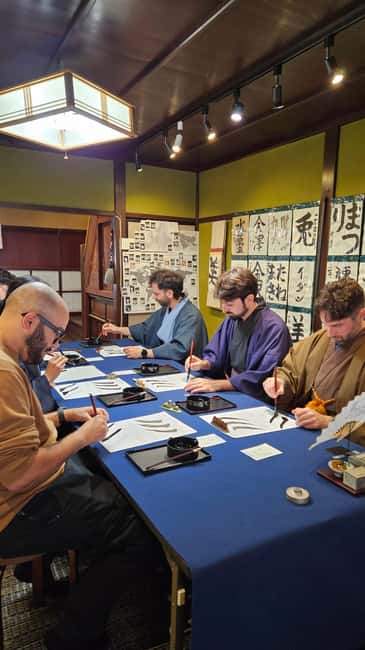
- 100-year-old traditional house setting that makes the lesson feel grounded and real
- Meditative, focused pace where you can slow down during sightseeing
- English-supported instruction with patient guidance, even if your Japanese is beginner-level
- Take-home souvenir on a hanging scroll or folding fan made during class
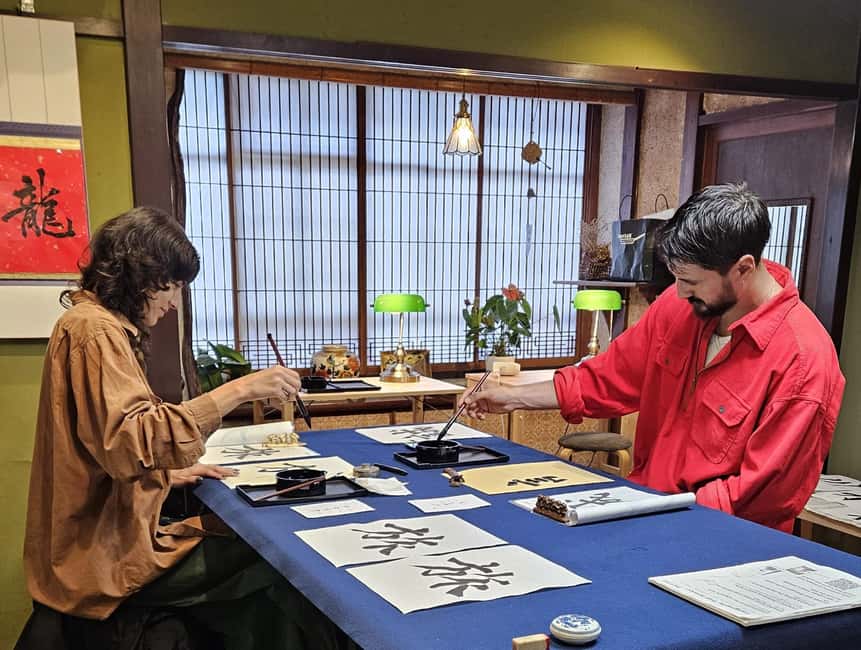
Step inside a 100-year-old Kanazawa classroom
Kanazawa has plenty of culture you can shop for, but this experience is culture you do. The lesson happens in a traditional home, one described as about 100 years old, where the whole room seems built for quiet work and attention to detail.
This is a good break if your day is packed with temples, gardens, or museums. Instead of walking past things, you sit down and make something with your own hands. The setting matters. It encourages slower movement, softer voices, and a more grounded feel than many studio activities.
I also like that the location is easy to spot. There are calligraphy pieces visible from outside the building, so you can often confirm you are in the right place before you even step in.
More Samurai & Ninja Experiences in Kanazawa
- Kanazawa: Samurai Residence Remains Nomura Family admission
★ 4.4 · 111 reviews - Kanazawa: Samurai, Matcha, Gardens and Geisha Full-Day Tour
★ 4.9 · 75 reviews - Full-Day Tour from Kanazawa: Samurai, Matcha, Gardens and Geisha
★ 5.0 · 68 reviews
Getting oriented fast: scripts, tools, and what you will be learning
Before the brush ever touches paper, you get an explanation that connects the visuals to the meaning. The instructor walks you through the three core Japanese scripts: Kanji, Hiragana, and Katakana.
Here is the practical version of what that means:
- Kanji are ideographic characters, each one carrying meaning like a picture
- Hiragana and Katakana are phonetic scripts, with flowing forms and a different visual rhythm
You also get context on how Japanese writing connects to Japanese aesthetics, and you are shown how calligraphy is not only about copying. It is about tool control, line quality, and intention.
Then comes the hands-on portion: you learn about the calligraphy tools, including how brush and ink work. This is not a “watch and smile” class. You practice, adjust, and try again until your stroke makes sense to your own eye.
If you are worried about having no talent, don’t. The point here is learning the mechanics and the mindset, not producing museum-level lettering in 60 minutes.
The brush stroke workshop: practice sheets first, then your own piece
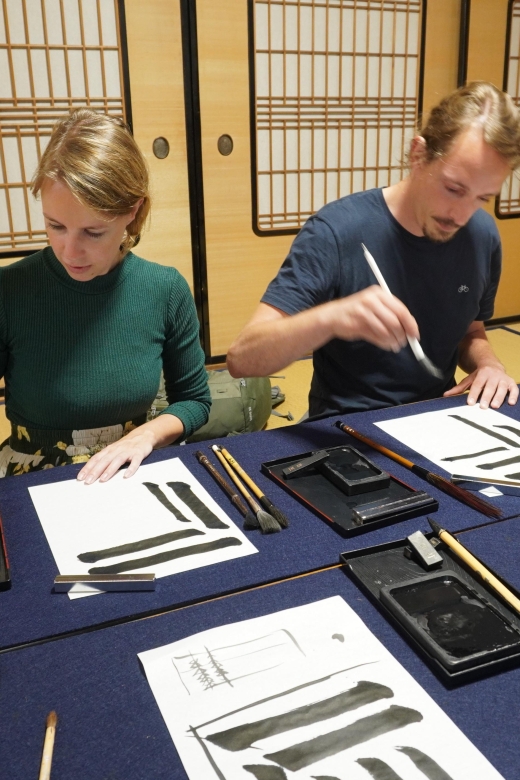
The structure is simple and sensible, which is why it works for beginners. You start with basic strokes and brush techniques, guided by the instructor. You practice using guide sheets, so you can focus on movement and pressure instead of guessing.
In my view, this is the best way to learn calligraphy in a short time. If you jump straight to a finished piece, you tend to “gesture at art.” With guide sheets, you build repeatable motion and you begin to understand why each stroke looks the way it does.
The class is also set up for real attention. It runs as a private group, so you are not lost in a crowd. In practice, that usually means you can ask questions and get corrections without waiting your turn forever.
You might meet instructors such as Naomi and Daiki, and in some sessions you may also hear from the family team, including a master calligrapher husband who can add extra explanation. That family-style instruction is part of what makes the lesson feel human instead of industrial.
Choosing your word: where the lesson becomes personal
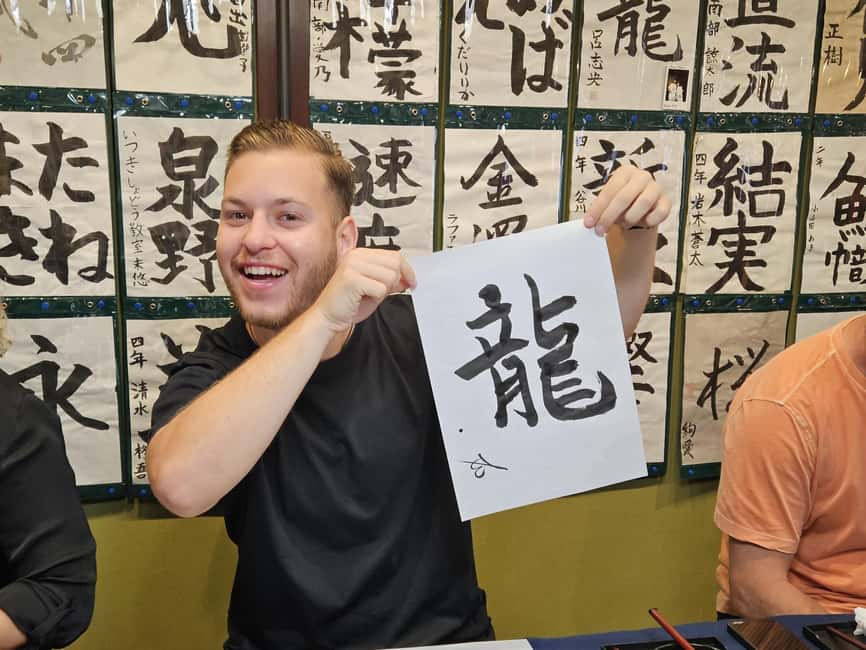
This is where the experience turns from “learning calligraphy” into “making something you care about.” You get to choose a word you like, then you create a unique piece based on that choice.
That choice matters because calligraphy is slow, and the stroke quality reflects your focus. When your word has meaning to you, your attention stays steady. The lesson becomes a quiet reset button.
You also get guidance on writing the character(s) you select. The instructor’s job is to help you understand the character shape and the flow, not to judge your attempt. You practice the strokes you need, then you apply the technique to your final artwork.
If you are choosing a word, pick something you can explain to yourself. A feeling. A value. A theme for your trip. Something that will still matter when you look at it at home.
More samurai and ninja experiences in Kanazawa:
- Kanazawa Private Tour: Highlights of an Old Samurai Town
★ 5.0 · 46 reviews - Kanazawa: Samurai Swordsmanship Lesson at a rented temple
★ 5.0 · 21 reviews - Kanazawa Ninja Temple Half Day E-bike tour
★ 5.0 · 14 reviews - Tokyo: Samurai Restaurant Show Ticket with 2 Drinks
★ 4.5 · 1,307 reviews
Your finished artwork on a scroll or folding fan
At the end, you create your completed work directly on a hanging scroll or a folding fan. You do not just fill in a workbook page. The finished product is made as part of the lesson, and you take it home as a souvenir.
From a value standpoint, this is where a short class can either disappoint or shine. Here, it shines, because the time is spent on producing an artifact, not only practicing. You get real “I did this” evidence you can display or gift.
Also, writing on a hanging scroll or folding fan changes the pressure and pacing of your brush work. It forces you to commit to the line quality and the brush angle. That is exactly the sort of learning you want from a trial class.
A meditative hour that fits into a sightseeing day
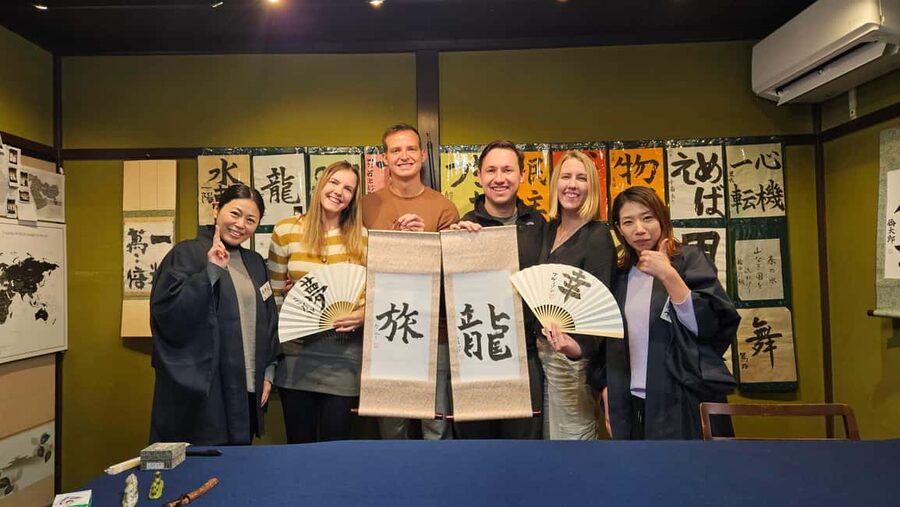
Calligraphy gets described as mindful for a reason. The activity naturally slows you down. You do not multitask. You do not scroll through your phone. Your brain is focused on a single line at a time, and the room stays calm.
This is the kind of experience that works even if you think you are not “artsy.” The goal is control and calm, not aesthetic perfection. As you practice, you start noticing how small adjustments in pressure and direction change the character.
It is also a great reset if your Kanazawa day is emotionally loud. You can sit down, breathe, and leave with something you made. That combo is hard to beat for a one-hour activity.
English-friendly guidance that keeps you from getting lost
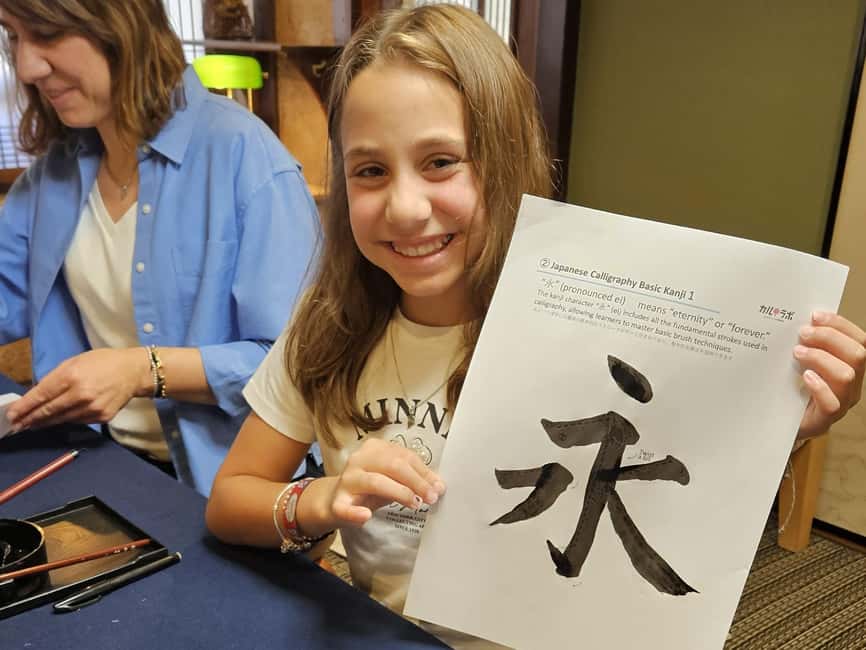
One of the most practical reasons this lesson feels beginner-friendly is the English support. The instructor can guide you in English, plus there is Japanese used naturally in the studio.
That matters because calligraphy instructions can sound abstract if you only hear them in Japanese. With English explanation, you get the “why” behind the “how.” You also get stories behind characters and writing, so the lesson becomes culture and technique at the same time.
The vibe is also encouraging. From what I have seen in how the class is run, the instructors focus on progress and patience. When you make a mistake, you are not stuck. You correct the stroke and move forward.
Price and value: why $44 for one hour can be worth it
The price is $44 per person for about one hour. On paper, it is not “cheap.” But calligraphy classes are tool-based, instructor-led, and you leave with a finished item.
Here is what you get for the cost:
- Guided practice with brush techniques and guide sheets
- Clear instruction on Japanese scripts like Kanji, Hiragana, and Katakana
- A personal word choice and a unique final piece
- The finished artwork created on a hanging scroll or folding fan that you can take home
If you are budgeting, treat this as a paid workshop, not a free craft. The value comes from the combination of real instruction and a real souvenir made during class.
It is also private group instruction, which can be a big deal in a short time window. If you can swing it, this is one of the better ways to spend an hour in Kanazawa that still feels authentic.
Timing notes: what changes on Thursday and Saturday afternoons
There is one detail that can affect the feel of the room. On Thursday and Saturday after 3:00 PM, the local calligraphy school is also in session, so you may see local children in the studio.
That does not sound disruptive in a harmful way. It just means the space might have more activity and a more “local learning” atmosphere. If you prefer a very quiet studio with only your group, consider choosing another time. If you like seeing calligraphy as part of everyday life, those times can be interesting.
Who should book this calligraphy trial, and who might skip it
This class is a strong match for:
- Anyone who wants a calm, hands-on cultural activity in Kanazawa
- Beginner-friendly learners who want English guidance
- People who want a take-home souvenir that feels personal
- Couples or small groups who like doing an activity together
You might skip it if:
- You need a vegan-friendly art class, since brushes and ink traditionally contain animal-derived materials
- You are traveling with kids under 5, since the lesson is not suitable for children under that age
- You want a long, multi-session progression. This is a trial lesson, so it gives you a taste and fundamentals, not a full mastery path
Should you book this mindful calligraphy lesson?
Yes, if you want a real classroom experience and a souvenir you made yourself. The best reasons to book are practical: you get guided technique practice, you pick a word that means something to you, and you leave with a finished hanging scroll or folding fan.
One tip before you go: choose a word ahead of time, even if you keep it simple. You will save mental energy, and you can focus on brush control and calm.
If you are in Kanazawa for sights and you want one hour that slows everything down, this fits perfectly. It is not a performance. It is a quiet skill lesson with a real output you can hang up later and remember the day.
FAQ
How long is the Japanese calligraphy trial lesson?
It lasts 1 hour.
How much does it cost, and is the price per person?
The price is $44 per person.
Is there instruction in English?
Yes. The instructor offers English and Japanese guidance.
What will I make during the class?
You will practice brush techniques and strokes, then choose a word and create your own calligraphy artwork.
What do I take home at the end?
Your completed work is created directly on a hanging scroll or a folding fan, and you can take it home as a souvenir.
Where is the meeting point?
The address is 1-1-26 Nomachi, Kanazawa, Ishikawa 921-8031. You should be able to find it easily since calligraphy works are visible from outside the building, and there is a nearby bus stop served by the Kanazawa Loop Bus.
Is it suitable for young children or vegans?
No. It is not suitable for children under 5 years and it is not suitable for vegans.
Are there any material considerations I should know about?
Calligraphy tools such as brushes and ink traditionally contain animal-derived materials.
Do you offer free cancellation or reserve-pay later?
Yes. You can reserve now and pay later, and there is free cancellation up to 24 hours in advance for a full refund.
More Temple & Shrine Tours in Kanazawa
- Full Day Tour Eiheiji Buddhist Temple and Fukui City Castle Town
★ 5.0 · 13 reviews - Kyoto: Fushimi Inari, Kinkakuji, Bamboo Grove 1 Day Bus Tour
★ 4.8 · 4,316 reviews - Kyoto: Tea Ceremony Ju-An at Jotokuji Temple
★ 4.9 · 3,207 reviews - Tokyo: Meiji Shrine, Asakusa, Skytree Bus Tour and Cruise
★ 4.7 · 1,986 reviews
Fresh options around Kanazawa
- Kanazawa Half-day Tour: Curated: Gardens, Craft & Geisha District★ 4.5 · 12 reviews
- Kanazawa Private Walking Tour with a Local★ 5.0 · 13 reviews
- Full Day Tour Eiheiji Buddhist Temple and Fukui City Castle Town★ 5.0 · 13 reviews
- Kanazawa Ninja Temple Half Day E-bike tour★ 5.0 · 14 reviews
- Omicho Market & Kanazawa Ramen Tasting Tour★ 5.0 · 15 reviews
- Kanazawa Historic Brewery: Fermentation Tour, Tasting, Lunch★ 4.9 · 15 reviews
- Private transfer Kanazawa to Takayama Including Shirakawago★ 5.0 · 15 reviews
- Kanazawa Full-Day Tour Private & Personalized with a Local Guide★ 5.0 · 16 reviews
Samurai & Ninja Experiences, compared.
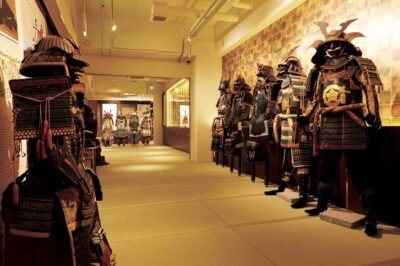
Samurai Ninja Museum Guided tour and Experience
Read our review →
Kendo and Samurai Experience with Uniform and Gear
Read our review →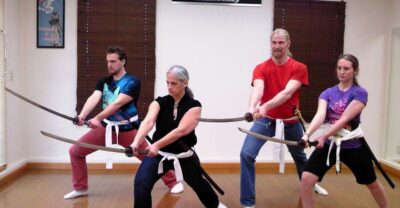
Samurai Sword Class by Experts in Traditional Arts
Read our review →
Skip the lines Basic Ticket at SAMURAI NINJA MUSEUM KYOTO
Read our review →
Samurai Sword & Archery Class from Samurai Descendant
Read our review →
Browse the lists this tour appears in