
Reviewed · FOOD & DRINK
Kanazawa Historic Brewery: Fermentation Tour, Tasting, Lunch
Fermentation here is not vague science, it is a meal you can understand fast. You start at Koji Park inside Yamato Soy Sauce & Miso, a site tied to 1911-era soy sauce and miso traditions, then you move straight into hands-on flavor work. I love how the tour turns koji from a buzzword into something you can smell, compare, and eat.
You also get two tastings that actually teach your palate. The miso soup workshop lets you compare two miso styles aged 6 to 12 months, then lunch leans hard on koji and other fermented ingredients. The only real drawback to plan for is that this experience does not take you into the production rooms where everything is made, so you will spend more time learning from the site and its history than walking through active factory floors.
Why This Tour Feels Different Than a Standard Food Stop
This is the kind of experience where your brain and stomach work together. The guided flow is short, 150 minutes total, and it keeps switching modes: tour talk, quick workshop, a plated lunch, then doburoku tasting with easy-to-drink flavors. Small group size, limited to 8 people, means questions are welcome and the pacing stays relaxed.
One more consideration: the outdoor parts of the visit may shift if the weather changes. That is normal for an open-air historic complex, but it is smart to dress for Kanazawa conditions on the day you go.
Key Things I’d Prioritize
- Koji Park Tour & Koji Talk explains what koji does, why fermentation matters, and how it connects to gut health
- Miso soup workshop uses two miso pastes aged 6 to 12 months, so you can compare real flavor development
- Fermented food lunch course highlights koji in multiple dishes, with the default being Koji Beef Steak
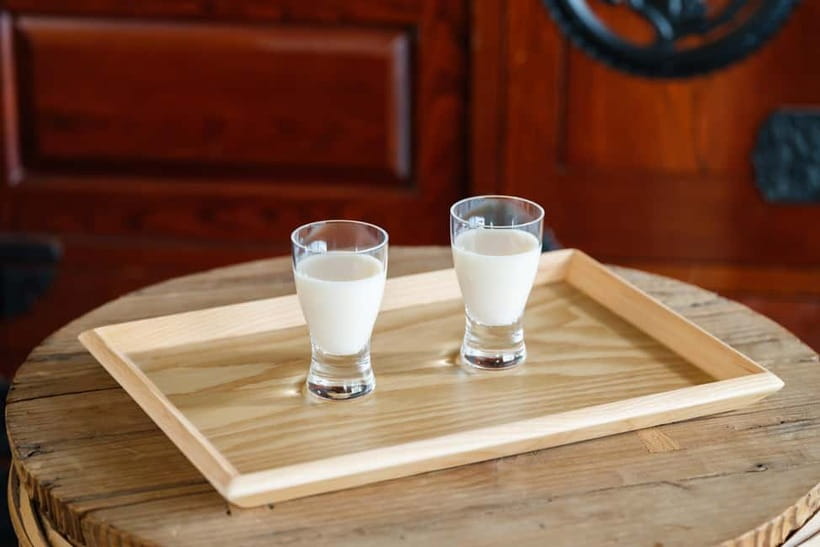
- Doburoku tasting includes two craft styles, one with yuzu and one with black currant
- Small group size (up to 8) helps the guide keep your questions answered
- Historic Yamato grounds include photo-friendly factory architecture like the red brick boiler and chimney
More sake tastings in Kanazawa:
- Kyoto Night Foodie Tour in Gion (9+ dishes + 6 Sake tastings)
★ 5.0 · 1,762 reviews - 1-Day Snow Monkeys, Zenko-ji Temple & Sake in Nagano
★ 5.0 · 1,020 reviews - 3-Hour Kyoto Insider Sake Brewery Tour with Tastings & Pairings
★ 5.0 · 917 reviews
Entering Koji Park at Yamato: What Makes This Start Work
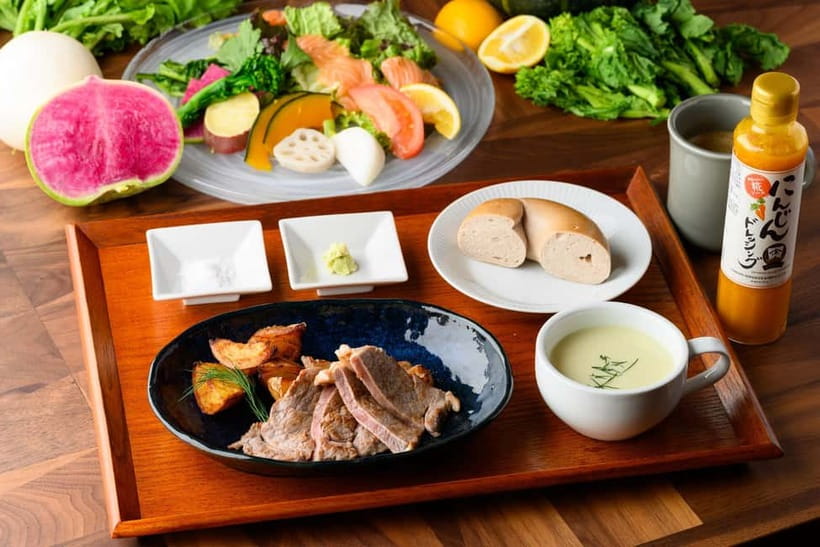
The meeting point is the Hishiho-Gura product showroom, at Yamato Koji Park. You are not starting with a bus ride, a waiting lounge, or a big crowd scene. You start in a place built for food discovery, with history and products living side by side.
From there, the tone is simple. You learn with your senses first: smell, compare, taste, then put it into words. That is how fermentation becomes understandable. Koji is not just an ingredient. It is the starter work that helps rice and other materials transform into miso, soy sauce-related flavors, and even doburoku.
Also, the surroundings help you stay in “food history mode.” The site sits in Oonomachi, Kanazawa, a historic port town tied to soy sauce production going back to the Edo period. If you like food culture beyond street snacks, this is a strong match.
The Koji Park Tour and Koji Talk: 30 Minutes That Actually Adds Up
The tour block runs 12:00-12:30, and it is built like a guided briefing you can follow. You get an entertaining explanation of three things:
- What koji is
- The secret of fermentation
- The connection to intestinal health
You will likely hear this explained in a way that is practical, not preachy. The point is to help you understand what is happening during fermentation, and why the same basic process can lead to very different results like miso versus doburoku.
There is also an important note about the “outdoor” portion. Depending on weather, you might not access every external area. If you show up prepared for rain or wind, you will have a smoother experience either way.
The guide language is English or Japanese, and the tour is paced for small-group conversation. In past groups, English proficiency has been a major plus, and that matters when you are learning fermentation terms you do not see in typical food tourism.
The Historic Yard Stops: Red Brick Boiler, Chimney Smells, and Storehouses
Between the talk and the workshop, you will move through the Yamato complex. This is not a museum walkthrough where you read every plaque and move on. You are in a working-style historic space with architectural details that make fermentation feel physical.
Look out for:
- A red brick boiler building that gives the site an old-world industrial feel
- An iconic chimney that can carry the scent of roasted wheat-like notes in the air
- Traditional wooden storehouses adapted for production and shop areas
The view backdrop adds another layer. On a clear day, you can see the broader Kanazawa port setting, plus distant Hakusan and Tateyama mountain ranges. Even if you focus mainly on food, those sightlines make the place feel like it belongs to the region, not just a business location.
If you are the type who likes photography, this part gives you frames that are more interesting than yet another temple gate shot.
More food tours in Kanazawa:
- Taste of Kanazawa (Food tasting in Omicho Market & Higashi Chaya)
★ 5.0 · 58 reviews - Kanazawa: Private Food Tasting Walking Tour
★ 4.7 · 25 reviews - Omicho Market & Kanazawa Ramen Tasting Tour
★ 5.0 · 15 reviews - Tokyo: Shinjuku Food Tour (13 Dishes at 4 Local Eateries)
★ 5.0 · 6,603 reviews
Making Miso Soup: Two Miso Ages, One Simple Recipe, Real Learning
After the talk, you shift into the most practical part: a miso soup making and tasting session, running 12:30-13:00.
What I like here is the comparison setup. You make your own bowl using simple instructions, then you taste two types of miso pastes aged 6 to 12 months. That age range matters because fermentation keeps developing flavor. Younger miso tends to taste brighter and more straightforward, while older miso can feel deeper and rounder. You do not just hear that idea. You feel it in the spoon.
You get ingredients and utensil rental included. That lowers friction, because you do not need to hunt down cooking supplies or worry you will miss something technical. It is also a great “bridge” moment between food theory and food pleasure.
Diet note: if you have restrictions, the lunch is the one most likely to change. For the soup workshop, you should still tell the team about allergies or dietary limits when you reserve, since they handle meal planning during the experience.
Lunch Course With Koji Beef Steak and Fermented Ingredients
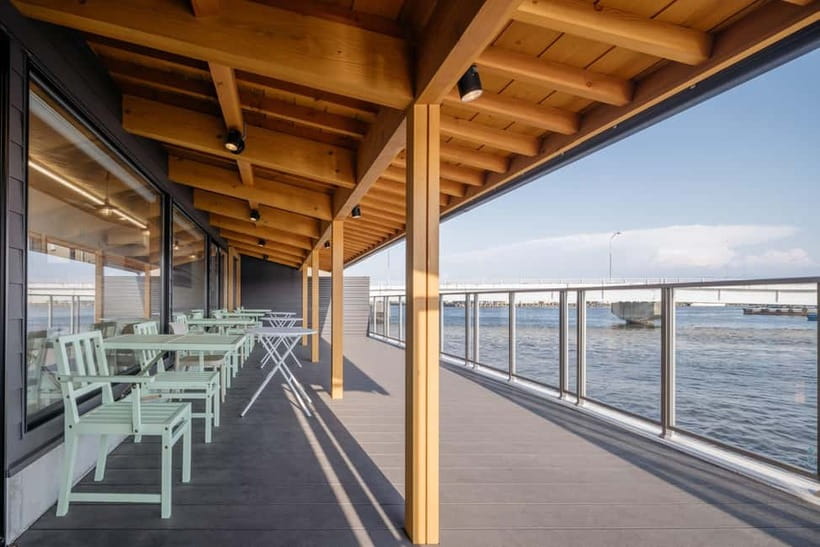
The lunch block runs 13:00-14:00 and it is built around fermentation flavor. The default menu is the Koji Beef Steak Lunch Course.
The big idea is that you see what koji does in real dishes, not just in one bite. The lunch course includes multiple items and uses generous portions of koji and other fermented ingredients. The meals can also include interesting side items beyond classic miso soup, and some people in earlier groups have found things like salad, soup, steak, and even bread-like items in the same broader lunch flow.
A practical point: lunch is the most filling part of the day. If you have ever found fermentation tours too “tasting only,” this one has a full course approach. You will leave feeling like you ate lunch, not like you sampled lunch.
If you have dietary needs, you will want to email after reserving. The tour includes a standard lunch plan, but they ask you to communicate restrictions in advance so they can adjust.
Doburoku Tasting: Yuzu and Black Currant With a Gentle Buzz
Right after lunch, you move into doburoku tasting from 14:00-14:30.
Doburoku is a cloudy fermented rice beverage built from koji, yeast, and lactic acid bacteria. This matters because it is not “just sake.” It is part of a fermentation family, and it tastes closer to something you can sip and discuss with the guide.
You taste two craft styles:
- One flavored with yuzu
- One flavored with black currant
I like that these flavors do not make you work too hard. They make the drink approachable, even if doburoku is new to you. The experience is also described as producing a gentle buzz, so it functions as a tasting moment and a relaxed closer to the tour.
And yes, people who are curious about fermented foods tend to walk away remembering the doburoku flavors first, because they are vivid and easy to recall later when you shop.
Value for $77: Why This Price Doesn’t Feel Random
For $77 per person over about 150 minutes, you are paying for more than “a guided walk.” You get:
- Koji Park tour and the koji talk
- A hands-on miso soup workshop with rental tools
- A fermented food lunch course
- Two doburoku tastings
This is good value if you treat it as a mini class plus a meal. The hands-on soup part is where the price starts to make sense, because it includes ingredients and a structured comparison between two miso ages. Most food tours are either lecture-only or tasting-only. Here, you do both, then eat the results.
If you are the type who spends time in food museums but leaves hungry, you will appreciate the lunch course. If you like cooking, the workshop gives you a home-friendly skill you can actually reuse later.
Getting There From Kanazawa Station: Bus Steps You Should Not Skip
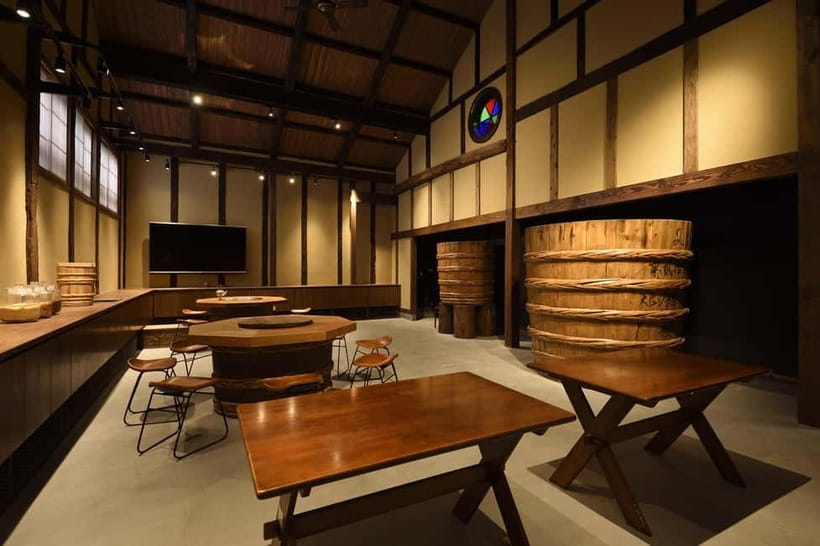
Kanazawa Station is the obvious starting point, but the meeting area is not a one-street walk from it. Plan your transport.
Here is the public-transport path that works:
- Walk 3 minutes from the Kanazawa Station West Exit to the bus stop called Nakabashi (under the Nakabashi overpass).
- Take Hokutetsu Bus Line 61 bound for Ono, about 30 minutes.
- Get off at the final stop Ono.
- Walk 3 to 8 minutes toward Minato Bridge.
On the way back:
- From Ono, take Line 34 bound for Takao or Kanazawa Institute of Technology.
- Get off at Nakabashi to return to Kanazawa Station.
Your best move: check the latest bus timetable on the Hokutetsu bus website. Also, if you are traveling with luggage or just want a stress-free morning, a taxi is a reasonable trade for saving time.
Who Should Book This Fermentation Tour
This tour is ideal if you want a food experience that is not just eating, but understanding. It is especially good for you if:
- You are curious about koji and why it is linked to miso, soy sauce flavor culture, and fermentation starters
- You like workshops where you leave with a skill (making miso soup)
- You want a break from shrine-heavy days in Kanazawa
- You enjoy small-group tours with real conversation
It is also a strong fit for couples, solo travelers who enjoy Q and A, and anyone who plans to shop for food souvenirs right after the experience since the site is built around products.
Two notes to keep in mind:
- The tour is not suitable for people under 20 years
- It is closed Tuesdays and Wednesdays, and during New Year holidays
Should You Book It? My Take
If you like fermentation as a concept and you want proof in your bowl and glass, I would book this. The reason is simple: you get instruction, hands-on making, and a meal that shows what koji tastes like when it is not just an idea.
Before you commit, decide if you are comfortable with the fact that you will not go into the production rooms where the food is made. You are seeing the historic site and learning from it, which is still valuable, but it is not the same as a behind-the-scenes factory walk.
If you want a short, high-impact Kanazawa food experience with koji, miso, and doburoku in one tidy timeline, this is a very solid choice.
FAQ
How long is the fermentation tour?
The experience runs for about 150 minutes total.
What is the group size?
It is a small group limited to 8 participants.
Is the tour suitable for children or teenagers?
No. It is not suitable for people under 20 years.
What languages are offered?
The live tour guide is available in English and Japanese.
What is included in the miso soup workshop?
You make your own miso soup using simple recipes and two types of miso pastes aged from 6 to 12 months. Ingredients and utensil rental are included.
What does the lunch include?
Lunch is a fermented food course that uses generous amounts of koji and other fermented ingredients. The default is Koji Beef Steak Lunch Course, and you should email the provider after reserving if you have dietary restrictions.
What doburoku flavors do you taste?
You taste two types of doburoku, including one flavored with yuzu and one flavored with black currant.
When is it closed, and what is the cancellation window?
The site is closed Tuesdays and Wednesdays, and during New Year holidays. You can cancel up to 24 hours in advance for a full refund.
More Drinking Tours in Kanazawa
- Tokyo Bar Hopping Tour in Shinjuku (All-You-Can-Drink + Dinner)
★ 5.0 · 3,587 reviews - Best of Shinjuku: Izakaya Food Tour (4 Stops, 14+ Tastings)
★ 5.0 · 1,863 reviews - Tokyo: Shinjuku Local Bar and Izakaya Guided Walking Tour
★ 4.9 · 1,794 reviews - Shibuya Meltdown Nightlife Tour: All-You-Can-Drink Bar Hopping
★ 5.0 · 1,058 reviews
More Historical Tours in Kanazawa
- World Heritage Shirakawa-go and Experience Tours from Kanazawa
★ 5.0 · 4,049 reviews - [One-day bus tour departing from Kanazawa Station] Shirakawa-go and Gokayama – Two World Heritage Villages Enjoyable Bus Tour
★ 5.0 · 253 reviews - World Heritage Shirakawa-go Perfect Guided Tour from Kanazawa
★ 5.0 · 220 reviews - Kanazawa: Sushi & Japanese Cooking Class at a Historic School
★ 5.0 · 66 reviews
Fresh options around Kanazawa
- Kanazawa Half-day Tour: Curated: Gardens, Craft & Geisha District★ 4.5 · 12 reviews
- Kanazawa Private Walking Tour with a Local★ 5.0 · 13 reviews
- Full Day Tour Eiheiji Buddhist Temple and Fukui City Castle Town★ 5.0 · 13 reviews
- Kanazawa Ninja Temple Half Day E-bike tour★ 5.0 · 14 reviews
- Omicho Market & Kanazawa Ramen Tasting Tour★ 5.0 · 15 reviews
- Private transfer Kanazawa to Takayama Including Shirakawago★ 5.0 · 15 reviews
- Kanazawa Full-Day Tour Private & Personalized with a Local Guide★ 5.0 · 16 reviews
- Kanazawa Night Tour With Full Course Meal★ 4.9 · 16 reviews
Food & Drink, compared.
Shinjuku Food Tour (13 Dishes at 4 Local Eateries)
Read our review →
Tokyo Tsukiji Fish Market Food and Culture Walking Tour
Read our review →
Shinsekai Food Tour with 13-15 Dishes at 5 Eateries
Read our review →
Osaka Food Tour: 13 Dishes at 5 Local Eateries
Read our review →
Shinjuku Food Tour (15 Dishes and 4 Eateries)
Read our review →
Best of Shinjuku: Izakaya Food Tour (4 Stops, 14+ Tastings)
Read our review →
Kyoto Night Foodie Tour in Gion (9+ dishes + 6 Sake tastings)
Read our review →
Hungry Osaka Street Food Tour:15 Tastings & 3 Drinks with a Local
Read our review →Browse the lists this tour appears in