
Reviewed · COOKING CLASSES
Kanazawa: Sushi & Japanese Cooking Class at a Historic School
Cooking sushi in Kanazawa feels like a shortcut to the local way of eating. What makes this class interesting is that it is truly hands-on, not a show, and you cook five dishes with clear guidance. You also get real-time AI translation on a large screen, so the teaching stays fun and understandable even if your Japanese is rusty.
I especially love the combination of fresh seafood from Omicho Market and the practical techniques you can actually repeat later. The format also includes premium Japanese knives, plus photos and a certificate, so the value is more than just the meal.
One drawback to plan around: vegan diets and fish-based dashi avoiders can’t be accommodated, and same-day diet changes aren’t possible. If you’re sensitive to fish broth, you’ll want to think through that before booking.
Key highlights to look for
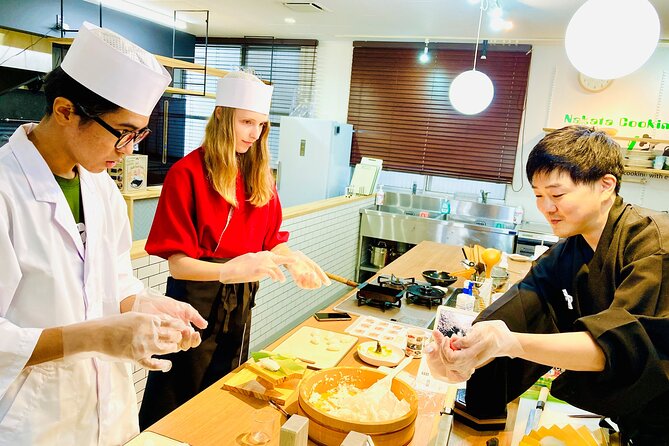
- You cook every dish, including nigiri sushi and Jibuni, instead of watching
- Live AI voice and text translation keeps the class moving and the jokes landing
- Omicho Market seafood is part of the nigiri experience, not generic substitutes
- Dashi-making and tamago technique give you a reusable Japanese cooking foundation
- Small group size (max 8) means more hands-on help when you need it
- Optional Knife Museum visit and knife discounts add an extra reason to make time
Entering Nakata Cooking School near Kanazawa Station
This class starts with location that saves you time. You meet at Nakata Cooking School and Knife Shop by appointment, and it’s about a 3-minute walk from Kanazawa Station. That matters if your Kanazawa days are packed and you do not want to spend half your evening traveling.
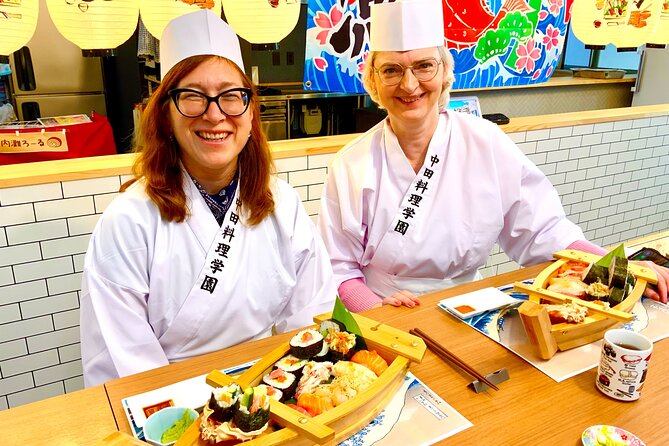
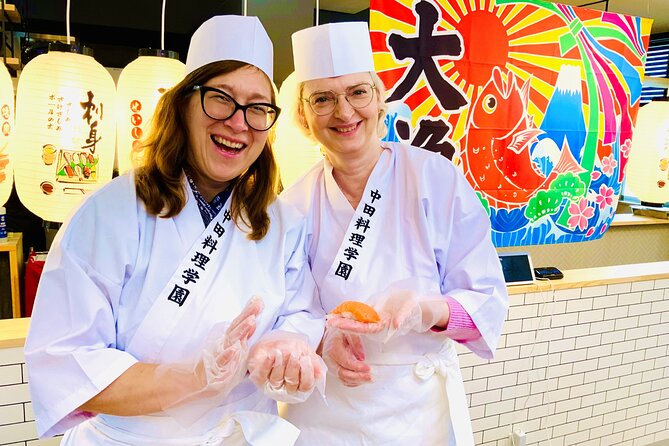
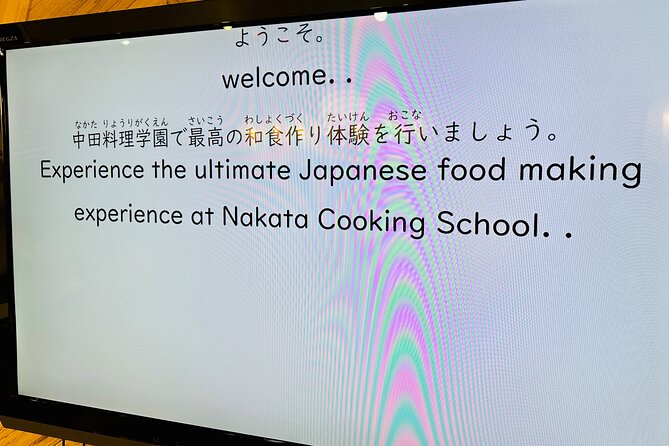
Inside, you’ll change into a sushi chef uniform. Then you get hit with the basics of Japanese food culture and ingredients, with the English support running on a large screen. The whole vibe feels welcoming and relaxed, not stiff or overly formal.
The class runs about 2 hours 30 minutes, which is a sweet spot. Long enough to learn real technique, short enough to still enjoy Kanazawa afterward.
More sushi making classes in Kanazawa:
- Sushi Making Tokyo Roll and Authentic Japanese Sushi Class
★ 5.0 · 3,971 reviews - Tokyo: Roll and Authentic Sushi Making Class in Asakusa
★ 4.9 · 1,957 reviews - Make Sushi and Create Unforgettable Memories in Tokyo
★ 5.0 · 1,413 reviews
Real-time AI translation, plus the human touch
The biggest practical win here is communication. You’ll use real-time AI translation (voice and text) on a large screen, so you can follow instructions as you work. In a cooking class, that is everything, because timing matters when you’re shaping sushi or rolling omelet.
I like that it is not just functional. The teaching includes humor, and translation helps keep the room light. That can matter when you are juggling hands, tools, and concentration at the same time.
Also, the instruction comes with personal guidance as you cook. With a maximum of 8 travelers, you are less likely to get stuck waiting for the next step.
The knife moment: premium tools and a future Knife Museum
Japanese knives can feel intimidating until you hold the right one. Here, you use premium Japanese kitchen knives during the class, which lets you learn with tools that match the technique. You’re not just learning “what to do,” you’re learning how it feels to do it.
There’s also an in-house Knife Museum option. It’s scheduled to open July 2025, and participants get a 10% discount if you choose to visit. If you already love kitchen gear, this is a nice bonus that extends the experience beyond food.
You can also buy knives as an optional participants-only purchase. For me, this is a smart add-on because you can test what you like while you’re already in knife mode.
Your 2.5-hour menu: five dishes that teach real Japanese technique
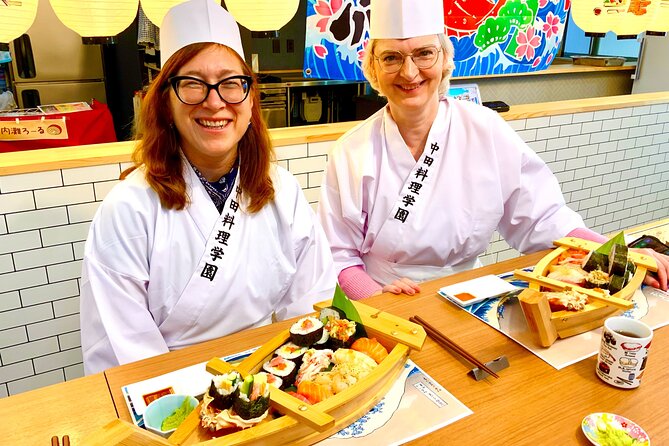
This is the part I’d focus on if I were planning your evening. The class covers five hands-on dishes, and each one teaches something that carries over to home cooking.
More cooking classes in Kanazawa:
- Ramen Cooking Class at Ramen Factory in Kyoto
★ 5.0 · 1,937 reviews - Ramen & Gyoza Cooking Class in Tokyo with Local Supermarket Visit
★ 5.0 · 823 reviews - Kyoto: Ramen Cooking Class at a Ramen Factory with Souvenir
★ 4.9 · 532 reviews - Kyoto: Ramen, Gyoza, and Onigiri Cooking Class
★ 5.0 · 445 reviews
Nigiri Sushi with wild fish from Omicho Market
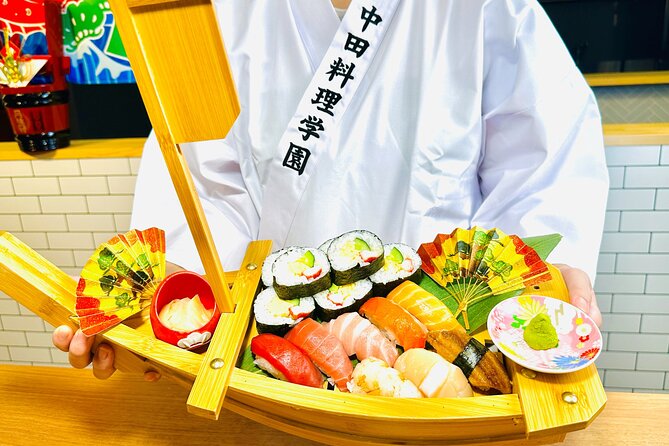
You start with nigiri sushi. You’ll use wild fish sourced from Omicho Market, which is a major factor in why this feels local and not generic. The instruction covers shaping and getting the balance right between rice and fish.
This is also where you learn the small details that restaurants rely on. Even if you’ve made sushi before, the technique is still worth tightening, especially for consistency.
Dashi broth: bonito and kelp stock
Next comes dashi, the flavor backbone of a lot of Japanese home cooking. You’ll make a dashi broth using traditional bonito and kelp. It’s one of those skills that sounds simple until you try to do it in your own kitchen.
Once you have a good dashi base, it becomes your shortcut ingredient. You’ll taste how it changes everything that follows, including soup and omelet flavor.
Dashi-maki tamago: the soft rolled omelet method
Then you roll into dashi-maki tamago, the soft rolled omelet. The class uses a Michelin-style recipe approach for the technique, so you’re not stuck with vague advice. The focus is on the process, how to layer, and how to keep the texture silky.
If you’ve ever had tamago that was either too dry or uneven, you’ll appreciate this. It teaches how to control texture instead of just chasing a flavor.
Jibuni: Kanazawa’s chicken stew with samurai-era roots
After that, you make Jibuni, a Kanazawa specialty with samurai-era roots. This dish brings comfort and depth, and it also breaks up the evening so it is not all sushi and egg.
Jibuni uses chicken, and you’ll get guidance on building the stew as part of the class flow. Even if you are not a stew person, this one often wins people over because it is specific to place.
Seasonal side dish and miso soup
Finally, you round out the meal with a seasonal side dish and miso soup. That ending matters because it shows how Japanese meals balance multiple flavors and textures, not just a single hero dish.
And yes, you cook it with the same level of step-by-step guidance as the earlier items. This is not a “good luck” situation.
What “hands-on” really means here, and why it’s good value
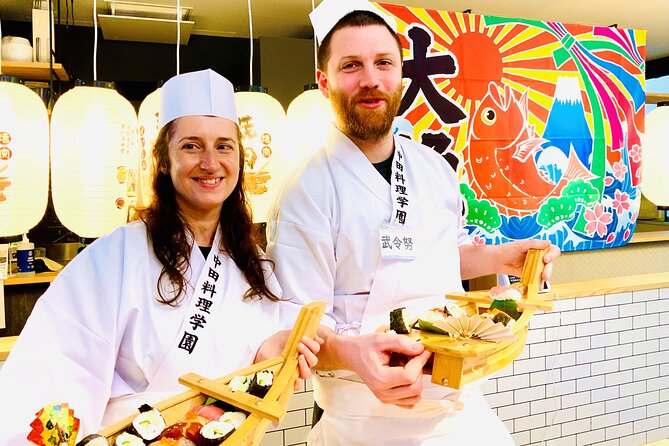
Many cooking classes advertise hands-on. This one earns the label because you truly participate in the work. You shape sushi, roll tamago, and prepare dashi components, then you eat everything you made.
For your planning, that means you’ll leave with more than recipes. You’ll leave with muscle memory for key steps like sushi shaping and rolled omelet technique.
The ingredient quality also supports the learning. The class uses fresh, seasonal ingredients, and it includes premium seafood for the sushi portion. When the ingredients are good, you can focus on method instead of fighting bland food.
Eating what you made, plus aperitif and the certificate
After you finish cooking, you sit down for a full tasting of everything you prepared. You also get an aperitif, either Kanazawa plum wine or local sake. It’s a small touch, but it helps you end like you’re actually celebrating the dishes instead of just grabbing lunch and leaving.
There’s also a photo service during the experience. Photos are taken while you’re cooking, and you receive a Japanese Certificate of Completion with your name. You’ll also get an English recipe sent by email the day before the class.
I like that the day-before recipe email gives you time to prep mentally. You can read through steps and then recognize what you are doing while you’re in the kitchen.
Photos, uniforms, and why the tech setup feels practical
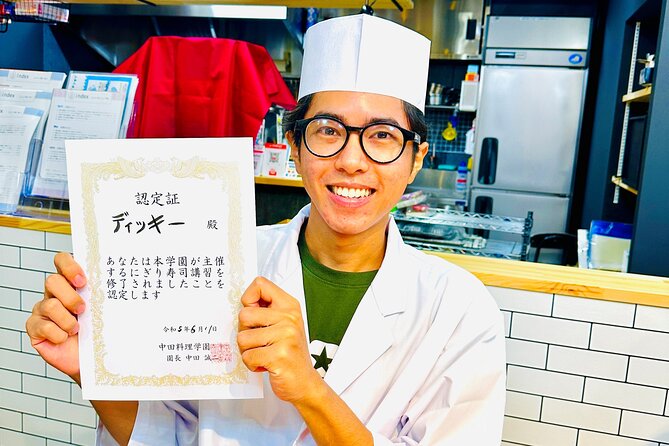
A lot of classes take photos at the start and call it done. Here, the photo service happens during the class, so you end up with images of what you actually made, not just a posed group shot.
The AI translation setup also plays a bigger role than people expect. When you can follow both voice and text in real time, you can catch small corrections without guessing. That lowers frustration, especially for timing-sensitive tasks.
The room also feels set up for English speakers without turning into a theater. The tech is there to support communication, and the instructor keeps things moving.
Price and value: what you actually get for $99.10
At $99.10 per person, you are paying for a compact, high-impact cooking session. In a typical meal, that price buys dinner. Here, it buys instruction, ingredients, tools, translation, photos, and recipes.
You’re getting:
- A hands-on class for five dishes
- Premium Japanese knives during the session
- Chef-style apron rental
- Full tasting of everything you cook
- AI translation (voice and text)
- Photos and a completion certificate
- An aperitif (plum wine or sake)
That is a lot packed into 2.5 hours, especially with the small group limit of 8 travelers. If your goal is to bring technique home and not just eat well, the value gets easier to justify.
Who this Kanazawa class is best for
This is a good fit if you like cooking and want structured, guided practice. It is also ideal if you care about eating what is tied to a specific place, because Jibuni is Kanazawa’s signature and the sushi uses seafood linked to Omicho Market.
It’s also a strong choice for groups, including families. The class length and the interactive format tend to keep everyone engaged, and the translation helps reduce awkwardness if not everyone shares the same language level.
If you’re a serious sushi maker already, you might still find it useful for technique details and the way dashi and tamago connect to Japanese flavor logic. That combination is where the class becomes more than just cooking for fun.
The main limitation: dietary restrictions around dashi
This is the one thing you should not gloss over. The class notes that it cannot accommodate vegan diets and it cannot accommodate guests avoiding fish-based dashi. If you follow a strict fish-free or vegan plan, this may not work for you.
It also says other dietary restrictions must be shared at booking and that same-day changes aren’t possible. So if you have allergies or a complex diet, plan ahead.
Should you book it?
Yes, you should consider booking if you want a true hands-on Japanese cooking experience close to Kanazawa Station. The best reasons are the practical dish lineup, the AI translation support, and the fact that you cook and eat what you make.
I would hesitate only if your diet conflicts with fish-based dashi. If you’re comfortable with that, this class is one of the easiest ways to turn a Kanazawa evening into skills you can use later, not just a nice meal you’ll forget in a week.
More Historical Tours in Kanazawa
- World Heritage Shirakawa-go and Experience Tours from Kanazawa
★ 5.0 · 4,049 reviews - [One-day bus tour departing from Kanazawa Station] Shirakawa-go and Gokayama – Two World Heritage Villages Enjoyable Bus Tour
★ 5.0 · 253 reviews - World Heritage Shirakawa-go Perfect Guided Tour from Kanazawa
★ 5.0 · 220 reviews - [Day trip bus tour from Kanazawa Station] Weekend only! World Heritage Shirakawago Day Bus Tour
★ 5.0 · 46 reviews
Fresh options around Kanazawa
- Kanazawa Half-day Tour: Curated: Gardens, Craft & Geisha District★ 4.5 · 12 reviews
- Kanazawa Private Walking Tour with a Local★ 5.0 · 13 reviews
- Full Day Tour Eiheiji Buddhist Temple and Fukui City Castle Town★ 5.0 · 13 reviews
- Kanazawa Ninja Temple Half Day E-bike tour★ 5.0 · 14 reviews
- Omicho Market & Kanazawa Ramen Tasting Tour★ 5.0 · 15 reviews
- Kanazawa Historic Brewery: Fermentation Tour, Tasting, Lunch★ 4.9 · 15 reviews
- Private transfer Kanazawa to Takayama Including Shirakawago★ 5.0 · 15 reviews
- Kanazawa Full-Day Tour Private & Personalized with a Local Guide★ 5.0 · 16 reviews
Cooking Classes, compared.
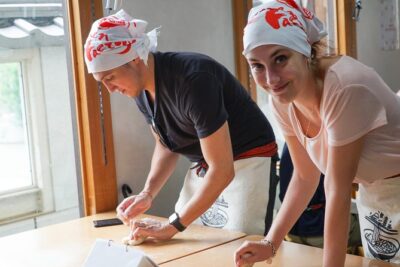
Ramen Cooking Class at Ramen Factory in Kyoto
Read our review →
Ramen & Gyoza Cooking Class in Tokyo with Local Supermarket Visit
Read our review →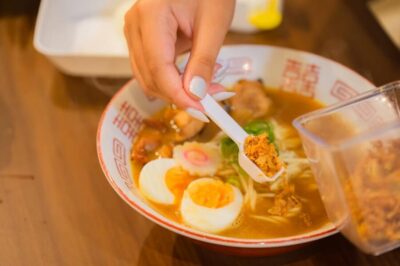
Ramen Cooking Class at a Ramen Factory with Souvenir
Read our review →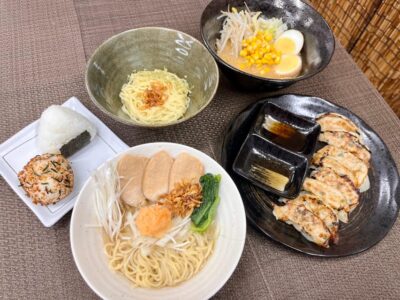
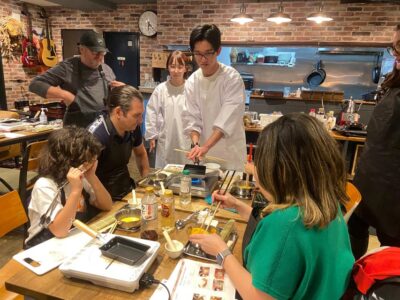
Japanese Washoku Bento Small Group Cooking Class
Read our review →
Easy Ramen Cooking Experience in Kabukicho, Shinjuku
Read our review →
Ramen and Sushi Cooking Class with Sake Pairing Set in Tokyo
Read our review →Browse the lists this tour appears in