
Reviewed · WORKSHOPS
Kyo-arashi Shibori Scarf Class
Silk, strings, and a Kyoto art lesson. In a private class at the Kyoto Shibori Museum, I learned the kyo-arashi shibori method for dyeing a long silk scarf, and you get to choose your own color preferences. It feels hands-on in a way most Kyoto workshops never quite manage.
I also love that the session is built with time to enjoy the museum, including a kimono try-on while your fabric dries. The only drawback is simple, the class moves fast, around 30 minutes to 1 hour, so you will want to focus right when you start folding and winding.
Key things to know before you go

- A pro guides the folding and pipe-wrapping so your shibori pattern has a real chance of turning out well
- You personalize the scarf colors, then you get to see the result when the dyeing finishes
- Your session includes museum entry, plus time to browse while the silk dries
- Kimono try-on is part of the experience, so it is not just hands-on work
- It is a private class, meaning your group can move at its own pace within the time window
Why this Kyoto Shibori Museum scarf class feels different

Kyoto has a lot of “do-it-yourself” workshops. This one stands out because the goal is not crafts class theater. You actually learn the logic behind the dyeing.
You start with a specific technique, kyo-arashi shibori, and you use it on a real silk scarf that is long and substantial, about 70 inches by 17 inches (180 cm by 44 cm). That matters. When you leave with something that large, your souvenir feels like a true piece of travel, not a small token.
The setting helps too. The Kyoto Shibori Museum is where shibori has context, not just sample pieces on a shelf. It gives you something to look at while your scarf does its dyeing and drying work.
A few more Kyoto days worth comparing
- PERFECT KYOTO 1-Day Bus Tour
★ 5.0 · 13,518 reviews - Kyoto: Fushimi Inari, Kinkakuji, Bamboo Grove 1 Day Bus Tour
★ 4.8 · 4,316 reviews - Kyoto: Tea Ceremony in a Traditional Tea House in Kiyomizu
★ 4.9 · 3,519 reviews
The main event: dyeing your kyo-arashi scarf, step by step
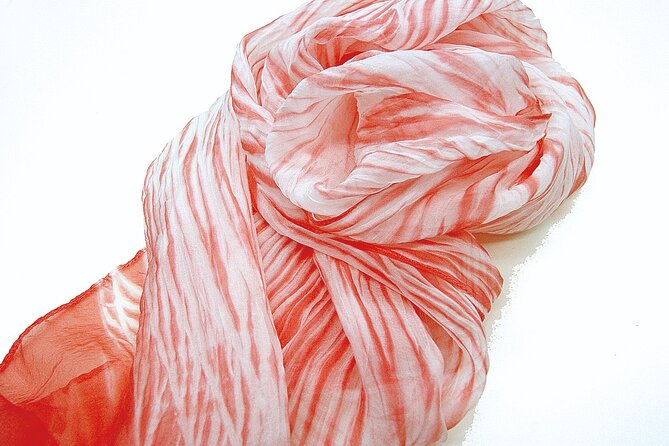
The class centers on how shibori controls the dye. In practical terms, it is folding, binding, and dyeing, then unfolding to reveal the pattern your fabric “picked up” during the process.
Here is what you can expect, in plain language:
Folding and binding
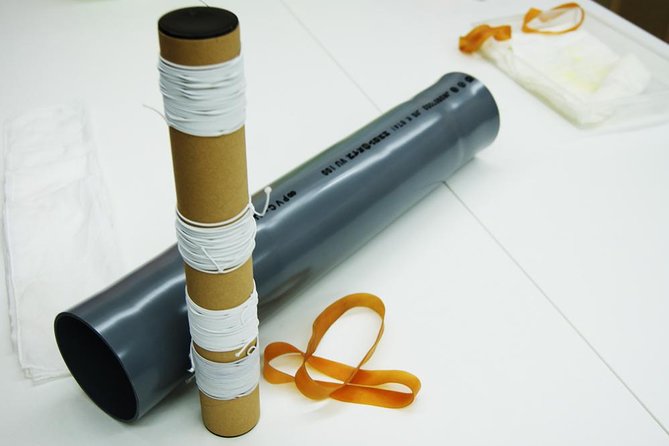
You begin by folding the fabric in a particular way. Then you wrap a pipe in the fabric, and wind string around it. The next move is what makes shibori feel like shibori, you squish the fabric down toward the bottom of the pipe.
This is where a good instructor really matters. When you bind too loosely or fold at the wrong angle, the pattern can turn out weaker. The staff here guide you through it, and you get to ask questions as you go.
Dyeing in your chosen color
After binding, you dye your fabric with your favorite color. This is the moment where you can see the connection between your earlier steps and the final look.
The class is structured so you are not left alone with a vat and hope. You dye under supervision, and you move to the next steps in order, not randomly.
Same corner of Japan, a different kind of day:
- Kyoto Geisha Walking Tour: Gion District & Hidden Gems
★ 4.7 · 3,273 reviews - Kyoto: Tea Ceremony Ju-An at Jotokuji Temple
★ 4.9 · 3,207 reviews - Kyoto: Gion Magical Night Walking Tour with Geisha Trivia
★ 4.9 · 2,393 reviews - Kyoto: 45-Minute Tea Ceremony Lesson Experience
★ 4.3 · 2,378 reviews
Unwinding, rolling, pressing
Once the dye step is done, you unwind the string and roll the fabric using a towel. Then you press it.
Pressing is not a flashy step, but it is essential. It helps the silk settle so you get a cleaner, more readable final pattern.
Unfolding and seeing the result
Finally, you unfold the fabric to see what you made. That reveal is the real payoff, because shibori patterns can be precise or surprising depending on how you handled the binding and squishing.
One nice detail from the way the workshop is run is that you are not just watching. You are part of the process from fold to reveal, and you end with an actual scarf sized for real wearing and gift-giving.
Choosing colors and keeping it personal
Personalization is built in, not bolted on. You choose your color preferences before dyeing, so the scarf matches what you like, not only what the museum wants to sell that day.
That is a smart value play. A generic souvenir is easy to buy back home. A scarf in your exact color palette is something you can picture in your wardrobe, on a friend, or framed on a wall later.
Also, because you are making it yourself, the scarf becomes more than a “thing.” It becomes proof of you learning a Kyoto craft, with the smell of dye and fabric memory attached.
Museum time while your silk dries, plus the kimono moment
This workshop is designed with downtime in mind. Once your fabric is doing its drying work, you are free to browse museum displays and take in the rest of the space.
That is one of my favorite parts of this kind of class, because it prevents the awkward wait that other workshops do badly. You are not stuck sitting somewhere while time passes. You can look, ask questions if you want, and get your bearings in a place that explains shibori.
You can also try on a kimono during this waiting period. That adds a cultural layer without eating into the dyeing time. It is a fun break, and it helps you see your scarf as part of the larger tradition of fabric arts in Kyoto.
If you love shopping for craft details, leave room to browse the museum and its gift options too, since it is often set up for visitors who just made something.
Private class format: what it means for your experience

This activity is private, meaning only your group participates. That changes the vibe.
Instead of sharing instructions with strangers, you get a calmer setup. You can ask quick questions without feeling like you are slowing down a line of people. It also tends to make first-timers feel more comfortable, especially if you have never worked with textile dyeing before.
It is also helpful that the instructor is known for English support. One instructor, Nina, is specifically mentioned for speaking great English, and that is exactly what you want when folding and binding has to be done in a particular way.
Timing, meeting point, and how long it really takes
Sessions run about 30 minutes to 1 hour. That is short enough to fit into a busy Kyoto day, but long enough for a full craft cycle from folding to dyeing to unveiling.
Your start is at the Kyoto Shibori Museum, address 135-5 Shikiamichō, Nakagyo Ward, Kyoto, 604-8261, Japan. It ends back at the meeting point, which is convenient because you do not need to plan a separate stop to “wrap up” your day.
Multiple start times are offered, so you can pick the best slot for your schedule. My practical advice: choose a time that gives you buffer before and after. Textile work is hands-on and sensory, and you will want a little breathing room for photos, browsing, and the kimono moment.
If you are traveling by car or bicycle, there are two car parking spaces and bicycle parking spaces available. If you are on public transportation, the museum is near transit, which is usually the easiest option in Kyoto.
Price and value: what $50.30 really buys you

The listed price is $50.30 per person. On paper, it is not the cheapest thing you can do in Kyoto. But for a private, supervised silk dye workshop with museum entry and a kimono try-on, it is in the fair to good value range.
Here is what you are actually paying for:
- A pro-led technique (kyo-arashi shibori) that is tricky to get right on your own
- A sizable silk scarf (180 cm by 44 cm), not a tiny sample
- Time inside the museum, not just dyeing time
- Kimono try-on, which adds a cultural layer without extra ticketing
You are also paying for guidance through steps that are hard to learn from photos. The folding, pipe wrapping, string winding, squishing, dyeing, rolling, pressing, and unfolding are all parts of a chain. Get one link wrong and your scarf can lose contrast.
So the real value is reduced frustration. You finish with a scarf you can show and wear, and you leave knowing how the pattern was built.
Who this shibori class suits best
This is a good fit if you want a practical craft experience in Kyoto. If you like learning with your hands and seeing a result quickly, you will probably enjoy it a lot.
A few practical matches:
- Families with teens 12 and up. The minimum age is 12, and adult pricing applies to all ages, so plan accordingly.
- Visitors who want something more memorable than a museum-only stop.
- People who enjoy textile arts, or who want a take-home souvenir that looks like it belongs in a real life wardrobe.
If you are someone who likes to do things slowly, you might find the pacing a little intense, because the time window is tight. But the trade is that you get a full outcome in one sitting.
Tips to get the best results, fast
You are going to fold and bind correctly or you are not. So focus on these basics:
- Listen early and ask questions early. The first steps set up the whole pattern.
- Don’t rush the folding and winding. Even within a short class, careful beats fast.
- Enjoy the reveal. The best part is the unfold, when your dye choices show up for real.
- Use museum time well. Browse while your scarf dries, so you are not just waiting around.
Also, if you care about the final look, choose your color preferences with the scarf in mind. A deep color tends to show contrast strongly against resist folds, while lighter shades can feel more delicate.
Should you book the Kyo-arashi Shibori Scarf Class?
Yes, if you want a Kyoto souvenir with real craft behind it. This class hits a sweet spot: it is short, focused, and you leave with a personalized silk scarf made using a Kyoto shibori method under professional supervision. Add the museum admission and kimono try-on, and it becomes a full cultural stop, not just a single action.
Book it if you:
- Want a hands-on art class that produces something you can actually use
- Appreciate clear guidance for a technique that is hard to DIY
- Like the idea of combining craft time with museum time
Skip it only if you hate fast pacing. With a 30 minute to 1 hour window, you have to pay attention during folding and winding to get the best-looking result.
FAQ
FAQ
How long is the Kyo-arashi Shibori Scarf Class?
The class runs about 30 minutes to 1 hour.
Where does the class meet?
It starts at the Kyoto Shibori Museum, 135-5 Shikiamichō, Nakagyo Ward, Kyoto, 604-8261, Japan.
Is this class private for my group?
Yes. It is a private tour or activity, so only your group participates.
What will I make and take home?
You dye a silk scarf using the kyo-arashi shibori method and leave with your finished, personalized scarf.
What is included with the class?
The experience includes admission to the Kyoto Shibori Museum and the opportunity to try on a kimono, along with the scarf-making instruction.
What is the minimum age to join?
The minimum age is 12 years. Adult pricing applies to all ages.
Can I cancel for a full refund?
Yes. Free cancellation is available up to 24 hours in advance for a full refund. If you cancel less than 24 hours before the start time, the amount paid is not refunded.
Fresh options around Kyoto
- SHIRAKAWA Japanese Culture Experiences with private English staff★ 5.0 · 16 reviews
- Crowd-Free Kyoto: Fushimi Inari, Nijo Castle & Kinkaku-ji★ 5.0 · 16 reviews
- Guided Kyoto City Cherry Blossom One Day Private Tour★ 5.0 · 16 reviews
- Kyoto and Nara Private Car Tour with a Local English Guide Driver★ 5.0 · 16 reviews
- The Art of Mindful Living: Tea Ceremony in Kyoto★ 5.0 · 16 reviews
- Single- & multi-day Adventures within Kyoto Nara Osaka Kobe★ 5.0 · 16 reviews
- Full day Kyoto Walk in Fushimi, Arashiyama, Monkey, and Kinkakuji★ 5.0 · 17 reviews
- Kyoto: Kiyomizudera, Higashiyama and Yasaka Discovery Tour★ 4.8 · 17 reviews
Workshops, compared.
Sushi Making Tokyo Roll and Authentic Japanese Sushi Class
Read our review →
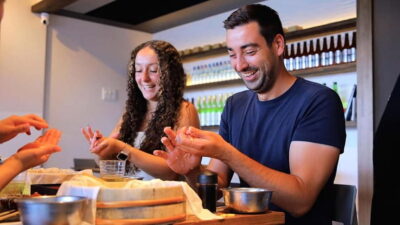
Roll and Authentic Sushi Making Class in Asakusa
Read our review →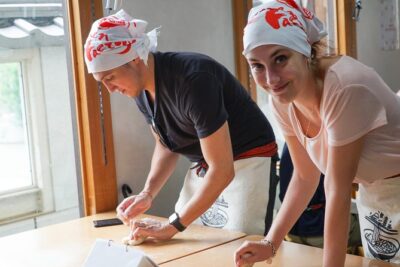
Ramen Cooking Class at Ramen Factory in Kyoto
Read our review →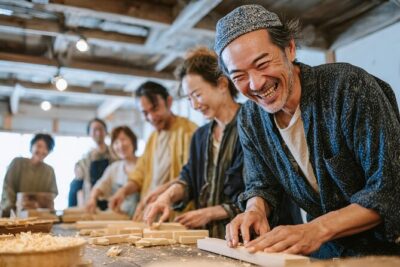
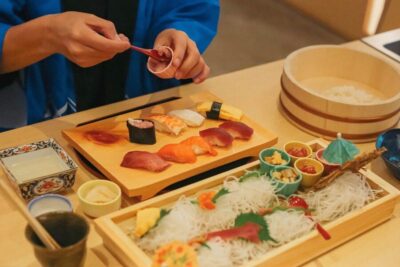
Sushi Making Class in a Happi Coat near a Famous Spot
Read our review →
Sushi Making Osaka Roll and Authentic Japanese Sushi Class
Read our review →Browse the lists this tour appears in