
Reviewed · FOOD & DRINK
Kyoto Evening Gion Food Tour Including Kaiseki Dinner
Gion at night is where Kyoto stops feeling like a museum and starts feeling real. This walking-and-dinner tour pairs an easy, guided route through the Kamo River terraces, Pontocho, and back-alley Gion sights with a proper 10-course kaiseki meal, including green tea and dessert. Two things I especially like are the small group size (max 10) and the way the guide connects what you see, geisha culture, and temple-and-street details into one flowing evening. The main drawback is simple: it is a fair bit of walking, so you will want comfortable shoes and a good pace.
You meet at Japan Kanji Museum & Library in Higashiyama, start around 5:00 pm, and finish in the Pontocho area. You also do get food along the way, plus one included drink with dinner, but if you are a big eater, you may still want to plan for extra drinks or food outside the included set.
Key highlights worth planning for
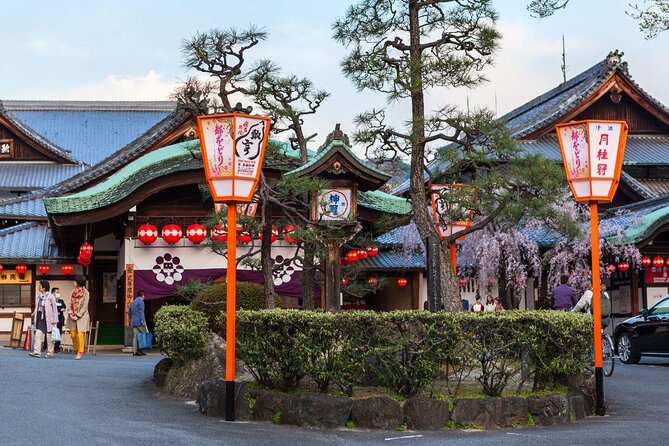
- Kamogawa crossing and Kamo River terraces for the classic evening Kyoto mood
- Gion orientation on foot, including main streets and quieter back lanes
- Pontocho and geisha-area context, with real sights like Hanamikoji Street and nearby shrines
- Shirakawa neighborhood storytelling, focused on Maiko and Geiko life
- 10-course kaiseki dinner at the end, plus green tea, dessert, and one drink
A 5:00 pm Gion plan that actually feels like Kyoto
This is the kind of tour that works because it starts when the city turns gentler. At 5:00 pm, you head toward the Kamo River, where locals relax along the terraces and the whole area looks made for evening wandering. If you have only one Kyoto night, this timing helps you get that atmosphere without spending hours figuring out a route.
The walk is led by a local guide, and the group stays small, up to 10 travelers. That matters in Kyoto, where streets can feel tight and it is easy to get separated in bigger groups. If you like asking questions while you walk, a smaller group makes it easier.
One more practical point: the tour is listed as requiring a strong physical fitness level. That does not mean it is a brutal hike, but you should expect steady walking and some steps on uneven areas, especially if the weather is wet.
More Food Tours in Kyoto
- Kyoto Night Foodie Tour in Gion (9+ dishes + 6 Sake tastings)
★ 5.0 · 1,762 reviews - 3-Hour Kyoto Insider Sake Brewery Tour with Tastings & Pairings
★ 5.0 · 917 reviews - Arashiyama Bamboo, Temple, Monkeys, or Secret Sake Brewery
★ 4.8 · 886 reviews
From Kanji Museum to Gion streets, you get oriented fast
Your evening begins at Japan Kanji Museum & Library (551 Gionmachi Minamigawa). You spend only about 5 minutes there, and the ticket is free. Think of it as a quick starting point, not a long museum visit, so you can shift into walking mode right away.
From there, your guide moves you toward Gion, and the tour structure keeps you in motion. One stop is simply called Gion, about 30 minutes, where you learn how this entertainment district became Kyoto’s center for traditional arts. The city’s design shows up here too: you go through the feeling of old Kyoto with wooden buildings, teahouses, and restaurant streets that are not always easy to decode on your own.
You also hit a few named waypoints that help you connect neighborhoods to real street scenes, including Gionmachi and Gion Corner. The benefit is that you leave with a mental map, not just photos. The small drawback is that you will be outside most of the time, so you will want a light layer and something rain-friendly if the evening looks questionable.
Kamogawa and Pontocho: where geisha-area sights become part of the story
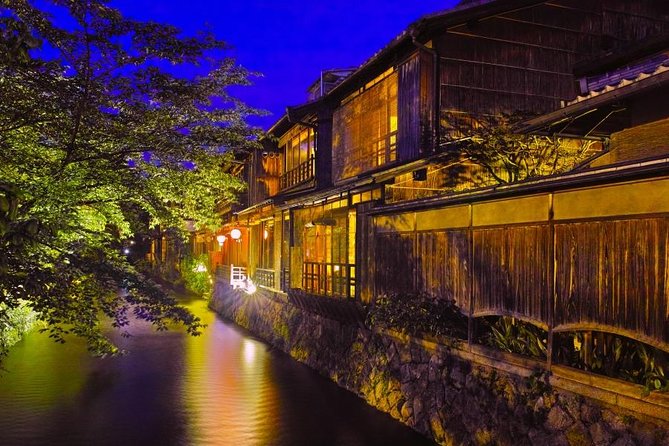
After getting your bearings, the route guides you across the Kamogawa bridge and then along the Kamo River. This is one of the strongest parts of the evening, because it is not only pretty. It also sets context. The Kamo River terraces are part of daily life here, and the guide uses that setting to explain how neighborhoods developed around the flow of people and performances.
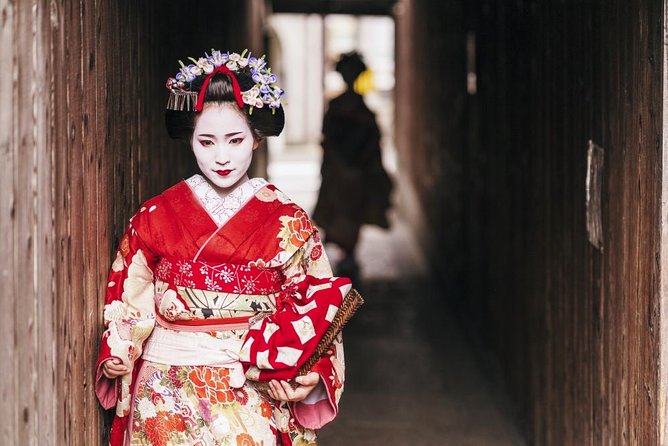
Next comes Pontocho, a district traditionally tied to geisha life since the 16th century. Your job, with the guide, is to keep your eyes up and your behavior respectful. You may see geisha walking between teahouses in traditional kimonos as you pass through the area, and the guide helps you understand what you are looking at and why it matters.
Pontocho is also where the tour starts feeling like a real evening stroll rather than a checklist. You are moving along major streets, then slipping into quieter lanes. If you want Kyoto’s “how do I make sense of this neighborhood?” factor, this is where you start getting it.
Shirakawa and Hanamikoji: shrines and street names with meaning
One of the tour’s biggest wins is that it does not treat Gion as one single blob of scenery. It separates it, too. You spend time in the Shirakawa area, about 15 minutes, and you get to walk past key points that anchor the stories in place.
On this stretch, the tour includes stops such as:
- Tatsumi Daimyojin Shrine
- A statue of Izumo-no-Okuni
- Kyomizu Temple
- Hōkanji Temple and Yasaka Pagoda
- Tatsumi Bridge
- Hanamikoji Street
Even if you are not a temple-nerd, these stops help because they give the street names a job. Kyoto does not just look historic, it explains itself through sites like these. The guide also shares background on the life of Maiko and Geiko, which changes how you view the teahouse streets. Instead of guessing, you understand what traditions are tied to the area’s rhythm and architecture.
One nice touch is that you have a chance to stop for a special Kyoto treat along the way while walking. The exact snack is not detailed here, but the goal is clear: small tastes that match the story you are hearing, not just random bites.
Practical note: Hanamikoji Street and the lanes around Shirakawa can get slippery if it rains. Wear shoes you trust, and keep your pace steady. The tour is built for walking, so stopping too long to read every sign can make you fall behind the group.
More geisha experiences in Kyoto:
- Kyoto Geisha Walking Tour: Gion District & Hidden Gems
★ 4.7 · 3,273 reviews - Kyoto: Gion Magical Night Walking Tour with Geisha Trivia
★ 4.9 · 2,393 reviews - Kyoto: Gion Geisha District Walking Tour – Stories of Geisha
★ 4.7 · 2,187 reviews - Best of Kyoto: Gion, Geisha, Pagodas & Cobblestones
★ 4.9 · 2,058 reviews
Gion corner details that help you stop guessing
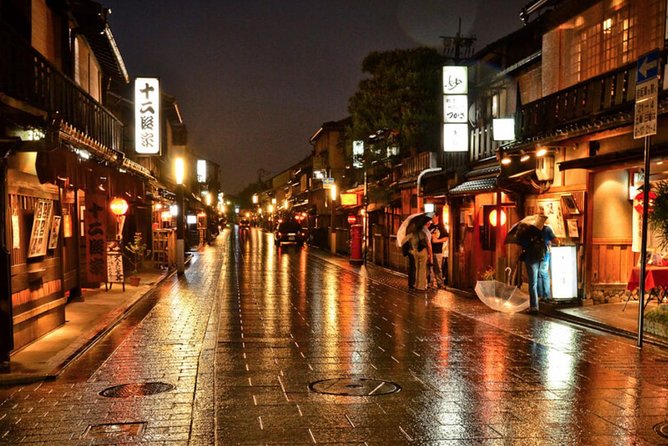
Part of the Gion experience is figuring out how to look at it. This tour helps because you are not just passing storefronts. You are learning how the district is structured and why some places feel harder to access.
You will walk along main roads and also into back alleys, which is the only way to understand the contrast in this part of Kyoto. On major lanes, you see the obvious traditional facades. In the smaller lanes, you notice the quiet, the narrowness, and the way the area feels preserved rather than redeveloped.
There is also a subtle benefit for first-timers: you learn what to expect from the “center of entertainment and traditional arts” vibe. The tour is careful about staying street-level, not turning into a lecture. In the best examples from guides on this kind of route, people like Sae and Yoshiko are praised for clear English and warm storytelling, so you get context without feeling like you are stuck in class.
If your goal is simply to cover Gion fast and eat well, this tour delivers. If your goal is complete privacy and zero crowds, you might find Gion’s visibility part of the experience. Night in Gion is still a neighborhood people see, not a closed set.
10-course kaiseki dinner, plus green tea and dessert
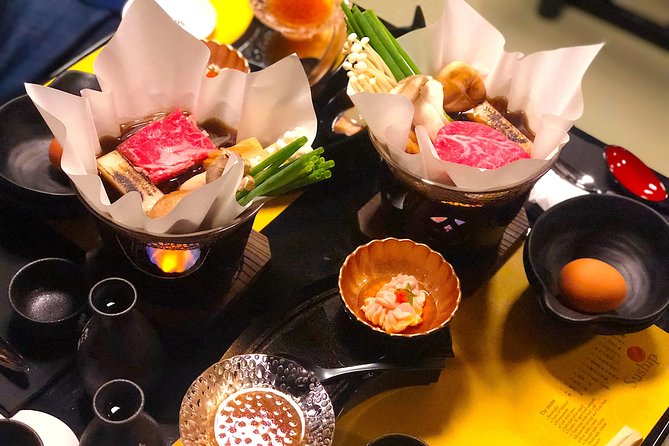
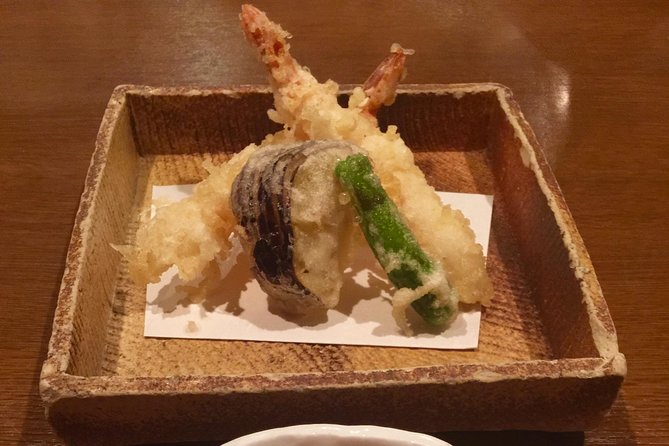
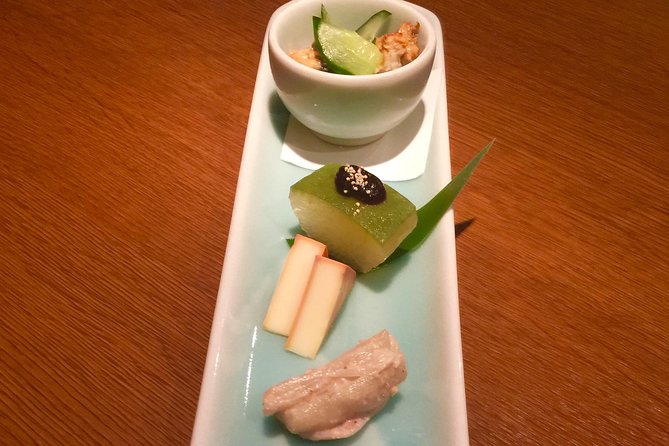
The finish line is dinner in the Pontocho area at Pontocho Idumoya (173-2 Kashiwayachō, Nakagyo Ward). Your meal is a 10-course kaiseki set, and it comes with green tea and dessert. You also receive one included drink, with extra drinks or food paid separately.
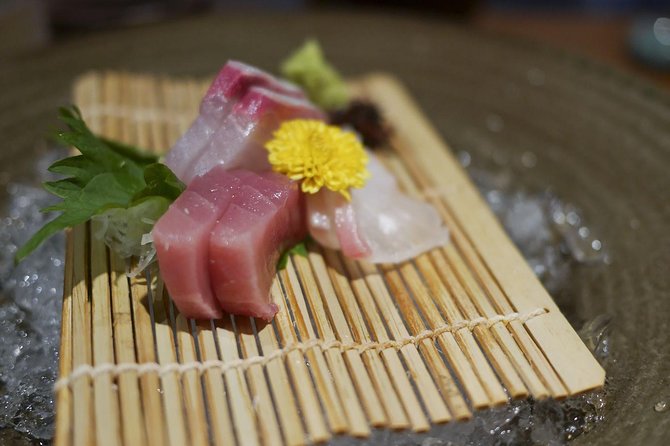
Kaiseki is the part of Japanese dining that rewards patience. The idea is seasonal ingredients arranged for harmony, so you are not eating one heavy dish after another. You will likely get a range of small courses that change flavor and texture across the meal. It is structured, but it does not feel like a buffet. It feels like a sequence.
One thing to plan for is appetite. In the feedback around this tour style, people often point out that the dinner can be filling, but because it is course-by-course, it can also trick you into thinking you still need more. If you arrive hungry, you will have a better time. If you arrive after a big snack, the later courses can feel like a chore.
Dietary needs are acknowledged. The tour lists Vegetarian, Pescatarian, and Gluten-Free Friendly. That is a big deal if you need options, but still: do expect the kitchen to adapt the set, not swap every item on your personal wish list.
Alcohol is handled with standard rules. The tour notes a minimum drinking age of 21, and the included drink is tied to that. If you are not drinking, you still get the meal and the green tea, so the core experience remains intact.
Timing, walking pace, and why the route feels smooth
The total tour time is about 3 hours. In that window, you get a real walking loop across multiple Gion-adjacent areas and end with dinner. That is a good length for evening. You are not stuck out so late that you lose the day’s energy, and you are not done so early that you have nothing to do after.
Because you are on foot, you also get micro-moments that a bus tour skips. You notice the transition from river terraces to teahouse streets to shrine-and-temple corners. That “connective tissue” is what makes the area click mentally.
The group limit of 10 is also a timing lever. Smaller groups move with fewer bottlenecks at narrow lanes and at stops. That tends to reduce that feeling of rushing.
If the weather turns bad, expect flexibility. The tour notes that schedules can change due to public holidays, weather, and restaurant timing, with substitutions as needed. The upside is that you are not left stranded, but the downside is you should accept that the exact streets and stops could shift slightly.
Price and value: what $276 buys in an evening with dinner
At $276 per person, this is not a budget snack tour. The value question is whether you are paying mainly for scenery plus a guide, or whether the dinner is doing most of the heavy lifting.
Here, the dinner is the core. A 10-course kaiseki meal, plus green tea and dessert, and an included drink, is a significant part of the package. If you would otherwise pay for a kaiseki meal, book a guide separately, and then try to manage transportation and timing yourself, the math starts looking more reasonable.
The other value lever is the guided walking portion. You are not simply walking Gion. You are getting explanations about the geisha district, Pontocho, Maiko and Geiko life, and the meaning behind specific street and temple sites. That matters because Gion can be confusing if you only use signs and guidebook pages. A guide helps you see what to look for, not just where to stand.
The main caution for some people is that the cost can feel high if you expect a bigger volume meal or more hands-on food stops. This is still a dinner-first evening, not a street-food crawl. If you are price-sensitive, you may want to compare how much you value a guided cultural route versus free-form exploring.
What convinces most people is consistency: strong guides and a meal that feels like the real deal. Some guides are repeatedly praised for passionate explanations and for making the experience feel personal, such as Thomas, Sae, Yoshiko, and Zae. If you get that kind of guide energy, the tour becomes more than just a meal reservation with a walk attached.
Who should book this Kyoto evening experience
This tour fits best if you:
- Want a first-timer-friendly introduction to Gion and geisha-area history
- Care about a guided walk that connects streets to culture, not just a photo route
- Plan to eat kaiseki anyway and want it handled for you, including dessert and green tea
- Have dietary needs, since the tour is listed as vegetarian and gluten-free friendly
It may be less ideal if you:
- Hate walking and long evenings outside
- Have a very tight budget and want more street food volume for the price
- Expect lots of drinks included, since only one drink is included
For families, the tour allows children as long as they are accompanied by an adult, and it requires passport info for kids 10 and above. If your child needs attention, it is best to be flexible, because this is still a walking and dining schedule.
Solo travelers can join as well, but the tour notes to email the provider for solo arrangements.
Should you book this Kyoto Evening Gion Food Tour with Kaiseki?
If you want one memorable night that stitches together Gion street life and a real kaiseki dinner, I think it is a strong choice. The route is short enough to stay enjoyable, the meal is substantive, and the guide component is what turns the district from scenery into understanding.
Book it if you value structure and you like asking questions while you walk. Skip it if you want a purely free-form evening, plan to roam without a plan, or you are not interested in kaiseki as a seated multi-course experience.
FAQ
Where does the tour start, and what time do we meet?
You meet at Japan Kanji Museum & Library, located at 551 Gionmachi Minamigawa, Higashiyama Ward, Kyoto, at 5:00 pm.
Where does the tour end?
The tour ends in the Pontocho area, at Pontocho Idumoya, 173-2 Kashiwayachō, Nakagyo Ward, Kyoto.
How long is the tour?
The tour duration is approximately 3 hours.
How many people are in the group?
The tour has a maximum group size of 10 travelers.
Is dinner included, and what is included with it?
Yes. The package includes a 10-course kaiseki dinner, plus green tea and dessert, and one drink.
Are any dietary needs supported?
The tour is listed as Vegetarian, Pescatarian, Gluten-Free Friendly.
Is there a minimum age for drinking?
Yes. The minimum drinking age is 21.
Can I cancel for a full refund?
Yes. You can cancel up to 24 hours in advance for a full refund.
Does the tour require good weather?
Yes. It requires good weather, and if it is canceled due to poor weather you will be offered a different date or a full refund.
More Dining Experiences in Kyoto
- Kyoto Gion Cultural Walk & Geisha Show with Dining Options
★ 5.0 · 518 reviews - Kyoto Gion Cultural Walk & Geisha Show with Dining Options
★ 5.0 · 483 reviews - Dinner with Maiko in a Traditional Kyoto Style Restaurant Tour
★ 5.0 · 175 reviews - Kyoto: Geisha Dinner & Gion Cultural Walk
★ 5.0 · 73 reviews
More Evening Experiences in Kyoto
- Night Walk in Gion: Kyoto’s Geisha District
★ 4.5 · 2,003 reviews - Kyoto Gion Night Walk & Geisha District Guided Tour
★ 5.0 · 786 reviews - Kyoto Ghost Tour: Dark Tales, Urban Legends, Bamboo Forest Night
★ 5.0 · 625 reviews - Kyoto Bar Hopping Night Tour
★ 5.0 · 613 reviews
Fresh options around Kyoto
- Kyoto Aquarium Admission Ticket★ 4.7 · 12 reviews
- Kyoto Gion Photoshoot – Private Session | Pro Photographer★ 5.0 · 12 reviews
- Gyoza Cooking Class in Kyoto: Traditional Japanese Dumplings★ 5.0 · 12 reviews
- Kyoto: Guided Food Tour with 12 Dishes & 3 Drinks★ 5.0 · 12 reviews
- Kyoto: Avoid the Crowds at the Hidden Gems of Arashiyama★ 4.9 · 13 reviews
- Kyoto Early Bird English Tour: Gion & Higashiyama(Private opt)★ 5.0 · 13 reviews
- Otsu-e Folk Art Workshop & Local Culture Walk Near Kyoto★ 5.0 · 13 reviews
- Kyoto, Osaka, Nara Full Day tour by Car English speaking Driver★ 3.5 · 13 reviews
Food & Drink, compared.
Shinjuku Food Tour (13 Dishes at 4 Local Eateries)
Read our review →
Tokyo Tsukiji Fish Market Food and Culture Walking Tour
Read our review →
Shinsekai Food Tour with 13-15 Dishes at 5 Eateries
Read our review →
Osaka Food Tour: 13 Dishes at 5 Local Eateries
Read our review →
Shinjuku Food Tour (15 Dishes and 4 Eateries)
Read our review →
Best of Shinjuku: Izakaya Food Tour (4 Stops, 14+ Tastings)
Read our review →
Kyoto Night Foodie Tour in Gion (9+ dishes + 6 Sake tastings)
Read our review →
Hungry Osaka Street Food Tour:15 Tastings & 3 Drinks with a Local
Read our review →Browse the lists this tour appears in