
Reviewed · WORKSHOPS
Private Art Sushi Roll Class in Kyoto
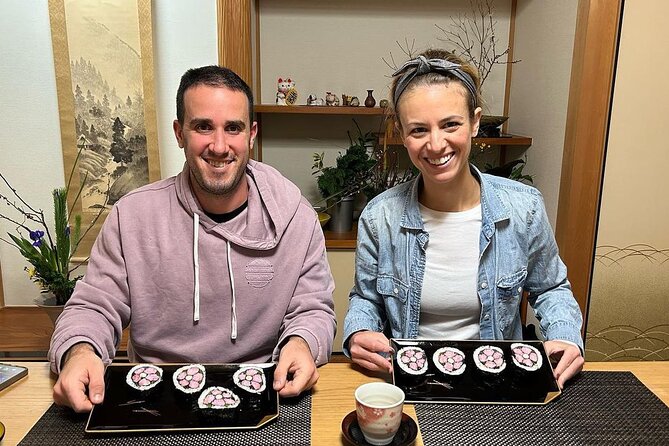
Kyoto sushi can be art, not just food. This private kazarimaki roll class turns natural, plant-based pigments into a picture you can slice and eat, with clear English coaching throughout. I also like that you leave with a booklet and a formal certification. The main catch: you need to bring socks for the tatami room, and you cannot join if you arrive more than 15 minutes late.
The class is built for a wide range of skill levels, and you get guided, hands-on steps to shape a peach flower pattern roll in about 60 minutes. You’ll also be given traditional clothing, like a kimono for women, so you feel part of the experience, not just a spectator.
If you’re extremely short on time, note that the schedule is tight, and this is a true private session for your group.
Key Things to Know Before You Go
- Private instruction in English from Aya and support from her husband, Manabu Ito, so you can ask questions and move at your pace.
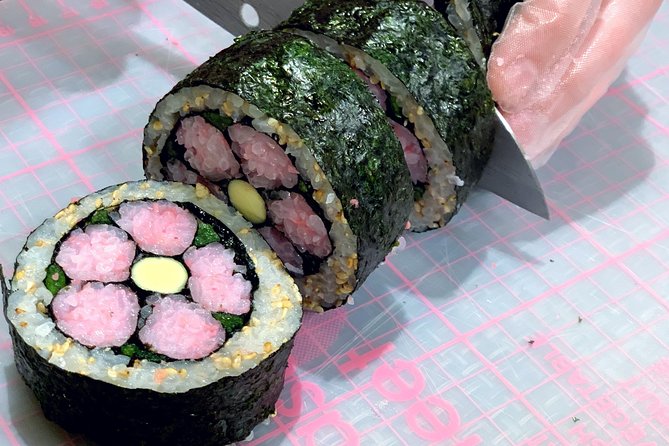
- Kazarimaki technique uses edible pigments from plants to create designs inside the roll.
- One-hour goal: you’ll learn the method and make a peach flower roll, not just watch someone else.
- You leave with proof: a booklet and certification at the end of the class.
- Drinks and everything included, including bottled water, tea or coffee, and all sushi ingredients.
- Tatami etiquette matters: bring socks, and arrive on time for entry.
Why Kazarimaki Sushi Feels Different from Regular Rolls
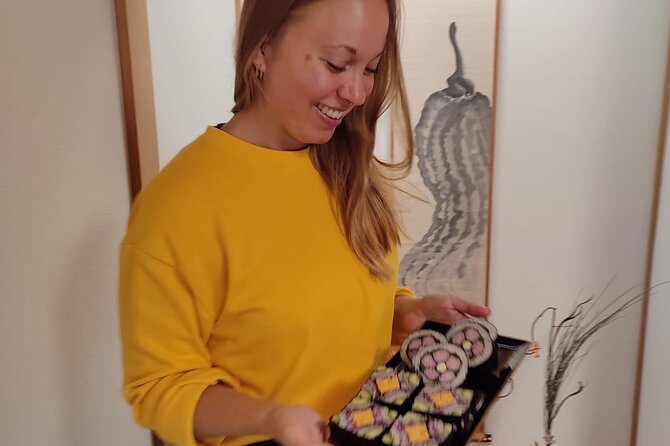
Most sushi classes teach you how to roll. This one teaches you how to design inside the roll. The key word here is kazarimaki, the art of creating patterns that show up when you slice the finished sushi. Instead of just forming a cylinder of rice and fillings, you’re working with edible colors derived from plants to make a picture-like effect.
I like that the class doesn’t treat this as an advanced, mysterious craft reserved for chefs only. You’re still making sushi, so the techniques are real and practical. But the presentation becomes a storytelling tool you can recreate at home, which is a big reason people remember this kind of class long after the meal is gone.
One more detail I appreciate: the class specifically mentions vegan and vegetarian options. Even if you eat meat in your regular life, it’s a useful option for a group with mixed preferences, and it tells you the instructor is thinking about ingredients beyond a single standard recipe.
More Sushi Making Classes in Kyoto
- Sushi Making in Kyoto! Same-day bookings welcome!
★ 5.0 · 713 reviews - The Original Small-Group Sushi Making Class in Kyoto
★ 5.0 · 436 reviews - Kyoto: Small-Group Authentic Sushi Making Workshop
★ 5.0 · 137 reviews
Meeting at Sakura Experience Japanese Culture Nijo Home, and What the Setting Adds
Your class starts at SAKURA Experience Japanese Culture Nijo Home, in Izumichō, Nakagyo Ward, Kyoto, near public transportation. The start time is 4:30 pm, and the session ends back at the meeting point.
The setting matters. You’re not doing this in a generic demo kitchen. The experience is hosted in a traditional home environment, including a tatami space where you’ll be seated and working. That changes the vibe. You’ll slow down a bit, pay attention to small steps, and feel like you’re practicing a real cultural activity rather than checking off a workshop.
Also, it’s a private class. That means your group gets the instructor’s attention, and you aren’t stuck waiting your turn while someone else’s questions take over the time. From the way the hosts teach, the focus is on clarity, patience, and making sure you understand each step before moving ahead.
Traditional Garment Moment, Plus the Teaching Style That Keeps It Friendly
Before you start rolling, you’ll be in traditional clothing during the experience. The class includes a kimono for women, and traditional garments for men and children. This is one of those small things that changes how you feel during the class. It’s not for cosplay. It helps you participate in the cultural side of the event, and it adds a memorable photo moment.
Now to the part that affects your results: how you’re taught.
Aya runs the instruction in English, and the class approach is hands-on and step-by-step. The teaching style emphasizes easy-to-follow procedures, including visual aids for tools and technique. Aya and her husband, Manabu Ito, also handle practical support like tool setup, cleanup, and dishes. That matters more than it sounds. When you’re focused on getting the sushi pattern right, you don’t want to be distracted by mess or missing supplies.
If you’re a complete beginner, the class should still work, but keep expectations realistic. One note to consider is that the session may feel best if you already know a little about sushi basics. Still, the instructor’s job is to guide you through the method, and the goal is to have you leaving with a roll you made and can replicate.
The 4:30 pm Sushi Mission: Making a Peach Flower Kazarimaki Roll
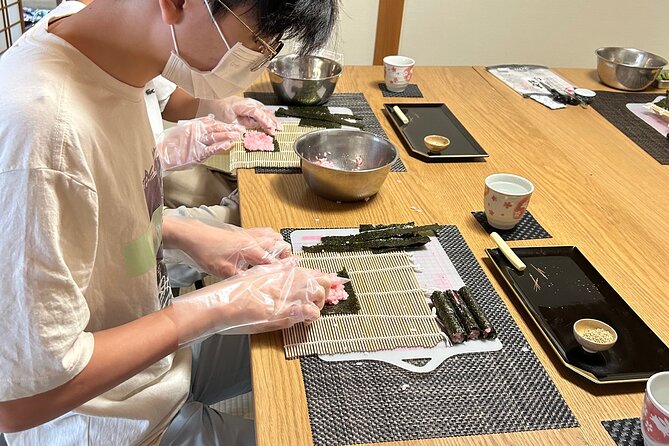
The plan is simple to describe and fun to do: you’ll create a peach flower pattern sushi roll in about 60 minutes. The class is built around the idea that the design is what makes the roll special, and you’ll learn how to build that design using natural edible pigments.
Here’s what that means in practical terms. You’ll be working with sushi ingredients and edible color components, then shaping the roll in a way that preserves the pattern. If you’ve ever struggled with sushi rolling before, the design layer is where this class becomes extra useful. You learn not just how to roll, but how to roll without destroying the picture you’re trying to create.
The instructor provides all sushi ingredients and includes guidance on how to use the colored components effectively. You’ll shape and form your roll, and you’ll get enough structure to make it achievable in one sitting.
This is also a great class if you like visual crafts. The process feels like both cooking and edible art. And since you’re making something that you can slice at the end, you get instant feedback on whether the design is reading properly.
Same corner of Japan, a different kind of day:
- PERFECT KYOTO 1-Day Bus Tour
★ 5.0 · 13,518 reviews - Kyoto: Fushimi Inari, Kinkakuji, Bamboo Grove 1 Day Bus Tour
★ 4.8 · 4,316 reviews - Kyoto: Tea Ceremony in a Traditional Tea House in Kiyomizu
★ 4.9 · 3,519 reviews - Kyoto Geisha Walking Tour: Gion District & Hidden Gems
★ 4.7 · 3,273 reviews
What You Actually Get to Take Home: Booklet and Certification
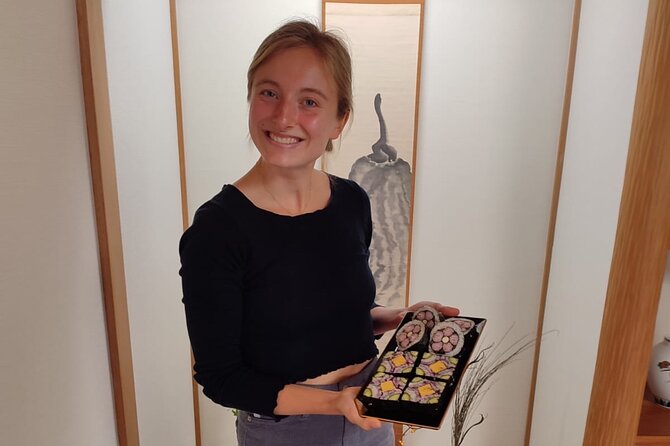
At the end, you’ll receive a booklet and certification. For many cooking classes, the benefit is eating the food. Here, the real value is practice and repeatability. The booklet gives you a reference you can use later, and the certification turns the experience into something concrete, like a souvenir with purpose.
I like this approach because sushi skills fade if you don’t have a reminder. A simple memory is not enough when you’re trying to recreate a pattern technique at home. With a booklet and certification, you’re more likely to retry the method, and that’s where the class becomes more than a one-hour event.
Drinks, Ingredients, and Dietary Options That Make Planning Easier
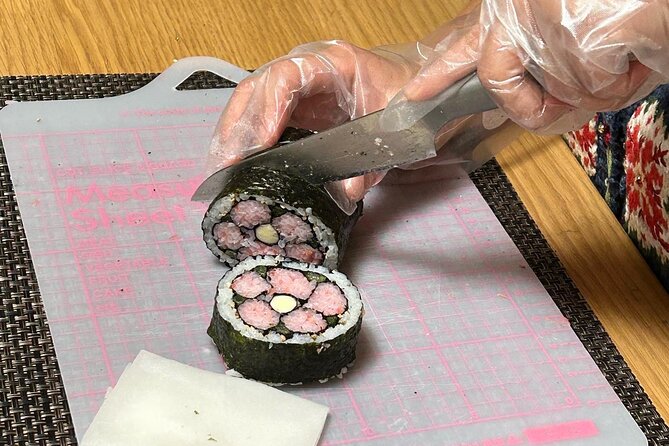
The class includes bottled water plus tea or coffee, so you’re not scrambling for refreshments mid-session. That may sound small, but with a timed activity, it keeps things comfortable and focused.
On food itself, everything needed for your rolls is included. You won’t be guessing what ingredients to buy later just to get started. The class also explicitly states that vegan and vegetarian options are available, which helps if you’re traveling with picky eaters or dietary restrictions.
For practical planning, think of this as a meal-adjacent experience. You’ll be learning and eating, but it’s also a production of an art piece. If you have a big dinner plan afterward, you may want to keep it flexible, because the class is filling and you may want time to enjoy your own finished roll.
Tatami Rules and the Socks Requirement (It’s Not a Minor Detail)
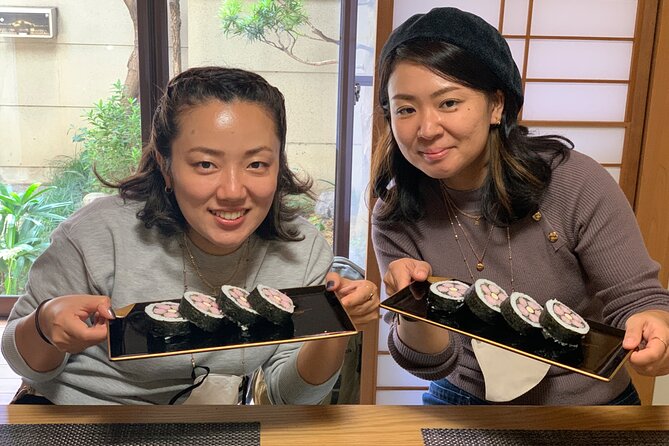
One rule is stated clearly for a reason: the class uses a tatami room, and you need to wear socks. The experience also notes that you cannot enter the tatami room without socks, to respect Japanese customs.
So do this in advance. Pack socks you’re comfortable working in. Don’t rely on finding socks locally unless you’re already near a store and have time to spare. The class also says if you arrive more than 15 minutes late, you will not be able to join. That’s strict, and it’s worth treating it like a timed appointment, not a flexible drop-in.
If you’re traveling with very young kids, the class notes that baby and toddler can sit or sleep on the tatami mat. If someone in your group is under 18, they need to come with a parent or guardian over 21. These are the kinds of rules that can make or break your experience if you ignore them, so check your group details before you head out.
Price and Value: What $93.32 Buys You in Kyoto
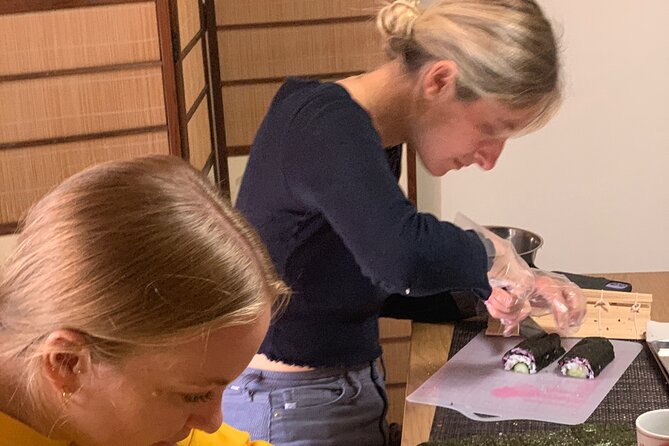
At $93.32 per person, this is not a budget activity. But it is also not just a cooking demo dressed up as a workshop. You’re paying for multiple forms of value at once:
- Private, English-speaking instruction for your group
- All ingredients included
- Drinks included
- Traditional clothing during the class
- A booklet and certification at the end
- The kazarimaki design technique, which is the hardest part to learn on your own
For me, the best way to judge value is by whether the class gives you something you can reuse. This one does. You learn a repeatable method for building patterns inside a roll, and you get written support to help you recreate it later. That makes the price feel more justified than classes where you leave with nothing beyond a single plate of food.
Also, the booking window is tight on average, booked about 6 days in advance. That’s a hint that people find this experience worth planning for, not last-minute shopping.
Who Should Book This Private Sushi Roll Class
This class is a strong fit if you want a Kyoto activity that feels hands-on, cultural, and a little artsy. It’s ideal for:
- Couples who want something more personal than a standard group cooking class
- Families with teens, since it can work as a shared skill-building activity
- People who enjoy crafts, visual patterns, and learning a technique with immediate results
- Anyone who wants a practical skill for home, not just a one-time meal
It may be less ideal if you want a casual, very slow pace. It’s only about an hour, and it’s structured around producing a designed roll within that time. If you arrive late, you miss the class.
My Take: Should You Book This Class?
If you like sushi and you also like doing things with your hands, I’d book this. The biggest reasons are the private instruction in English, the real technique of kazarimaki, and the fact that you leave with more than a memory. The booklet and certification turn it into a skill you can revisit, not just a fun evening.
I’d think twice only if you know you cannot reliably arrive on time or you’re not willing to follow the tatami sock rule. Otherwise, this is the kind of Kyoto experience that gives you something you can show, slice, and share, plus a method you might actually use again.
FAQ
How long is the private art sushi roll class in Kyoto?
The class runs for about 1 hour.
Where do we meet for the class?
You meet at さくら日本文化体験 二条城教室 / SAKURA Experience Japanese Culture Nijo Home, Izumichō, Nakagyo Ward, Kyoto, 604-0015, Japan. The activity ends back at the meeting point.
Is this class private or shared with other groups?
It’s a private class, and only your group participates.
Do I need socks for the experience?
Yes. To respect Japanese customs, you cannot enter the tatami room without socks.
What is included in the price?
The class includes bottled water, tea or coffee, and all sushi ingredients. You also receive a booklet and certification.
Are there vegetarian or vegan options?
Yes. The class notes that vegan and vegetarian options are available.
What happens if I arrive late?
If you arrive more than 15 minutes late, you will not be able to join the class.
What is the cancellation policy?
Free cancellation is available if you cancel up to 24 hours in advance for a full refund. If you cancel less than 24 hours before the start time, the amount paid is not refunded.
Fresh options around Kyoto
- Kyoto, Osaka, Nara Full Day tour by Car English speaking Driver★ 3.5 · 13 reviews
- 2 Hour Night Walking Tour Throughout Gion with snack★ 4.0 · 13 reviews
- Private eBike Tour Exploring Fushimi with Torii Red Gate Ride★ 5.0 · 13 reviews
- Kyoto 1 Day Suntory Yamazaki Distillery Tour and Asahi Art Museum★ 5.0 · 13 reviews
- Nara Todaiji Kasuga Taisha Private Full Day Tour From Kyoto★ 5.0 · 13 reviews
- Private Sake Tasting in Central Kyoto with Sake Sommelier★ 5.0 · 13 reviews
- Traditional Tea Ceremony with Matcha and Sweets in Kyoto★ 5.0 · 13 reviews
- Kyoto: Sushi Making Experience in Kawaramachi★ 4.8 · 13 reviews
Workshops, compared.
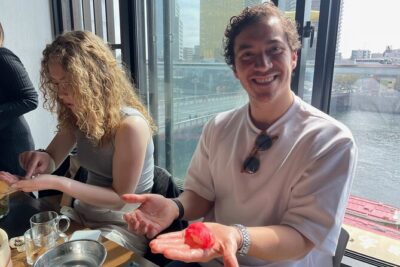
Sushi Making Tokyo Roll and Authentic Japanese Sushi Class
Read our review →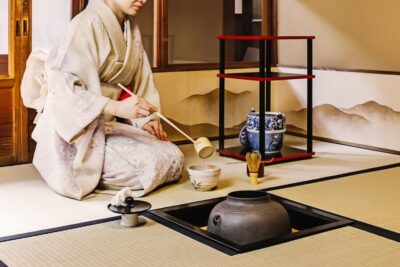
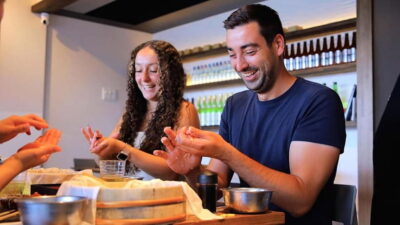
Roll and Authentic Sushi Making Class in Asakusa
Read our review →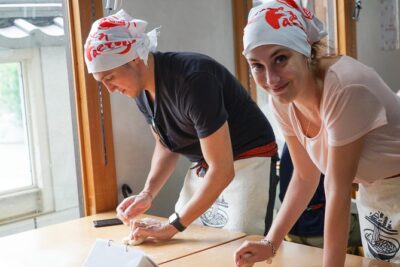
Ramen Cooking Class at Ramen Factory in Kyoto
Read our review →
Sushi Making Class in a Happi Coat near a Famous Spot
Read our review →
Sushi Making Osaka Roll and Authentic Japanese Sushi Class
Read our review →Browse the lists this tour appears in