
Reviewed · WORKSHOPS
Tokyo: Family Sumo Workshop & Live Wrestling Show with Lunch
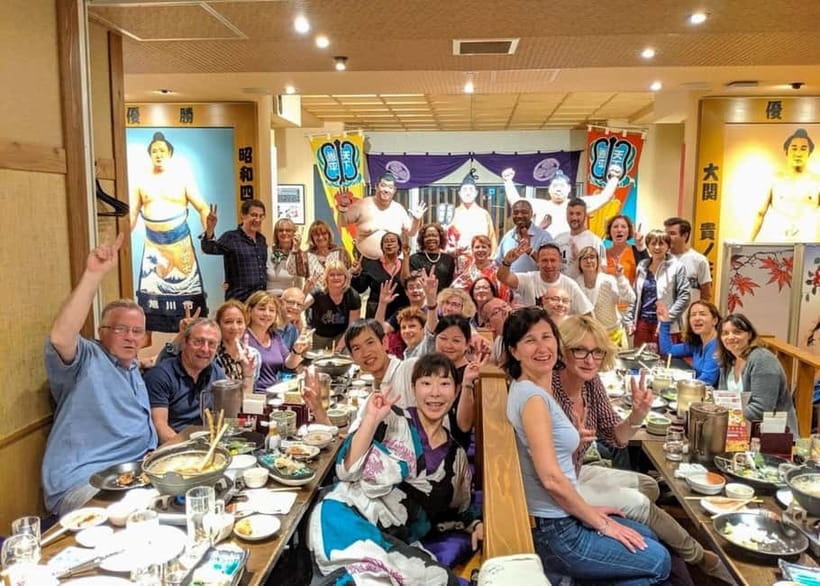
Sumo in Tokyo, taught to families. This is one of the most hands-on ways to experience Ryogoku ring access with former pro wrestlers, right where sumo’s traditions feel physical and close. You learn basics with guidance, watch full-speed exhibition action, and then get a chance to challenge a wrestler in the ring.
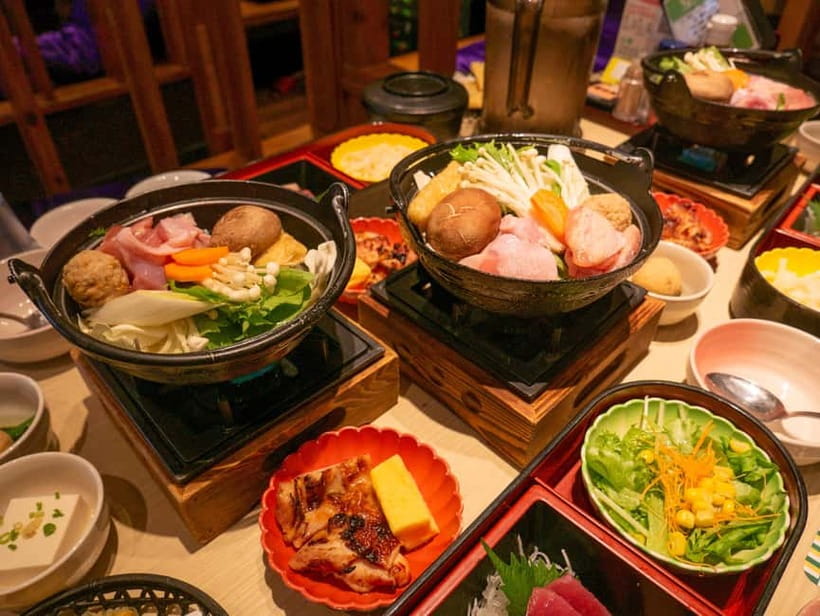
I also love the mini chanko nabe lunch, because it is hearty, filling, and easy to keep together as a family when someone needs vegan or allergy-friendly food. The one consideration is food limits: they can avoid pork and alcohol, but there is no official Halal certification, and if you need strict cross-contamination avoidance, the meal may not meet your needs.
Key highlights worth waking up for
- Ryogoku dohyo time: you step into the clay ring area, not just the viewing zone
- Former pros as coaches: you get real technique and live explanations during drills
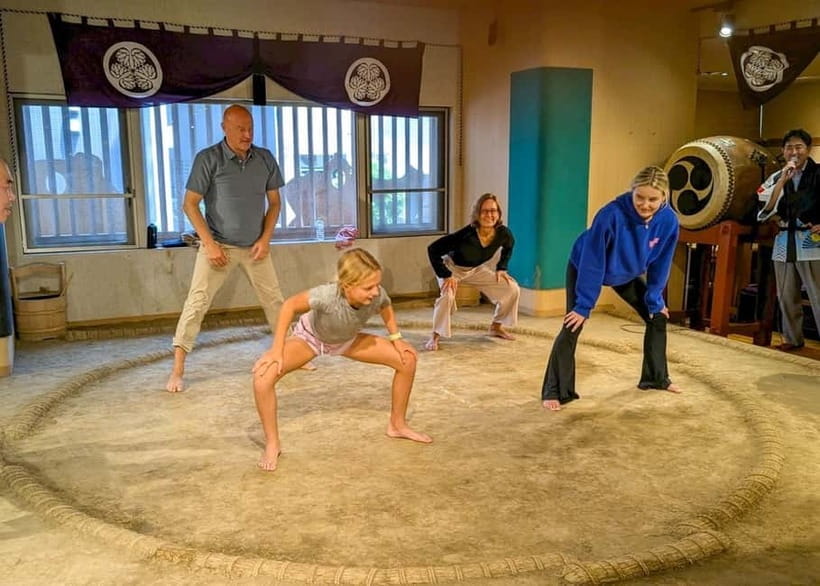
- Try the moves as a family: shiko, teppo, and suri-ashi basics with optional participation
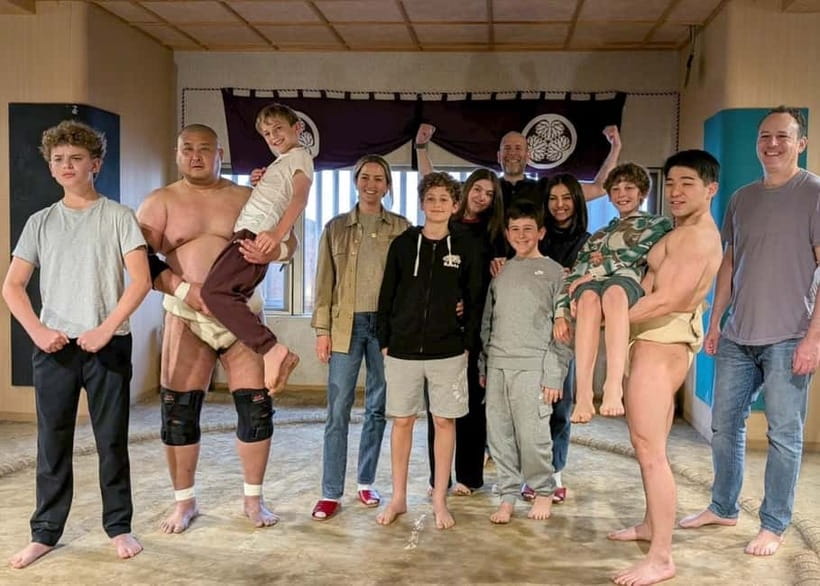
- Ring challenge photo moments: get close to wrestlers for memorable pictures
- Chanko nabe lunch with options: vegan and allergy-friendly versions available on request
Ryogoku dohyo time, where tradition becomes physical
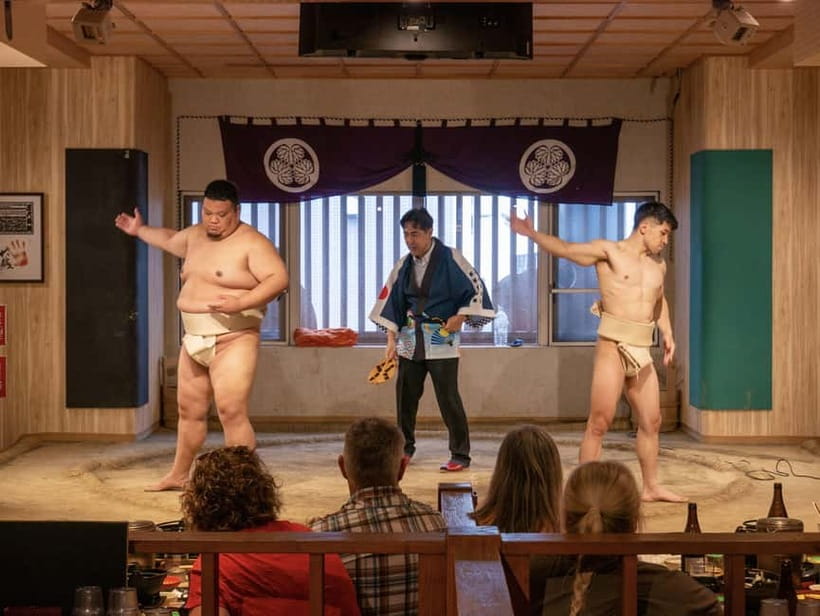
Tokyo has plenty of sumo experiences, but this one aims for something rarer, real proximity to the sport’s center. Ryogoku is where the culture of sumo feels most concentrated, and stepping into the ring area helps you understand why the rituals matter. When you are that close, you start noticing details like how quickly the pace shifts, how much space matters around the dohyo, and how the wrestlers use body weight and balance as tools, not just strength.
The experience is designed for families, so it does not feel like you have to be an expert on rules to enjoy it. You are there to learn a few core fundamentals, watch the power of the match, and participate if you want to. That balance is key. You get the show, but you also get the simple training blocks that explain how sumo actually works.
More sumo experiences in Tokyo:
- Tokyo: Sumo Show Experience with Chicken Hot Pot and a Photo
★ 4.8 · 6,678 reviews - Tokyo: Sumo Show and Dining Experience
★ 4.8 · 2,742 reviews - the SUMO show
★ 5.0 · 1,960 reviews
Former pros and the bilingual rhythm of the show
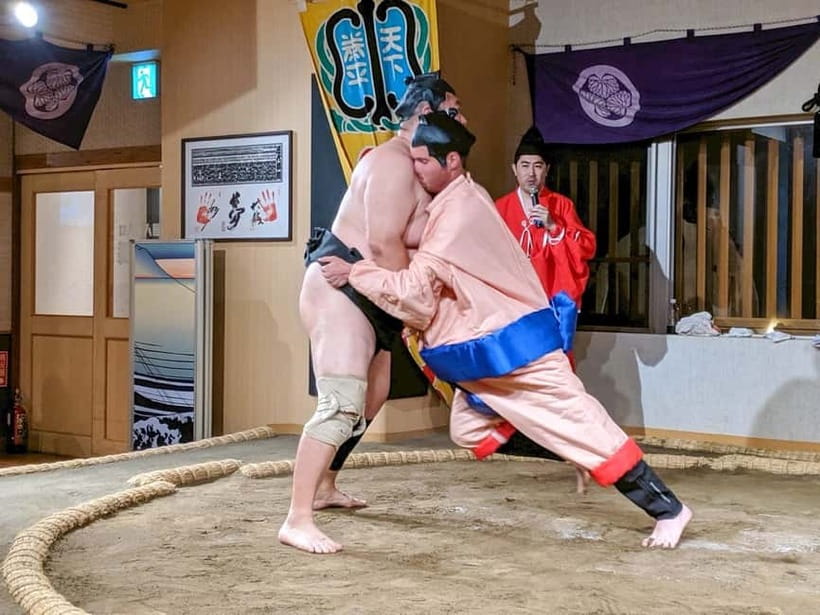
A big reason this workshop lands well is the way the coaches communicate. Former pro wrestlers lead the training, and the event runs with bilingual support so the meaning behind the routines comes through. You are not left guessing why everyone is doing the same ritual motions, or why a particular footwork pattern makes sense in the ring.
The pace typically alternates between instruction and action. First you see demonstrations that show raw power and agility. Then you move into drills where you practice the basics at a safe, friendly intensity. Later you watch an exhibition match that looks faster and louder than you expect, because sumo is not just strength. It is timing, positioning, and how quickly they close distance.
If you are traveling with kids, this coaching style helps. Reviews repeatedly point to the MC and wrestlers being funny and inclusive, which makes the whole session feel like a family morning, not a lecture. That does not mean it is shallow. You still learn the logic of the movements, and you get a real sense for the discipline behind them.
Training basics that make sumo feel understandable
You will get a taste of sumo training through a few signature drills. Even if you have never wrestled before, the structure is designed so you can try without feeling overwhelmed.
Shiko, teppo, and suri-ashi in plain language
The most talked-about drills are shiko, teppo, and suri-ashi. Here is what they help you understand:
Shiko is the stomping leg pattern. It looks simple, but up close you realize it is about rooting your body and making stability visible. It also gives you a way to feel how the wrestler controls the floor with controlled, heavy steps.
Teppo is the striking drill. It teaches you about timing and commitment. When you practice it, you see why sumo athletes train impact in a controlled way, not just for show.
Suri-ashi is the sliding footwork. This is often the trickiest at first, because it is all about balance while moving. When someone demonstrates it well, you immediately get why sumo is so hard to escape once the wrestlers find positioning.
The event makes it easy to participate at your own comfort level. Ring drills are optional, and spectators can stay seated and film if they prefer. That matters for families, because not every kid, or every adult, will want to suit up for the full challenge every time.
A few more Tokyo days worth comparing
- Mt Fuji and Hakone 1-Day Bus Tour Return by Bullet Train
★ 5.0 · 26,383 reviews - 1-Day Tokyo Bus Tour
★ 5.0 · 14,250 reviews - Tokyo: TOKYO SKYTREE® Admission ticket
★ 4.5 · 11,192 reviews - Tokyo: teamLab Planets TOKYO Digital Art Museum Entry Ticket
★ 4.6 · 9,779 reviews
The exhibition match, then the chance to challenge a wrestler
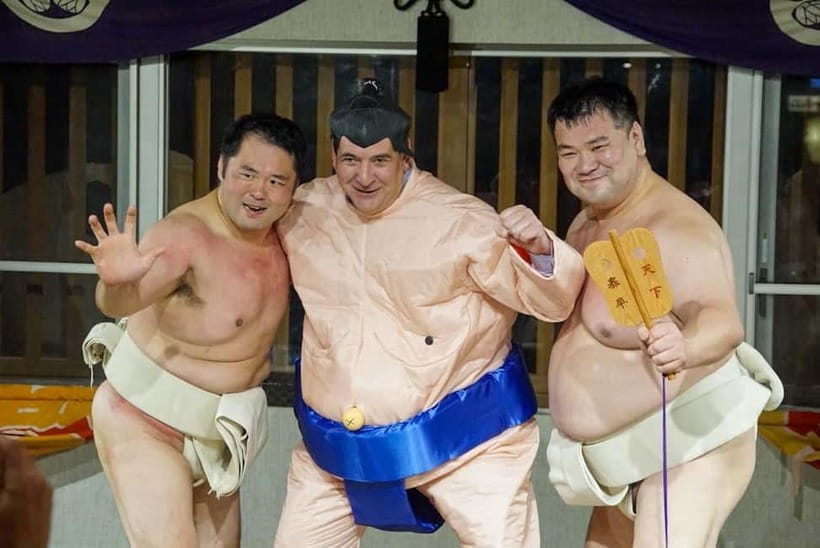
Watching a match is one thing. Feeling the scale of it is another. That is why the exhibition segment matters. You get to cheer during a real-feeling performance at full speed, so you can connect the drills you just practiced to what actually happens under pressure.
Then comes the part most people remember: challenging a wrestler in the ring. You may be asked to volunteer only if you are in good health, and the wrestling suit and setup are designed to keep it safe and fun. The goal is not to win. The goal is to experience the sensation of colliding with someone who has trained that power and balance every day.
If you choose to participate, expect a hilarious moment of realizing how much work footwork and grip take. Even when you are not successful, it still feels like you are learning, because the coaches guide you on how to approach and how to move. And yes, that is why so many families describe it as a core memory. Kids especially seem to love the combination of bravery, laughter, and quick coaching.
Photos and Q&A: how to turn the show into real learning
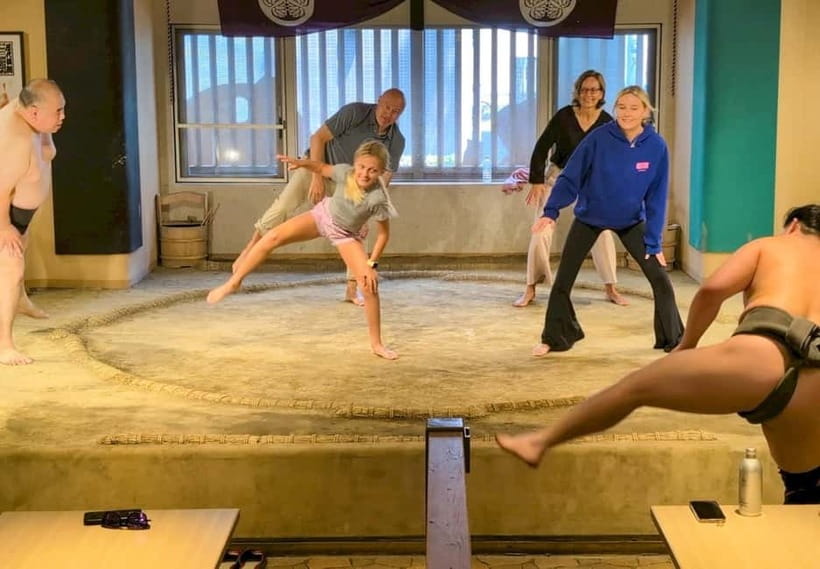
This is not only a training session. It also includes a photo moment with the wrestlers so you can capture the day in a way that feels personal, not like a blurry crowd shot. You use your own camera or phone, and parents may be invited to film or join in the action depending on what is happening at the moment.
At the end, there is typically time for questions. That is where you can ask practical things like what training looks like day to day, why certain rules exist, or what it takes to build strength and discipline. A lot of the value here is that you leave with clearer mental pictures of how sumo works, not just a few random facts.
One small but meaningful detail: you learn about rituals like the salt toss and the purpose behind the shiko stomps. Even if you forget the exact phrasing later, you remember the feeling of why the ring has gravity in Japanese culture.
Chanko nabe lunch: the meal that makes sumo training make sense
After training, you get lunch, and this is where the workshop scores major points. Chanko nabe is the classic sumo hotpot, and the portion is substantial. It is meant to be filling and performance-focused, so you end up feeling like you are getting a real piece of athlete life, not a token snack.
The flavor is simple in the best way. It is a steaming hotpot with protein, fresh vegetables, and the kind of comfort food warmth that follows you after the session. If you are hungry, you will notice the meal goes beyond what you expected for a short experience.
Vegan and allergy-friendly options, with limits
Dietary accommodations are a strong selling point. Vegan and allergy-friendly options are available on request, so you can often keep the whole family together at one table. Halal is also mentioned as something they can handle to a certain extent, with no pork or alcohol.
Just be aware of the limitation: there is no official Halal certification, and they cannot guarantee strict cross-contamination avoidance. If someone has an extremely strict medical requirement or a need for zero cross-contact, you will want to discuss details in advance.
Price and value: what $60 buys you in Tokyo
At $60 per person for a 105-minute experience, you are paying for more than entry. You are paying for:
- Hands-on coaching by former pros
- Interactive participation, not just passive viewing
- A full exhibition segment
- A hotpot lunch that is genuinely filling
Compared to typical Tokyo attractions, this is not just “see and leave.” You actively train, you get guided context, and you eat a meal tied to sumo culture. That combination is what makes the value feel strong. If you love experiences where you learn by doing, you will likely feel like the money went into the part you remember most, the time in the ring and the moment of being coached.
If you mainly want something quiet and observational, the interactive elements might feel like a lot. But the event is structured so you can stay seated during drills and still enjoy the show.
Who this family sumo workshop fits best
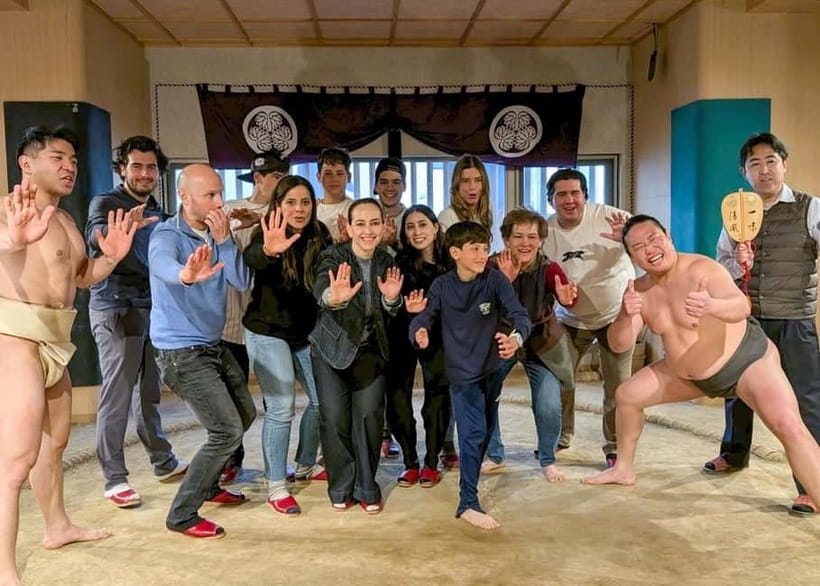
This tour tends to click for families, and for a specific reason. It is structured so multiple ages can enjoy it without one group being left bored.
It is a great match if:
- you want a family-friendly Tokyo activity that feels authentically tied to local culture
- your kids like participating, not only watching
- you enjoy hands-on learning that uses your body, not just your phone camera
- you want a memorable cultural morning without committing to a full-day plan
It is also worth considering if you are a solo traveler who wants an easy social setting. Reviews include multiple solo guests who still found the atmosphere friendly and inclusive.
Practical tips so your morning goes smoothly
A few details help you have the smoothest experience, and they matter more than you might think.
Wear loose sportswear. You will take shoes off for the ring area, and you want clothes that let you move comfortably. If you plan to challenge a wrestler or join drills, breathable, flexible clothing is the difference between fun and frustration.
If you are bringing kids, plan food timing. The event includes lunch for those eligible, but children under 5 are not provided meals under the child rate, so you may need to book them at the adult rate if they require a meal. Also note that children aged 6 and older cannot be booked at the child rate.
For people with food needs, send dietary requests at least 48 hours ahead so they can prepare appropriate options. And if your requirement is strict cross-contamination avoidance, be ready for a no on that specific point.
Finally, the meeting point is simple but easy to miss if you arrive late. You meet in front of a face-in-hole photo board at the shop, and your guide is the person holding a smartphone showing AlvaJapan. Arrive a bit early so you can get your bearings and avoid stress.
Should you book the Tokyo family sumo workshop with lunch?
I recommend booking if you want an active, family-friendly sumo experience in Tokyo that goes beyond watching. The best part is the combination of dohyo access, coaching by former pros, and a meal that is actually part of sumo culture, not an afterthought.
Skip it only if you need a fully strict dietary guarantee (especially for cross-contamination), or if you strongly prefer passive sightseeing over participating in simple drills. For most families, this hits a sweet spot, you learn real basics, cheer a live match, and eat chanko nabe you can feel good about sharing.
If your group includes someone who loves taking photos and someone who wants to try getting into the action, this is the kind of Tokyo activity that satisfies both in one 105-minute morning.
Fresh options around Tokyo
- Tokyo: Nagano Snow Monkeys and Zenkoji Tour with Temples★ 4.9 · 19 reviews
- Yokohama Port: Private Customizable Tour with Transfer★ 5.0 · 19 reviews
- Explore Unique Tokyo Streets / Learn with a Pro Photographer★ 5.0 · 19 reviews
- Sushi Making with Interactive Samurai Experience at JIN-ASAKUSA★ 5.0 · 19 reviews
- DAIKOKU excursion by car DRIFT automobile encounter★ 4.5 · 19 reviews
- Official Street Go Kart Tour Akihabara 2nd★ 5.0 · 19 reviews
- Cosplay Experience with Professional Makeup and Photo Shoot!★ 5.0 · 19 reviews
- Japanese Traditional Sweets making★ 4.1 · 19 reviews
Workshops, compared.
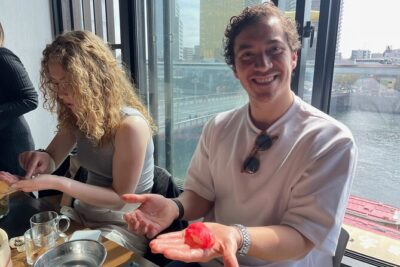
Sushi Making Tokyo Roll and Authentic Japanese Sushi Class
Read our review →
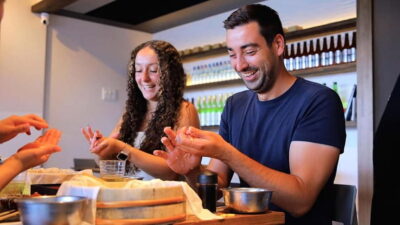
Roll and Authentic Sushi Making Class in Asakusa
Read our review →
Ramen Cooking Class at Ramen Factory in Kyoto
Read our review →
Sushi Making Class in a Happi Coat near a Famous Spot
Read our review →
Sushi Making Osaka Roll and Authentic Japanese Sushi Class
Read our review →Browse the lists this tour appears in