
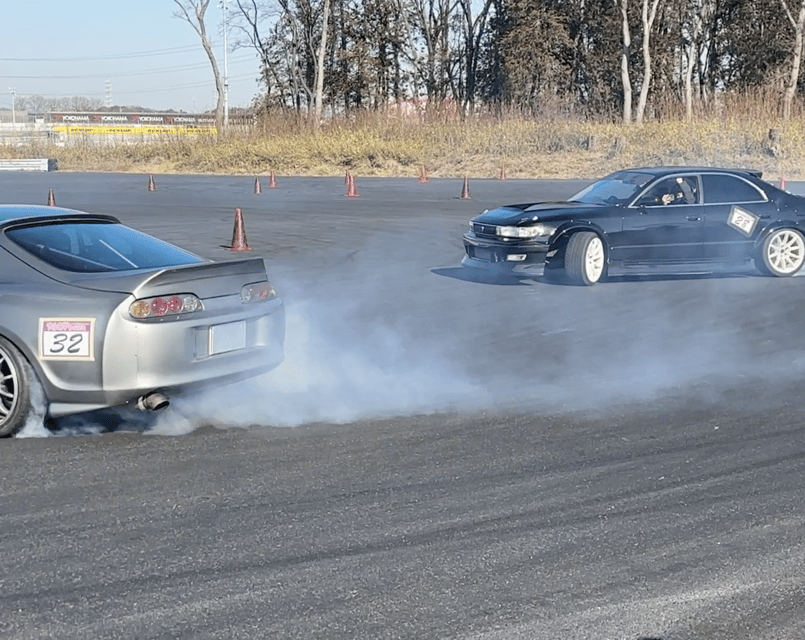
Reviewed · WORKSHOPS
Private Drifting Lesson w/ OG Instructor Tokyo Drift Japan
Real drift school energy, up close. This private lesson puts you behind the wheel of a JDM drift car with OG-level coaching, then finishes with a police-chase style finale. I really like the private structure and the way they teach you a proper donut in about three hours. The main consideration is the full-day time commitment, and you need the right outfit on arrival.
You get a smooth start with free pickup and drop-off in Tokyo, and an English, Japanese speaking team to keep communication clear. They’ll drive you from central Tokyo up to Minami Chiba Circuit, about an hour, so you can focus on driving instead of logistics.
The driving plan is built around your skill level. Beginners work toward donuts, then figure 8s, while intermediate drivers add techniques like e-brakes and more aggressive gear changes, all pushed by a graduation challenge course and a replica undercover police car moment at the end.
Key highlights that matter (quick hits)
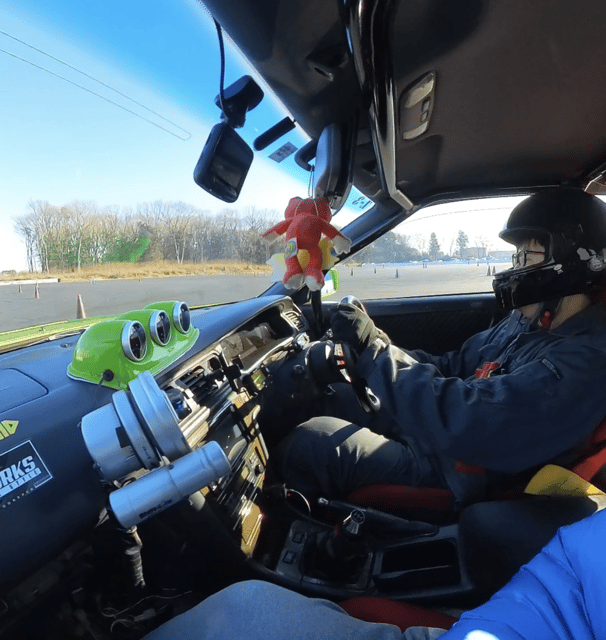
- A true private lesson with OG drift instructors and step-by-step feedback tailored to you
- Three hours of wheel time focused on donuts, figure 8s, and controlled drift basics
- JDM car options by skill level, including MX-5 Miyata, 350Z, RX-8, and 180SX
- English support on the day with translators plus instructors who explain clearly
- Graduation challenge course that gives you a goal and a measurable improvement path
- Police pursuit vibe using a replica undercover police vehicle for the finale
From Tokyo pickup to Minami Chiba Circuit: what your day feels like
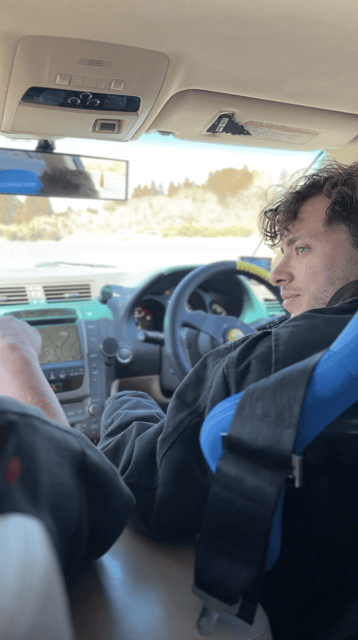
This is the kind of activity that starts relaxing and ends loud. Pickup is included from your chosen Tokyo location, ideally within 5 km of the city center, and you’ll go to Minami Chiba Circuit, about a one-hour drive. You’re not stuck coordinating trains, taxis, or timing. Someone brings you to the track, and later brings you back.
One practical detail I appreciate is that pickup happens in a Lexus LS460, with the rest of the team managing the process after that. That matters because a drift session runs on momentum. If you show up stressed, you burn brainpower before you even start driving.
Plan on a total time block of about 5-6 hours. The main teaching block is 3 hours at the track, but the day also includes getting there, getting kitted up, and wrapping up after your graduation challenge. If your schedule is tight, this is not a “quick morning activity” type of plan.
A few more Tokyo days worth comparing
- Mt Fuji and Hakone 1-Day Bus Tour Return by Bullet Train
★ 5.0 · 26,383 reviews - 1-Day Tokyo Bus Tour
★ 5.0 · 14,250 reviews - Tokyo: TOKYO SKYTREE® Admission ticket
★ 4.5 · 11,192 reviews
The OG instructors, the translator team, and why private coaching changes everything
The big promise here is a completely private lesson, with OG drift team members from Tokyo and Chiba coaching you directly. That one-on-one, no-shared-session setup is the whole point. Drifting is technical, and timing matters, so you want an instructor watching what you do in real time, not waiting your turn.
The teaching style you get is very “do this, then adjust that.” You’ll see it in how they break down goals. For beginners, they focus on learning a proper donut. For intermediate drivers, they build out the next layers like e-brakes and higher-gear changes. That step progression is exactly what you need if you’re trying to learn drifting instead of just taking a few spins.
Communication is handled with English and Japanese support. In real-world terms, that means you can understand the corrections clearly. One of the standout notes from past participants is that the instructors and guides explain what you need to do, and you can actually translate the feedback into your next run. Names you might run into include Hiro and Ross in some experiences, and Takeshi as an organizer/guide in others, with additional instruction support mentioned like Risa.
You also get to meet local OG drift drivers as part of the overall experience. I like this because it makes the day feel less like a ride-and-go ticket. It’s more like being welcomed into the scene for a few hours.
Choosing your drift car: MX-5 Miyata, 350Z, RX-8, or 180SX
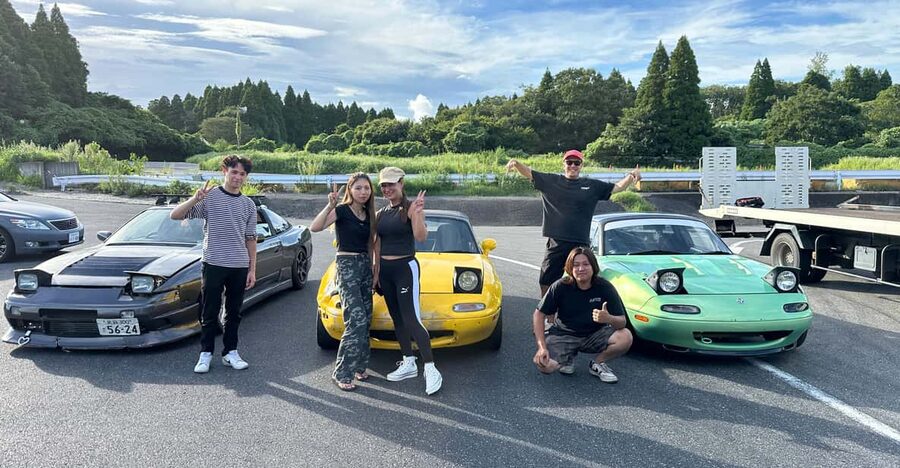
You don’t just show up and hope for the best car. Your car choice depends on your skill level and can vary based on the day. For beginners, you may drive a Mazda MX-5 Miyata NB. For more skilled drivers, options listed include a Nissan 350Z, Mazda RX-8, or Nissan 180SX.
That’s important for value and learning. A session in the right machine helps you practice the technique they’re targeting. If you’re a beginner working on donuts and controlled rotation, the aim is not just speed. It’s learning stable inputs and repeatable behavior.
For intermediates, the session moves beyond the first tricks. You’ll be working with e-brakes and more gear change techniques, which generally means a bigger focus on how you manage the car under drift load. The exact car can change how the steering and throttle response feel, so flexible coaching matters.
One more note I find useful: safety gear is provided, including helmets and gloves. That takes one big uncertainty out of packing for a track day.
The actual skills plan: donuts, figure 8s, e-brakes, and a graduation challenge
Here’s what your 3-hour practice block is built to accomplish: repeatable drift shapes with coaching that helps you tighten control. The structure is clear, and it changes by level.
Same corner of Japan, a different kind of day:
- Tokyo: teamLab Planets TOKYO Digital Art Museum Entry Ticket
★ 4.6 · 9,779 reviews - Mt Fuji & Hakone Cruise, Drum Show Bullet Train 1 Day from Tokyo
★ 4.0 · 7,413 reviews - Tokyo: Sumo Show Experience with Chicken Hot Pot and a Photo
★ 4.8 · 6,678 reviews - Tokyo: Shinjuku Food Tour (13 Dishes at 4 Local Eateries)
★ 5.0 · 6,603 reviews
Beginners: donut first, then figure 8
The beginner progression is straightforward and surprisingly goal-driven. You’ll learn how to do a proper donut in about three hours. If you master that, they move you on to a figure 8. In other words, you’re not stuck doing only one basic motion all day. The lesson has a natural “next step.”
Why that works: donuts teach rotation and throttle balance, and the moment you can repeat it, you’re ready to combine inputs into a tighter pattern. Figure 8 adds direction changes that force you to manage the car through transitions instead of only circling.
Intermediate: e-brake technique plus higher-gear changes
If you already have drift basics, the plan shifts. Intermediate driving focuses on adding skills using e-brakes and more aggressive higher-gear changing. Even if you think you know drifting, this kind of structured refinement can be valuable because instructors can spot small inconsistencies that stop you from feeling fully in control.
The vibe stays practical. You’re not just watching someone else drift. You’re driving, and the instructor is coaching during your runs, then adjusting your next attempt.
The graduation challenge course
There’s also a graduation challenge course for everyone. This is a useful feature because it gives you a finish line. Drifting can feel like chaos when you’re new, so having a “show what you learned” segment helps you feel progress instead of just experiencing thrills.
It also gives the instructors a clear framework to judge improvement within your session. That’s how a 3-hour practice block becomes more than a demo.
The finale: replica undercover police pursuit energy
The best “movie moment” in this experience comes at the end. You’ll get a replica undercover police vehicle so you can experience a police-chase style drift pursuit vibe. It’s not real law enforcement, but it is designed to feel like that fast, close, chase scenario using track conditions and controlled driving.
Why I think this is worth it: it changes the emotional tone of the day. If you spend hours learning technique, your brain gets focused. Then the finale adds a performance feel without removing the technical foundation you worked on.
If you’re a JDM fan, this part often lands because it mixes car culture with the spectacle people associate with drifting. It also fits the overall theme of authenticity, because it’s not just a static photo stop. It’s a driving moment that still ties back to what you learned.
Price and what $708 buys you in practical terms
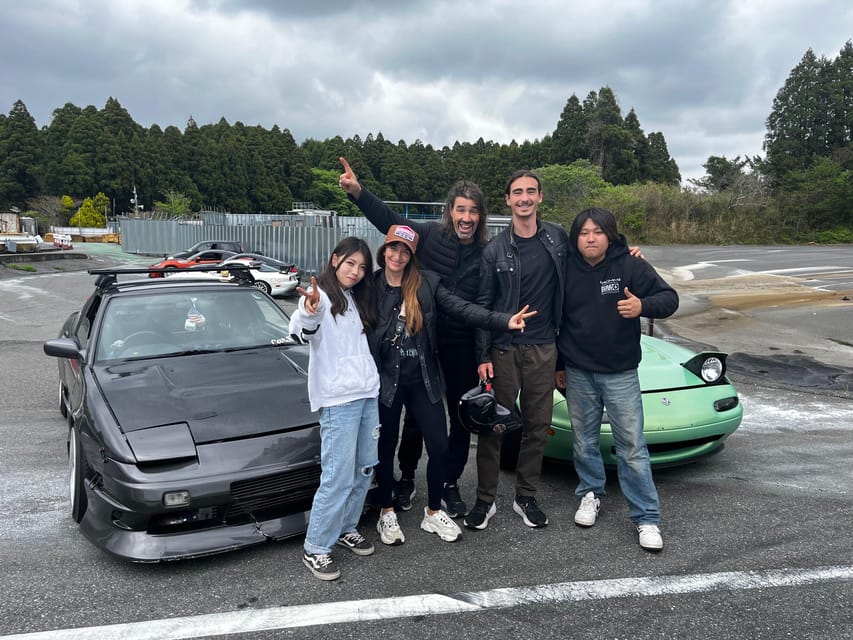
At $708 per person for about 6 hours total (with 3 hours of hands-on practice), the price isn’t “cheap.” But it’s not random either. You’re paying for a private coaching setup, OG-level instructors, translation support, track time, and safety equipment.
Here’s the value math I look at:
- Private lesson means you get focused instruction during your runs, not a shared group pace.
- Real JDM drift cars mean you’re learning on vehicles intended for this kind of driving.
- 3 hours of practice is substantial for a first or intermediate try.
- Pickup and drop-off saves time, hassle, and local navigation stress in Tokyo.
- Graduation challenge gives the day structure and a “finish” that feels earned.
The main cost trade-off is time and commitment. You’re dedicating most of a day, and you’ll want to be mentally ready for repeated driving attempts and feedback.
If your goal is pure thrill, you can find shorter activities. But if your goal is to learn technique, this pricing starts to make sense fast.
What to bring (and the one outfit detail that can ruin your day)
The kit list is short, and it matters. You should wear long sleeve shirts and long pants, plus sneakers. No sandals.
Helmets and gloves are provided, so you don’t need to bring those. Still, the clothing requirement is a real constraint, especially if you’re doing this near the end of a sightseeing day when you might have been living in shorts and slippers.
I also suggest you show up feeling rested enough to learn quickly. Drifting is hands-on and the corrections pile up. When you’re tired, it’s harder to remember the sequence: entry, rotation, throttle balance, and recovery.
Who this drifting lesson suits best
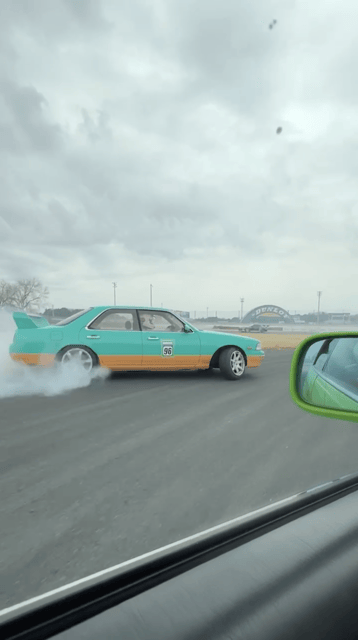
This experience fits best if you fall into one of these buckets:
- You want a true private session where the instructor can coach your exact inputs.
- You’re a beginner who wants to learn a proper donut and then go further toward a figure 8.
- You’re an intermediate driver who wants structured refinement, especially with e-brake and gear-change technique.
- You care about car culture and want to meet OG drift drivers, not just watch from the sidelines.
It may not be the right match if you want a very light, sightseeing-style day. This is track-based, driving-focused, and you should plan your schedule around a full half-day block of driving time plus travel.
Should you book Matenro Drift Racing’s private Tokyo drift lesson?
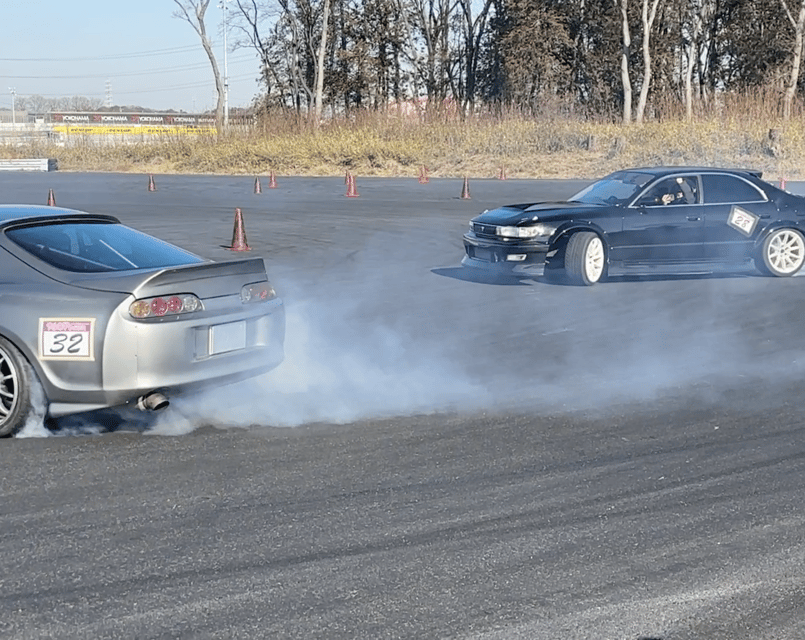
I’d book it if you want technique, not just excitement. The combination of a private setup, OG instructors, 3 hours of practice, and a clear beginner-to-intermediate skills plan makes the day feel like training you can build on later.
I’d also book it if you want a memorable Tokyo add-on that still feels authentic and local, with translation support and pickup that keeps the experience smooth. The police-chase style finale is icing on the cake, not the whole event.
Hold off if your schedule is too tight for a 5-6 hour block, or if you cannot meet the clothing requirements. In a track lesson, small prep issues can become big irritations.
FAQ
What is the duration of the private drifting lesson?
The experience lasts 6 hours in total, including travel time. About 3 hours are dedicated to hands-on drifting practice.
Where does the activity take place?
You’ll be picked up in Tokyo and driven to Minami Chiba Circuit in Honshu for the lesson.
Is this a shared group or truly private?
It’s a completely private group experience.
What cars might I drive?
Cars vary by skill level and day. Beginners may drive a Mazda MX-5 Miyata NB, while more skilled drivers may drive a Nissan 350Z, Mazda RX-8, or Nissan 180SX.
Do you provide English support?
Yes. There is live tour guidance in English and Japanese, including translators and staff.
Is there a beginner option?
Yes. Beginners are taught a proper donut, and if they master it, they move on to a figure 8.
What do intermediate drivers work on?
Intermediate drivers work on additional drift skills using e-brakes and more higher-gear changing.
What should I wear for the lesson?
Bring long sleeve shirts, long pants, and sneakers. Helmets and gloves are provided, and sandals are not appropriate.
Fresh options around Tokyo
- Tokyo: Private Customized Hidden Gems Tour with Local Guide★ 5.0 · 30 reviews
- Tokyo’s Scariest Shitamachi Ghost Tour★ 4.0 · 30 reviews
- Tokyo: Hidden Gems Guided Bike Tour with Lunch★ 4.5 · 30 reviews
- Private Memorable Tokyo Tour with English Speaking Driver★ 5.0 · 30 reviews
- Asakusa’s Historic Treasures★ 5.0 · 30 reviews
- Full Day Private Tour in Mt. Fuji and Hakone★ 4.5 · 30 reviews
- Tokyo: Asakusa Kimono Rental Experience★ 5.0 · 30 reviews
- GINZA: Go Kart Experience with NEO GINZA★ 4.9 · 30 reviews
Workshops, compared.
Sushi Making Tokyo Roll and Authentic Japanese Sushi Class
Read our review →
Roll and Authentic Sushi Making Class in Asakusa
Read our review →
Ramen Cooking Class at Ramen Factory in Kyoto
Read our review →
Sushi Making Class in a Happi Coat near a Famous Spot
Read our review →
Sushi Making Osaka Roll and Authentic Japanese Sushi Class
Read our review →Browse the lists this tour appears in