
Reviewed · WORKSHOPS
Tokyo: Calligraphy Workshop Craft Your Own Art in Asakusa
Brush ink has a way of slowing Tokyo down. In Asakusa, you get a hands-on shodo (Japanese calligraphy) workshop that turns a famous cultural idea into something you can actually do with your own hands. The setting matters too, because Asakusa is the kind of area where old Tokyo still feels close.
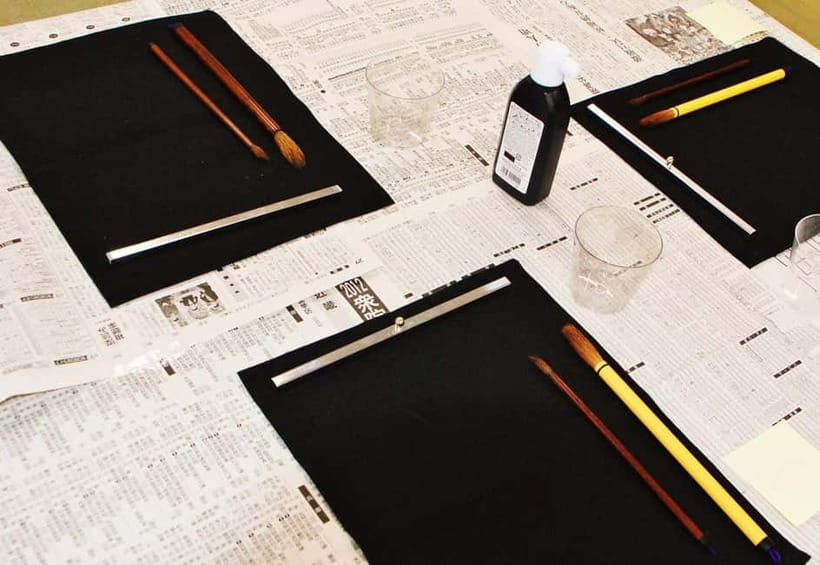
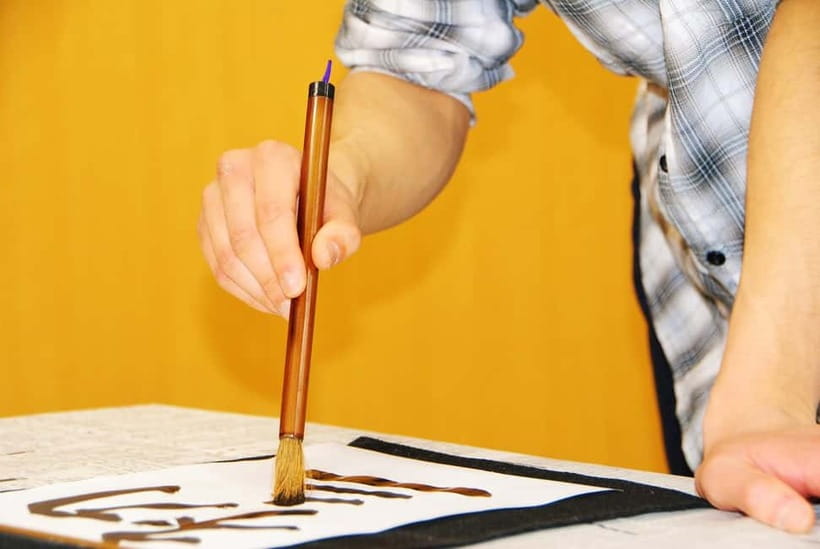
What I like most is the focus on practical fundamentals, especially stroke order and brush control, taught in clear steps by instructor Mei. I also love that you use both a traditional brush and a modern fude pen, so you can keep the elegance of calligraphy while getting cleaner results as a beginner.
One consideration: you will be writing characters, so if you want a fast, purely sightseeing-style activity, this is more about steady practice than quick photos. Plan to give your attention to the strokes, even if you are short on time.
Key highlights at a glance
- Small group (up to 10) means you get real coaching instead of being shuffled along.
- English instruction by Mei helps beginners feel confident from the first practice line.
- Traditional brush + modern fude pen lets you compare styles and control.
- You take home your finished piece, made from what you write in class.
- Calm, patient teaching turns calligraphy into a break from the usual Tokyo pace.
Asakusa’s old-Tokyo setting for shodo practice
Asakusa is one of those places where Tokyo’s layers feel tangible. You come expecting temples and street life, then you add a calligraphy class into the mix and suddenly the whole neighborhood makes more sense. This workshop is set at Tokyo Tourist Lounge Asakusa, on the 5th floor, so you get a break from the noise without feeling cut off from the district.
What makes this location especially practical is the vibe. You can pair this with an easy day around Asakusa, then come in for something that feels focused and grounded. Calligraphy is physical, not just visual, and that calmer indoor time can be a nice reset after a morning of walking.
If you’re the type of traveler who likes culture you can touch, this fits. You are not only looking at art. You are learning how the art is made, one controlled stroke at a time.
A few more Tokyo days worth comparing
- Mt Fuji and Hakone 1-Day Bus Tour Return by Bullet Train
★ 5.0 · 26,383 reviews - 1-Day Tokyo Bus Tour
★ 5.0 · 14,250 reviews - Tokyo: TOKYO SKYTREE® Admission ticket
★ 4.5 · 11,192 reviews
The 90-minute class flow: strokes first, then your own characters
The workshop runs about 90 minutes, and you can expect a session that fits beginners without prior experience. A few people reported a longer overall time, so mentally budget for a bit of extra practice if the class runs slower on your hands or you want more time to refine.
The class rhythm is usually simple and effective:
1) Start with brush control and basic technique
You’ll practice how to hold the brush, how to apply pressure, and how to keep your lines consistent. This is the part where shodo stops being mysterious and starts becoming learnable.
2) Learn stroke order and basic calligraphy patterns
Stroke order matters because Japanese writing is built on rules that help the final character look balanced. When you follow those rules, your work looks more like calligraphy and less like a hurried signature.
3) Write characters of your choice for your final piece
After you build confidence, you write your selected characters using the tools you were shown. This is where the workshop becomes personal, because the final piece is tied to your meaning, not just a template exercise.
This structure is why the class works for beginners. You’re not thrown into the final artwork right away. You earn it through practice, guided step by step.
Traditional brushes plus a modern fude pen for cleaner beginners
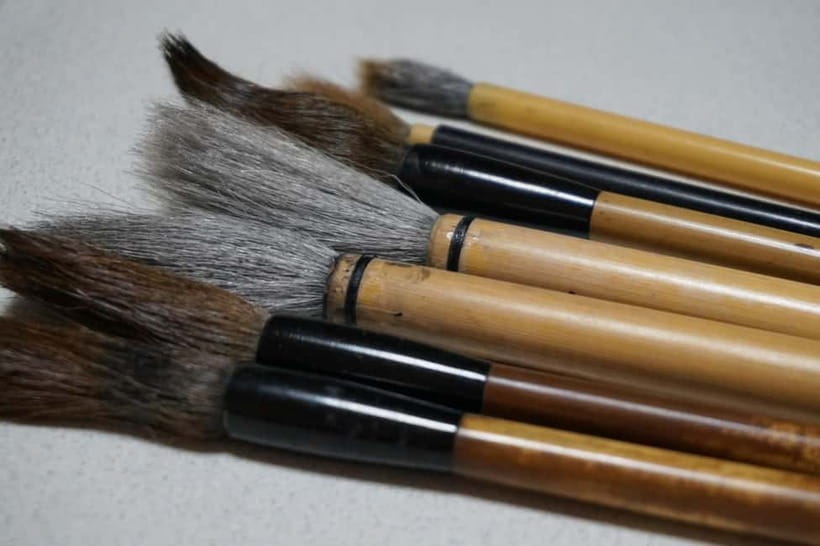
One of the most useful details here is the tool pairing: you use traditional brushes and a modern fude pen. That combination is not just a gimmick. It’s a smart way to help you learn the same calligraphic principles in two ways.
With the traditional brush, you learn:
- How pressure changes the line
- How direction affects the shape of each stroke
- How the brush angle impacts thickness
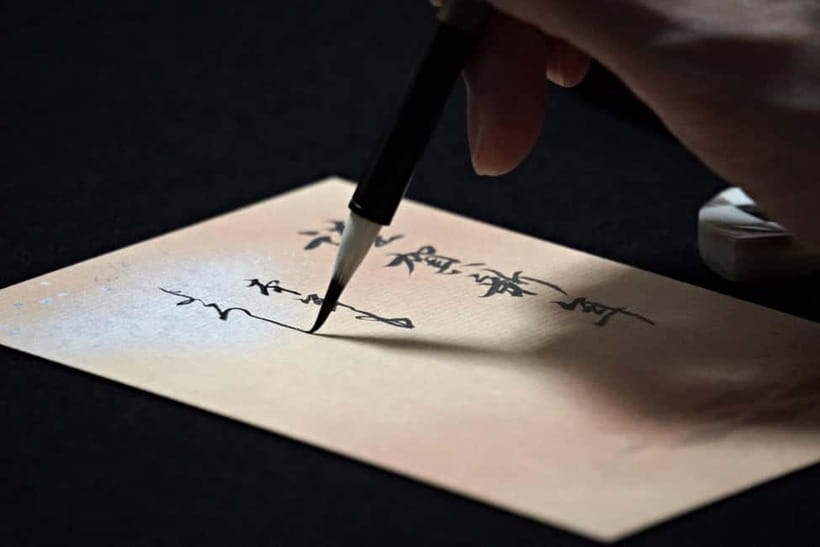
With the fude pen, you often get:
- More precision for beginners
- A steadier line when your hand is still adjusting
- A helpful bridge to finishing your final piece cleanly
In practice, this means you can focus on the character structure and stroke order while also controlling the final look. If you end up liking one tool more than the other, that’s normal. The class doesn’t force a single style. It teaches the core technique, then lets you build your own comfort level.
Your take-home artwork: scroll, fan, or hard-backed keepsake
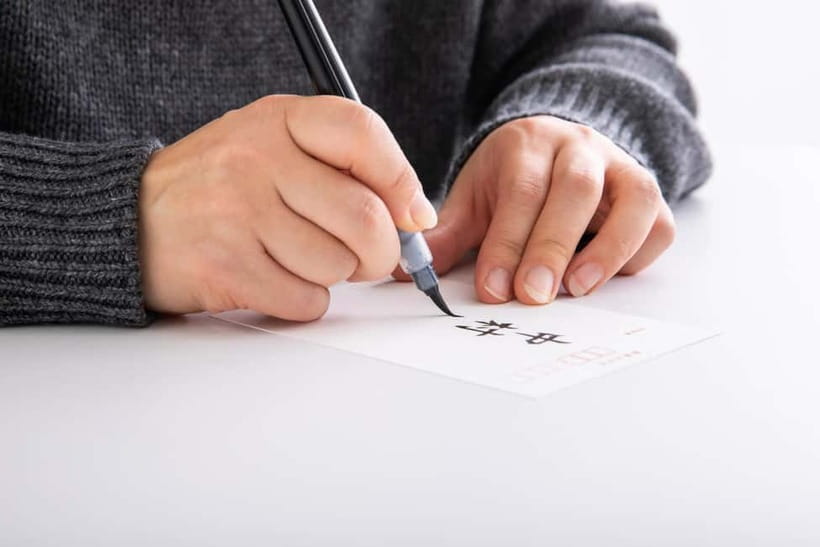
The workshop includes materials and instruction, and you leave with a finished work to take home. That matters because too many classes end with a good memory and an empty notebook. Here, you get an actual art object you can display or gift.
Your final format can vary by session. Some people mention finishing on items like a scroll, a fan, or a hard-backed piece. Either way, the key is the same: your final product is based on the characters you wrote during class.
A practical tip: treat your first tries as training, not as the end goal. The class is set up so you build control during the earlier drills, then apply it to your final composition. If you rush your practice lines, your finishing piece can suffer.
Also, don’t underestimate how meaningful this feels. One of the repeated themes from people who took the class is that it is not only relaxing, it produces something personal and lasting. You can hang it, frame it, or keep it as a souvenir that looks like you did the work, because you did.
Same corner of Japan, a different kind of day:
- Tokyo: teamLab Planets TOKYO Digital Art Museum Entry Ticket
★ 4.6 · 9,779 reviews - Mt Fuji & Hakone Cruise, Drum Show Bullet Train 1 Day from Tokyo
★ 4.0 · 7,413 reviews - Tokyo: Sumo Show Experience with Chicken Hot Pot and a Photo
★ 4.8 · 6,678 reviews - Tokyo: Shinjuku Food Tour (13 Dishes at 4 Local Eateries)
★ 5.0 · 6,603 reviews
Mei’s teaching style: patient coaching, clear history, and real focus
Instructor Mei is repeatedly described as patient, friendly, and highly effective at guiding beginners. She teaches in English, and that is a big deal because calligraphy has jargon and technique details that are hard to guess correctly. When the instruction lands clearly, your strokes improve faster.
The teaching style also seems to respect the pace of learning. People mention getting lots of practice time on strokes, plus helpful templates that make it easier to copy the correct structure. That combination helps you avoid the common beginner problem: you know the theory, but your hand does not yet.
Another element that keeps coming up is the calm, focused tone. Calligraphy is often described as meditative, and in this class you can feel that in the way instruction is paced. You’re not being rushed to the finish. You are being guided to steady attention.
You also learn more than how to write. Mei shares context about the history and cultural meaning of Japanese calligraphy. Even if you only absorb a few key ideas, it changes how you view the finished artwork. It stops being decoration and becomes a small piece of understanding.
Price and time value: $38 for materials, instruction, and a real souvenir
At about $38 per person for around 90 minutes, this is one of those experiences that looks modest on paper but pays off in the details. You are getting:
- An experienced instructor
- Use of traditional brushes
- Use of a modern fude pen
- A take-home calligraphy artwork
That is why the price feels fair. You are not just buying a pass to watch someone else work. You are buying instruction, materials, and the final output. For many travelers, the souvenir value is huge because the result is personalized and tangible.
Is it a bargain compared with a quick activity? Not always. But it is often a better buy than paying for another short stop where you leave with only photos. This class asks for focused time, and in return you get skills, a cultural connection, and an object you can keep.
If you’re deciding between a workshop like this and a higher-cost class elsewhere, use this value test: do you leave with an actual piece of artwork created from your own writing? Here, yes.
Who should take this calligraphy workshop in Asakusa, and who might skip it
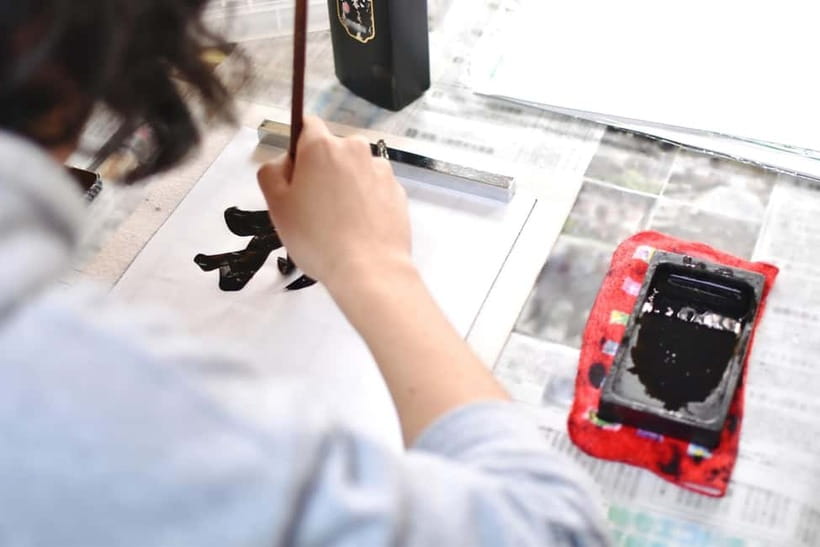
This workshop is a strong fit for:
- Beginners who want a structured introduction to shodo
- Travelers who like calm, hands-on culture
- People who want a meaningful souvenir they can display at home
- Anyone who would benefit from small-group coaching (limited to 10)
It also works well for mixed skill groups because the focus is on fundamentals, and the instructor can adjust the pace. The English instruction helps too.
You might skip it if:
- You want a purely sightseeing-heavy day with minimal sitting and minimal writing
- You dislike activities that require steady attention and repetition
- You’re hoping for something that feels like performance art rather than technique practice
There’s also a realistic angle: you are writing characters. If your goal is perfection, set expectations low. If your goal is progress and a piece you are proud of, you will likely have a great time.
Should you book this Asakusa calligraphy class?
I’d book this if you want one of your Tokyo days to be quieter, more personal, and more hands-on than the usual checklist. The class is beginner-friendly, guided in English by Mei, paced for real practice, and designed so you leave with your own artwork.
If you are on the fence, here’s the deciding question: do you want a souvenir you made, not just one you bought? If the answer is yes, this workshop is a smart choice.
Fresh options around Tokyo
- Tokyo: Nikko Kegon Falls Lake Chuzenji Toshogu Temple & More★ 4.9 · 12 reviews
- Tokyo: Samurai History Walking Tour★ 5.0 · 12 reviews
- Harajuku: Kawaii Fashion and Pop-Culture Tour★ 4.7 · 12 reviews
- Tokyo: Mt. Fuji & Lake Kawaguchi Instagram Full Day Trip★ 4.1 · 12 reviews
- Shibuya Tokyo: Modern Kintsugi Workshop in Shibuya★ 5.0 · 12 reviews
- Tokyo: GTR Guided Daikoku Experience at Night★ 5.0 · 12 reviews
- Tokyo: Daikoku JDM Car Culture Tour★ 4.6 · 12 reviews
- Mt Fuji Private Day Trip from Tokyo with English speaking driver★ 5.0 · 13 reviews
Workshops, compared.
Sushi Making Tokyo Roll and Authentic Japanese Sushi Class
Read our review →
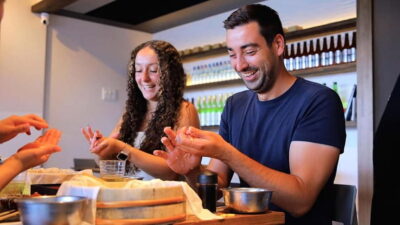
Roll and Authentic Sushi Making Class in Asakusa
Read our review →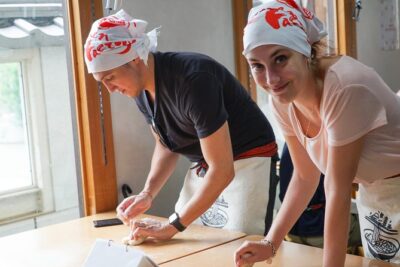
Ramen Cooking Class at Ramen Factory in Kyoto
Read our review →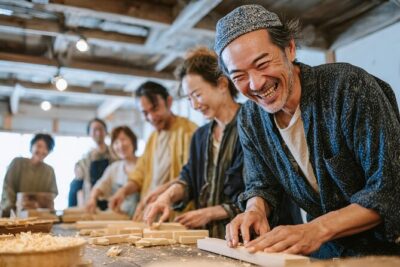
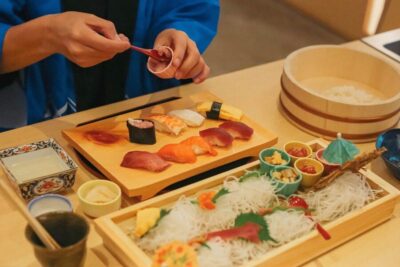
Sushi Making Class in a Happi Coat near a Famous Spot
Read our review →
Sushi Making Osaka Roll and Authentic Japanese Sushi Class
Read our review →Browse the lists this tour appears in