Reviewed · MORNING
Traditional Japanese Washi Papermaking- Kyoto morning
Making washi paper feels like time travel. In a traditional Kyoto-style house, you’ll learn the craft step by step, then design your own sheets using seasonal pressed botanicals. I also like that the instruction is bilingual (Japanese and English), and in a tiny setting you can actually ask questions, with folks like Hiro and Junko often leading the class.
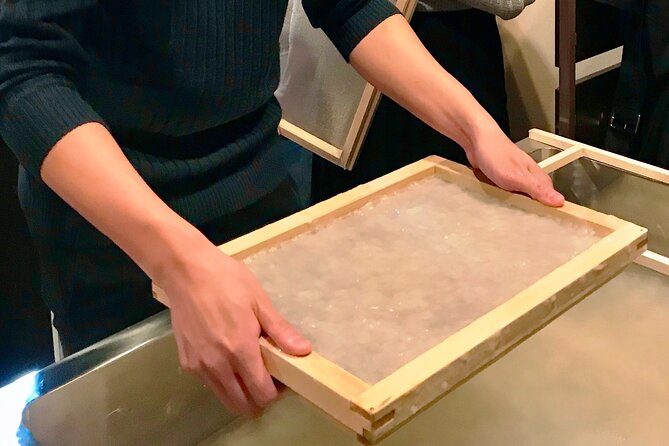
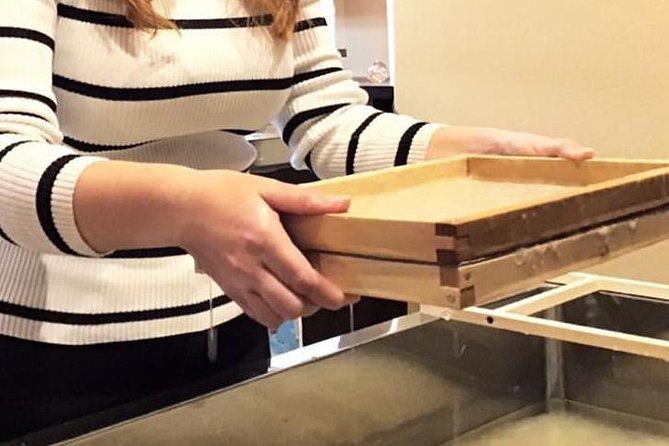
The two best parts are the hands-on process and the calm. You’re not just watching, you’re making a real sheet of washi from raw materials, and you get to decorate it with cherry blossoms, maple leaves, and paper cut-outs to create something you’ll keep. The result feels personal in a way store-bought souvenirs never do.
One drawback to plan for: you’re responsible for getting yourself to the workshop, and you’ll need to carry what you make unless you arrange pickup or storage (the class ends right back at the meeting spot).
Key things you should know before you go
- Small group size (maximum 4 travelers), which means more help while you’re working
- Bilingual instruction in Japanese and English, led by the workshop team
- You choose a project like postcards, a table mat, a wraparound lampshade, or a tapestry panel
- Seasonal decoration options using pressed flowers and leaves such as cherry blossoms and maple
- Optional extra making time if you want unlimited paper making for an additional hour (extra cost)
Finding the paper house near Kyoto’s rail lines
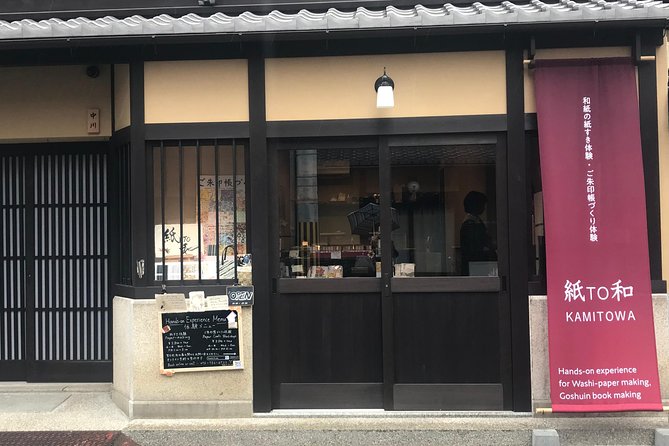
Your class starts at 345 Sanjōchō, Nakagyo Ward, Kyoto. It’s in a traditional Japanese-style house, and the location is easy to reach on foot from major stations.
The workshop is about a 9-minute walk from exit #24 of Shijo Station (Kyoto Metro Karasuma Line) or Karasuma Station (Hankyu Line). It’s also about a 6-minute walk from exit #6 of Karasuma Oike Station (Kyoto Metro Karasuma Line). In plain terms: you can build this into your morning without doing a complicated hopscotch of buses.
You’ll also appreciate that it is near public transportation, so you’re not stuck budgeting extra time for transit. One thing to keep in mind though: the price does not include transportation to and from the workshop. Build in buffer time so you arrive relaxed, not rushed. With a craft class, that first 10 minutes matters.
A few more Kyoto days worth comparing
- PERFECT KYOTO 1-Day Bus Tour
★ 5.0 · 13,518 reviews - Kyoto: Fushimi Inari, Kinkakuji, Bamboo Grove 1 Day Bus Tour
★ 4.8 · 4,316 reviews - Kyoto: Tea Ceremony in a Traditional Tea House in Kiyomizu
★ 4.9 · 3,519 reviews
What your Kyoto morning class is really like
This is a 1 hour (approx.) hands-on workshop. You start at the meeting point, meet your instructor, and then you get guided through the traditional washi papermaking process. The class is small, which keeps it calm. Several people specifically loved it as a peaceful break from Kyoto sightseeing crowds.
You can expect a mix of:
- step-by-step instruction while you make paper
- time spent crafting and designing
- time for drying, during which short informational videos are played about the process
That drying break is not wasted time. The videos add context without turning the class into a lecture, so even if you’ve never made paper before, you understand what you’re doing and why.
Also, the format is built to be doable for many skill levels. Most travelers can participate, and it’s a strong option if you want something indoor-friendly, such as a rainy day plan.
From raw materials to real washi paper
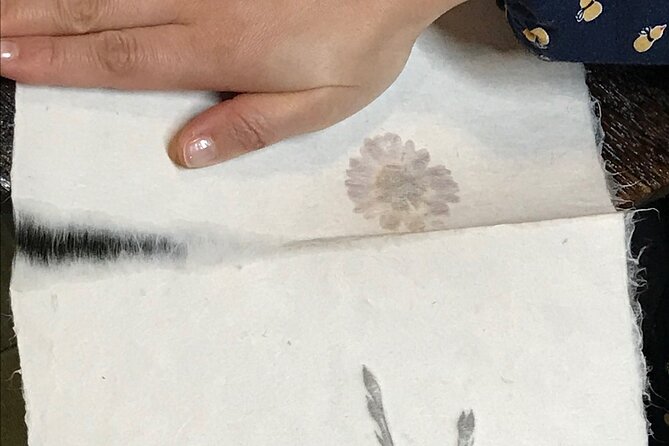
At the heart of the experience is making washi, not just decorating. The workshop teaches how to make traditional Japanese paper from raw materials, and you stay hands-on during the process.
In practical terms, this means you’ll do the core work yourself while the instructor watches closely. People repeatedly mention how attentive and gentle the instruction feels. That’s exactly what you want in a craft like this, because getting the early steps right makes everything that follows easier.
Why this part is valuable: washi isn’t a single trick. It’s a sequence of careful actions, and making it yourself gives you real respect for the labor behind Japanese paper goods. By the end, you’ll walk out knowing the process, not just owning a finished souvenir.
It also helps that the instruction is in Japanese and English, so you can follow along even if your Japanese is limited. The class is paced so you can keep up, and the small group size makes questions easier.
Decorating your sheet with cherry blossoms, maple, and cut-outs
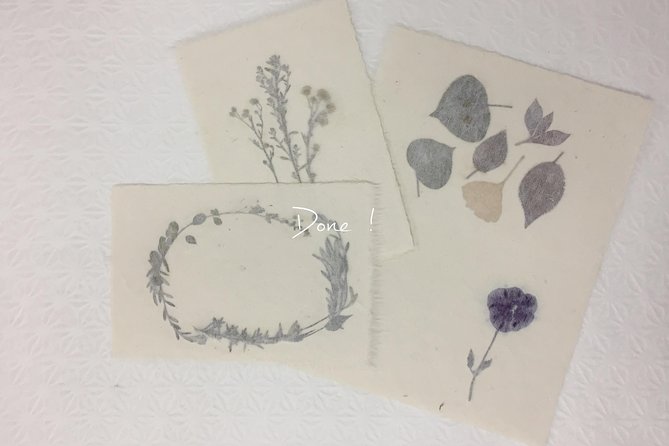
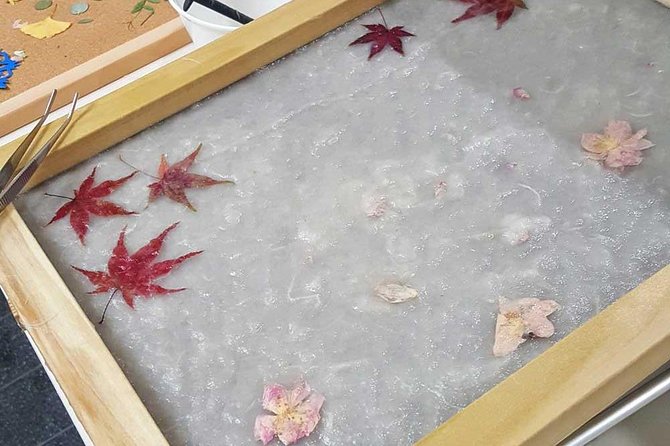
Once your paper-making base is underway, the fun part kicks in: designing. The workshop encourages you to use seasonal pressed botanicals such as cherry blossoms and maple leaves, plus paper cut-outs.
This is where your project stops being generic. If you’ve ever bought a gift in Kyoto and thought, I like it, but it’s not mine, this fixes that. You’re choosing what goes on your sheet and arranging it so it matches your taste.
You can pick from options like:
- a set of postcards
- a table mat
- a wraparound lampshade
- a tapestry panel
Some guests also mention making items like a lantern with a small supplement. The key idea is that there are multiple finished-product directions, so you can choose something that fits how you’ll use it later, not just what looks pretty.
One nice detail: several people said they watched an educational video around the drying time. That helps the decoration choices make more sense, because you understand the material and the process you’re working with.
Same corner of Japan, a different kind of day:
- Kyoto Geisha Walking Tour: Gion District & Hidden Gems
★ 4.7 · 3,273 reviews - Kyoto: Tea Ceremony Ju-An at Jotokuji Temple
★ 4.9 · 3,207 reviews - Kyoto: Gion Magical Night Walking Tour with Geisha Trivia
★ 4.9 · 2,393 reviews - Kyoto: 45-Minute Tea Ceremony Lesson Experience
★ 4.3 · 2,378 reviews
Your take-home paper souvenir, and how to handle it
At the end of the workshop, you leave with something you made yourself, packaged for travel. Multiple reviews call out that the finished products are packaged well, and it’s a genuine handmade keepsake from Japan.
What you bring home depends on the project you choose, but the promise is consistent: you will leave with a unique souvenir created from your own washi paper.
Two practical notes based on what people experienced:
- Plan to carry your item if you are not arranging storage. If you’re taking it on a day trip, use a protective bag and keep it flat.
- If you’re traveling with kids, this is a surprisingly good souvenir style. It’s tangible, it involves creativity, and it’s not a heavy collectible.
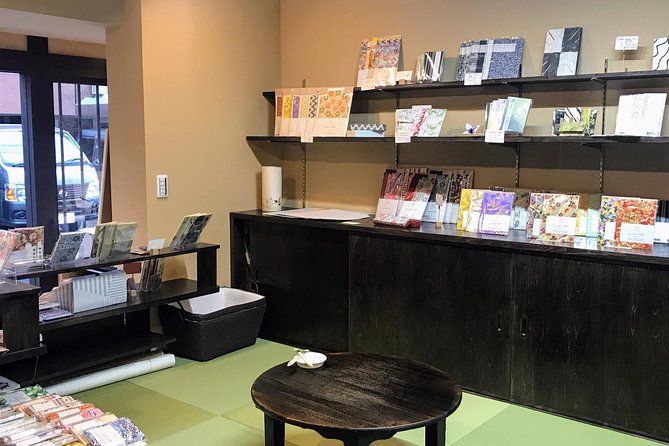
Also, after the class, the workshop has a small shop where you can browse other paper goods. It’s a good moment to connect what you made with what you see for sale, without being pressured. People liked that there was no pushy sales vibe.
Duration, group size, and why that matters for value
This class runs about 1 hour. There is an optional add-on: you can add an additional hour of unlimited paper making, but you pay for that extra time.
At $33.03 per person, it’s not trying to be a bargain craft factory. The value is in three things you’re getting in a short time:
- You learn and make actual traditional washi, from raw materials, with guidance.
- You get a finished souvenir, not just a sample sheet.
- Your group is capped at 4 travelers, which keeps the experience personal and helps you avoid the frustration that can happen when a workshop is too crowded.
For comparison, many Kyoto craft activities either cost about the same while giving you less hands-on time, or they don’t include a finished item that’s ready to take home. Here, the finished product is part of the point, and the small group size supports a better outcome.
Who it suits best:
- You want a calm morning activity away from the busiest tourist circuits.
- You like making things with your hands, even if you consider yourself a beginner.
- You want a Kyoto craft that feels authentic, not generic.
- You are traveling with kids and want an activity that is structured but still creative.
Tips so your washi project looks great
You don’t need craft skills to do well, but you do want to show up ready to focus.
Here’s what helps:
- Wear comfortable clothing. You’ll be doing hands-on work, and craft sessions usually involve leaning in and staying engaged.
- Arrive a bit early so you can settle in. A relaxed start makes the next steps easier to follow.
- Choose a project that matches how you’ll display or use it later. Postcards are fun if you’re mailing from Japan or gifting. Table mats work well at home. A lampshade or panel can be a dramatic keepsake, but pick what fits your travel style.
- Don’t overthink the botanical layout. The instructor will guide you, and part of the charm is that it’s handmade.
- If you’re sensitive to drying time, plan to enjoy the video portion. It helps you connect the steps you made with the material results.
If you add the optional extra hour, you’ll get more creative output. That’s especially worth considering if you want multiple gifts, or if you know you’ll want a spare set of paper designs.
Should you book this Kyoto washi papermaking class?
If you want a Kyoto experience that is creative, calm, and genuinely hands-on, I think this is a smart booking. The combination of traditional washi making, seasonal decoration choices, and a small group format makes it feel personal. Plus, you leave with a handmade souvenir you actually created, which is the best kind of travel memory.
Book it if:
- you want a break from sightseeing crowds
- you care about learning the process, not just taking photos
- you want a bilingual class that’s friendly for a range of ages and abilities
Skip it if:
- you dislike crafts or feel impatient with step-by-step activities
- you’d rather do an outdoor sightseeing heavy morning and you don’t want to carry a handmade item
FAQ
How long is the washi papermaking class in Kyoto?
The class runs about 1 hour.
Can I make more than one item during the workshop?
Yes. You can add an additional hour of unlimited paper making for an extra cost (your expense).
What does the price include?
The price includes all taxes, fees, and handling charges.
Is transportation to and from the workshop included?
No. You make your own way to the workshop and back.
How many people are in the group?
The workshop has a maximum of 4 travelers, which keeps the class small.
Can kids participate?
Children must be accompanied by an adult.
Is there free cancellation?
Yes, you can cancel for a full refund if you cancel at least 24 hours in advance of the experience’s start time.
Fresh options around Kyoto
- Kyoto Aquarium Admission Ticket★ 4.7 · 12 reviews
- Kyoto Gion Photoshoot – Private Session | Pro Photographer★ 5.0 · 12 reviews
- Gyoza Cooking Class in Kyoto: Traditional Japanese Dumplings★ 5.0 · 12 reviews
- Kyoto: Guided Food Tour with 12 Dishes & 3 Drinks★ 5.0 · 12 reviews
- Kyoto: Avoid the Crowds at the Hidden Gems of Arashiyama★ 4.9 · 13 reviews
- Kyoto Early Bird English Tour: Gion & Higashiyama(Private opt)★ 5.0 · 13 reviews
- Otsu-e Folk Art Workshop & Local Culture Walk Near Kyoto★ 5.0 · 13 reviews
- Kyoto, Osaka, Nara Full Day tour by Car English speaking Driver★ 3.5 · 13 reviews
Morning, compared.

Kyoto Early Morning Tour with English-Speaking Guide
Read our review →Early Morning Tour with English-Speaking Guide
Read our review →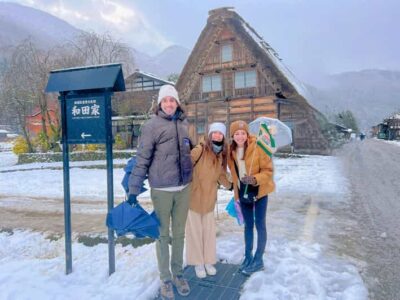
World Heritage Shirakawa-go Morning Guided Tour
Read our review →
Nara Early Morning Tour (Kyoto or Osaka Departure Available)
Read our review →

Hiroshima in a Nutshell: Morning Bike Adventure
Read our review →