
Reviewed · WALKING TOURS
Tokyo: Shibuya Crossing & Hidden Streets Walking Tour
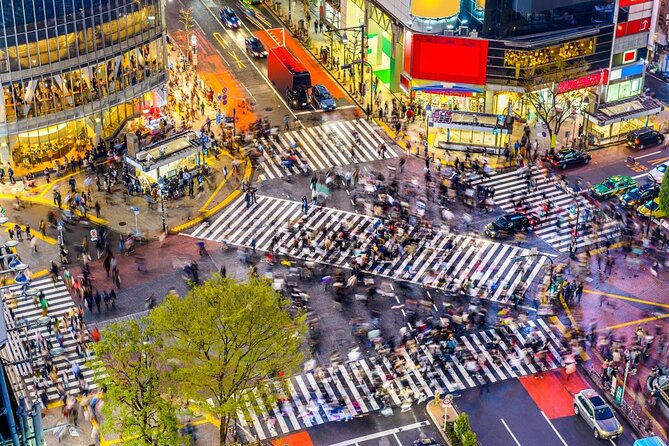
Shibuya hits you in the first minute. This 2-hour route mixes the Myth of Tomorrow mural with the chaos of Shibuya Crossing, then threads through Nonbei Yokocho before landing at the Hachikō statue. I like that it pairs huge, famous sights with smaller side streets and clear local context, but the meeting spot at SABON Shibuya Mark City, Mark City 3rd floor, can be tricky for first-timers, so start early.
The guide makes a big difference here. Names like Loc and Rio show up again and again in recent experiences, and the vibe is practical, friendly, and question-friendly, not just “point and pose.” If you want a structured way to get your bearings in Shibuya without turning the day into one long navigation headache, this is a strong bet.
Key Things I’d Watch For in This Shibuya Walking Tour
- Myth of Tomorrow by Taro Okamoto: a street-mural stop with a nuclear-age message of hope.
- Shibuya Crossing photo timing: you get quick photo stops without getting stuck in the crowd.
- Nonbei Yokocho, Drunkard’s Alley: old Tokyo atmosphere in a small, walk-through lane network.
- Miyashita Park’s multi-level design: an easy breather from the street swirl.
- Center Gai and Maruyamacho: modern shopping and nightlife-adjacent streets in one loop.
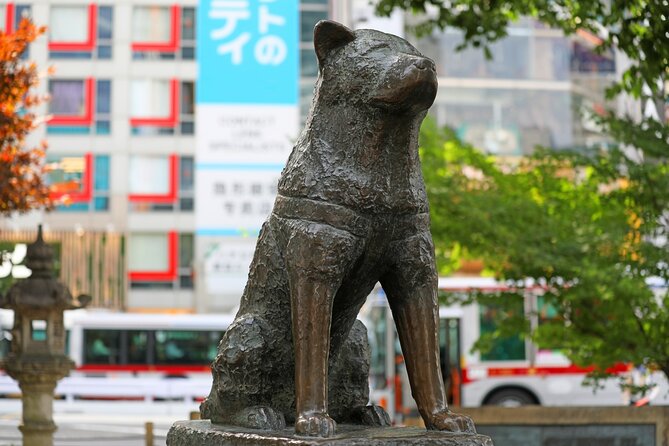
- Finish at Hachikō Memorial Statue: the loyalty symbol that anchors the whole district.
Myth of Tomorrow and Shibuya Station Area: When Street Art Means Something
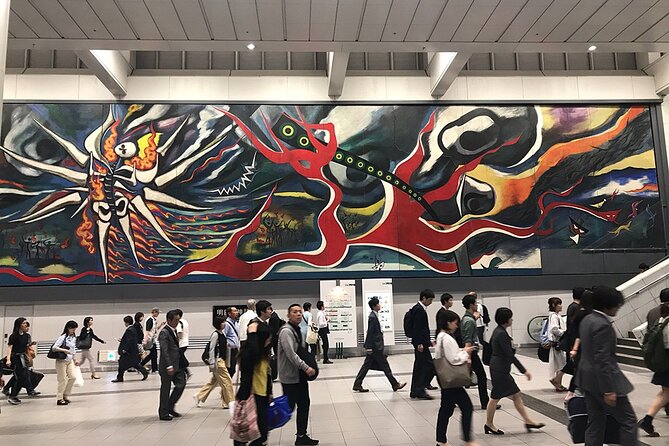
The tour’s tone starts right away with The Myth of Tomorrow, a powerful mural by Taro Okamoto. It sits in the Shibuya Station area and it is not just decorative. The message centers on nuclear impacts, but it is framed with hope, which gives Shibuya more weight than people expect when they picture only neon and crowds.
What I like is how this stop sets up the rest of the walk. Shibuya is often treated like one big entertainment zone, but this mural nudges you to look for meaning under the surface. It also gives you a practical rhythm: a short visit, a quick photo stop, and then moving on. You get a check-in moment before the foot-traffic monster that is Shibuya Crossing.
The only consideration is time. The mural stop is brief, so if you want long, slow contemplation, treat it like a strong opening note, not the whole symphony.
More Walking Tours in Tokyo
- Tokyo Tsukiji Fish Market Food and Culture Walking Tour
★ 5.0 · 3,184 reviews - Tokyo: Imperial Palace and Shogun Historical Walking Tour
★ 5.0 · 2,251 reviews - Tokyo: Shinjuku Local Bar and Izakaya Guided Walking Tour
★ 4.9 · 1,794 reviews
Shibuya Crossing: How to See the Famous Mess Without Getting Crushed
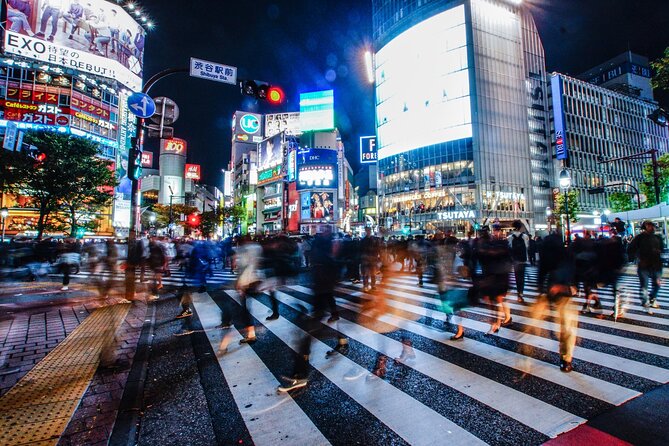
Shibuya Crossing is the world-famous intersection you’ve seen in videos. Here, it’s handled the right way, with a photo stop plus guided context rather than a “stand wherever and hope for the best” approach.
I like that the tour doesn’t just point you toward the crosswalk and leave you to figure out the rest. In the recent experiences, guides have helped with photos at the crossing, including for solo travelers who want someone else to frame the shot. That small bit of help can save real time, because in Shibuya you can burn minutes trying to line up the perfect angle.
Big crowd reality: the crossing is loud, busy, and full of moving bodies. If you get stressed in dense groups, you’ll want to stay close to the guide and follow the movement cues. This is one place where it is worth treating the tour like a safety-led choreography, not like a free-form stroll.
Nonbei Yokocho, Drunkard’s Alley: Old Tokyo in a Tight, Walk-Through Slice
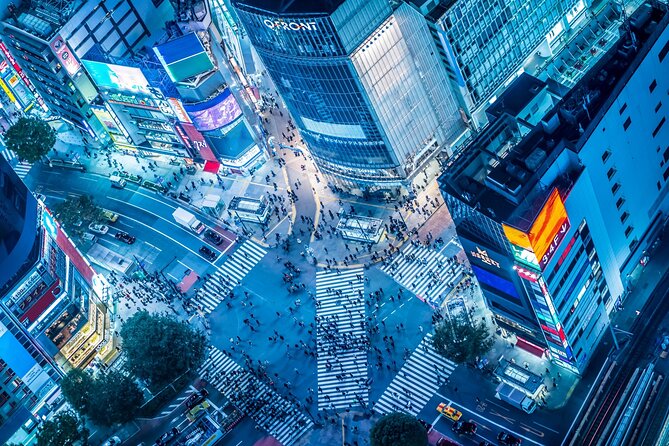
After the crossing spectacle, the route softens into old Tokyo with Nonbei Yokocho, commonly called Drunkard’s Alley. This is the kind of street you can’t really replicate from photos. It’s smaller, tighter, and it feels like you are stepping into a different tempo.
What makes this stop valuable is the guided framing. You’re not just walking through narrow lanes; you’re getting the cultural and historical context that explains why places like this fit into Shibuya’s story. Recent feedback highlights that guides explain facts clearly at each point, and this alley is one of the best spots to use that approach. The street layout makes it easy to get disoriented on your own, so having a guide helps you notice the details you’d otherwise miss.
The drawback is comfort and movement. Tight lanes mean you’ll likely walk slowly and squeeze through small spaces, especially if you hit a busy time. If claustrophobic spaces bother you, keep that in mind and expect the alley to feel more “close-up” than the open areas like Shibuya Crossing.
Miyashita Park: A Modern Reset Between Neon and Night Streets
Then you get a breather at Miyashita Park. This stop is more than a break in the itinerary. It’s an urban oasis in the middle of the district, and the multi-level setup gives you different sightlines while you catch your breath.
I like this part because it changes your camera and your body. After walking dense streets and hovering near the crossing, Miyashita Park gives you space to regroup and look across the area. The guide’s short visit format means you don’t wander for too long, but you still get a feel for why people hang out here instead of rushing through.
If you’re traveling with limited stamina, the park is a good moment to slow down. The tour keeps moving, but the park creates natural pauses: benches, levels, and open-air breaks. Just note that multi-level spaces usually mean stairs, so comfortable shoes matter more than you think.
Same corner of Japan, a different kind of day:
- Mt Fuji and Hakone 1-Day Bus Tour Return by Bullet Train
★ 5.0 · 26,383 reviews - 1-Day Tokyo Bus Tour
★ 5.0 · 14,250 reviews - Tokyo: TOKYO SKYTREE® Admission ticket
★ 4.5 · 11,192 reviews - Tokyo: teamLab Planets TOKYO Digital Art Museum Entry Ticket
★ 4.6 · 9,779 reviews
Center Gai and Maruyamacho: Youth Energy, Shopping Streets, and Night-Adjacent Atmosphere
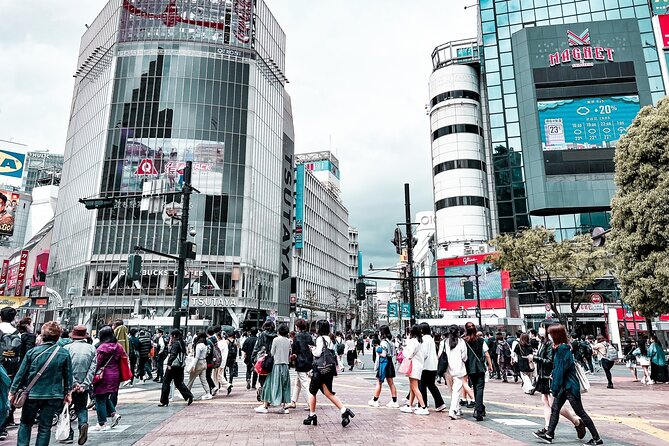
Center Gai is next, followed by Maruyama-cho. Together, they show the two faces of Shibuya after the famous sights: the consumer and culture streets, and the nightlife-adjacent side roads where the district feels like it’s living, not just performing.
Center Gai is the “in the middle of it” area. It’s an easy place to understand why Shibuya feels youthful, because the street layout funnels you into stores, crowds, and constant movement. The guide’s role here is to translate what you see into something you can interpret, not just name. In recent experiences, guides have been generous with context and practical tips, including where to go next for food and shopping.
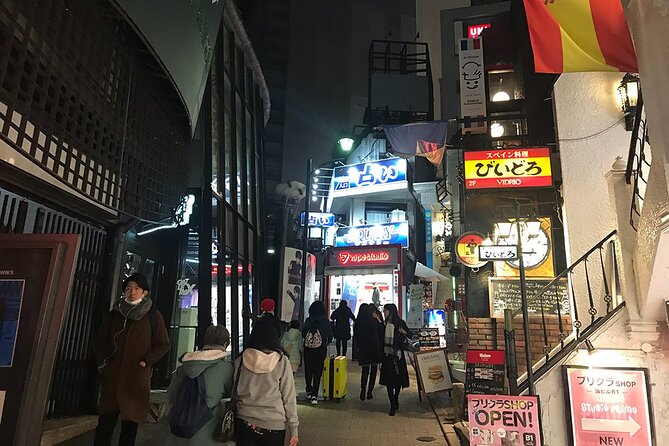
Maruyama-cho brings the mood shift. The streets are framed as historical but also turned into a hub for modern nightlife. So you get a mix, older-looking lanes next to newer energy. It’s a great pairing after Center Gai because it teaches you how Shibuya manages old and new at the same time.
The main consideration: if you prefer very quiet streets, these segments may feel too active for you. This tour is built for the Shibuya pulse, so expect people, lights, and movement.
Hachikō Memorial Statue: The Best Ending Point in Shibuya
The tour ends at the Hachikō Memorial Statue in the heart of Shibuya. This is more than a photo stop. Hachikō is a symbol of loyalty, and the guide’s storytelling at the finish helps explain why this statue sits at the emotional center of the district.
I like ending here because the loop structure makes sense. You start with a mural that pushes you toward meaning, you move through modern spectacle and old alley texture, you rest your legs in a park, then you close with a local icon that ties everything into one neighborhood identity.
Also, finishing at a well-known landmark helps after the tour. Even if you’re not sure how to get back out, you know where you are in Shibuya, and that reduces stress when you’re making your next plan for dinner or shopping.
Price and Value at $22 for a 2-Hour Walk
At $22 per person for a 2-hour guided walk, this tour sits in the sweet spot for Shibuya. You’re paying for more than someone walking beside you. You’re paying for a route that hits major anchors and side streets, with guided explanation at each stop and a live English-speaking guide.
Here’s what makes the value feel real:
- You get multiple distinct zones in a short time window, rather than just camping at one famous location.
- The guide time is built around context, not only directions, which helps you understand what you’re seeing.
- The format supports small groups, including cases where people were effectively the only participants, which is great if you want flexibility and slower pacing.
One more value point from recent experiences: guides have offered practical recommendations for food and shopping, including vegan-friendly suggestions. Even if you don’t follow every recommendation, it gives you an easy next step when you’re hungry and tired.
The only value caution is simple. If you already know Shibuya well and you just want to wander on your own, a guided tour adds cost. But if you’re new to the district, this is one of the more efficient ways to build local understanding fast.
Who Should Book, and Who Might Want Something Different
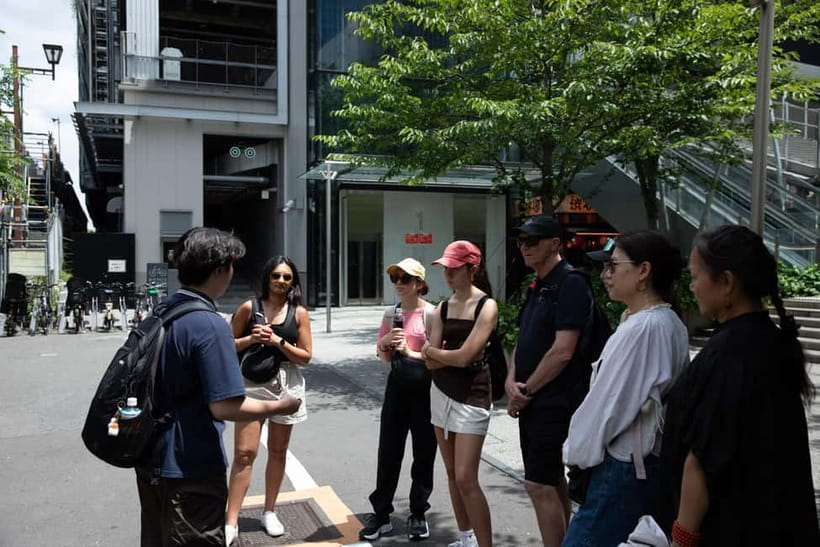
This tour fits best if you want an organized path through Shibuya with real explanations. It’s especially good for first-time visitors who want to see the big iconic spots, then go a step further into less-frequented streets like Nonbei Yokocho.
It also suits solo travelers. Recent experiences include guides taking photos for individuals at Shibuya Crossing, which is a small thing that can make a big difference when you don’t have a travel partner to photograph you.
If you hate crowds or you strongly prefer quiet neighborhoods, you might find parts of this route a bit too energetic. Shibuya Crossing and the Center Gai area are built for movement and people, not solitude. In that case, consider whether you’d rather spend more time in calmer districts, and treat Shibuya as a short visit.
Should You Book This Shibuya Walking Tour?
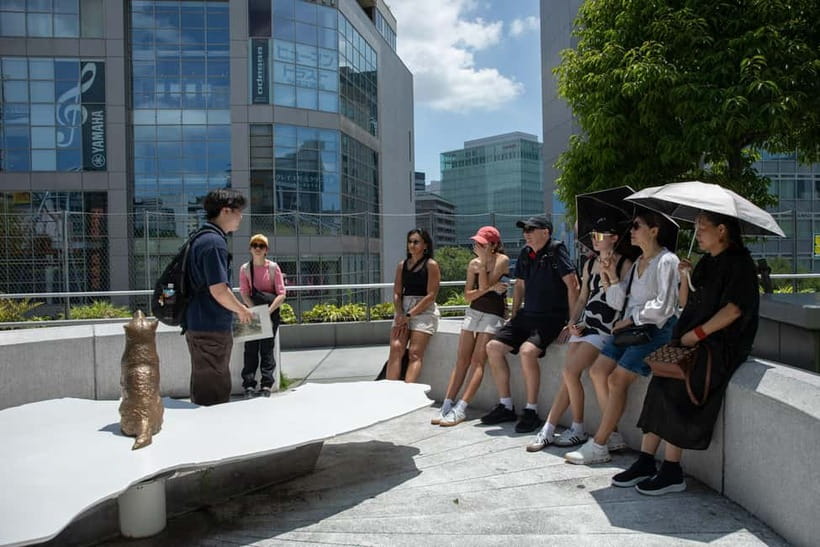
I’d book it if your goal is to understand Shibuya, not just snap photos. The combination of The Myth of Tomorrow mural, Shibuya Crossing, Nonbei Yokocho, Miyashita Park, and the ending at Hachikō gives you a whole-district story in a manageable 2-hour window.
The biggest reason to book is the guide quality and flexibility. Recent experiences highlight friendly communication, clear context at each stop, and guides who adjust to the group pace. If you care about learning why Shibuya looks the way it does, not only what it looks like, this tour delivers.
One last practical tip: be early to the meeting point. SABON Shibuya Mark City, inside Mark City on the 3rd floor, is easy to miss if you arrive at the last second. Bring comfortable shoes, keep your phone charged for photos, and treat Shibuya like a district you’re decoding, not just passing through.
FAQ
Where do I meet the guide?
You meet at SABON Shibuya Mark City, inside Mark City on the 3rd floor. The guide will be holding a sign.
How long is the Shibuya Crossing & Hidden Streets Walking Tour?
The tour lasts 2 hours.
Is the tour offered in English?
Yes, the live guide speaks English.
How much does the tour cost?
The price is $22 per person.
What are the main stops on the route?
You visit Nonbei Yokocho, The Myth of Tomorrow, Shibuya Crossing, Miyashita Park, Center Gai, Maruyamacho, and finish at the Hachikō Memorial Statue.
Is a local guide included?
Yes, the local guide fee is included.
Can I cancel or change my plans?
You can cancel up to 24 hours in advance for a full refund. You can also reserve now and pay later.
Fresh options around Tokyo
- Tokyo: Nikko Kegon Falls Lake Chuzenji Toshogu Temple & More★ 4.9 · 12 reviews
- Tokyo: Samurai History Walking Tour★ 5.0 · 12 reviews
- Harajuku: Kawaii Fashion and Pop-Culture Tour★ 4.7 · 12 reviews
- Tokyo: Mt. Fuji & Lake Kawaguchi Instagram Full Day Trip★ 4.1 · 12 reviews
- Shibuya Tokyo: Modern Kintsugi Workshop in Shibuya★ 5.0 · 12 reviews
- Tokyo: GTR Guided Daikoku Experience at Night★ 5.0 · 12 reviews
- Tokyo: Daikoku JDM Car Culture Tour★ 4.6 · 12 reviews
- Mt Fuji Private Day Trip from Tokyo with English speaking driver★ 5.0 · 13 reviews
Walking Tours, compared.
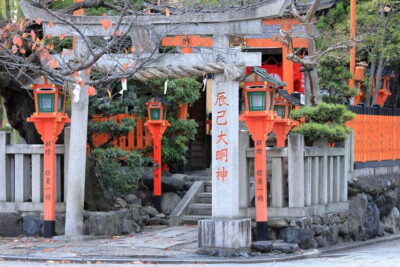
Kyoto Geisha Walking Tour: Gion District & Hidden Gems
Read our review →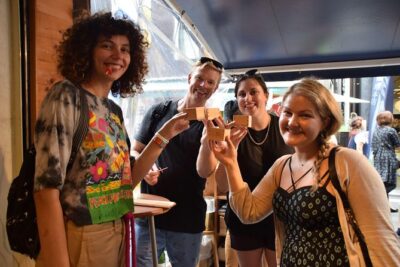
Tokyo Tsukiji Fish Market Food and Culture Walking Tour
Read our review →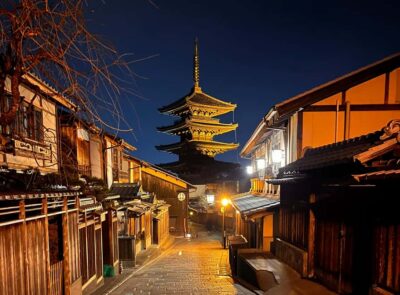
Gion Magical Night Walking Tour with Geisha Trivia
Read our review →
Imperial Palace and Shogun Historical Walking Tour
Read our review →
Gion Geisha District Walking Tour – Stories of Geisha
Read our review →
Shinjuku Local Bar and Izakaya Guided Walking Tour
Read our review →
Browse the lists this tour appears in