
Reviewed · WALKING TOURS
Tokyo Shibuya Crossing & Hidden Streets Walking Tour
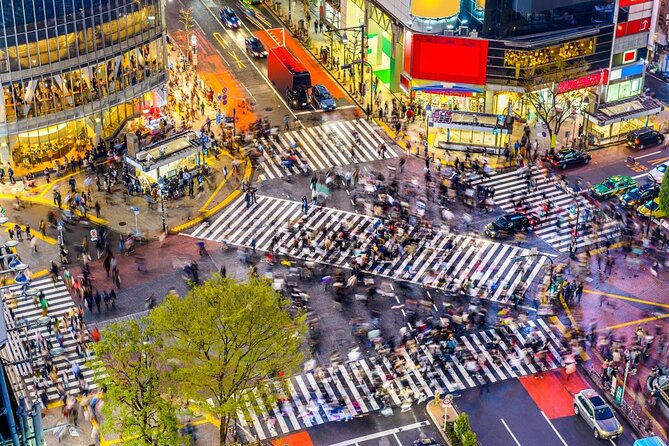
Shibuya makes even walking feel electric. This 2-hour small-group tour guides you through Shibuya Crossing and the nearby streets most people skip, with a plan that keeps you moving without getting lost. You also get a simple route that works even if you are new to Tokyo.
I really like the mix of stops. You start with the Myth of Tomorrow mural at Shibuya Station, then hit the intersection everyone photographs, then shift to everyday Shibuya with Miyashita Park, Nonbei Yokocho, Center-gai, Maruyamacho, and the Hachiko area. Guides such as Loc, Rio, Grey, and Daichi show up in reviews as the kind of people who connect what you see to what it means in real life.
One consideration: the walking is not totally flat, and the meeting point can be tricky to spot inside a big mall complex. If you are sensitive to uphill climbs or you hate hunting for entrances, plan on comfortable shoes and a little extra patience at the start.
Key takeaways before you go
- Small group, max 12: a tighter route and easier questions along the way
- Route beyond the Scramble: Shibuya Station art, Miyashita Park, and multiple alley and shopping streets
- Free-entry stops on the itinerary: the listed admissions are marked as free at each stop
- Guide-led navigation: you are not stuck trying to decode Shibuya signage
- Food and nightlife tips: guides often point you toward bars and eateries for later
Shibuya Crossing plus the streets you actually want
Shibuya has two faces. One is what the world photographs, the crossing in front of Shibuya Station. The other is the real district you walk through after the lights and crowds fade. This tour is built to give you both.
At a reasonable $25 per person, you are buying structure, not entry fees. The route is packed into about two hours, but it is paced like a human plan, not a sprint. And because the group is capped at 12, you get the feeling of a shared walk rather than a guided herding experience.
What makes this tour feel worth it is that it does not stop at the postcard spot. You go to places tied to Shibuya’s daily rhythms, including the places locals still use for casual wandering, grabbing food, and hanging out.
More Walking Tours in Tokyo
- Tokyo Tsukiji Fish Market Food and Culture Walking Tour
★ 5.0 · 3,184 reviews - Tokyo: Imperial Palace and Shogun Historical Walking Tour
★ 5.0 · 2,251 reviews - Tokyo: Shinjuku Local Bar and Izakaya Guided Walking Tour
★ 4.9 · 1,794 reviews
Price, value, and what you are really paying for
Let’s talk value, because Shibuya can be expensive in a hurry if you keep swiping your card every time you see something.
At $25, the tour covers all fees and taxes, and the sights on the itinerary are listed with free admission. That means your money goes toward the guide, the route planning, and the time saved figuring things out on your own.
This is also a good deal if you want nightlife leads. Multiple guides in reviews steered people toward local bars and eateries, and even suggested what to do when some places were closed during New Year. In other words, you are not just getting photos. You are getting next steps.
One small note: tips for the guide are not included. If you had a great guide, plan to tip in line with your comfort level and local norms.
Start at SABON Shibuya Mark City East Mall, end at Hachiko
Your start point is specific: SABON Shibuya Mark City, East Mall, 3F. Your end point is right outside the station area at the Hachiko statue.
This “start-to-finish” setup matters. A lot of Tokyo walking tours feel like you go out, then backtrack. Here, the route naturally funnels toward the famous meeting point outside Shibuya Station. You can do the tour, then continue on without feeling like you are starting over.
Two practical tips based on common issues people report:
- In a big mall complex, your landmark matters. If you have ever struggled with indoor meeting points, arrive a few minutes early and screenshot the map.
- If you are coming from another train line, give yourself extra time. Shibuya station can be a maze at first.
Myth of Tomorrow inside Shibuya Station: the first wow moment
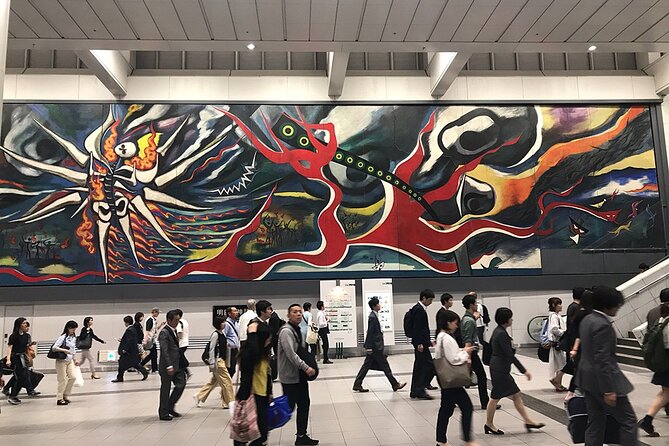
Stop one is Myth of Tomorrow, a large mural by Taro Okamoto located in Shibuya Station. It is a striking opener because it flips the mood from trendy shopping to something heavier, tied to the atomic bombings.
Why this stop works for you:
- It gives context right away, before you spend two hours in photo mode.
- It is an easy win because you are already at Shibuya Station, so you are not wasting time traveling between far-apart sights.
What to watch for:
- You will be in a station environment, so expect crowds and a bit of movement noise.
- The mural is free to enter, so you can linger without worrying about an extra ticket decision.
Same corner of Japan, a different kind of day:
- Mt Fuji and Hakone 1-Day Bus Tour Return by Bullet Train
★ 5.0 · 26,383 reviews - 1-Day Tokyo Bus Tour
★ 5.0 · 14,250 reviews - Tokyo: TOKYO SKYTREE® Admission ticket
★ 4.5 · 11,192 reviews - Tokyo: teamLab Planets TOKYO Digital Art Museum Entry Ticket
★ 4.6 · 9,779 reviews
Shibuya Crossing, aka the Scramble, plus the crossing rhythm
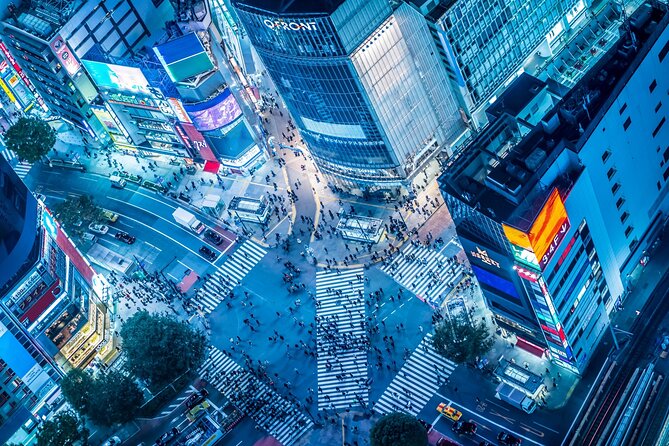
Of course, stop two is Shibuya Crossing, the intersection famous worldwide as The Scramble. Your guide takes you to the right viewpoints and helps you handle the flow of people.
This is not just about standing on a corner. The best part is learning how to time yourself. If you have ever tried to cross without knowing what the light cycles look like in Japan, you get caught in chaos fast. With a guide, you can just follow the plan, cross when everyone crosses, and then reset for photos.
Also, guides often turn this stop into a mini lesson. In reviews, guides like Loc and Rio stood out for making the intersection feel understandable, not just random traffic.
Practical tip for photos:
- Bring your phone power bank or ensure your camera is charged. Two hours in Shibuya means lots of bursts.
- If it is crowded, be flexible on where you stand. The guide knows which spots work best at that moment.
Miyashita Park: sports-and-recreation Shibuya above street level
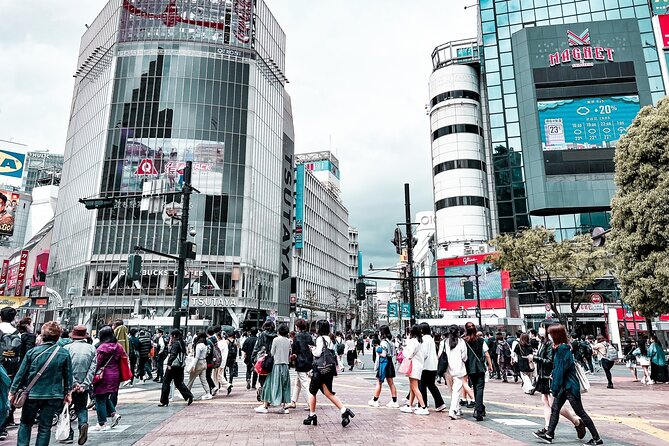
Stop three is Miyashita Park, an urban renewal project that turns a conventional park into a multi-level sports and recreation area. This is one of the most useful stops on the route because it shows how Shibuya changes upward, literally stacking activities into layers.
Why you might enjoy it:
- It is a break from crossing streets and shopping corridors.
- It gives you a sense of how modern Tokyo uses space, not just how it looks on posters.
What to consider:
- You may have stairs or ramps involved since the park is multi-level. If you are not great on stairs, take it slow and use the widest paths.
- You are still in Shibuya, so expect people. Plan to keep moving rather than expecting a quiet pause.
Nonbee Yokocho, Center-gai, and Maruyama-cho: the backstreets that feel local
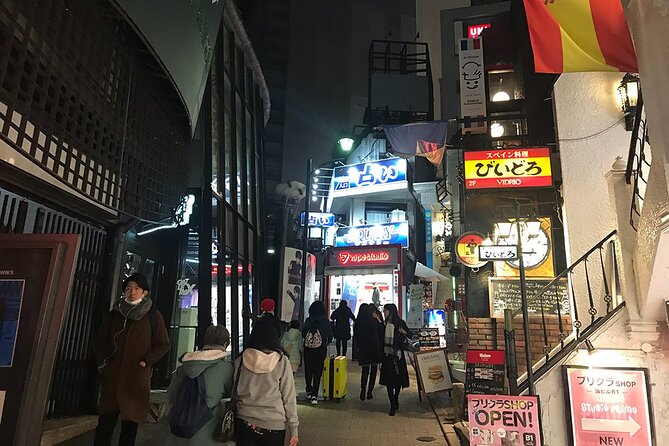
Stops four through six are where Shibuya becomes more personal.
Nonbee Yokocho
Nonbei Yokocho, often translated as Drunkard’s Alley, is a narrow historic alley near Shibuya Station, known for tiny traditional Japanese bars and eateries. Even if you do not go inside yet, just seeing the scale tells you why this area has a reputation.
A useful thing to know if you are planning your evening: guides often point people toward places that are easy to miss. In reviews, guides recommended asking about small bars and walking streets where you can hop between spots without committing to one long dinner.
Shibuya Center-gai
Shibuya Center-gai is the central pedestrian shopping street. It is a great contrast to the alley. One moment you are in tight, old-style lanes, the next you are in an area built for walking, browsing, and people-watching.
If you are the kind of person who likes browsing, this stop gives you an on-ramp to shops. If you are not, you can treat it like a quick orientation, then move on to the more interesting side streets.
Maruyama-cho
Maruyama-cho is tied to history as a former red-light district. Today, it has become a trendier neighborhood with an eclectic mix of old and new.
This stop is valuable because it adds a layer of meaning. You stop seeing Shibuya as only youth culture and neon shopping, and you start seeing how areas evolve, sometimes in ways that keep hints of the past.
Hachiko: the classic ending point that keeps your evening easy
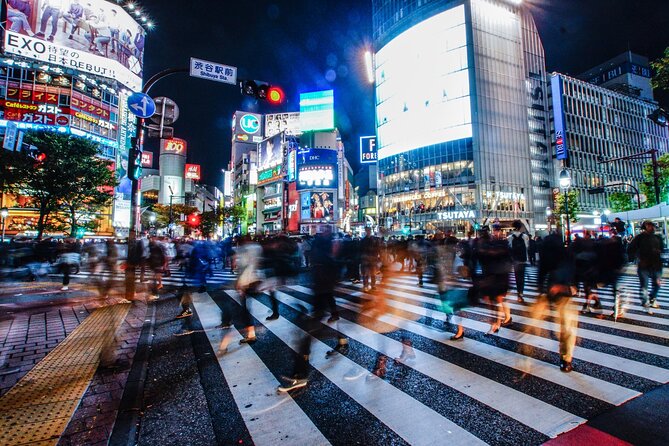
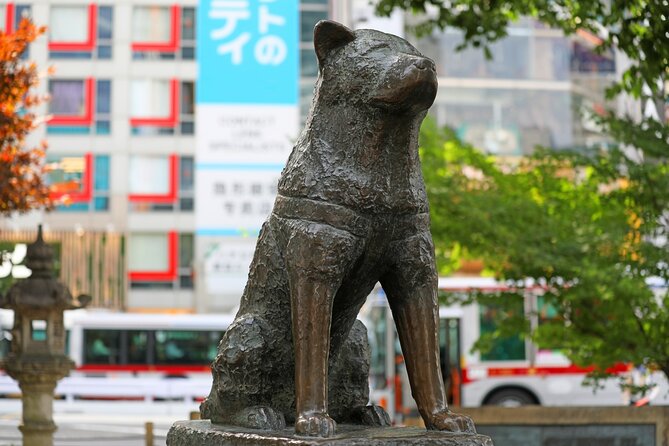
Stop seven is the Hachiko statue area, one of the most beloved landmarks near Shibuya Station. It makes a satisfying finish because:
- You end at a landmark you can find again later.
- It is a natural starting point for your own plans, whether you want dinner, dessert, or a stroll toward another neighborhood.
In reviews, guides often use this ending as a transition into the evening. People mentioned food recommendations, and the feeling that the tour helped them kick off a good night out in Shibuya.
Guides set the tone, and you will feel it
The guide is the difference between a list of stops and an actual experience. In reviews, several guides stood out repeatedly.
- Loc comes up as friendly, easy to talk to, and able to connect what you see to his home neighborhood. People also credited Loc with helping them start a night out, and with answering questions patiently.
- Rio is mentioned as knowledgeable and informative, with emphasis on showing Shibuya beyond the obvious.
- Grey and Zac are described as fun and engaging, including strong English and clear explanations.
- Daichi is praised for historical and current context, adding story to the walk.
- DIXCE is also singled out for being very informative in a short 2-hour window.
What you should take from this: the tour is built around a guided route, so the guide matters a lot. If you care about asking questions, you will get more out of the tour.
One more practical thing: people mentioned there can be uphill walking and that the pace can adjust. If you are traveling with a senior family member or you move slowly, this tour seems capable of slowing down and adding breaks when needed.
How the route feels in real time (and why it works)
This itinerary is tightly packed: Shibuya Station mural, Shibuya Crossing, Miyashita Park, then alley and shopping streets, then Hachiko. That sounds like a lot, but because stops are close, the tour stays efficient.
Here is the value in the way it is sequenced:
- Starting near Shibuya Station means you get your bearings fast.
- You hit the iconic photo moment early, so the rest of the walk can feel exploratory rather than frantic.
- Finishing near Hachiko gives you a simple, easy place to regroup and decide your next move.
You will also see a wide range of Shibuya types in a short time, which is exactly what you want if you have limited hours in Tokyo.
Who this tour suits best
This is a great fit if:
- You are a first-timer in Shibuya and want a smart orientation.
- You want Shibuya Crossing photos without losing the rest of the district.
- You like street-level Tokyo, not just museum-style sightseeing.
- You want local food and bar suggestions that make your evening smoother.
It may not be the best fit if:
- You hate walking or you cannot do uneven pavement and stairs. Some parts, like Miyashita Park, are multi-level.
- You get extremely anxious about finding indoor meeting points in large malls. The start is clearly defined, but it can still take a minute.
Should you book this Shibuya Crossing and Hidden Streets tour?
If you want the famous Shibuya Crossing experience but also want the streets that give Shibuya its personality, I think this is a strong choice. The price is reasonable for a guided, small-group walk, the listed admissions are free, and the route ends at Hachiko so you can keep your plans flowing.
Book it if you value direction, context, and practical leads for later. Consider skipping only if you know you want zero walking, or if you prefer to wander entirely on your own without a set route.
FAQ
How long is the Tokyo Shibuya Crossing & Hidden Streets Walking Tour?
It is listed as about 2 hours.
How much does the tour cost?
The price is $25.00 per person.
What is included in the price?
All fees and taxes are included. Tips to the guide are not included.
What is the group size limit?
The tour has a maximum of 12 travelers.
Where do I meet and where does the tour end?
The start is SABON Shibuya Mark City, East Mall, 3F. The tour ends at the Hachiko Statue area near Shibuya Station.
Do I get a mobile ticket?
Yes, it uses a mobile ticket.
Are there entrance fees for the stops?
The itinerary lists admissions for the stops as free.
Fresh options around Tokyo
- Tokyo: Nikko Kegon Falls Lake Chuzenji Toshogu Temple & More★ 4.9 · 12 reviews
- Tokyo: Samurai History Walking Tour★ 5.0 · 12 reviews
- Harajuku: Kawaii Fashion and Pop-Culture Tour★ 4.7 · 12 reviews
- Tokyo: Mt. Fuji & Lake Kawaguchi Instagram Full Day Trip★ 4.1 · 12 reviews
- Shibuya Tokyo: Modern Kintsugi Workshop in Shibuya★ 5.0 · 12 reviews
- Tokyo: GTR Guided Daikoku Experience at Night★ 5.0 · 12 reviews
- Tokyo: Daikoku JDM Car Culture Tour★ 4.6 · 12 reviews
- Mt Fuji Private Day Trip from Tokyo with English speaking driver★ 5.0 · 13 reviews
Walking Tours, compared.
Kyoto Geisha Walking Tour: Gion District & Hidden Gems
Read our review →
Tokyo Tsukiji Fish Market Food and Culture Walking Tour
Read our review →
Gion Magical Night Walking Tour with Geisha Trivia
Read our review →
Imperial Palace and Shogun Historical Walking Tour
Read our review →
Gion Geisha District Walking Tour – Stories of Geisha
Read our review →
Shinjuku Local Bar and Izakaya Guided Walking Tour
Read our review →
Browse the lists this tour appears in