
Reviewed · WALKING TOURS
Tokyo: Meiji Shrine Walking Tour — Shintoism & Imperial System
A shrine walk with real context. I love how this tour turns Meiji Jingu into an easy, calm experience, and I also love the way it makes Shinto practical instead of mysterious. One possible drawback: at about 1 hour 30 minutes, it is not a slow, all-day wander, so if you want lots of solo time to roam, plan extra time after.
My favorite part is how the guide keeps the pace human and the explanations clear. Names like Yuuki A, Nana, Nonoka, Nanami, and Keiko come up in this tour’s guide lineup, and the common thread is patient, friendly teaching in good English. You can even take part in simple shrine actions like drawing omikuji, writing a wish on an ema, and exploring omamori charms, which is where the meaning stops being theory and starts feeling real.
Key Highlights You Should Not Miss
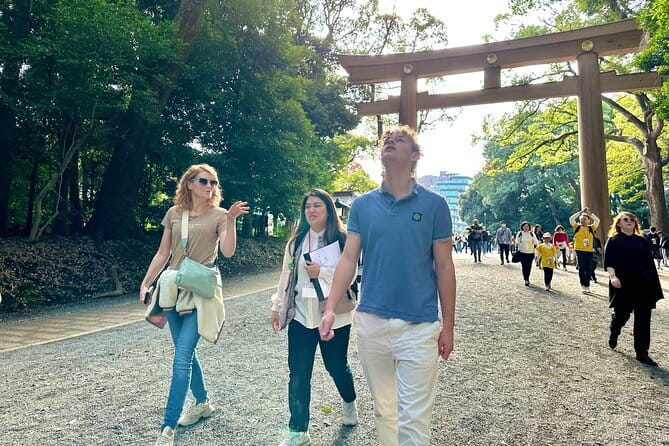
- A small-group walk (max 15) through a peaceful forest, so questions do not get lost in the crowd
- Two giant moments at the torii gates, including one of Japan’s largest wooden torii made from ancient cypress from Taiwan
- Do the shrine rituals yourself with help, from purification steps to offering a prayer
- Learn Shintoism and the Japanese Imperial system as you move through the grounds, not in a lecture
- Garden time is covered with included admission fees for the Meiji Shrine Garden
- Finish with a quiet café stop at Café Mori no Terrace and a nearby gift shop
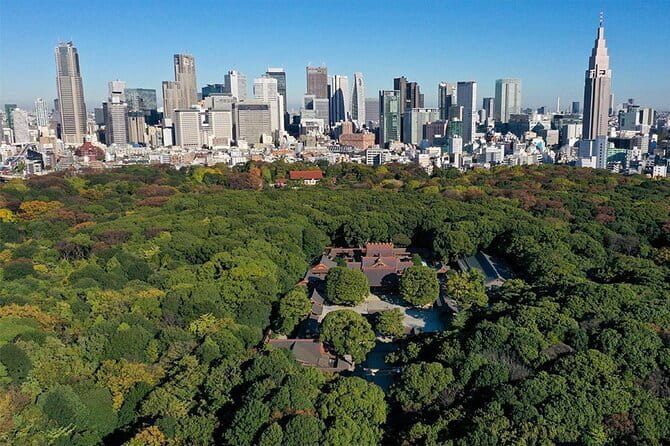
Entering Meiji Jingu Feels Like a City Reset
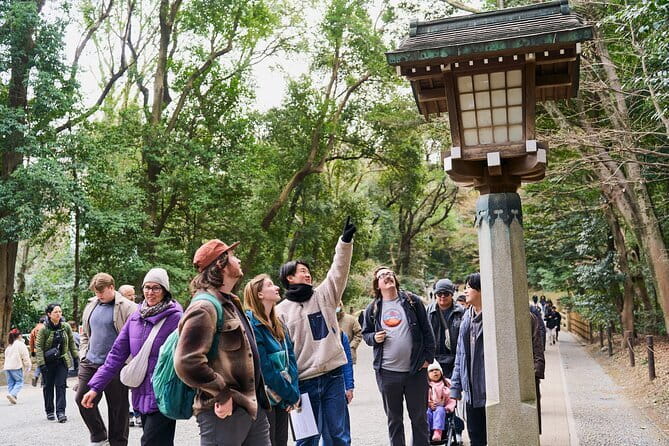
Meiji Shrine is one of those Tokyo places where your brain goes quiet the second you step into the trees. This tour leans hard into that effect. Instead of treating the shrine like a checklist, you walk the grounds with an actual story attached, so the sights make sense as you see them.
I like that you get both the atmosphere and the meaning. You are in a large urban area, yet the path feels shaded and cool due to the surrounding foliage. And because you have a guide, the rituals are not intimidating. You get a simple map in your head: where you are, what you are doing, and why people do it.
The other reason I think this tour is good value is the pacing. In about 1.5 hours you cover the key sights, learn the basics of Shinto practices, and still have time to end relaxed, not rushed. If you like cultural context more than raw photo ops, you will probably feel satisfied.
More Temple & Shrine Tours in Tokyo
- Tokyo: Meiji Shrine, Asakusa, Skytree Bus Tour and Cruise
★ 4.7 · 1,986 reviews - Tokyo: Asakusa Walking Tour with Sensoji Temple Visit
★ 4.8 · 1,583 reviews - Nikko: Kegon Falls, Lake Chuzenji & Toshogu Temple
★ 4.6 · 1,577 reviews
Meeting at Harajuku and Getting Off to a Smooth Start
The tour starts near Harajuku Station, by the Jingumae area (Harajuku Station, 1 Chome-18 Jingumae, Shibuya). That matters because Harajuku is busy, so having a clear, transit-friendly meetup saves time and stress before you even reach the shrine.
Once you meet your guide, the group heads into the shrine grounds through a wide approach. You walk along a forest path, and along the way you see big torii gates and little ritual details that you might miss on your own. I also like that the tour design uses two different start times, which is useful if your day in Tokyo is already packed.
With a max group size of 15, you are not elbowing people while trying to understand what is happening. It makes a difference at places where people naturally pause, like near shrine structures or when you are offered a chance to do a ritual action.
The Walk to the Shrine: Giant Torii, Sake Barrels, and Purification Steps
Early on, you enter through the Harajuku gate and follow a broad path toward the main shrine. This is the part that sets the tone. The forest creates a natural speed limit, so you end up walking slower than you would on a self-guided sprint.
You also pass through one of the most eye-catching elements right away: giant torii gates. They are not just big, they are symbolic. Torii mark transitions, and being guided through them helps you notice that this is not random architecture. It is a clear visual cue that you are moving into a different kind of space.
You may also see sake barrel displays and purification steps along the way. The value here is the guide’s ability to explain what you are looking at and what people do there. Instead of wondering where to stand, or what the motions mean, you get quick, practical context.
If you like taking part instead of just watching, this is a strong moment. Purification is one of those topics that can sound formal and confusing until someone shows you the basic idea and the general flow.
One Huge Wooden Torii Gate Worth the Photo (and the Story)

There is a short stop focused on a standout landmark: one of Japan’s largest wooden torii gates. This torii is made from ancient cypress brought from Taiwan. It is the kind of detail that makes a sight more than a photo background.
The tour gives this stop the right treatment. You get a few minutes to look closely, absorb the size, and listen without being whisked away. That matters, because big objects like this can feel like just another stop unless someone explains why it is noteworthy.
I also appreciate the quiet confidence of this section of the walk. Even with a guide group, the area does not feel like a stage. It feels like a pause inside the forest.
More Walking Tours in Tokyo
- Tokyo Tsukiji Fish Market Food and Culture Walking Tour
★ 5.0 · 3,184 reviews - Tokyo: Imperial Palace and Shogun Historical Walking Tour
★ 5.0 · 2,251 reviews - Tokyo: Shinjuku Local Bar and Izakaya Guided Walking Tour
★ 4.9 · 1,794 reviews - Tokyo: Tsukiji Fish Market Food and Walking tour
★ 5.0 · 1,724 reviews
Main Shrine Time: Prayers, Omikuji, Ema, and Omamori
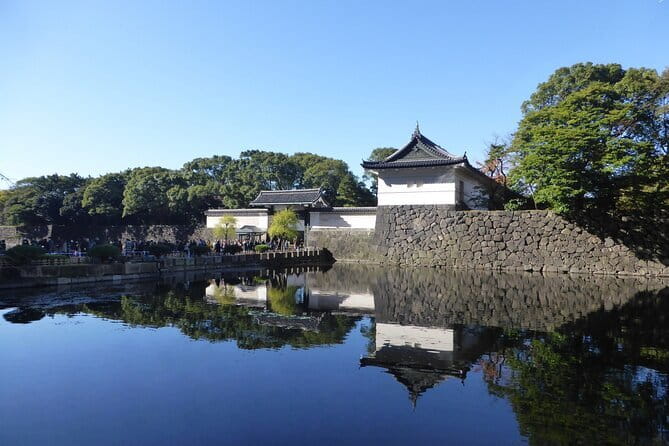
At the main shrine area, the tour shifts from walking and observing into a more participatory experience. You can offer a prayer, draw omikuji, write a wish on an ema, and explore omamori charms.
This part is the heart of why I recommend booking with a guide.
First, it helps you choose what to do. People see omikuji and assume it is just fortune-telling, but you get more grounded guidance through your guide’s explanations of the practice and what you can expect from the experience. Drawing omikuji is also a fun, low-pressure activity. You are not required to be an expert on day one.
Second, writing a wish on an ema is one of those small actions that instantly makes the visit feel personal. Even if you do not fully grasp every nuance, the act itself is clear and meaningful. Same goes for omamori charms. You get a sense for what charms are used for, and you are not just shopping blindly.
Third, the guide helps you keep your footing. Shrines are active places, and people move with different rhythms. With a guide, you know when to pause, where to look, and how to participate without feeling like you are blocking someone else.
Shintoism and the Imperial System, Explained While You Walk
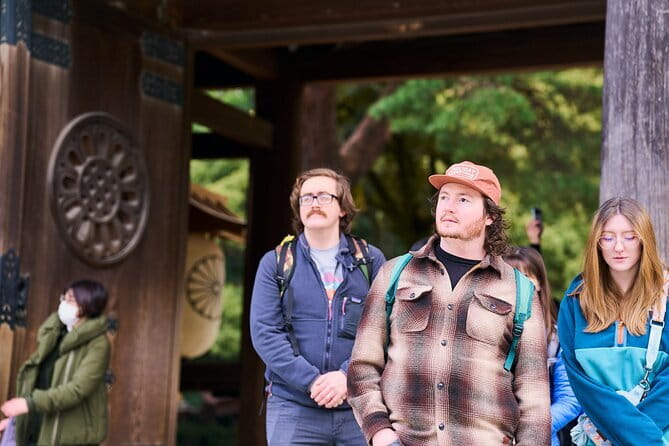
The tour is explicitly built around two big themes: Shintoism and the Japanese Imperial system. Instead of dumping this information at the start, your guide explains it as you pass through the grounds.
That approach works because you are seeing the physical setting while the ideas land in your brain. When you understand what shrine practices are doing, you start noticing small details more clearly, like why certain structures appear where they do and how the space is used for rituals and respect.
You also get context for the imperial connection as it relates to the shrine’s place in Japan’s story. Even if you already know a little, having it explained in plain language while you walk keeps it from feeling like memorization.
This is where the small-group format matters again. You can ask questions without waiting for a lull. And because the guide has the space to talk, they can answer in a way that matches what you are actually seeing right then.
Café Mori no Terrace: A Calm Finish With Food and Shopping

After the main shrine time, the tour wraps with a stop at Café Mori no Terrace, near the shrine grounds. This is not a random add-on. It is a chance to land softly after the spiritual focus of the shrine area.
The café offers light meals and drinks in a quiet forest setting. That quiet matters. Tokyo is loud, and even when you are surrounded by nature, you can still feel mentally “on” while doing rituals and learning new ideas. A relaxed snack helps you process what you saw.
Right next to the café you have a gift shop with Meiji Jingu–exclusive items, plus charms and traditional goods. I like that this is positioned as a natural conclusion. If you want a charm, you can choose it after you have learned what charms are and why people get them. If you want a small souvenir, you can pick one without turning the shrine area into a shopping mission.
Price and Value at About $21.22

This is one of those tours that makes sense even if you are not trying to optimize every yen. Around $21.22 for roughly 1 hour 30 minutes is reasonable, especially because the experience includes admission fees for the Meiji Shrine Garden.
That included garden admission is the key value point. You are not just paying for a walk and a talk. You are also paying for access to specific parts of the grounds where the garden element is part of the experience.
Then factor in the small-group size, max 15. At this price range, you are paying for a guide to add clarity to rituals and explain the imperial and Shinto context, not just to point at signs.
If you are already planning to visit Meiji Shrine anyway, this tour can make your time feel more complete. And if you are short on time, it is a strong way to see the highlights without needing to build your own plan from scratch.
Should You Book This Meiji Shrine Walking Tour?
If you want a meaningful, calm walk that explains what you are seeing, I think you should book it. This is especially a good fit if you:
- like learning cultural context while you travel, not after
- want help participating in shrine rituals like omikuji and ema
- prefer a small group (max 15) to keep questions flowing
- appreciate a guide who is patient and clear in English, with examples like Yuuki A, Nana, Nonoka, Nanami, and Keiko
I would hesitate if:
- you want to spend half a day wandering at your own pace without structure
- you are only in Tokyo for a quick photo stop and not interested in Shinto or imperial context
One practical tip: plan a little extra time either before or after the tour if you think you will want to slow down at the shrine on your own. The tour gives you a great foundation, then you can build on it.
FAQ
How long is the Meiji Shrine walking tour?
The experience is about 1 hour 30 minutes.
What does the tour cost?
The price is $21.22 per person.
Is admission included?
The tour includes admission fees for the Meiji Shrine Garden.
Where does the tour start?
It starts at Harajuku Station, 1 Chome-18 Jingumae, Shibuya, Tokyo 150-0001, Japan.
How big is the group?
The maximum group size is 15 travelers.
What do I do at the shrine itself?
You can offer a prayer, draw omikuji, write a wish on an ema, and explore omamori charms.
Are there different tour times?
Yes, you can choose from two tour times to suit your schedule.
Do I need to bring a ticket?
You use a mobile ticket.
Is there food during the tour?
Yes, the tour ends with a stop at Café Mori no Terrace, where you can get light meals and drinks.
What if my plans change?
Cancellation is free if you cancel up to 24 hours in advance for a full refund.
Fresh options around Tokyo
- Tokyo: Nikko Kegon Falls Lake Chuzenji Toshogu Temple & More★ 4.9 · 12 reviews
- Tokyo: Samurai History Walking Tour★ 5.0 · 12 reviews
- Harajuku: Kawaii Fashion and Pop-Culture Tour★ 4.7 · 12 reviews
- Tokyo: Mt. Fuji & Lake Kawaguchi Instagram Full Day Trip★ 4.1 · 12 reviews
- Shibuya Tokyo: Modern Kintsugi Workshop in Shibuya★ 5.0 · 12 reviews
- Tokyo: GTR Guided Daikoku Experience at Night★ 5.0 · 12 reviews
- Tokyo: Daikoku JDM Car Culture Tour★ 4.6 · 12 reviews
- Mt Fuji Private Day Trip from Tokyo with English speaking driver★ 5.0 · 13 reviews
Walking Tours, compared.
Kyoto Geisha Walking Tour: Gion District & Hidden Gems
Read our review →
Tokyo Tsukiji Fish Market Food and Culture Walking Tour
Read our review →
Gion Magical Night Walking Tour with Geisha Trivia
Read our review →
Imperial Palace and Shogun Historical Walking Tour
Read our review →
Gion Geisha District Walking Tour – Stories of Geisha
Read our review →

Shinjuku Local Bar and Izakaya Guided Walking Tour
Read our review →
Browse the lists this tour appears in