
Reviewed · WALKING TOURS
Tokyo: Meiji Shrine and Shinto Culture Walking Tour
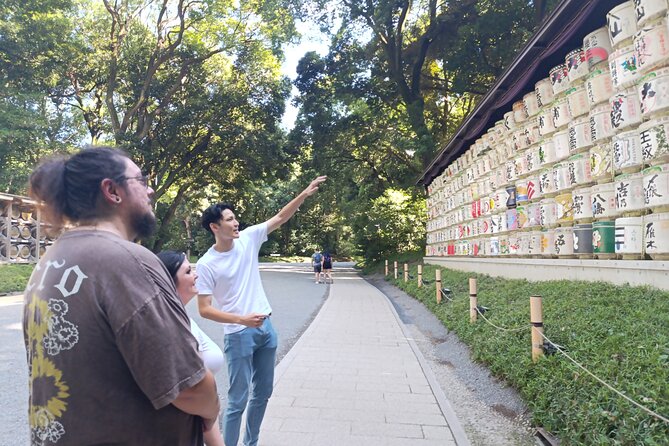
A shrine walk can feel like a reset. This Meiji Jingu guided stroll is a smart way to understand Shinto, with a guide explaining symbols and rituals many visitors miss, while the small-group pace keeps it conversational. I love that you get context as you go, not just a quick stop for photos, and I also like that the group size makes it easy to ask questions.
One consideration: this is still a walking tour, so plan for about 2 hours on your feet. If you prefer a totally hands-off visit, you may find the guided pacing less relaxing than strolling on your own.
Key highlights worth showing up for
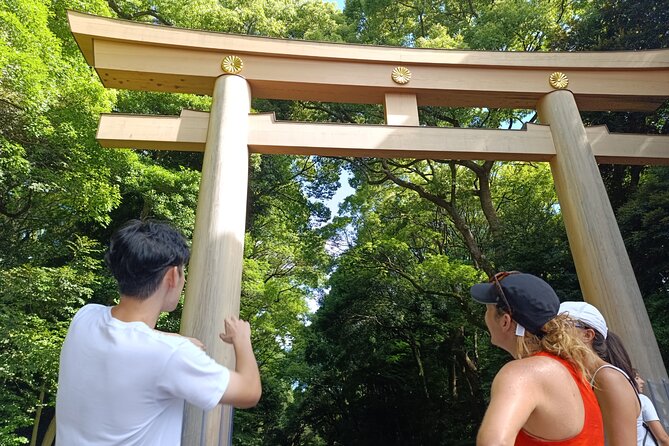
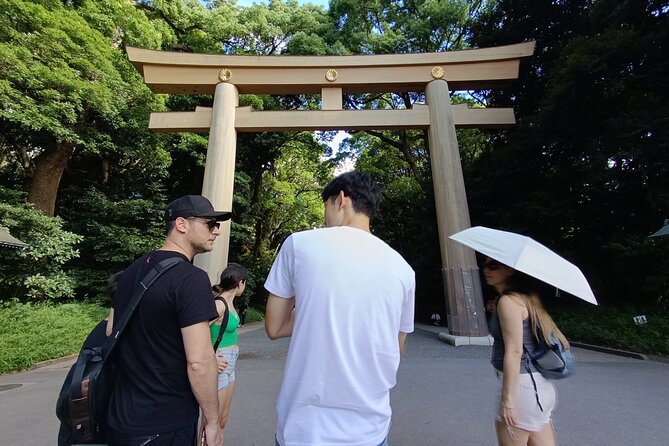
- A huge myojin-style torii gate that is 12 meters tall and 17.1 meters wide, instantly impressive
- Shinto rituals explained in a way that connects what you see to what it means
- A forested approach inside Tokyo that makes the shrine feel calmer than the neighborhood outside
- Small group size, up to 15 people, so your guide can answer your questions
- Admission ticket included for the shrine stop, so you are not scrambling for extras
- Guides who teach etiquette, including bowing at the gates and ritual purification
Why Meiji Jingu Feels Like a Reset, Not Just a Sight
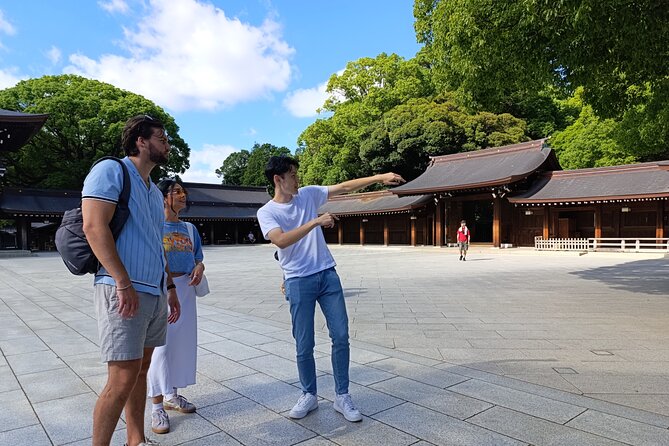
Meiji Jingu is one of Tokyo’s most iconic Shinto shrines, dedicated to the deified spirits of Emperor Meiji and Empress Shoken. The shrine dates back to 1920, but the experience feels timeless because it is built around ritual, timing, and space, not just buildings.
What really hits first is the arrival. You enter through towering torii gates, including a massive wooden myojin-style torii that reaches 12 meters tall and spreads 17.1 meters across. It is the kind of structure where your brain goes, okay, this is sacred. That matters, because Meiji Jingu is not asking you to race for highlights. It is asking you to pay attention.
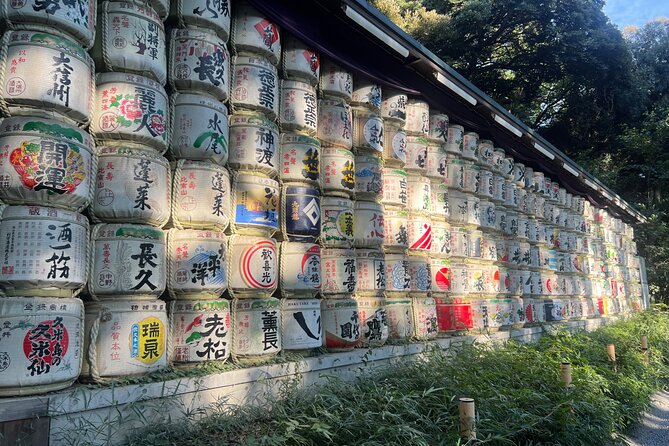
And then there is the setting. The shrine sits within a large artificial forest, so the sound and feel of the city fade quickly. You get that rare Tokyo contrast, quiet greenery inside one of the busiest areas of town. Even if you are short on days, this is the kind of stop that gives your Tokyo day breathing room.
More Temple & Shrine Tours in Tokyo
- Tokyo: Meiji Shrine, Asakusa, Skytree Bus Tour and Cruise
★ 4.7 · 1,986 reviews - Tokyo: Asakusa Walking Tour with Sensoji Temple Visit
★ 4.8 · 1,583 reviews - Nikko: Kegon Falls, Lake Chuzenji & Toshogu Temple
★ 4.6 · 1,577 reviews
How the Guide Turns Shinto Into Something You Can Actually Use
The biggest value here is not that you see Meiji Jingu. You will see Meiji Jingu on your own, too. The value is that you learn the symbolism behind Shinto practices while you are standing in the right place.
A good example: guides on this tour often focus on practical etiquette. In the walk, you learn about bowing at gates and what ritual purification is for. Those details sound small, but they change the whole feel of the shrine. Instead of wondering what you are supposed to do, you know what the actions mean.
I especially liked the way guides bring history into daily practice. Guides such as Yumi and Sara are described as friendly and interactive, and that approach matters when you are trying to understand a spiritual system that is not designed for tourists. Other named guides, including Matt-san, Haydn, and Benjamin, were praised for explaining Emperor Meiji’s achievements and the shrine’s restoration. That turns the shrine from scenery into context.
So yes, it is a walk through beautiful grounds. But it is also a guided lesson in how Shinto is expressed in everyday ritual, not just in textbooks.
Entering Meiji Jingu, What You See First and Why It Matters
The tour’s single main stop is Meiji Jingu itself, and you spend about an hour at the shrine with the guide. The experience starts with the entry sequence. You will move from torii gates into the shrine grounds along the forested approach. Even if you have been to temples before, this entry feels different because the structure and rhythm are built around Shinto tradition.
Here is what I think is worth paying attention to as you go:
- The scale of the gates, especially the enormous wooden torii, which sets the tone immediately
- How the forest path creates a transition from city to sacred space
- How your guide frames what you are doing, so it does not feel like guesswork
Meiji Jingu is dedicated to Emperor Meiji and Empress Shoken, and that dedication shows up through the way the shrine is presented. The guide’s job is to connect those names to what you experience on site, rather than treating the shrine like an art stop. When you understand that, you tend to notice details you would skip alone.
One small drawback to keep in mind: if you are coming only for architecture photos, you might want to leave extra time afterward on your own. The guided portion is designed for understanding, not for slow wandering for perfect shots.
The Forest Walk: Tokyo Quiet Inside a Sacred Space
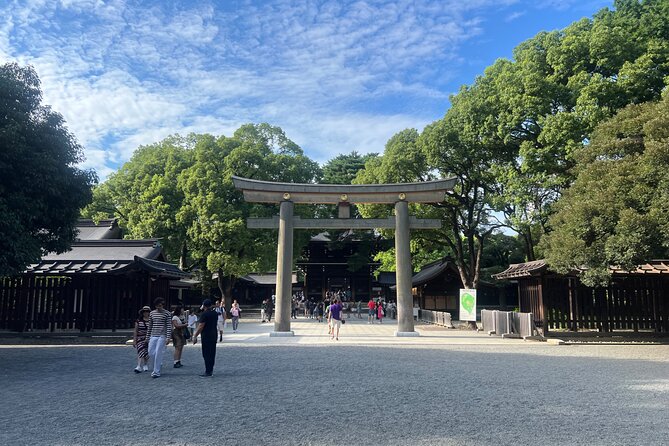
Tokyo is loud, even when you are outside. Meiji Jingu is one of the ways the city can quietly trick you. The artificial forest setting makes a difference in the body, not just the view. Your pace naturally slows, and you start paying attention to what is happening around you.
That is one reason this works well as a guided experience. The guide helps you stay present as the grounds unfold. Instead of walking through a park and hoping you grasp the point, you learn what different parts of the shrine area represent.
The shrine grounds are also described as beautiful and park-like, especially in contrast to the surrounding city activity. If you are planning your Tokyo days around high-energy neighborhoods like Harajuku and Shibuya, this can be a perfect counterbalance. You get culture without the pressure of a museum schedule.
And if the weather is uncooperative, you are not stuck with the ruins of your plan. There is at least one account of enjoying the walk despite rain, with the guide providing thoughtful, kind guidance. In other words, you can still make this work when clouds show up.
More Walking Tours in Tokyo
- Tokyo Tsukiji Fish Market Food and Culture Walking Tour
★ 5.0 · 3,184 reviews - Tokyo: Imperial Palace and Shogun Historical Walking Tour
★ 5.0 · 2,251 reviews - Tokyo: Shinjuku Local Bar and Izakaya Guided Walking Tour
★ 4.9 · 1,794 reviews - Tokyo: Tsukiji Fish Market Food and Walking tour
★ 5.0 · 1,724 reviews
Shinto Etiquette You Learn Here, and Why It Saves You Stress
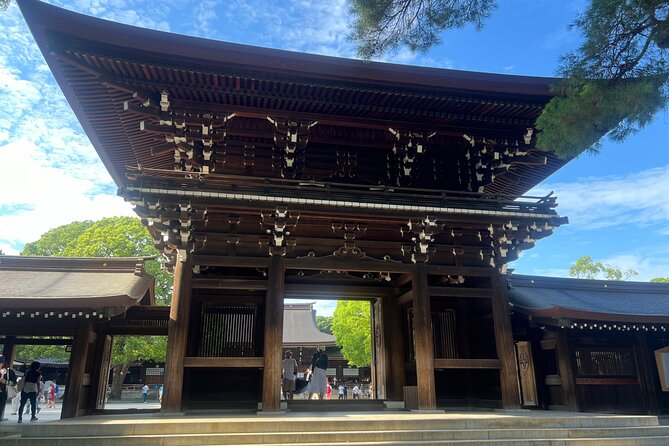
I love tours like this because they solve the awkward uncertainty. You know that moment when you are standing at a shrine and thinking, Am I doing this right? This tour is designed to reduce that stress.
Based on what the guides are praised for, you should come away with a clearer sense of:
- How bowing at gates fits the ritual flow
- What ritual purification is meant to do
Those are the kinds of basics that help you participate respectfully, without turning the whole experience into a performance. You are not just watching others. You are understanding the logic behind what you are doing.
Also, the guide helps you ask questions in context. That is a big deal. Shinto terms and rituals can feel abstract until you stand where they happen. With a guide, those moments stop being confusing and start being meaningful.
Price and Value: Why $18 Can Be a Smart Buy in Tokyo
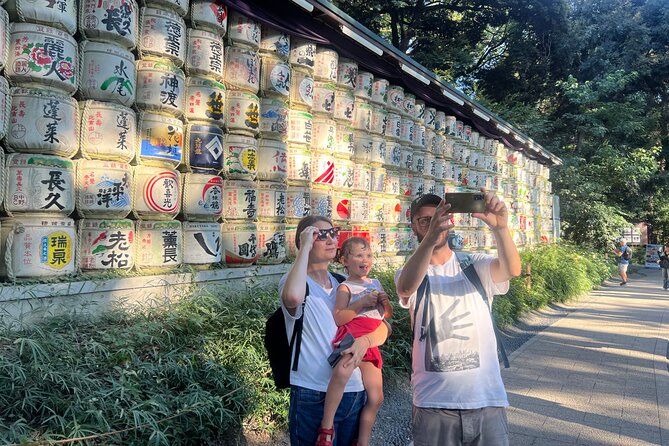
At $18 per person for a roughly two-hour experience, this is priced like a practical cultural add-on, not a luxury experience. And in Tokyo, value matters because costs can climb fast.
Here is what you are getting for that price:
- A tour guide
- Historical insights related to the area and shrine
- Admission ticket included for the shrine stop
- A small group size, capped at 15
When admission is included, you are less likely to hit the classic Tokyo problem of spending time planning purchases instead of enjoying the experience. The mobile ticket also helps, since you do not need extra paperwork.
Tips are not included, so if you want to account for tipping in your budget, I would plan for that separately.
If you are deciding between this and a self-guided shrine day, here is the deciding logic I would use: if you want understanding of Shinto rituals and why people do them, a guided hour at the shrine can be worth more than another hour wandering. If you already know Shinto basics and just want photos, you may be fine going on your own. But if you are a curious beginner, this is a strong value.
Where It Fits With Harajuku and Shibuya Days
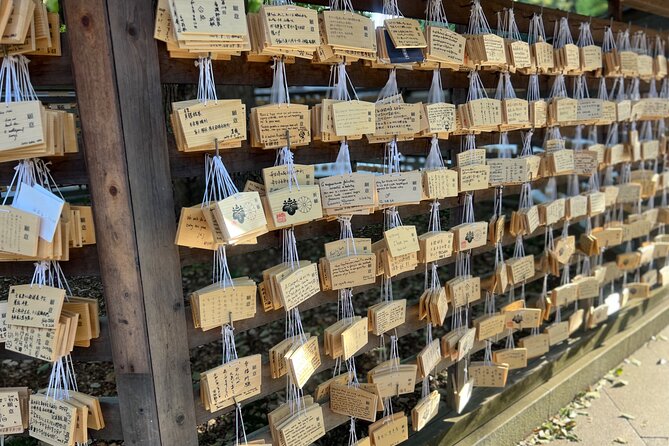
The meeting point is Starbucks Coffee with HarajukuJapan, in Jingūmae, Shibuya, at 1-chōme 1430. The tour ends back at the meeting point, which makes it easier to keep your day organized.
This is a good fit if your Tokyo schedule already includes Harajuku or Shibuya. You can do a morning or afternoon shrine reset, then continue with shopping and neighborhoods afterward. It also helps that the meeting area is near public transportation, so you are not forced into long backtracking trips.
One smart travel strategy: treat this as your planned cultural anchor. When you have an anchor, the rest of your day becomes more relaxed. You do not have to squeeze in a shrine between transit delays.
Who This Tour Suits Best, and Who Might Not Need It
This is best for:
- First-time Tokyo visitors who want a guided introduction to Shinto culture
- People who like learning through context, not just reading signs
- Anyone who appreciates small groups and interactive Q and A
It also sounds family-friendly based on accounts of a family of four attending in June 2025. That makes sense because the pace stays manageable and the guide explains what is easy to miss.
It may be less ideal if you:
- Want a purely self-directed visit with zero structure
- Dislike walking for about two hours, even if the ground is comfortable
The tour says most travelers can participate, so it is not designed for extreme athletic levels. Still, you should treat it as a walking experience.
Weather, Timing, and How to Get the Most Out of the Hour
Rain happens in Tokyo. One of the reasons I would still book this on an iffy forecast is that the experience is outdoors but not dependent on perfect visibility. The guide’s explanations, including details about Emperor Meiji and the shrine’s restoration, still land even if the sky is gray.
If you are going, bring simple weather-proof basics:
- Comfortable shoes for walking
- An umbrella or rain layer if showers are in your forecast
Timing matters, too. Because the tour is short and focused, arriving on time at the meeting point helps you get the full guided experience at the shrine, rather than feeling rushed.
Should You Book This Meiji Jingu Shinto Walk?
If you want Meiji Jingu to be more than a photo stop, I think this is a strong yes. It has a 5/5 rating with 225 reviews and a 100% recommendation score, and the feedback pattern is clear: the guides are trusted for being knowledgeable, friendly, and able to explain Shinto in plain language. You also get real value for the money with a guide, historical context, admission included, and a small group capped at 15.
Book it if you are the kind of person who likes knowing what you are looking at. Skip it only if you already know Shinto well, or if you want an entirely independent shrine visit with no guidance.
If you are building a first-time Tokyo plan, this is exactly the kind of tour that turns a famous landmark into a story you understand.
FAQ
How long is the Meiji Jingu walking tour?
The tour duration is about 2 hours.
Is the shrine admission ticket included?
Yes, an admission ticket is included for the Meiji Jingu shrine stop.
How big is the group?
The tour has a maximum of 15 travelers.
Where do I meet the guide?
The meeting point is Starbucks Coffee with HarajukuJapan, Jingūmae, Shibuya, at 1-chōme 1430.
Do I get a mobile ticket?
Yes, the tour uses a mobile ticket.
Is cancellation free?
Yes, you can cancel for a full refund for free up to 24 hours in advance of the experience start time.
Fresh options around Tokyo
- Tokyo: Nikko Kegon Falls Lake Chuzenji Toshogu Temple & More★ 4.9 · 12 reviews
- Tokyo: Samurai History Walking Tour★ 5.0 · 12 reviews
- Harajuku: Kawaii Fashion and Pop-Culture Tour★ 4.7 · 12 reviews
- Tokyo: Mt. Fuji & Lake Kawaguchi Instagram Full Day Trip★ 4.1 · 12 reviews
- Shibuya Tokyo: Modern Kintsugi Workshop in Shibuya★ 5.0 · 12 reviews
- Tokyo: GTR Guided Daikoku Experience at Night★ 5.0 · 12 reviews
- Tokyo: Daikoku JDM Car Culture Tour★ 4.6 · 12 reviews
- Mt Fuji Private Day Trip from Tokyo with English speaking driver★ 5.0 · 13 reviews
Walking Tours, compared.
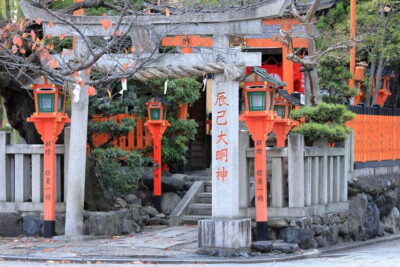
Kyoto Geisha Walking Tour: Gion District & Hidden Gems
Read our review →
Tokyo Tsukiji Fish Market Food and Culture Walking Tour
Read our review →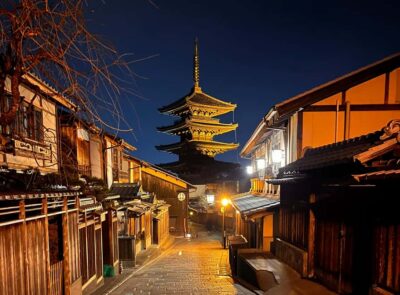
Gion Magical Night Walking Tour with Geisha Trivia
Read our review →
Imperial Palace and Shogun Historical Walking Tour
Read our review →
Gion Geisha District Walking Tour – Stories of Geisha
Read our review →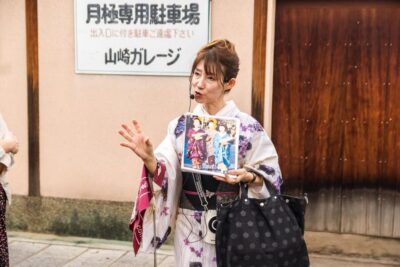
Shinjuku Local Bar and Izakaya Guided Walking Tour
Read our review →
Browse the lists this tour appears in