
Reviewed · WALKING TOURS
Tokyo: Meiji Jingu Shrine and Shinto Culture Walking Tour
Meiji Jingu feels like another Tokyo. This 2-hour Shinto culture walk helps you make sense of Shinto rituals you usually just walk past, from the big torii gate to the consecrated offerings.
I especially like how the tour slows down inside the grounds, including Meiji Jingu Gyoen and the peaceful Imperial Garden setting. Guides such as Maya and Minori are repeatedly praised for making the symbolism practical, so the shrine feels understandable, not mysterious.
One possible drawback: it is still a walking tour, and the time is capped at 2 hours. If you want to linger for half a day or go deep into every corner of the property, you might feel a little time-pressured.
Key highlights at Meiji Jingu with a Shinto-focused guide
- Step-by-step Shinto explanations that turn shrine sights into clear meaning
- Meiji Jingu Gyoen photo stop with a guided sense of where to look and why
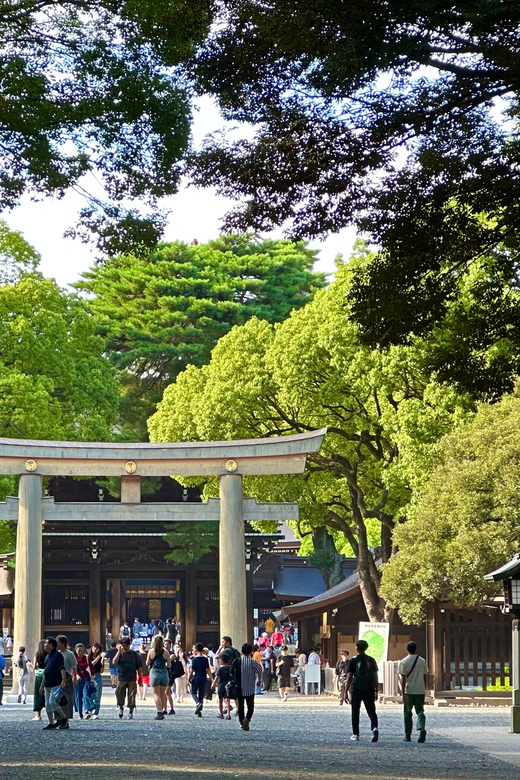
- Big torii transition that shows you how sacred space works in Japan
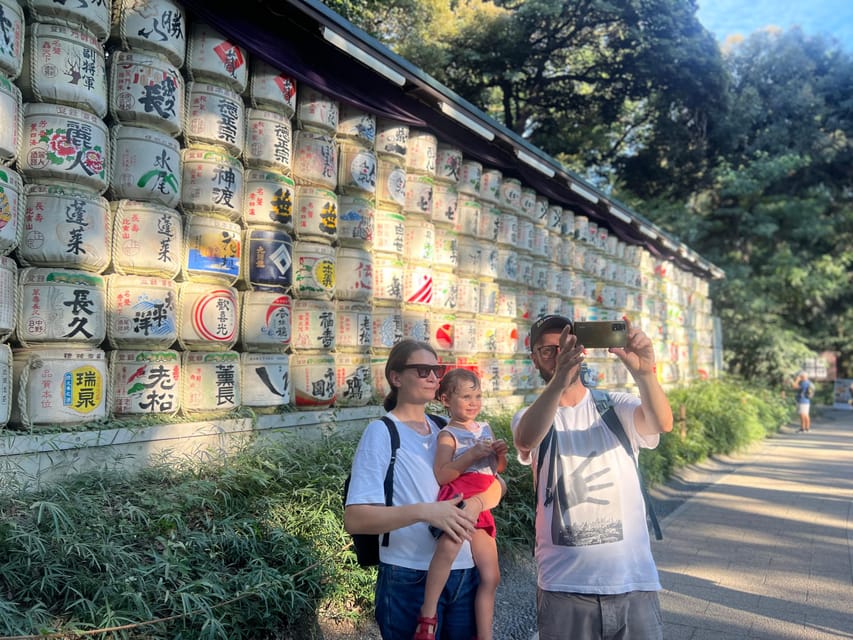
- Consecrated sake and wine barrels explained as offerings, not just decor
- Imperial Garden time with admission included so you can actually enjoy the calm
- A guide who takes photos so you are not stuck juggling your camera and your questions
Why Meiji Jingu is Tokyo’s spiritual reset
Tokyo can run hot. One minute you are in neon, the next you are walking into a forested calm that feels intentionally quiet. Meiji Jingu Shrine is one of the city’s most iconic sacred spaces, and the big reason this tour works is simple: it gives you a working map of what you are seeing.
Instead of treating the shrine like a photo backdrop, you learn how Shinto practice connects people, community, and nature. You start to notice details that most first-time visitors miss, like how visitors approach the grounds and how offerings are arranged. Guides such as Hoshi and Yumi are highlighted for answering questions clearly, which matters because Shinto has its own logic, and it helps to hear it in everyday English.
You also get a nature component that is not just scenery. The grounds are known for a sacred forest with 100,000 trees, and that is not trivia. It is part of the spiritual experience, because the setting is built to support the feeling of reverence, not just aesthetics.
More Temple & Shrine Tours in Tokyo
- Tokyo: Meiji Shrine, Asakusa, Skytree Bus Tour and Cruise
★ 4.7 · 1,986 reviews - Tokyo: Asakusa Walking Tour with Sensoji Temple Visit
★ 4.8 · 1,583 reviews - Nikko: Kegon Falls, Lake Chuzenji & Toshogu Temple
★ 4.6 · 1,577 reviews
Getting to the meeting point near Harajuku without stress
You meet in front of the Starbucks closest to Meiji Shrine, with coordinates at 35.6705208, 139.7031067. It is a very usable meetup spot, especially if you are trying to figure out trains and walking routes your first day in Tokyo.
Here is how I’d plan it for an easy start: aim to arrive a little early, then let the guide handle the group flow. Even if you know your way around Harajuku, this shrine area has a way of throwing off your sense of time, because the forest makes everything feel slower once you enter.
Also, this tour is wheelchair accessible, which is a big plus for anyone who wants the shrine experience without skipping it. Still, remember it is a walking tour. If you use a mobility aid, keep your own comfort in mind and be ready to pace yourself.
Meiji Jingu Gyoen photo stop: where the calm actually starts
The first meaningful stop is Meiji Jingu Gyoen, with a dedicated photo stop and guided time (about 30 minutes). This is a smart way to start, because you land in the right mood before you hit the most dramatic photo moments.
In this opening stretch, you’ll learn what makes the grounds feel different from other shrine areas in Tokyo. The guide can point out features you might otherwise interpret as just decorative landscaping. And since the group is kept small, you can ask questions early, when it is easiest to calibrate what you are looking at.
Practical tip: use this time to orient yourself. Once you understand the layout and the flow of sacred space, the later stops feel more connected, instead of like separate “checkpoints.”
The big torii gate: understanding the boundary
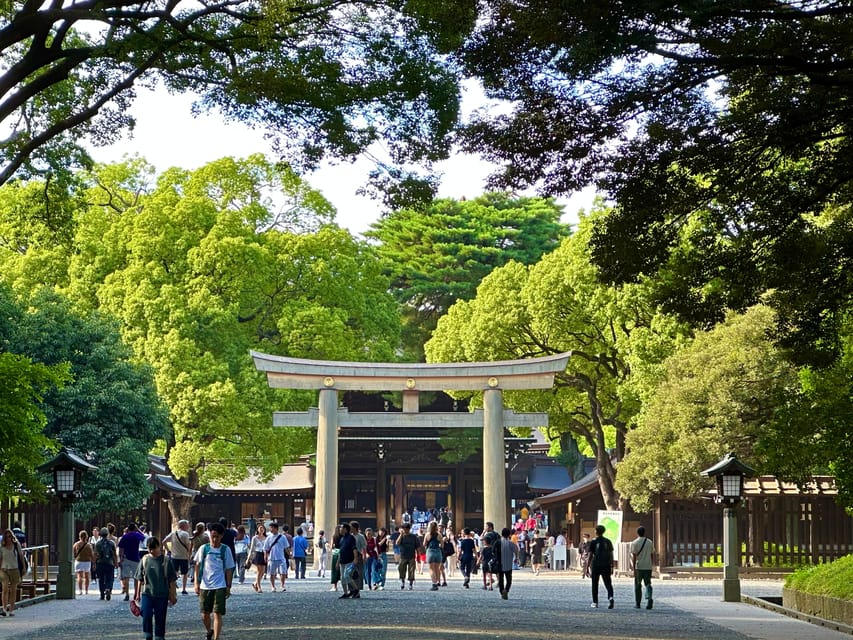
Next comes the Big Torii, with guided time around 10 minutes. The torii gate is not just a dramatic arch. In Shinto practice, it marks a boundary between everyday life and a sacred area where you behave with intention.
A good guide does two things here. First, they explain the symbolism in plain terms. Second, they help you notice the mechanics of how visitors move through the space. That matters because you are likely to see people bow, pause, and follow specific habits. Without context, those moments can feel random.
Also, this is a photo-friendly spot, but the best shots come from a calm approach. Don’t sprint to the perfect angle. Let the group settle and follow the guide’s rhythm so you are not blocking others.
More Walking Tours in Tokyo
- Tokyo Tsukiji Fish Market Food and Culture Walking Tour
★ 5.0 · 3,184 reviews - Tokyo: Imperial Palace and Shogun Historical Walking Tour
★ 5.0 · 2,251 reviews - Tokyo: Shinjuku Local Bar and Izakaya Guided Walking Tour
★ 4.9 · 1,794 reviews - Tokyo: Tsukiji Fish Market Food and Walking tour
★ 5.0 · 1,724 reviews
Consecrated sake barrels and wine barrels: offerings you can read
Then you get two short, focused stops tied to the idea of consecrated offerings: the consecrated sake barrels (about 10 minutes) and the Meiji Jingu consecrated wine barrels (about 10 minutes). Combined, you spend roughly 20 minutes here, and that is exactly enough time to turn visual details into understanding.
Why this section matters: visitors often treat barrels, plaques, and structures as background details. But offerings are a language in Shinto. You are seeing how people show respect through what they present and where they present it.
What I like is that the guide’s job is not to recite facts. It is to give you an interpretive lens. Once you understand that the offerings are part of a spiritual practice, you stop thinking, This is just a cool shrine detail, and you start thinking, This is how reverence is expressed.
The main shrine visit and Imperial Garden admission: how to make it worth your time
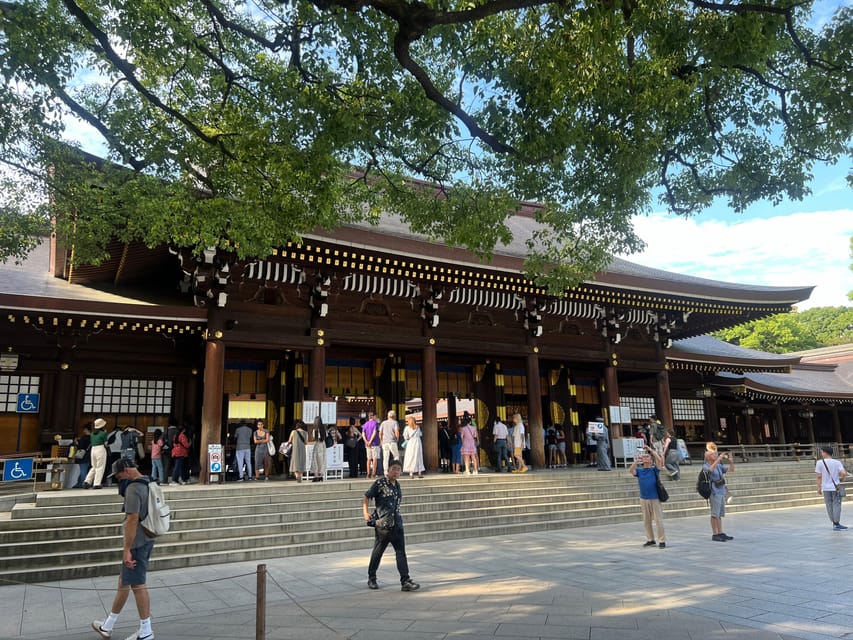
The heart of the tour is your time at the Meiji Shrine itself, plus access to the Meiji Shrine Imperial Garden with admission included. Expect about 1 hour of guided sightseeing here.
This is where you benefit most from an English-speaking guide, because they can connect visual cues to respectful behavior. In the experience, guides are praised for walking people through basics like how to pray at shrines and what to do in a way that feels correct. That alone can be worth it, especially if you are visiting Japan for the first time and want to avoid awkward guesswork.
This is also where the Imperial Garden changes the tone. Outside the forest, Tokyo can feel fast and loud. Inside the garden setting, you get breathing room. Even if you are not the type who “does gardens,” the guided framing makes it easier to appreciate why nature is treated with reverence in Shinto thinking.
Time check: 1 hour can go by quickly. If you want time to sit and take in the space, plan for it, but know you might have to compromise between photos, questions, and simply letting the atmosphere land.
The sacred forest of 100,000 trees: enjoying it without rushing
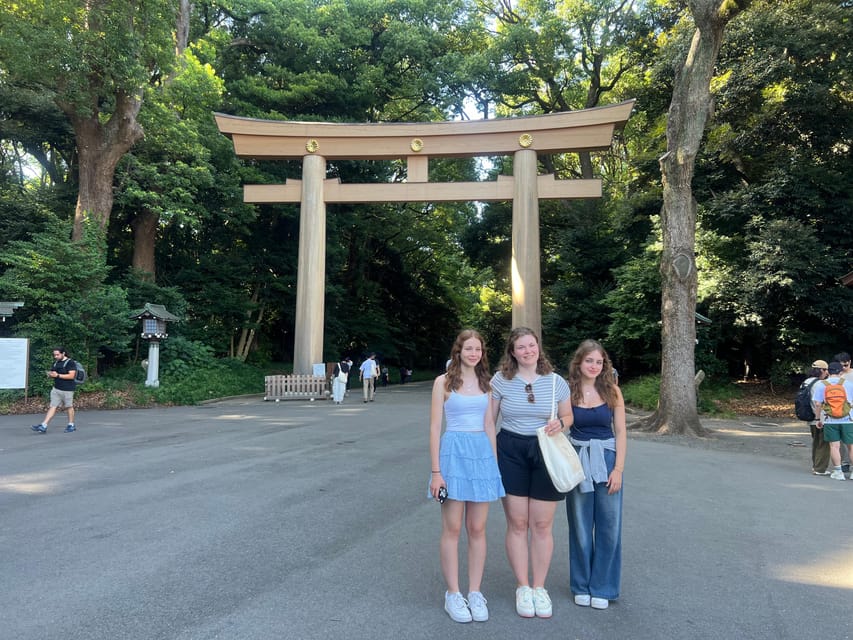
Meiji Jingu’s sacred forest is one of the biggest reasons people return. And it is not just a postcard idea. When you walk through an environment designed to feel spiritually supportive, your pace naturally changes.
During the tour, your guide helps you keep things grounded in meaning, but you still have your own moments. Try to slow down for a few minutes. Look at the way the trees create a ceiling of quiet. Notice how the sound changes. Tokyo noise does not vanish, but it recedes.
If you are someone who loves nature but also likes cultural context, this is a nice match. You are not choosing between a scenic walk and a cultural lesson. You get both, and you get it in a guided flow that keeps you from wandering in circles.
If it rains, do not panic. One of the most common positives in the guide experience is flexibility and good pacing. A good guide helps you keep going and keep the tour meaningful even when the weather turns.
Price and value: why $19 can be a smart first-day investment
At $19 per person for a 2-hour tour, this is priced like a budget-friendly introduction, not a luxury experience. The value comes from a few concrete pieces you might otherwise have to piece together yourself.
You get:
- A professional English-speaking guide
- Entry/admission to Meiji Shrine and the Imperial Garden
- Historical and cultural context tailored to what you are seeing
- Photos taken during the tour
- Small-group feel, so you can actually ask questions
For first-time Tokyo visitors, the best value is often guidance that prevents wasted time. If you arrive at Meiji Jingu and only follow your instinct, you may take photos and still miss the logic behind what you see. Here, the guide helps you interpret the ritual cues, and that turns admission and walking time into something more satisfying.
In other words: this $19 tour is not just “get in and look.” It is a way to leave with understanding, plus memories in the form of photos taken for you.
Who this tour is perfect for
This is a great fit if you:
- Want a Shinto-focused introduction rather than a generic Tokyo highlights walk
- Prefer small-group pacing so your questions get answered
- Like knowing what you are doing at a shrine, including basic etiquette
- Want to see Meiji Jingu and Imperial Garden but do not want to spend a full day planning
It is also a good choice if you are short on time and want one meaningful cultural stop that is walkable and guided.
Who might prefer a different option
You might consider a different format if:
- You want to linger alone for hours to photograph quietly without a timed schedule
- You prefer self-guided exploring with minimal structure
- You are specifically looking for a deep academic lecture style experience, because the tour is only 2 hours
A timed guided tour is a tradeoff. You gain clarity and momentum, but you give up some freedom.
Should you book this Tokyo Meiji Jingu Shinto Culture tour?
Yes, I think you should book it if Meiji Jingu is on your list and you care about understanding what you are seeing. The combination of ritual explanations, admission to the Imperial Garden, and photo support makes it easy to turn a popular shrine into a meaningful experience.
If you are a first-day visitor, it is even more worthwhile. You will get a clearer sense of shrine etiquette and how sacred space works, so your later shrine visits in Japan feel more familiar. If you are a repeat visitor, this is still a solid refresher because the guide’s interpretive lens can help you notice new details even in a place you have already photographed.
Just show up ready to walk, ask questions, and let the forest set the pace.
Fresh options around Tokyo
- Tokyo: Nikko Kegon Falls Lake Chuzenji Toshogu Temple & More★ 4.9 · 12 reviews
- Tokyo: Samurai History Walking Tour★ 5.0 · 12 reviews
- Harajuku: Kawaii Fashion and Pop-Culture Tour★ 4.7 · 12 reviews
- Tokyo: Mt. Fuji & Lake Kawaguchi Instagram Full Day Trip★ 4.1 · 12 reviews
- Shibuya Tokyo: Modern Kintsugi Workshop in Shibuya★ 5.0 · 12 reviews
- Tokyo: GTR Guided Daikoku Experience at Night★ 5.0 · 12 reviews
- Tokyo: Daikoku JDM Car Culture Tour★ 4.6 · 12 reviews
- Mt Fuji Private Day Trip from Tokyo with English speaking driver★ 5.0 · 13 reviews
Walking Tours, compared.
Kyoto Geisha Walking Tour: Gion District & Hidden Gems
Read our review →
Tokyo Tsukiji Fish Market Food and Culture Walking Tour
Read our review →
Gion Magical Night Walking Tour with Geisha Trivia
Read our review →
Imperial Palace and Shogun Historical Walking Tour
Read our review →
Gion Geisha District Walking Tour – Stories of Geisha
Read our review →
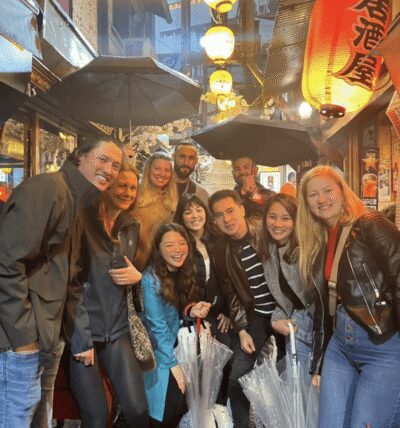
Shinjuku Local Bar and Izakaya Guided Walking Tour
Read our review →
Browse the lists this tour appears in