
Reviewed · WALKING TOURS
The Old Quarter of Tokyo – Yanaka Walking Tour
Tokyo’s quiet side is waiting. This small-group Yanaka walking tour shows you wooden homes, shrines, and lanes that many big-city tours miss. I especially love the way it mixes faith and daily life, with stops like Tennoji Temple’s Yanaka Buddha and Nezu Shrine’s dense red torii gates, plus time to pause in a restored old-house café spot. The one thing to consider is you will be walking, and you should plan around weather, since the experience runs best in good conditions.
You also get the bonus of an English-speaking local guide who can answer real questions, not just recite facts. I saw names like Polina, Aya, Junko, Mami, Mei, Kiyo, and Rei come up in guides for this route, and the common thread is clear explanations, lots of Q and A, and practical tips like where to try food along Yanaka Ginza. Bring comfortable shoes and keep an eye on the sun, because this area can feel hot and humid in summer.
Why Yanaka Feels Like Another Tokyo
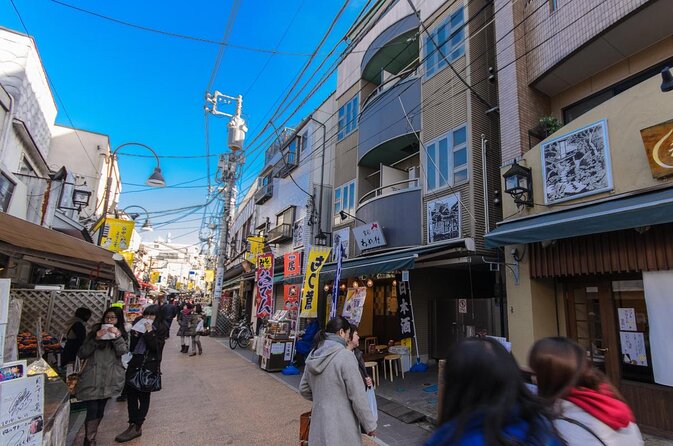
Yanaka is the kind of neighborhood where Tokyo slows down. You trade skyscraper views for low wooden houses, small shrines tucked into side streets, and temple signs you would not notice unless someone pointed them out. It is also a strong contrast to the flashy shopping districts most people default to.
The magic here is the storytelling. You do not just pass religious sites, you learn why people treat them the way they do, and how Shinto and Buddhism can show up side by side in everyday life. That context makes the sights click, even if you do not read Japanese.
What Makes This Tour Worth $40
At $40 per person, you are paying for three main things: a tight 3-hour walk, an English-speaking local guide, and a route designed to connect dots you would not naturally see. Several stops also have free entry, which helps value. And because the group is limited to up to 10 travelers, you get more personal attention, more time for questions, and fewer people standing in your way for photos.
Also, the tour ends in a place where you can keep the experience going on your own. Yanaka Ginza is where you can snack, browse, and linger, instead of being dropped at a random corner. Food is not included in the price, but the guide’s local pointers make it easier to choose wisely without wasting time hunting.
More Walking Tours in Tokyo
- Tokyo Tsukiji Fish Market Food and Culture Walking Tour
★ 5.0 · 3,184 reviews - Tokyo: Imperial Palace and Shogun Historical Walking Tour
★ 5.0 · 2,251 reviews - Tokyo: Shinjuku Local Bar and Izakaya Guided Walking Tour
★ 4.9 · 1,794 reviews
The Small-Group Route, Up Close on Foot
This is a half-day style tour, about 3 hours on foot, with a mobile ticket. You meet at Nippori Station, then head through the Yanaka area step by step.
That structure matters because Yanaka is not a checklist neighborhood. It rewards patience. Walking gives you the slow look: the grain of wood on old homes, the way torii gates shape a path, and how quiet residential lanes feel when you are not fighting crowds.
Start at Nippori, Finish at Yanaka Ginza
Your start is Nippori Station (2 Chome-19 Nishinippori, Arakawa City). Your end point is Yanaka Ginza (3-chōme-13-1 Yanaka, Taito City). The meeting point is near public transportation, which makes it easy to pair this with the rest of your Tokyo plan.
One practical advantage: your route is designed so the final stretch flows into shopping and casual dining. You will not feel like you are scrambling to find something to do after the guide leaves.
Stop by Stop: Temples, Shrines, and Neighborhood Lanes
This tour is built like a story. Each stop has a specific theme, then you move on to see the next layer of Yanaka. Expect a few short breaks, photo moments, and explanations that connect the sites to how people live around them.
Same corner of Japan, a different kind of day:
- Mt Fuji and Hakone 1-Day Bus Tour Return by Bullet Train
★ 5.0 · 26,383 reviews - 1-Day Tokyo Bus Tour
★ 5.0 · 14,250 reviews - Tokyo: TOKYO SKYTREE® Admission ticket
★ 4.5 · 11,192 reviews - Tokyo: teamLab Planets TOKYO Digital Art Museum Entry Ticket
★ 4.6 · 9,779 reviews
Tennoji Temple and the Yanaka Buddha (1690)
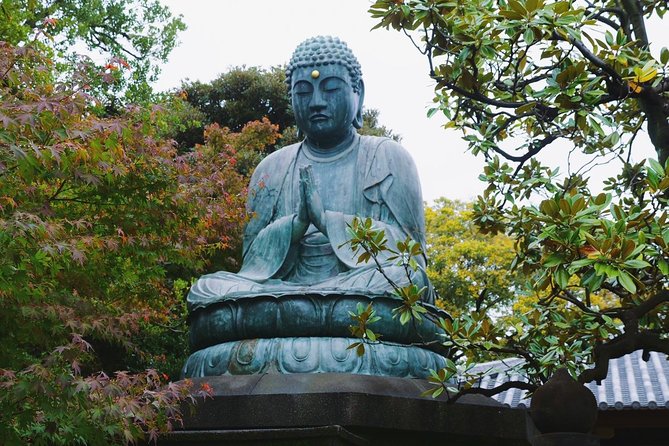
The tour begins at Tennoji Temple, where you can see the Yanaka Buddha, said to have been created in 1690. You also get temple history and how it ties into Japanese religious life.
Even if you only catch part of the background, the point is to help you read what you are seeing. Temples are not just buildings here, they are places with a timeline, a set of beliefs, and customs that locals recognize instantly.
Time at the stop is short, about 15 minutes, and entry here is free.
Yanaka Cemetery: Customs You Can Actually Understand
Next up is Yanaka Cemetery. You walk into the cemetery and learn what a Japanese cemetery is like, plus customs locals follow. This is one of the more quietly powerful moments in the whole route.
Cemeteries can feel confusing to visitors. This stop helps you understand the logic behind the layout and the respect shown through everyday practices. You are not left guessing.
This part also runs about 15 minutes, with free admission.
Ueno-Sakuragi Atari: Restored Houses as Community Life
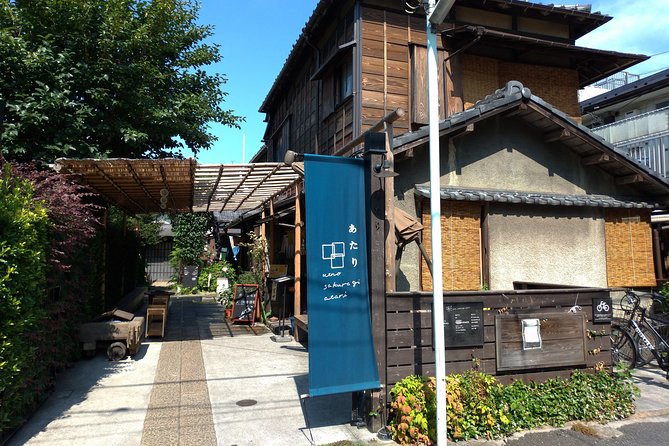
Then comes Ueno-Sakuragi atari, a break spot built around restored older homes. You will see how about 80-year-old wooden houses were renovated into a café, a bakery, and a beer hall, and how they function as a local community space.
This stop gives you a breather and a different kind of perspective. You are learning how the neighborhood keeps old structures alive by turning them into useful gathering places, not by freezing them as museum pieces.
Plan on about 15 minutes here, and note that admission is not included. Food and drinks also cost extra, but you can use this as a reset before the next temple and shrine sights.
The 100-Year-Old Cyder Tree, Yanaka’s Symbol
Between stops, you will also see a 100-year-old cyder tree, described as the symbol of Yanaka. This kind of marker is common in older neighborhoods. It is not just scenery, it is a shared reference point that tells you where the neighborhood’s identity lives.
This is a quick moment, but it helps you connect the route to the idea that Yanaka has continuity.
Enju-ji Temple: Wishes for Strong Legs
At Enju-ji Temple, you will learn that it enshrines a god focused on strong legs. People with foot problems write wishes on wooden boards, which creates a living record of community hopes.
This is not a typical “one temple, one famous idol” experience. The angle here is practical and human. It is about health worries, everyday pain, and the way people use religion to cope.
Time is brief, about 5 minutes, and admission is not included.
Nezu Shrine: Torii Gates, Photos, and Shrine Etiquette
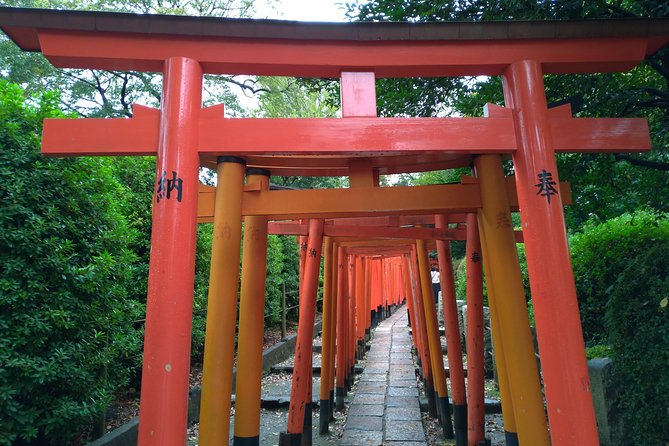
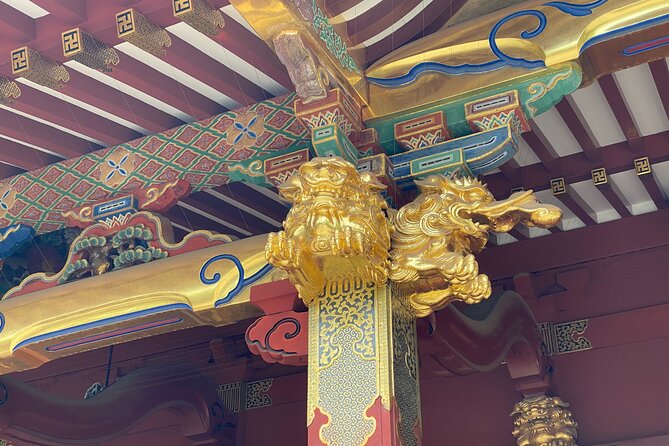
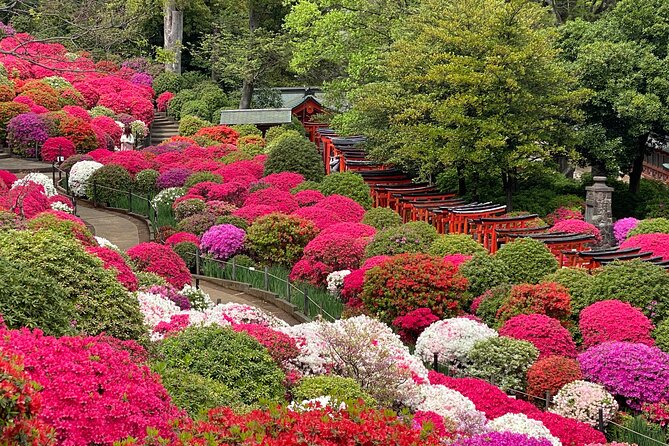
One of the most photogenic stops is Nezu Shrine. You will see many red torii gates, and you will also learn shrine etiquette.
The torii gates matter because they are not just decoration. They create a path, they guide movement, and they help structure how worshippers approach the shrine. And yes, it is one of those places where photos make sense, because the scenery is built to be viewed as you walk through it.
This stop lasts about 20 minutes and has free admission.
Hebimichi Back Street and Yanaka Ginza Shopping Street
After the shrine, you walk a residential back street called Hebimichi. This is where you slow down and see daily life up close, the kind of thing you cannot get from a train-window photo.
Then the route ends at Yanaka Ginza Shopping Street, about 20 minutes, where your guide explains the shopping street and what to look for. This is where you can try local foods and sweets, with food fees not included in the tour price.
A good strategy here is to treat Yanaka Ginza like a choose-your-own-adventure. You can grab a snack, buy a small souvenir, and keep strolling before heading back toward your hotel.
What the Best Guides Actually Do for You
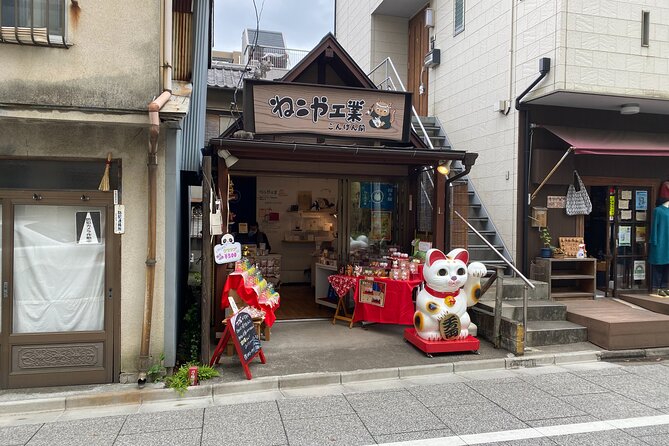
The biggest thing I like about this tour is the way the guide turns stops into meaning. Many guided walks are just route narration. Here, the guides focus on how and why.
The names that kept showing up for this route make that pattern clear. Guides like Polina and Aya are repeatedly praised for answering questions and sharing context. Some guides also bring visuals, like laminated photos, which can be a huge help when you are trying to connect stories to specific objects or architecture. Other guides are described as living in the neighborhood, which usually means they can point out things you would otherwise walk right past.
You can also expect plenty of photo help. Multiple guides are noted for taking pictures and guiding you to good angles at key stops like Nezu Shrine.
The Group Size and Pace, What to Expect
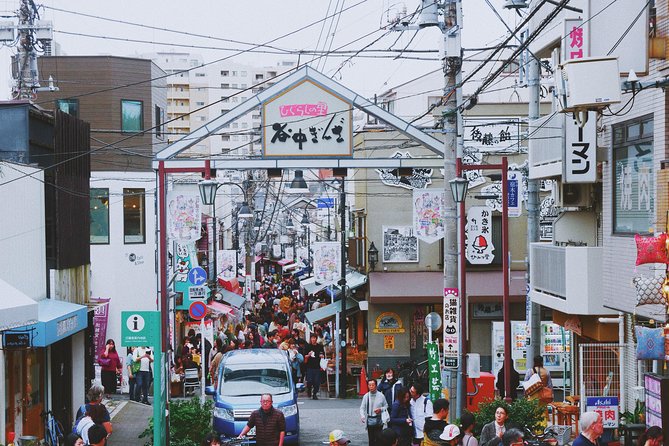
With a maximum of 10 travelers, you will feel more like you are walking with a small team than getting herded through a schedule. It also helps with questions. When the group is small, it is easier for your guide to pause and answer details instead of rushing on.
Timing-wise, the stops are mostly short but not frantic. You get multiple 15 to 20 minute moments at key locations, plus quick bursts like Enju-ji Temple. If you like a tour that does not drag, this fits.
The pace matters because Yanaka is compact enough to cover comfortably in a few hours, but slow enough to actually look.
Practical Tips So You Can Enjoy It
Here is how to make the day feel easy.
- Wear comfortable shoes. You are moving between multiple religious and residential stops.
- Plan for sun. In hotter months, it can be 35 degrees and humid, so bring sun protection.
- Use your time at Ueno-Sakuragi atari wisely. It is a natural break point.
- Bring cash or card for food. Local sweets and snacks are not included.
- Keep your pace steady during quiet lanes like Hebimichi. This is where you get the most real-life feel, so take a moment and look.
If you are sensitive to heat, start your day earlier rather than later.
Who This Tour Suits Best
This is a great match if you want Tokyo that feels human. You will enjoy it if you like:
- Neighborhood walking more than big monument selfies
- Cultural context, especially around Shinto and Buddhism
- Quiet, residential Tokyo where you are not constantly dodging crowds
- A guide-led route that helps you notice details on the way
It is also a strong choice if you have already seen the big-ticket areas and want a calmer counterpoint.
Should You Book the Old Quarter of Tokyo, Yanaka Walking Tour?
I would book this if you want value through context, not just photos. The combination of free-entry temples, a shrine famous for torii gates, a cemetery stop with practical customs, and an ending at Yanaka Ginza makes the full half-day feel purposeful.
Book it if you enjoy guided history told in plain language, and if you like walking neighborhoods that still feel lived-in. Skip it if you hate being outdoors for a few hours, or if you want only major landmarks without any quiet side streets or etiquette lessons.
If you are choosing one “different Tokyo” experience, this one is a smart pick, because Yanaka is exactly the kind of place where a good guide changes everything.
FAQ
How long is the Yanaka walking tour?
The tour lasts about 3 hours.
How much does it cost?
It costs $40.00 per person.
How big is the group?
The tour has a maximum of 10 travelers.
Where do I meet the guide, and where does the tour end?
You meet at Nippori Station (2 Chome-19 Nishinippori, Arakawa City). The tour ends at Yanaka Ginza (3-chōme-13-1 Yanaka, Taito City).
What ticket type do I get?
You receive a mobile ticket.
Is food included in the price?
No. Food and drinks are not included. You can try local foods and sweets at Yanaka Ginza, but that will cost extra.
Are temple and shrine admissions included?
Some stops have free admission, while others list admission as not included. For example, Tennoji Temple, Yanaka Cemetery, and Nezu Shrine are free, while Ueno-Sakuragi atari and Enju-ji Temple note that admission is not included.
Is the tour offered in English?
Yes. It is guided by an English-speaking local expert.
What if the weather is bad?
This experience requires good weather. If it is canceled due to poor weather, you will be offered a different date or a full refund.
Can I cancel for a refund?
Yes. Free cancellation is available up to 24 hours in advance for a full refund.
Fresh options around Tokyo
- Tokyo: Nikko Kegon Falls Lake Chuzenji Toshogu Temple & More★ 4.9 · 12 reviews
- Tokyo: Samurai History Walking Tour★ 5.0 · 12 reviews
- Harajuku: Kawaii Fashion and Pop-Culture Tour★ 4.7 · 12 reviews
- Tokyo: Mt. Fuji & Lake Kawaguchi Instagram Full Day Trip★ 4.1 · 12 reviews
- Shibuya Tokyo: Modern Kintsugi Workshop in Shibuya★ 5.0 · 12 reviews
- Tokyo: GTR Guided Daikoku Experience at Night★ 5.0 · 12 reviews
- Tokyo: Daikoku JDM Car Culture Tour★ 4.6 · 12 reviews
- Mt Fuji Private Day Trip from Tokyo with English speaking driver★ 5.0 · 13 reviews
Walking Tours, compared.
Kyoto Geisha Walking Tour: Gion District & Hidden Gems
Read our review →
Tokyo Tsukiji Fish Market Food and Culture Walking Tour
Read our review →
Gion Magical Night Walking Tour with Geisha Trivia
Read our review →
Imperial Palace and Shogun Historical Walking Tour
Read our review →
Gion Geisha District Walking Tour – Stories of Geisha
Read our review →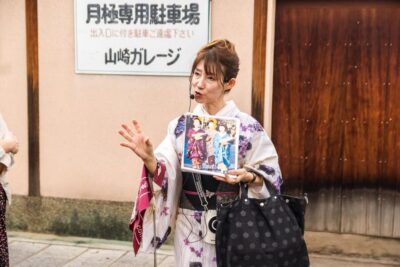
Shinjuku Local Bar and Izakaya Guided Walking Tour
Read our review →
Browse the lists this tour appears in