
Reviewed · TEA CEREMONIES IN KYOTO
Kyoto: Tea Ceremony in 100-year-old Kyo-Machiya Townhouse
A calm room. A whole culture.
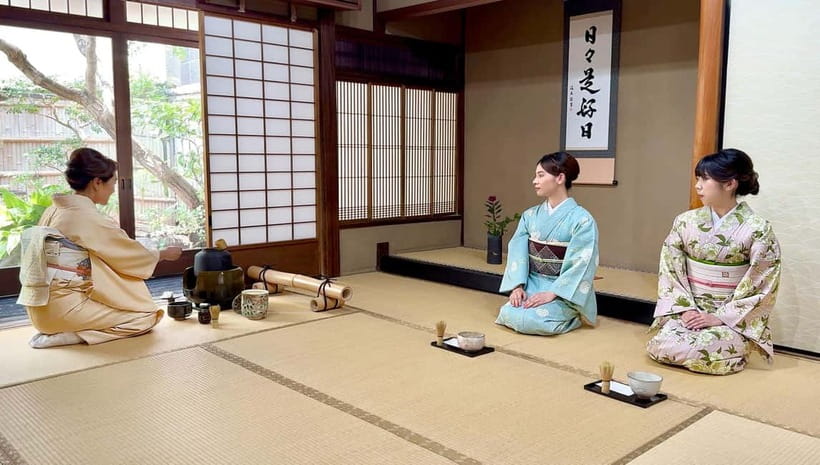
This Kyoto experience is interesting because you learn the Japanese Way of Tea inside a 100-year-old kyo-machiya townhouse, then you get to make your own matcha with expert guidance. You’ll also eat traditional sweets and slow down enough to notice how every gesture, bow, and bowl moment connects to the ritual.
One consideration: it runs as a small group session, so you’ll want to follow the quiet rules closely, and you may sit on the floor (small chairs are available if you prefer not to).
Key things that make this Kyoto tea ceremony worth it
- A 100-year-old machiya setting that feels like Kyoto before the crowds
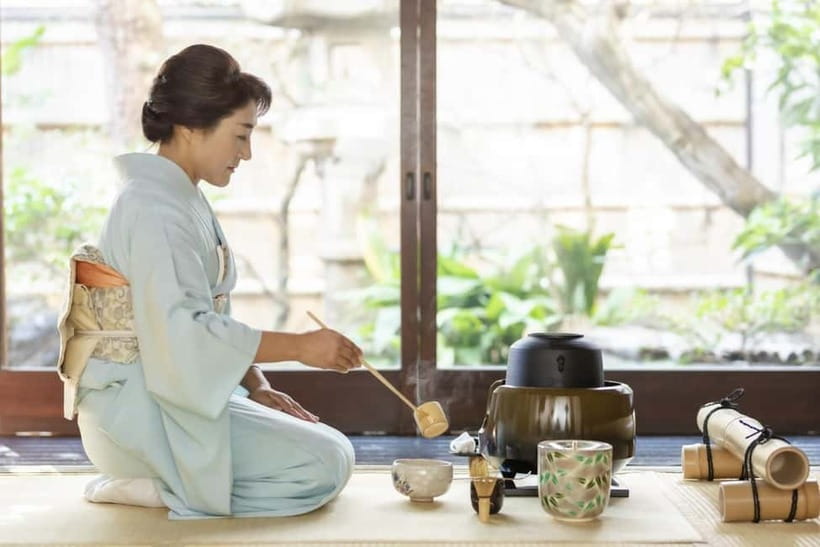
- Hands-on matcha prep with a tea master supervising every step
- Etiquette training you can use again like bowing, greetings, and bowl appreciation
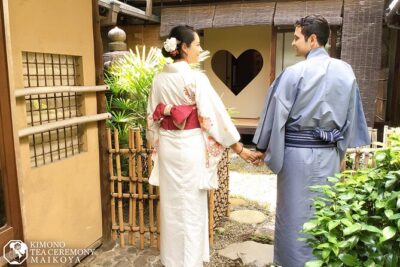
- Kimono time in Kyoto after the ceremony, with an optional formal upgrade (Houmongi)
- Optional Kyo-Machiya townhouse moment right after, with a short architecture tour and photo time
- English support from an interpreter plus tea master instruction in the room
Tea ceremony in a 100-year-old machiya, and why the setting matters
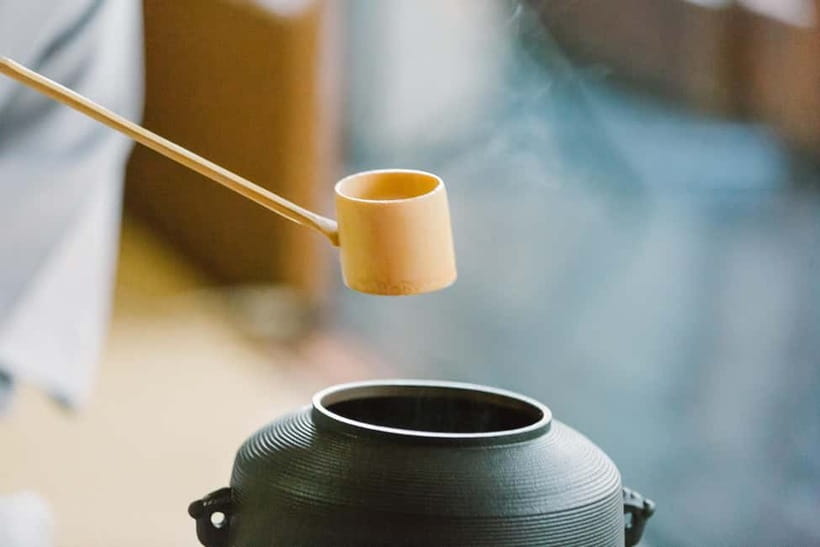
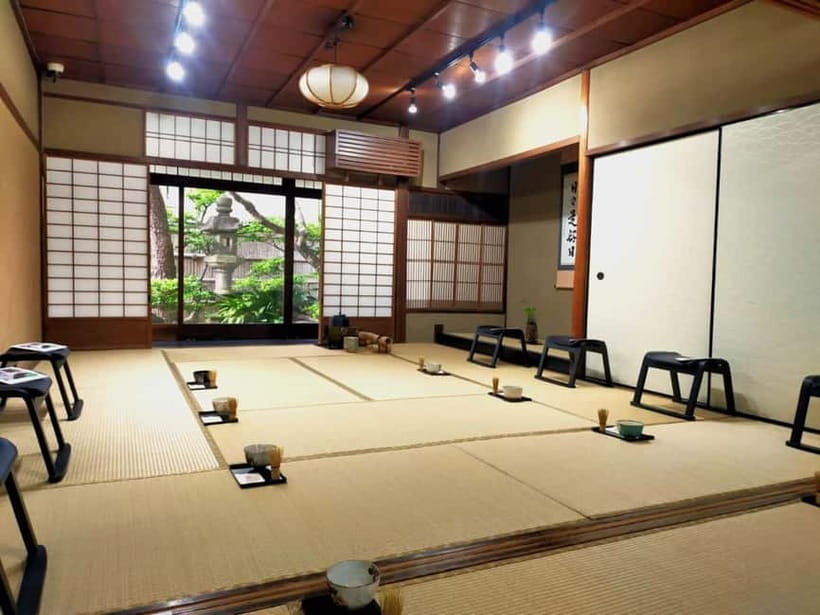
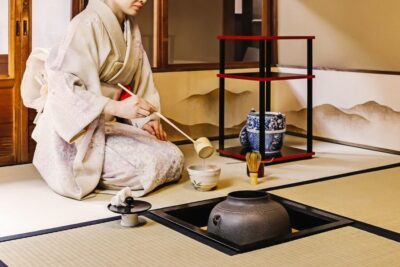
Kyoto tea ceremonies often feel like a performance you watch. Here, the old machiya townhouse is not just a backdrop. The wooden gate, tatami-like stillness, paper screens, and low, careful space make the experience feel smaller, quieter, and more personal.
That matters because tea ceremony is about attention. You’re not only tasting matcha, you’re learning why the order of actions matters, from how sweets arrive to how you hold and appreciate the tea bowl. Even before you lift a cup, the tea master sets a tone: measured movements, respectful greetings, and a calm pace that asks you to slow down.
More Tea Ceremonies in Kyoto
- Kyoto: Tea Ceremony in a Traditional Tea House in Kiyomizu
★ 4.9 · 3,519 reviews - Kyoto: Tea Ceremony Ju-An at Jotokuji Temple
★ 4.9 · 3,207 reviews - Kyoto: 45-Minute Tea Ceremony Lesson Experience
★ 4.3 · 2,378 reviews
Gojo Shop kimono timing, and when your tea actually begins
If you book the option with kimono rental, your day starts at Gojo Shop at the exact time on your voucher. You’ll pick from a range of kimono colors and designs and get sized correctly, so you don’t feel like you’re squeezing into the wrong outfit.
The key timing detail: the tea ceremony begins two hours after your selected starting time. For example, choosing 11:00 AM means your tea ceremony starts at 1:00 PM. That gives you a chunk of time where you’re getting dressed, then moving into the townhouse experience when it’s time.
After the ceremony, you can wear your kimono and stroll around Kyoto, but you’ll need to return it to Yumeyakata Gojo Shop by 5:30 PM. That turns the ceremony from a one-time activity into a longer Kyoto moment, where your outfit changes how the city feels.
If you choose tea ceremony only (no kimono), you skip the Gojo Shop step. Instead, you go to Oike Bettei 5 to 10 minutes before the starting time on your voucher.
Inside the tea room: etiquette, sweets, and making your own matcha
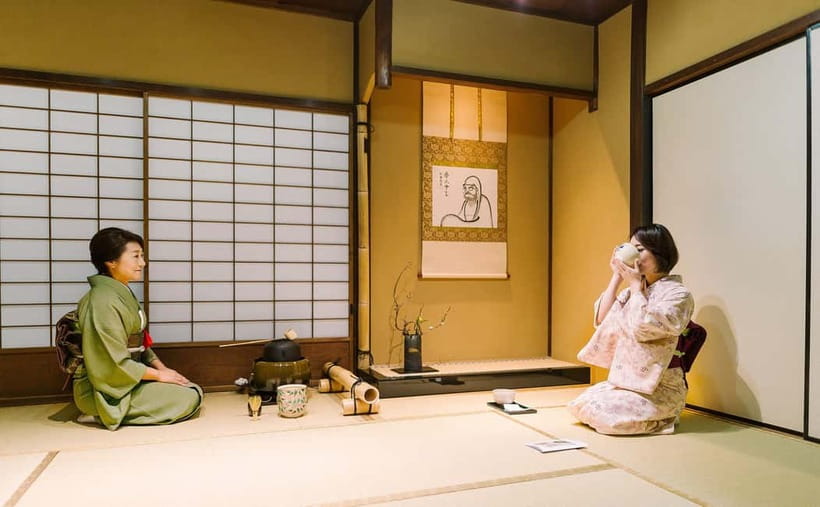
The ceremony has a built-in lesson plan, and it starts with context. You’ll get an explanation of tea ceremony history, including how it came into Japan from China about 1,200 years ago, and how it evolved into what people recognize today as the Japanese Way of Tea.
Then comes the practical part, the stuff that turns matcha from a drink into an experience:
- You’ll learn how to bow and use proper greeting words
- You’ll handle sweets in the correct sequence
- You’ll learn how to drink the tea with the right rhythm
- You’ll practice observing the tea bowl as part of the ritual
One of the best features is that you don’t only watch. The tea master prepares the first tea service for you, then you prepare the tea yourself under supervision. That supervised try is a big deal. Matcha is easy to mess up if you don’t know the basics, and this structure helps you learn without the stress of guessing.
The session also leaves space for questions. Before you leave, you can ask your tea master questions, which is where a lot of people get the extra meaning they didn’t know they wanted.
The tea master and interpreter, plus the group format reality
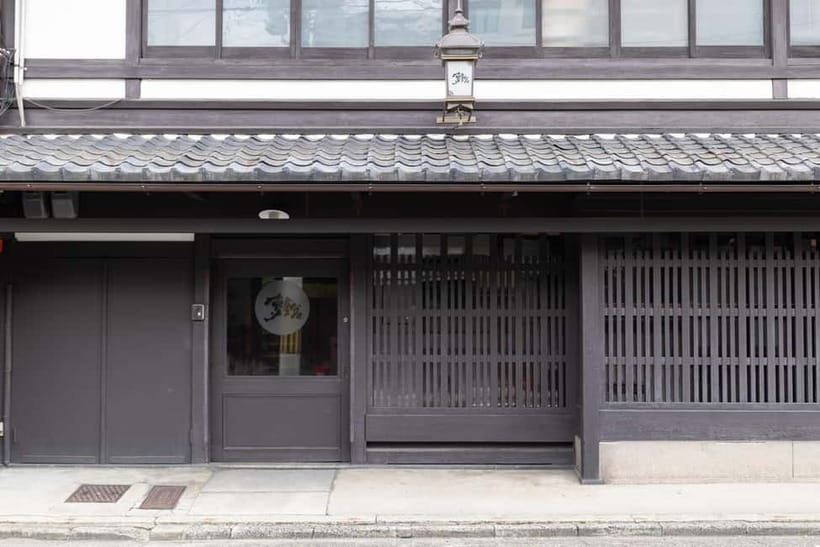
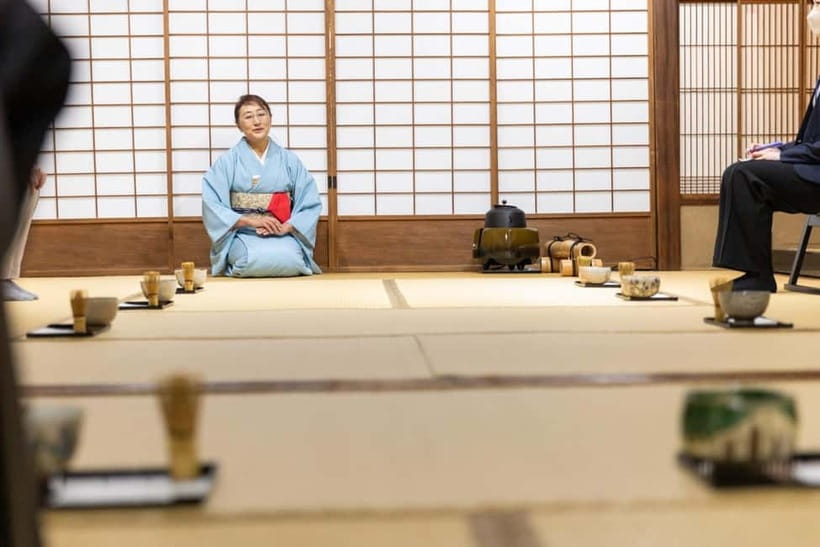
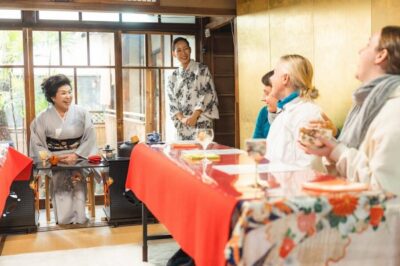
This experience is designed for a group. The format can accommodate up to 20 people, and the room you use can vary depending on group size. The upside is you’ll see the flow of the ceremony with others around you, which can help you learn faster. The downside is you’ll need to be respectful of the group quiet.
You’re expected to keep a quiet atmosphere and avoid distracting behavior. If you prefer a totally private lesson, this may feel less like that. But for most people, it’s a friendly size that still lets you participate, especially since you prepare your own matcha.
Language support is part of the design. You’ll have a tea master and interpreter, and the experience is offered in English and Japanese. In the feedback I reviewed, people often praised the clarity of the teaching, including hosts and translators named Lim, Maki, and Ling. You should still be ready for the fact that spoken English can vary by session, even when the meaning is clear.
One practical note: the experience allows floor seating, but if you don’t want to sit on the floor, you can use a small chair. That flexibility matters in Japan, where ceremonies can look strict but often include options for different comfort levels.
Same corner of Japan, a different kind of day:
- PERFECT KYOTO 1-Day Bus Tour
★ 5.0 · 13,518 reviews - Kyoto: Fushimi Inari, Kinkakuji, Bamboo Grove 1 Day Bus Tour
★ 4.8 · 4,316 reviews - Kyoto Geisha Walking Tour: Gion District & Hidden Gems
★ 4.7 · 3,273 reviews - Kyoto: Gion Magical Night Walking Tour with Geisha Trivia
★ 4.9 · 2,393 reviews
Optional Kyo-Machiya moment near Kyoto Gosho and Nijō Yoshimoto
If you choose the add-on, you stay right in the same beautiful place for an extra Kyo-Machiya townhouse moment right after the tea ceremony. It’s scheduled as 30 minutes total, made of a 20-minute architecture and culture tour plus 10 minutes of selfie time.
The focus here is not random history trivia. You’ll explore how machiya townhouses worked, their architectural details, and even hidden functions of these homes. That makes your tea ceremony feel more grounded in everyday Kyoto life, not just a ritual sealed in tradition.
This townhouse experience also ties in a specific Kyoto area: it’s near Kyoto Gosho (Kyoto Imperial Palace). Next to the setup is the former residence of Nijō Yoshimoto (1320 to 1388), a high-ranking court noble from the Nanboku-cho period. He was a Daijō Daijin (Grand Minister of State) and a key figure in Renga, the linked verse poetry culture.
In other words, you’re not only learning tea, you’re learning the cultural neighborhood where tea gatherings and refined discussion fit into the court world.
Photo time is part of this add-on. In at least one recent experience, people noted props like a katana and an umbrella during the photo moment, so expect some fun picture opportunities alongside the architecture tour.
Price and value, plus the practical tips that prevent stress
The base price is listed at $31 per person, and the value comes from what’s included in the ritual itself. You’re not just tasting matcha. You get:
- Tea ceremony instruction with a tea master and interpreter
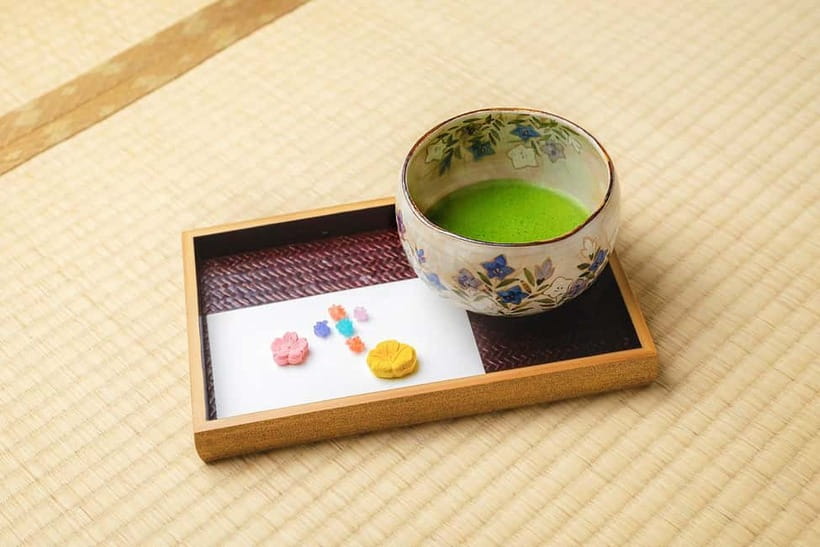
- Matcha tea and traditional Japanese sweets
- A leaflet explaining the ceremony
- Plus kimono rental if you choose that option
- If you select the add-on, women can also get hairstyling, makeup, and a kimono upgrade to Houmongi (formal kimono)
That’s why the price feels reasonable. You’re paying for a guided, structured cultural lesson, not a casual tasting. And if you do the kimono option, you also gain a practical outfit for exploring Kyoto right after, with a clear return deadline.
To avoid friction, plan around the rules:
- Bring socks. You’ll need them, and sandals or flip-flops are not allowed.
- Indoors, no flash photography.
- The atmosphere needs to stay quiet, and noise can get you asked to leave.
- Food and drinks are not allowed during the session, and smoking indoors is also not allowed.
One more thing to manage: transportation between Gojo Shop and the townhouse isn’t included. The experience provides the activity, not the ride between points. If you’re using public transit or walking, it helps to buffer extra time so you don’t feel rushed.
Who should book this Kyoto tea ceremony, and who should skip it
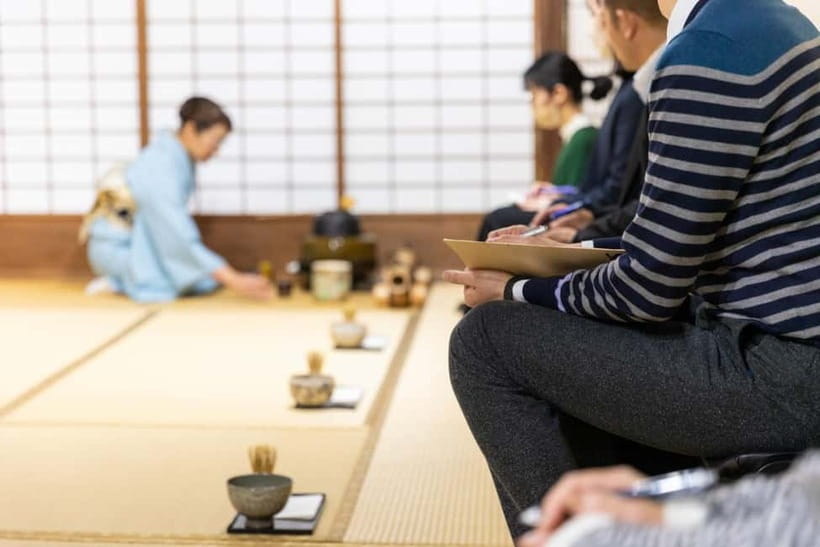
This is a strong fit if you want culture with structure. The best kind of traveler here is the one who enjoys etiquette, enjoys learning how rituals work, and doesn’t mind following instructions for 50 minutes to a bit longer.
You should also consider the setting if you care about photos. The machiya townhouse is naturally photogenic, and the kimono option helps the whole look.
But it’s not for everyone. It’s not suitable for:
- Children under 10 years
- Pregnant women
- Wheelchair users
- People over 6 ft 6 in (200 cm)
- Visually impaired people
- Babies under 1 year
- People over 209 lbs (95 kg)
Also, floor seating may be part of the experience. While chairs are available, be ready for the possibility that you’ll need to coordinate your comfort level quickly when you arrive.
Should you book this Kyoto tea ceremony?
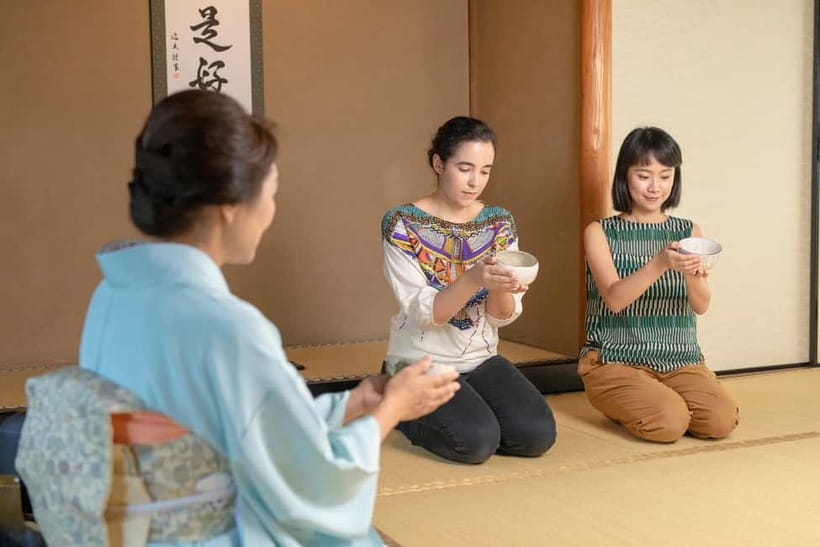
If you want a tea ceremony that teaches you, not just one that entertains you, I think you’ll like this. The combination of a machiya setting and hands-on matcha prep is the real draw, and kimono adds a practical Kyoto element so the experience doesn’t end the moment you leave the room.
Book it if you’re okay with a quiet group format and you can handle the basic rules, like socks and no flash indoors. Skip it if quiet and etiquette-focused sessions sound stressful, or if you fall into any of the stated unsuitability categories.
FAQ
Where do I meet, and how is the start time handled?
If you choose kimono rental, meet at Gojo Shop at the starting time on your voucher. The tea ceremony begins two hours after that selected starting time. If you choose tea ceremony only, meet at Oike Bettei 5 to 10 minutes before the voucher starting time.
How long is the tea ceremony?
The activity duration is listed as 50 minutes to 3 hours, depending on the option you choose. The tea ceremony itself is designed as a shorter guided session within that window.
Do I get to prepare matcha myself?
Yes. After the tea master prepares the first tea for the guests, you prepare the tea yourself under the tea master’s supervision.
What should I bring?
You should bring socks. Sandals or flip-flops are not allowed.
Can I sit on a chair instead of on the floor?
Yes. If you prefer not to sit on the floor, you can sit comfortably on a small chair.
Are there any rules about photos and quiet behavior?
Flash photography is not allowed. The room requires a quiet atmosphere, and disruptive behavior may result in being asked to leave.
Is kimono included, and can it be upgraded?
Kimono rental is included if you select that plan. If you select the add-on for women, you may also have hair styling and makeup, plus an upgrade from casual kimono to formal kimono (Houmongi).
Fresh options around Kyoto
- Kyoto Aquarium Admission Ticket★ 4.7 · 12 reviews
- Kyoto Gion Photoshoot – Private Session | Pro Photographer★ 5.0 · 12 reviews
- Gyoza Cooking Class in Kyoto: Traditional Japanese Dumplings★ 5.0 · 12 reviews
- Kyoto: Guided Food Tour with 12 Dishes & 3 Drinks★ 5.0 · 12 reviews
- Kyoto: Avoid the Crowds at the Hidden Gems of Arashiyama★ 4.9 · 13 reviews
- Kyoto Early Bird English Tour: Gion & Higashiyama(Private opt)★ 5.0 · 13 reviews
- Otsu-e Folk Art Workshop & Local Culture Walk Near Kyoto★ 5.0 · 13 reviews
- Kyoto, Osaka, Nara Full Day tour by Car English speaking Driver★ 3.5 · 13 reviews
Tea Ceremonies in Kyoto, compared.
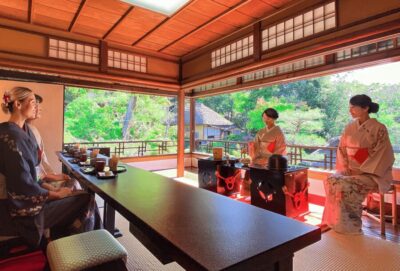
Tea Ceremony in a Traditional Tea House in Kiyomizu
Read our review →
Arashiyama Bamboo Forest, Monkeys, Matcha & Temple Tour
Read our review →
Tea Museum Tickets and Matcha Grinding Experience
Read our review →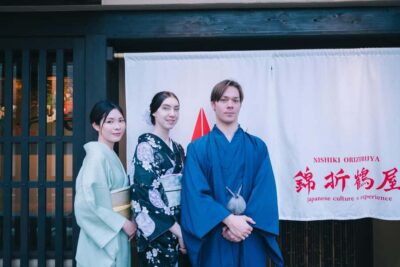
Browse the lists this tour appears in