
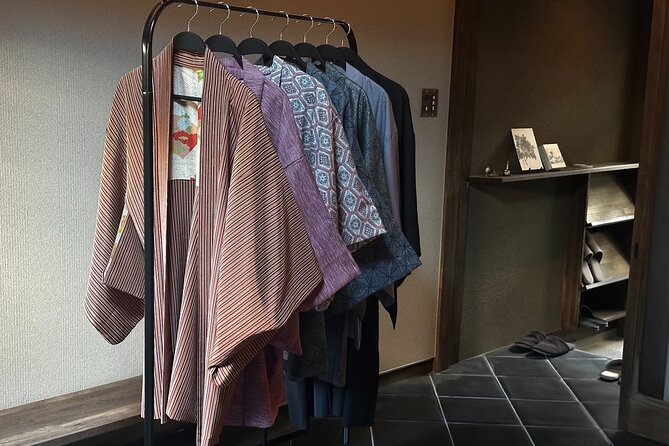
Reviewed · TEA CEREMONIES IN KYOTO
KYOTO: Private Tea Ceremony in Hidden Townhouse (Kid-Friendly)
A tea ceremony in Kyoto, without the crowd. This private session in a hidden townhouse is kid-friendly, and you get a short film plus a step-by-step routine to help you reproduce the process later. I especially like the personal attention and the hands-on stone-milling matcha powder part, not just watching. The only real drawback is the total time is about 45 minutes, so if your group wants lots of chatting or extra practice, you may feel a bit rushed.
You also get a little built-in breathing room for photos, which matters in Kyoto when you’re often moving fast. In the feedback, the host (Yuki) is described as polite, friendly, and careful about explaining. Just remember this is a matcha-focused experience, so it helps if your group is open to that taste.
Key Highlights You Will Actually Care About
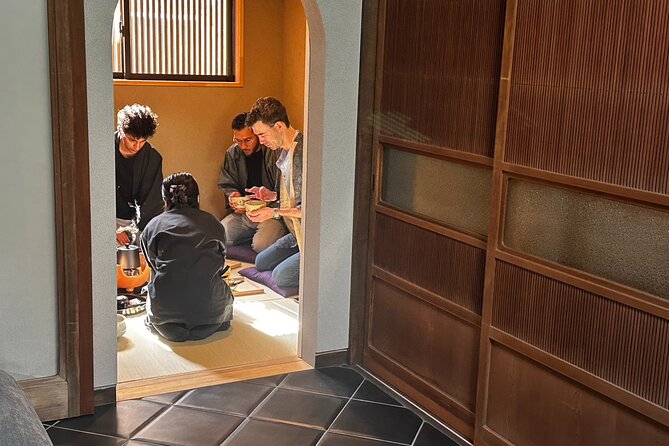
- A private, family-friendly tea ceremony for just your group, not a busload experience
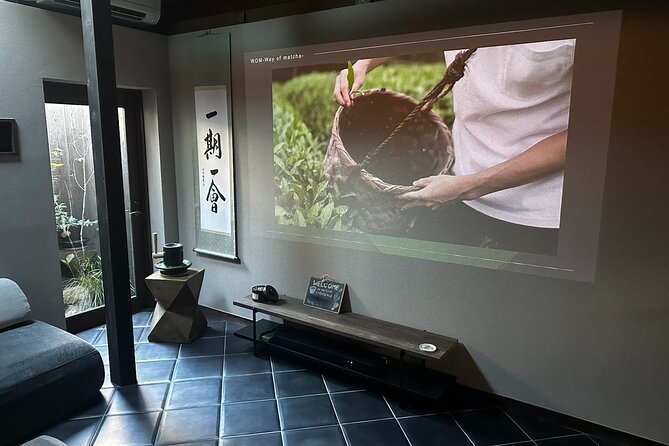
- Short film about matcha and tea plantations, setting the scene before you start
- Stone-milling matcha powder, a hands-on skill you can try at home
- A full tea flow, including demonstration and your own cup-making
- Time for photos, so you can capture the moment without feeling rushed
Why This Private Kyoto Tea Ceremony Feels Like Real Japanese Culture
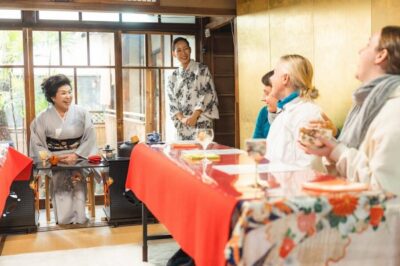
Kyoto has no shortage of tea experiences, but most come with the same tradeoff: you watch while strangers shuffle around you. This one flips the script by keeping it private. That changes how the teaching works. You can ask questions, follow along at a comfortable pace, and let kids participate without feeling like they are in the way.
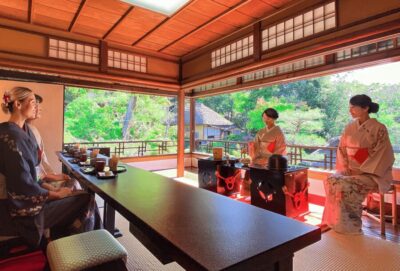
The setting also adds a layer of calm. The ceremony happens in a hidden townhouse, not a loud storefront. That small detail matters because tea is slow by nature. When the environment is quiet, you stop thinking about what is next and start paying attention to the steps.
And then there’s the matcha focus. You do more than sip. You learn how matcha powder gets made, then how it turns into a cup through the ceremony steps. It is the kind of cultural activity that gives you something practical to remember, not just a photo.
More Tea Ceremonies in Kyoto
- Kyoto: Tea Ceremony in a Traditional Tea House in Kiyomizu
★ 4.9 · 3,519 reviews - Kyoto: Tea Ceremony Ju-An at Jotokuji Temple
★ 4.9 · 3,207 reviews - Kyoto: 45-Minute Tea Ceremony Lesson Experience
★ 4.3 · 2,378 reviews
The 45-Minute Timeline: What Happens, Step by Step
Your session runs about 45 minutes. The flow is simple, and it keeps moving, which is good for families and for anyone who does not want a long performance.
Here is what the timeline includes:
- Watch footage of tea plantations
- Make matcha powder using stone-milling
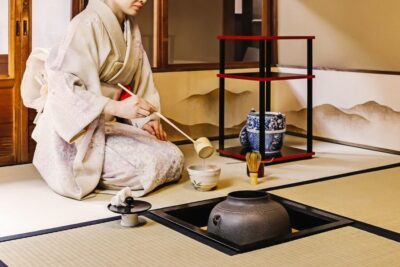
- Tea ceremony demonstration
- Hands-on tea making, tasting, and making a latte
Let’s make that real in your head.
Tea-Plantation Footage to Set the Stage
Before you touch anything, you watch footage about tea plantations and matcha. This is a smart warm-up. If you walk in knowing almost nothing, you still leave with a basic story: where the leaves come from and why matcha is treated differently from regular tea.
If you have kids, this part helps too. It gives them something concrete to watch before they transition into doing.
Stone-Milling Matcha Powder, The Practical Magic
Next comes matcha powder with stone-milling. Even if you have seen matcha before, this step turns it into a skill. You are not just buying matcha later, you are understanding the process behind it.
For parents, this is also a great “hands-on learning” moment. Kids tend to like the idea of turning whole materials into something new. For adults, it is where the experience shifts from cultural watching into real technique.
A consideration: stone-milling is part of the process, but your group is still limited by the overall time. You will learn enough to be able to repeat the basic approach at home, not become a master grinder.
Same corner of Japan, a different kind of day:
- PERFECT KYOTO 1-Day Bus Tour
★ 5.0 · 13,518 reviews - Kyoto: Fushimi Inari, Kinkakuji, Bamboo Grove 1 Day Bus Tour
★ 4.8 · 4,316 reviews - Kyoto Geisha Walking Tour: Gion District & Hidden Gems
★ 4.7 · 3,273 reviews - Kyoto: Gion Magical Night Walking Tour with Geisha Trivia
★ 4.9 · 2,393 reviews
Demonstration First, Then Your Turn
After the powder stage, you see the tea ceremony demonstration. This is where a guide’s teaching style makes the difference. In the feedback, Yuki is described as friendly and informative, and that kind of calm explanation helps you follow the steps without intimidation.
Then you do the hands-on tea making and tasting. That is the moment you stop thinking, Now what? and start tasting what you made.
Making a Latte, Because Modern Families Need Options
The timeline also includes making a latte. That matters in a family setting, because it gives everyone something familiar to aim for. Even if your family is new to matcha, a latte format can be easier to enjoy.
Stone-Milling Matcha Powder: Why This Skill Is the Best Part
Most tea ceremonies focus on the final cup. This one spends real time on the powder itself.
That gives you two big wins:
- You learn the input, not only the output
- You get a technique you can recreate, which makes the experience extend beyond the 45 minutes
At home, matcha can be as simple or as technical as you want. But when you’ve actually seen powder being made with stone-milling, you understand why matcha is prized and why it tastes the way it does.
In practical terms, this is the part of the tour that creates confidence. You are not just thinking, I should do this someday. You know what “doing it” looks like.
The Tea Ceremony Demonstration and Your Time for Photos
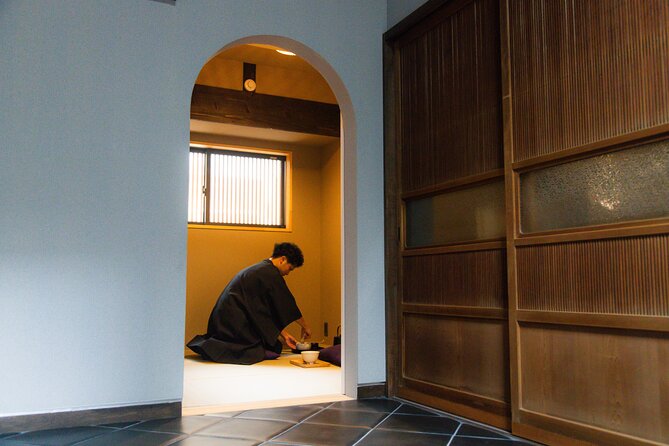
The demonstration is not just theater. It is the bridge between learning and doing. You get to see the steps before you try them yourself, which is especially helpful if you’re traveling with kids or anyone who gets overwhelmed by unfamiliar routines.
Another detail that makes this experience more enjoyable: you get time to capture photos. Tea ceremony moments can be camera-ready, but in many settings you are told to rush because the next group is waiting. Here, the experience design includes a window to take pictures without turning the ceremony into a sprint.
What to expect in tone: calm and careful. The host is described as polite and friendly, and that usually means the explanation is paced for real people, not just performers.
Hands-On Tea Making, Tasting, and Latte Making
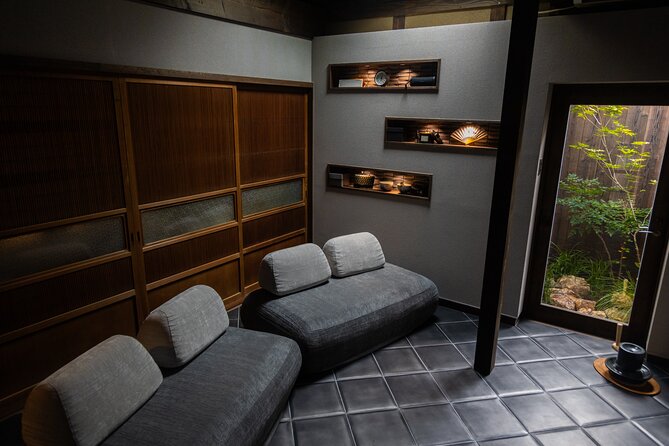
This is where you become part of the ceremony instead of spectators. The tour includes hands-on tea making and tasting, plus making a latte.
Why that is valuable:
- Tasting closes the loop. You connect the steps to the flavor right away.
- Latte making gives flexibility. If someone is hesitant about plain matcha, latte format can feel more approachable.
For families, hands-on time is the difference between a cultural activity that kids remember and one that turns into restlessness. When children are actively involved, the experience feels less like sitting in a room and more like doing a project.
One consideration: since the whole thing is about 45 minutes, you may not get a long, slow practice session. Think of it as a guided intro that leaves you with a memory and a repeatable method, not a multi-session training course.
Family-Friendly Kyoto Culture, With Kids Actually Included
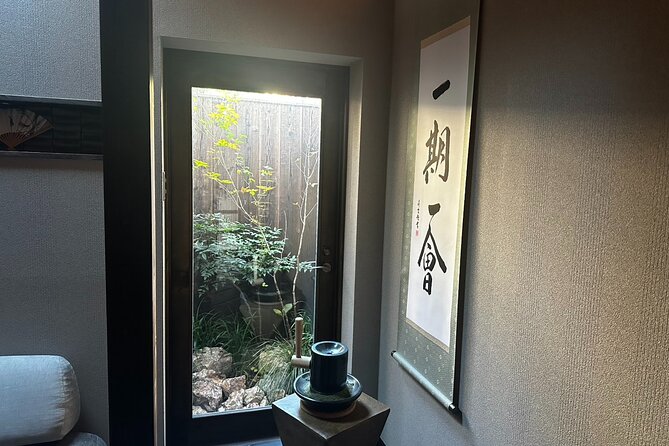
This is labeled kid-friendly and suitable for families. In practical terms, that usually means the host’s approach is geared toward comfort. In the feedback, the host Yuki is described as friendly, informative, and polite, which is exactly what helps kids stay engaged.
The structure also supports families:
- You start with footage, so kids are not instantly thrown into complex motions
- You shift into hands-on matcha making, so energy has an outlet
- You end with tasting and latte making, so there is a payoff
If you’re traveling with children, consider this a good “cultural stop” between temple visits and long walks. It takes less time than many Kyoto activities, and it gives everyone a shared accomplishment: cups made by your own hands.
Meeting Point in Jurakucho: What to Know Before You Go
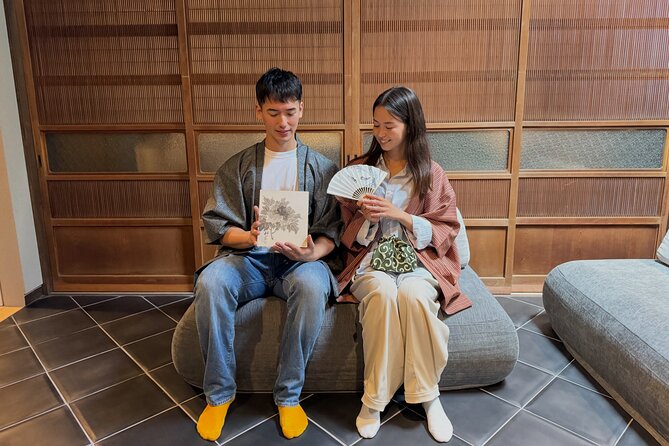
The session starts at WOM-Way of Matcha, KYOTO863-41 Jurakuchō, Kamigyo Ward, Kyoto, 602-8156, Japan. It ends back at the meeting point.
That return is helpful for families, because you do not have to worry about planning a route afterward. You can just regroup and head to your next Kyoto move.
Also note that the experience uses a mobile ticket, and you receive confirmation at booking time. If you like to keep things simple, this cuts down on “where do I pick up the ticket” stress.
Price and Value: Is $51.24 Per Person Worth It?
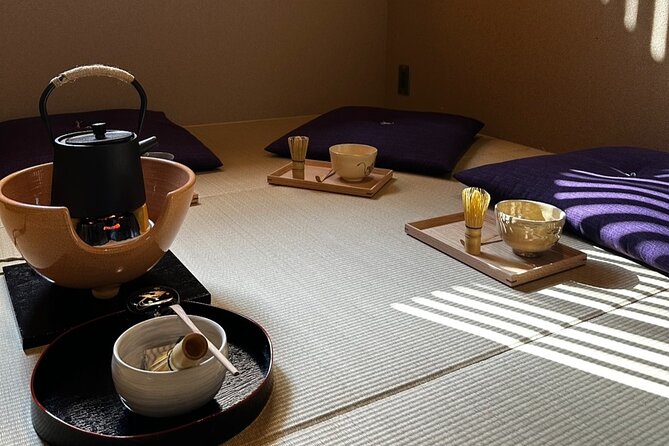
At $51.24 per person for a private session, this is not the cheapest way to do matcha in Kyoto. But you are paying for three things that are hard to find in standard group formats.
You’re paying for:
- Privacy and personalized attention for just your group
- Hands-on training that includes stone-milling and making your own tea
- A family-friendly structure, plus time for photos
If you’ve ever done a group tea ceremony, you know the feeling: you watch, you smile, and you move on. Here, you do the steps. That is why the cost can feel more reasonable. You are buying a short, guided workshop in matcha culture, not just a seating experience.
Also, the price-to-time ratio is strong for families who do not want a half-day activity. About 45 minutes is enough to learn, make something, taste it, and leave calm.
Should You Book This Private Matcha Ceremony in Kyoto?
Book it if you want:
- A private Kyoto tea ceremony for your group
- Hands-on matcha with stone-milling and a practical process you can repeat
- A family-friendly activity that keeps kids engaged
- A calmer alternative to crowded group sessions
You might skip it if:
- Your group dislikes matcha and is only interested in something generic
- You want a longer, slower ceremony with lots of free-form time, because this one is about 45 minutes
If your plan includes temples and neighborhoods like Kamigyo, this is the kind of indoor cultural stop that refreshes you. It also gives you a story you can recreate at home, especially because the matcha-making part is taught, not just shown.
If you do book, arrive a bit early at the listed start point so you do not start the ceremony feeling rushed.
FAQ
How long does the private tea ceremony last?
The experience lasts about 45 minutes.
Is this a private experience?
Yes. It is a private tour or activity, and only your group participates.
Where does the tea ceremony start?
The meeting point is WOM-Way of Matcha, KYOTO863-41 Jurakuchō, Kamigyo Ward, Kyoto, 602-8156, Japan.
What activities are included during the session?
You watch footage of tea plantations, make matcha powder using stone-milling, do a tea ceremony demonstration, then participate in hands-on tea making and tasting, including making a latte.
Is it suitable for families and children?
Yes. The experience is described as family-friendly and children are welcome.
What is the cancellation policy?
Free cancellation is available. You can cancel up to 24 hours in advance of the experience for a full refund.
Fresh options around Kyoto
- Kyoto Aquarium Admission Ticket★ 4.7 · 12 reviews
- Kyoto Gion Photoshoot – Private Session | Pro Photographer★ 5.0 · 12 reviews
- Gyoza Cooking Class in Kyoto: Traditional Japanese Dumplings★ 5.0 · 12 reviews
- Kyoto: Guided Food Tour with 12 Dishes & 3 Drinks★ 5.0 · 12 reviews
- Kyoto: Avoid the Crowds at the Hidden Gems of Arashiyama★ 4.9 · 13 reviews
- Kyoto Early Bird English Tour: Gion & Higashiyama(Private opt)★ 5.0 · 13 reviews
- Otsu-e Folk Art Workshop & Local Culture Walk Near Kyoto★ 5.0 · 13 reviews
- Kyoto, Osaka, Nara Full Day tour by Car English speaking Driver★ 3.5 · 13 reviews
Tea Ceremonies in Kyoto, compared.
Tea Ceremony in a Traditional Tea House in Kiyomizu
Read our review →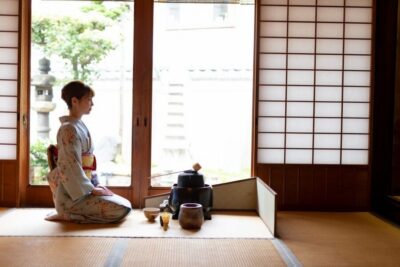
Arashiyama Bamboo Forest, Monkeys, Matcha & Temple Tour
Read our review →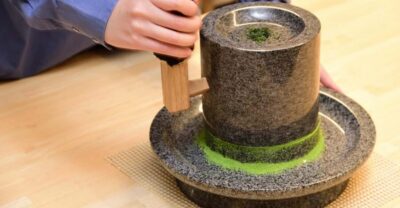
Tea Museum Tickets and Matcha Grinding Experience
Read our review →
Browse the lists this tour appears in