
Reviewed · TEA CEREMONIES IN KYOTO
Kyoto: Newly Opened Tea Ceremony – Sanjo Chasuian
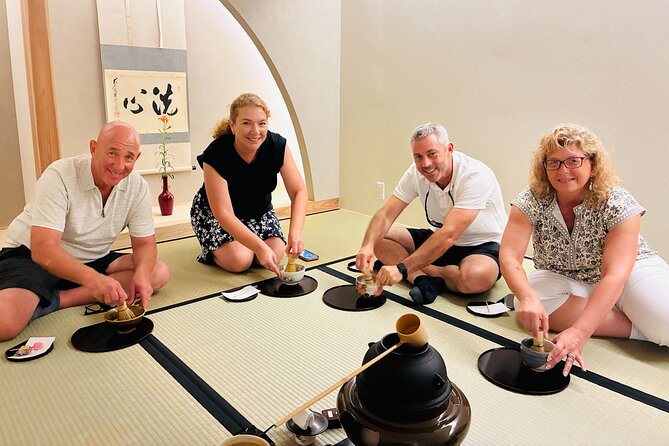
Kyoto can be loud. This one-hour stop turns the dial way down with a traditional tea ceremony in a newly opened space. I like the hands-on matcha making (you whisk your own bowl), plus the seasonal wagashi from a long-running Kyoto confectioner. One thing to plan for: the door locks right when the session begins, so late entry means no participation.
Sanjo Chasuian is easy to reach, just a 5-minute walk from Karasuma Oike Station, and it is built for international visitors with English guidance. You will start with the meaning and history of the ceremony, then enjoy matcha and sweets, and finally make your own bowl with a helper who keeps the pace calm and clear.
Key highlights to know before you go
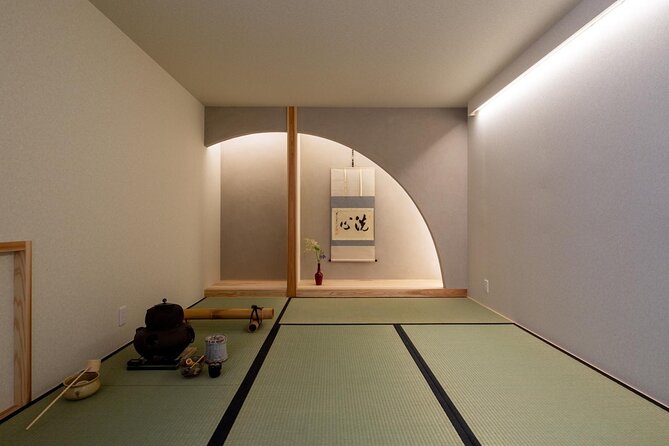
- Nijiriguchi crawl-in entrance that signals you are leaving the outside world behind
- Two bowls of matcha in one session, one from the host and one you whisk
- Seasonal wagashi included from a Kyoto sweets shop with 100+ years of history
- Small group size up to 10 for a quieter, more personal feel
- English instruction with hosts who have names like Yuko and Reina in past sessions
- Socks required, and seating is available if you prefer not to sit on the floor
Sanjo Chasuian’s location and the 1-hour rhythm that works
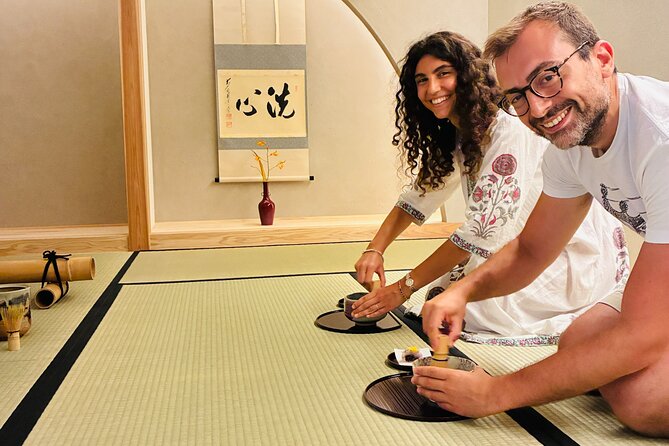
You get a lot of payoff for the time. The experience is one hour, which makes it a great match for Kyoto days when you want culture without sacrificing dinner plans. It also helps that Sanjo Chasuian is close to public transit, a short walk from Karasuma Oike Station.
The session runs on a strict clock. Entry is allowed from 5 minutes before start time, and once it begins the door is locked. If you are even slightly behind, you will not be able to join and there is no workaround built into the schedule, so I recommend showing up a bit early.
Meeting up is also simple. You come to the venue address, and the staff are waiting by a big plate with the Sanjo Chasuian logo. No mystery, no scavenger hunt.
More Tea Ceremonies in Kyoto
- Kyoto: Tea Ceremony in a Traditional Tea House in Kiyomizu
★ 4.9 · 3,519 reviews - Kyoto: Tea Ceremony Ju-An at Jotokuji Temple
★ 4.9 · 3,207 reviews - Kyoto: 45-Minute Tea Ceremony Lesson Experience
★ 4.3 · 2,378 reviews
Nijiriguchi: where the ceremony starts before you drink
The most memorable moment for first-timers often happens before matcha even hits the bowl. Your tea room has nijiriguchi, a crawl-in style entrance that is meant to lower the mood from everyday life. It is a physical reminder that this space asks for attention and respect.
Yes, it sounds ceremonial on purpose, because it is. The walk, the small shift in posture, the quiet that follows, it all sets the stage for the rest of the hour. It is not about being dramatic. It is about training your brain to slow down.
And if you do not want to floor-sit, you can choose chairs. That matters because tea ceremony culture is precise, and the last thing you want is to be distracted by discomfort.
Learning the meaning first, not just the steps
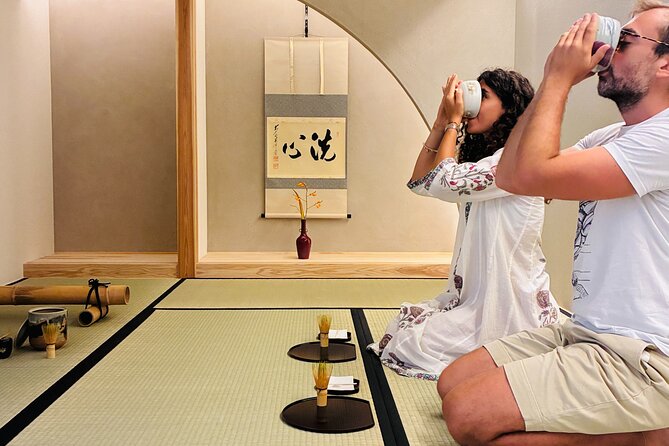
You do not just jump to whisking. The session starts with an explanation of the tea ceremony’s history and significance, with guidance in English. This is one of the most satisfying parts for me because the movements make more sense when you know what they are trying to communicate.
After that intro, you watch the host’s process. You will see how tools are handled, how the space is used, and how each movement has a reason. Then the instructor transitions you from observer to participant.
This order is smart. If you only learn technique, the ritual can feel like a performance you are trying to copy. With the story and meaning first, you will understand why the ceremony moves at the pace it does.
Two bowls of matcha: a host pour and your own whisking round
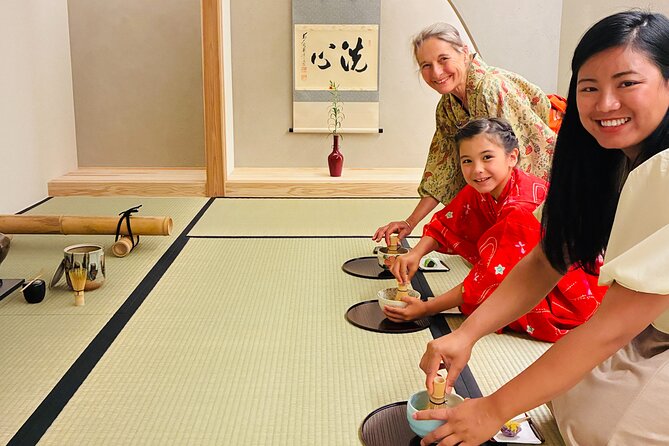
Most “tea experiences” in Kyoto give you one sip and a photo. Here you get a real skill moment.
You receive two cups of matcha. The first one is made by the host. It is your reference point, a model you can compare to when you make your own bowl. Then you get your turn to whisk and prepare matcha yourself, either solo or with a companion depending on how your group is arranged.
The hands-on part is where you gain confidence. You choose a tea bowl and a whisk, then follow the instructor’s guidance closely. Watching is good. Doing is better, because you can feel how the whisking changes the texture and the overall character of the drink.
Also, the host will walk you through what to expect before you start. That small heads-up is huge for nervous beginners. You know what comes next, so you can focus on the moment instead of guessing.
Same corner of Japan, a different kind of day:
- PERFECT KYOTO 1-Day Bus Tour
★ 5.0 · 13,518 reviews - Kyoto: Fushimi Inari, Kinkakuji, Bamboo Grove 1 Day Bus Tour
★ 4.8 · 4,316 reviews - Kyoto Geisha Walking Tour: Gion District & Hidden Gems
★ 4.7 · 3,273 reviews - Kyoto: Gion Magical Night Walking Tour with Geisha Trivia
★ 4.9 · 2,393 reviews
Seasonal wagashi: included sweets that set the flavor mood
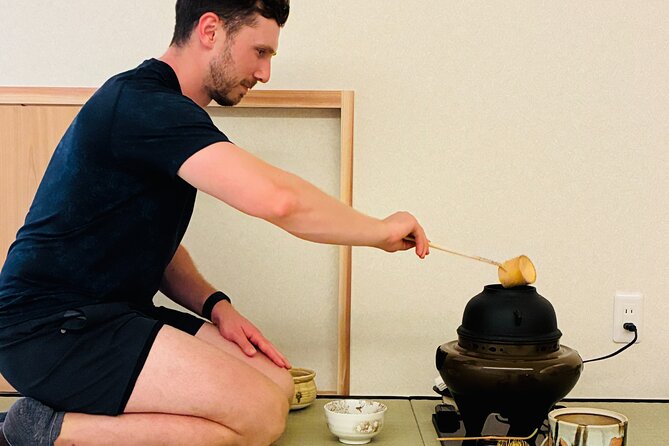
Matcha is the star, but the sweet is not an afterthought. You get traditional seasonal Japanese confectionary (wagashi) as part of the experience. It comes from a Kyoto confection shop with over 100 years behind it.
This matters because wagashi is designed to complement the tea, not just add sugar. Seasonal sweets also make the ritual feel tied to real time, not a generic “tour version” snack.
You should expect the sweet to be part of the pacing. It shows up as you are settling into the tea-room rhythm, so it becomes part of why the hour feels calm and intentional, not rushed.
Group setting: small numbers, calm rules, and how photos may happen
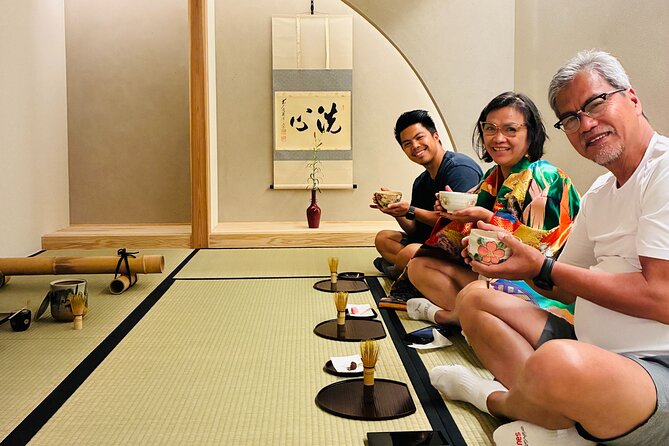
This is a shared plan format, meaning you will be with other participants. The group is limited to 10, which helps keep the room from turning into a busy workshop line.
To preserve a calm atmosphere, the session has quiet etiquette. For example, timing matters, and the door lock rule is part of how they keep the flow steady for everyone. If you like quiet experiences where you can actually pay attention, this format tends to work.
There is also seating available, and that flexibility helps you stay relaxed while you learn. If you are worried about sitting posture, this is one of the practical wins.
On the photo front, multiple hosts offer help taking pictures and videos while you make the matcha. If you care about documenting the hands-on part, this is convenient and it means you do not need to break the ceremony moment to ask.
Price and value: why $31 can be a fair deal in Kyoto
At $31 per person for about an hour, this is not a budget cooking class style expense, but it also is not overpriced for what you actually do. Here is what makes the value feel real:
- You get two matcha bowls, not one
- You get seasonal wagashi included
- You get English instruction and step-by-step guidance
- You get a small group limit, plus a ceremony space designed for focus
- You get hands-on practice, including choosing a bowl and whisk
One more reason to pay attention to timing: it is newly opened, and there is a grand opening discount running until September 15. If you are planning a fall trip, that discount can make the deal even easier to justify.
If you are trying to squeeze one Kyoto “culture” activity into a busy schedule, I find this kind of matcha session works well because you leave with both a memory and a skill.
What to wear, what to bring, and the sock rule
Do not overpack for this one. The venue asks you to bring socks. Even if you are tempted to wear shoes, remember the ceremony setting is sock-based for a clean, respectful interior feel.
Because they mention no standard kimono rental, your clothing choice matters more than trying to coordinate outfits. If you want to look more traditional, there is an optional alternative, which I cover next.
Optional uchikake and buying matcha gear, if you want souvenirs
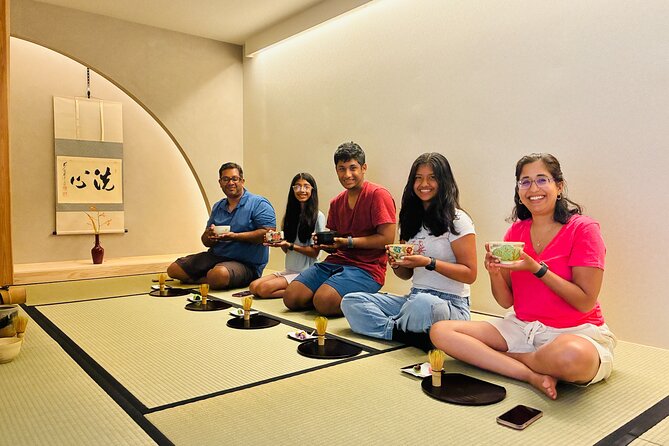
You will not automatically get kimono dressing as part of the standard experience. The venue notes that it does not offer standard kimono rental or dressing services.
But there is an optional uchikake (coat-style kimono) experience for ¥1,500 (tax included). Quantities are limited, and advance reservations are not accepted, so it is more of a day-of bonus than a guaranteed add-on. If you are the type who likes a costume moment, it can be a fun extra. If you prefer to travel light, skip it and just enjoy the tea.
On top of that, select items are available for purchase, including matcha and tea bowls. Many people leave wanting to keep the ritual going at home, and this is the simplest path since you will already know what you are buying and why.
Who should book this matcha class, and who should skip it
This is a strong choice if you want a meaningful entry point into Japanese tea culture. You get history, you get tools, and you get practice. The English instruction makes it less intimidating than self-guided museum-style tea learning.
It is also a good fit if you like structured experiences with quiet rules. The ceremony is set up for calm attention, not rapid-fire commentary.
But it is not for everyone. The venue says it is not suitable for children under 6 and it is not suitable for wheelchair users. Also, the venue notes that families with children under 5, or anyone who needs an interpreter, should choose the Private Plan instead of the Shared Plan. If that applies to you, do not assume you can just show up and switch once you arrive.
Finally, if you hate strict timing, consider whether the locked-door rule will stress you out. If you can arrive early and stay on the schedule, you will likely enjoy the calm pace a lot more.
Should you book Sanjo Chasuian’s newly opened tea ceremony?
I would book it if you want a Kyoto tea ceremony that is small, structured, and hands-on. The combination of two matcha bowls, included seasonal wagashi, and English guidance makes it feel like more than a quick tourist stop.
I would also book it if you enjoy respectful quiet and precise instruction. The nijiriguchi entrance sets the tone, and the whole hour is built around mindfulness and careful technique.
Skip it only if strict timing, the sock requirement, or the shared-group format sounds like a hassle for you. Also, if accessibility needs are in play, double-check suitability before you plan your day.
If you match those basics, this is an easy “yes” for a first Kyoto tea ceremony, and a satisfying one for anyone who has tried matcha before and wants a better handle on the ritual.
FAQ
Where is Sanjo Chasuian located?
It is about a 5-minute walk from subway Karasuma Oike Station. You meet at the venue address, where there is a large plate showing the Sanjo Chasuian logo.
What is included in the price?
The experience includes two cups of matcha (one made by the host and one you whisk) and traditional seasonal Japanese confectionary (wagashi).
How long is the tea ceremony experience?
The duration is 1 hour.
Do I need to wear socks?
Yes. You are required to bring or wear socks during the experience.
Is there kimono rental included?
No standard kimono rental or dressing is included. An optional uchikake (coat-style kimono) experience is available for ¥1,500 (tax included), but it is limited and not reservable in advance.
Is it suitable for children or wheelchair users?
The venue states it is not suitable for children under 6 and it is not suitable for wheelchair users. For children under 5 or guests requiring an interpreter, the venue says the Private Plan must be booked instead of the Shared Plan.
Fresh options around Kyoto
- Kyoto Aquarium Admission Ticket★ 4.7 · 12 reviews
- Kyoto Gion Photoshoot – Private Session | Pro Photographer★ 5.0 · 12 reviews
- Gyoza Cooking Class in Kyoto: Traditional Japanese Dumplings★ 5.0 · 12 reviews
- Kyoto: Guided Food Tour with 12 Dishes & 3 Drinks★ 5.0 · 12 reviews
- Kyoto: Avoid the Crowds at the Hidden Gems of Arashiyama★ 4.9 · 13 reviews
- Kyoto Early Bird English Tour: Gion & Higashiyama(Private opt)★ 5.0 · 13 reviews
- Otsu-e Folk Art Workshop & Local Culture Walk Near Kyoto★ 5.0 · 13 reviews
- Kyoto, Osaka, Nara Full Day tour by Car English speaking Driver★ 3.5 · 13 reviews
Tea Ceremonies in Kyoto, compared.
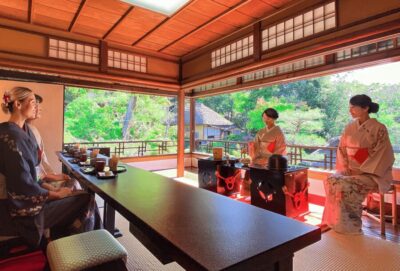
Tea Ceremony in a Traditional Tea House in Kiyomizu
Read our review →
Arashiyama Bamboo Forest, Monkeys, Matcha & Temple Tour
Read our review →
Tea Museum Tickets and Matcha Grinding Experience
Read our review →
Browse the lists this tour appears in