
Reviewed · WALKING TOURS
Kyoto: Fushimi Inari Taisha Guided Walking Tour
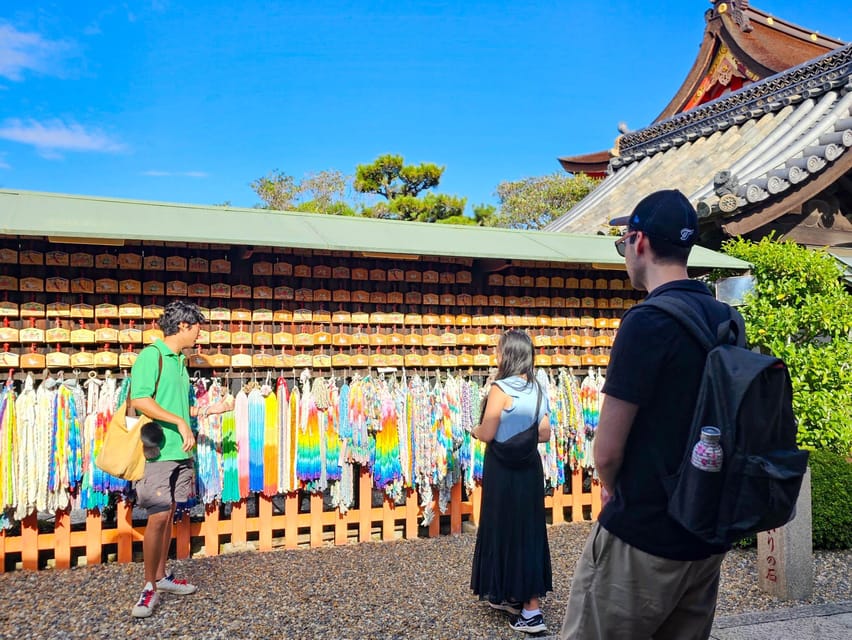
Fushimi Inari feels like a Kyoto shortcut to wonder. You’ll visit the iconic Shinto shrine, then follow trails lined with thousands of red torii gates, with a guide to connect what you’re seeing to the story of Inari and the fox messengers. I especially like the flexibility of choosing how much hiking you want, and the small-group feel that keeps the walk easy to manage. One drawback: it’s still a real walking tour, so you’ll want to plan for steady steps, even though the whole experience is only 2 to 3 hours.
There are two ways to do it, and that’s a big part of the value. If you want the classic photo corridor, you can keep it to the lower shrine. If you have time and energy, going up toward the upper shrine along Mount Inari adds views over Kyoto that make the red gates feel even more dramatic. If you’re short on time or you prefer moving at your own pace, this tour format is a smart match.
Key things to know before you go
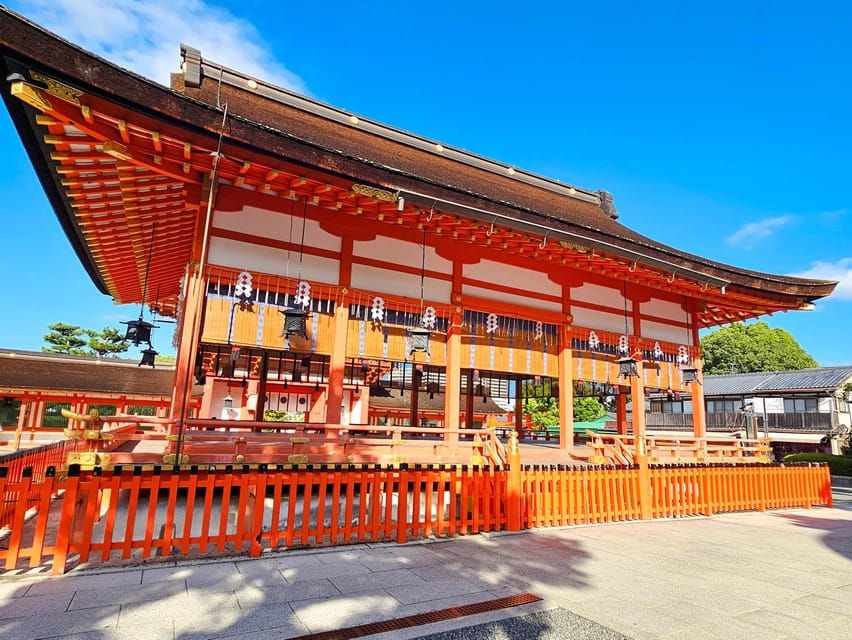
- Two tour options: lower shrine only (Option B) or lower plus the upper shrine hike (Option A)
- Mount Inari viewpoints if you choose Option A, you get higher vantage points over Kyoto
- Small group limit of 9 helps keep the pace friendly and manageable
- Friendly guide energy with English narration, plus lots of picture-taking support from guides like Katz, Nobumasa, and Raphael
- Street food stop built into the flow, so you can snack without wandering off on your own
Why Fushimi Inari Taisha is worth your Kyoto time
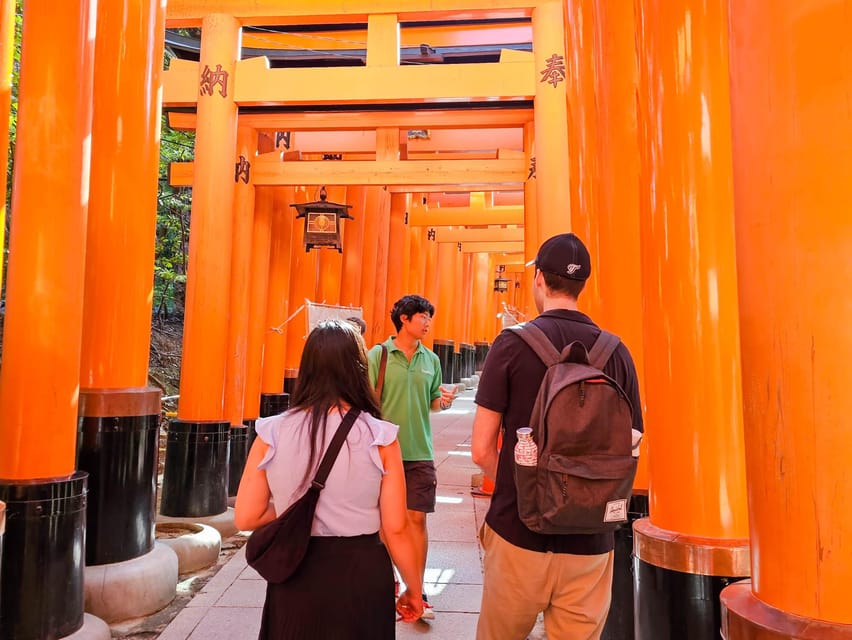
Kyoto has famous sights, but Fushimi Inari Taisha is different. The draw isn’t just the shrine buildings, it’s the constant rhythm of torii gates marching up and down the slopes of Mount Inari. That visual repetition hits fast, and once you start walking, you feel like you’re moving through a symbol, not just touring a landmark.
I like how this tour focuses on both meaning and motion. You don’t just stand under gates and take photos. You learn how the shrine is tied to Inari, the deity associated with agriculture and commerce, and why foxes matter in the story. A good guide helps you notice small details you’d otherwise miss, like the way the shrine’s layout supports the idea of pilgrimage and ascent.
There’s also something practical here: the tour is short. In 2 to 3 hours, you can cover the must-see portions without turning your whole day into a long slog.
More Temple & Shrine Tours in Kyoto
- Kyoto: Fushimi Inari, Kinkakuji, Bamboo Grove 1 Day Bus Tour
★ 4.8 · 4,316 reviews - Kyoto: Tea Ceremony Ju-An at Jotokuji Temple
★ 4.9 · 3,207 reviews - Fushimi Inari Hidden Hiking Tour (Private Option Available)
★ 5.0 · 1,750 reviews
Meeting at Daily Yamazaki Fushimi Inari Shrine, and how the tour keeps moving
You meet your guide at Daily Yamazaki Fushimi Inari Shrine. Your guide will be wearing a TripGuru shirt or holding a TripGuru sign, which makes it easier to connect quickly once you arrive.
The tour runs on a tight, friendly schedule. Your guide will wait up to 10 minutes before moving to the next stop, so aim to be there early. This is also where morning traffic matters: heavy congestion can slow things down compared to navigation apps, so build in extra time.
Group size is capped at 9 participants, which changes the whole vibe. Smaller groups usually mean less crowd-control chaos and fewer moments where you feel lost. In past groups, guides such as Raphael have even adapted for kids and strollers, which is a good sign that the walk is planned with real-world visitors in mind.
Lower shrine torii gates: the highlight route when you want big photos fast
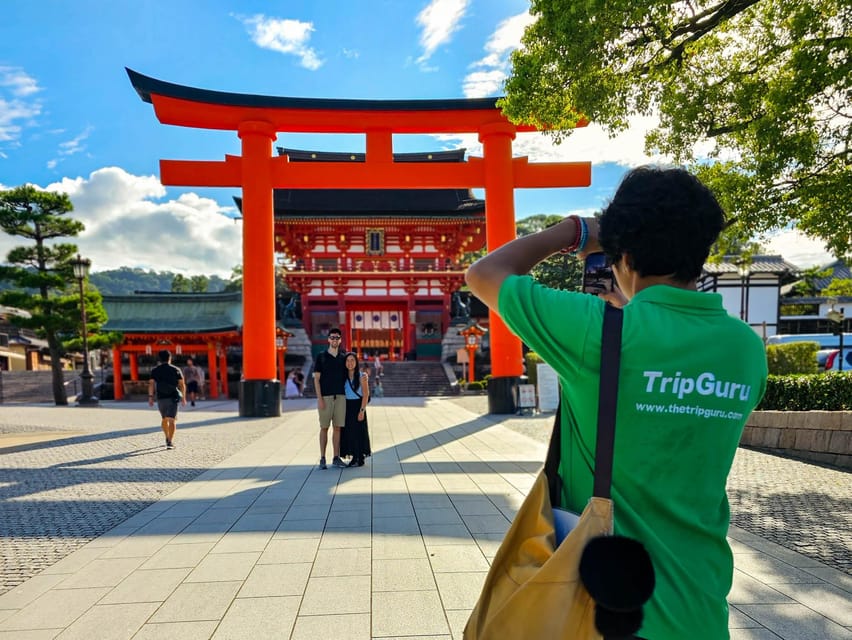
If you choose Option B, you’ll focus on the lower shrine area at the base of Mount Inari. This is the part that feels most immediately recognizable: the main entrance, the offering hall, and smaller shrines in the surrounding complex.
Lower shrine time is perfect if:
- you want the classic torii gate scenery without committing to a longer hike
- you’re traveling with less stamina
- you’d rather spend your Kyoto energy elsewhere after the tour
You’ll still get that signature gate experience. The difference is that you can keep the walk shorter and spend more time soaking in the atmosphere around the entrance area. It’s also an easier plan if you’re arriving when crowds are already high, because you can move with the group through the most iconic sections without feeling like you’re behind.
One thing to consider: even the lower shrine route still involves walking on shrine grounds. Comfortable shoes matter, and you’ll still want to pace yourself.
Upper shrine hike up Mount Inari: when the gates become the view
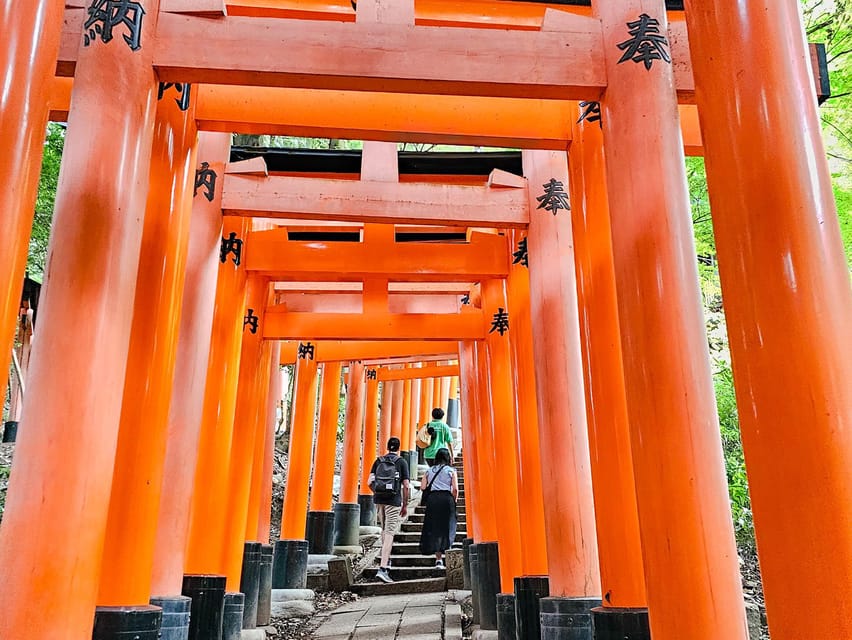
Option A adds the hike trail up toward the upper shrine. This is where the red gates feel like a tunnel of color, layered along the path as you climb. Along the way, there are smaller shrines, and the walking gradually changes your perspective.
What you gain with the upper route is simple: views. As you rise, you’ll get higher looks over the city and the surrounding mountains. The gates don’t just look pretty anymore, they look like a system, stretching from the base into the landscape.
This option tends to be best when:
- you want the full Fushimi Inari experience, not just the entry gates
- you’re comfortable walking for about an extra hour
- you like scenery that rewards effort
It’s also a good way to manage photo timing. Early in the hike you can often frame the gates with less interruption, then later you can decide where to stop and turn around. Still, you’re hiking, so treat it like a short trail walk, not a flat stroll.
More Walking Tours in Kyoto
- Kyoto Geisha Walking Tour: Gion District & Hidden Gems
★ 4.7 · 3,273 reviews - Kyoto: Gion Magical Night Walking Tour with Geisha Trivia
★ 4.9 · 2,393 reviews - Kyoto: Gion Geisha District Walking Tour – Stories of Geisha
★ 4.7 · 2,187 reviews - Night Walk in Gion: Kyoto’s Geisha District
★ 4.5 · 2,003 reviews
What you’ll learn about Inari, foxes, and shrine details on the walk
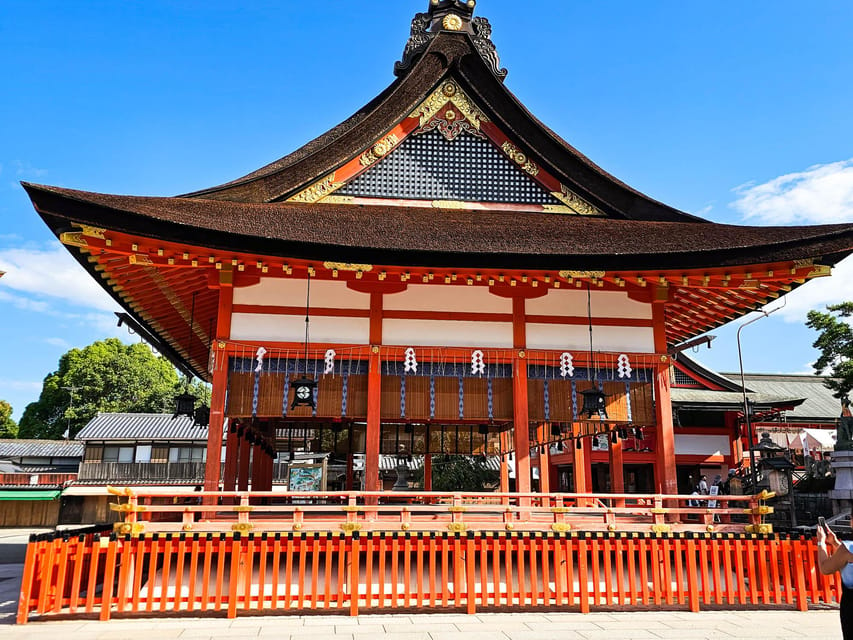
A shrine like this can feel mysterious if you only know it by images online. The value of a guided walk is that the meaning becomes practical. You start to understand why certain things are placed where they are, and why people move the way they do through the gates.
Inari is associated with agriculture and commerce, so this isn’t a shrine only for one kind of visitor. It connects to work and livelihood, and that makes the place feel more relevant when you’re walking through it as a foreign visitor. You’ll also learn that foxes are linked to Inari as messengers, and that detail helps you spot the theme as you move through the complex.
Several guides have stood out in how they communicate. People have praised guides like Katz and Christiana for being friendly and giving clear explanations, and others have noted how guides like Nobumasa keep the walk enjoyable while sharing facts. The common thread is that you don’t just hear information, you hear it at the right moments, while you’re standing where it applies.
If you like when a tour connects culture to real places, this is the type you’ll appreciate.
Street food stop: a smart break without derailing your schedule
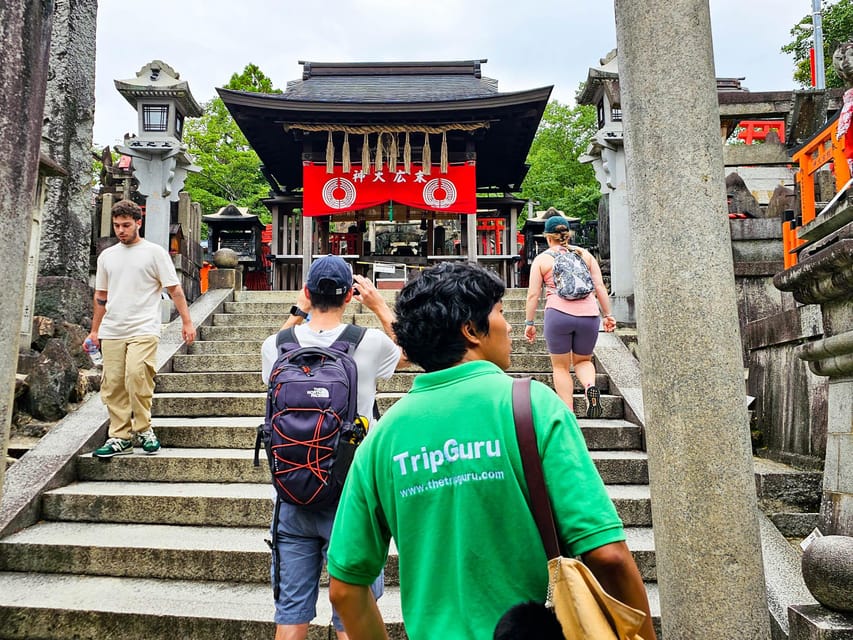
This tour includes time for street food and a short walk segment of about 30 minutes. I like this because it solves a common Kyoto problem. You can wander around looking for snacks and end up spending precious time figuring things out, while everyone else is slowly collecting a headache from indecision.
Here, the food break is built into the route. That means you can refuel while the day still feels organized. You also get a small pause from the constant gate scenery, which helps the whole tour feel less like you’re sprinting from photo spot to photo spot.
Since meals are not included, you’ll be paying for what you choose to eat. But the timing is the value. You’re not stuck eating too early or too late, and you’re not turning your tour into a scavenger hunt.
Price and value: why $24 can feel fair in Kyoto
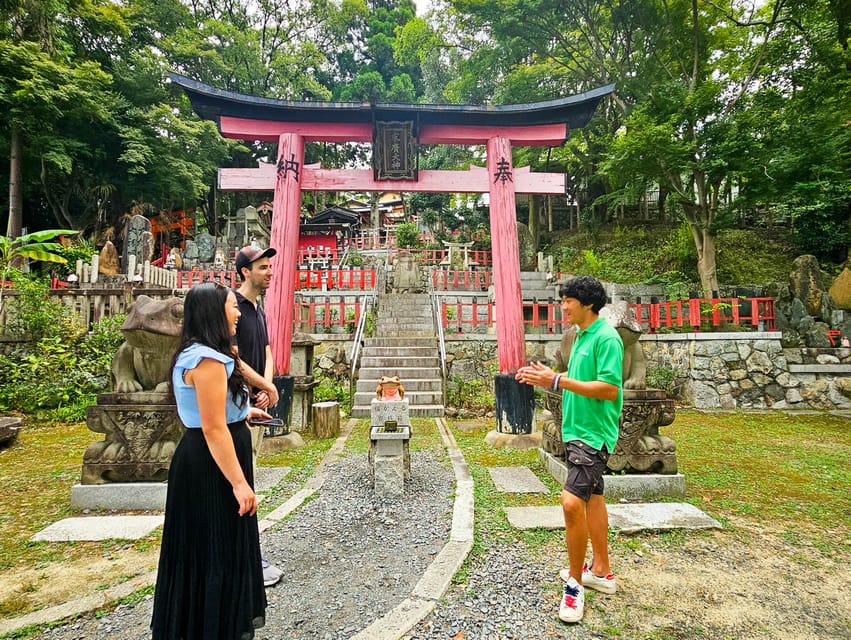
At $24 per person for a 2 to 3 hour guided walking tour, the price is reasonable for Kyoto. What makes it feel like value is the combination of three things you’d otherwise have to stitch together yourself.
1) A licensed-feeling local guide in English
2) Entrance fees included
3) A guided route that covers the most important shrine areas efficiently
Without a guide, you can absolutely see Fushimi Inari on your own. But you’d spend more time figuring out what to prioritize, what to notice, and how the whole place connects to Inari’s meaning. For a short day, that guidance is often what makes the difference between a photo trip and a real experience.
Small-group size also supports the value. With a cap at 9, you’re more likely to feel like you’re walking with a plan rather than being herded. And from the way guides have been described, you may also get extra help like picture-taking or help with practical needs during the walk, as people have shared about guides such as Cody, Jessica, and Raphael.
Practical tips that keep the walk comfortable and respectful
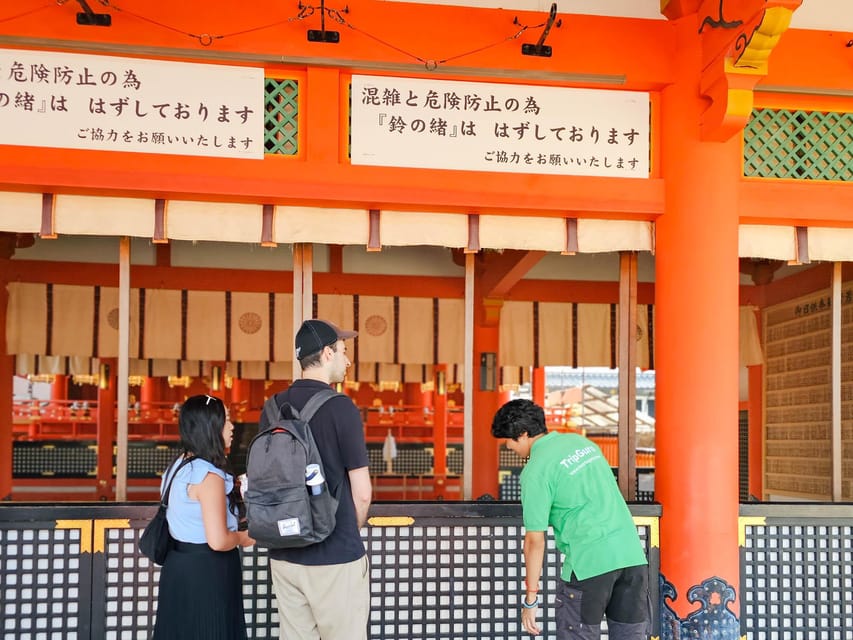
This tour is straightforward, but Kyoto shrine etiquette still matters. Visitors are expected to dress modestly and respectfully. That means avoiding clothing that’s too revealing or casual, like shorts or tank tops.
Bring comfortable shoes. Torii gate scenery is fun, but you’ll be on your feet and moving across uneven shrine-ground surfaces. Also, plan for modesty in both outfit and mindset. It’s a place people treat with care.
On the day, give yourself extra buffer time to reach the meeting point, because morning traffic can be much heavier than navigation apps predict. Once you’re there, be on time, because waiting is limited to 10 minutes.
Finally, keep your expectations realistic about who the tour suits. The tour is not suitable for pregnant women, people with mobility impairments, people with heart problems, or people with respiratory issues. If any of those apply, it’s better to choose a different kind of visit that matches your needs.
Who should book this Fushimi Inari guided walking tour
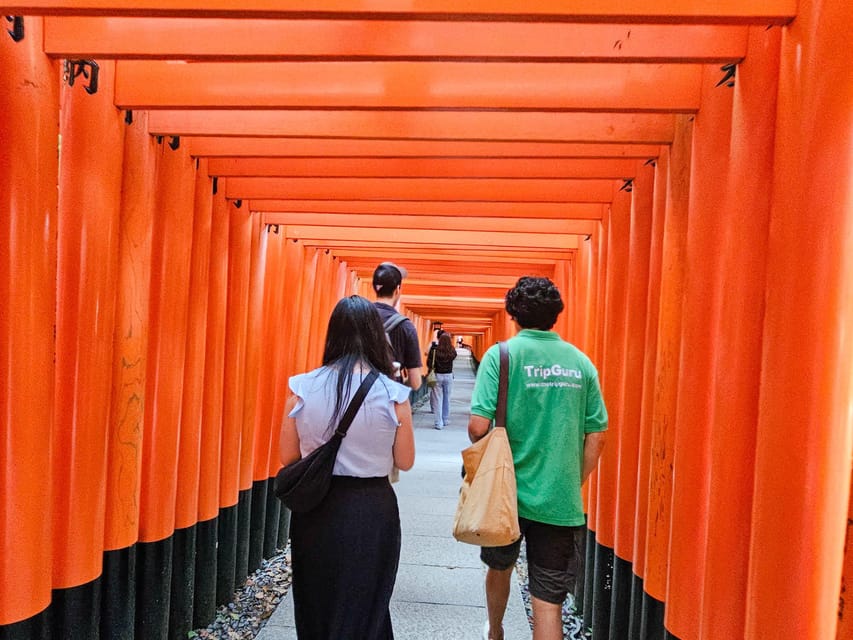
Book it if you:
- want the iconic Fushimi Inari Taisha torii gates with context, not just photos
- have only a couple hours in Kyoto and need a clean plan
- like guided storytelling that matches what you’re seeing
- prefer a small group, limited to 9 people
You might skip it if you:
- don’t want any hiking at all (Option B can help, but it’s still a walking tour)
- have health or mobility limitations listed by the tour guidance
- need full wheelchair accessibility or a fully flat route
If you’re traveling with kids or you need stroller-friendly pacing, there’s evidence that some guides, like Raphael, have made efforts to accommodate. Still, because the tour is walking-based, it’s wise to think in terms of manageable steps rather than expecting an easy, stroller-only path.
Should you book this Kyoto Fushimi Inari Taisha guided walking tour?
Yes, if you want a high-impact Kyoto experience without turning your day into a long production. The tour’s main strengths are the torii gate focus, the option to choose lower shrine only or add the upper hike, and the fact that you get explanations at the right time instead of trying to decode the place on your own.
I’d book it especially if you’re the type who likes understanding what you’re looking at. The guide element is what turns Fushimi Inari from a set of famous images into something you can feel and interpret while you walk.
If you’re time-crunched, you’ll like the 2 to 3 hour structure. If you’re energy-flexible, choose Option A for the Mount Inari views and gates that seem to stretch into the hills. And if your energy is limited, Option B still gets you the core shrine atmosphere and the gate corridor without the extra climb.
FAQ
How long is the Kyoto Fushimi Inari Taisha guided walking tour?
The tour lasts 2 to 3 hours.
Where do I meet the guide?
Meet your guide at Daily Yamazaki Fushimi Inari Shrine. The guide will be wearing a TripGuru shirt or holding a TripGuru sign.
Can I choose to see only the lower shrine or also hike to the upper shrine?
Yes. Option A includes exploring both the upper and lower shrine, which adds about an extra hour of walking. Option B focuses only on the lower part, so you can skip the upper hike.
What is included in the price?
Included are an English-speaking tour guide, entrance fees, and the walking tour.
What should I wear or bring?
Wear modest, respectful clothing (avoid shorts and tank tops) and bring comfortable shoes. The tour is a walking experience.
Is the tour in English, and how large is the group?
The tour is in English and is limited to a small group of up to 9 participants.
Is the tour suitable for everyone?
No. It is not suitable for pregnant women, people with mobility impairments, people with heart problems, or people with respiratory issues.
Fresh options around Kyoto
- Kyoto Aquarium Admission Ticket★ 4.7 · 12 reviews
- Kyoto Gion Photoshoot – Private Session | Pro Photographer★ 5.0 · 12 reviews
- Gyoza Cooking Class in Kyoto: Traditional Japanese Dumplings★ 5.0 · 12 reviews
- Kyoto: Guided Food Tour with 12 Dishes & 3 Drinks★ 5.0 · 12 reviews
- Kyoto: Avoid the Crowds at the Hidden Gems of Arashiyama★ 4.9 · 13 reviews
- Kyoto Early Bird English Tour: Gion & Higashiyama(Private opt)★ 5.0 · 13 reviews
- Otsu-e Folk Art Workshop & Local Culture Walk Near Kyoto★ 5.0 · 13 reviews
- Kyoto, Osaka, Nara Full Day tour by Car English speaking Driver★ 3.5 · 13 reviews
Walking Tours, compared.
Kyoto Geisha Walking Tour: Gion District & Hidden Gems
Read our review →
Tokyo Tsukiji Fish Market Food and Culture Walking Tour
Read our review →
Gion Magical Night Walking Tour with Geisha Trivia
Read our review →
Imperial Palace and Shogun Historical Walking Tour
Read our review →
Gion Geisha District Walking Tour – Stories of Geisha
Read our review →

Shinjuku Local Bar and Izakaya Guided Walking Tour
Read our review →
Browse the lists this tour appears in