
Reviewed · WALKING TOURS
Kyoto Fushimi-Inari Night Walking Tour
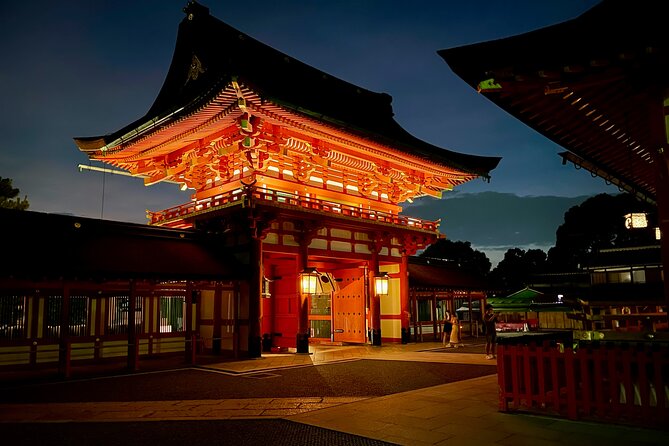
Fushimi-Inari at night feels like a different shrine. I love how this tour keeps things small-group and relaxed, so you can actually read what you are walking past. You also get the tori gates after the crowds, plus clear context about the Inari faith as the paths light up. One drawback to consider is that it is still dark enough that you should expect uneven, nighttime walking, so comfy shoes matter.
What makes it worth your time is the pacing. You are guided through the Fushimi Inari-taisha area as evening turns to night, so you get the spiritual atmosphere without the day-time shoulder-to-shoulder chaos. At $43.11 per person, it is not a throwaway add-on, but for a guided, limited-size experience it tends to be a strong value in Kyoto.
Key points I’d plan around
- Maximum 12 people keeps the vibe calm and the route easier to follow.
- Night lighting changes what the tori gates and stone details look like, especially for photos.
- Inari worship context helps you understand why specific statues and spots matter.
- Short, focused duration of about 1 hour 30 minutes to 2 hours keeps you from burning your whole evening.
- Free shrine admission means your money goes to the guided experience, not extra entry fees.
Why Fushimi-Inari at night is worth paying for
Fushimi-Inari is one of Kyoto’s most famous sights, which also means daytime can get crowded fast. This tour is built for the opposite mood, after the bulk of the day visitors have left and the shrine starts to glow as dusk settles in.
The biggest win is that the shrine stops feeling like a photo line and starts feeling like a place of worship. You still see the famous red tori gates, but with breathing room around you. That extra space changes how you notice things, like the smaller shrines along the path and the rhythm of the fox-related details.
More Walking Tours in Kyoto
- Kyoto Geisha Walking Tour: Gion District & Hidden Gems
★ 4.7 · 3,273 reviews - Kyoto: Gion Magical Night Walking Tour with Geisha Trivia
★ 4.9 · 2,393 reviews - Kyoto: Gion Geisha District Walking Tour – Stories of Geisha
★ 4.7 · 2,187 reviews
Small-group pacing, and why it matters on the mountain path
This is a maximum 12 traveler tour, which is a big deal at a place that can be confusing even in daylight. Smaller groups mean you spend less time waiting and more time moving when it is safe and comfortable. It also makes it easier to ask questions, especially when the guide is explaining how different prayers and symbols connect.
From the guidance style shared in the experience, many guides use a friendly, story-based approach, not a lecture. Names that show up across past tours include Jem, Tammy, Masaki, Hiro, Caleb, Yessi, and Vincent. You should expect an upbeat tone and clear answers, plus patience for photo stops, not rushed pacing.
Do note that some parts are described as a small hike on mountain paths. Bring walking shoes, and if you are going in cooler months, add layers because the temperature can drop once the sun goes down.
Meeting at the entrance, so you do not lose time
You meet at the fox statue at the entrance to Fushimi Inari Taisha Shrine. The location is listed near Inari Station, with the address in Fukakusa Inarionmaechō, Kyoto (612-0881). Starting at a clear landmark matters here because the shrine grounds and approach streets can branch quickly.
The tour ends back at the meeting point. That is practical because you are not stuck trying to navigate the same area in the dark after your guide leaves. It also makes it easier to plan dinner right afterward.
What you will see at Fushimi Inari-taisha after dusk
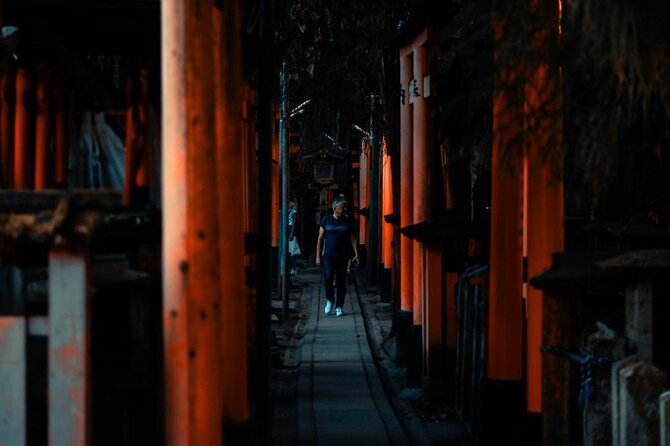
Your focus stays centered on Fushimi Inari-taisha Shrine. The heart of the experience is walking through the tori gates that lead up toward Mount Inari, then continuing along paths where you can see more of the shrine’s layout and smaller sacred points.
Here is what stands out when you shift from day wandering to guided night wandering:
Same corner of Japan, a different kind of day:
- PERFECT KYOTO 1-Day Bus Tour
★ 5.0 · 13,518 reviews - Kyoto: Fushimi Inari, Kinkakuji, Bamboo Grove 1 Day Bus Tour
★ 4.8 · 4,316 reviews - Kyoto: Tea Ceremony in a Traditional Tea House in Kiyomizu
★ 4.9 · 3,519 reviews - Kyoto: Tea Ceremony Ju-An at Jotokuji Temple
★ 4.9 · 3,207 reviews
The tori gates, now with space and atmosphere
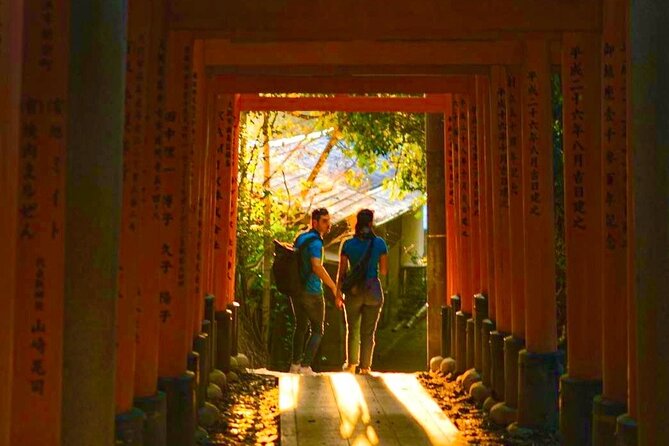
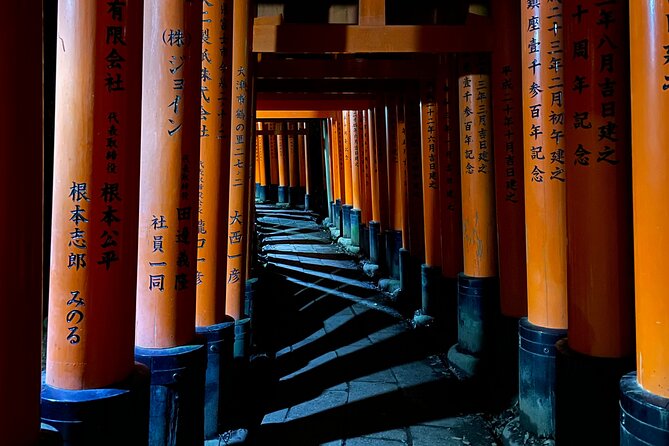
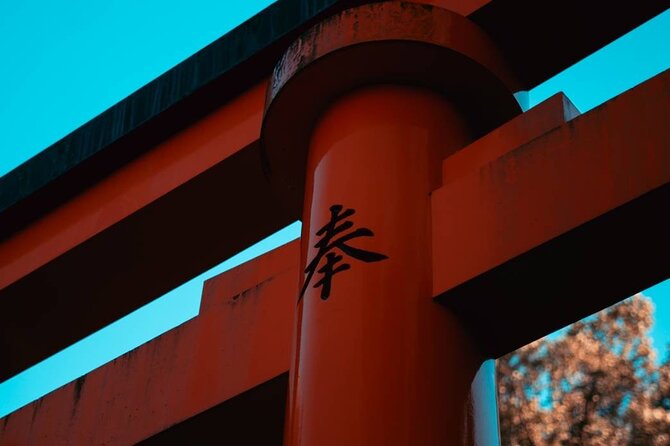
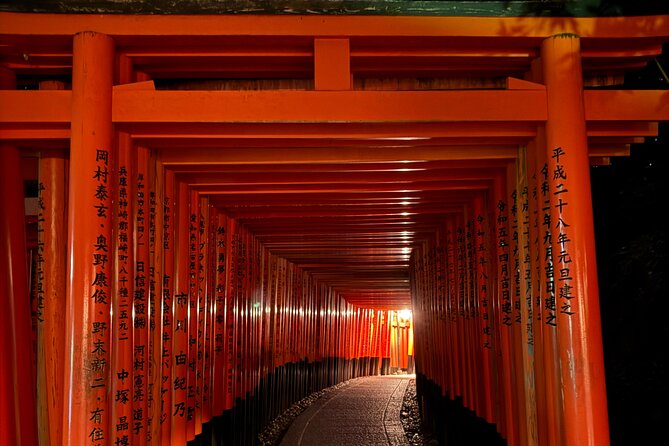
At daytime, the tori gates are famous for their scale, but crowds can flatten the experience. At dusk and night, the gates feel more like a corridor into the hills rather than a checklist. The path lighting helps the red color pop, and the quieter pace lets you notice the gates are not just one big loop, they frame specific turns, sightlines, and resting spots.
This is also a better time for photos. Many guests specifically call out that nighttime lighting makes images more interesting, and that the fewer people later in the evening means you can actually stop and shoot without feeling like you are blocking everyone.
Inari worship, explained in plain language
Fushimi Inari-taisha is dedicated to Inari, the god of rice, agriculture, and business. That basic fact is the entry point, then your guide adds meaning to what you are seeing: why fox statues appear, why different locations are treated with different attention, and why people visit to pray for success, health, and happiness.
The guides also tend to connect symbols to behavior, not just to history. One example from past experiences is showing how to pray at different sites because each area can involve different rituals. Even if you are not trying to copy every gesture, it helps you understand the shrine as a living practice.
Smaller shrines, stone details, and viewpoints
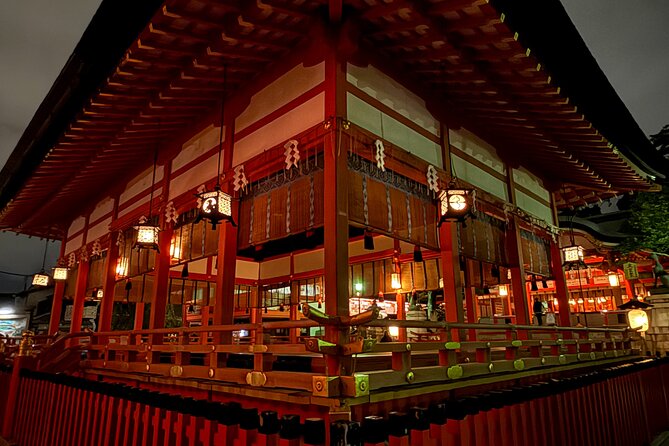
As you walk, you are likely to pass smaller shrines and stone elements that most first-time visitors might miss. These are the parts that make the experience feel more than just gates and steps. Your guide points out what to look for and explains why it exists where it does, which turns the climb into an interpretive route.
The overview also notes scenic viewpoints along the way. At night, viewpoints can feel quieter and more atmospheric. Just keep your footing in mind because night photography can tempt you to look up without watching the ground.
How long it takes, and how to fit it into your evening
The tour runs about 1 hour 30 minutes to 2 hours. That range is useful in Kyoto because evenings fill up with dinners, river views, and other sights. You are not committing to half a day, but you are also not stuck with a rushed 30 minute stop.
Timing matters. The concept is after crowds have left, as the shrine transitions into dusk and nighttime lighting. Some past participants have gone around 6pm, noting it was less crowded and cooler, with lights helping along the path. In August heat, one guide-led night walk is also described as a smart way to avoid the worst of daytime temperatures.
My practical advice: if you want photos and calmer walking, aim for a later start in the evening range your schedule allows, not the earliest slot.
What to wear and bring for comfortable nighttime walking
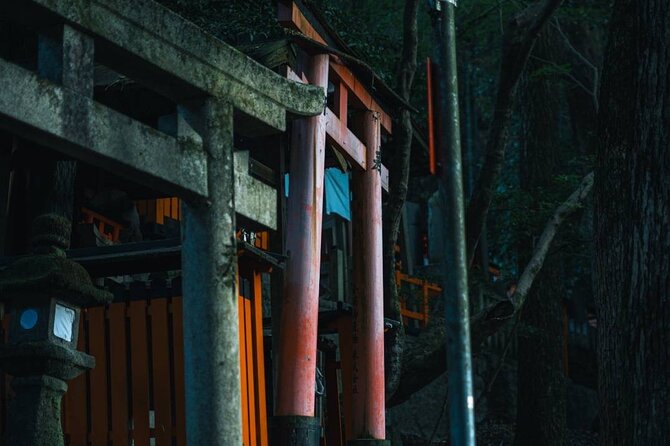
This tour is a walking experience on mountain paths through the gates. Even when it is described as a small hike, it can still be uneven.
Bring:
- Walking shoes with good grip
- Layers, especially if you are going in winter or shoulder seasons
- A phone with enough battery if you want photos, since you will be out longer than you think once you stop for shots
Also, expect some darkness. One caution from past feedback is that portions can be in proper night conditions and the route can be harder to follow without a guide. That is exactly why the guided format helps. The route is not just scenic, it is also easy to get turned around.
Price and value check for $43.11 in Kyoto
At $43.11 per person, this is not the cheapest thing you can do in Kyoto. But it is also not priced like a luxury excursion. The value comes from what you are actually buying:
- A small-group guided walk of up to 12 people
- Local context about Inari worship, symbols, and shrine etiquette
- Help navigating a place that can feel like a maze, especially when dark
- A route that is built around the best time of day, when crowds thin and lighting improves
Also, the shrine admission is free, so you are not paying extra just to enter Fushimi Inari-taisha. For many visitors, that means your money goes to the experience that daytime self-guided walking often lacks: clear explanations and safer navigation when visibility drops.
Finally, the tour shows signs of steady demand, including being booked 5+ times last week. That usually means you should not wait until the last day to try to fit it in.
Who this Kyoto night walk fits best
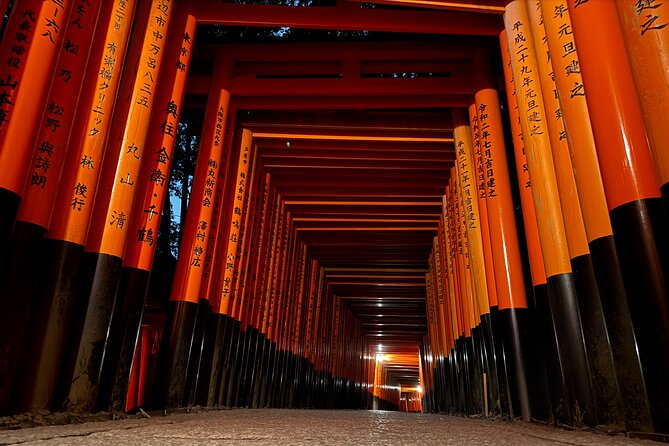
This tour is a great fit if you want:
- A first-time visit to Fushimi Inari, but without day-time chaos
- A chance to learn what you are seeing, not just take photos
- A guided route that keeps you oriented on darker paths
It is also a good choice for families, since one past experience notes a guide explaining history in a way that worked even with kids. If your group includes slower walkers, the small size and guide patience can help. And if you are traveling solo but want someone to guide you through the shrine maze, this format is naturally social without being crowded.
If you hate walking at night or you have mobility constraints, you might find it harder. The tour is described as walkable for most travelers, but it is still on mountain paths and in low light.
Should you book this Fushimi-Inari night tour?
Book it if you want the shrine’s meaning, not just the headline scenery. Night lighting plus a guided explanation of Inari worship is the combo that turns Fushimi Inari from a famous stop into a memorable evening.
I would especially recommend it if:
- You plan to see multiple Kyoto sights and want a focused 1.5 to 2 hour slot
- You care about avoiding the daytime crowd wave
- You want help finding your way when the paths get dark
Skip it only if you plan to spend your time elsewhere that evening, or if you are determined to visit strictly on your own regardless of how confusing the area can feel at night.
FAQ
How long is the Kyoto Fushimi-Inari Night Walking Tour?
It runs about 1 hour 30 minutes to 2 hours.
What is the price per person?
The price is $43.11 per person.
How large is the group?
The tour has a maximum of 12 travelers.
Where do I meet for the tour?
Meet at the fox statue at the entrance to Fushimi Inari Taisha Shrine, near Inari Station in Kyoto (612-0881).
What is the tour route and main stop?
The tour is focused on exploring Fushimi Inari-taisha Shrine, including walking through the torii gate paths. The tour ends back at the meeting point.
Do I need to pay shrine admission?
The shrine admission listed for the experience is free.
Is this tour good for seeing Fushimi Inari without daytime crowds?
Yes. The tour is designed to explore Fushimi Inari after the crowds have left, as the shrine looks beautiful at dusk and into the evening.
What ticket format is used?
The tour uses a mobile ticket.
Is service available for animals?
Service animals are allowed.
What is the cancellation policy?
Free cancellation is offered. You can cancel up to 24 hours in advance for a full refund.
More Evening Experiences in Kyoto
- Night Walk in Gion: Kyoto’s Geisha District
★ 4.5 · 2,003 reviews - Kyoto Night Foodie Tour in Gion (9+ dishes + 6 Sake tastings)
★ 5.0 · 1,762 reviews - Kyoto Gion Night Walk & Geisha District Guided Tour
★ 5.0 · 786 reviews - Kyoto Ghost Tour: Dark Tales, Urban Legends, Bamboo Forest Night
★ 5.0 · 625 reviews
Fresh options around Kyoto
- Kyoto Aquarium Admission Ticket★ 4.7 · 12 reviews
- Kyoto Gion Photoshoot – Private Session | Pro Photographer★ 5.0 · 12 reviews
- Gyoza Cooking Class in Kyoto: Traditional Japanese Dumplings★ 5.0 · 12 reviews
- Kyoto: Guided Food Tour with 12 Dishes & 3 Drinks★ 5.0 · 12 reviews
- Kyoto: Avoid the Crowds at the Hidden Gems of Arashiyama★ 4.9 · 13 reviews
- Kyoto Early Bird English Tour: Gion & Higashiyama(Private opt)★ 5.0 · 13 reviews
- Otsu-e Folk Art Workshop & Local Culture Walk Near Kyoto★ 5.0 · 13 reviews
- Kyoto, Osaka, Nara Full Day tour by Car English speaking Driver★ 3.5 · 13 reviews
Walking Tours, compared.
Kyoto Geisha Walking Tour: Gion District & Hidden Gems
Read our review →
Tokyo Tsukiji Fish Market Food and Culture Walking Tour
Read our review →
Gion Magical Night Walking Tour with Geisha Trivia
Read our review →
Imperial Palace and Shogun Historical Walking Tour
Read our review →
Gion Geisha District Walking Tour – Stories of Geisha
Read our review →

Shinjuku Local Bar and Izakaya Guided Walking Tour
Read our review →
Browse the lists this tour appears in