
Reviewed · WALKING TOURS
Kyoto Early Riser Golden One-Day Walking Tour
Kyoto gets busy fast, so start smart. This private, early-riser style one-day walk strings together Kyoto’s biggest wow-factor stops, with guide commentary that helps you understand what you are actually seeing. You also get time in Nishiki Market for easy, on-foot browsing and tasty breaks.
What I like most is the way it balances the iconic and the calm. You hit Fushimi Inari-taisha and the Golden Pavilion on your schedule, then slow down at places like Arashiyama and Ryoan-ji where the pacing matters. I also love the human factor, the guides in this program earn praise for being organized and flexible, with examples like Sumiko Yoshikawa, Tomoko, and Satomi getting named for energy and good instincts.
One consideration: you should be ready for a full day with quite a bit of walking. The itinerary is efficient, but it still adds up, and you will want comfortable shoes and a plan for breaks.
Key things that make this Kyoto day work
- Private guide time, not a herd: your group stays together and the route is handled for you.
- Early start energy: you begin from Kyoto Station and move into the highlights before the day fully ramps up.
- A mix of shrine, temple, and street food: Fushimi Inari, bamboo, Zen rock garden, Kinkakuji, then Nishiki Market.
- Mindful pacing from real guides: multiple reviews mention rest stops when needed, including heat and even a knee injury.
- Transparent add-on costs: transport and at least one major entrance fee (Ryoan-ji) are not included.
Price and what you actually get for $119.30
At $119.30 per person, this tour is priced for what most people really want in Kyoto: not just famous sights, but order, timing, and interpretation. The ticket covers the professional guide, while you separately budget for public transportation fare (¥1,670 per person) and meals. Ryoan-ji admission (¥1,100 per person) is listed as not included, and Kinkakuji admission is also not included.
So is it worth it? For me, value comes down to the stress factor. If you try to string these places together on your own, you spend time figuring routes, tickets, and timing, then you lose the chance to ask questions at the exact moment something clicks. A good guide also helps you read the sites, not just photograph them.
One more practical note: the tour uses a mobile ticket, which tends to make check-in smoother once you are in Kyoto. Also, it is a private tour/activity, so you are not waiting around for other people to catch up.
More Walking Tours in Kyoto
- Kyoto Geisha Walking Tour: Gion District & Hidden Gems
★ 4.7 · 3,273 reviews - Kyoto: Gion Magical Night Walking Tour with Geisha Trivia
★ 4.9 · 2,393 reviews - Kyoto: Gion Geisha District Walking Tour – Stories of Geisha
★ 4.7 · 2,187 reviews
How the early-riser flow keeps your day from collapsing
This is an 8-hour day, and it is built like a “cover the highlights without wasting daylight” route. You meet at Kyoto Station, then the plan is to move quickly to Fushimi Inari-taisha first. That matters, because Kyoto’s heavy-hitter sites can turn into slow lines if you arrive late.
The stops are spaced so you are not stuck at one place for hours, but you also are not rushed through everything. You get about 1 hour at Fushimi Inari-taisha, 1 hour 10 minutes in Arashiyama, 50 minutes at Ryoan-ji, 50 minutes at Kinkakuji, and 40 minutes at Nishiki Market.
What makes this feel good in practice is the pacing promise you can read between the lines of the reviews. Guides like Satomi are described as mindful in tough conditions, with rest stops. In other reviews, guides were also praised for being efficient with public transport and for keeping the day organized even when weather got rough.
Still, you will walk. Kyoto is walkable in theory, and tiring in reality. Bring shoes you trust.
Stop 1: Fushimi Inari-taisha and why you should go looking up
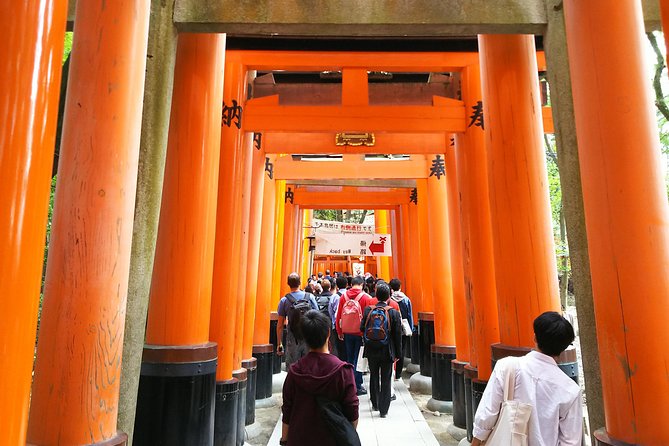
Fushimi Inari-taisha is the iconic start for a reason: the famous shrine tunnel of thousands of vermilion torii gates turns your approach into a visual experience before you even reach the main area. The torii gates are tied to offerings made by worshippers, so the place feels more like a living tradition than a photo spot.
Timing helps here. You are scheduled for about 1 hour, with admission listed as free. That is enough to get your bearings, walk into the gate corridor, and pause when the view changes. If you only skim, you will miss the rhythm of the climb and the way side paths create mini “moments” along the route.
A guide makes this stop better because they can point out what you would otherwise overlook: why Inari is so central in popular culture, and how the shrine’s design supports worship. Expect interpretation that turns the scene from pretty to meaningful.
Practical tip: start walking with intention. If you stop every 10 steps, you will eat up your hour fast. Do a first pass, then return for photos where the light hits.
Stop 2: Arashiyama Bamboo, the calm after the crowds
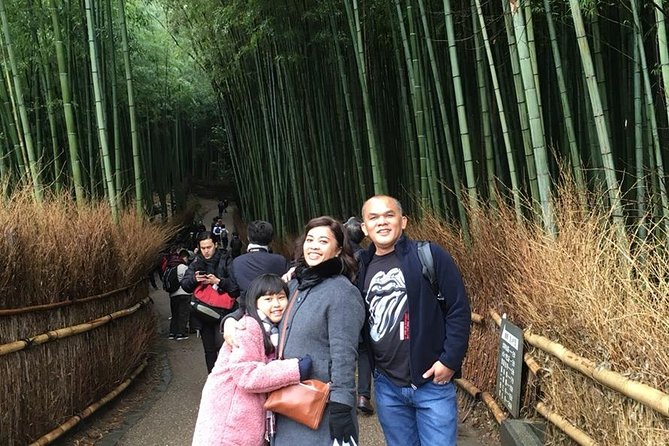
After the shrine, you move into Arashiyama, where the mood shifts hard, in the best way. You get about 1 hour 10 minutes, and admission is listed as free. The bamboo forest is described in a poetic way for a reason: the look changes with the light, and the soundscape matters, too.
In real terms, bamboo is one of those places where you get more out of it if you slow down. Stand still at least once. Let your eyes adjust to the green-and-shadow pattern. The forest feels different depending on where you stand, and the sun slanting through is part of why it photographs well.
This stop also balances your day because it is not only about one building or one main attraction. It gives you a stretch of time to move through a landscape and reset.
Potential drawback: Arashiyama can still be busy, even with an early flow. You are scheduled for a set time, so you may want to decide in advance how deep you want to go into the bamboo areas versus how much time you want to spend on nearby streets.
Same corner of Japan, a different kind of day:
- PERFECT KYOTO 1-Day Bus Tour
★ 5.0 · 13,518 reviews - Kyoto: Fushimi Inari, Kinkakuji, Bamboo Grove 1 Day Bus Tour
★ 4.8 · 4,316 reviews - Kyoto: Tea Ceremony in a Traditional Tea House in Kiyomizu
★ 4.9 · 3,519 reviews - Kyoto: Tea Ceremony Ju-An at Jotokuji Temple
★ 4.9 · 3,207 reviews
Stop 3: Ryoan-ji rock garden, small space, big impact
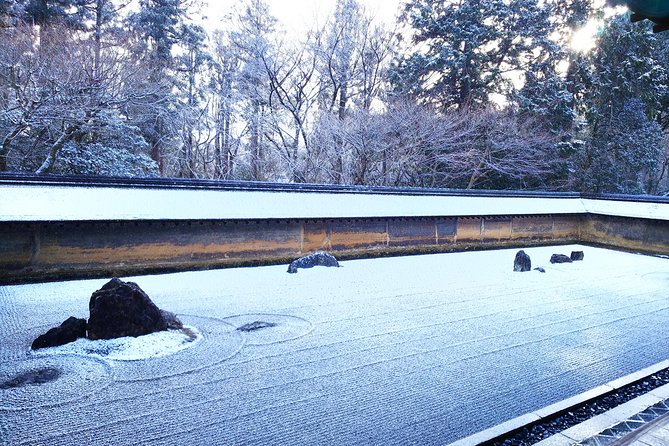
Next is Ryoan-ji Temple, a UNESCO World Heritage Site. You have about 50 minutes here. Admission is not included, and the entrance fee listed for Ryoan-ji is ¥1,100 per person.
The famous part is the Zen rock garden. The description you are given is that it is visually simple, made of rocks and white gravel, and that the garden is small. That can sound underwhelming if you go in expecting something grand.
Here’s the key: the point of the rock garden is not size, it is perspective. A guide can explain why the arrangement matters and how people are meant to “read” the scene from different viewpoints. That extra context turns the garden into something you can actually understand instead of just staring at rocks.
From the review pattern, guides were often singled out for giving deeper appreciation of historical significance at each stop. This is exactly the kind of place where that skill pays off.
Practical note: because the garden is small, you might feel like you want more time. Your schedule gives you just enough to see it properly and then move on without feeling trapped.
Stop 4: Kinkaku-ji Golden Pavilion and the photos that live up
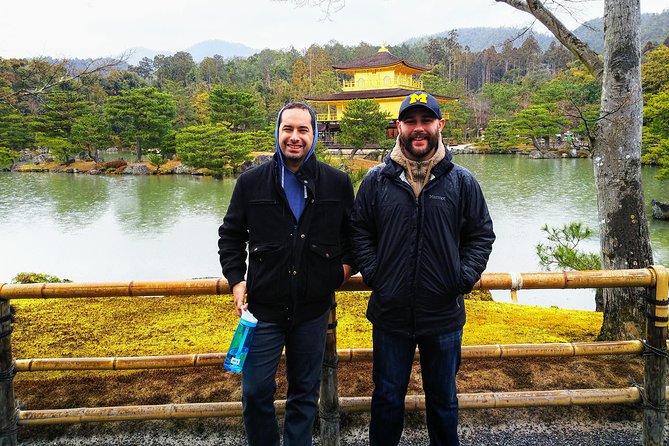
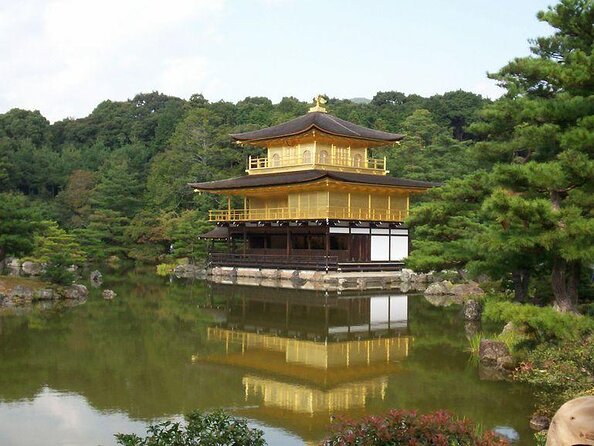
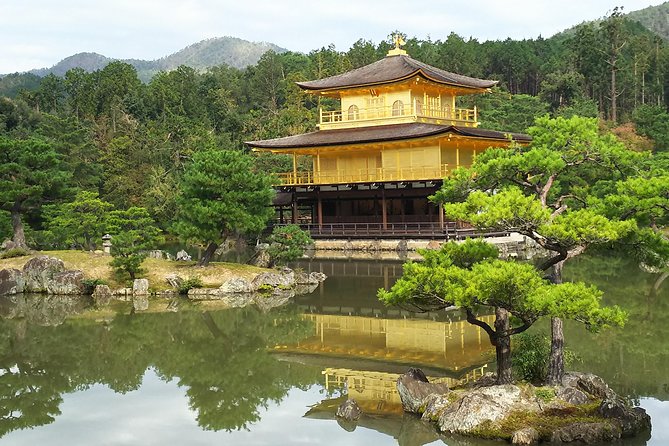
Then comes the big visual payoff: Kinkakuji Temple, also known for the Golden Pavilion. Your time allocation is about 50 minutes, and admission is listed as not included.
Even if you have seen photos, the real thing can surprise you. The pavilion’s gold look is tied to Zen aesthetic and Japanese cultural ideas about refinement and form. If you only treat it as a landmark, you might miss how the surrounding grounds contribute to the overall effect.
A guide helps here by placing the pavilion into context, including its connection to samurai culture mentioned in the tour description. You also get help spotting the angles that make the pavilion look like it is glowing, not just shiny.
This is a popular site, so consider your strategy: decide your main photo spot, grab one or two shots, then step back and actually look at the garden layout. You are doing this as part of a full-day flow, so don’t spend all your time lining up for one perfect frame.
Stop 5: Nishiki Market on foot, where tasting is the whole point
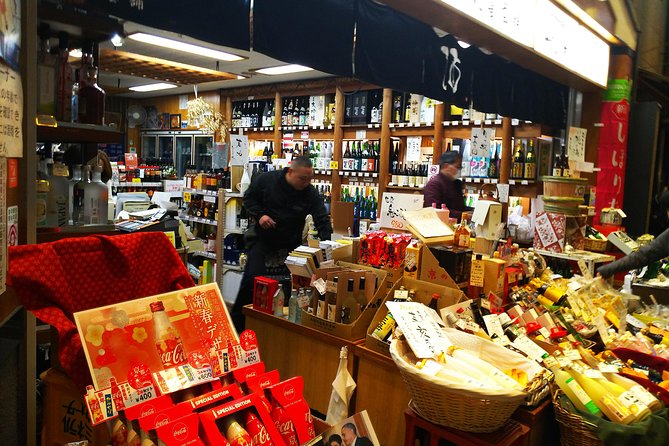
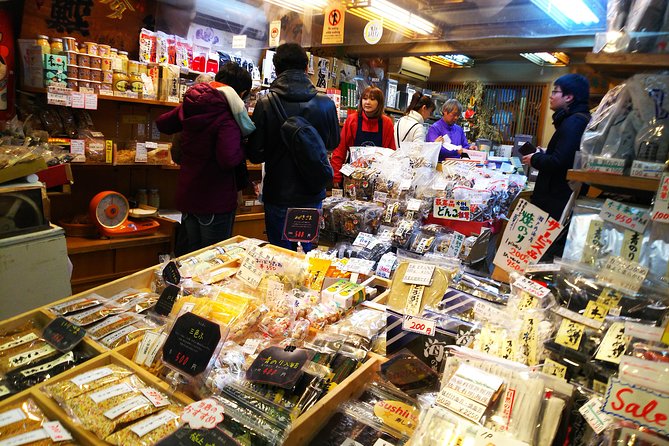
Your final stretch is Nishiki Market Shopping District, with about 40 minutes. Admission is free. This is a street of roughly 390 meters lined with 126 shops, and it has been popular locally for centuries.
The best way to experience Nishiki is not to treat it like a museum. It is a place to walk, sample, and ask questions while vendors explain what they sell. The tour description specifically sets you up for that, including the chance to taste your way through.
In practice, this stop is also a good pacing tool. After temples and long walks, Nishiki lets you move slower, snack, and reset socially. You can pick a couple of items that fit your tastes and keep it light.
One of the most useful benefits from the review data is the way guides handle food decisions. Several reviews mention lunch recommendations, including sushi experiences. Meals are not included, but with a guide, you are less likely to end up at the wrong place for your budget or preferences.
Practical tip: set a spending limit before you start tasting. Nishiki is fun, but it is also easy to over-snack in a short window.
The real superpower: guide energy and problem-solving
This tour’s headline is “private full-day Kyoto,” but the reviews show what that means day-to-day: a guide who can keep you moving and also keep you comfortable.
Across the feedback, guides are praised for:
- Humor and approachable explanations, like Toshi and others being described as fun while still adding context.
- Organization and timing, including efficient public transport handling.
- Rest stops when conditions are tough, including one August heat day where the guide was mindful.
- Help when mobility is limited, including support for someone with an injured knee and arranging easier access options such as lift or escalator.
Names that come up in the praise include Sumiko Yoshikawa, Tomoko, Satomi, Kazuo, Chie, Toshi, Keiko, Michiko, Meg, Yuka, and others. That tells me something important: you are not paying just for a checklist. You are paying for human interpretation plus real-world logistics.
So what should you do as the passenger? Ask questions as you go. Kyoto’s signs and symbols can feel cryptic if you do not know what to look for. A good guide gives you the “why” and the “how,” and then suddenly everything makes sense, even if your Japanese is basic.
Getting around: trains, buses, and why the tour starts at Kyoto Station
The tour starts at Kyoto Station Building (901 Higashishiokōjichō, Shimogyo Ward). That location choice is practical. Kyoto Station is the hub where multiple rail and bus connections feed into the rest of the city.
The tour includes your professional guide but does not include public transportation fare (¥1,670 per person). That is common for private walking tours, but it is also a key budget note. If you treat it like a fully inclusive ticket, you might be surprised at the add-on.
The good news is that multiple reviews praise guides for organizing transportation efficiently. In other words, you should spend less time figuring routes and more time enjoying the sights.
Walking level is listed as moderate fitness, and the tour includes “quite a bit of walking.” Build your day around that. You are covering multiple neighborhoods, so you want hydration and breaks. If you need a slower pace, ask early.
What to pack and how to make the day feel easier
You are walking across Kyoto for about 8 hours, with temple time where you might spend more time standing and looking. That means your comfort matters.
Bring:
- Comfortable walking shoes (no surprise blisters)
- A small water bottle or plan to buy water along the way
- Weather protection, since this experience is said to require good weather, and weather can shift quickly in Kyoto
- A light layer for mornings and for time in shaded areas
Also, think about camera strategy. Kinkaku-ji and Fushimi Inari are photo magnets. If you chase every shot, you will lose time. Pick your must-have photos, then spend the rest of your time learning what you are looking at.
Who this Kyoto early-riser tour fits best
This is a strong fit if:
- You want Kyoto highlights in one day without running logistics solo.
- You like hearing context, myths, and practical cultural meaning while you stand in front of the site.
- You value private guiding, especially if your group has different interests or needs.
- You want a day that includes both big landmarks and easy street food.
It may not be the best match if:
- You do not want to walk much, because this route includes multiple stops and moving between areas.
- You are the type who prefers total freedom with no set order. This itinerary is designed for flow, not wandering.
If you are a first-time Kyoto visitor with limited time, this kind of structured day can be a smart way to “get your bearings” fast.
Should you book this tour?
I would book this Kyoto early-riser day if your priority is a smooth, guided hit list that still feels human. The guide factor is consistently praised, including flexible pacing and real problem-solving, even in heat or with mobility needs. You also get a good mix: shrine drama at Fushimi Inari, calm time in Arashiyama, a Zen moment at Ryoan-ji, the Golden Pavilion payoff, and a practical food stop at Nishiki Market.
Before you book, do two things:
- Budget for the separate transport fare and Ryoan-ji entrance fee, plus whatever you want to eat.
- Commit to comfortable walking shoes and a break-friendly mindset.
If that sounds like your kind of day, this tour is a great way to see Kyoto’s icons with less stress and more understanding.
Fresh options around Kyoto
- Kyoto Aquarium Admission Ticket★ 4.7 · 12 reviews
- Kyoto Gion Photoshoot – Private Session | Pro Photographer★ 5.0 · 12 reviews
- Gyoza Cooking Class in Kyoto: Traditional Japanese Dumplings★ 5.0 · 12 reviews
- Kyoto: Guided Food Tour with 12 Dishes & 3 Drinks★ 5.0 · 12 reviews
- Kyoto: Avoid the Crowds at the Hidden Gems of Arashiyama★ 4.9 · 13 reviews
- Kyoto Early Bird English Tour: Gion & Higashiyama(Private opt)★ 5.0 · 13 reviews
- Otsu-e Folk Art Workshop & Local Culture Walk Near Kyoto★ 5.0 · 13 reviews
- Kyoto, Osaka, Nara Full Day tour by Car English speaking Driver★ 3.5 · 13 reviews
Walking Tours, compared.
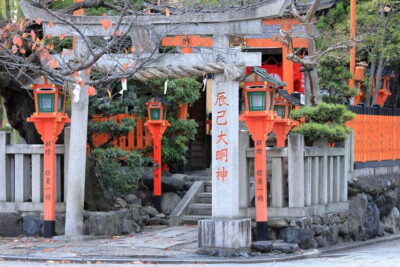
Kyoto Geisha Walking Tour: Gion District & Hidden Gems
Read our review →
Tokyo Tsukiji Fish Market Food and Culture Walking Tour
Read our review →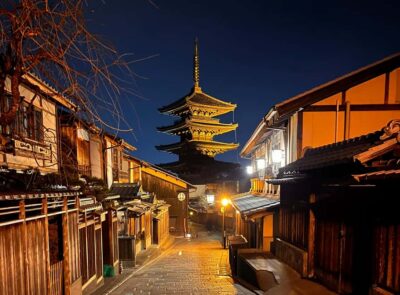
Gion Magical Night Walking Tour with Geisha Trivia
Read our review →
Imperial Palace and Shogun Historical Walking Tour
Read our review →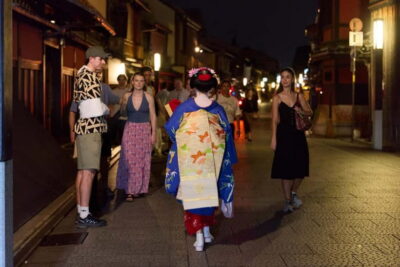
Gion Geisha District Walking Tour – Stories of Geisha
Read our review →
Shinjuku Local Bar and Izakaya Guided Walking Tour
Read our review →
Browse the lists this tour appears in