Reviewed · MORNING
Kyoto Early Morning Private Tour with Government-Licensed Guide
Kyoto at sunrise changes everything, and this private tour is built for that. You start early, then move through classics like Fushimi Inari and Gion with a government-licensed English guide who can explain what you are actually seeing. I love the calm timing that makes famous shrines feel manageable, and I also love the private pacing that lets you ask questions instead of chasing a group. One drawback to plan for, it is a walking tour, so it works best if you are comfortable on your feet for a half day.
What I like most is the value of a licensed local guide during the hours when Kyoto is hardest to navigate. I also like how your route can be customized to 2-3 stops, so you can build around your priorities instead of accepting someone else’s “must-see” list. If you want temples and street culture in one morning, this is a strong fit because the tour focuses on both.
The main consideration is practical, you do not get a private vehicle, and entrance fees are not included. If you pick pricey sites or you expect lots of long rides in between, you may feel the time pressure during a 4-hour window.
Key points before you go
- Early-morning start helps you dodge peak crowds at the most famous sights
- Private format means your guide can pace you and answer questions
- Choose 2-3 sites from the available options instead of being forced into one route
- Walking tour with pickup on foot means you should plan for comfortable shoes
- Licensed local English guidance is included for a smoother first visit to Kyoto
- You pay your own entrance tickets (guide entry is treated separately)
Why a 4-hour private Kyoto dawn tour actually pays off
Kyoto crowds are not subtle. During the day, lines grow, buses drop groups of people at once, and you end up spending more time moving than looking. This tour is designed to start early, so you can see places like Fushimi Inari-taisha Shrine and Kiyomizu-dera Temple before the heaviest rush.
That timing matters in real ways. You get calmer photos. You get space to read signs and notice details. You also get breathing room to talk with a guide who can translate the meaning behind the ritual spaces, not just name the buildings.
The private part is the second big reason it feels worth it. With only your group, you are not trapped in a 30-person rhythm where everyone moves together and nobody slows down. In the reviews, guides such as Rie, Tomy, Kay, Yasu, and Nabet are praised for being responsive and for making the early start feel smooth.
The price is $101.82 per person for about 4 hours, which is the typical range for a licensed private guide in Kyoto. The value comes from two things: you are buying time with a guide and you are buying the schedule advantage of early arrival, not just walking between landmarks.
A few more Kyoto days worth comparing
- PERFECT KYOTO 1-Day Bus Tour
★ 5.0 · 13,518 reviews - Kyoto: Fushimi Inari, Kinkakuji, Bamboo Grove 1 Day Bus Tour
★ 4.8 · 4,316 reviews - Kyoto: Tea Ceremony in a Traditional Tea House in Kiyomizu
★ 4.9 · 3,519 reviews
Meeting on foot, using public transit, and building your 2-3 stop route
This is a walking tour. You meet your guide on foot within a designated area, and pickup is offered, but the tour still starts with you meeting in the neighborhood rather than stepping into a private car. It is also near public transportation, which is helpful because you are likely to combine walking with nearby transit when you travel between districts.
Your customization is straightforward. You can choose 2-3 attractions from the options provided for the tour, and the guide shapes the route around those choices. That is a big deal if you have limited time or if your group has mixed tastes, like one person wants shrines and another wants gardens and streets.
Also note what is included. You get a licensed local English speaking guide, and you can customize within the available site list. You get a mobile ticket, and confirmation is received at booking.
What is not included affects how you plan your day. There is no private vehicle. Transportation fees and lunch are not included. Entrance fees are not included either, so budget for tickets when you choose sites where you must pay.
Fushimi Inari, Nijo Castle, and the “first hour magic” in historic Kyoto
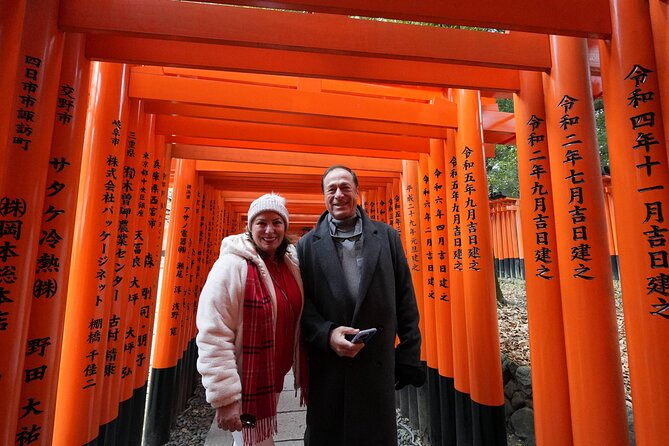
Most first-time Kyoto plans start with Fushimi Inari-taisha Shrine, and it is smart to do it early. Fushimi Inari is famous for vermillion-red torii gates that stack into repeating pathways. What makes it special is that the shrine is not only a view, it is a lived religious space with history and meaning behind the gate rows.
Early in the morning, the shrine can feel like a set of quiet corridors. You can actually read and look without constant shoulder-to-shoulder crowding. One guide even made this point clear in a review response, when the start time was early, the area felt unusually calm.
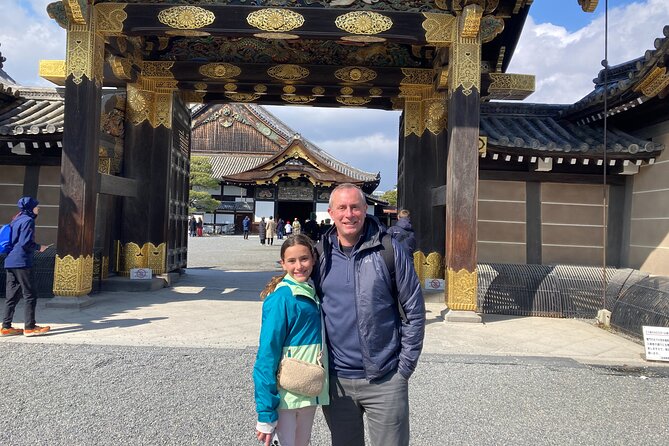
If you want an Edo-period contrast, pair Fushimi Inari with Nijo Castle. Nijo Castle is a UNESCO World Heritage site built in 1603 as the Kyoto residence of Tokugawa Ieyasu, the first shogun of the Edo Period. It is a good choice when your group wants palace architecture and an easy entry into Japan’s power history.
One drawback with castle days is pace. Large heritage sites can stretch your time if you add too much. With only 4 hours total, your best move is to choose one major “big ticket” stop like Nijo Castle and then keep your second and third picks shorter.
Gion, Nishiki Market, Pontocho, and Higashiyama Ward in one calm loop
After Fushimi and/or Nijo, Gion is the next classic flavor of Kyoto. Gion is the geisha district area, and the narrow alleyways can feel confusing if you have never been there. With a guide, you do not just pass through. You learn how to interpret the lanes and why certain spots are known for specific traditions.
Nishiki Market is a different vibe, more street-level and food-focused. It is a narrow shopping stretch known as Kyoto’s Kitchen, with many shops and eateries in a compact area. A guide helps you decide what is worth stopping for, especially if you have limited time and you do not want to wander blindly.
Pontocho sits between the market scene and the river atmosphere. It is a narrow dining alley running from Shijo-dori to Sanjo-dori, one block west of the Kamogawa River. In the morning, it is not at its night-life peak, but it is still a great place to see how the neighborhood is laid out and how the dining streets fit into the city pattern.
Higashiyama Ward is where Kyoto starts to feel like old postcard Kyoto, especially along the eastern mountainside slopes. This area is especially useful if you want preserved historic streets and a sense of “old Kyoto” without needing to study maps for hours. It is also a good buffer zone if you are tired, because you can slow down in scenic areas and let your guide steer you where it is easy to walk.
A practical note: these stops are tightly connected by atmosphere, but they are not all equal in walking time. If your group is traveling with mobility limits, choose one “street district” stop plus one temple or palace, rather than trying to stack three districts.
Same corner of Japan, a different kind of day:
- Kyoto Geisha Walking Tour: Gion District & Hidden Gems
★ 4.7 · 3,273 reviews - Kyoto: Tea Ceremony Ju-An at Jotokuji Temple
★ 4.9 · 3,207 reviews - Kyoto: Gion Magical Night Walking Tour with Geisha Trivia
★ 4.9 · 2,393 reviews - Kyoto: 45-Minute Tea Ceremony Lesson Experience
★ 4.3 · 2,378 reviews
Kiyomizu-dera, Kyoto Imperial Palace, and the Higashiyama temple mood
Kiyomizu-dera Temple is one of Kyoto’s most popular temples, and it is popular for a reason. The grounds have long-standing cultural weight, and walking with a guide helps you understand the significance behind the structures and the overall setting.
One of the best advantages of an early start is that Kiyomizu-dera can feel almost empty compared to later hours, based on guide feedback shared in the tour experience. That calm makes it easier to absorb the temple area without turning it into a checklist.
Kyoto Imperial Palace is a different kind of Kyoto experience. The palace grounds used to be the residence of Japan’s Imperial Family until 1868, when the emperor and capital moved to Tokyo. It is a good stop if you want a political and historic context angle, especially if your group likes the idea of Kyoto as the capital before it became the cultural capital.
If you are pairing Kiyomizu-dera with palace grounds, remember the time math. You will get the most satisfaction if you treat one stop as the anchor and let the other two be lighter.
Ginkakuji and Nanzenji Suirokaku: slow Zen stops that feel rewarding
Ginkakuji, also called the Silver Pavilion, sits along the eastern mountains. It was built in 1482 by shogun Ashikaga Yoshimasa as a retirement villa modelled after a Chinese pavilion tradition. The appeal here is not just the name, it is the whole “Zen calm” feeling that makes you pause and look longer.
Nanzenji Suirokaku is a strong companion for that mood. Nanzenji’s grounds are spacious, and Suirokaku is associated with the temple complex atmosphere. If you like walking through temple spaces and seeing how they use larger areas for quiet reflection, this pair can work well.
These two are often a good choice when you want temples that feel less like photo marathons and more like “slow sightseeing.” Still, because they are religious sites, expect moments of quiet and keep your group respectful and mobile.
Tofuku-ji, Toji, and the Zen-to-city balance
Tofuku-ji is a Zen temple famous for autumn colors. Even if you visit outside peak leaf season, it is a solid option because it is a large temple space and tends to feel more spread out than the most packed “name-brand” sights.
Toji Temple is also in the Heian Period storyline, founded after the capital moved to Kyoto in the late 700s. It is called East Temple, and it is a great pick if your group enjoys understanding the timeline of Kyoto’s growth.
This is also where I suggest you think strategically. If your morning is already loaded with famous shrines and markets, keep one of these as an “extra credit” temple. The payoff is you feel less rushed and you understand more of the broader religious landscape.
Kinkakuji, Ninna-ji, and the garden-temple choices that slow you down
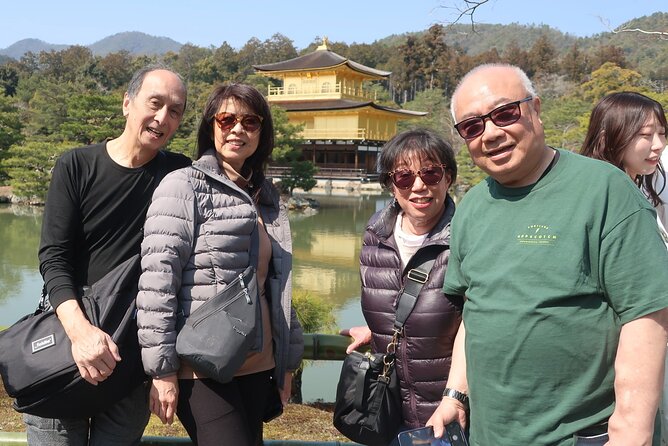
Kinkakuji, the Golden Pavilion, is a Zen temple with top floors covered in gold leaf. It is formal and iconic, and you will see why once you are there. It is also popular, so early timing helps.
Ninna-ji is another UNESCO-listed site and the head temple of the Omuro School of the Shingon sect. If Kinkakuji is about the dramatic shine, Ninna-ji can feel more spacious and traditional in a way that supports slower walking and reading.
If you only choose one “big famous image” temple, Kinkakuji is often the pick. If you want a more varied feel, pair Ninna-ji with something street-level like Gion or Nishiki Market, so the day has texture.
Kyoto Imperial Villa and the quieter northern options: Shugakuin, Kibune, and Kurama
Shugakuin Imperial Villa is an option that fits people who like gardens and palace-style grounds. It was built in the 17th century by Emperor Gomizuno and is managed by the Imperial Household Agency. If your group wants something more contemplative than a dense crowd scene, this is a strong candidate.
Kibune and Kurama-dera shift your day toward the mountains. Kibune is a small town in a forested valley in northern Kyoto, developed around Kifune Shrine, and it is tied to a legend about a goddess traveling from Osaka. Kurama-dera is in the same northern mountain region and is known for its temple.
These are not for everyone, mostly because travel time can eat into your 4-hour window. If you have a fit group and you like nature-linked sightseeing, they can be memorable. If you are focused on classic central Kyoto landmarks, keep your choices closer to the main tourist districts.
Ryoan-ji and the rock garden test: why it works best with a guide
Ryoan-ji is famous for Japan’s most recognized rock garden. It attracts crowds, but the garden works best when you slow down and actually look. A guide helps you read the logic behind how it is arranged and how you approach the space visually.
It is also the kind of stop that can turn into a short experience if you rush. The private format can help here, because your guide can encourage pacing so the garden is not just another place you pass through.
Arashiyama and the west: Tenryu-ji, Togetsukyo Bridge, bamboo paths, and gardens
Arashiyama is a natural choice if you want Kyoto’s western flavor. It has been a destination since the Heian Period, when nobles enjoyed the scenery, and today it is known for both classic landmarks and walkable districts.
Tenryu-ji Temple is one of Arashiyama’s strongest anchors. It is ranked among Kyoto’s great Zen temples and is registered as a world heritage site. If you want the garden-temple feel that makes Kyoto gardens special, Tenryu-ji is often the best starting point.
Togetsukyo Bridge is the iconic Arashiyama landmark. It was originally built in the Heian Period and reconstructed in the 1930s. Even as a short stop, it gives you a clear sense of where the area’s energy flows.
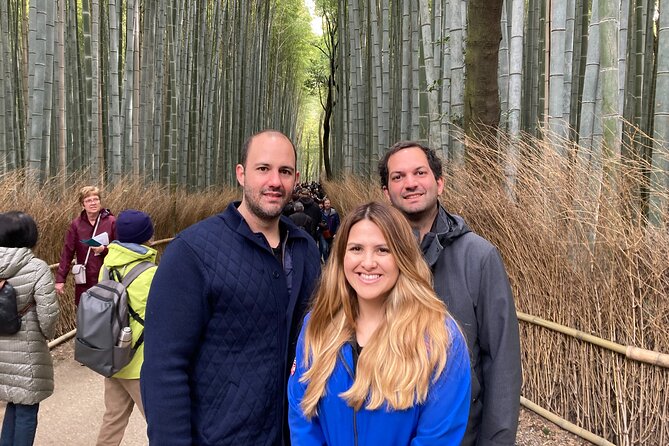
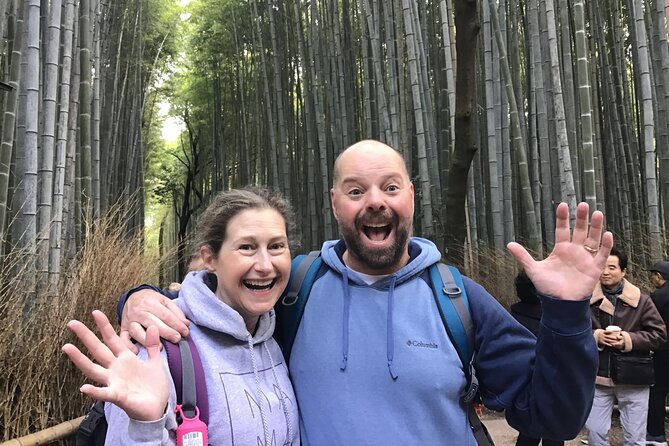
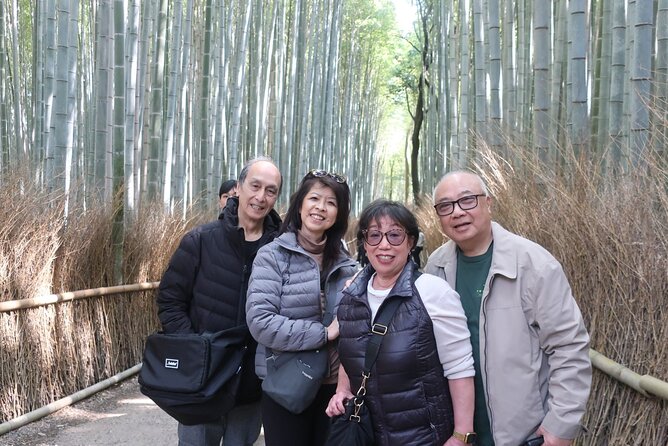
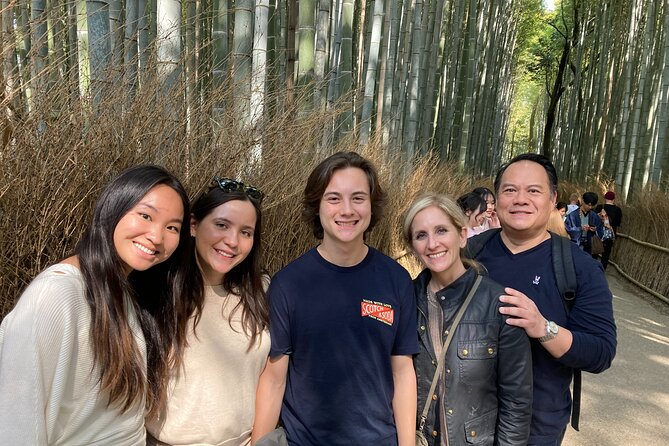
Then there is Bamboo Forest Street. This is where morning timing really pays off. Walking the paths early can feel magical, with bamboo stalks swaying gently if there is a light wind. It is not just a photo stop, it is a sensory change of pace from shrine lanes and market streets.
Okochi Sanso Garden is another pick for garden lovers. It is the former villa of actor Okochi Denjiro and has multiple gardens and buildings, which can make the stop feel like a slow walk through layers of design rather than a single viewpoint.
Kyoto’s hillside temple circuit: Jojakkoji, Nisonin, Gioji, and the Nenbutsu-ji statues
If you want something that feels quieter and more out of the main rush, the hillside temple cluster is your option. Jojakkoji is a mountainside temple with small buildings and gates, plus maple trees and moss along paths. Nisonin is similar, with slightly larger structures, and it benefits from overhanging trees that add a shaded, calmer feel.
Gioji is even more tucked into the forest, known for its moss garden and thatched roof features at the entrance gate and main hall area. These hillside temples are ideal when you want a softer, less crowded side of Kyoto.
Adashino Nenbutsu-ji is another very specific kind of place. It is at the end of the Saga-Toriimoto Preserved Street and is known for stone statues placed for the souls of the dead, tied to Kobo Daishi. Otagi Nenbutsu-ji is close by and is famous for its 1200 stone statues of rakan, each with a different facial expression.
These are powerful, but they are also easy to over-stack. Pick one or two hillside stops at most, then give yourself time to reset.
Money and timing: tickets, no private car, and how to plan within 4 hours
Let’s talk about the part that affects your stress level: how your choices affect walking and ticket spending. Entrance fees are not included, and you should expect to pay for paid sites based on what you select. The guide’s entry fees are covered only for the sights listed in the provided options, which mainly means your guide can get into the chosen locations, not that your personal ticket cost disappears.
No private vehicle is another piece of the puzzle. You are relying on walking and nearby transit, so you want to choose locations that are reasonably compatible in geography. The tour gives you flexibility on stops, but geography still matters when you only have about 4 hours.
Lunch is not included, so if you want food, you should plan to stop after your tour ends. Many early-morning tours end around late morning, and that is a perfect time to eat while the rest of Kyoto is still trickling into peak hours.
Should you book this Kyoto early morning private tour?
Book it if you want a calmer Kyoto morning, you prefer a guide who can explain what you see, and you like the idea of choosing exactly 2-3 stops. This tour is especially good for first visits because it bundles the classic mix, shrines, Zen temples, and Kyoto street atmosphere, into a single half day.
Skip it or adjust your plan if you do not do well with walking, or if your group needs lots of long rides. With no private vehicle and entrance fees not included, you get the best value when you keep your choices focused and close together.
If you match the tour to your pace and pick a smart combo, you are buying time, comfort, and a clearer understanding of Kyoto, not just a list of photos.
FAQ
How long is the Kyoto early morning private tour?
It is about 4 hours.
What is included in the tour price?
A licensed local English speaking guide is included, along with a customizable experience where you choose 2-3 sites from the provided options. Pickup is offered, and you receive a mobile ticket.
Can I customize which sights I see?
Yes. You can choose 2-3 attractions from the options included for the tour.
Is this tour a walking tour?
Yes. It is a walking tour, and pick up is on foot, with you meeting your guide within a designated area. It is also near public transportation.
Are entrance fees included?
Entrance fees are not included. The guide entry fees are covered only for sights listed under the tour’s included options.
Do I get a private vehicle?
No. A private vehicle is not included, and transportation fees are not included.
Can I cancel for a full refund?
Yes. You can cancel up to 24 hours in advance for a full refund.
Fresh options around Kyoto
- Kyoto Aquarium Admission Ticket★ 4.7 · 12 reviews
- Kyoto Gion Photoshoot – Private Session | Pro Photographer★ 5.0 · 12 reviews
- Gyoza Cooking Class in Kyoto: Traditional Japanese Dumplings★ 5.0 · 12 reviews
- Kyoto: Guided Food Tour with 12 Dishes & 3 Drinks★ 5.0 · 12 reviews
- Kyoto: Avoid the Crowds at the Hidden Gems of Arashiyama★ 4.9 · 13 reviews
- Kyoto Early Bird English Tour: Gion & Higashiyama(Private opt)★ 5.0 · 13 reviews
- Otsu-e Folk Art Workshop & Local Culture Walk Near Kyoto★ 5.0 · 13 reviews
- Kyoto, Osaka, Nara Full Day tour by Car English speaking Driver★ 3.5 · 13 reviews
Morning, compared.
Kyoto Early Morning Tour with English-Speaking Guide
Read our review →Early Morning Tour with English-Speaking Guide
Read our review →
World Heritage Shirakawa-go Morning Guided Tour
Read our review →
Nara Early Morning Tour (Kyoto or Osaka Departure Available)
Read our review →

Hiroshima in a Nutshell: Morning Bike Adventure
Read our review →