
Reviewed · KIMONO EXPERIENCES IN KYOTO
Kimono and Yukata Experience in Kyoto
A kimono changes how Kyoto feels.
This Kyoto experience is built around a professional fitting and then free time wandering in traditional clothes around Gion and nearby shrines. I also like the flexible time slots, so you can pick a slot that fits your day instead of feeling rushed.
The best part is what the staff handles for you: choosing a robe, getting you dressed correctly, and (if you upgrade) adding hair and makeup so you look photo-ready without wrestling with complicated layers. The one drawback to plan for is the add-on menu, plus a few small surprises like limited selection in the base booking and the reality that some sandals and layers are not made for long, barefoot comfort.
Key takeaways before you go (Gion fit, shrines, and add-ons)
- Fast, staff-led kimono fitting means you do not have to figure out the wrapping yourself.
- Optional hair and makeup can be worth it if you want a full look, not just a robe.
- A day of walking in the Higashiyama area gives you lots of chances for photos around historic streets and shrines.
- Base kimono selection may feel limited, with nicer options usually costing extra.
- You need the right underlayer (shorts are a lifesaver) because fitting can require changing into light clothing.
- Timing matters, with most people returning by late afternoon (plan to be back well before closing).
Why this kimono-and-yukata outing feels different in Kyoto
Kyoto has plenty of places to take photos. This experience does something else: it changes how you move through the city. Once you’re in a kimono or yukata, your pace slows naturally, and the streets around Gion and Higashiyama start to feel less like a checklist and more like a living neighborhood.
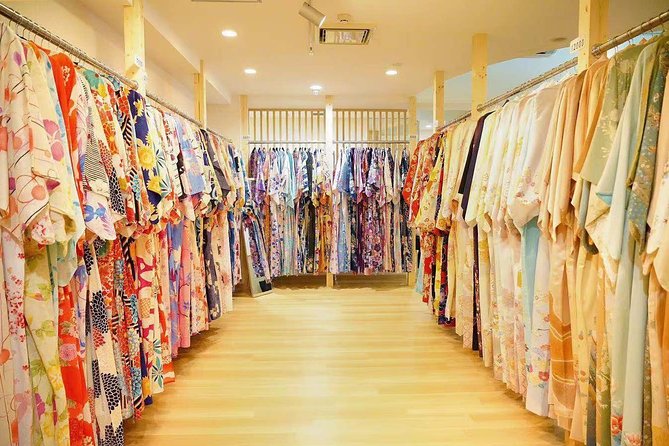
What makes it practical is that you get a staff-assisted fitting right at the start. You choose from the shop’s selection, they help you wear everything correctly, and then you’re free to explore. Many people love that “done-for-you” setup because it turns a potentially stressful costume moment into a simple, guided first step.
The other big reason people get hooked is the combination of dressing up and actually going somewhere with meaning. You’re not just sitting in a shop. You’re heading out to see major landmarks such as Kiyomizu-dera and Heianjingu Shrine, plus shrine areas closer to the Gion side like Yasaka Shrine (often called Gion Shrine).
More Kimono Experiences in Kyoto
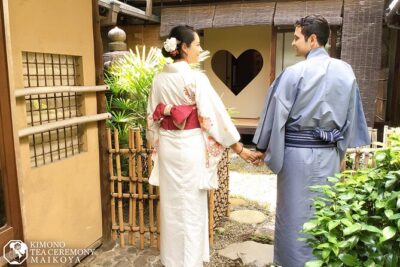
- Kimono Tea Ceremony at Kyoto Maikoya, NISHIKI
★ 5.0 · 911 reviews - Kyoto: Kimono Rental with Hairstyling and Accessories
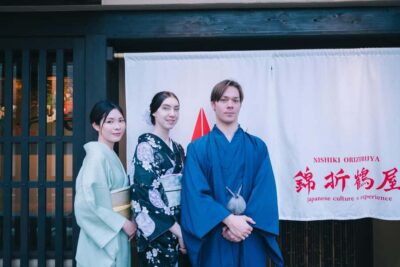
★ 4.8 · 653 reviews - Kyoto: Kimono Tea Ceremony at Orizuruya Gion
★ 4.9 · 618 reviews
Getting dressed at Kyoto Kimono Rental Rei, step by step
The experience starts at Kyoto Kimono Rental Rei, in Kyoto’s Gion area, at Umemotochō 270 in the 605-0064 Higashiyama Ward area. You make your own way there, and you’ll check in at the shop.
Choosing and fitting (the part you should not rush)
Expect the process to move quickly. The flow goes like this:
1) Selecting a kimono or yukata from the shop’s options
2) Professional fitting by staff
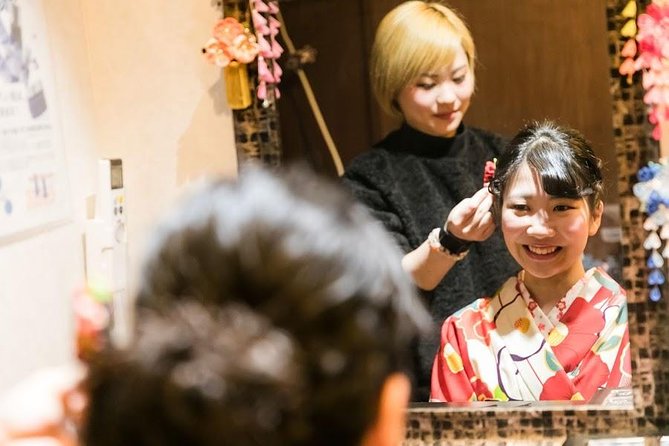
3) Optional hair styling
4) Optional makeup
5) Then time outdoors in your outfit
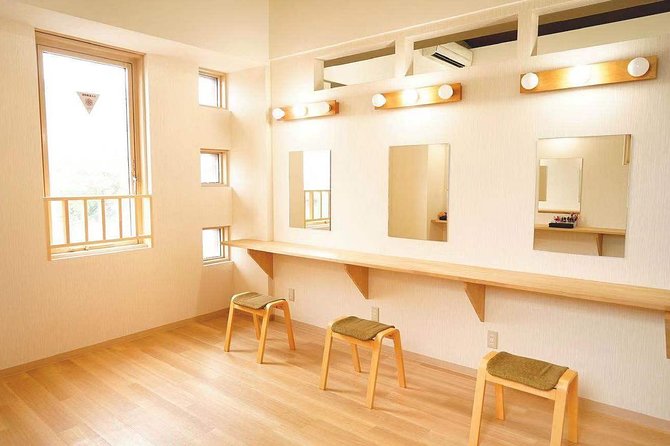
The fitting is the key value. A kimono is not just fabric. It has layers, ties, and details that affect comfort, posture, and how it photographs. Staff doing it for you means you avoid the most common beginner issues like uneven collars, strap confusion, or a robe that looks right in the mirror but falls awkwardly while walking.
Hair and makeup add-on, and when it’s actually worth paying
Hair styling is optional and listed at 1650 yen. Makeup is optional and listed at 5500 yen. If you’re the type who wants the full “Kyoto moment” look, many people say this upgrade is worth it, especially when the styling includes extra details like hair flowers and embellishments.
If you’re low on time or prefer a simpler look, you can skip both and still have a great day. But if you want your photos to look intentional, the hair and makeup upgrade tends to pay off because it turns the outfit from costume to complete look.
Same corner of Japan, a different kind of day:
- PERFECT KYOTO 1-Day Bus Tour
★ 5.0 · 13,518 reviews - Kyoto: Fushimi Inari, Kinkakuji, Bamboo Grove 1 Day Bus Tour
★ 4.8 · 4,316 reviews - Kyoto: Tea Ceremony in a Traditional Tea House in Kiyomizu
★ 4.9 · 3,519 reviews - Kyoto Geisha Walking Tour: Gion District & Hidden Gems
★ 4.7 · 3,273 reviews
The reality check: you will likely change underwear-level
A few practical warnings come up again and again. Wear shorts underneath because the process can require you to get down to more revealing clothing to dress properly. If you feel shy, this is not a “maybe” tip. It’s a “bring it or suffer it” tip.
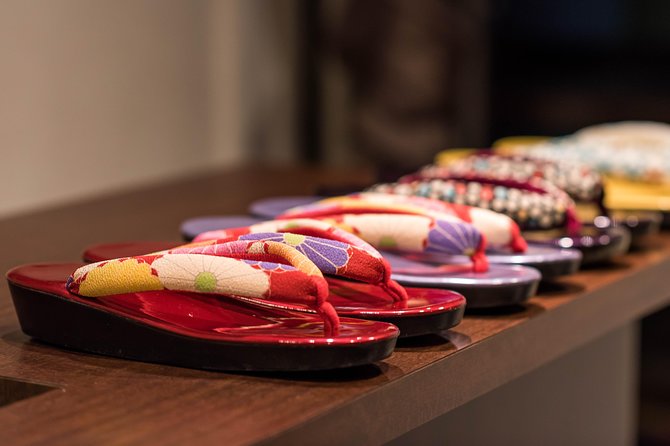
Also, plan for comfort limits. The kimono and the layered socks or padding can feel warm. Sandals are part of the deal, and not everyone finds them comfy for long distances.
Where you go once you are dressed: Gion streets to Kyoto’s big shrines
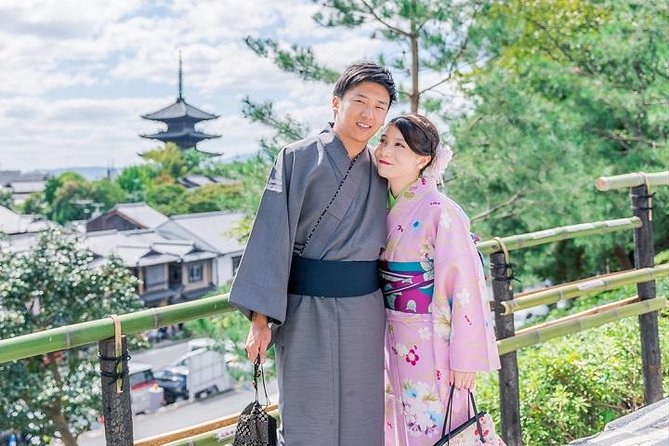
After fitting, you head out in your kimono to explore. The experience is designed as a flexible walk-and-photo outing, with multiple time slots offered across the day.
Yasaka Shrine area and Gion photo moments
You’ll have opportunities around the Gion side, including Yasaka Shrine (Gion Shrine). This area is perfect for kimono photos because the old Kyoto vibe is already built in: stone paths, shrine atmospheres, and classic street angles.
Kiyomizu-dera and Heianjingu Shrine, the two-name combo
The experience includes visits to Kiyomizu-dera and Heianjingu Shrines. These are two very different kinds of Kyoto icons. Kiyomizu-dera gives you the dramatic temple setting most people picture when they think Kyoto. Heianjingu Shrine brings a calmer, more spacious feel with a strong sense of ceremonial layout.
Because you’re wearing traditional clothing, the visit feels less like sightseeing and more like being part of the scene. It helps that these landmarks are exactly the kind of places where your outfit will look like it belongs.
How much time do you really have outdoors?
The schedule is flexible, but you do need to plan your day around return time. The general rule given is to return earlier than 6 pm. In real life, some days people report a closer-to-5:30 or 5 pm return expectation, depending on timing and shop closing.
My advice: treat this as a half-day to early-evening plan. If you try to stretch it late at night, you may feel rushed going back to change out.
Price and value: what $25.43 buys, and what costs extra
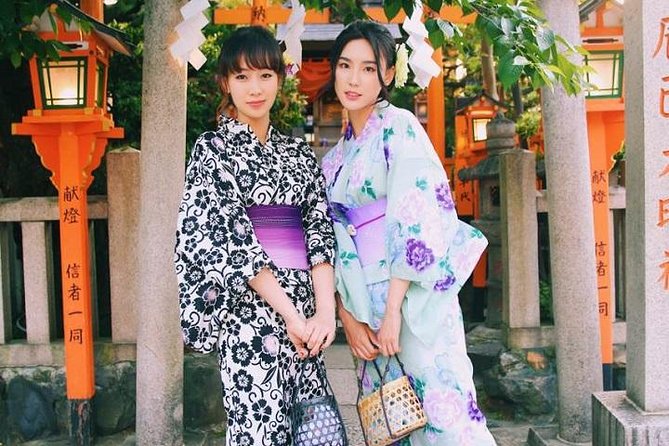
On paper, the price looks like a bargain: $25.43 per person. You get kimono or yukata rental and the professional fitting. That’s the core.
Here’s the catch: the base booking tends to cover a more standard set. Several details point to the same pattern:
- Nicer kimono choices often mean extra payment
- Hair styling and makeup cost extra (1650 yen and 5500 yen respectively)
- Accessories can be add-ons too, like items such as a purse or embellished styling options
One shopper also warned about an extra credit card charge, specifically a 10% fee. I cannot verify how universal that is, but it’s a smart reminder to bring cash if you want to avoid surprises.
So is it good value? Usually yes, because the fitting alone is the hardest part of doing this on your own. But if your goal is a very specific high-end robe or a full glam look, budget for add-ons from the start. If you go in thinking the base price includes everything, you might feel nickeled and dimed.
The small logistics that make or break the day
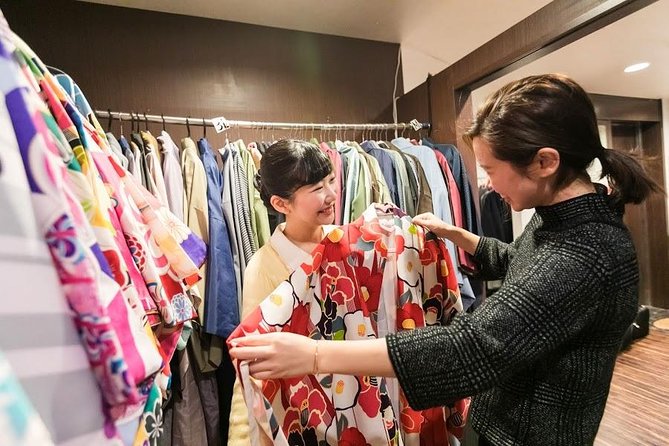
Kimono days can go smoothly, or turn stressful fast. These are the little factors that matter.
Finding the shop can be tricky
A few people call out that the location is not obvious. Use the address and the directions you’re given, and arrive with a little buffer. If you are late, the fitting schedule can feel chaotic.
Group size stays small
The experience caps out at 14 travelers. Smaller groups usually mean less time waiting and less friction when multiple people are getting fitted and styled at once.
Communication is available in multiple languages
Staff are available in English, Chinese, and Japanese. That helps a lot during fitting, especially if you have any questions about what to wear under the kimono or how to adjust your outfit.
Service can vary by staff, so be ready to advocate kindly
Most comments emphasize friendliness and efficiency. Still, a few negative notes mention that service quality can be uneven for foreigners. The safest plan is simple: be calm, ask clear questions, and tell staff what you need for comfort and timing.
Packing tips so you enjoy the walking part
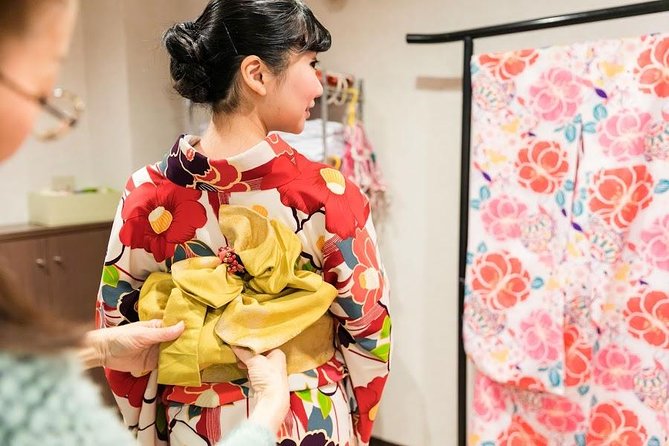
This is a walking-heavy day. A kimono is an outfit, but it is also a set of restrictions.
Bring or wear:
- Shorts under your clothes for easier dressing
- Comfortable socks or the type of footwear you expect to use with rental sandals
- A plan for photos since you may be on your own for pictures
- Something for weather, because the experience requires good weather
If you’re visiting during hot or sunny months, consider an umbrella strategy. People mention renting an umbrella, and the most helpful photo tip I saw was using a clear umbrella in light rain or drizzle so you get soft light in photos without getting soaked.
Best times to book and who this fits
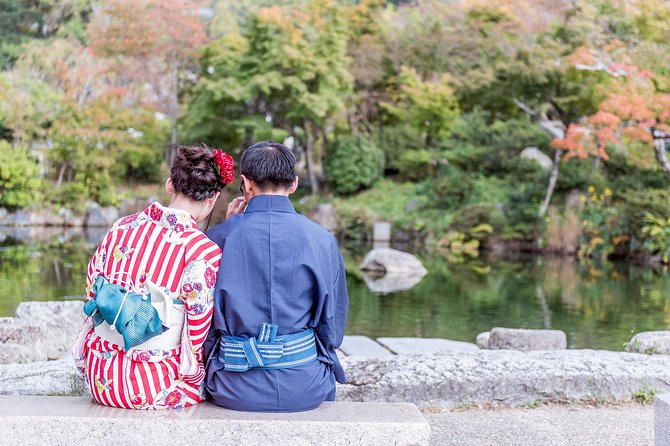
This is perfect if you want:
- A classic Kyoto outfit experience with professional help
- A practical way to see major shrines while dressed traditionally
- A day plan that is flexible with multiple time slots
- A smaller group setting
You’ll probably love it if you are celebrating something, enjoy photos, or want a memorable first-time kimono moment without learning the complicated wrapping process.
It may be less ideal if:
- You hate add-on pricing and want a single all-in price
- You need long hours at a slow pace with very comfortable shoes
- You have very specific requirements for a premium robe and assume the base selection matches your dream
Also note size ranges: women 140 cm to 175 cm, men 170 cm to 185 cm, and children 100 cm. If you are outside these ranges, you may need to check availability directly.
Quick itinerary reality: what each part accomplishes
- Selecting the kimono (about 10 minutes)
You get from “what do I look like in Kyoto?” to “this is my outfit,” fast. Picking early also keeps your hair and makeup timing smooth if you upgraded.
- Professional fitting (about 10 minutes)
This is the part that saves you. It makes the robe wearable right away and reduces the odds of awkward fits later.
- Hair styling (optional, about 10 minutes)
This is where you go from dressed to styled. If you care about looking polished for photos, it matters.
- Makeup (optional, about 20 minutes)
Makeup tends to be the biggest transformation. If you plan to take lots of photos, it’s the add-on that changes the overall look most.
- Walking time outdoors
This is where the experience justifies itself. You’re in the streets in a way that feels more personal than standard sightseeing.
- Return to change out (before late afternoon)
You end back at the same shop and change into your clothes.
Should you book Kyoto Kimono Rental Rei in Gion?
I’d book this if you want a straightforward, staff-assisted kimono experience in Kyoto that also gets you out to see real landmarks like Kiyomizu-dera and Heianjingu. The professional fitting is the main reason it works, and the flexible time slots help you line it up with your day.
I’d be cautious if you want everything included at the advertised price. The base rental often covers more standard choices, while nicer kimono options, hair styling, makeup, and accessories are paid add-ons. If you go in with a clear budget for upgrades, the value feels much better.
Final advice: arrive prepared for a real fitting day. Wear shorts under your clothes, plan for sandals and layers, and keep your return time in mind so you do not feel rushed. If you do that, you’ll walk out of the shop looking like you belong in Kyoto, not like you borrowed a costume for an hour.
FAQ
Is kimono fitting included?
Yes. The experience includes kimono or yukata rental and professional kimono fitting by staff.
Are hair styling and makeup included in the base price?
No. Hair styling and makeup are optional add-ons. Hair styling is 1650 yen and makeup is 5500 yen.
Do I need a guide during the walk?
No. A guide is not included.
How do I get to the meeting point?
You make your own way to the shop in Kyoto’s Gion area. The meeting point address is Umemotochō, 270 Prestige Gion (605-0064, Higashiyama Ward).
Where can I go during the experience?
You’ll explore in kimono around Gion and you’ll visit nearby shrines including Kiyomizu-dera and Heianjingu Shrine.
What time do I need to return the rental?
You need to return earlier than 6 pm. Some days may require returning by about 5 pm, so plan to be back before late afternoon.
What languages are available for staff?
English-speaking, Chinese-speaking, and Japanese-speaking staff are available.
What if the weather is poor?
The experience requires good weather. If it is canceled due to poor weather, you will be offered a different date or a full refund.
Fresh options around Kyoto
- Kyoto Aquarium Admission Ticket★ 4.7 · 12 reviews
- Kyoto Gion Photoshoot – Private Session | Pro Photographer★ 5.0 · 12 reviews
- Gyoza Cooking Class in Kyoto: Traditional Japanese Dumplings★ 5.0 · 12 reviews
- Kyoto: Guided Food Tour with 12 Dishes & 3 Drinks★ 5.0 · 12 reviews
- Kyoto: Avoid the Crowds at the Hidden Gems of Arashiyama★ 4.9 · 13 reviews
- Kyoto Early Bird English Tour: Gion & Higashiyama(Private opt)★ 5.0 · 13 reviews
- Otsu-e Folk Art Workshop & Local Culture Walk Near Kyoto★ 5.0 · 13 reviews
- Kyoto, Osaka, Nara Full Day tour by Car English speaking Driver★ 3.5 · 13 reviews
Kimono Experiences in Kyoto, compared.
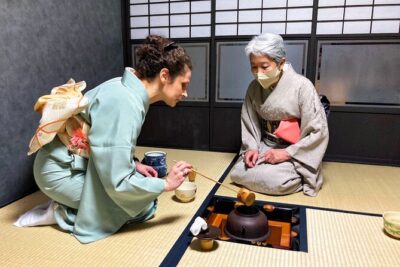
KYOTO Tea Ceremony with kimono near by Imamiya Jinjya Shrine
Read our review →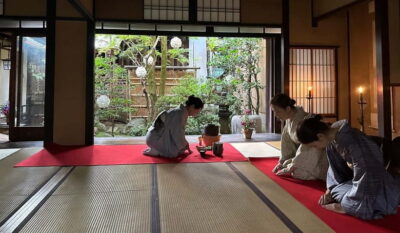
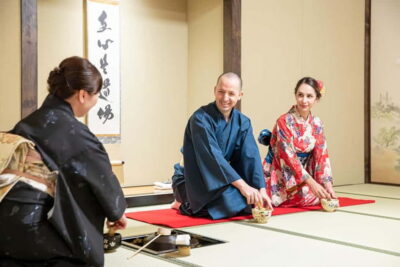
Kimono and Tea Ceremony Experience at Cultural Asset
Read our review →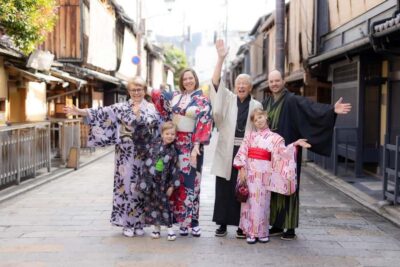
Family-Friendly Kimono & Yukata Experience at WARGO
Read our review →Browse the lists this tour appears in