
Reviewed · WALKING TOURS
Kamakura Full Day Walking Tour with Local Expert Guide and Pickup
Kamakura is a shortcut to old Japan. This private day tour takes you from Tokyo into coastal temple country with pickup options and a guide who helps you make sense of what you’re seeing. I like that you get a tight route of top sights, with enough context to understand why each one matters.
I also like the pacing. You get planned time at major stops, plus a real walk-and-learn day that includes shrine rituals like Zeniarai Benten’s money-washing, and a break for shopping on Komachi-dori. The main drawback to plan around is that it is a walking day, so it may feel long if it’s very hot or if mobility is an issue.
Key points to know before you go
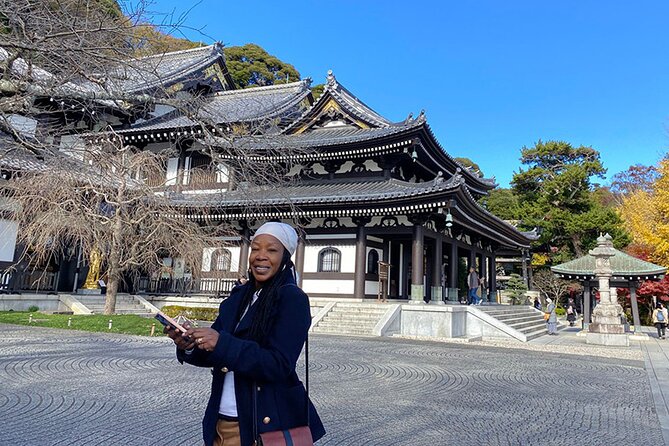
- Private guide, private group: only your group participates, so you can ask questions and move at a comfortable pace.
- Pickup from Tokyo areas: round-trip transfers from your hotel, cruise port, or airport are included.
- Top Kamakura sights in one day: Kotoku-in (Great Buddha), Tsurugaoka Hachimangu, Zeniarai Benten, Meigetsuin, Engaku-ji, plus Komachi-dori.
- Some admissions are not included: entry tickets are listed as not included for key stops, so budget for those in advance.
- Walking is part of the experience: there are temple-to-temple strolls, including the Zeniarai area with a scenic walk.
- Guides like Lana, Raffa, Brian, and Colt: reviews point to consistently strong guiding that helps with history and practical navigation.
Why Kamakura feels like a separate world from Tokyo
Kamakura sits about an hour south of Tokyo, and it shows. The vibe changes fast. You trade train-platform speed for paths, temple bells, and the kind of quiet where you can actually hear your own footsteps.
The tour is built for exactly that feeling. Instead of doing Kamakura as a list you chase alone, you do it as a story. Your guide sets the scene, then you move from Shinto shrine to Buddhist temple to a coastal street where daily life runs right next to old stone.
This is the kind of day trip that works even if you don’t speak much Japanese. You’re not just looking at buildings, you’re learning what they mean, what you’re supposed to notice, and what order of visits helps you get the best experience.
More Walking Tours in Tokyo
- Tokyo Tsukiji Fish Market Food and Culture Walking Tour
★ 5.0 · 3,184 reviews - Tokyo: Imperial Palace and Shogun Historical Walking Tour
★ 5.0 · 2,251 reviews - Tokyo: Shinjuku Local Bar and Izakaya Guided Walking Tour
★ 4.9 · 1,794 reviews
Price and what you still pay for on the ground
The tour price is listed at $118.88 per person for a private full day (about 8 hours). That’s not cheap, but it’s also not random. You’re paying for your guide time, coordination between sights, and round-trip pickup from Tokyo-area locations.
Here’s the part you should plan carefully: entry fees are not included. Admission is specifically marked as not included for Kotoku-in, Meigetsuin, and Engaku-ji. Other stops, like Tsurugaoka Hachimangu and Zeniarai Benten, are listed as free.
So the real budgeting picture looks like this:
- Expect to pay some temple or temple-complex entry tickets on the day.
- Plan your meals separately, since food and drink are not included.
- You should also expect that you will cover whatever transit costs apply if any local fares are needed, because one review complaint centered on being asked to pay transit and entrance items.
My practical advice: before you arrive, message or confirm what your “not included” items cover in real life. Keep a card and some cash ready, even if you think it’s mostly covered.
Pickup and routing, so you don’t waste your one day
The biggest value of booking this in advance is not the temples. It’s the logistics buffer.
The tour includes round-trip transfers from Tokyo by pick-up and return to your meeting point. That matters because Kamakura can be simple on paper and complicated in real life, especially if you want to do a tight route. Trains, station exits, and temple access routes can eat hours when you’re doing it solo.
This is also designed around timed visits. Kotoku-in is allotted about 30 minutes. Most other stops are about 45 minutes. Komachi-dori gets about 45 minutes as your built-in break. That structure helps you see a lot without spending the whole day chasing “just one more” place.
One more detail I appreciate: the tour says transfer time between locations is included in the total duration. So you’re not stuck doing math in your head.
First stop: Kotoku-in and the Great Buddha scale check
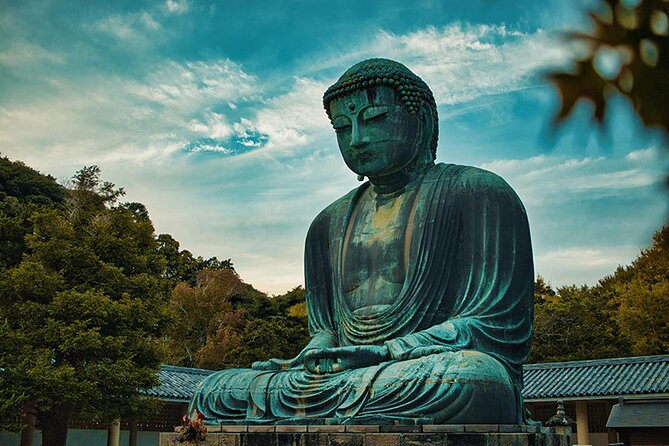
Kotoku-in, home to the Great Buddha of Kamakura, is the obvious headline attraction for a reason. It’s an 11-meter-plus bronze presence that makes everything else feel smaller. Even if you’ve seen giant statues elsewhere in Japan, this one has a distinct calm weight.
You get about 30 minutes here, and admission is listed as not included. That short window can feel quick if you want to linger for photos and details, but it’s also smart. You get the main experience, then you move while your energy is still high.
What I’d do with your time:
- Spend your first minute just stepping back and taking in the full statue.
- Then look for the human details your guide points out, because that’s where the experience becomes more than sightseeing.
- If you’re photo-heavy, bring a stable stance. Crowds and angles can shift fast.
Also, if you’re sensitive to sun glare, plan for shade breaks. The Kamakura day can be bright, and you’ll be outside between sites.
Same corner of Japan, a different kind of day:
- Mt Fuji and Hakone 1-Day Bus Tour Return by Bullet Train
★ 5.0 · 26,383 reviews - 1-Day Tokyo Bus Tour
★ 5.0 · 14,250 reviews - Tokyo: TOKYO SKYTREE® Admission ticket
★ 4.5 · 11,192 reviews - Tokyo: teamLab Planets TOKYO Digital Art Museum Entry Ticket
★ 4.6 · 9,779 reviews
Tsurugaoka Hachimangu, then Zeniarai Benten’s money-washing ritual
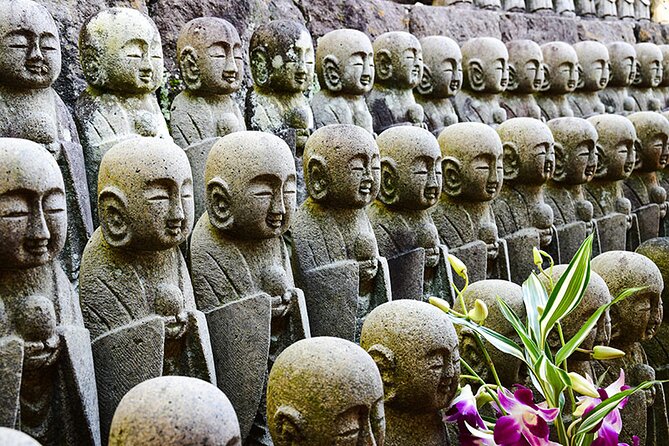
After Kotoku-in, the route shifts into shrine country.
Tsurugaoka Hachimangu: the spiritual center
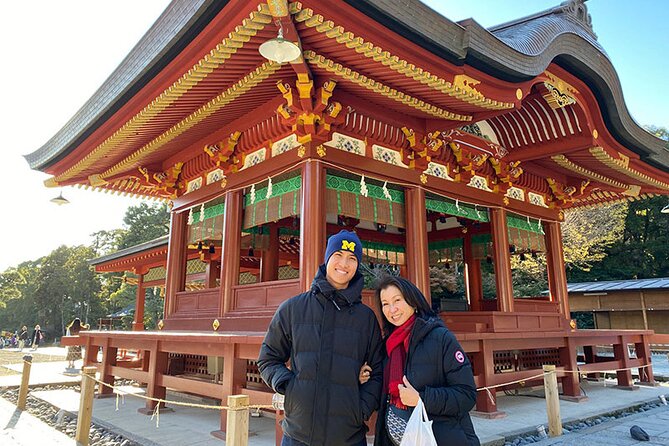
Tsurugaoka Hachimangu gets about 45 minutes, and entry is free. This shrine is often treated as Kamakura’s spiritual heart, and your guide helps you connect it to what shaped the town historically.
Even if you’re not a shrine expert, you’ll learn what to notice: the flow of the grounds, the role of offerings, and the meaning behind key features you see on the way in. With a guide, these places stop feeling like random stops and start feeling like a connected system.
Zeniarai Benten: a ritual you can understand fast
Then you go to Zeniarai Benten Shrine for about 45 minutes, also free.
This is where the tour gets fun in a very practical way. The ritual here is washing money to invite prosperity. It’s one of those things that sounds odd until you see it explained in context. Your guide helps you understand what the ritual symbolizes and why it’s done here.
Location note: this stop is near Genjiyama Park and is described as a scenic 30-minute walk from Kamakura Station. That means you should treat Zeniarai as a walking segment, not only a quick photo stop. If your day’s mobility is limited, you’ll want to adjust your expectations or ask your guide how the walk will be handled.
Meigetsuin (Hydrangea Temple) and Engaku-ji: Zen calm, with a guide to read it
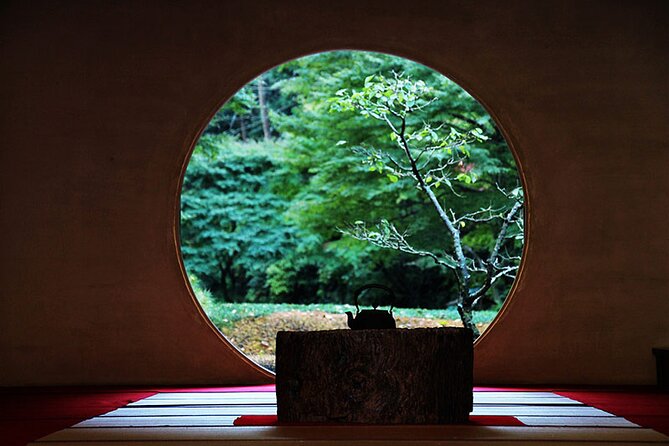
This tour doesn’t just do the famous names. It includes two temple visits that feel quieter and more reflective, and they balance the busy shrine energy.
Meigetsuin, also called Ajisaidera
Meigetsuin is known as the Hydrangea Temple (Ajisaidera). You get about 45 minutes here, and admission is not included.
Even if you’re not there during peak hydrangea season, this kind of temple experience still works because your guide frames what you’re seeing. Hydrangeas are seasonal, but the temple’s mood, layout, and Zen-influenced rhythm are not. The guide can point out what the garden design and temple approach were meant to communicate.
A practical note: if you’re visiting in warmer months, plan hydration. Gardens and temple grounds can be cooler in shade, but the walking between them is still a factor.
Engaku-ji: hills, Zen tradition, and a slower pace
Engaku-ji gets another 45 minutes. Admission tickets are also not included here.
Engaku-ji is described as a Zen temple in Kamakura’s hills, and it’s one of the more significant temples in Japan. That’s a big claim, but you’ll feel it in how the space holds quiet. Your guide’s job is to give you a fast way to interpret the structure, the religious context, and why this temple matters in the broader Japanese Buddhist story.
This is a good stop for people who want something more than photos. If you like temples but find solo temple visits hard to understand, this is the portion of the day where a guide pays off most.
Komachi-dori, your planned break to snack and shop
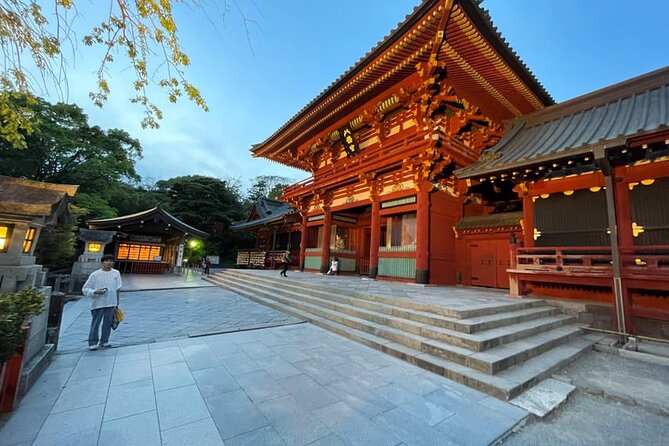
The final big human-scale stop is Komachi-dori Street with about 45 minutes. Entry here is free.
Komachi-dori is where Kamakura’s day-to-day energy comes in. You’ll find shops selling traditional crafts and local treats. You don’t need to buy anything to enjoy it. The point of the timing is that you get a pocket of freedom after the structured temple time.
I suggest using Komachi-dori for two things:
- A snack or drink so you don’t try to force food later in the day when you’re tired.
- A small purchase you can actually carry, like a craft item or a quick souvenir that feels local.
You’re on a full-day route, so this is your built-in moment to reset your brain.
How the guide turns sights into understanding (and easier travel)
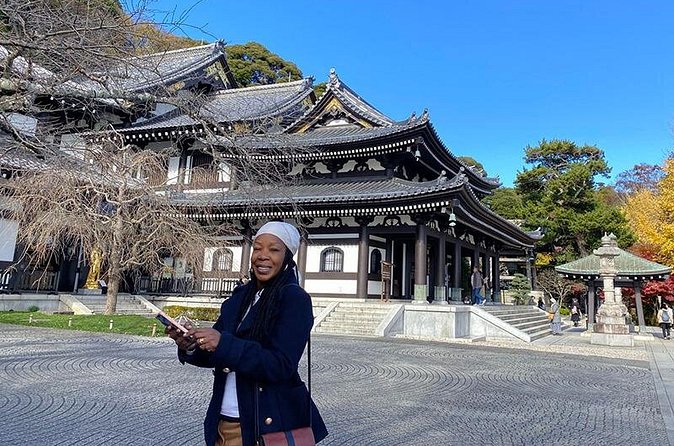
This is the part that separates a good day tour from an exhausting day tour.
Multiple guides are associated with this experience in reviews, including Lana, Raffa, Brian, and Colt, and the strongest praise connects to the same idea: the guide helps you understand what you’re looking at, and helps you move through Japan in a practical way.
In real terms, that means:
- You get historical context you can actually remember, because it’s tied to the place.
- You get answers to questions you would otherwise hesitate to ask.
- You get help with navigation so you don’t burn energy on train connections and station exits.
It’s also worth saying: a tour like this can only work if the communication is clear. One negative experience complaint focused on confusion over who should pay what. To protect yourself, ask your guide or operator in advance to confirm:
- Which admissions you personally will pay on-site.
- Any transit fares you might need.
- What your meeting and pickup looks like at the start of the day.
If you do that homework, the day is much more likely to feel smooth.
Walking reality: plan for shoes, heat, and energy management
Kamakura is not a sit-down city. Even though you’re “touring,” you’re still walking between sites for a full day.
There’s a specific caution that the day involves long walks between temples. It may not be the best choice in very hot weather. There’s also a Zeniarai access detail that includes a scenic walk from Kamakura Station, so some parts may feel like a casual hike.
Here’s how you can make it work:
- Wear comfortable shoes with good grip.
- Carry water. Your guide can only do so much when the sun is doing the rest.
- Take your time at photo stops, but don’t linger so long that the rest of the route gets rushed.
- If you have limited mobility, this might still be possible, but you should ask ahead how the route can be adjusted.
Best fit: who should book, and who should reconsider
This tour is best if you want a structured way to see major Kamakura highlights without turning your day into a puzzle.
It suits:
- First-timers to Japan who want practical guidance on how to move.
- People who like temple and shrine visits but don’t want to guess the meaning.
- Anyone who wants an efficient day trip from Tokyo with pickup and a clear plan.
It may not be ideal if:
- You want minimal walking, or you’re very heat-sensitive.
- You’re on a strict budget and don’t want to add on temple entry tickets and meals.
- You prefer total independent freedom with no set timing.
Should you book this Kamakura full-day tour?
I’d book it if your goal is to see Kotoku-in, major shrines, and Zen temples in one day, with a guide helping you understand what you’re looking at. The pickup and private-group setup add real value, especially if you’re not excited to map out transport and temple access on your own.
I’d think twice if walking days make you miserable, or if you hate any uncertainty about what you’ll pay on-site. The smart move is simple: confirm admissions and any on-the-ground costs clearly before the day starts.
If you get that part right, this is a strong way to spend one day outside Tokyo, with enough structure to feel productive and enough time at each stop to feel human.
FAQ
What is included in the tour?
The tour includes support during your time in Japan before and after your tour. It also offers round-trip hotel, cruise port, or airport transfers from Tokyo, and the experience ends back at the meeting point.
Are temple and shrine entry fees included?
No. Entry fees are not included. Some stops list admission tickets as not included, while other stops are listed as free.
How long does the Kamakura tour take?
The duration is listed as about 8 hours.
Does this tour use pickup from Tokyo?
Yes. Pickup is offered, and round-trip transfers from Tokyo locations (hotel, cruise port, or airport) are included.
Is food and drink included?
No. Food and drink are not included.
Is it possible to cancel for a full refund?
Yes. Free cancellation is offered if you cancel at least 24 hours in advance for a full refund.
What hours does the tour run?
The listed operating hours are Monday through Sunday, from 9:00 AM to 1:00 PM.
Fresh options around Tokyo
- Tokyo: Imperial Palace East Gardens and Tokyo Station Tour★ 5.0 · 16 reviews
- Tokyo Shibuya and Harajuku Walking Tour With A Guide★ 4.5 · 16 reviews
- Half-Day Local Tokyo Tour in Adachi Market and Shibamata★ 5.0 · 16 reviews
- Private Kamakura Early Morning Tour (Tokyo Departure Available)★ 5.0 · 16 reviews
- Shibuya All You Can Eat & Drink Private Tour★ 5.0 · 16 reviews
- Asakusa Night Evening Walking Tour with English-Speaking Guide★ 5.0 · 16 reviews
- Hands On Wagyu Sushi Making Experience★ 5.0 · 16 reviews
- Shibuya Bar Hopping Adventure Unique and Drank Experience★ 5.0 · 16 reviews
Walking Tours, compared.
Kyoto Geisha Walking Tour: Gion District & Hidden Gems
Read our review →
Tokyo Tsukiji Fish Market Food and Culture Walking Tour
Read our review →
Gion Magical Night Walking Tour with Geisha Trivia
Read our review →
Imperial Palace and Shogun Historical Walking Tour
Read our review →
Gion Geisha District Walking Tour – Stories of Geisha
Read our review →
Shinjuku Local Bar and Izakaya Guided Walking Tour
Read our review →
Browse the lists this tour appears in