
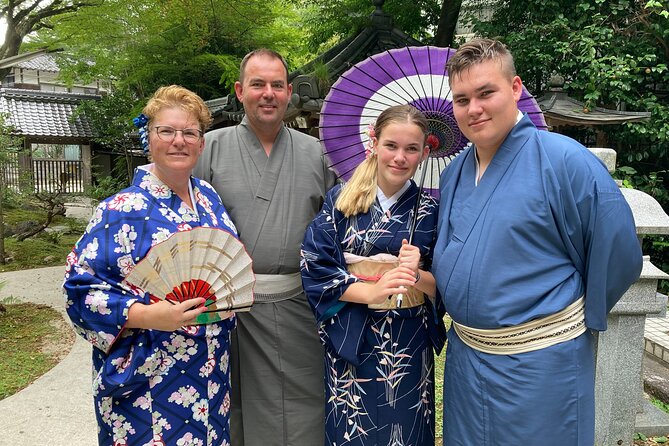
Reviewed · KIMONO EXPERIENCES
Cultural Activities :Kimono, tea ceremony, Calligraphy and Amulet
Three traditions, one calm temple visit. I like how this tour packs kimono time with calligraphy plus tea and amulet making in about two hours. The setting matters too: the lessons happen at Tokuju-ji, a temple founded around 300 years ago. One possible drawback is the schedule is tight, so it is not the best choice if you want long, slow instruction for serious practice.
I also like that your teachers take photos during the lessons and send them to you by email, so you come away with both the skills and the keepsakes. With a maximum of 10 people and a stop at one beautiful temple, it feels organized and personal. The day includes a temple visit and workshop-style teaching, so it may not satisfy you if you are looking for a full sightseeing tour of Miyajima on the same timeline.
Key highlights in a few minutes
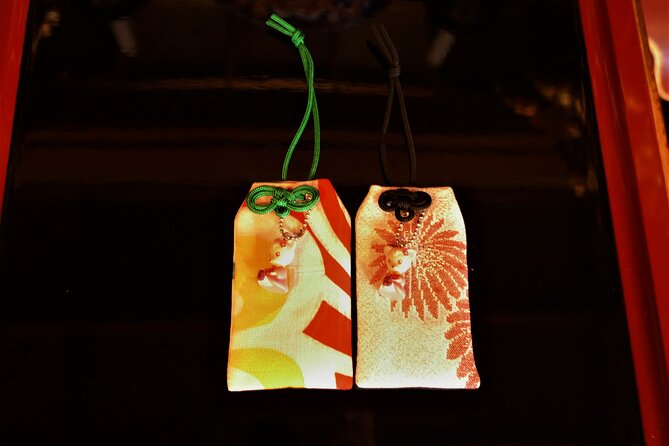
- Kimono and apron provided: you dress for the activities, not just for photos.
- Three workshops in one visit: calligraphy, tea ceremony, and amulet making all fit into roughly 2 hours.
- Tokuju-ji Temple setting: lessons in a centuries-old temple with lovely gardens.
- Your photos are handled for you: teachers take pictures during the lessons and email them to you.
- Small group size: up to 10 people, which usually means more attention and a smoother flow.
Tokuju-ji Temple in Miyajima: why the location matters
This experience is built around Tokuju-ji Temple in Miyajima, and that is a big part of why it works. The temple was founded about 300 years ago, and it is tied to a specific focus of worship centered on a Buddha called Kinseki jizo. The idea is protection for children and pregnancy, and the temple story includes an old couple who prayed for a baby to Jizo and later received a healthy boy. The temple was then built out of gratitude.
You also get that extra layer you might enjoy if you have been around Miyajima’s religion before. The tour notes that temples in Miyajima are somewhat connected with Itsukushima Shrine, which is why you may spot elements that feel Shinto-like in a Buddhist temple setting. Even if you do not go deep into religious details, this helps you understand why Miyajima feels spiritually layered. You are not just doing three crafts on a random calendar slot.
The main practical win is that the lessons sit inside a real temple environment. That changes the tone of the activities. Calligraphy does not feel like a generic writing class. Tea is not just a drink demo. And amulet making is not just a souvenir factory. It ties to the temple atmosphere you are standing in.
More tea ceremonies in Hiroshima:
- Hiroshima Local guided Hiking Tour&Open-air Tea Ceremony
★ 5.0 · 213 reviews - Kimono and Tea Ceremony in Miyajima
★ 5.0 · 73 reviews - An Amazing set of Cultural experience: Kimono, Tea Ceremony and Calligraphy
★ 5.0 · 69 reviews
Getting started at Okeiko Japan, near public transport
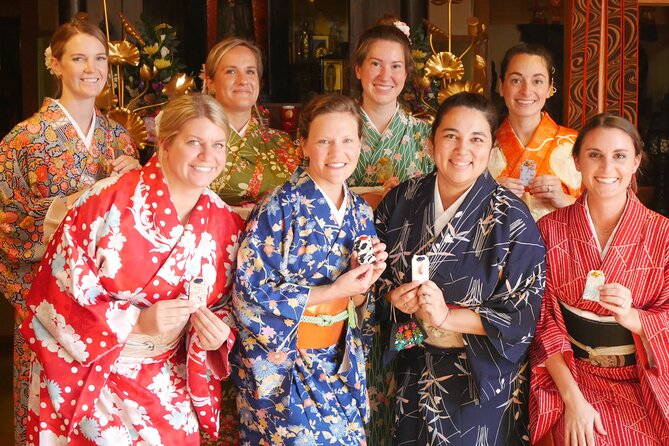
You meet at Okeiko Japan in Miyajima, at 741-1 Miyajimachō, Hatsukaichi, Hiroshima (listed as 739-0588). The tour says it is near public transportation, which is helpful because Miyajima can eat up time if you are hopping between stops.
The experience runs about 2 hours, and it is designed to move in a clear sequence: one temple stop with workshops afterward. You get a mobile ticket, and confirmation is received at booking. That matters when you are juggling ferry times, train connections, and temple crowds.
There are a couple of rules that help you plan realistically:
- Minimum age is 6, and children must be accompanied by an adult.
- Most people can participate.
- The group is capped at 10 travelers, so you are unlikely to feel lost in a huge class.
One thing I pay attention to with short cultural programs is how early arrival can change the experience. A review highlighted that arriving early gave time to wear kimono first, then take photos in the garden before the lessons began. If your schedule allows it, showing up a bit early can make the experience feel more relaxed and less like you are rushing into the first activity.
Calligraphy in Japanese: writing your name at Tokuju-ji
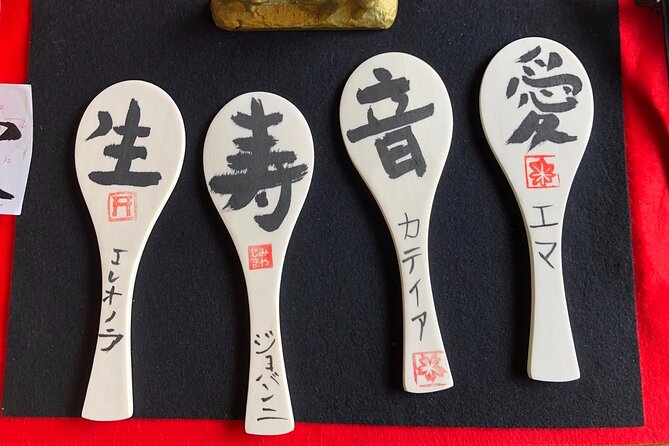
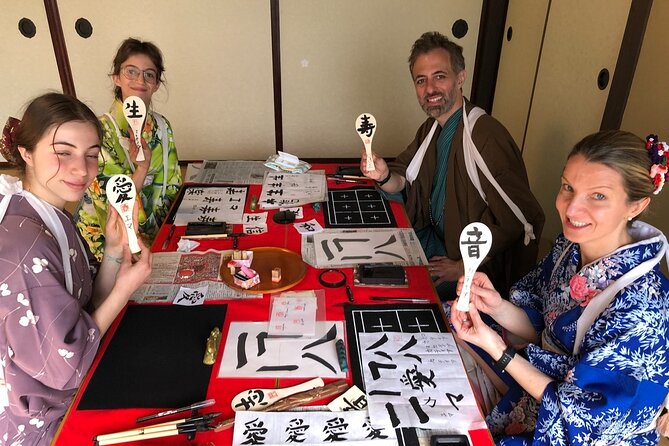
The first hands-on part is calligraphy at Tokuju-ji, with about half an hour for the lesson. The goal is simple and practical: you learn how to write your name in Japanese. That is a great format for two reasons.
First, it gives you an end product you can actually use. Instead of learning a long list of strokes with no clear payoff, you leave with something personal. Second, it gives you a clear reason to pay attention. You can see your name forming, and you understand why the instructor cares about the order and shape of each stroke.
In a real temple setting, calligraphy also becomes more than technique. The environment slows you down. You are not doing it in a classroom that smells like copy paper. You are doing it where people come to pray and reflect. Even if you do not share the religious background, the setting nudges you toward careful movement and calm focus, which is exactly what calligraphy needs.
A review specifically mentioned learning a lot from the calligraphy lesson and pairing it with the tea ceremony, which suggests the instructors do more than tell you where to put ink. They also explain the steps clearly enough that you can feel proud of what you produce at the end.
Practical consideration: because the lesson time is limited, do not expect months of practice compressed into one workshop. Expect a good introduction, and a nice finished result.
Tea ceremony basics: matcha, etiquette, and hands-on steps
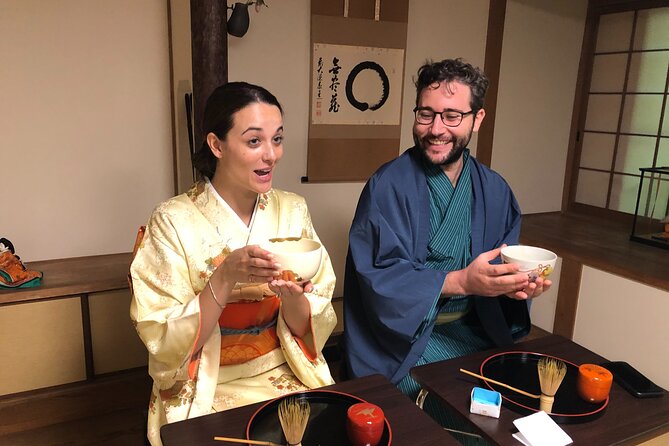
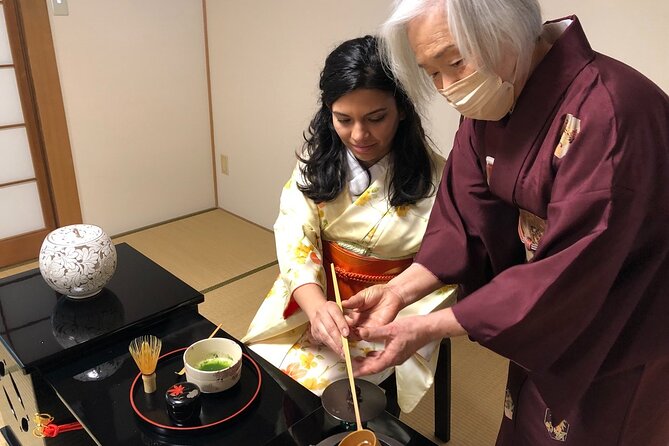
Next comes the tea ceremony, again with about half an hour. This is where the experience leans into Japanese tradition in a way that feels physical, not just educational. One review called out learning how to prepare matcha and perform the tea ceremony, which is exactly the kind of detail that makes a tea lesson more than a tasting.
In most tea ceremonies, people focus on preparation, presentation, and small etiquette moments. This tour’s description and reviews point to the preparation and performance side, so you are not only watching. You are participating in the flow of the ceremony.
Why that matters for you: tea ceremonies can be one of those activities that either turns into a quick performance with no understanding, or it turns into a “wait and eat cake” moment with no cultural meaning. Here, the structure is designed around actually doing the steps. When you prepare matcha yourself and then carry out the ceremony, you start noticing the logic behind the ritual: why it takes time, why the gestures matter, and why the host’s calm pace is part of the tradition.
Another nice touch is timing. Tea happens while you are already wearing the provided kimono and apron. That makes it feel unified. You are not changing outfits between activities like a theme park schedule. It is all one continuous cultural session.
More kimono experiences in Hiroshima:
- Kimono and Calligraphy Experience in Miyajima
★ 5.0 · 16 reviews - Kimono Tea Ceremony at Kyoto Maikoya, NISHIKI
★ 5.0 · 911 reviews - Kyoto: Kimono Rental with Hairstyling and Accessories
★ 4.8 · 653 reviews - Kyoto: Kimono Tea Ceremony at Orizuruya Gion
★ 4.9 · 618 reviews
Amulet making: a craft you can actually keep
The third workshop is amulet making. You make an amulet during the class, and one review highlighted that amulet making is not offered in many places in Japan, which is why this part stands out in the lineup. That alone can make the whole tour feel more special, because you are not doing the most common “make paper souvenirs” routine.
Amulets are meaningful objects in Japanese religious life, and making one yourself adds a personal connection you usually do not get when you just buy one in a shop. You are not just taking home something decorative. You have a reason tied to the temple atmosphere and the prayers that sit behind it.
This class also balances the other activities. Calligraphy is controlled and precise. Tea ceremony is rhythmic and ceremonial. Amulet making adds a different kind of focus, one that feels more tactile. The result is a day that hits different learning styles: careful hand movement, mindful procedure, and hands-on crafting.
If you like leaving with something small that has a story, this is the part to lean into. It is also the part that can give you a question to ask later, something you can reflect on after your trip when you see the amulet at home.
Kimono, photos, and the experience you can hold onto
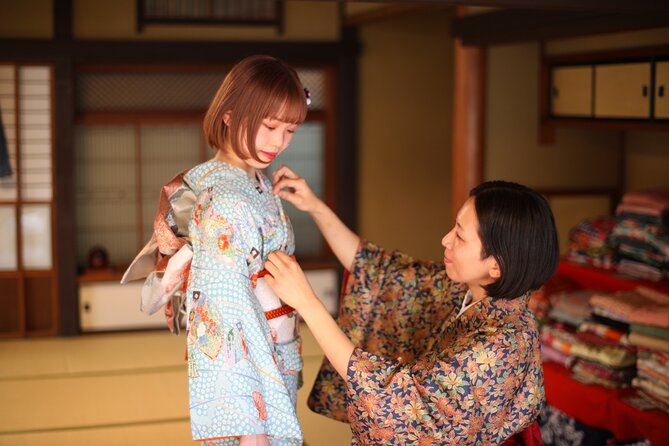
Wearing kimono is often why people book cultural workshops, but in this tour it also does practical work. The kimono and traditional apron are provided, and they are used during the lessons. A review called out that everything felt better because the kimono went along for each activity. That makes sense. The clothing sets your posture and mindset, and it makes the activities feel tied to tradition rather than a costume moment.
Then there is the photo setup. Your teachers take photos during the lessons and send them to you via email. That sounds simple, but it solves a common problem: when you are busy participating, you usually forget to stop and document your day. Here, you get photos without having to juggle your phone, your position, and your attention.
One review mentioned extra photo time in the garden, especially after arriving early to dress in kimono. That kind of pre-lesson time can be a big win because the setting is part of the charm. If you are someone who likes visual keepsakes, you will likely appreciate this approach a lot.
The only thing to consider is that you should expect a bit of time for dressing and transitions. The tour still runs about two hours, but kimono does take a moment to get right.
Price and value: $171.73 for three traditions in two hours
At $171.73 per person, this is not a budget activity. But it also is not overpriced for what you get, assuming you value the full set of experiences rather than just one workshop.
Here is the value logic:
- You get three distinct cultural activities in one visit: calligraphy, tea ceremony, and amulet making.
- You wear a provided kimono and traditional apron.
- A temple admission ticket is included for the portion at the temple (the itinerary notes a 20-minute admission ticket included).
- Teachers handle photos during the lessons and email them to you.
- The group is small, up to 10 people, which usually improves the overall pacing of a class.
If you broke those pieces out separately, you would likely pay more in time and money for multiple bookings, especially with outfit rental and instructor time. This price can feel fair if you want a well-packaged introduction to several traditions without scheduling three separate experiences across your day.
Timing matters too. The booking pattern shows it is often reserved about 52 days in advance on average. That suggests demand, which is common for compact, high-impact cultural programs. If you are traveling in peak periods, booking earlier can help you lock in a time window that works with Miyajima ferry and train schedules.
Who this suits best, and who might want a longer program
This works well for people who want structure and variety. If you have only a short window in Hiroshima or you plan to spend your full day in Miyajima, this gives you cultural depth without eating your whole day.
It also suits you if you:
- Want a clear introduction to Japanese arts you can practice later.
- Like leaving with a personal item, like writing your name in Japanese and a handmade amulet.
- Prefer a small-group class with photos handled for you.
- Are traveling with someone you want to share meaningful activities with, since the session is simple to follow as a unit.
If you are a serious craft student, you may find the sessions short. Each workshop is roughly half an hour, so you will not get long-term coaching. You will get a guided start and a finished result, not a full skill course.
Age wise, the minimum is 6, and children must be accompanied by an adult. So it is reasonable for families who want a structured cultural experience, not a long endurance activity.
Should you book this cultural combo in Hiroshima’s Miyajima?
I would book it if you want a focused cultural hit in a single time block. The biggest reasons are the combination: kimono + calligraphy + tea ceremony + amulet making, all tied to a real temple setting. Add the emailed photos and the small group size, and it feels like a compact package built for memories you can keep.
Before you book, consider one practical point: this is a short session. If you hate time pressure, plan your arrival calmly and give yourself extra buffer. One review-style tip that seems consistent with how the tour runs is arriving early to dress and enjoy photo time in the garden.
A second helpful check is your goal. If your goal is hands-on cultural practice and you like neat souvenirs with meaning, you are in the right place. If your goal is only sightseeing around Miyajima and you want more wandering time, you might choose a longer temple or walking itinerary instead.
FAQ
How long is the cultural experience in Miyajima?
The experience runs about 2 hours (approx.).
What activities are included?
You take part in three Japanese cultural activities: calligraphy, a tea ceremony, and amulet making, with a kimono and apron worn during the lessons.
Is a kimono provided?
Yes. The tour provides a kimono and a traditional apron for you during the activities.
Will I get photos from the experience?
Yes. Your teachers take photos during the lessons and send them to you via email.
Where is the meeting point?
The meeting point is Okeiko Japan, 741-1 Miyajimachō, Hatsukaichi, Hiroshima 739-0588, Japan. The tour notes it is near public transportation, and it ends back at the meeting point.
Is temple admission included?
Yes. The itinerary indicates a 20-minute admission ticket included for the temple stop at Tokuju-ji.
What is the minimum age, and can children participate?
The minimum age is 6. Children must be accompanied by an adult.
Is there free cancellation?
Yes. You can cancel for a full refund with free cancellation up to 24 hours in advance of the experience’s start time.
Fresh options around Hiroshima
- The Peace Memorial and Beyond: A Half-Day around Hiroshima★ 4.9 · 12 reviews
- Hiroshima Saijo Sake Tasting Tour with visit to 3 Breweries★ 5.0 · 12 reviews
- Private Hiroshima Calligraphy: Create Your Own Kanji Art Souvenir★ 5.0 · 12 reviews
- Hiroshima:Private lacquer workshop experience tour(gift included)★ 5.0 · 13 reviews
- Sunset Walking Tour at Peace Park, Hiroshima★ 5.0 · 13 reviews
- Kimono and Calligraphy Experience in Miyajima★ 5.0 · 16 reviews
- Hiroshima Peace Memorial Park: A Guided Tour★ 4.9 · 16 reviews
- History of Hiroshima: Small Group Night Walking Tour★ 4.8 · 17 reviews
Kimono Experiences, compared.
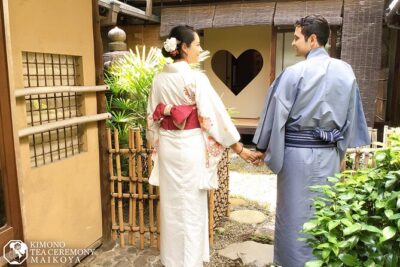
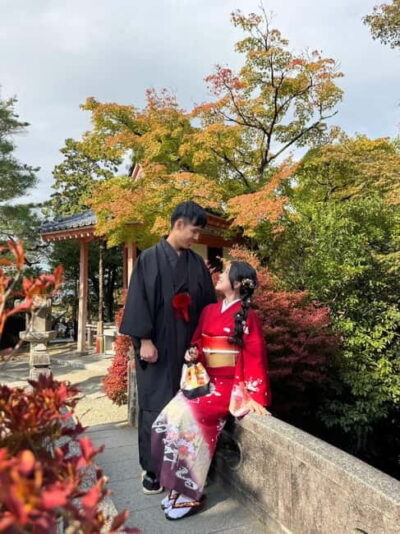
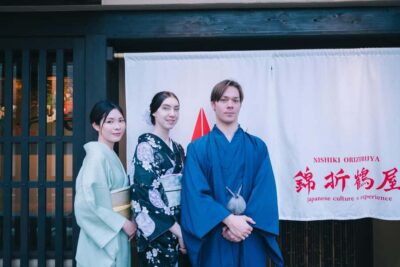
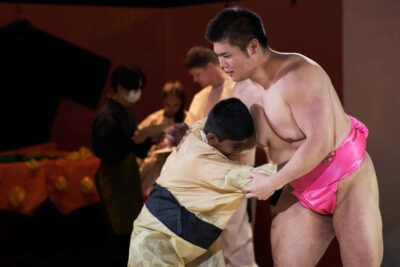
Sumo Show & Experience w/ Optional Kimono & Hot Pot
Read our review →
KYOTO Tea Ceremony with kimono near by Imamiya Jinjya Shrine
Read our review →
Kimono and Tea Ceremony Experience at Cultural Asset
Read our review →
Browse the lists this tour appears in