
Reviewed · WALKING TOURS
Asakusa Night Evening Walking Tour with English-Speaking Guide
Lantern light turns Asakusa into a night story. This 1 hour, small-group walk takes you from the iconic Kaminarimon Gate through quieter temple lanes, then down toward dinner streets where local drinks and snacks are still going strong. It is a great way to start an evening in Tokyo without rushing or getting lost.
I love two things most: the after-dark pacing around Sensō-ji and Asakusa’s sacred spaces, and the fact that the guide gives you context so the streets make sense fast. In the reviews, guides like Takumi and Mio are highlighted for making the walk feel both fun and informative, especially if you already saw Asakusa during the day but did not know what you were looking at.
One thing to consider is timing at Sensō-ji. The main hall closes at 6 PM, so if you show up late, you might not be able to enter everywhere the same way. Still, the walk works well as a nighttime orientation and photo route.
Key points you will feel right away
- A short 1 hour walk that fits before dinner, not a half-day commitment
- Small group size (max 8), so questions are easy and the pace stays comfortable
- English-speaking guides, with strong storytelling praised by past guests, including Takumi and Mio
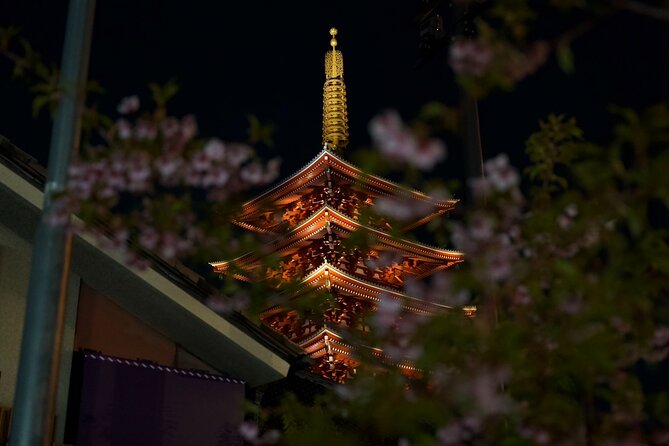
- Sensō-ji and Asakusa Shrine at night, when the area feels calmer than daytime crowds
- Ends at Hoppy Street, a practical finish point for izakaya hopping
Lantern-Light Asakusa: why night changes everything
Asakusa in daytime is busy, loud, and full of people hunting photos. At night, the mood shifts. The big lantern glow at Kaminarimon, the temple grounds, and the side streets feel softer, and you have an easier time noticing details.
This tour is built for that shift. You are not just walking past famous sights. You are moving through them in a logical order that helps you understand what matters, why it matters, and how locals experience it after dark.
And since it is only about an hour, you do not have to build a whole evening plan around it. You can go straight from the tour into dinner.
More Walking Tours in Tokyo
- Tokyo Tsukiji Fish Market Food and Culture Walking Tour
★ 5.0 · 3,184 reviews - Tokyo: Imperial Palace and Shogun Historical Walking Tour
★ 5.0 · 2,251 reviews - Tokyo: Shinjuku Local Bar and Izakaya Guided Walking Tour
★ 4.9 · 1,794 reviews
Meeting at Burger King Asakusa Azumabashi and getting started fast
You meet near Burger King Asakusa Azumabashi, in the Kaminarimon area, and you finish later at Hoppy Street. That start location is convenient because it puts you right where most people want to be anyway, and it helps you avoid the awkward half hour of transit and waiting.
The tour uses a mobile ticket, so you can keep everything on your phone. The group is kept to a maximum of 8 travelers, which matters more than you might think in a dense neighborhood like Asakusa. With fewer people, you are less likely to get stretched out, and your guide can slow down when something is worth a closer look.
The tour is listed as being near public transportation too, so it should fit easily into any Tokyo plan you already have.
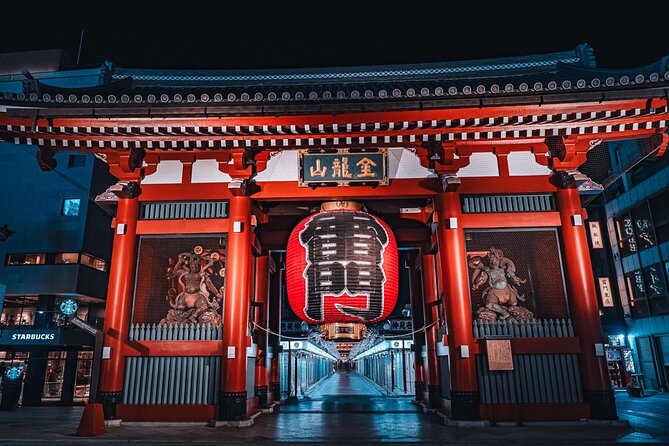
Kaminarimon Gate: Thunder Gate photos plus the wind-and-thunder statues
Kaminarimon, the Thunder Gate, is the classic entrance to Sensō-ji. It is hard to miss, and it is the kind of place where you immediately see why it is a must-see.
What makes this stop better on a guided walk is not the photo spot itself. It is what the gate represents. The gate is flanked by statues of Fujin, the god of wind, and Raijin, the god of thunder. Those details turn a landmark photo into a story you can remember.
You also get an added benefit by going at night. Even if Kaminarimon still has activity, the lighting and the atmosphere give you a different feel than the midday rush.
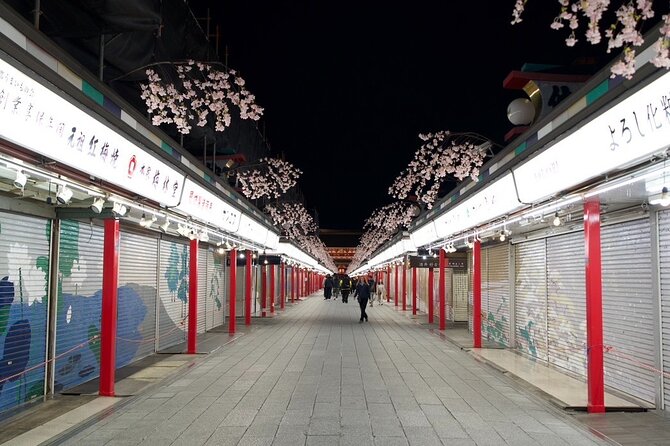
Nakamise Shopping Street: snack-and-souvenir energy without the daytime grind
After Kaminarimon, you move along Nakamise Shopping Street. This is the long lane that leads toward the temple, and it is packed with shops selling traditional snacks, souvenirs, and handcrafted goods.
At night, Nakamise can feel like a living corridor instead of a rush hour obstacle course. You can browse with a bit more control. You can also spot which stalls catch your eye, then decide later if you want to come back during your own time.
The practical part: the tour does not include food and drinks, so you can treat this stop as a sampling or browsing moment. If you want to eat, you will likely do it before or after this tour based on your schedule.
Same corner of Japan, a different kind of day:
- Mt Fuji and Hakone 1-Day Bus Tour Return by Bullet Train
★ 5.0 · 26,383 reviews - 1-Day Tokyo Bus Tour
★ 5.0 · 14,250 reviews - Tokyo: TOKYO SKYTREE® Admission ticket
★ 4.5 · 11,192 reviews - Tokyo: teamLab Planets TOKYO Digital Art Museum Entry Ticket
★ 4.6 · 9,779 reviews
Sensō-ji Temple after crowds: what you will see and what may be closed
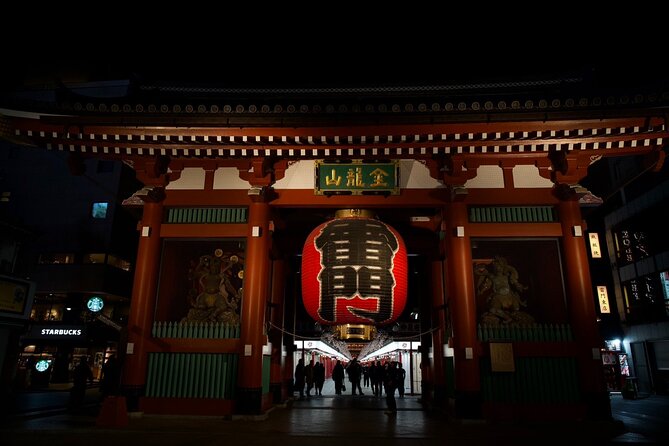
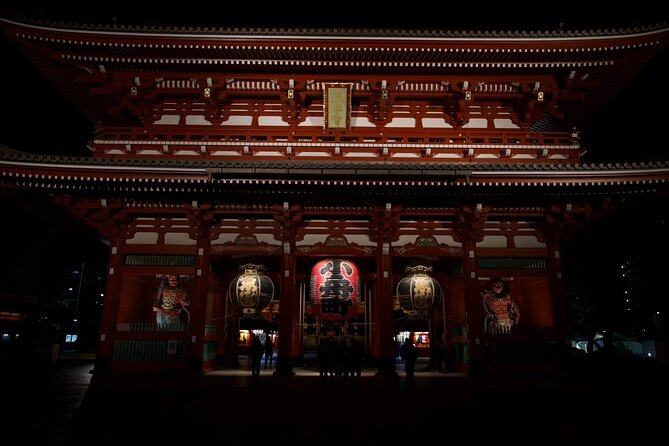
Sensō-ji is one of Tokyo’s best-known temple sites, dedicated to Kannon, the goddess of mercy. The iconic Kaminarimon gate is the visual anchor, but the experience is also about the feel of the grounds as you move through them on foot.
Going after the main daytime crowd is a big reason this tour works. The area tends to be less chaotic, so you can look around and absorb details you might otherwise miss.
The main catch is the closing time. The tour information notes that the main hall closes at 6 PM, so entry may not be possible if you arrive later. Even if that happens, you can still enjoy the gate views and the surrounding atmosphere, which is still valuable for orientation and night photography.
If you are planning your evening, treat Sensō-ji timing like a checklist item. If your schedule is flexible, earlier in the evening keeps more options open.
Asakusa Shrine next to the temple grounds: a calmer Shinto pause
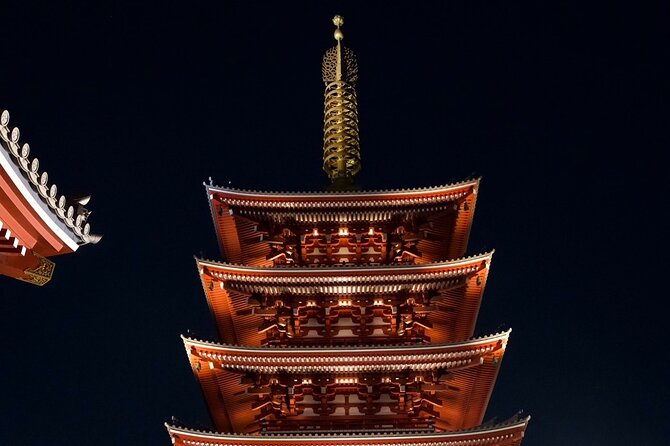
Right beside Sensō-ji is Asakusa Shrine. It is a historic Shinto shrine connected to the three men who founded Sensō-ji. The shrine dates back to the 17th century and is noted for surviving World War II.
Why this stop matters on a guided walk is that it adds balance. You are not only focused on the big temple complex. You also get a chance to compare how different spiritual spaces feel and how they connect to the same neighborhood.
At night, the shrine can feel quieter and more reflective than the shopping lanes. That makes it a good moment to slow down, regroup, and get a better sense of how the area holds both everyday life and long-standing tradition in the same place.
Hanayashikidori: the street named for Japan’s oldest amusement park area
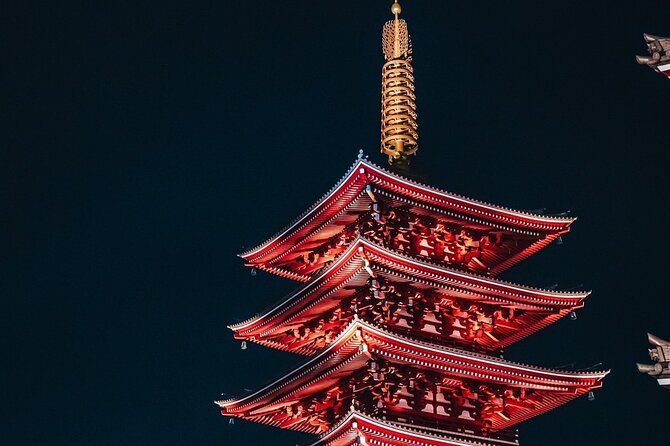
After the shrine, the route leads you toward Hanayashikidori Street. This area is named after Hanayashiki, described as Japan’s oldest amusement park. Even if you do not go into any rides or museums, the street layout and storefront mix give you a sense of Asakusa as a place where history and entertainment sit side by side.
This stop is also a useful breather. By this point in the walk, you have already seen the headline sights. Now you transition into the surrounding neighborhood energy, with shops and restaurants and a more everyday feel.
You might treat this segment as your chance to spot where you want to return later for snacks, a casual meal, or a dessert after dinner.
Hoppy Street ending: where the tour turns into dinner plans
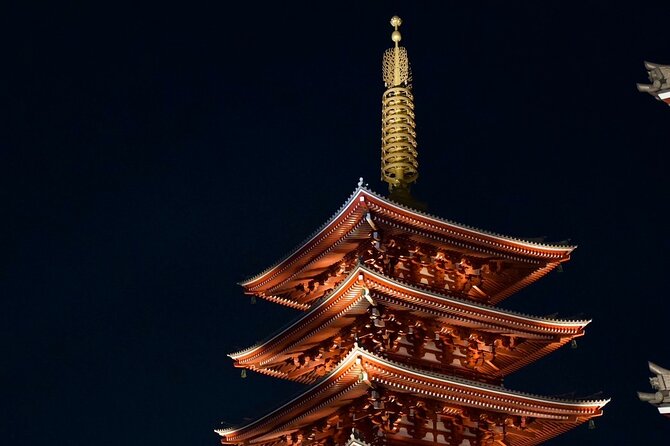
The tour finishes at Hoppy Street. This is famous for its izakayas, Japanese pubs, where you can order a local drink called Hoppy.
The best part here is the practicality. You are not ending in some random corner far from food. You are ending right where the dinner options start, and you can walk in and choose based on your mood. If you want a lively start to your meal, this is a straightforward place to do it.
Since food and drinks are not included in the tour, ending near izakayas is a smart match. You can keep your stomach happy without worrying about whether you should be ordering right away during the walk.
If you plan to stay out late, Hoppy Street is an easy springboard for a second round of wandering after dinner.
Price and value: $34.29 for context, pacing, and expert guidance
At $34.29 per person for about 1 hour, the value comes from what you gain, not what is included. There are no meals or drinks included, and the listed admissions for the stops are free. So you are paying mainly for the guide, the structured route, and the storytelling that turns famous locations into something you can understand quickly.
The small group size (max 8) is part of that value too. In a compact area like Asakusa, being in a larger group can dilute your experience and slow you down. Here, the pace tends to stay manageable, and the guide can tailor the moment.
Reviews also point to strong guide performance. Takumi is praised for being excellent and making the evening walk both enjoyable and informative. Mio is praised for being bubbly and fun, with backstory that made even a brief visit feel more meaningful. That lines up with the real payoff of this kind of tour: you leave knowing what you just saw.
If you are short on time and want your Asakusa evening to make sense fast, this price can feel fair.
Why the guide stories matter more than you expect
You can read about temples and shrines later. The guide experience is different because it is happening while you are standing in front of the sights.
That is where the reviews click. When Mio gave context about the temples, streets, and culture, the walk became more than a photo stop. When Takumi guided an evening walk that matched what guests wanted, it helped them connect with what they had already seen during the day.
This matters if you are a first-time visitor to Tokyo. It also matters if you have already walked Asakusa in daylight and realized you were mostly moving from landmark to landmark. A nighttime guide gives you a second lens, and you come away with better mental notes.
In other words, you are not paying for somebody to walk next to you. You are paying for a sense of direction and meaning while the streets are at their best for an evening stroll.
Who should book this Asakusa night walk
This tour fits best if you want:
- A starter plan for your first Asakusa evening
- A short activity before dinner that does not steal hours
- A guided route that helps you understand what you are seeing at Sensō-ji and Asakusa Shrine
- An easy way to switch from sightseeing mode to dinner mode, since you end at Hoppy Street
It is also described as suitable for most travelers and runs with near public transportation access. If you like walking at a comfortable pace and you enjoy cultural stories tied to the places you see, you will probably enjoy this format.
Should you book this Asakusa night tour?
If your goal is to get oriented in Asakusa after dark, yes, you should consider booking. The structure is strong for an evening, the route connects the big sights to the dinner streets, and the guide element is clearly the main reason people recommend it, including praise for Takumi and Mio.
Hold back only if your schedule is tight around 6 PM and you specifically need entry to the main hall at Sensō-ji. If you can start earlier, you keep more options open.
Otherwise, this is a smart, time-efficient way to turn a famous neighborhood into a night you remember, and then turn that momentum into an easy izakaya dinner at the end.
FAQ
How long is the Asakusa Night Evening Walking Tour?
The tour is approximately 1 hour.
What is the price per person?
The price is $34.29 per person.
Where does the tour start?
The tour starts at Burger King Asakusa Azumabashi, in the Kaminarimon area.
Where does the tour end?
The tour ends at Hoppy Street (Hoppy St, Asakusa).
Is the guide English-speaking?
Yes, the tour includes an English-speaking guide.
Do I need a printed ticket?
No, the tour uses a mobile ticket.
Are admissions included for the stops?
The tour listing notes free admission at the stops, such as Kaminarimon Gate, Nakamise Shopping Street, Sensō-ji, and Asakusa Shrine.
Does the tour include food or drinks?
No. Food and drinks are not included.
What is the maximum group size?
The tour has a maximum of 8 travelers.
Is there anything to know about Sensō-ji closing times?
The tour information notes that the main hall closes at 6 PM, so entry may not be possible if you arrive after that time.
Is cancellation free?
Yes, you can cancel for a full refund if you cancel at least 24 hours in advance.
More Evening Experiences in Tokyo
- Tokyo Night Foodie Tour in Shinjuku – Seasonal Sushi, Wagyu Beef
★ 5.0 · 1,161 reviews - Tokyo: Daikoku JDM Car Meet & Night Car Culture Tour
★ 4.8 · 626 reviews - Tokyo After 5: Authentic Japanese Food & Drink Night Tour
★ 4.5 · 560 reviews - Tokyo: Samurai Entertainment Night Show in Kanda Shrine
★ 4.6 · 417 reviews
Fresh options around Tokyo
- Tokyo: Imperial Palace East Gardens and Tokyo Station Tour★ 5.0 · 16 reviews
- Tokyo Shibuya and Harajuku Walking Tour With A Guide★ 4.5 · 16 reviews
- Half-Day Local Tokyo Tour in Adachi Market and Shibamata★ 5.0 · 16 reviews
- Private Kamakura Early Morning Tour (Tokyo Departure Available)★ 5.0 · 16 reviews
- Shibuya All You Can Eat & Drink Private Tour★ 5.0 · 16 reviews
- Hands On Wagyu Sushi Making Experience★ 5.0 · 16 reviews
- Shibuya Bar Hopping Adventure Unique and Drank Experience★ 5.0 · 16 reviews
- Kamakura Full Day Walking Tour with Local Expert Guide and Pickup★ 4.5 · 16 reviews
Walking Tours, compared.
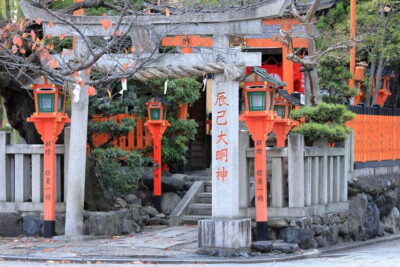
Kyoto Geisha Walking Tour: Gion District & Hidden Gems
Read our review →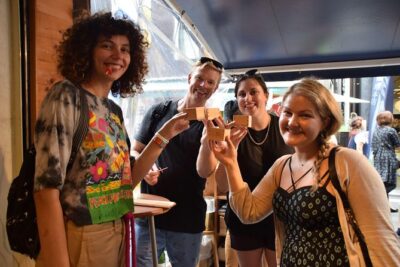
Tokyo Tsukiji Fish Market Food and Culture Walking Tour
Read our review →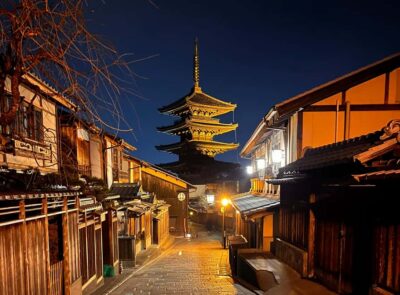
Gion Magical Night Walking Tour with Geisha Trivia
Read our review →
Imperial Palace and Shogun Historical Walking Tour
Read our review →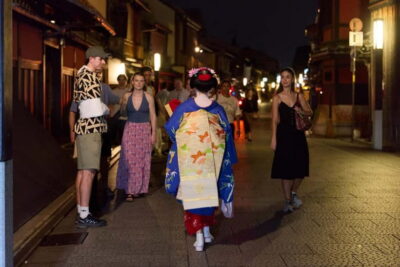
Gion Geisha District Walking Tour – Stories of Geisha
Read our review →
Shinjuku Local Bar and Izakaya Guided Walking Tour
Read our review →
Browse the lists this tour appears in