
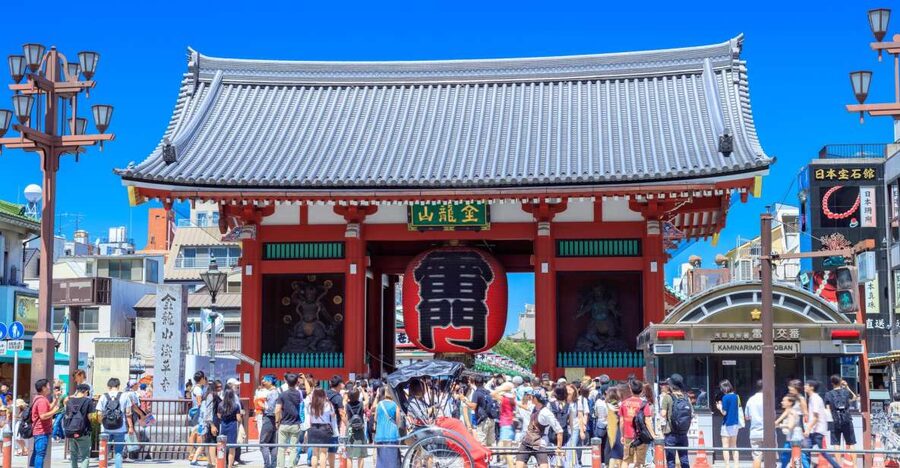
Reviewed · HISTORICAL TOURS
Asakusa: 3.5-hour Big-picture History Walk
Japan makes more sense in Asakusa. This 3.5-hour walk turns major landmarks into a clear story about 300 years of isolation, reopening to the world, and how daily life grew from it.
I especially like how the guide uses each stop to explain the big ideas, not just the postcard views. And I also like the pacing, with breaks built into snack time and the route, so you can keep going without feeling rushed.
One thing to plan for: there is a moderate amount of walking, and the tour is not listed as suitable for people with mobility impairments.
Key takeaways
- Isolation to reopening, explained using real symbols and trade history
- Two religions in Japan, shown as lived practice, even among shared worshippers
- Sacred temple space plus secular entertainment, right next to each other
- Edo-era nostalgia through side streets and old-school shopping lanes
- Small group of up to 8, with headsets for clear English for groups of 3+
Entering Asakusa With the Right Big-Picture Lens
Asakusa is one of Tokyo’s most “explains-itself” neighborhoods, but it takes the right guide to connect the dots. This walk is built for that. You’re not only moving from gate to temple. You’re getting the why behind what you see, piece by piece, as the route flows from pier area to temple grounds and into side streets.
The best part is that the history is practical. You’ll get answers to questions that normally sound too broad for a single afternoon, like why Japan closed itself, why the Netherlands mattered during isolation, and what changed when the country reopened. You’ll also hear how 19th-century Japanese art influenced the world, including a line that links to French Impressionists.
More Walking Tours in Tokyo
- Tokyo Tsukiji Fish Market Food and Culture Walking Tour
★ 5.0 · 3,184 reviews - Tokyo: Imperial Palace and Shogun Historical Walking Tour
★ 5.0 · 2,251 reviews - Tokyo: Shinjuku Local Bar and Izakaya Guided Walking Tour
★ 4.9 · 1,794 reviews
Is $88 Worth It for a 3.5-Hour History Walk?
At $88 per person for 210 minutes, you’re paying for three things that matter in Tokyo: time, expert interpretation, and small-group comfort. The group is capped at 8, so you’re less likely to lose the guide when you stop for explanations, and the route has been structured to keep moving without feeling like a checklist stamp.
You also get a few value add-ons that make the experience easier to enjoy:
- English-speaking certified guide
- Headsets if you’re in a group of 3 or more, which really helps on crowded streets
- A selection of freshly made Japanese traditional snacks and sweets
That snack break sounds small, but it changes the whole tone of a history walk. It turns “information hour” into “walking hour,” and you’re less likely to rush the route just to get to the next stop.
Meeting at Kaminarimon, Then Getting Oriented Fast
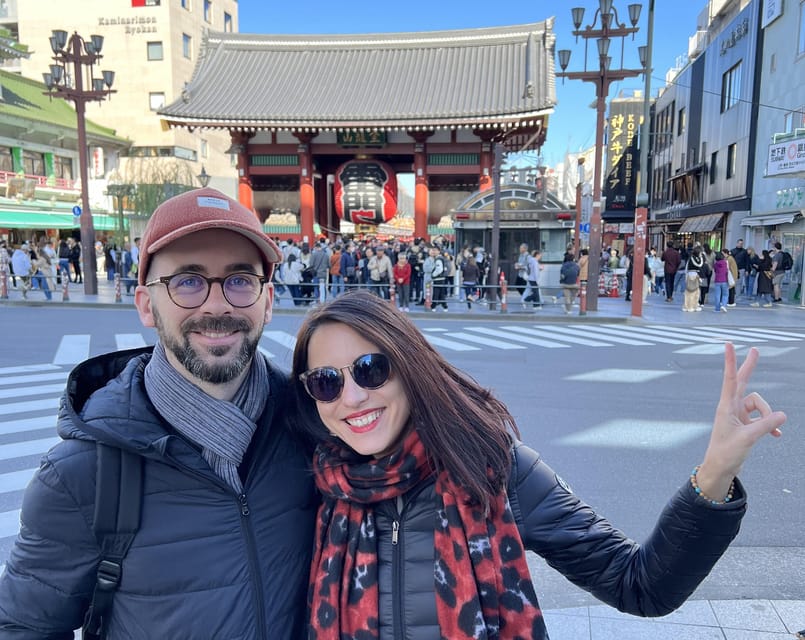
The meeting point is easy to find if you follow the specifics. Meet in front of a Burger King restaurant right next to Exit 4 of Asakusa subway station on the Ginza line (G19). From there, you’re set up for the first phase of the story in the Kaminarimon area.
I like this kind of start because you’re not dropped into the middle of tourist crowds with no framework. You’re heading into Asakusa with an idea of what you’re looking for, so landmarks feel like clues instead of separate stops.
Tokyo Cruise Asakusa Pier: Where the City’s Story Gets Spatial
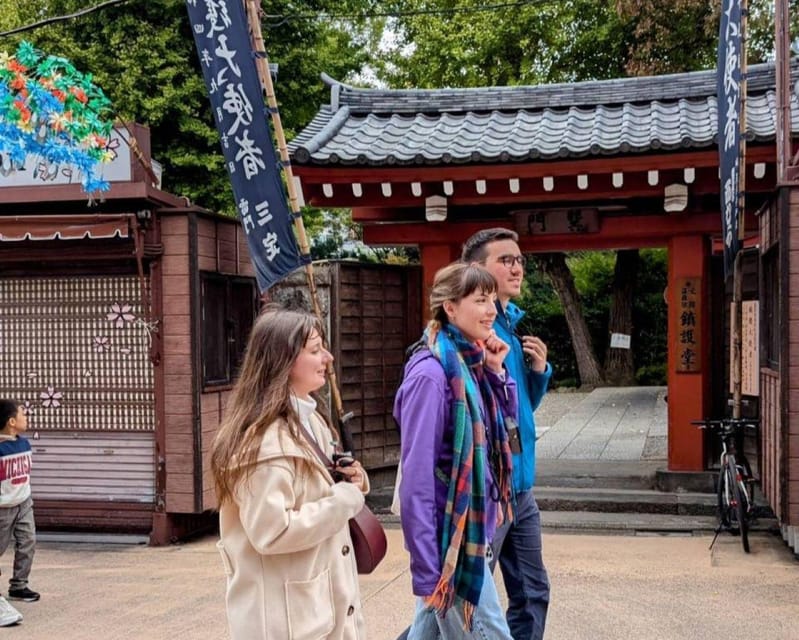
The route includes a guided stop at Tokyo Cruise Asakusa Pier for about 15 minutes. This is a smart early inclusion. Looking at the river and the surrounding area helps you understand why trade, foreign contact, and Japan’s shifting openness were not abstract ideas. They were geography and access.
Even if you’re not doing a cruise, the pier area helps your brain build a map. From there, it’s easier to grasp why certain neighborhoods became gateways and why later changes in the world reshaped Tokyo’s rhythms.
Same corner of Japan, a different kind of day:
- Mt Fuji and Hakone 1-Day Bus Tour Return by Bullet Train
★ 5.0 · 26,383 reviews - 1-Day Tokyo Bus Tour
★ 5.0 · 14,250 reviews - Tokyo: TOKYO SKYTREE® Admission ticket
★ 4.5 · 11,192 reviews - Tokyo: teamLab Planets TOKYO Digital Art Museum Entry Ticket
★ 4.6 · 9,779 reviews
Asakusa Culture Tourist Information Center: The Place for the Big-Think Framing
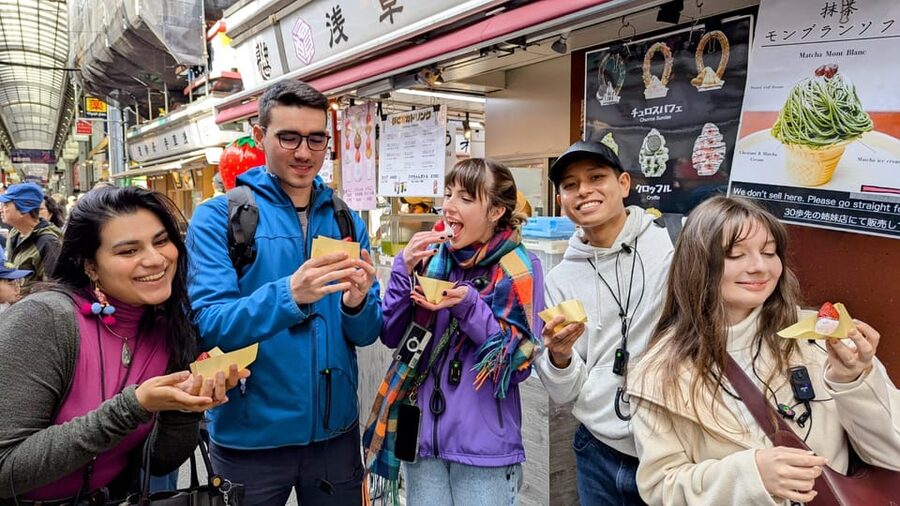
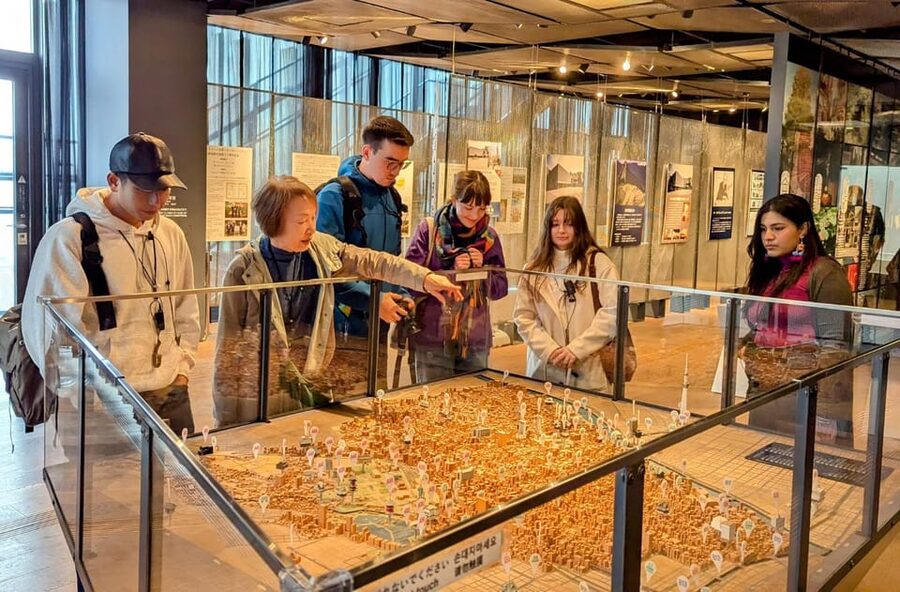
Next you spend about 30 minutes at the Asakusa Culture Tourist Information Center with guided context. This is where the tour’s “big-picture” promise really shows, because you’re gathering story threads before walking deeper into the temple district and shopping lanes.
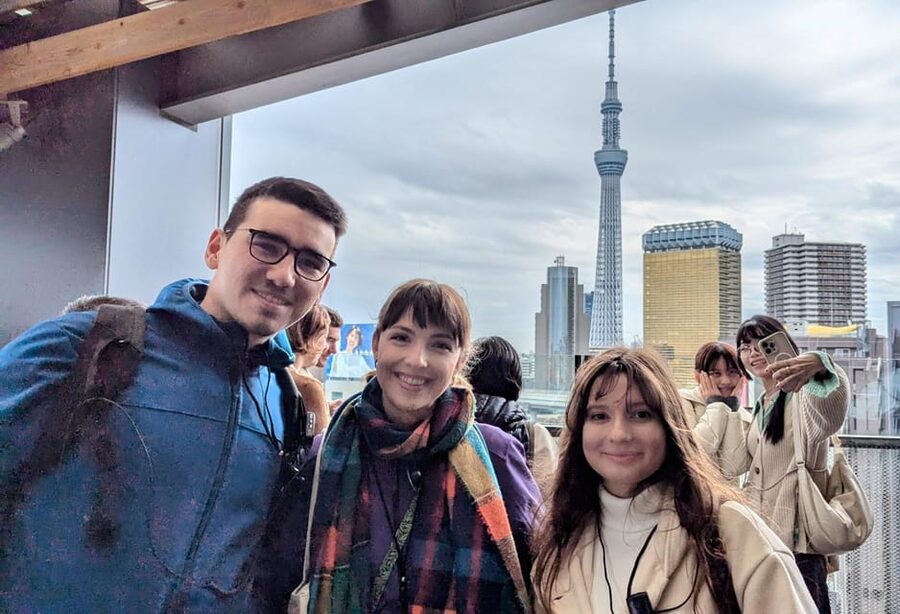
A highlight from past participants is how guides can connect what’s in front of you to what you’ll see in the broader Tokyo view. For example, at this point in the tour you might hear a note about Tokyo Skytree and the playful Japanese wordplay around 634 meters, broken down as roku-san-yon. It’s the kind of detail that makes Japan feel less like trivia and more like language and culture working together.
If the guide points out a viewpoint from the facility’s rooftop area, take a moment. That kind of overhead perspective helps you understand how old neighborhoods sit inside a modern city grid.
Kaminarimon Gate: The Shortcut to Power, Protection, and Meaning
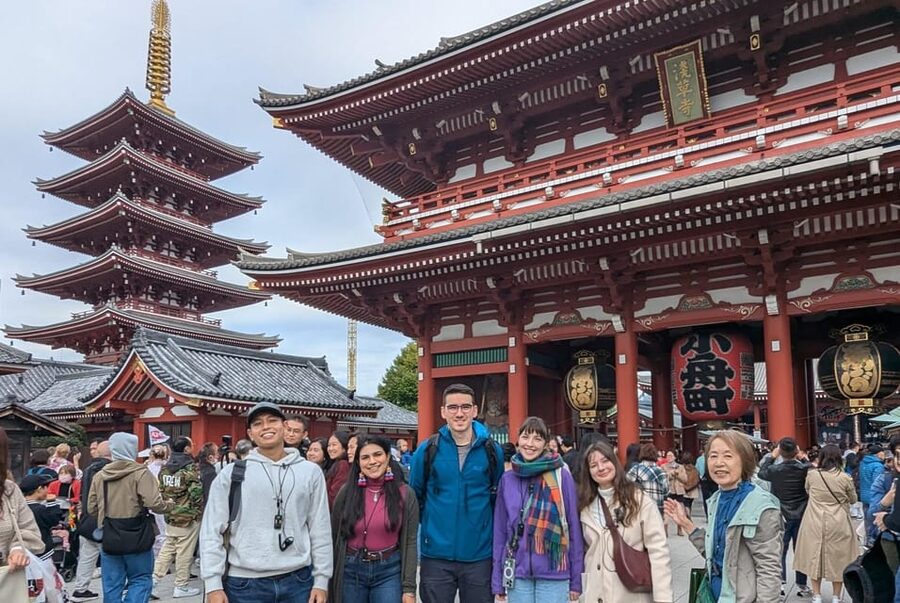
From the information center, you move toward Kaminarimon (about 15 minutes guided). This is a classic Asakusa entrance, but on a normal visit it can feel like “just a big gate.” Here, it becomes a story starter.
I like that the tour treats gate space as cultural messaging. You’re guided to notice what the gate represents and how it connects to the larger sacred area ahead, which makes your later time at Sensō-ji feel more intentional, not just scenic.
Nakamise Shopping Street: Tradition With a Mission
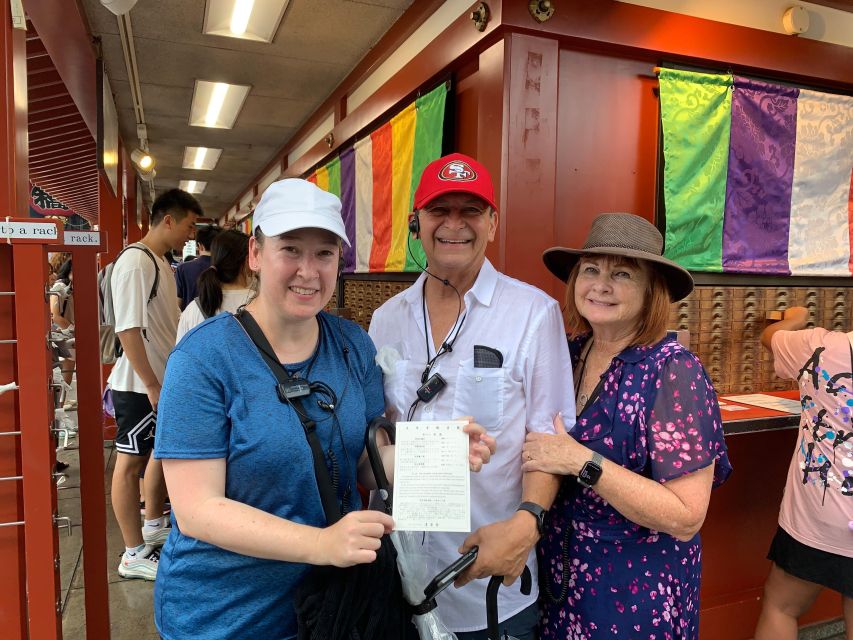
Nakamise Shopping Street takes about 30 minutes, guided and walk-through style. This is where the tour finds balance between culture and convenience.
You’ll get time to experience the street atmosphere without being told to shop. The best part is that the shopping lane is used as context, not a pressure cooker. It’s a place where you can feel how visitors and locals move through religious space, and how commerce grew right alongside shrine and temple life.
Also, snack time often slots in around here. You’ll have that selection of freshly made traditional sweets and snacks as part of the included experience, so you can taste what you’re seeing rather than only hearing about it.
Practical tip: if you want photos, go when the crowd thins even slightly. Headsets help, but you still need your eyes free for details.
Hōzōmon Gate and Sensō-ji: Sacred Space, Plus the Secular Just Next Door
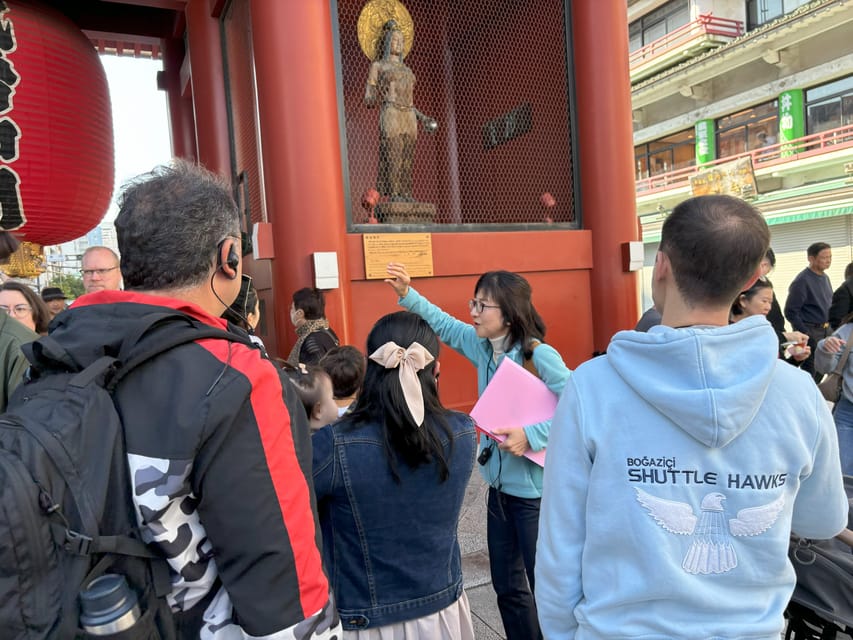
You’ll spend time at Hōzōmon Gate (about 15 minutes guided) and then a longer 45-minute guided block at Sensō-ji Temple. This is the emotional center of the walk.
Here’s what I like about this tour’s approach: it doesn’t treat the sacred area as sealed off. It explains how human nature swings between sacred and secular life. Right near the temple zone, you’ll talk about how this area used to be a big entertainment zone before districts like Shinjuku and Shibuya became the main nightlife magnets.
That framing changes how you see the streets around the temple. Instead of thinking, temples are quiet islands, you start noticing how religious centers often sit inside a broader urban social life.
At Sensō-ji, expect a guided pace that gives you time to understand what you’re looking at. It’s also where a good guide makes crowd management feel effortless, like you’re moving with purpose rather than getting shoved around.
Asakusa Shrine and Yōgō-dō Pavilion: Two Religions, Same People
After Sensō-ji, you go to Asakusa Shrine (about 15 minutes guided), then the Yōgō-dō Pavilion (about 15 minutes). This part of the tour is built around a key idea: Japan’s two major religions have coexisted for a long time, even with shared worshippers.
This is one of the tour’s best themes because it explains something visitors often misunderstand. Japan’s religious landscape is not usually a strict either-or system in real life. You’ll hear how traditions complement each other, and how that shows up in daily behavior, not only in rituals.
I also like that the Yōgō-dō stop is treated as a “why it matters” moment. That keeps it from feeling like an extra detour. It becomes another piece in the puzzle of how faith functions in ordinary Tokyo life.
Asakusa Nishi-sandō and Asakusa Mokubakan: Quiet Nostalgia Meets Real Daily Flow
The route continues into Asakusa Nishi-sandō Shopping Street (about 15 minutes) and then to Asakusa Mokubakan (about 15 minutes guided). Together, these stops help you feel the neighborhood beyond the biggest temple front door.
Nishi-sandō is described in the tour framing as a smaller shopping area with a quieter, more nostalgic mood. That matters, because it gives you a breather from peak temple-and-market energy, and it shows how people actually live around these famous sites.
At Mokubakan, the guide’s role is again critical. You’re not just looking at a building. You’re getting context that makes the stop feel connected to the tour’s larger themes of culture changing over time while still staying recognizable.
If you’re the kind of person who likes details about everyday history, this pair of stops tends to click.
Hoppy Street: When Postwar Grit Shows Up in Old-Style Pubs
Hoppy Street is another guided walk-through stop for about 15 minutes, and it fits perfectly with the tour’s theme of sacred and secular side-by-side.
This lane is associated with old-style Japanese pubs and a postwar working-class energy. The tour framing emphasizes resilience and the everyday human side of city life. You’re basically seeing how communities built social spaces near major cultural sites.
This is also where you’ll feel the “dual nature” of Asakusa. On one block you’re in spiritual gravity. On the next, you’re in social life, food smells, and the kind of local atmosphere that doesn’t require a big headline.
What You’ll Walk Away With: The Isolation, Reopening, and Art Connection
By the end of the walk, you’re not just carrying photos. You’re carrying a mental map of Japan’s turning points:
- Why Japan closed itself and how it chose specific trade partners when it was isolated
- The kind of symbols you’ll see that reflect the transition toward reopening
- How Japanese art in the 19th century influenced the world, including its pull on French Impressionist painters
- How cultural parallels show up in surprising ways, including a discussion of dragons’ roles on both sides and how similar human mindsets can appear across time
This is the kind of payoff that makes future Tokyo visits easier. Even if your next stop is far from Asakusa, you’ll notice the patterns the guide taught you.
Who This Walk Fits Best
This tour is best for people who want more than a “see it, snap it, leave it” visit. It’s also ideal if you like learning in the real setting, not in a classroom.
You’ll likely enjoy it if:
- You’re interested in Japanese history and religion but want it explained in plain language
- You appreciate guides who handle crowds and keep the pace comfortable
- You like architecture, old streets, and the way everyday life forms around famous places
It’s less ideal if you need step-by-step mobility support. The tour is not listed as suitable for mobility impairments, and you do face some walking on foot.
Should You Book This Asakusa Big-Picture History Walk?
I think you should book it if you want the most meaning per hour. For 210 minutes, the tour connects isolation and reopening, faith and daily practice, and sacred and secular street life into one coherent story. The small group size, headsets when needed, and included snacks help you stay comfortable enough to actually absorb the explanations.
Skip it if you only want quick photos and you dislike guided interpretation. If you’d rather wander unguided through temples and shopping streets at your own rhythm, you might find a self-paced plan more your style.
If you do book, bring comfortable shoes and water. And when the guide starts linking a street detail to a bigger historical idea, lean in. That’s where the value really lives.
FAQ
How long is the Asakusa Big-Picture History Walk?
It runs for 210 minutes, or about 3.5 hours.
How much does it cost per person?
The price is $88 per person.
What size is the group?
The tour is a small group limited to 8 participants.
What language is the tour guide?
The tour is in English, and English audio support is included.
What’s included in the tour besides the guide?
You get headsets for groups of 3 or more, plus a selection of freshly made Japanese traditional snacks and sweets.
Where do I meet the guide?
Meet in front of a Burger King restaurant next to Exit 4 of Asakusa subway station (G19) on the Ginza line.
What should I bring?
Bring comfortable shoes and water. Bottled water is recommended, and vending machines are available.
Is the tour suitable for people with mobility impairments?
No, it is not listed as suitable for people with mobility impairments.
FAQ
What is the cancellation policy?
Free cancellation is available up to 24 hours in advance for a full refund.
Does the tour run in all weather?
It operates in all weather conditions, so dress appropriately for rain or cold.
More Historical Tours in Tokyo
- Tokyo: Imperial Palace Japanese History Walking Tour
★ 4.9 · 987 reviews - Tokyo: Shinjuku Historical Walking Tour & Secret Backstreets
★ 5.0 · 530 reviews - Yanaka Walking Tour: Historic and Traditional District of Tokyo
★ 5.0 · 530 reviews - Mt. Fuji Heritage Tour: Traditional Villages, Lakes & Shrine
★ 4.5 · 509 reviews
Fresh options around Tokyo
- Tokyo: Nikko Kegon Falls Lake Chuzenji Toshogu Temple & More★ 4.9 · 12 reviews
- Tokyo: Samurai History Walking Tour★ 5.0 · 12 reviews
- Harajuku: Kawaii Fashion and Pop-Culture Tour★ 4.7 · 12 reviews
- Tokyo: Mt. Fuji & Lake Kawaguchi Instagram Full Day Trip★ 4.1 · 12 reviews
- Shibuya Tokyo: Modern Kintsugi Workshop in Shibuya★ 5.0 · 12 reviews
- Tokyo: GTR Guided Daikoku Experience at Night★ 5.0 · 12 reviews
- Tokyo: Daikoku JDM Car Culture Tour★ 4.6 · 12 reviews
- Mt Fuji Private Day Trip from Tokyo with English speaking driver★ 5.0 · 13 reviews
Historical Tours, compared.
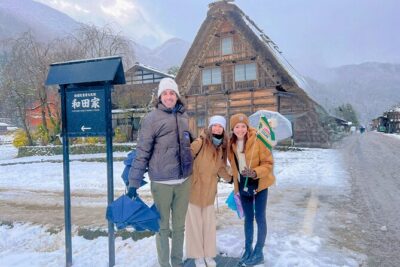
World Heritage Shirakawa-go and Experience Tours from Kanazawa
Read our review →
Imperial Palace and Shogun Historical Walking Tour
Read our review →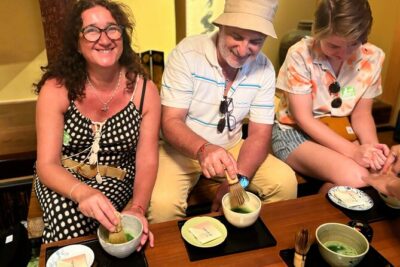
World Heritage Kyoto & Nara Uji Authentic Matcha Experience
Read our review →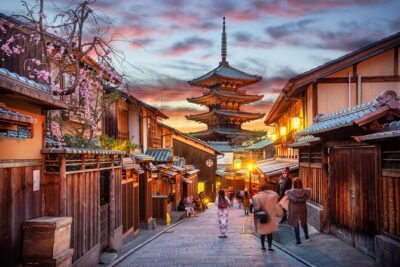
Kyoto Gion: 2-Hour Geisha Culture & History Walking Tour
Read our review →
World Heritage Shirakawa-go Morning Guided Tour
Read our review →
Hiroshima Historical Walking Tour – Why A-Bomb was Dropped
Read our review →
Hiroshima Peace (Heiwa) Walking Tour at World Heritage Sites
Read our review →Browse the lists this tour appears in