
Reviewed · TEA CEREMONIES IN KYOTO
Kyoto: Table-Style Tea Ceremony at a Kyo-Machiya
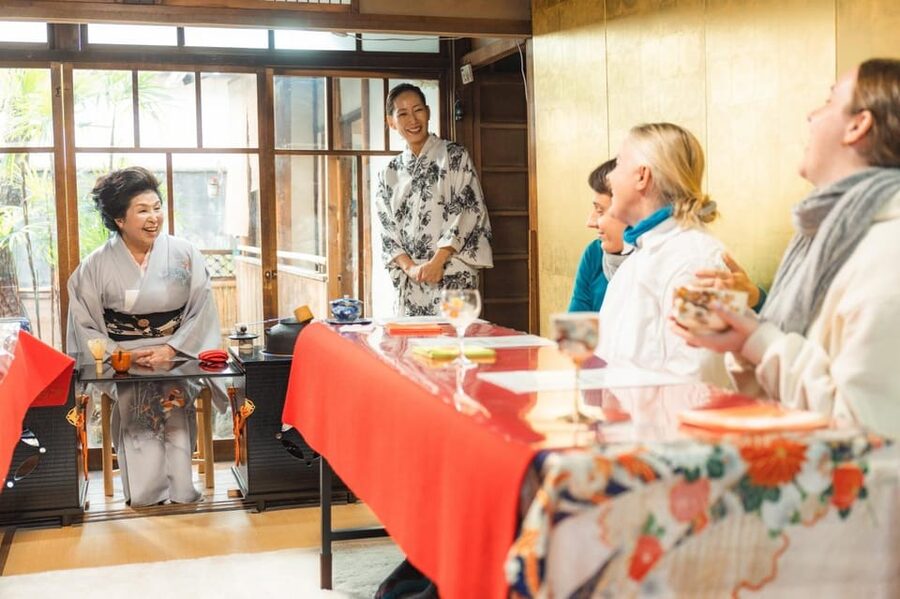
A chair-based tea ceremony feels like cheating, in the best way. You get the manners, the ritual, and the warm hospitality, without hours on the floor.
I love the comfort of sitting at a table and chair, and how you still learn the real tea etiquette step by step. You’ll also make creamy, frothy matcha yourself, then cap it off with writing your name in Japanese characters and taking home a personalized piece of calligraphy.
One thing to consider: this is a historic townhouse, and it’s not suitable for wheelchair users, so think about mobility and stairs before booking.
Key things that make this Kyoto tea ceremony memorable
- Chair seating instead of tatami so you can focus on the ritual, not your knees.
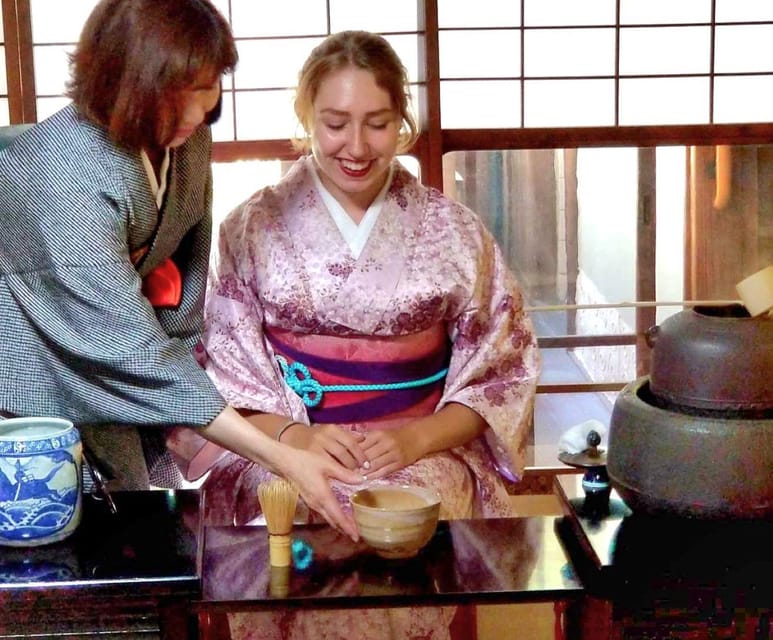
- Your own matcha with a bamboo whisk to create that thick, frothy texture.
- Photo-friendly moments with props like umbrellas, folding fans, and even a katana sword for images.
- More than tea: calligraphy plus flower arranging, so you leave with something you made.
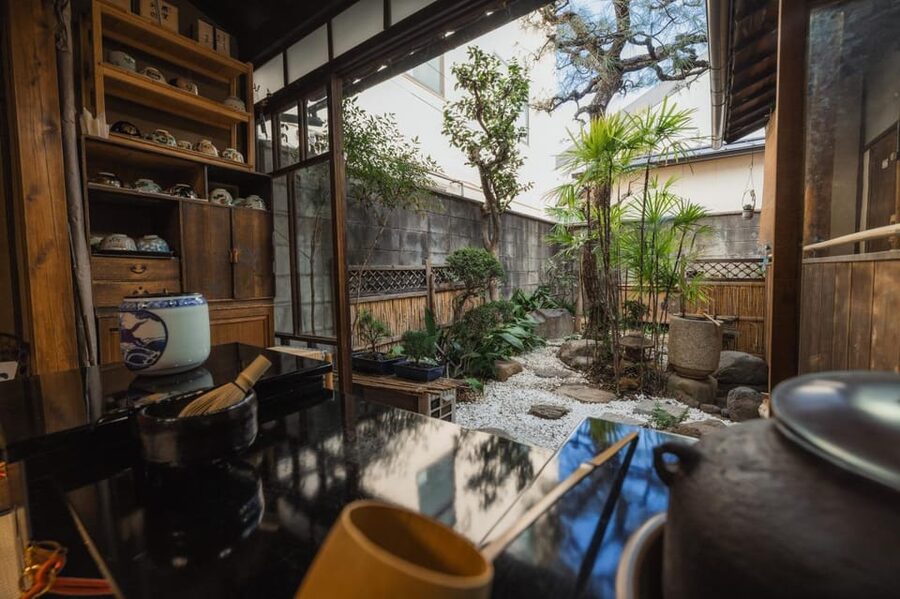
- Kyo-machiya charm in a 100+ year-old townhouse with garden and small shrine elements.
Table-Style Tea Ceremony in a 100-Year-Old Kyoto Townhouse
In Kyoto, tea ceremony often gets sold as something you endure. This version keeps the spirit and structure, but gives you a chair and table, so the experience stays relaxing and social.
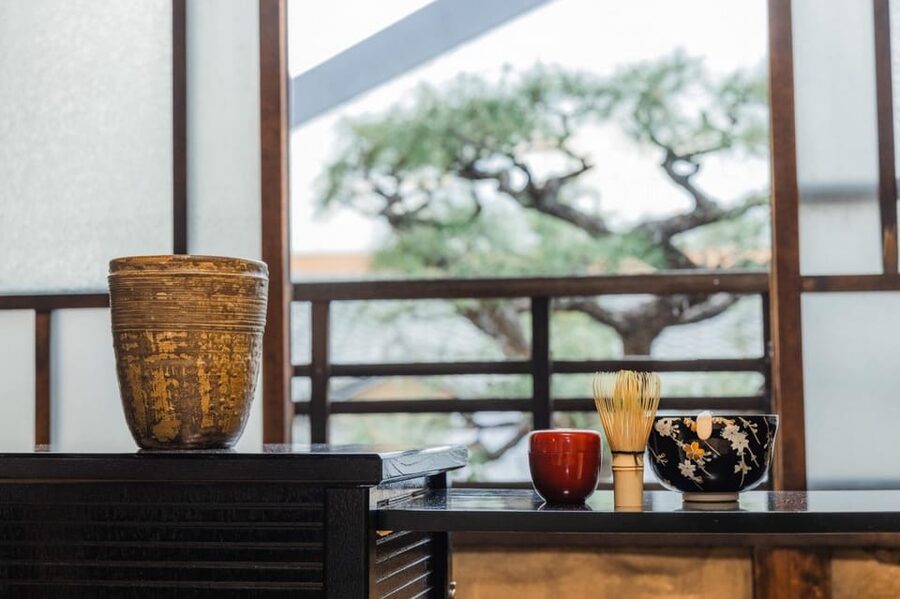
The setting is a +100 year-old traditional house, the kind of place that feels like it belongs to daily Kyoto life, not a performance hall. You also get to see antiques and traditional religious touches inside, including old Buddhist and Shinto altars, as part of the visit.
The whole feel is calm and personal. The pace is slow enough to learn the why behind the movements, and the hosts tend to work with you one step at a time, especially in smaller groups.
More Tea Ceremonies in Kyoto
- Kyoto: Tea Ceremony in a Traditional Tea House in Kiyomizu
★ 4.9 · 3,519 reviews - Kyoto: Tea Ceremony Ju-An at Jotokuji Temple
★ 4.9 · 3,207 reviews - Kyoto: 45-Minute Tea Ceremony Lesson Experience
★ 4.3 · 2,378 reviews
What You Do During the 90 Minutes, Step by Step
This is a tight 90-minute workshop, with activities woven together so you’re never just watching.
Welcome moment, plus tea culture basics
You start with a welcome drink. Depending on what’s available that day, you might get sake or juice, plus Japanese tea. Then comes a short teaching session where the hosts explain how the tea ceremony developed in Japan, plus the manners behind it, using PowerPoint presentations in English.
This matters because tea ceremony is really about respect and timing, not just the taste. When you understand that, even small details like how you receive a bowl or pause before sipping feel more intentional.
Purify yourself at the stone basin
Next is a hands-on tradition you can actually feel. You’ll experience the purification step at a stone basin in the garden, like you would at a shrine.
It’s a simple act, but it sets the mood fast. You stop thinking like a tourist and start acting like a guest.
Same corner of Japan, a different kind of day:
- PERFECT KYOTO 1-Day Bus Tour
★ 5.0 · 13,518 reviews - Kyoto: Fushimi Inari, Kinkakuji, Bamboo Grove 1 Day Bus Tour
★ 4.8 · 4,316 reviews - Kyoto Geisha Walking Tour: Gion District & Hidden Gems
★ 4.7 · 3,273 reviews - Kyoto: Gion Magical Night Walking Tour with Geisha Trivia
★ 4.9 · 2,393 reviews
Learn in the house, then sit at the tea setup
Before the main serving and making, you take a stroll through the townhouse. You’ll notice the architecture and the atmosphere, and the hosts point out what you should pay attention to while you’re in that space.
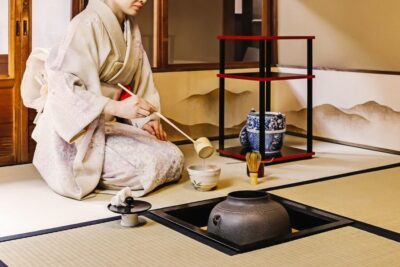
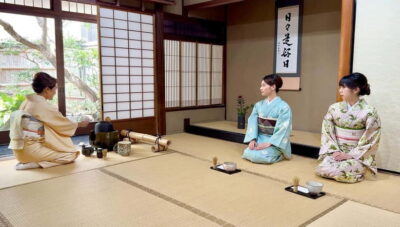
Then you move into the tea ceremony proper. The big difference here is that you sit at a table and chair, not on the floor. That changes the whole physical experience, and for many people, it makes it easier to concentrate on the etiquette.
Matcha making, plus the tasting
Here’s the part most people book for, and it lives up to it. You’ll learn how to prepare matcha using a bamboo whisk, and you’ll make your own so you can feel the texture change as you whisk.
Expect a creamy, frothy result. Then you taste the tea with the included sweets, and you get time to settle into the flavor instead of rushing through a sip.
A chance for fun photo moments
You also have dedicated moments for photos and videos. There are props like umbrellas, folding fans, and even a katana sword for picture-taking.
It’s not the entire ceremony, but it’s a nice touch if you want images that look like Kyoto, not like a quick stop outside a gate.
Calligraphy and flower arranging to finish
This is where the experience turns from a single skill into a multi-skill workshop.
You’ll do calligraphy by writing your name in kanji or hiragana. Afterward, you receive a hanging scroll or envelope with your name written in Japanese characters.
You also get a flower arranging experience, which adds that finishing touch of seasonal beauty and careful presentation. It’s peaceful work, and it makes the whole tea ceremony feel complete.
The Matcha, Sweets, and Welcome Drinks Part You Should Plan For
The meal-side details here are genuinely part of the value, not just a minor add-on.
Welcome drinks and included tastings
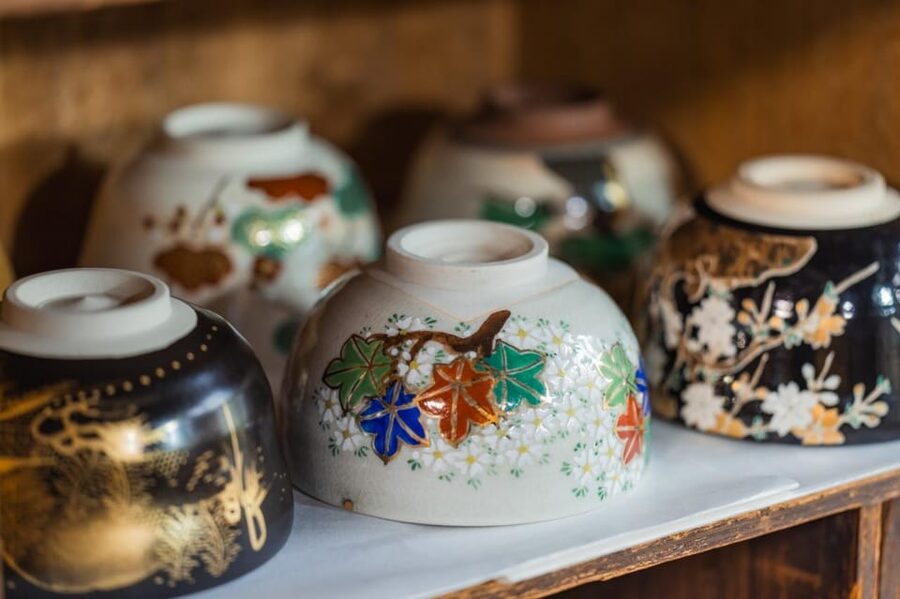
You’ll get a welcome drink, with options that may include sake or juice, and you’ll also enjoy Japanese tea as part of the session. The sweets are traditional pairings for tea, designed to match the flow of the ceremony and keep your tasting experience balanced.
Latte art using thick tea
One of the more unexpected inclusions is latte art using thick tea. It gives you a visual and hands-on break from only doing matcha, and it’s fun to watch and try.
If you like taking home a “how did they do that” memory, this is one of those moments.
Your own whisking creates the best learning
Making matcha yourself is where you really understand what “quality” means. The whisking technique affects thickness and foam, and you can taste the difference immediately.
And because you’re sitting comfortably at a table, you can focus on your technique without fighting for posture.
Tea Ceremony Etiquette You Actually Understand (Not Just Perform)
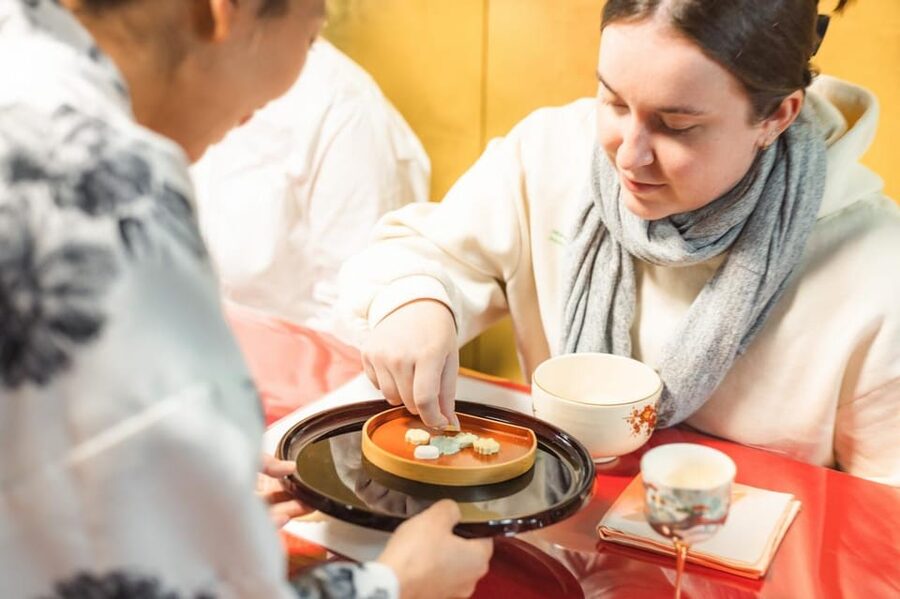
A lot of tea ceremonies teach you what to do, but not why. This one starts with the story and manners, then moves into actions you can repeat.
You’ll learn the reasons behind the ceremony steps, including how Japanese spirit and etiquette show up in small timing and hand movements. The hosts also guide you through preparation, so your role feels clear.
That clarity is a big reason the experience scores so high. You’re not left guessing. You’re learning the rhythm.
The House and Garden Details That Make It Feel Kyoto, Not Generic
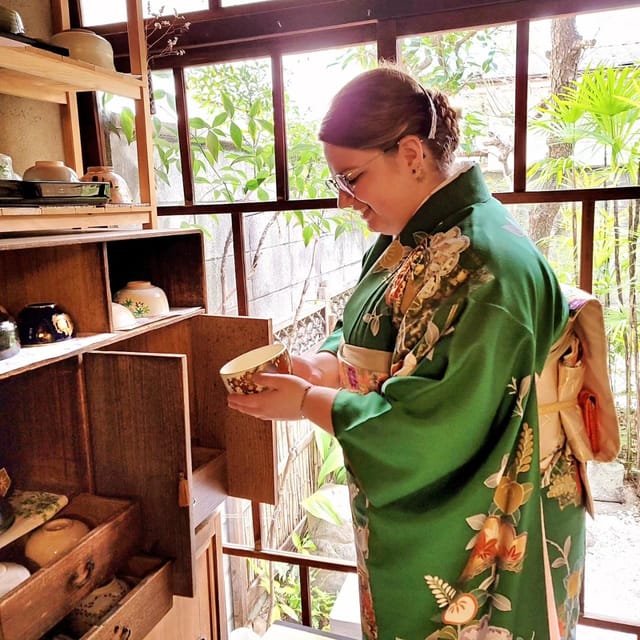
Location and setting matter for tea ceremony. This experience is in the southern part of Kyoto, in a historic area with a strong local identity tied to sake and old town life.
You’re also in a Kyo-machiya atmosphere, with a garden and a townhouse feel that helps you slow down. The purification basin in the garden isn’t just a prop. It’s part of the transition into the ceremony.
Inside, you can see traditional religious elements and antiques, so you’re not just sitting at a tea station. You’re in a space that explains, through objects and layout, why Kyoto tea feels different from tea done anywhere else.
Kimono Option: When It Adds Value, and When It’s Not for You
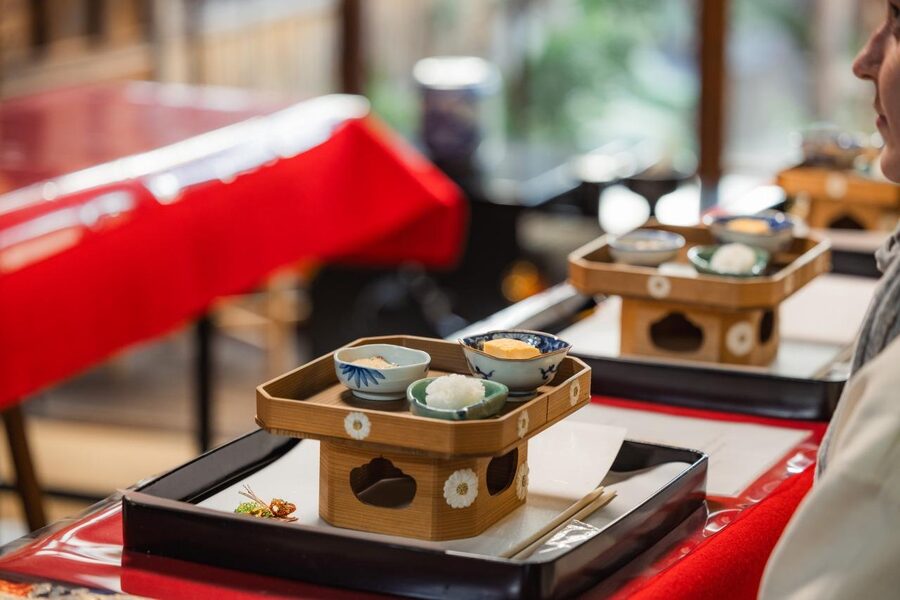
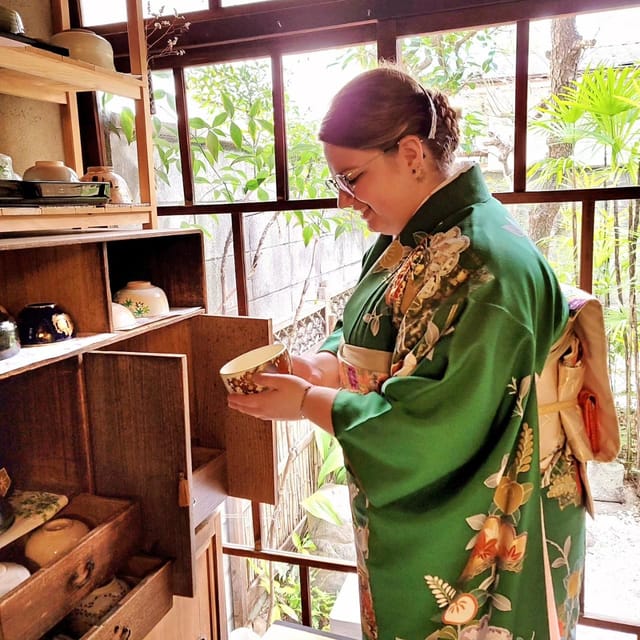
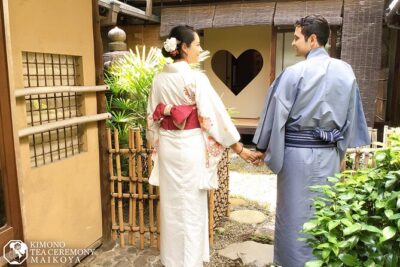
The kimono rental option is one of the best “effort to reward” upgrades in Kyoto activities. If you want photos that look and feel authentic, the outfit does a lot of the heavy lifting.
If you choose the kimono option, you’ll be able to wear it during the ceremony, and you’ll get help dressing for it. Many people also find it makes the whole experience feel more like stepping into another time.
Two practical cautions from the provided info:
- If you select kimono, arrive 30 minutes before the experience begins.
- For guests who are pregnant, the guide asks that you refrain from wearing a kimono for health and safety.
Price and Value: What $45 Gets You in 90 Minutes
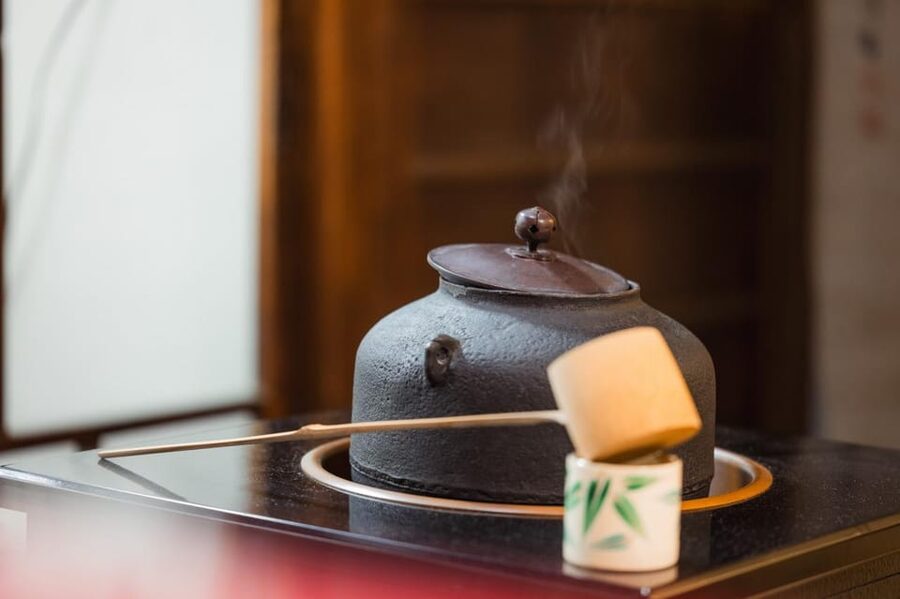
At $45 per person for 90 minutes, you’re paying for more than a cup of tea.
You get:
- The tea ceremony experience itself
- Traditional sweets
- A welcome drink, such as sake or juice
- Latte art using thick tea
- Matcha making, with a bamboo whisk
- Calligraphy experience, plus a hanging scroll or envelope with your name
- A flower arranging experience
- Kimono rental only if you select that option
- Private or small groups available (so the teaching can feel more personal)
That mix is why the value feels strong. A basic tea tasting might be shorter and lighter on active making. Here, you’re learning, doing, and producing something by the end.
If you’re on a first-time Kyoto itinerary, this is a practical “culture with skills” activity. It’s also easier than many cultural workshops because it’s fully explained in English.
Getting There From Kyoto, Osaka, or Nara Without Stress
This is on the outskirts of Kyoto, about 20 minutes by train from the meeting area.
From Kintetsu Kyoto Station
Take the express train about 15 minutes, get off at Kintetsu Momoyama-Goryo-mae Station.
From Keihan Gion-Shijo Station
Get off at Fushimi-Momoyama Station.
Walk directions once you’re at the station
From the stations, you head west on Otesuji shopping arcade. You’ll walk about 3 minutes, then turn right at the Mizuho Bank or the Rakuten mobile shop.
From Momoyama Station (JR), the walking route is a little different: head northwest, go straight, pass by a Gokogu shrine on the right in 300 meters, continue on Otesuji Arcade, turn right at Mizuho Bank or the Rakuten mobile shop, and walk about 2 minutes. You should see an old Kyoto townhouse with a blue curtain on the right.
Guides wearing kimono will be waiting for you at the meeting point.
Handy planning tip
No hotel pickup is included. I recommend building in extra time the first time you do this route, just so you’re calm when you look for that blue curtain.
Who Should Book This Table-Style Tea Ceremony?
This is a great fit if you want Kyoto culture that feels personal and hands-on.
You’ll like it if:
- You’re curious about tea ceremony but don’t want the physical challenge of floor seating.
- You want a full workshop with making matcha, calligraphy, and flower arranging.
- You like activities where hosts patiently guide you in English, step by step.
- You’d like an authentic townhouse setting without it feeling like you’re stuck in a bus group.
You should think twice if:
- You use a wheelchair. The activity is not suitable for wheelchair users.
- You’re considering kimono and you’re pregnant, since wearing one is discouraged for safety.
Should You Book It?
Yes, you should book this if you want a Kyoto tea ceremony that teaches you the meaning and gives you real participation.
For your money, you get a chair-based tea ceremony, matcha you whisk yourself, plus calligraphy and flower arranging, all inside a 100-plus-year-old townhouse. It’s also a smart option for people who want culture with fewer comfort tradeoffs.
If you can handle walking to the meeting spot and you’re okay with an older house layout, it’s an easy recommendation for a memorable Kyoto afternoon.
FAQ
Is this tea ceremony a chair-and-table format or floor seating?
It’s designed for comfortable chair seating instead of sitting on the floor.
How long is the experience?
The duration is 90 minutes.
Is there English instruction?
Yes, the instructor is English.
What is included in the price?
The included items are the tea ceremony, traditional sweets, welcome drinks (sake or juice), latte art using thick tea, calligraphy experience, a hanging scroll or envelope with your name written in Japanese characters, tea ceremony flower arranging, and kimono rental only if you choose that option.
Do I need to arrange kimono rental in advance?
You can reserve the kimono option by selecting it (via the availability options). If you choose kimono, please arrive 30 minutes before the experience starts.
Is hotel pickup included?
No, hotel pickup and drop-off are not included.
Is the experience wheelchair accessible?
No, the experience is not suitable for wheelchair users.
Fresh options around Kyoto
- Kyoto: Quiet and Graceful Tea Ceremony★ 4.5 · 19 reviews
- Oboro | Mindful Tea Ceremony in a 100-Year-Old Kyoto Teahouse★ 5.0 · 19 reviews
- Ikebana Traditional Japanese Art of Flower Arranging★ 4.5 · 19 reviews
- Kyoto Satoyama Cycling with Lunch and English Guide★ 5.0 · 19 reviews
- Tea Ceremony Experience in Traditional Kyoto Townhouse★ 5.0 · 19 reviews
- Kyoto International Party Solo Friendly Expats and Locals★ 5.0 · 19 reviews
- Kyoto: Amanohashidate Ine Funaya Tour★ 4.4 · 19 reviews
- Kyoto Private Food Tours with a Local Foodie: 100% Personalized★ 4.5 · 19 reviews
Tea Ceremonies in Kyoto, compared.
Tea Ceremony in a Traditional Tea House in Kiyomizu
Read our review →
Arashiyama Bamboo Forest, Monkeys, Matcha & Temple Tour
Read our review →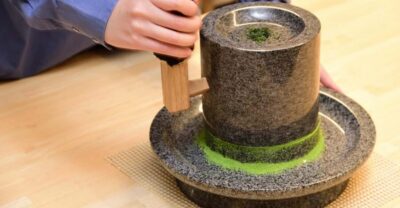
Tea Museum Tickets and Matcha Grinding Experience
Read our review →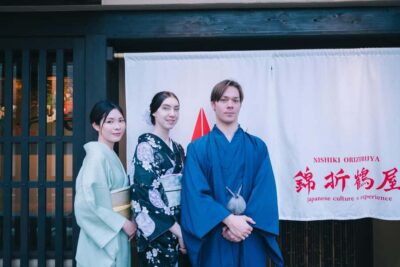
Tea Ceremony in 100-year-old Kyo-Machiya Townhouse
Read our review →Browse the lists this tour appears in