
Reviewed · TEA CEREMONIES IN KYOTO
Traditional Tea Ceremony Experience in Kyoto
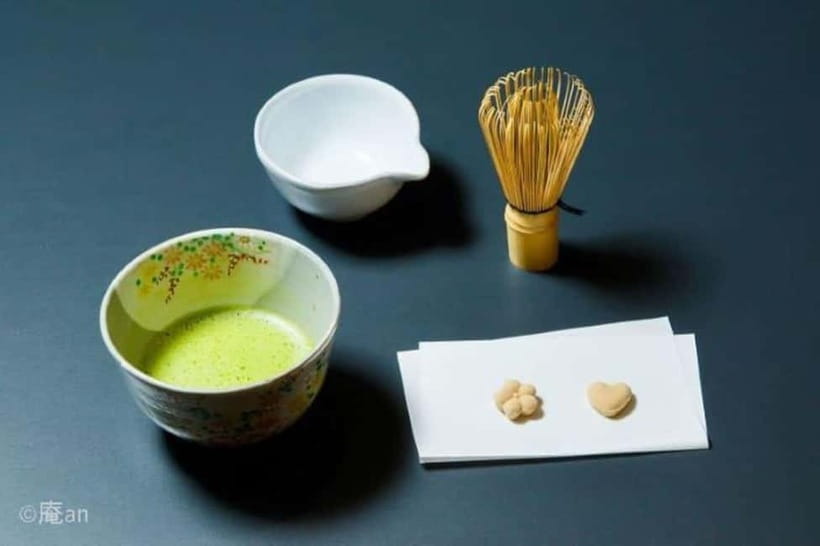
Kyoto is calmer than you expect. A traditional OTE-MAE tea ceremony near Gojo Station gives you a structured, hands-on look at how matcha culture works, without turning your day into a whole production. You sit at tables and chairs, sip a single-origin matcha, and get OHIGASHI (Japanese dried sweets) as part of the flow.
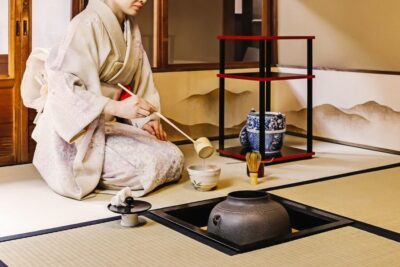
I especially like that the session focuses on the meaning behind what you do, not just the motions. You are guided through the steps, with explanation of the significance of utensils and movements, plus a demonstration showing how the matcha goes from powder to tea.
One thing to keep in mind: it is short, and the room can get busy. If you are sensitive to noise or you need lots of detailed English, plan to bring patience and good listening ears.
Key things to know before you go
- Single-origin matcha, served as part of your session, so you taste the idea, not just the lecture
- OHIGASHI (Japanese dried sweets) included, which helps balance the flavor of the tea
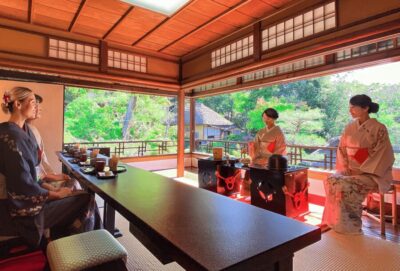
- Table and chair seating, so you can do a Kyoto tea ceremony without kneeling on the floor
- Step-by-step guidance with explanation of movements, utensils, and philosophy
- 30 minutes total, so it is a focused taste of tradition rather than an all-day program
- No certificate included by default, but a completion certificate option is available for a fee
Kyoto OTE-MAE tea ceremony, table seating and all
Kyoto’s tea ceremony tradition can sound intimidating. You hear words like ritual, posture, and years of training, and suddenly you think, This is not for me. The version offered here keeps the spirit of the traditional tea ceremony while making it practical for real travel schedules.
What makes it feel different is the setup. You are seated at tables and chairs. That means you can concentrate on the tea itself and the teachable moments, instead of spending half the experience fighting with your balance. In a city where a lot of cultural experiences expect you to be flexible, I like that this one starts with comfort.
Also, the session is branded as OTE-MAE, which signals a formal style of tea preparation. Even if you have never seen one before, the guide’s pacing helps you follow what is happening in a way that feels orderly, not like you are just watching a performance from across the room.
More Tea Ceremonies in Kyoto
- Kyoto: Tea Ceremony in a Traditional Tea House in Kiyomizu
★ 4.9 · 3,519 reviews - Kyoto: Tea Ceremony Ju-An at Jotokuji Temple
★ 4.9 · 3,207 reviews - Kyoto: 45-Minute Tea Ceremony Lesson Experience
★ 4.3 · 2,378 reviews
What you drink and snack: single-origin matcha plus OHIGASHI
This is not a tea sampler where you get a tiny sip and move on. You get to enjoy single-origin matcha as part of the ceremony experience. Single-origin matters because it gives you a clearer idea of character. Instead of mixing and blending your way through flavors, you taste matcha as a specific style and source.
Then comes the food pairing. You will be served OHIGASHI (Japanese dried sweets). Dried sweets may not be what you think of with matcha, but that pairing helps explain why tea ceremonies often treat sweets as part of the balance, not an afterthought. The sweetness and texture can soften matcha’s intensity and make the tea more approachable.
If you like food-and-drink culture that is not just about eating, you will appreciate that this feels planned. Tea and sweets show up together in a ritual order, and that order gives you a clearer sense of how the Japanese tea experience is meant to be felt.
How the 30 minutes actually works, steps and matcha making
You have about 30 minutes from start to finish. That time frame is long enough to learn, but short enough that you will leave with a real takeaway instead of fatigue. The session is structured around an OTE-MAE experience, which means you get a guided flow rather than a quick demo.
Here is what you should expect during your time:
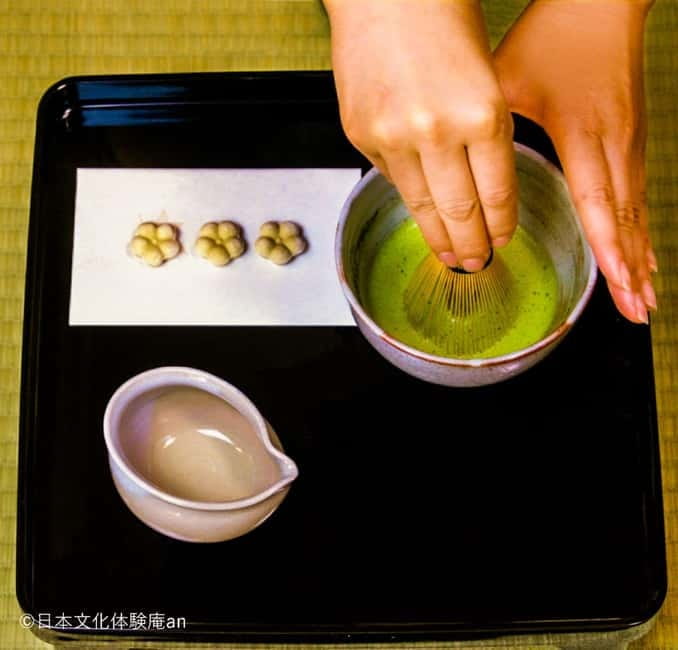
- The instructor guides you through the process, explaining the significance of each movement, utensil, and the philosophy behind the ceremony
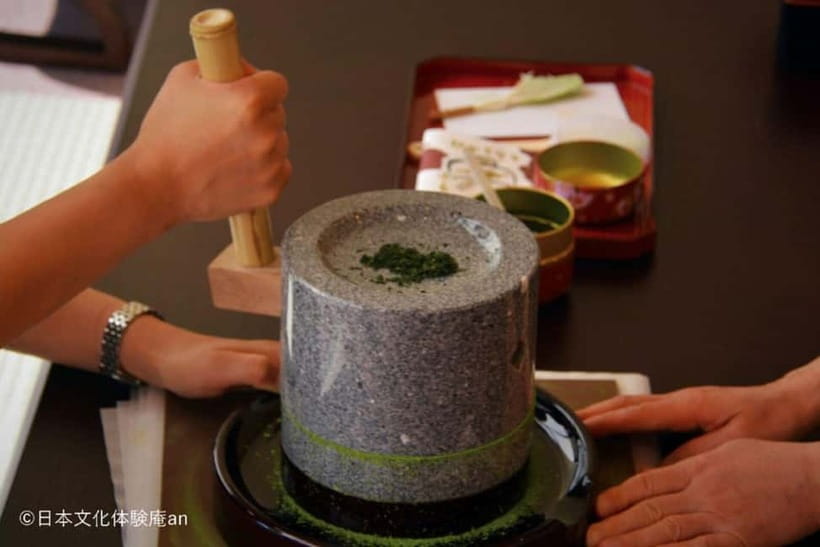
- You get a demonstration of how matcha is made into matcha tea, so you understand what you are drinking
- You enjoy your single-origin matcha, accompanied by OHIGASHI
One practical point: because it is short, the explanation has to be selective. In a perfect world, everyone hears every detail in their preferred language. In the real world, the information density is enough to be educational, but it may not cover every historical tangent you might want.
So if you are the type who loves deep background on who drank what and when, you might wish the talk went further. Still, the experience works well if your goal is to understand the basic logic of the ritual and learn enough to recognize what you are tasting and seeing.
Learning with a Japanese instructor and English support
The instructor is Japanese, and English translation is provided as much as possible. You can also contact the team to request additional English support.
This matters because tea ceremony instruction lives in details. Small timing cues, specific utensil handling, and careful phrasing make the difference between a good session and a confusing one. If translation support is thinner than you hoped, you can still follow the action, but you may miss some of the nuance.
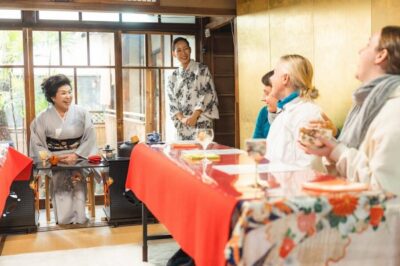
A real-world caution: the experience can be crowded. When the room is busy, hearing the guide becomes harder. If you care about understanding every explanation, arrive early for your slot and pick a spot where you can see the instructor and hear clearly. Keep your phone away during the demonstration. It sounds obvious, but it changes how much you catch.
Also, it is a good idea to go in with a flexible mindset. Treat it like a calm culture lesson that gives you a foundation, not like a full lecture series.
Same corner of Japan, a different kind of day:
- PERFECT KYOTO 1-Day Bus Tour
★ 5.0 · 13,518 reviews - Kyoto: Fushimi Inari, Kinkakuji, Bamboo Grove 1 Day Bus Tour
★ 4.8 · 4,316 reviews - Kyoto Geisha Walking Tour: Gion District & Hidden Gems
★ 4.7 · 3,273 reviews - Kyoto: Gion Magical Night Walking Tour with Geisha Trivia
★ 4.9 · 2,393 reviews
Price and value: why $7 can make sense
The price is listed at about $7 per person for a 30-minute Kyoto tea ceremony experience. For Kyoto, that is the kind of number that gets your attention, because traditional cultural activities can cost far more, especially when you add guided instruction.
So what are you paying for? You are paying for:
- Guided instruction through the steps of an OTE-MAE style tea ceremony
- A single-origin matcha served to you
- OHIGASHI included
- A demonstration showing how matcha becomes matcha tea
That combination is what makes the value feel real. You are not just buying a drink. You are paying for a short, structured cultural lesson plus a tasting experience.
One extra cost to note: an experience completion certificate is not included, and it costs 300 JPY if you want it. If you care about certificates as a fun souvenir, budget for it. If not, the tea and sweets are still the main point.
Also, the session is described as Japanese-language instruction. If you are someone who needs lots of language support, factor that into whether the low price is worth it to you. But if you can work with basic translation or you mainly want the practical experience, the cost-to-time ratio is hard to beat.
Location near Gojo Station, and the short walk you can handle
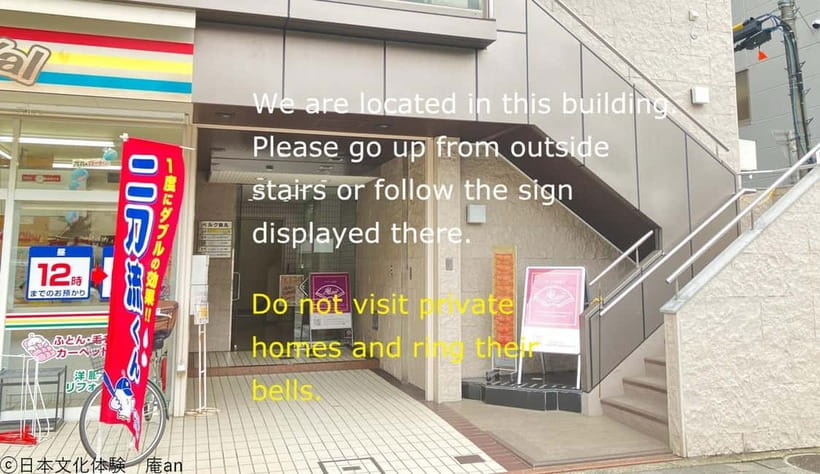
You meet just one minute walk from Exit 1 of the Karasuma Line Gojo Station. The store entrance faces Gojo-dori, on the main street side, which makes it easier to spot when you are moving through Kyoto stations and side streets.
If you are navigating on foot, give yourself a little cushion. The experience notes that they will not be able to hold the event to accommodate delays. In other words, arrive early, not on the dot. If you have a habit of slipping into commuter mode and walking fast, you are already on the right track for this one.
A detail that affects planning: there is no elevator in the building, and you need to take stairs to reach each venue. Even though the experience is marked as wheelchair accessible, the stair issue is a real consideration. If you use a wheelchair or mobility aids, you should think through how you will handle stairs before you go.
Finally, this is not a drop-in photo spot. Those who do not participate in the experience will not be allowed to enter. So if you are thinking, I’ll stand outside and watch, skip that plan. Do the activity or choose another option.
Who this Kyoto tea ceremony fits best, and who might want alternatives
This is the kind of experience I like recommending to people who want a real Kyoto cultural moment without spending a half day on logistics.
It is especially suitable if:
- You want a traditional tea ceremony that fits into a packed sightseeing schedule
- You prefer table and chair seating
- You want to drink matcha and learn the basic meaning behind the steps
- You like educational experiences that still feel calm and food-friendly
It may be less ideal if:
- You want a very long, detailed history lecture. The session is short, so the explanation time is limited.
- You strongly depend on fluent, detailed English throughout. English translation is provided as much as possible, but the experience is also Japanese-language based.
- You dislike crowded indoor spaces. Some sessions can feel tight, and that can make hearing the instructor harder.
If you fall into the second group, you still might enjoy the tea itself. Just adjust expectations. Think of it as a gentle, guided introduction you can build on later by exploring tea shops and matcha tastings on your own.
Should you book? My practical call
Yes, I would book it if you want a short Kyoto cultural experience that includes a real tasting. The value is strong for the money, and the structure helps you understand what is happening instead of treating it like a quick photo stop.
I would also book it if you appreciate calm, hands-on learning. The best part of this kind of tea ceremony is the way it slows your thinking down. Even when the session is brief, matcha, OHIGASHI, and guided steps create a small pocket of Kyoto you can actually feel.
I would not book it on the assumption that it will satisfy every deep history question you have. If that is your main goal, look for a longer format session with heavier English instruction. But if your goal is to taste matcha properly and learn the basic logic of the ritual, this is a solid, affordable way to do it.
FAQ
How long is the traditional tea ceremony experience?
The experience lasts about 30 minutes.
What is included in the price?
You get the OTE-MAE Japanese tea ceremony experience, which includes single-origin matcha tea and OHIGASHI (Japanese dried sweets).
Do I get a matcha certificate?
A completion certificate is not included. If you want one, it costs 300 JPY.
Where do I meet for the experience?
Meet at a location about a 1 minute walk from Exit 1 of the Subway Karasuma Line Gojo Station. The store entrance faces Gojo-dori.
Is there English translation during the ceremony?
English translation is provided as much as possible. If you want to add English support, you need to contact the team.
Is the venue wheelchair accessible?
The experience is marked as wheelchair accessible, but there is no elevator and you need to take stairs to reach each venue.
What is the operating window?
Operations run from 10:00 to 17:00. Reservations received after 17:00 are processed next day.
Fresh options around Kyoto
- Kyoto Aquarium Admission Ticket★ 4.7 · 12 reviews
- Kyoto Gion Photoshoot – Private Session | Pro Photographer★ 5.0 · 12 reviews
- Gyoza Cooking Class in Kyoto: Traditional Japanese Dumplings★ 5.0 · 12 reviews
- Kyoto: Guided Food Tour with 12 Dishes & 3 Drinks★ 5.0 · 12 reviews
- Kyoto: Avoid the Crowds at the Hidden Gems of Arashiyama★ 4.9 · 13 reviews
- Kyoto Early Bird English Tour: Gion & Higashiyama(Private opt)★ 5.0 · 13 reviews
- Otsu-e Folk Art Workshop & Local Culture Walk Near Kyoto★ 5.0 · 13 reviews
- Kyoto, Osaka, Nara Full Day tour by Car English speaking Driver★ 3.5 · 13 reviews
Tea Ceremonies in Kyoto, compared.
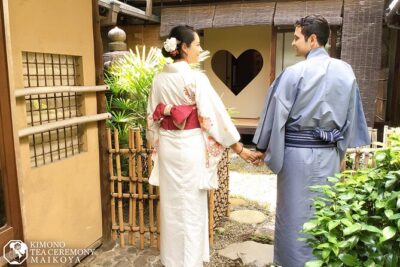
Tea Ceremony in a Traditional Tea House in Kiyomizu
Read our review →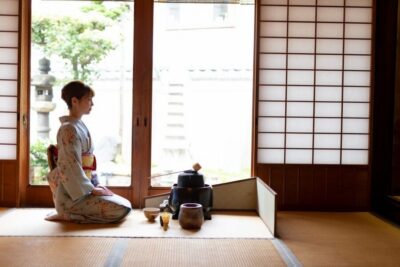
Arashiyama Bamboo Forest, Monkeys, Matcha & Temple Tour
Read our review →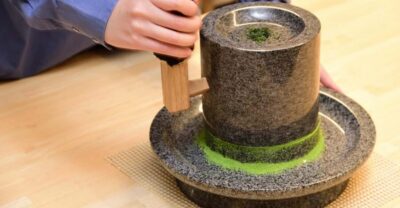
Tea Museum Tickets and Matcha Grinding Experience
Read our review →
Browse the lists this tour appears in