
Reviewed · HISTORICAL TOURS
Asakusa: A Big-picture History Walk to Know Japan
This walk turns Asakusa into Japan in miniature. What makes it special is how each stop becomes a chapter, with the guide linking everyday sights to Japan’s turning points and beliefs. I especially like that the story starts with the Sumida River and moves outward to explain why Japan closed itself, then reopened.
I also love the way the tour makes Shinto and Buddhism feel concrete, not textbook. The incense, gates, and temple grounds turn into real-life examples, including the long-running idea of coexistence in one shared neighborhood. One consideration: the route involves moderate walking and it is not suitable for mobility impairments, so wear good shoes and plan for an active morning or afternoon.
Key things I’d prioritize
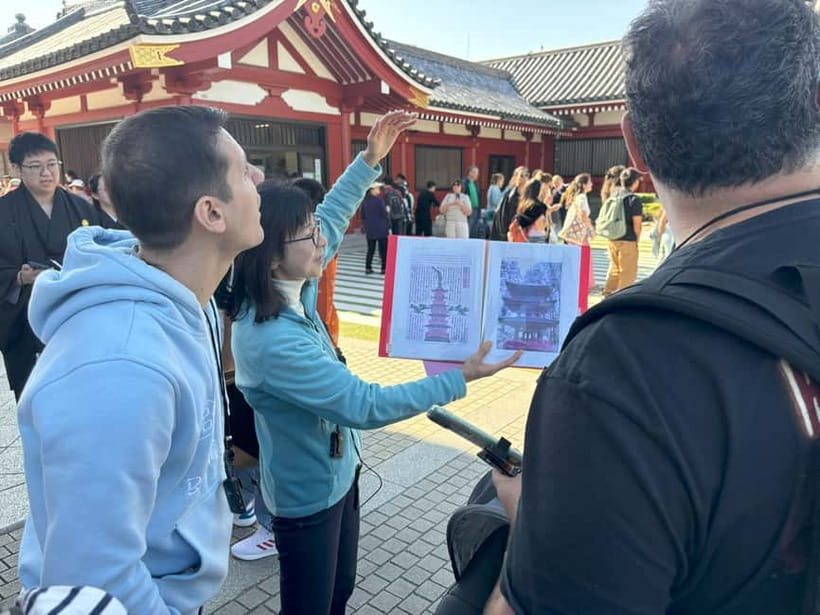
- Sumida River context for sakoku, Netherlands trading, and Perry’s pressure to reopen
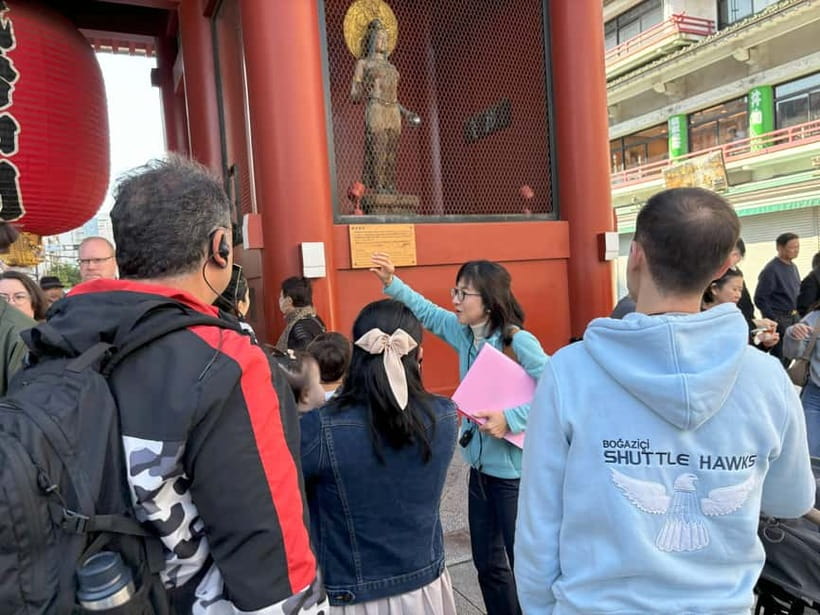
- Kaminarimon’s dragon comparison, Japanese and Western meanings explained clearly
- Nakamise Street symbols like the vajra (tokko) plus how ukiyo-e reached Europe
- Hozomon and Senso-ji comparisons that make medieval thought feel familiar
- A real look at 1,000-year religious coexistence at Asakusa Shrine and the nearby temple space
Why Asakusa Works So Well for a Big-Picture Japan Story
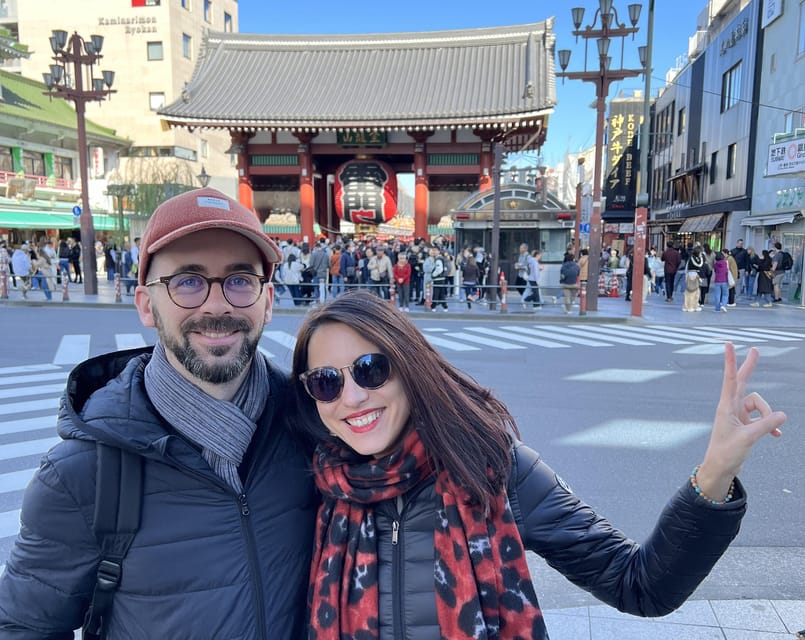
Asakusa is one of those places where you can look straight ahead and feel the layers right away. You see gates, old shopping streets, and famous religious sites packed into a walkable area. What this tour adds is the “why.” Instead of treating each landmark like a photo stop, I like that your guide uses each place as a doorway into bigger history, beliefs, and even global art connections.
This is not just a facts-only stroll. The tour’s main goal is to help you understand how Japan went from a closed feudal country into the Japan you see today. You’ll cover the Edo period isolation story, Japan’s two major religions explained in plain terms, and how Japanese art changed Western art through the path of woodblock prints.
And because it’s only about 2 hours, it’s a smart option when you want meaning without losing an entire day. The tour also includes traditional snack tastings, so you get to taste the neighborhood as you learn it.
More Walking Tours in Tokyo
- Tokyo Tsukiji Fish Market Food and Culture Walking Tour
★ 5.0 · 3,184 reviews - Tokyo: Imperial Palace and Shogun Historical Walking Tour
★ 5.0 · 2,251 reviews - Tokyo: Shinjuku Local Bar and Izakaya Guided Walking Tour
★ 4.9 · 1,794 reviews
Starting Point Near Asakusa Station, Then Moving With Intent
You’ll meet near Asakusa subway station, at 2-chōme-20-6 Kaminarimon, right in front of a Burger King by Exit 4 on the Ginza line. It’s easy to miss if you stay inside the station, so step outside when you come up. I like that the meeting is straightforward, which matters with a timed tour that runs rain or shine.
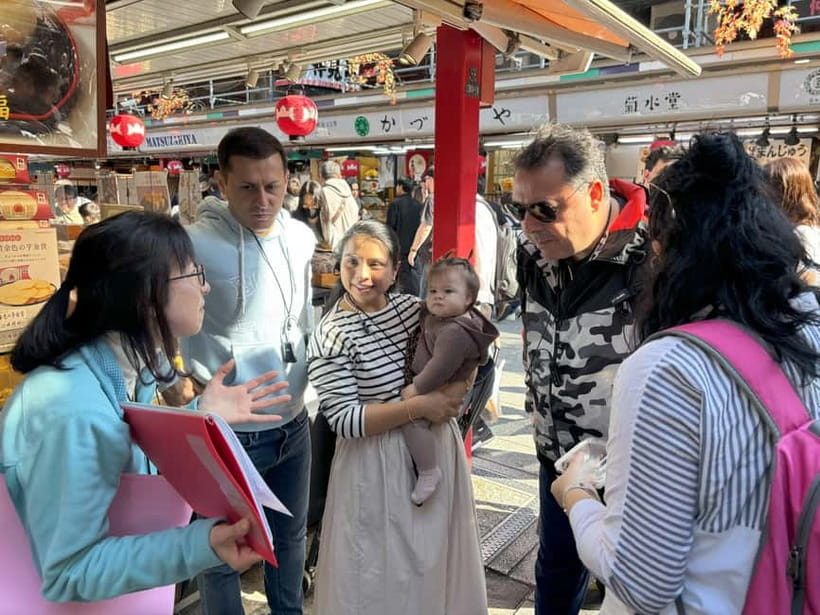
From there, the pace stays walkable, with short segments tied to specific learning stops. Each part is designed to connect to the next one, so the walk feels like a guided thread rather than a list of unrelated sights. Headsets are included for groups of 3 or more, which helps a lot when you’re passing through crowded entrances or when wind carries sound away.
You’ll also want the usual basics: comfortable shoes and water. The route is described as moderate walking, so if you have even mild knee or endurance issues, plan accordingly before you book.
Sumida River Theme: Isolation and Opening, Told From a Tokyo Angle
The tour begins with a Tokyo Cruise Asakusa Pier segment along the Sumida River. Even if you’re a first-timer, the river gives you the right “setting” feeling fast. This is where the guide sets up Japan’s long isolation story: the Edo shogunate sealed the country for over 200 years, the Netherlands was allowed to trade when other contact was heavily restricted, and then Admiral Perry’s arrival became a turning point that forced Japan to reopen.
What I find useful is how the guide doesn’t stop in the past. You’ll connect those events to modern Tokyo references. The tour even links the story to places like Odaiba’s former gun batteries and the Statue of Liberty replica facing the Pacific. It’s the kind of connection that helps you read the city instead of just moving through it.
If you enjoy history but hate the “one lecture stops, next lecture starts” feeling, this river setup is a strong opener. It sets a theme early, so later landmarks make more sense.
Culture Center Stop: Buddhism and Shinto, Without the Confusion
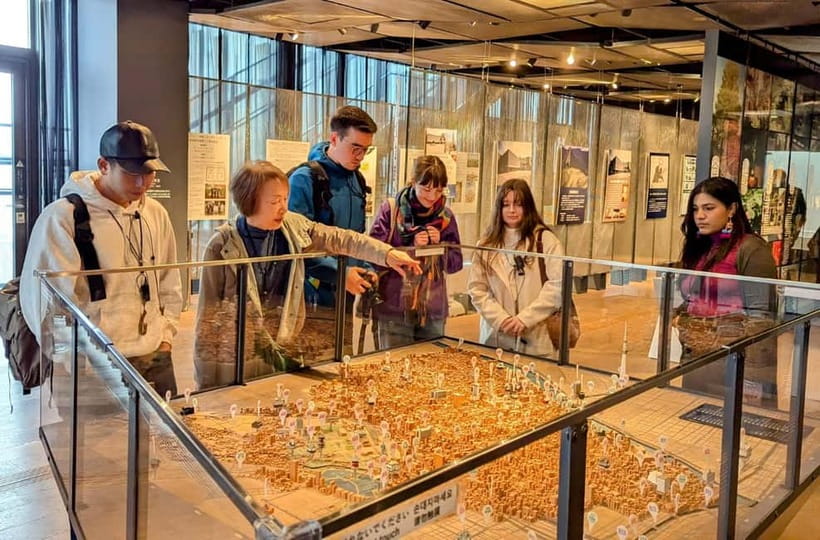
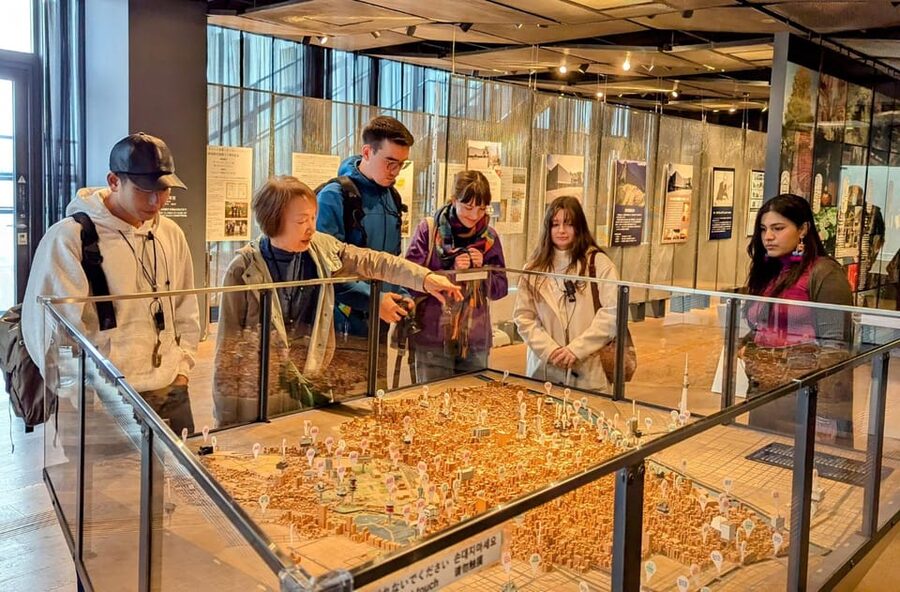
Right after the pier segment, you’ll visit the Asakusa Culture Tourist Information Center. This part works like a fast foundation layer. You learn about Japan’s two major religions, Buddhism and Shinto, in a way that prepares you for what you’ll see next.
I like this because Asakusa can be confusing at first glance. Shrines and temples are close together, symbols show up in different forms, and it’s easy to assume every religious space works the same way. This stop helps you recognize what you’re looking at, and it makes the later comparisons far easier to follow.
It also makes the tour feel respectful. Instead of treating worship as spectacle, the guide helps you understand what the practices are for, and why certain visuals show up in certain places.
Same corner of Japan, a different kind of day:
- Mt Fuji and Hakone 1-Day Bus Tour Return by Bullet Train
★ 5.0 · 26,383 reviews - 1-Day Tokyo Bus Tour
★ 5.0 · 14,250 reviews - Tokyo: TOKYO SKYTREE® Admission ticket
★ 4.5 · 11,192 reviews - Tokyo: teamLab Planets TOKYO Digital Art Museum Entry Ticket
★ 4.6 · 9,779 reviews
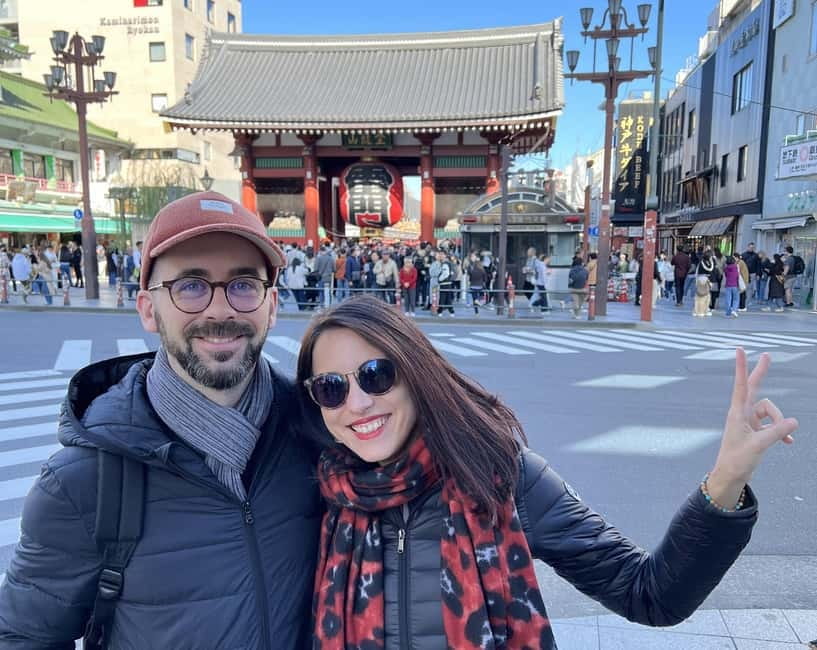
Kaminarimon: The Dragon Gate Moment That Changes How You Read Symbols
At Kaminarimon (Thunder) Gate, the tour shifts into symbolism. The gate is famous for a reason, and the guide uses it to explain the contrast between Japanese and Western dragons.
This is surprisingly helpful even if you’ve never studied anything religious or mythological. Western dragons often symbolize different traits, while the Japanese dragon is used differently in cultural meaning. The guide’s explanation helps you notice how visual symbolism travels, changes, and gets used in different ways.
You’ll also get a sense of how gates function in Japan. They’re not just entry points. They’re cues that tell you to slow down mentally, pay attention, and expect something spiritually meaningful just ahead.
Nakamise Shopping Street: Vajra Symbols and Ukiyo-e’s Surprise Global Reach
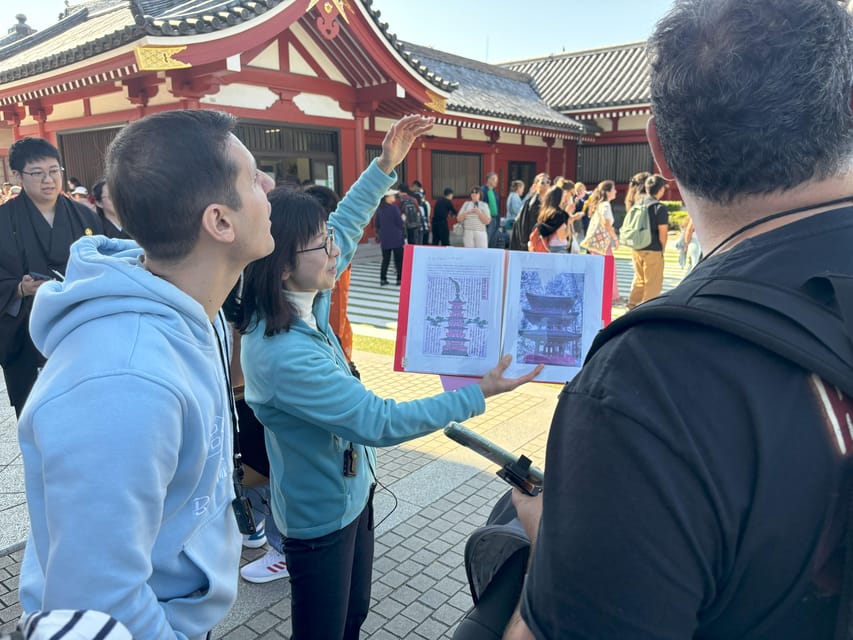
Next comes Nakamise Shopping Street, one of the oldest shopping lanes in the area. This is where the tour adds texture beyond temples and gates. As you walk, your guide points out Buddhist symbols you might not recognize on your own, including the vajra (tokko).
Then the tour connects the neighborhood to a global art story. You’ll learn about ukiyo-e woodblock prints and how their influence traveled to Europe. The tour specifically highlights the way these prints inspired Western painters, including Impressionist artists.
I like that this isn’t presented as some distant museum tale. It’s anchored to what you’re seeing right now on a street where religious commerce, daily life, and craft traditions overlap. It also helps you spot that Japanese art influence was not a one-time event. It was a transfer of ideas, style, and aesthetics.
This is also a good moment to snack. Since traditional snack tastings are included, this part gives you a natural reason to pause and try something local while the story stays fresh.
One small practical note: Nakamise can get crowded, and the headsets are a real advantage in the noise.
Hozomon Gate: The Mindset Comparison That Feels Like a Time-Travel Shortcut
At Hōzōmon Gate, the guide introduces one of the tour’s most thought-provoking comparisons. You’ll learn a surprising truth: people in Japan and the West had remarkably similar ways of thinking about 1,000 years ago.
That claim could sound abstract if it was just said once. Here, it’s used to sharpen your perspective on what you see next at the main temple complex. Instead of treating religious spaces as purely separate traditions, you’re encouraged to compare human motivations: meaning-making, ritual, community identity, and how societies express those ideas in built form.
This stop is short, but it sets you up to see Senso-ji differently. You’ll walk in expecting more than architecture and incense. You’ll look for the logic of why people gathered and how they communicated belief through daily behavior.
Senso-ji Temple: Prayer Differences and a More Accurate Way to Observe
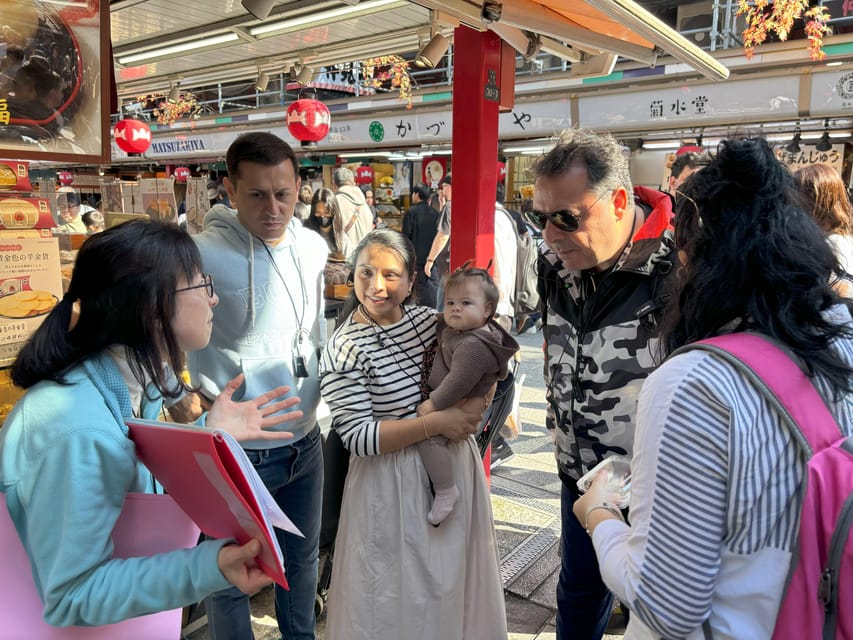
Sensō-ji Temple is Japan’s oldest Buddhist temple, and it’s a centerpiece for a reason. Here, the guide helps you connect the atmosphere you feel with the religious structure behind it.
You’ll get another comparison, this time between medieval Japan and Europe, paired with a clear explanation of how prayer differs in Buddhism and Shinto. This is a key part of the tour, because it changes how you behave. Once you understand the differences, you know what you’re watching instead of just reacting to what looks familiar.
In addition, some guides build in a fortune-telling activity at the temple entrance area. Even if you’re not the type who usually buys souvenirs or takes part in rituals, it’s a fun, low-pressure cultural moment that can also work well with kids.
If you’re the kind of person who likes to ask questions, this is a good time for it. The temple area invites curiosity, and the guide is set up to translate what you’re seeing into meaning you can carry with you.
Asakusa Shrine: The 1,000-Year Coexistence You Can Walk Through
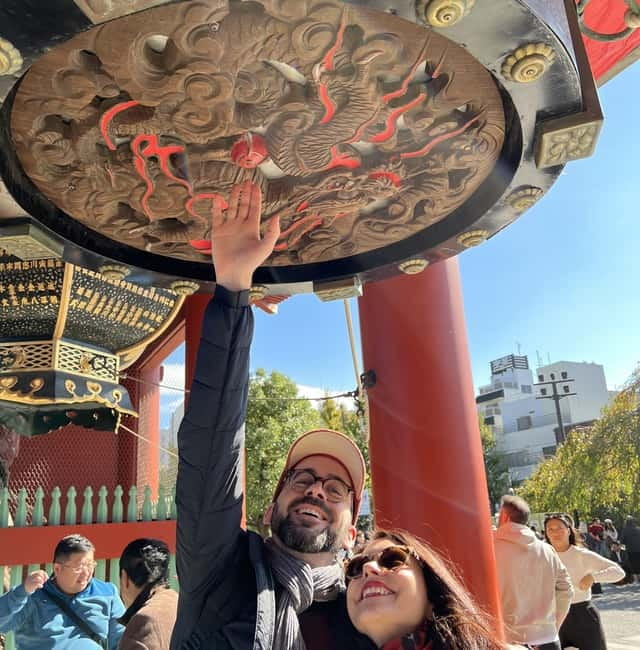
The tour ends at Asakusa Shrine, where something unusual becomes visible in real space. Here, you get a Shinto shrine and a Buddhist temple sharing the same grounds, with worshippers and history that have coexisted peacefully for over a millennium.
I think this ending is one of the reasons the tour sticks. A lot of religious tours stop at “this is what it is.” This one shows you how it can function side by side, with shared space and continued practice over centuries. That idea of coexistence is not only historical. It’s built into daily reality on the ground.
You also get a final layer of interpretation about Japan’s belief system, tied back to the earlier explanation of Shinto and Buddhism. By the time you leave, the neighborhood feels less like a random cluster of famous buildings and more like a living map of how Japan organized religious life.
Price and Value: What $58 Buys You in Real Terms
At $58 per person for about 2 hours, this tour is priced for people who want structure and explanation, not just sightseeing. And in this case, you’re not paying only for access to the same gates you could visit on your own.
You’re paying for:
- A certified English guide who connects landmarks to big history
- Headsets for clearer listening when groups are larger
- An audio guide in English
- Traditional snack tastings
- A route that stays compact while covering major themes: isolation, religion, symbol meaning, and art influence
Is it cheap? No. But it can be good value if you care about interpretation. If you’re the type who usually reads signs and then moves on, you might prefer self-guided wandering. If, like me, you like your sightseeing with context, this price starts to make sense.
One practical consideration from real participant feedback: headsets can sometimes produce echo or make words slightly harder to catch. If that happens, ask your guide to repeat or slow down, since clarity is the point of the gear.
Who Should Book This Tour, and Who Might Skip It
This tour is a strong fit if you want:
- A fast route to understanding Japan’s isolation-to-opening story
- Clear explanations of Shinto vs Buddhism in a place where they coexist
- A meaningful link between Japan and the West, including ukiyo-e’s impact on European art
- A walk that works for adults and can also keep kids engaged, especially when fortune telling and festival energy show up
It may be less ideal if:
- You need long periods of minimal walking, because the tour is described as moderate walking and is not suitable for mobility impairments
- You dislike history explanations and only want quick photo stops
Also keep an eye on the calendar. During major local events like Sanja Matsuri, the area can feel extra alive. If your dates overlap, you might catch festival energy like mikoshi processions nearby.
Should You Book This Asakusa Big-Picture History Walk?
Yes, if you want one compact experience that makes Asakusa feel like more than a famous temple district. The best reason to book is the guide’s theme-first approach: isolation and opening, two religions explained clearly, symbolism translated into meaning, and Japanese art influence shown as an actual world connection.
Skip it if your main goal is to roam freely without structure, or if moderate walking is a problem for you. Otherwise, this is one of those tours that helps you leave with a mental map, not just a set of photos.
FAQ
How long is the Asakusa history walk?
The tour duration is about 2 hours.
What is the price per person?
The price is $58 per person.
Where is the meeting point?
Meet in front of a Burger King restaurant next to Exit 4 of Asakusa subway station (G19) on the Ginza line. Step outside when you reach Exit 4.
What language is the tour offered in?
The live tour guide and audio guide are in English.
What is included in the tour price?
Included features are a certified guide, a walking tour, headsets to hear the guide clearly for groups of 3 or more, and traditional snack tastings.
What is not included?
Hotel pickup and drop-off are not included.
Does the tour run in bad weather?
Yes, it operates rain or shine.
Is the tour suitable for people with mobility impairments?
The tour is listed as not suitable for people with mobility impairments. If you have mobility issues, contact the supplier first to see what they can do.
Can kids join?
Children younger than 6 can join without charge. The tour is recommended for adults due to its historical focus, but families are welcome.
More Historical Tours in Tokyo
- Tokyo: Imperial Palace Japanese History Walking Tour
★ 4.9 · 987 reviews - Yanaka Walking Tour: Historic and Traditional District of Tokyo
★ 5.0 · 530 reviews - Tokyo: Shinjuku Historical Walking Tour & Secret Backstreets
★ 5.0 · 530 reviews - Mt. Fuji Heritage Tour: Traditional Villages, Lakes & Shrine
★ 4.5 · 509 reviews
Fresh options around Tokyo
- Private Tour – History, Art and Nature at the Imperial Palace★ 5.0 · 24 reviews
- Customizable Private Tokyo Trip with an English Speaking Driver★ 5.0 · 24 reviews
- 1- Day Private Tour to Nikko Tochigi With English Speaking Driver★ 5.0 · 24 reviews
- Tokyo VIP private nightlife tour with a local insider★ 5.0 · 24 reviews
- Hop-On Hop-Off Tokyo Bus by Skyhop Bus★ 2.0 · 24 reviews
- [1 Group Only] Explore Tokyo Ginza Food Tour for Family★ 5.0 · 24 reviews
- From Tokyo: Mount Fuji and Hakone Full Customizable Trip★ 5.0 · 24 reviews
- Nagano Private Tour With English Speaking Driver★ 4.5 · 24 reviews
Historical Tours, compared.
World Heritage Shirakawa-go and Experience Tours from Kanazawa
Read our review →
Imperial Palace and Shogun Historical Walking Tour
Read our review →
World Heritage Kyoto & Nara Uji Authentic Matcha Experience
Read our review →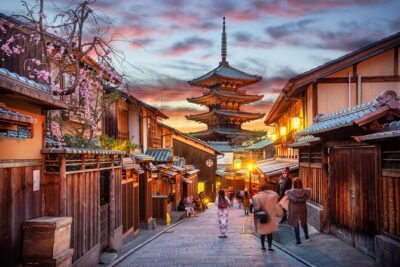
Kyoto Gion: 2-Hour Geisha Culture & History Walking Tour
Read our review →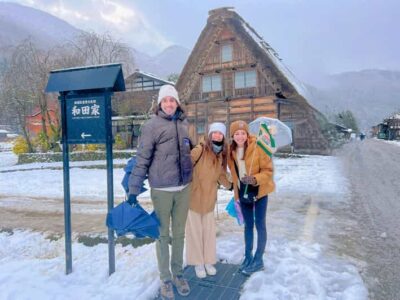
World Heritage Shirakawa-go Morning Guided Tour
Read our review →
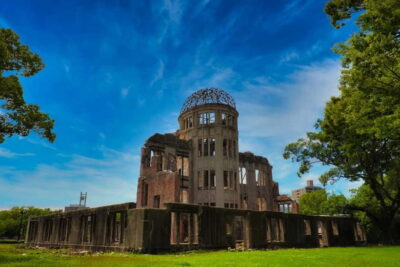
Hiroshima Historical Walking Tour – Why A-Bomb was Dropped
Read our review →
Hiroshima Peace (Heiwa) Walking Tour at World Heritage Sites
Read our review →Browse the lists this tour appears in