
Reviewed · WALKING TOURS
Osaka Castle & Dotonbori Lively One-Day Walking Tour
Osaka feels like two cities in one day. This tour threads castle, old neighborhoods, and modern street life into about 7 hours that actually makes sense. I especially like the way it balances headline sights with day-to-day places you’d otherwise rush past.
Second, hotel pickup plus a tiny group (max five) keeps the day smooth, not crowded.
What I like most is the guided pacing. You get museum time where you can look around, then enough wandering time at street-level spots like Tenjinbashi-suji, Kuromon Market, and Dotonbori to enjoy Osaka for real. The only real drawback is that this is still a walking-heavy outing, so comfy shoes matter.
Key highlights worth planning for
- Hotel pickup that removes the mental hassle of finding a meeting spot
- Small group size (up to five) so you can move at a human pace
- Osaka Castle + museum tickets included, not just a photo stop
- Tenjinbashi-suji shopping street, Japan’s longest arcade at 2.6 km
- Old-life recreations at the Osaka Museum of Housing and Living (a full-size town setting)
- Dotonbori nightlife district explained with context, not just neon views
A tight 7-hour introduction to Osaka’s old and loud sides
Osaka can feel confusing at first, because it’s not only about big landmarks. It’s also about daily life, shopping streets, and food markets that locals treat like routine. This tour is designed to connect those dots in one day, with a guide steering you toward places that each tell a different part of the story.
You also get the right mix of time blocks. Museums take up real focus time, like Osaka Museum of History and Osaka Castle. Then you shift to street walking where you can look, browse, and sense the city’s rhythm. It’s a smart rhythm for first-timers, and it works well if you do not want to spend your vacation trying to map every train change.
One more practical point I like: the tour ends back where it starts. That reduces the chance you’ll feel stranded at the far end of Osaka’s entertainment areas after a long day.
More Castle Tours in Osaka
- Osaka Castle: Museum and Tower Entry Ticket
★ 4.5 · 2,380 reviews - Ultimate Osaka Walking Tour: Castle, Dotonbori & Hidden Gems
★ 5.0 · 862 reviews - Osaka Castle Walking Tour and Castle Tower Admission
★ 5.0 · 561 reviews
Pickup, transit, and why the group stays small
This is a small-group tour, capped at five guests, with a hassle-free pickup from your Osaka hotel. That matters more than you think in Japan. Getting dropped near a major rail hub is convenient, but it can also break your flow when you are tired. Pickup keeps you in “vacation mode” from the start.
The tour also uses public transportation, and the transport fare is included. In practice, that means you are not paying extra ticket costs every time the plan changes. It also helps you get a better feel for how Osaka moves, since you’ll ride the subway or train between areas instead of relying on taxis.
From the reviews, a theme shows up: guides keep things organized and do not rush you. Names that came up include Chuji, Tomoko, Noriko, Taka Sakai, Yoko-san, Leo, Mizuho, Satomi, Nick, Toshi, and Saori. You’ll likely notice the difference when a guide speaks clearly and answers questions without making you feel like you’re slowing the group down.
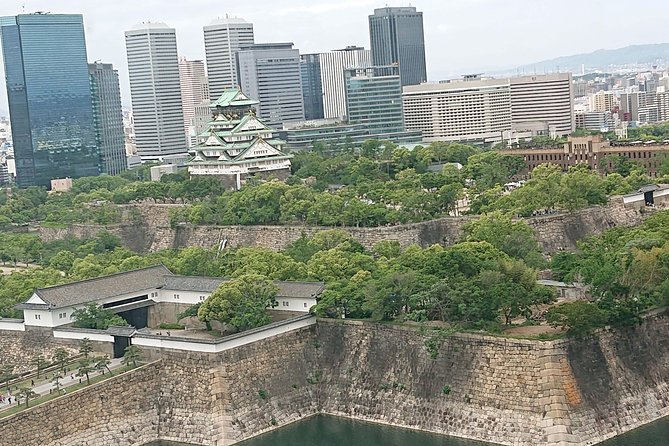
Osaka Museum of History: castle views before you even enter the fortress
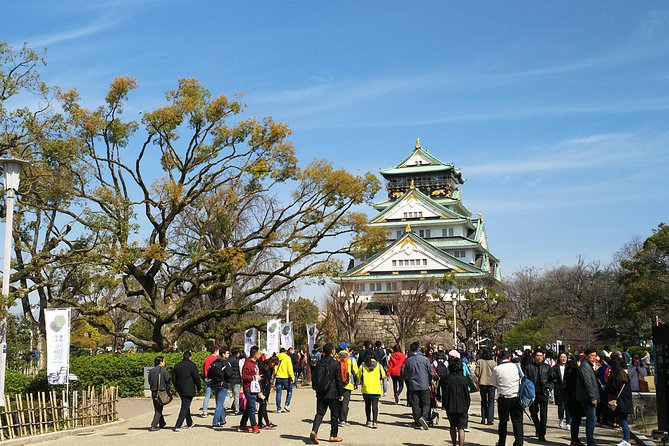
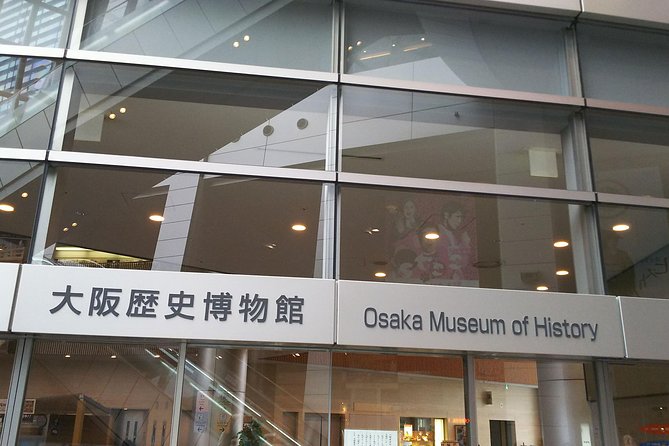
Stop one is Osaka Museum of History, located right in front of Osaka Castle. The museum is built on the site of an ancient palace, which gives the place a sense of built-in context. You get about 1 hour here, and admission is included.
The standout detail is the 10th-floor viewpoint overlooking Osaka Castle. Even if you are not a museum person, that view helps you “read” the castle later. You’ll see how the castle sits within Osaka’s modern layout, and you’ll understand that the building you’re about to visit is not isolated. It was part of a wider power center.
A good use of your hour is to start with the viewpoint early, then return for the museum content with a clearer mental picture. If you jump straight into exhibits first, the castle can feel abstract. With the view first, it clicks faster.
Possible drawback: museums can slow the pace if you prefer long, wandering breaks. If you like to keep moving, use your hour actively. Scan what matters to you, then let the guide connect the dots.
Osaka Castle: moats, stone walls, and the samurai story thread
Next comes Osaka Castle with about 1 hour 30 minutes and admission included. Osaka Castle is described as a 17th-century fortress built under the Tokugawa Shogunate, with double moats and strong stone walls. You are not just looking at a landmark. You’re walking through a structure that was designed for defense.
What makes a guided visit worthwhile here is the story thread. The tour frames the castle as a power base tied to samurai leadership, so the architecture feels intentional instead of random. And because you visited the museum viewpoint first, you’ll notice details with more meaning: the defensive layout, the sense of control, and how the castle’s design supported the era.
A small practical note: this is a walking and stair-influenced stop. Even if you do not consider yourself a “castle person,” you’ll still get a lot out of the guided pacing and the included entry. One review even mentioned getting into the castle effectively with the tour setup, which is exactly what you want when your day is already packed.
If you hate crowds, come in with patience. Osaka Castle is popular. A small group helps because you’re less likely to get swept into a huge pack without a plan.
More Walking Tours in Osaka
- Osaka: Hotspots & Hidden Gems Walking Tour Private or Group
★ 4.9 · 1,300 reviews - Osaka Local Foodie Walking Tour in Dotonbori and Shinsekai
★ 5.0 · 985 reviews - Osaka Bar Hopping Night Walking Tour in Namba (3 bars, 6 tastes)
★ 5.0 · 958 reviews - Osaka: Deep Backstreets Walking Tour with Dinner Option
★ 4.9 · 902 reviews
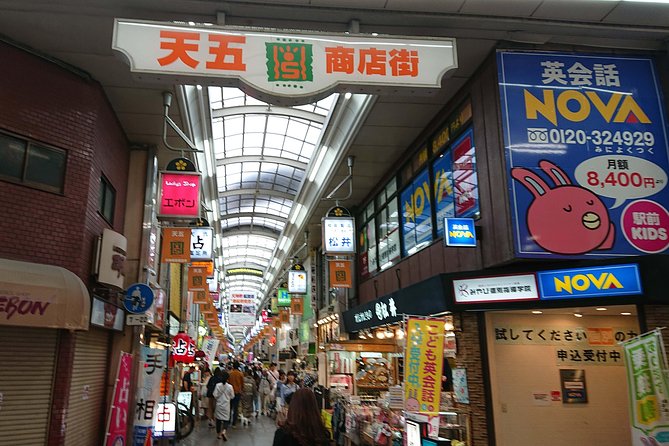
Tenjinbashi-suji arcade: 2.6 km of local shopping energy
After the castle, you head to Tenjinbashi-suji Shopping Street, described as Japan’s longest arcade at 2.6 km with about 600 shops. You get around 1 hour here, and admission is free.
This stop is not only about shopping. It’s about seeing how locals use space. An arcade street like this is where daily life gets built into architecture. You can browse without overheating, rain doesn’t end the fun instantly, and the crowd feels like a living city habit rather than a staged attraction.
I like this as a mid-day breather after a big history stop. You can walk at your own speed, pop into storefronts if something catches your eye, and let the guide point out what you should notice. One review advice was simple: bring comfortable walking shoes and skip restrictive footwear. That’s perfect here, because 2.6 km is a long stretch to do in anything less than supportive shoes.
Possible drawback: if you are only interested in photos of famous sights, you might feel this part is more about atmosphere than spectacle. But if you like authentic street life, this is a highlight.
Osaka Museum of Housing and Living: walk through everyday life about 180 years ago
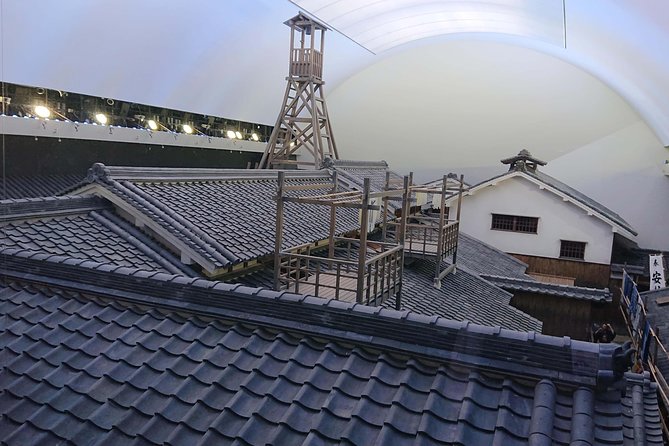
Then you go to the Osaka Museum of Housing and Living for about 40 minutes, with admission included. The key idea is that it recreates Osaka townscape around 180 years ago at full scale, and you can actually walk in it.
This is one of those stops that turns history into something you can sense. Instead of only reading labels, you see the shape of houses and the way daily life was arranged. You can also touch and experience parts of the reconstructed environment, including products sold at the time.
The time is short, but that can be a plus. If you’ve spent the morning in deeper history, 40 minutes can be the right dose of “old life” without turning the day into museum burnout. The trade-off is that you will want to pay attention to what the guide emphasizes, because you cannot absorb everything in 40 minutes.
If you’re traveling with kids or multi-generational family groups, this stop tends to work well because it is physical and walkable. In reviews, the tour pace and guide flexibility were praised, which is a big deal on shorter museum segments.
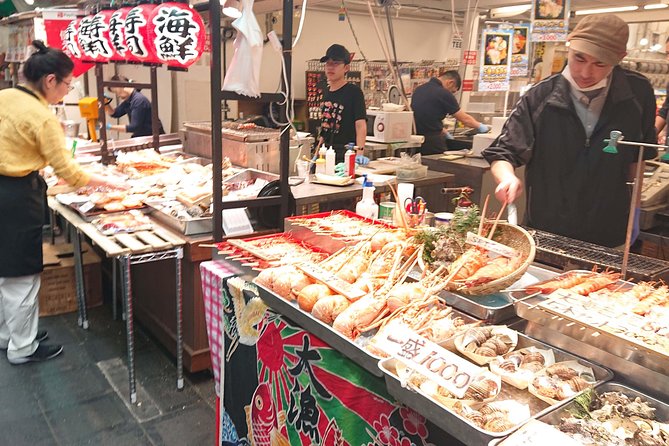
Kuromon Market: a food-focused pause without forcing a meal
Next is Kuromon Market for about 30 minutes. Admission is free here, and the tour frames it as part of Osaka’s food culture, often called the Food Capital of Japan.
Even without an included meal, this stop is valuable because you get to see what an Osaka food market feels like. You’ll have time to look at stalls and browse options on your own, which is helpful because not everyone wants the same kind of snack.
The best move here is to treat it like an observation stop with a flexible bite plan. If you feel like eating, you can. If you’re not hungry yet, you can still enjoy the sights and learn what locals consider worth buying. This works especially well since food and drink are not included on the tour.
Possible drawback: 30 minutes can feel short if you love markets. If you want more time for shopping or eating, plan a second visit later in your trip on your own.
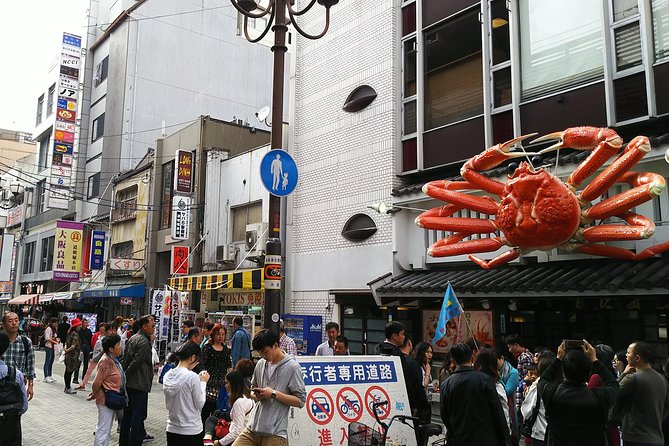
Dotonbori: from canal entertainment to neon nightlife
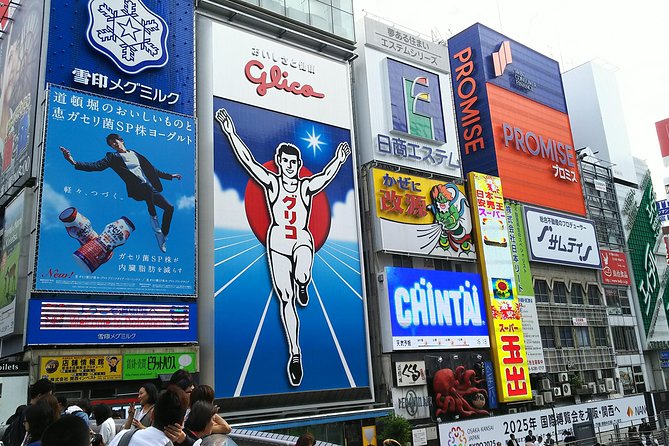
The final stop is Dotonbori District for about 30 minutes. Admission is free.
This is where Osaka turns loud and colorful. The tour context matters here. Dotonbori started as a local entertainment area, with theaters along the canal. Today, it’s known for restaurants with colorful billboards and a strong nightlife vibe.
This stop is perfect as a closer because it contrasts the earlier history stops. In the same day, you went from defensive architecture and reconstructed old neighborhoods to an entertainment district shaped by modern energy. That contrast is exactly why the schedule works.
Because the tour duration is limited, you will not have time for a long wander and a long sit-down meal at the end. I’d recommend keeping your expectations realistic: use this as a final taste. Then, if you want more, head back out later with your own plan.
Price and what you’re paying for (and what you’re not)
The price is $141.23 per person for a tour that runs about 7 hours and caps at five guests. The big question is whether it’s worth paying instead of DIY.
Here’s what you’re getting that most self-plans would cost you time or money to coordinate:
- Professional guide time throughout the day
- Public transportation fare included
- Admission fees included for Osaka Museum of History, Osaka Castle, and Osaka Museum of Housing and Living
Food and drink are not included. That is normal for tours like this, and it’s actually a good thing for value. It lets you choose snacks based on your appetite, dietary needs, and budget, instead of being pushed into a set meal.
Also note that the tour uses a mobile ticket, which tends to reduce little friction points. Booking averages show it’s scheduled about 65 days in advance, which often signals that time slots can be popular. If you want a specific date, don’t wait too late.
If you’re comfortable navigating trains and planning museums, you could DIY. But if you want a day that feels structured and coherent, the cost starts to make sense quickly.
Comfort tips that will save your feet and your mood
This is a walking tour with transit. The listing is explicit about moderate physical fitness, and reviews reinforce the same practical truth: you should be ready to walk more than you might expect.
My advice:
- Wear comfy walking shoes, not boots and not stiff footwear.
- Bring something for weather swings. The tour is stated to require good weather.
- Keep your day lighter on luggage, since you will be moving between several neighborhoods.
One review also mentioned the day working out even with rain, which makes sense. Some stops are covered or arcade-like, like Tenjinbashi-suji. Still, if the weather is really bad, the tour may be canceled or adjusted based on local conditions.
Who this Osaka tour is best for
This one-day format is ideal if you:
- Want a first Osaka overview that includes both history and the modern feel
- Prefer a small group and a guided route over train-hopping alone
- Like structure, especially when museums are involved
- Do not want to plan museum entry times and transportation between them
It’s also a solid choice for mixed-age groups, as long as everyone is comfortable with walking and stairs. Some reviews specifically praised guide flexibility for multi-generation groups, which is exactly what you’d want if your pace is not uniform.
If you already know Osaka well and want only food hunting, you might find the history museums take time you’d prefer to spend elsewhere. In that case, a food-market focused day might fit better.
Should you book this Osaka Castle and Dotonbori tour?
Yes, I’d book it if you want a guided day that strings together Osaka’s major “musts” without feeling like a rushed checklist. The small group size, hotel pickup, and included entries for the museum and castle combo are the reasons it feels like good value. Tenjinbashi-suji, Kuromon Market, and Dotonbori then add the street-level Osaka you probably came for in the first place.
I would not book it if you hate walking, want long downtime, or plan to eat a full sit-down meal during every stop. This tour is built for motion and smart time use, not for lingering.
If you’re on the fence, do this quick check: Can you handle comfortable shoes for a full day, and are you happy paying for guidance plus admission to save planning time? If yes, this is an easy yes.
FAQ
How long is the Osaka Castle and Dotonbori walking tour?
It runs about 7 hours.
What time does the tour start?
The start time is 9:00 am.
How big is the group?
This tour has a maximum of 5 travelers.
Where does the tour meet, and where does it end?
It starts at Osaka Station 3-chōme-1-1 Umeda, Kita Ward, Osaka, 530-0001, Japan. It ends back at the meeting point.
What’s included in the price?
The price includes the professional guide fare, public transportation fare, and admission fees.
Are food and drinks included?
No, food and drink are not included.
Which stops have admission tickets included?
Admission is included for the Osaka Museum of History, Osaka Castle, and the Osaka Museum of Housing and Living.
What if the weather is bad?
The tour requires good weather. If it is canceled due to poor weather, you will be offered a different date or a full refund.
Can I cancel for a full refund?
Yes. You can cancel up to 24 hours in advance for a full refund. If you cancel less than 24 hours before the start time, the amount paid is not refunded.
More Castle Tours near Osaka
- From Osaka: Himeji Castle, Arima Onsen & Mt. Rokko Day Tour
★ 4.6 · 339 reviews - 5-Hour Osaka Bike Tour to the Neighborhood of Osaka Castle
★ 5.0 · 319 reviews - Osaka Castle Guided Tour
★ 4.7 · 249 reviews - Osaka: Castle History Walking Tour / Castle Tower Admission
★ 4.9 · 230 reviews
Fresh options around Osaka
- Osaka Bar Hopping | Explore Hidden Bars & Izakayas in Namba★ 4.7 · 18 reviews
- Hiroshima and Miyajima 1 Day Private Tour from Kyoto or Osaka★ 4.5 · 18 reviews
- Discover Japanese Tea Blending Techniques in Osaka★ 5.0 · 19 reviews
- Osaka Dotonbori Night Photoshoot – Private | Pro Photographer★ 5.0 · 19 reviews
- Osaka: Tennen Onsen Naniwa-no-Yu, the famous hot spring spa★ 4.7 · 19 reviews
- Osaka Private Walking Tour with a Local★ 4.5 · 19 reviews
- Osaka: HEP FIVE Ferris Wheel E-Ticket in Umeda★ 4.7 · 19 reviews
- Kansai/KIX Airport to or from Osaka/Kyoto Private Transfer★ 5.0 · 20 reviews
Walking Tours, compared.
Kyoto Geisha Walking Tour: Gion District & Hidden Gems
Read our review →
Tokyo Tsukiji Fish Market Food and Culture Walking Tour
Read our review →
Gion Magical Night Walking Tour with Geisha Trivia
Read our review →
Imperial Palace and Shogun Historical Walking Tour
Read our review →
Gion Geisha District Walking Tour – Stories of Geisha
Read our review →
Shinjuku Local Bar and Izakaya Guided Walking Tour
Read our review →
Browse the lists this tour appears in