
Reviewed · WALKING TOURS
Nara Half Day Trip Walking Tour (Private Option Available)
Nara’s biggest hits, in just five hours. This half-day walk strings together Todaiji and Kasuga Taisha with real time in Nara Park, plus lunch and admission tickets, so you do not waste hours figuring out logistics.
I also love the pacing and variety, from the Kofuku-ji five-story pagoda to the old merchant lanes of Naramachi, where you get a different feel than Tokyo.
One possible drawback: it is a lot of ground in 5 hours, so if you want very slow, deep temple wandering, this may feel a bit time-pressured in summer heat.
Key points worth knowing before you go
- UNESCO and the top shrines in one loop with Todaiji Temple and Kasuga Taisha Shrine on the same day
- Deer etiquette you can actually use so you know how to interact respectfully and spot the calmer moments
- Lunch plus shrine admission covered so your day runs on fewer tickets and fewer decisions
- Old-town Naramachi experience with a historic merchant’s house stop and a surprise sight described as a hidden Japanese pyramid
- Small group energy (max 8), plus a private option if you want more control of the pace
- Guides who keep the day smooth with English support and helpful context, including wish-making guidance at shrines in past tours
Why this half-day Nara walk works so well
If you are first-timing Nara, this format is hard to beat. You get the famous names and the emotional payoff, the Great Buddha at Todaiji, the lantern mood at Kasuga Taisha, and the deer you came for, all in one controlled route. It is designed for people who want a “best of” day without feeling like you spent half the time walking in the wrong direction.
The biggest value is that the tour does not treat the stops like separate box-checking tasks. Your guide ties the places together, so Todaiji is not just a building with statues, and Nara Park is not just a zoo of cute animals. In past experiences led by guides like Jimmy, Shin, Yuki, and Mari, the common theme is clarity, friendly guidance, and practical tips.
The second value is simplicity. Admission tickets and lunch are built in, and the day ends back at the meeting point. You bring yourself, comfortable shoes, and your appetite.
More walking tours in Nara:
- Nara Highlight Walking Tour with Furoshiki Experience with Lunch
★ 5.0 · 73 reviews - Nara: Private Walking Tour with a Local
★ 4.3 · 36 reviews - Kyoto Geisha Walking Tour: Gion District & Hidden Gems
★ 4.7 · 3,273 reviews
Kofuku-ji Five-Story Pagoda, Fujiwara power you can spot fast
Your day starts at Kofuku-ji Temple and its famous five-story pagoda. The stop is short, about 15 minutes, which sounds brief until you realize what you are there to do: get oriented and take in one of Nara’s most recognizable silhouettes.
This pagoda matters because it is tied to the Fujiwara clan, with an early-730 construction date noted for this landmark. Even if you know nothing about the timeline, the height and carved details make it feel like more than a photo spot. It is one of those starts that gives you a mental picture of what Nara’s temple world looks like.
Practical tip: treat the first stop like a warm-up. From here, you will be doing main hall entrances and walking temple grounds, so use this moment to settle into the pace and ask any “how do we behave here” questions early.
Todaiji Main Hall and Nandaimon, the Great Buddha with context
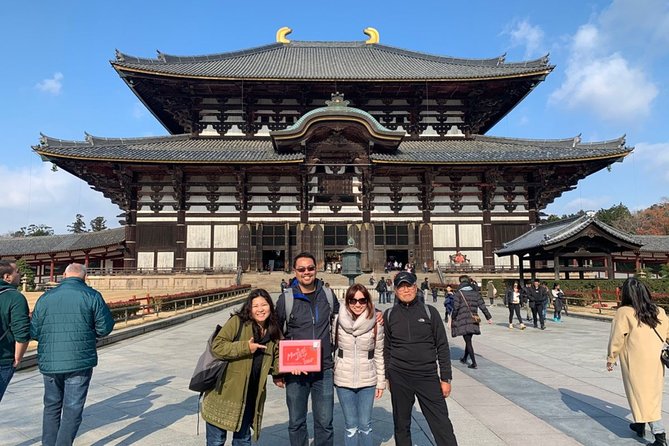
Todaiji is the anchor. You spend about 30 minutes exploring the Main Hall and Nandaimon, and the approach sets you up for the wow. Past guidance includes attention to the imposing guardian statues called Kongorikishi, which frame your entry and help you understand why people describe this place as unforgettable even after multiple visits to Japan.
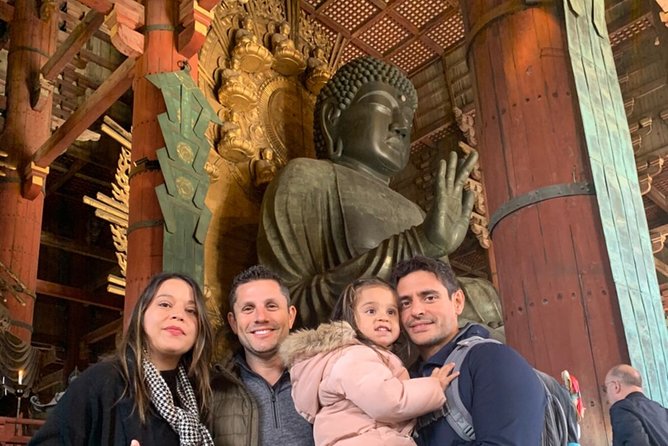
Then you face the Great Buddha. The key here is not just scale, it is what your guide makes you notice. You learn how to read the space and what you are looking at as you move, so the statues and architecture turn from “things I saw” into “things I understood.”
Nandaimon is also a good reminder that Nara is not only about sacred buildings, it is about movement and ritual. Shrines and temples in Japan often work like stages, and your guide helps you understand what is happening as you pass through key gates and halls.
Possible drawback: Todaiji can be crowded. In past tours, guides helped groups still navigate key areas and keep the schedule moving, but you should still expect some crowding and keep your patience switched on.
Lunch in 107 Zōshichō, a real break inside an old-town pocket
After Todaiji, you get lunch around 107 Zōshichō, at a traditional Japanese restaurant in an older part of town. The stop is about 45 minutes, which is exactly the right amount of time in a walking tour like this. You do not feel rushed, and you get a chance to recharge before the shrines and deer time.
The other reason this lunch stop adds value is that it is not a random tourist meal. The tour is positioned to give you something authentic in an old-town setting, so you continue absorbing the feel of Nara rather than instantly switching to a generic restaurant street.
Food notes you should know:
- Gluten-free requests are not accommodated on this tour.
- Allergy-free or dietary guarantees are not stated, since the food is prepared in kitchens that do not belong to the tour operator.
- You can request dietary needs in advance (by the day before), but changes on the tour day are not accepted.
In practice, past groups have mentioned the restaurant working out vegetarian needs, even vegan options in at least one case. Still, do not count on a perfect swap for every restriction. If you have a serious allergy, I would plan extra carefully and contact the provider ahead of time.
A few more Nara days worth comparing
- World Heritage Kyoto & Nara Uji Authentic Matcha Experience
★ 5.0 · 1,573 reviews - Nara Early Morning Tour (Kyoto or Osaka Departure Available)
★ 5.0 · 676 reviews - Osaka: Nara and Uji Day Trip with Deer Park and Hot Spring
★ 4.4 · 302 reviews - Kyoto/Osaka: Kinkakuji, Bamboo Forest, and Nara Deer Park
★ 4.4 · 265 reviews
Kasuga Taisha and Kasugayama forest edge, lantern atmosphere in motion
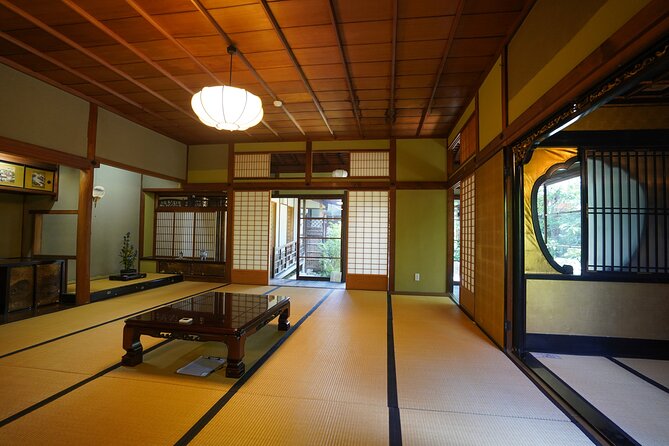
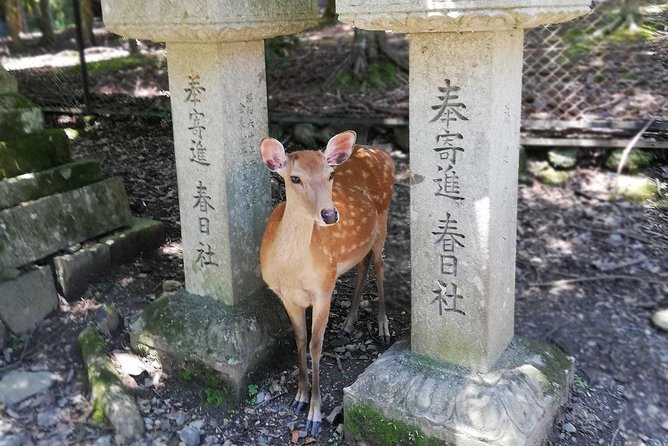
Kasuga Taisha is where Nara leans into the quiet-luminous side of its identity. You spend about 30 minutes here, with time to explore Kasugayama Primeval Forest and then reach Kasuga Taisha Shrine.
What makes this stop special is the mix of nature and shrine life. You are not just stepping into a courtyard. You get a short experience of the forest context, which helps the shrine feel like it belongs to the land rather than sitting separate from it.
Also, Kasuga Taisha is strongly associated with lanterns. Even the later Nara Park shrine area includes the red shrine housing hundreds of lanterns, so by the time you hit Nara Park, you are already “trained” to recognize the lantern symbolism and what it creates visually.
In past experiences with guides like Eri-san and Yuki, the best part was often the religious customs explanations. Things like how wishes are handled at shrines, and what behaviors are respectful, can make Kasuga Taisha feel more interactive and less confusing.
Nara Park deer time, plus the bowing-custom moment
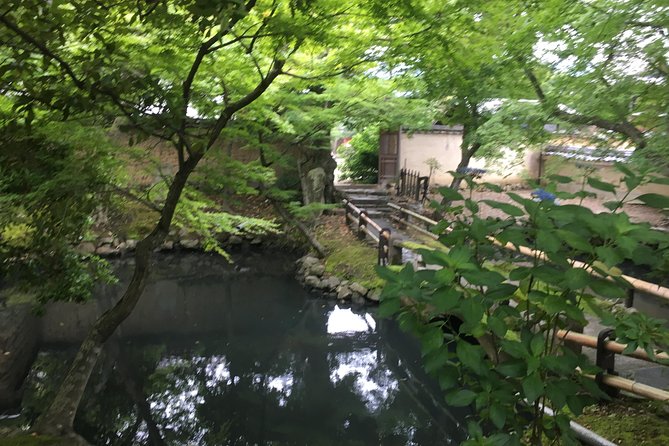
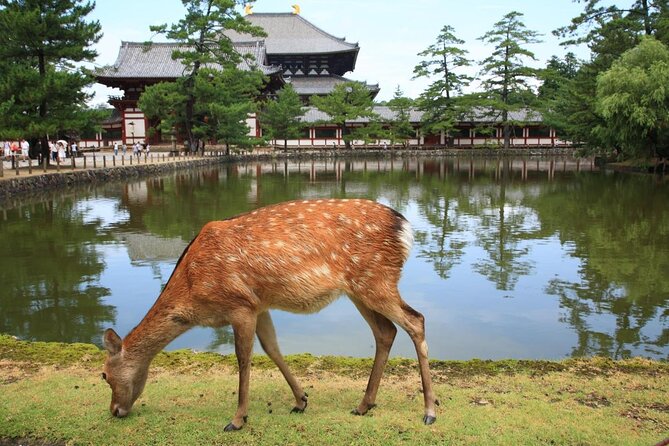
Nara Park is the reason many people book Nara at all. The tour gives you about 30 minutes inside the park, with time to see the deer up close.
Here is what really elevates this stop: your guide does not leave you to figure out deer etiquette on your own. In past tours, guides provided clear instructions on how to behave around the deer, and that matters because the deer can be curious and persistent, especially in the mornings. You also learn about respectful feeding habits, including how interactions can stay calm instead of turning chaotic.
The bowing moment is a big part of the deer experience. Multiple past groups called out the deer bowing before getting a cookie treat. Even if you do not plan on feeding, the bowing moments usually happen during the feeding rhythm, and your guide helps you capture it without turning the situation into a crowd pile.
Practical tip: bring water and keep moving at a steady pace. Nara Park can be hot and sunny, and the deer are most active when you least want to stop.
Naramachi and Nigiwai no Ie, where the old merchant lanes feel real
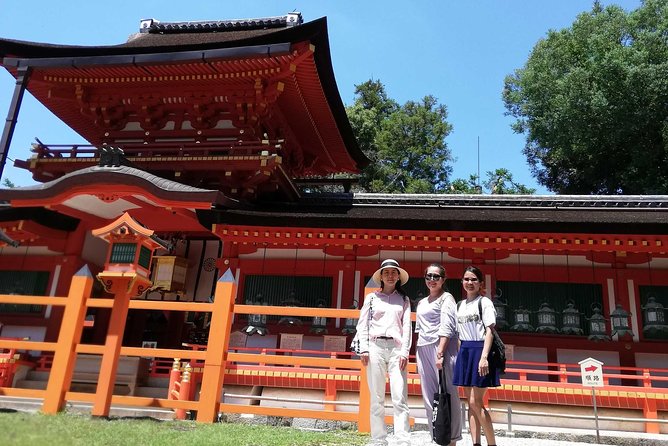
After deer time, you shift from park energy to old-town atmosphere. Stop 6 is Naramachi, plus Naramachi Nigiwai no Ie. You get about 35 minutes to wander through historical buildings and enter a merchant’s house.
This is the part many first-timers appreciate most, because it shows Nara as a living town, not only a temple museum. You see the side streets and the old structures that make Nara feel distinct from nearby cities.
The tour overview also mentions a surprise structure described as a hidden Japanese pyramid. That kind of detail is exactly why I like guided half-days. You get to a place like Nigiwai no Ie, and someone points out the “wait, what is that?” element you might miss if you were just wandering.
Also, if you are shopping, Naramachi is where you tend to spot handmade items and local sweets. One past tour even mentioned a furoshiki stop, which is the kind of small cultural souvenir you actually end up using.
Is $105.45 good value for Todaiji, Kasuga, lunch, and tickets?
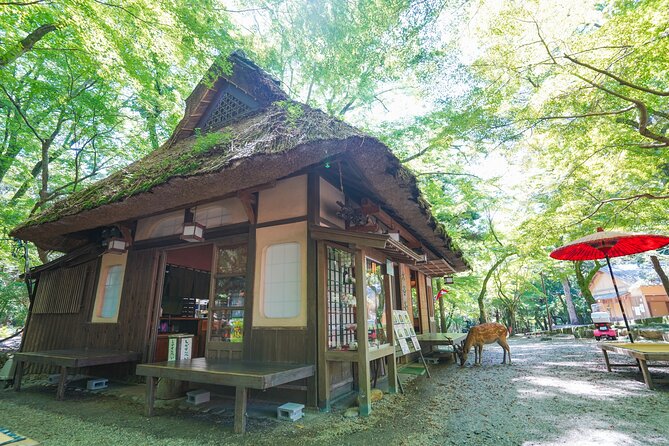
At $105.45 per person, this is not the cheapest way to see Nara. But it is also not charging you extra for “just walking.” Here is what the price is really buying:
- Admission tickets are included for major shrine and temple portions you visit
- Lunch is included, with a specific restaurant stop rather than an on-your-own suggestion
- A guide manages timing across multiple sites in one day
- The tour is capped at a small group size (max 8), which helps you move through key areas with less friction
In other words, you pay for saved time and fewer decisions. For first-time visitors, that can be worth a lot. You also avoid the trap of trying to string these sites together while you are still learning the layout of Nara.
If your goal is only to snap deer photos and one temple selfie, you might find cheaper ways. But if you want the context, the flow, and the included lunch and entries, the value holds up.
What the group size and private option change
This tour runs with a maximum of 8 travelers. That small cap is a big deal. It makes it easier to hear explanations, and it reduces the “follow the line and hope you can see” problem that can happen at popular sites.
It also changes the tone of the deer park and shrine areas. With fewer people, guides can give more direct deer behavior advice and help you reposition without losing the group.
You also have a private option available. If you are traveling with kids, have mobility needs, or simply prefer a slower, quieter rhythm, a private walk can feel more like a conversation than a schedule.
In past tours, guides also seemed willing to adapt the route for group energy and mobility, so if you are bringing mixed ages, this format can work well.
When to go and what to bring for a comfortable 5-hour day
Weather matters here. The tour says it requires good weather, and if it gets canceled due to poor conditions, you will be offered another date or a full refund. That means you should keep your schedule flexible if possible.
Also, Japan summers can reach extreme temperatures, and this tour specifically recommends water and a hat to help prevent heat stroke. That is not a casual suggestion, it is the difference between enjoying Nara Park and feeling miserable during the walk.
What to bring:
- A hat and water bottle
- Comfortable walking shoes
- Cash if you want extra snacks or drinks at any stop
- Any requested dietary details in advance (since day-of changes are not accepted)
If you are sensitive to crowds, plan for that too. Even with guidance, Todaiji and the surrounding areas can get busy. The advantage of this tour is that the schedule is designed to keep you moving, not trapped.
Should you book this Nara half-day walking tour?
Book it if you want a high-impact Nara primer. This is a strong choice for first-timers, families, and people who want UNESCO-level highlights without overplanning. I like the way it blends major temple and shrine stops with the lived-in feel of Naramachi, then finishes with deer time that most visitors remember long after the photos fade.
Skip it if you are the kind of traveler who wants to spend hours inside one temple complex, wandering without a set rhythm. This is a tour designed to cover the highlights efficiently, not a slow study day.
Also, read your food needs carefully. Gluten-free is not supported, and allergy-free guarantees are not provided. If your diet is simple and you can follow the meal plan, you will probably find lunch pleasant and filling. If your dietary restrictions are strict, handle it with extra caution and request in advance.
FAQ
How long is the Nara half day walking tour?
The tour runs about 5 hours (approx.).
What is the price per person?
The price is $105.45 per person.
What is included in the tour?
Admission tickets and lunch are included, along with guided walking through the listed stops.
Where is the meeting point?
The meeting point is the Statue of Gyoki-bosatsu at 27 Higashimuki Nakamachi, Nara, 630-8215, Japan. The tour ends back at the meeting point.
What is the maximum group size?
The tour has a maximum of 8 travelers.
Can I request gluten-free food?
No, gluten-free requests are unable to be accommodated for this tour.
What dietary requests are possible?
Dietary requests must be requested in advance (by the day before). Allergy-free or fully dietary-restricted meal guarantees are not stated, and substitutions may not always be possible at certain stops.
What should I bring for the walk?
Bring water and wear a hat, since summer in Japan can be very hot and humid. Also wear comfortable shoes for walking.
What happens if weather is bad or I cancel?
If the tour is canceled due to poor weather, you will be offered a different date or a full refund. You can cancel up to 24 hours in advance for a full refund.
Fresh options around Nara
- Nara – Heart of Nature Cross Bike Tour★ 5.0 · 19 reviews
- Nara:Tea Tasting&Private Tea Ceremony -Master Matcha Making-★ 5.0 · 19 reviews
- Make Your Own Soy Sauce in Japan’s Old Capital Asuka Nara★ 5.0 · 22 reviews
- Nara: Essential Private Tour with Deer Park and Temples★ 5.0 · 24 reviews
- Nara:5 Type of Tea Tasting & Mindful Tea Ceremony★ 5.0 · 28 reviews
- E-Bike Nara Highlights – Todaiji, Knives, Deer, Shrine, and Gems★ 4.5 · 34 reviews
- Nara: City Highlights Shared Group or Private Bike Tour★ 4.9 · 34 reviews
- Sushi Making Experience Luxury Course in Nara★ 5.0 · 36 reviews
Walking Tours, compared.
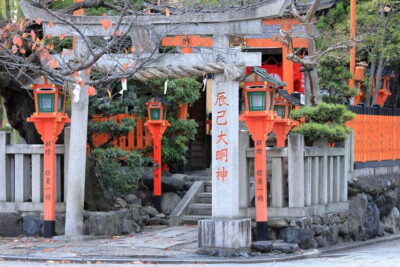
Kyoto Geisha Walking Tour: Gion District & Hidden Gems
Read our review →
Tokyo Tsukiji Fish Market Food and Culture Walking Tour
Read our review →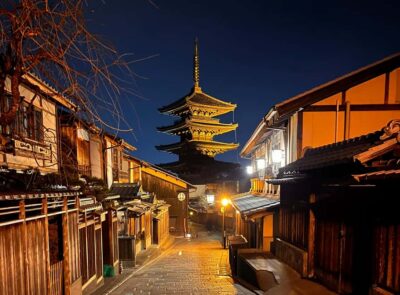
Gion Magical Night Walking Tour with Geisha Trivia
Read our review →
Imperial Palace and Shogun Historical Walking Tour
Read our review →
Gion Geisha District Walking Tour – Stories of Geisha
Read our review →
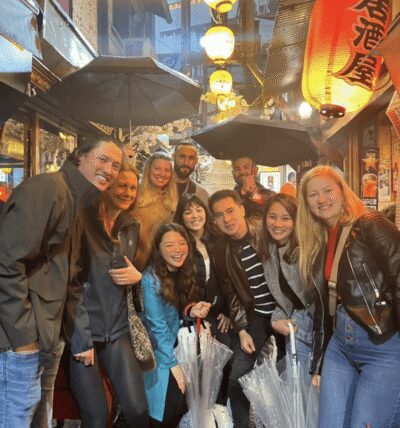
Shinjuku Local Bar and Izakaya Guided Walking Tour
Read our review →
Browse the lists this tour appears in