
Reviewed · WALKING TOURS
Nara Highlight Walking Tour with Furoshiki Experience with Lunch
Nara feels different the minute you step into it. This 5.5-hour small-group walk strings together the big World Heritage hits, deer encounters, and a hands-on furoshiki experience, with lunch built in. You get guided context at each stop, so the place feels like more than a photo checklist.
I especially love how the tour blends top sights with everyday Nara culture. Todai-ji is a mind-bending anchor, and the added stops around it give you variety without rushing. I also like that you take something real home, your own furoshiki cloth, instead of just collecting stamps.
One thing to consider: this tour requires good weather, and it leans into walking. If your day is tight or you dislike being outdoors for hours, it is worth thinking about timing and comfort before you book.
Key highlights at a glance
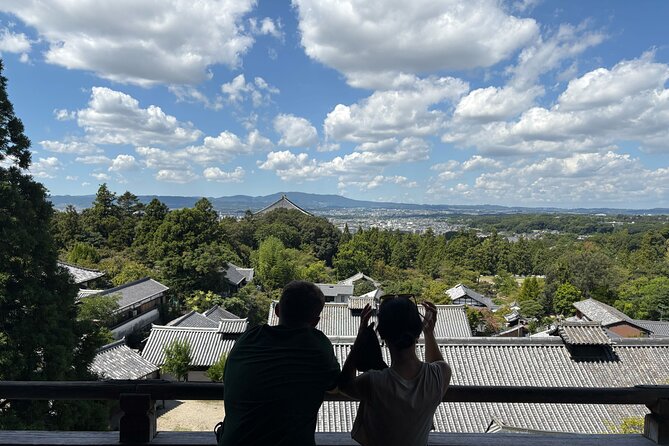
- UNESCO-heavy route from Kasuga Taisha through Todai-ji Temple
- Free-roaming deer time in Nara Park for the classic Nara moment
- Furoshiki wrapping workshop plus taking your cloth home
- Traditional lunch included (with a Wednesday exception depending on option)
- Small group cap of 7 for a calmer, more personal pace
- English-speaking local guide with details that make the sights click
Why Nara’s highlight walk feels like the right length
A half-day in Nara can be either perfect or overwhelming, depending on how you plan it. This one works because it targets the places most visitors come for, then adds a couple of quieter cultural stops to keep your brain from going on autopilot.
The pace is built around short stays at major sites and a longer block for lunch plus furoshiki. That matters because Todai-ji and its nearby halls are visually huge, but they are also spiritually layered. With a guide, you spend less time guessing what you are looking at, and more time noticing details you would likely miss on your own.
Also, the group size helps. With a maximum of 7 travelers, it is easier to hear your guide and stay together without turning the day into a sprint. In one standout review, guide Keiko was described as constantly engaging, even when the group was tiny. That is exactly the kind of energy that makes a short tour feel worth it.
More walking tours in Nara:
- Nara Half Day Trip Walking Tour (Private Option Available)
★ 5.0 · 937 reviews - Nara: Private Walking Tour with a Local
★ 4.3 · 36 reviews - Kyoto Geisha Walking Tour: Gion District & Hidden Gems
★ 4.7 · 3,273 reviews
Price and what you are getting for $37
At $37 per person, the real value is not just the walking. The tour includes entrance fees for the temples and shrines you visit, an English-speaking local guide, lunch (with a Wednesday note), and the furoshiki wrapping experience (option-dependent).
That combination can add up quickly if you price it separately. Todai-ji and other shrine/temple stops are not usually free, and lunch in a tourist area often becomes an extra cost you did not budget. Here, at least on paper, your biggest day elements are bundled.
One extra cost to plan for: the bus fee is ¥500 per person and is not included. Even if the day feels mostly on foot, that transport allowance is worth keeping in mind so you do not get surprised later.
If you like your sightseeing organized, this price point is about making your day smoother, not about being the cheapest option.
Getting oriented in Nara: the start and the end
The tour starts at 行基菩薩像27 Higashimuki Nakamachi, Nara (630-8215) and ends at Nakatanidou29 Hashimotochō, Nara (630-8217). The finish point is in a shopping area with easy access to JR Nara Station or Kintetsu Nara Station, which is convenient when you want to continue your day without complicated transit.
You will also use a mobile ticket, which is handy if you do not want to handle paper vouchers during temple hopping.
If you arrive in Nara early, this tour can be a strong way to get your bearings. Once the route is explained, it is easier to return later to explore streets like Naramachi on your own.
Kasuga Grand Shrine: lanterns, symbolism, and a calm first stop
Kasuga Taisha is a great opening move. You get placed in the right mood early, since this shrine is known for its many bronze and stone lanterns. The fact that lanterns are lit during special festivals is the kind of detail your guide can bring to life, helping you understand why the place looks the way it does, not just that it looks impressive.
The time here is about 20 minutes, and that is enough for a first pass when you are pairing it with other major sights later. The drawback of short stays is that you might want to linger longer if you love atmosphere, but that is also how the tour keeps the total day within about 5 hours 30 minutes.
If you are the kind of traveler who loves reading meanings into architecture and sacred design, this first stop sets the tone for everything after.
A few more Nara days worth comparing
- World Heritage Kyoto & Nara Uji Authentic Matcha Experience
★ 5.0 · 1,573 reviews - Nara Early Morning Tour (Kyoto or Osaka Departure Available)
★ 5.0 · 676 reviews - Osaka: Nara and Uji Day Trip with Deer Park and Hot Spring
★ 4.4 · 302 reviews - Kyoto/Osaka: Kinkakuji, Bamboo Forest, and Nara Deer Park
★ 4.4 · 265 reviews
Deer time in Nara Park: the classic moment, without the chaos
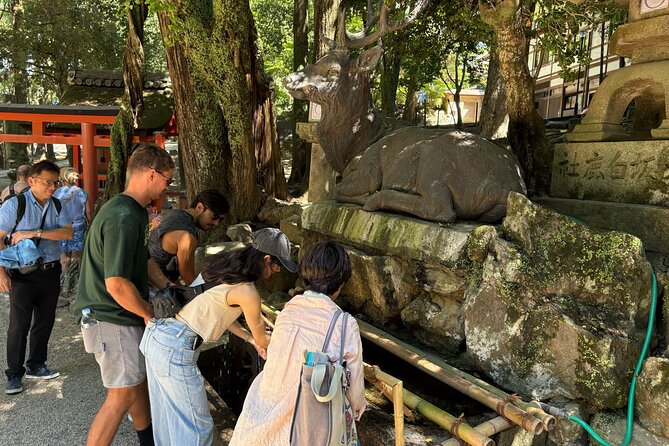
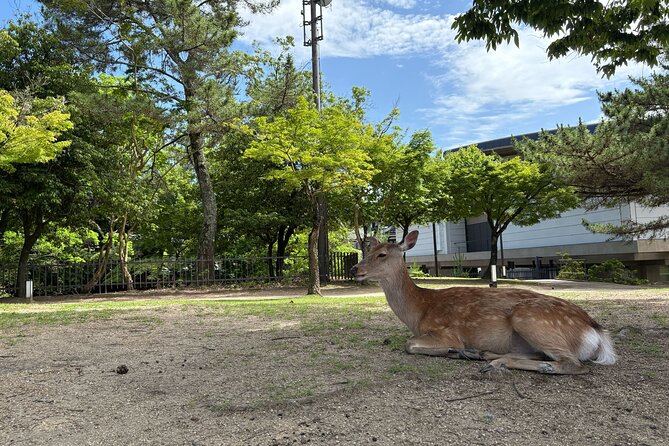
Nara’s famous free-roaming deer are a big part of why the city pulls people in. This tour specifically includes meeting and interacting with them in Nara Park, which is the heart of the deer experience.
How it feels on the ground matters. Deer are not stage props, they move, they pause, they wander close. With a small group, you are more likely to keep the flow manageable, and you spend less time stuck waiting for people to catch up.
Practical advice: keep your expectations realistic. You will get deer time, but you are sharing space with wild animals, so you should stay observant and patient. If your main goal is to get a specific kind of photo, aim to have your camera ready, but do not treat the deer like a guaranteed performance.
This is also a good break between heavier temple moments, because it resets your day with something playful and very Nara.
Tamukeyama Hachimangu: protection-minded shrine vibes
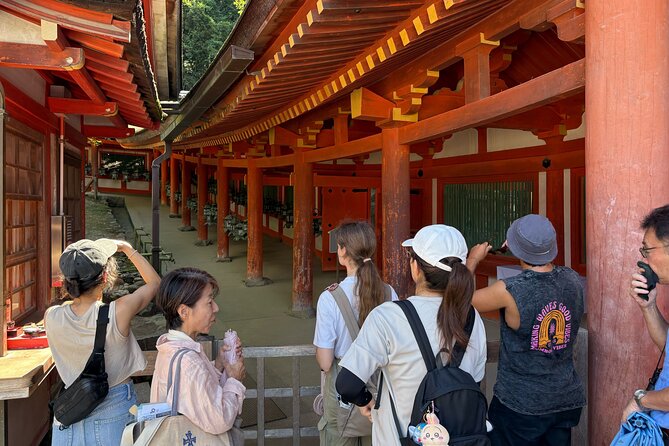
Between the big draw of Kasuga Taisha and the monumental scale of Todai-ji, the tour includes Tamukeyama Hachimangu. This is a smaller Shinto shrine, built in 749, with a practical purpose in its origin story: it was meant to protect the nearby Great Buddha Hall of Todai-ji Temple.
Why this stop is worth your time is simple. You get a different angle on sacred space. Instead of only seeing grandeur, you learn about intention, protection, and why shrines can cluster around major religious centers. With an English-speaking guide, that context turns a quick stop into something you remember.
The time allocated is short, but the origin detail gives it weight.
Nigatsu-do at Todai-ji: the Omizutori connection
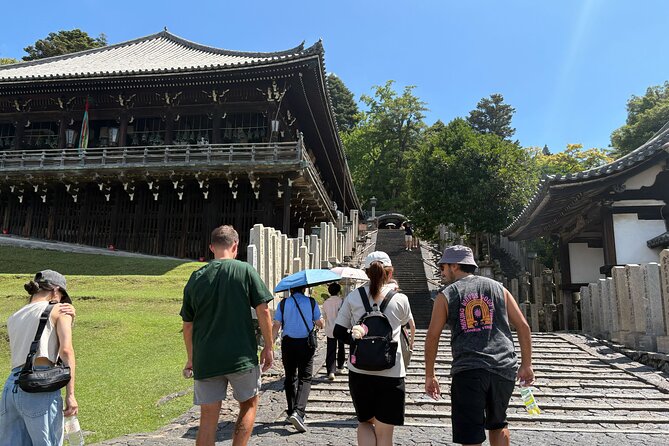
At Nigatsu-do Temple, you have another short, focused segment, around 20 minutes, with the highlight being the Omizutori (Water-Drawing) ceremony held every March, described as over 1,250 years old.
Even if you are not in Nara during March, this matters. The ceremony is not just a festival fact, it explains why certain halls and spaces feel like they carry ongoing tradition. It is also the kind of information you would not likely connect on your own while walking around the Todai-ji complex.
One potential drawback: if you are visiting and you want the full Todai-ji complex experience with plenty of time everywhere, the tour’s approach is more selective. You still get a solid anchor at Todai-ji later, so treat this stop as a guided clue trail.
Todai-ji Temple and the Great Buddha: scale you feel in your body
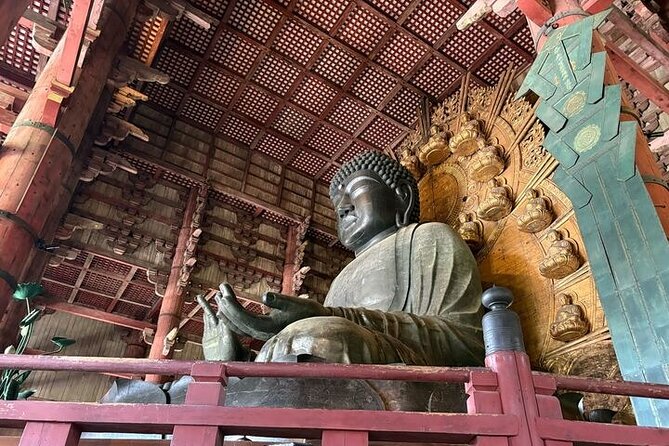
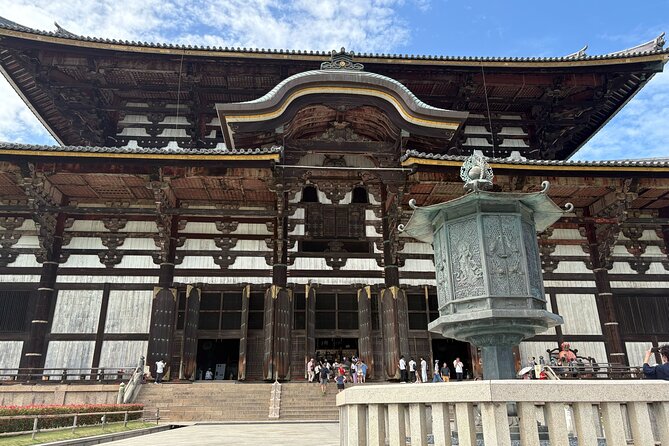
Todai-ji is the big one. The temple dates back to the 8th century and is home to the Great Buddha, described as one of the largest bronze statues in the world. Your visit here lasts about 40 minutes, and with entrance included, it is a core value moment.
What makes this stop land is not only scale, it is the way religious spaces concentrate attention. When you stand in front of something that massive, your sense of scale recalibrates. A guide can help you connect that physical size to what the site represents.
If you love monumental architecture and you want the confidence of knowing what you are seeing, this is the stop that justifies doing a tour at all. On your own, Todai-ji can still impress, but with guidance you are more likely to notice meaningful details instead of only feeling awe.
The time is enough for a proper look and photo time, though people who want to slow-walk and linger might wish for more. The tradeoff is that you keep the rest of the city culture in the same day.
Lunch at Shika no Fune Mayu plus your furoshiki workshop
This is where the tour becomes more than sightseeing.
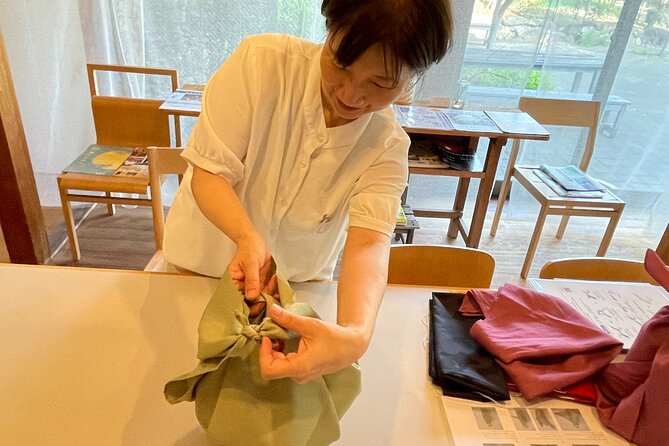
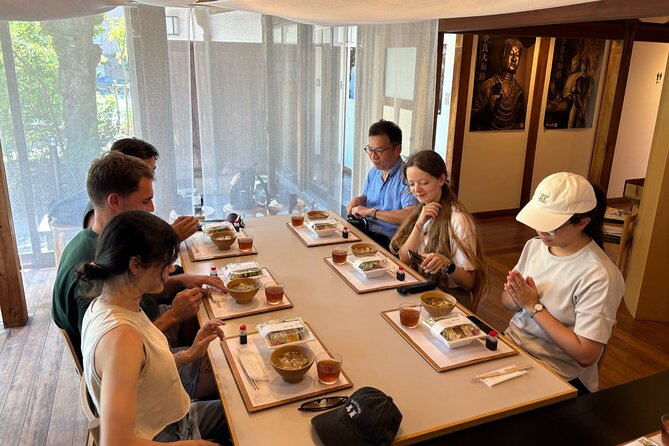
You spend about 1 hour at Shika no Fune Mayu for lunch and the furoshiki experience. Lunch is described as a traditional Japanese meal with freshly cooked rice and seasonal vegetables from Nara. That is a good combination after temple time, because it feels local and grounding instead of a generic set meal.
Then comes the hands-on part. You do a short furoshiki wrapping workshop, and you take your own furoshiki cloth home. That matters for two reasons:
- You leave with a tangible memory you can actually use later.
- You learn a craft element tied to everyday Japanese traditions, not only ceremonial sites.
The main consideration is scheduling and options. Lunch inclusion can vary by option, and specifically Wednesday is not included. If you plan a Wednesday visit, double-check the option details so you are not stuck hungry between stops.
For most people, this lunch and workshop block is the most relaxing part of the whole day, because it shifts you from walking and looking to making something small with your own hands.
Naramachi townhouse lanes at Nigiwai-no-le
After the big sights, the tour ends with a cultural contrast: Naramachi Nigiwai-no-Ie, a historic townhouse in the old Naramachi district. This one is built in 1917 by an antique dealer and is listed as a Registered Tangible Cultural Property.
The stop is about 15 minutes, which keeps it from becoming a deep museum-style visit. What you get instead is a quick taste of old neighborhood texture, a chance to see how commercial and residential life shaped Nara in the more recent past.
This ending works well because it helps you pivot from monumental religious sites to the streets. If you want to keep exploring after the tour, Naramachi is the kind of area where wandering feels natural.
Who this tour fits best
This experience is a strong match if you want:
- A guided Nara day without spending time planning routes between major sites
- The combination of Todai-ji plus Kasuga Taisha, with deer time added in
- A small-group vibe, maximum 7, so your guide can keep conversations flowing
- A hands-on cultural activity, especially if you enjoy making something you can take home
It may be less ideal if you hate walking and outdoor time, since it runs about 5.5 hours and needs good weather. It is also not the best fit if you specifically want a fully unstructured day where you control every stop length.
Practical tips to make the day smoother
A few habits will make this tour feel easy:
- Wear shoes you trust for temple grounds and walking segments. The tour is designed to move from one key area to another.
- Bring your camera planning in mind. You will have short timed stops at several sites, so be ready when you arrive.
- If you are visiting on Wednesday, confirm whether lunch is included for your chosen option, since the tour notes Wednesday can be different.
- Keep an eye on the end location near JR Nara Station or Kintetsu Nara Station, so you can plan your next meal or train timing without stress.
Also, if you have a question about what you are seeing, ask early. With a small group, it is usually easier for the guide to respond thoughtfully.
Should you book this Nara highlight walking tour with furoshiki?
Yes, if you want a structured Nara day that covers the headline sights while still giving you something memorable to do. For the money, you are not just paying for access. You are paying for organization, entrance inclusion, a guided flow, lunch, and the craft element that produces a take-home souvenir.
I would especially recommend it to first-time visitors who want Todai-ji and Kasuga Taisha without the guesswork of figuring out what to prioritize. The best feedback points to guides like Keiko delivering clear, engaging explanations, even in tiny groups, which is exactly what you hope for on a short schedule.
If you hate walking or you are traveling during a period where weather is unpredictable, wait for a forecast you can trust or be ready to pivot, since the tour requires good conditions.
In short: this is a satisfying way to see Nara efficiently, while still feeling personal, not rushed.
FAQ
How long is the Nara Highlight Walking Tour with Furoshiki and lunch?
The tour lasts about 5 hours 30 minutes.
What is the price per person?
The price is $37.00 per person.
Is lunch included?
A traditional Japanese lunch is included depending on the option. The information also notes that Wednesday is not included.
Are entrance fees included?
Yes. Entrance fees for all the temples and shrines you visit are included.
Do I get to take home the furoshiki?
Yes. You join a furoshiki wrapping experience and you take your own furoshiki cloth home.
What group size should I expect?
The tour has a maximum of 7 travelers.
Where does the tour start and end?
It starts at 行基菩薩像27 Higashimuki Nakamachi, Nara and ends at Nakatanidou29 Hashimotochō, Nara. The finish is in a shopping district with easy access to JR Nara Station and Kintetsu Nara Station.
Is transportation included?
No. A bus fee is listed as ¥500.00 per person and it is not included.
Is the tour in English?
Yes. The tour includes an English-speaking local guide.
What happens if the weather is bad?
The tour requires good weather. If it is canceled due to poor weather, you will be offered a different date or a full refund.
Fresh options around Nara
- Nara World Heritage PRIVATE TOUR★ 4.5 · 15 reviews
- Nara: Todai-ji y parque de Nara (Spanish Guide)★ 5.0 · 16 reviews
- Nara Private Tour: Flexible Pickup from Kyoto, Osaka, or Nara★ 5.0 · 17 reviews
- Nara – Heart of Nature Cross Bike Tour★ 5.0 · 19 reviews
- Nara:Tea Tasting&Private Tea Ceremony -Master Matcha Making-★ 5.0 · 19 reviews
- Make Your Own Soy Sauce in Japan’s Old Capital Asuka Nara★ 5.0 · 22 reviews
- Nara: Essential Private Tour with Deer Park and Temples★ 5.0 · 24 reviews
- Nara:5 Type of Tea Tasting & Mindful Tea Ceremony★ 5.0 · 28 reviews
Walking Tours, compared.
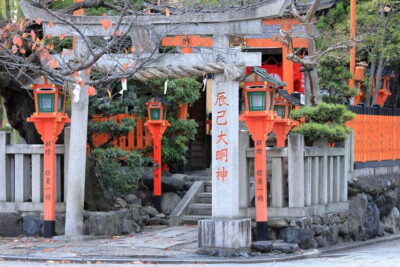
Kyoto Geisha Walking Tour: Gion District & Hidden Gems
Read our review →
Tokyo Tsukiji Fish Market Food and Culture Walking Tour
Read our review →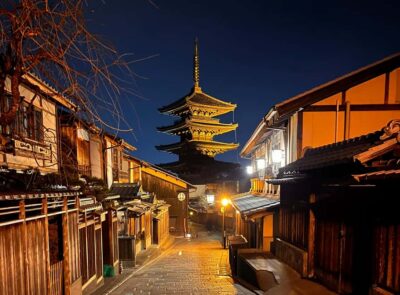
Gion Magical Night Walking Tour with Geisha Trivia
Read our review →
Imperial Palace and Shogun Historical Walking Tour
Read our review →
Gion Geisha District Walking Tour – Stories of Geisha
Read our review →
Shinjuku Local Bar and Izakaya Guided Walking Tour
Read our review →
Browse the lists this tour appears in