
Reviewed · WALKING TOURS
Wasabi Farm Walking Tour & Lunch
A wasabi farm tour feels like a secret side quest in Japan. You’ll visit Daio Wasabi Farm in Azumino, learn how the plant is grown, and taste wasabi in a real-food way, not just as a condiment.
I especially like the English-speaking guide component, because wasabi farming has details you’d miss if you just wander. I also like that the experience includes lunch with wasabi, so you can connect what you see in the fields to what you eat afterward.
One consideration: during peak farm days, you may face a wait to enter the restaurant, so if you’re on a tight schedule, plan a little flexibility around lunch time.
Small-group, private-style walk: Maximum 12 people, and you get guide time that doesn’t feel rushed.
Daio Wasabi Farm (since 1915): A long-running operation in the base of the Japanese Alps region.
Wasabi learning you can use: How cultivation works, plus history tied to Nagano (Shinshu).
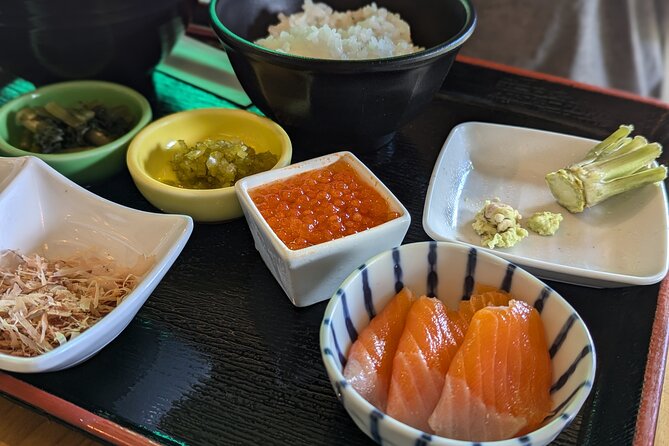
Lunch built around real wasabi: Shinshu soba and miso, served as a guided flavor experience.
Wasabi ice cream may be included or add-on: It’s described in the experience, but some pricing notes list it separately.
Daio Wasabi Farm in Azumino, Nagano: Why This Trip Is Worth the Time
Nagano is famous for mountains, nature, and food that takes itself seriously. This tour gives you a very specific twist: wasabi farming at Daio Wasabi Farm, located in Hotaka in Azumino.
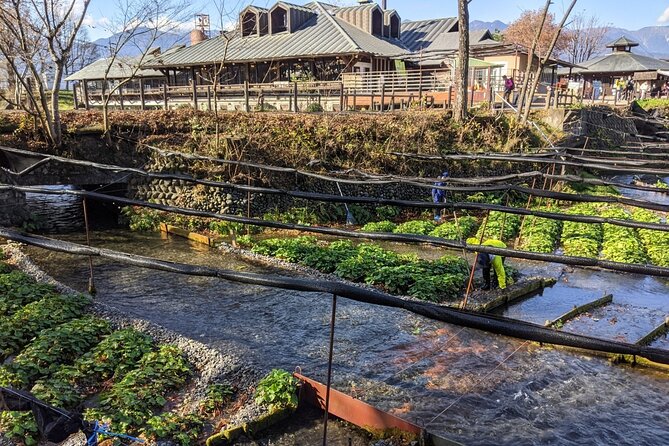
Daio is especially interesting because it’s established in 1915 and sits in an area known for the natural conditions that support wasabi cultivation. Wasabi is not a spice-like plant you can grow anywhere. The farming setup matters, and seeing it in the real place where it’s produced changes how you think about that tiny green hit in sushi and soba.
I like that this isn’t just a quick photo stop. The tour is structured as a walk through the farm grounds with guiding commentary, so you’re not left staring at plants and guessing what you’re looking at. It’s also a good match for people who want something different from the usual shrine and castle routine. Here, the “culture” is food science and local agriculture.
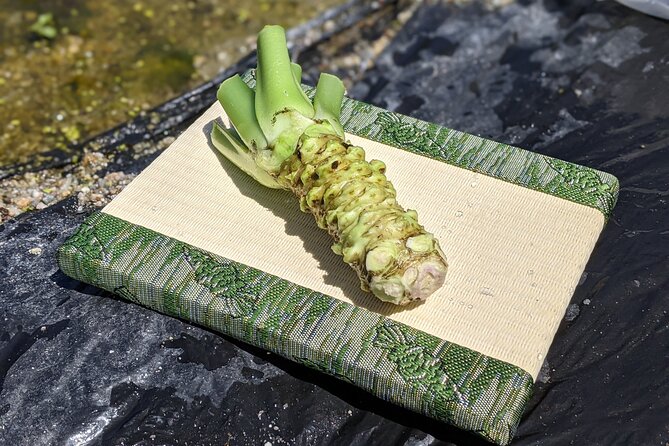
And yes, it’s photogenic. The wasabi plants have a unique look, and the setting can feel calm, like a break from the pace of city travel.
Walking the Fields With an English Guide (and names like Akiko, Naomi, Tom, Tim)
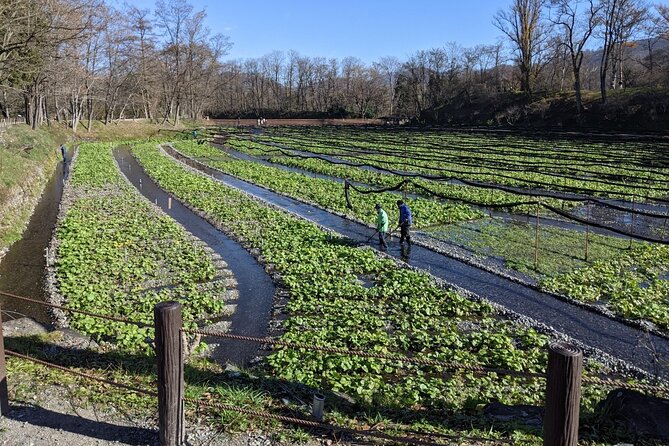
What makes this tour work is the guide. Wasabi cultivation is full of small details, from how the farm is set up to how growers think about quality. You’ll get commentary in English, which means you can ask questions without playing guessing games.
This tour is also described as a private tour for your group, with a maximum of 12 travelers. In practice, that usually means you can actually hear the guide and follow along without the “herd herding” vibe. It’s a better format for learning, especially if you care about how food is made.
You might be led by English-speaking guides such as Akiko, Naomi, Tom, or Tim. The common thread across these names is strong communication and a willingness to explain not only the farm, but also how it connects to Japanese food culture. One guide even helped translate museum information that’s mostly in Japanese, which is a nice bonus if you want context beyond the walk.
A small but real benefit: if you’re traveling in Japan and you’re unsure how to move around, guides can offer practical advice about what to do next. That kind of trip-smoothing matters more than people expect.
More walking tours in Nagano:
- Matsumoto Castle Town Walking Tour
★ 4.8 · 58 reviews - Food & Cultural Walking Tour around Zenkoji temple in Nagano
★ 5.0 · 58 reviews - Matsumoto Discovery – Half Day Walking Tour
★ 5.0 · 43 reviews
Stop One, Daio Wasabi Farm Grounds: What You’ll Learn While You Walk
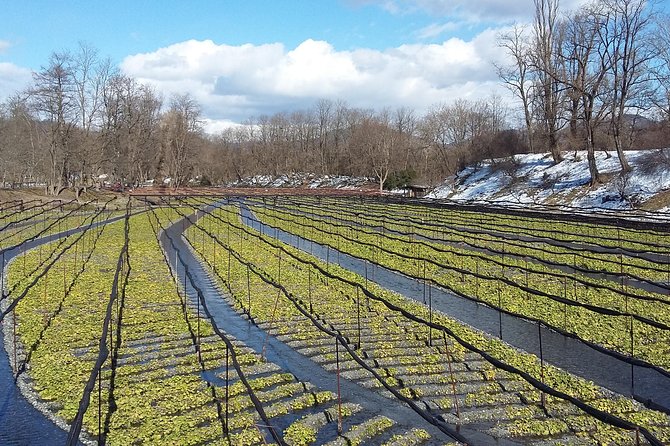
The first phase is all about the farm itself. You’ll be at Daio Wasabi Farm in Hotaka, Azumino, and you’ll spend about one hour walking with the guide. The point is to see wasabi cultivation up close and understand why this plant is grown the way it is here.
You can expect a guided route that explains:
- how wasabi farming is tied to the local environment
- the history of the farm (Daio dates back to 1915)
- why wasabi is such a core ingredient in Japanese cuisine
Wasabi is often treated like a single flavor bomb. On this walk, it’s easier to see it as a crop with a production process. That matters if you’re into food and cooking. Even if you don’t cook much, you start noticing the difference between flavored wasabi products and wasabi that’s genuinely handled and prepared for taste.
Also, the farm visit is not presented as rushed sightseeing. It’s described as peaceful, and that matches the setting. If you’re coming off trains and busy streets, this is a welcome reset.
Stop Two, Lunch at the Farm: Shinshu Soba, Shinshu Miso, and Real Wasabi Flavor
The second phase is where this tour earns extra points: lunch designed to highlight wasabi.
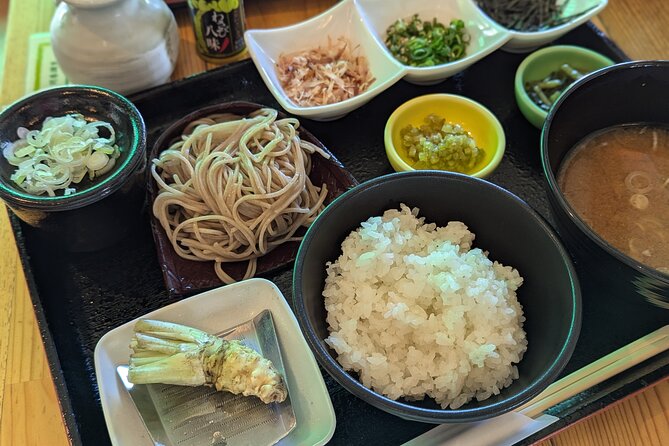
You’ll spend about one hour for the meal, served as a traditional lunch set. The meal is linked to Shinshu, the old name for Nagano Prefecture, and you’ll enjoy local foods like Shinshu soba and Shinshu miso alongside wasabi-focused flavor.
This is more than “here’s food, bye.” The way lunch is built helps you connect the dots. You see how wasabi is grown, then you taste it in a context Japanese diners recognize. It’s the difference between buying a souvenir paste and understanding why fresh wasabi has a particular bite and aroma.
A helpful detail: the tour notes that they can cater to vegetarian and vegan guests, and they can also accommodate families with young children. That’s not something you always find on small food-focused tours, so it’s worth noting.
One drawback to keep in mind: during peak season, reservations at the restaurant may not be possible right away, so there may be a wait to enter. If you have another activity after lunch, don’t book it back-to-back without buffer time.
Wasabi Ice Cream: What to Expect and How to Avoid a Surprise
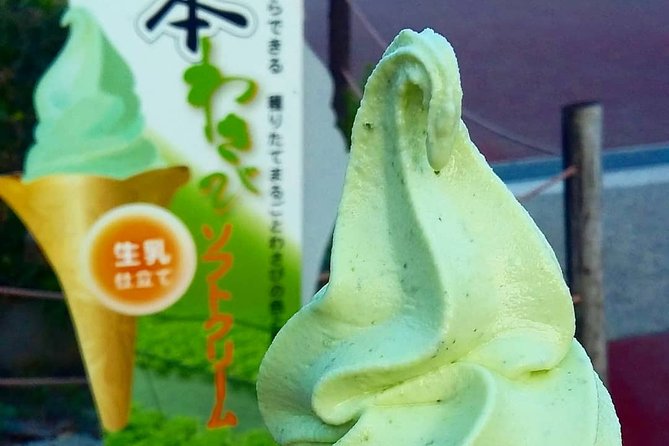
The experience is promoted as including a wasabi ice cream tasting. You’ll also see this mentioned as a highlight, with people describing it as memorable at the end.
At the same time, some pricing details list wasabi ice cream under items not included as snacks or drinks. That means you should not rely on assumptions.
My practical advice: when you confirm your booking, quickly check whether your date includes the ice cream tasting or if it’s available separately. If it is included, great, you get a fun, slightly strange dessert that shows how wasabi flavors can work beyond savory food. If it’s not included, you’re not stuck feeling like you “missed the main part.” You still get the guided farm walk and the wasabi-forward lunch, which are the core value drivers here.
If you’re the type who likes to try one unexpected flavor, this stop is likely to be a fun finale. If you’re more cautious, plan to keep your expectations flexible.
A few more Nagano days worth comparing
- 1-Day Snow Monkeys, Zenko-ji Temple & Sake in Nagano
★ 5.0 · 1,020 reviews - Nagano: Snow Monkeys, Zenkoji Temple & Sake Day Trip
★ 4.9 · 833 reviews - From Tokyo: Snow Monkey 1 Day Tour with Beef Sukiyaki Lunch
★ 4.6 · 295 reviews - Tokyo: Snow Monkey & Nagano Customiseable Private Day Tour
★ 4.8 · 138 reviews
Timing and Getting There: A 10:30 Start in Azumino
The tour starts at 10:30 am and runs about 2 hours total. It’s a good length if you’re doing a Nagano-based itinerary and you want a cultural-food activity that doesn’t swallow your whole day.
The meeting and end point is Daio Wasabi Farm, Hotaka, Azumino, Nagano 399-8303, Japan. The tour also says it’s near public transportation and you’ll have a mobile ticket, which makes last-minute logistics less annoying.
One thing I’d plan for: wasabi farms are a countryside experience. Even though the start point is clear, you may still want to build in time to get there calmly, especially if you’re switching between train and local transport. This kind of outing is easy to like when you arrive without stress.
If your schedule is tight, that lunch wait during peak season matters even more. I’d keep your next plan later than you think you need.
Price and Value: Is $70.94 for Two Hours a Good Deal?
At $70.94 per person, this isn’t a bargain-basement activity. So here’s how I judge value.
You’re paying for four big things:
- English-speaking guided walking time (roughly one hour on the farm)
- a structured farm visit at Daio Wasabi Farm, not just wandering
- a Japanese lunch set with wasabi included
- entry to the farm itself is free
When an experience includes a real meal, the price stops looking as steep. Lunch in Japan is usually not free, and wasabi-focused food isn’t exactly cheap if you try to piece it together on your own.
Also, the maximum group size of 12 supports better guide interaction, which is what you want for a food-production topic. If you’re the type who likes to ask questions, that guide time can be worth more than the farm admission alone.
So, for me, the value is strongest if you want:
- an English-guided explanation of wasabi farming
- a wasabi-forward lunch instead of a generic snack
If you’re only interested in taking photos and eating quickly, this might feel pricey for the time. But if food is your theme, it’s a sensible use of a half-day.
Who This Tour Suits Best (and who might skip it)
This tour is a great fit for:
- food lovers who want to understand what makes wasabi different
- people who care about local agriculture, not just tourist sights
- travelers who prefer an English-speaking guide and clear structure
- families, since vegetarian and vegan catering is noted
It may be less ideal for you if:
- you dislike farm walks or want a faster, more hands-off experience
- you have zero flexibility for a possible restaurant wait in busy periods
- you’re only chasing the ice cream and nothing else
The vibe is calm and educational. Even if you’re not a wasabi superfan, the plant has an unusual look and the story of how it’s grown can surprise you.
Should You Book the Wasabi Farm Walking Tour and Lunch?
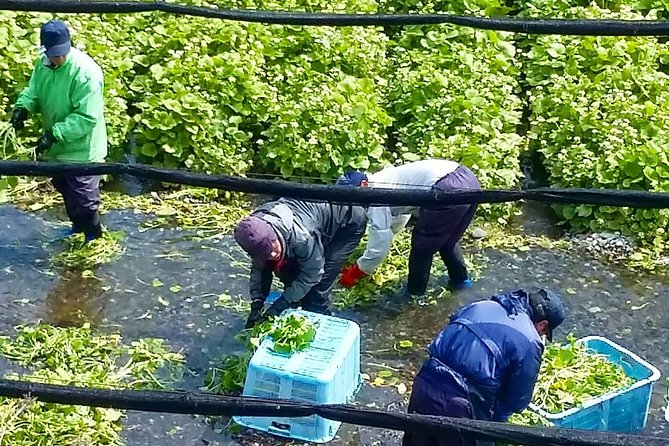
I’d book it if you want a Nagano experience that’s genuinely tied to the region’s food identity. Daio Wasabi Farm is the real place, and the tour structure connects the walk to what you taste at lunch. The guide factor makes the difference between seeing plants and understanding them.
Book with a quick check on the wasabi ice cream part for your specific date, and give yourself breathing room around lunch time during busy seasons. If you do that, this is one of those tours that turns an ingredient you already know into something you actually get.
FAQ
What time does the Wasabi Farm Walking Tour and Lunch start?
The start time is 10:30 am.
Where does the tour begin and end?
It starts and ends at Daio Wasabi Farm, Hotaka, Azumino, Nagano 399-8303, Japan.
How long is the tour?
The tour is about 2 hours total, with around one hour for the farm visit and around one hour for lunch.
Is there an English-speaking guide?
Yes. The experience includes an English-speaking guide.
How big is the group?
The tour lists a maximum of 12 travelers.
What’s included in the price?
The included items are English-speaking guide, Japanese lunch set with wasabi, and entry to the farm.
Can the lunch accommodate vegetarian or vegan guests?
Yes. The tour notes they can cater to vegetarian and vegan guests, and families with young children.
What happens if the weather is poor?
The experience requires good weather. If it’s canceled due to poor weather, you’ll be offered a different date or a full refund.
Can I cancel for a full refund?
Yes. You can cancel up to 24 hours in advance for a full refund. If you cancel less than 24 hours before the start time, you won’t get a refund.
Fresh options around Nagano
- Snow Monkeys, Hokusai & Sake: A Perfect Day in Nagano★ 5.0 · 19 reviews
- 1-Day Tateyama-Kurobe Tour: Walking on the ‘Roof of Japan’★ 5.0 · 20 reviews
- Matsumoto Castle Tour & Soba Noodle Experience★ 4.5 · 20 reviews
- Nagano Private Two Day Tour★ 5.0 · 29 reviews
- 1-Day Ski Tour Package from Nagano Station★ 5.0 · 30 reviews
- Explore Jigokudani Snow Monkey Park with a Local Guide★ 4.5 · 30 reviews
- Nagano Spring: 1-Day Cherry Blossoms & Snow Monkeys Guided Tour★ 5.0 · 31 reviews
- 1-Day Winter Tour From Nozawa Onsen: Snow Monkeys, Zenko-ji Temple & Sake★ 5.0 · 32 reviews
Walking Tours, compared.
Kyoto Geisha Walking Tour: Gion District & Hidden Gems
Read our review →
Tokyo Tsukiji Fish Market Food and Culture Walking Tour
Read our review →
Gion Magical Night Walking Tour with Geisha Trivia
Read our review →
Imperial Palace and Shogun Historical Walking Tour
Read our review →
Gion Geisha District Walking Tour – Stories of Geisha
Read our review →
Shinjuku Local Bar and Izakaya Guided Walking Tour
Read our review →
Browse the lists this tour appears in