
Reviewed · TEA CEREMONIES IN KYOTO
Tea Ceremony in 150 Years Old Townhouse with Tables and Chairs
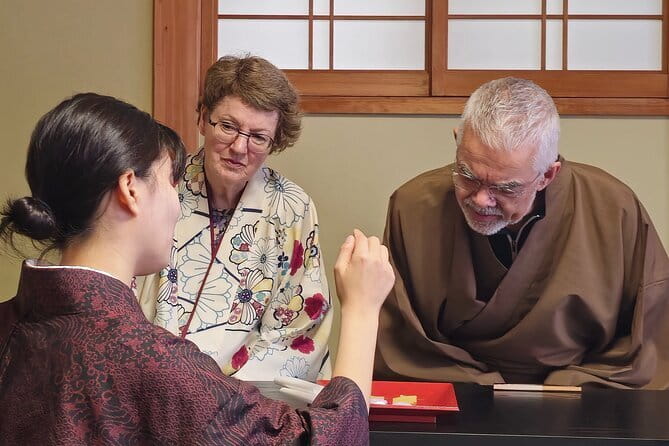
Matcha rituals in a 150-year-old Kyoto townhouse. This small-group session in the Ninenzaka area turns a polite tea gathering into a practical mini lesson, from utensils and etiquette to making your own cup of matcha. You also get to sit down, taste traditional seasonal sweets, and ask questions after the main ceremony.
I love the hands-on part most. You are not just watching, you get to prepare your own matcha. I also like that the tea focuses on high-quality matcha from Uji, Kyoto, served alongside two types of beautiful seasonal Japanese sweets.
One thing to consider: this is a rule-following tea room. You will be expected to wear socks, skip perfume, and keep phones strictly to what the room allows, and the session runs about 50 minutes with others in the space.
Key things that make this matcha ceremony worth your time
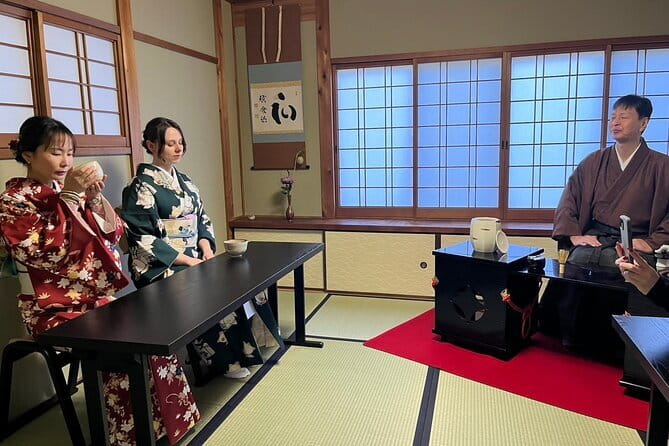
- You make matcha yourself, with guidance during the ceremony rather than just a lecture
- Uji matcha and seasonal sweets are included, so you taste as you learn
- Small-group atmosphere (up to 15) makes the experience feel personal, not rushed
- English explanations every day help you follow the steps and the meaning
- Tea room rules are clear, which keeps the experience calm and respectful
Why Ninenzaka is the right setting for a tea ceremony lesson
Kyoto’s old streets set the tone before you even step into the tea room. Your experience starts in the Sannenzaka Ninenzaka area, where stone lanes, traditional houses, and quiet courtyards make it easy to understand why tea culture took root here.
This matters more than it sounds. Tea ceremony is not only about taste. It is about atmosphere, timing, and respect for the space you are in. Starting in a historic neighborhood helps you get into the right mindset fast, especially if this is your first time doing anything like this.
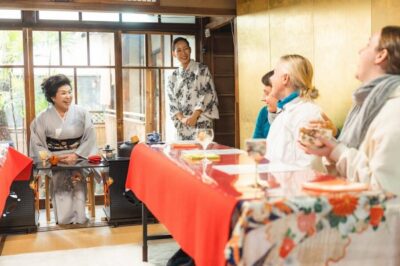
Once you arrive at Tea Ceremony & Cultural Experience Kangetsu Kyoto, you will be guided into a traditional townhouse setup with tables and chairs. That combination is part of the appeal. It feels authentic without being so formal that you feel lost the whole time.
More Tea Ceremonies in Kyoto
- Kyoto: Tea Ceremony in a Traditional Tea House in Kiyomizu
★ 4.9 · 3,519 reviews - Kyoto: Tea Ceremony Ju-An at Jotokuji Temple
★ 4.9 · 3,207 reviews - Kyoto: 45-Minute Tea Ceremony Lesson Experience
★ 4.3 · 2,378 reviews
The 50-minute flow, from etiquette basics to making your own matcha
The ceremony lasts about 50 minutes, which is a smart length for most schedules in Kyoto. You get enough time to learn the why, but it does not drag.
Here is the overall rhythm you should expect:
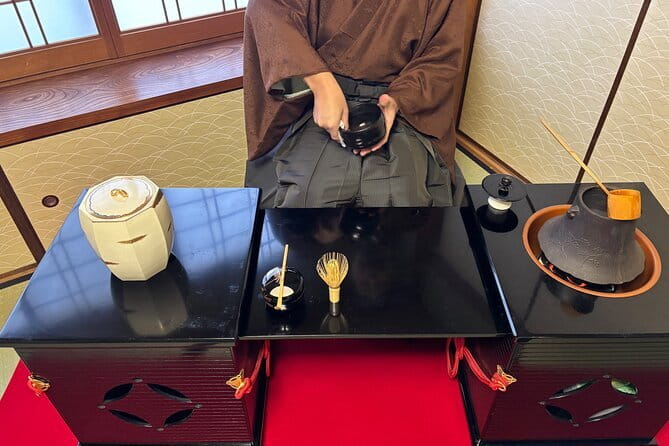
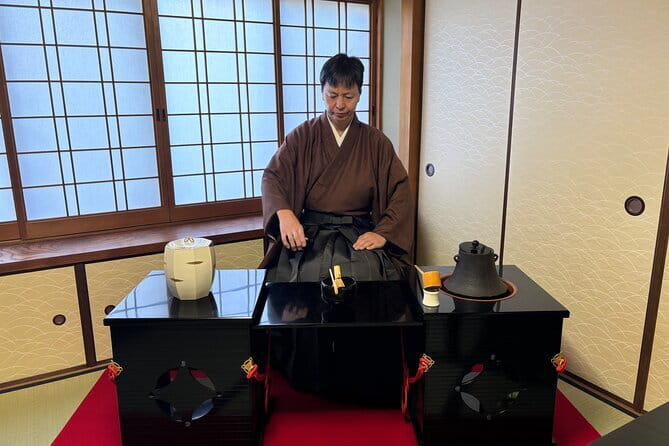
First, you learn the structure of the ceremony and the meaning behind the steps. You get explanations of tea etiquette, the utensils, and the key rituals. This is where the experience becomes more than a food activity.
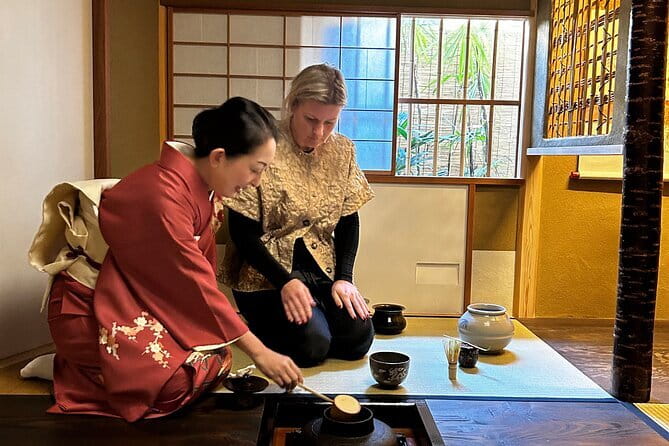
Then comes the main event: you prepare your own cup of matcha. With instruction at each stage, you learn how the tea is mixed and served. You can usually move from watching to doing without feeling pressured, because the group stays small.
At the end, you will have a short question-and-answer moment. You can ask what you were curious about, like why certain steps matter or what to look for when you buy matcha.
After that, you taste traditional Japanese sweets with your tea. The session stays focused, so you leave with a clearer mental picture of the whole practice.
Uji matcha and the tasting part that actually sticks with you
The value here is not just that matcha is included. It is that the tea is presented as something worth learning, not just something to drink for a photo.
You are provided two cups of matcha, described as high-quality match made in Uji, Kyoto. Uji is known for matcha, and including it in a 50-minute experience gives you a real reference point. If you later buy matcha in Kyoto, you will know what you like and what level of quality feels balanced and smooth to you.
You also get the food pairing: two different types of seasonal authentic Japanese sweets. That pairing is quietly important. In the tea room, sweets are not an afterthought. They are part of the overall experience, meant to complement the tea’s taste and the ceremony’s pacing.
A practical takeaway for you: treat the sweets and matcha as one moment. Taste slowly, notice sweetness, bitterness, and how the flavor changes as you sip. That is the easiest way to connect what you learned about the ritual to what you taste.
The sweet-to-tea pairing and what to pay attention to
Matcha has a specific profile, with a grassy bitterness and a creamy texture when whisked well. The sweets you receive are seasonal, which means the flavor balance can shift depending on when you visit.
Instead of trying to identify every ingredient, focus on how the sweets change the matcha in your mouth:
- If the sweet is more delicate, matcha can feel cleaner and more focused.
- If the sweet is richer, matcha can feel more rounded and less sharp.
That is the reason these sweets matter. They show you how Japanese tea culture thinks about harmony, not just taste.
Also, because you are learning while you eat, you are less likely to get bored. You have a reason to keep paying attention after the whisking lesson.
Same corner of Japan, a different kind of day:
- PERFECT KYOTO 1-Day Bus Tour
★ 5.0 · 13,518 reviews - Kyoto: Fushimi Inari, Kinkakuji, Bamboo Grove 1 Day Bus Tour
★ 4.8 · 4,316 reviews - Kyoto Geisha Walking Tour: Gion District & Hidden Gems
★ 4.7 · 3,273 reviews - Kyoto: Gion Magical Night Walking Tour with Geisha Trivia
★ 4.9 · 2,393 reviews
The room rules that keep the tea ceremony experience respectful
Tea ceremony rooms are different from restaurants. They are quiet, scent-sensitive, and tradition-based. This one spells out the rules clearly, and they are worth taking seriously, because they affect your comfort and everyone else’s.
Here are the key rules you should plan around:
You need to wear socks. If you forget, you will be able to purchase socks on site.
Wear clothing that does not expose too much skin.
Perfume is strictly prohibited, because strong scent can interfere with the smell of incense and tea in the room.
In the tea room, only smart phones are allowed.
Video recording during the instructor’s demonstration is prohibited.
Children under 7 years old are not allowed.
If you have allergies, you should inform the team in advance.
These rules might feel strict on paper, but in practice they are what help the session stay calm. I like experiences that protect the atmosphere, especially for something as sensory as matcha and incense.
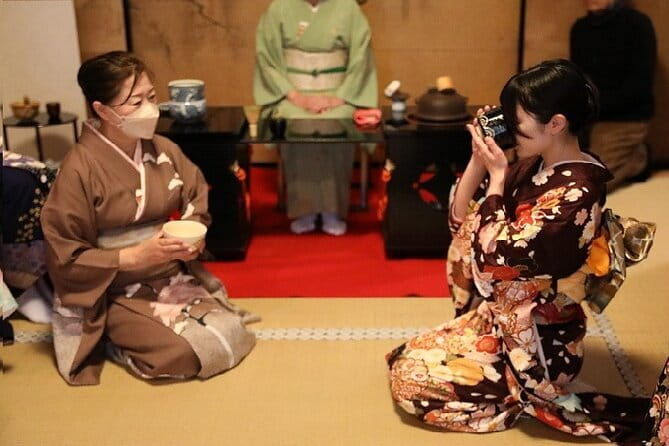
If you care about photos, know that you can use your phone but cannot record video during the demonstration. That means you can still capture the moment, just not the instructional portion.
Socks, perfume, and phone rules: small things that can ruin your timing
Let’s talk about the practical stuff that trips people up in Kyoto.
Socks are the big one. Tea rooms want clean, quiet steps. If you have already been walking around in sandals all day, stop by a convenience store or pack socks in advance. The good news is that this experience also provides a fix if you forget.
Perfume is another common surprise. If you sprayed yourself for the day, either choose a lighter hand next time or keep fragrance to a minimum before you go in. The goal is not to be rude, it is to let tea and incense be the main scent.
Phones are allowed, but only smart phones, and video recording is off-limits during demonstrations. So if your plan is to film the ceremony like a concert, you will have to adjust. Bring your phone for photos if that helps you remember, but keep your hands and eyes ready for the steps you are doing.
What the guides are doing, and why English matters
One of the strongest reasons to choose this session is the teaching style. You get a tea master who explains the process, the utensils, and the rituals, with English experiences every day.
That step-by-step guidance is what helps you go from confusion to confidence. When people get matcha wrong, it is usually from missing something small, like how to mix, how to hold a utensil, or what the ceremony is aiming for.
Also, the session includes a Q and A at the end. That is your chance to clear up anything you did not understand. It makes the experience feel interactive rather than like a show.
And because it is a small group with up to 15 travelers, you can usually pay attention without feeling like you are part of a crowd that moves too fast. You will still share timing with others, but the room stays focused.
Price and value: what $28.90 buys you in Kyoto
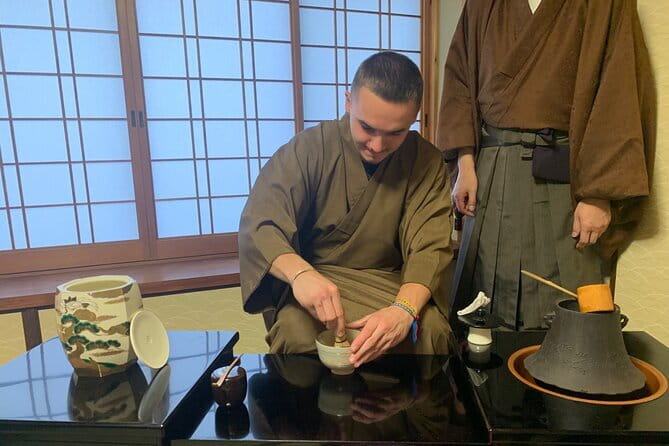
At $28.90 per person, this is priced like a serious cultural activity, not a casual tasting. The value comes from three things you get together in one package:
First, you get tea-making instruction and the chance to prepare your own matcha. Learning is usually where tea ceremony experiences justify their price.
Second, you get the actual product: two cups of high-quality matcha from Uji. If you were only buying tea, the price would be hard to beat, even before you count the class.
Third, you get two types of seasonal Japanese sweets. Those sweets are part of the ceremony, not a separate snack add-on.
So you leave with more than a memory. You leave with a new skill, a clearer sense of what good matcha tastes like, and enough sweets and tea for it to feel like a real sitting, not a quick sample.
Optional kimono: fun for photos, but plan the extra cost
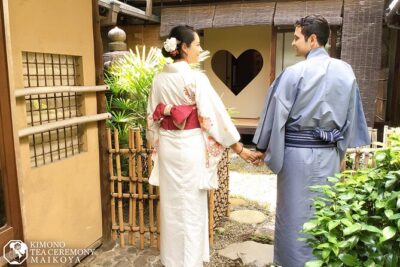
If you want to add a classic Kyoto look, you can wear a two-piece kimono option for 1000 JPY. It is not included in the base price, so it is an extra add-on to plan for.
Even if you skip the kimono, you will still get a traditional townhouse experience and a real tea lesson. If you do add it, treat it like icing on the cake, not the main dish.
Who should book this matcha tea ceremony, and who should skip it
This is a great fit if you want something structured but not stiff. You like the idea of learning the meaning behind a tradition, then getting hands-on with matcha and tasting the pairing.
You will also enjoy it if you want a smaller, calmer alternative to big-group tours. The setting works well for couples and friends who want a shared activity they can talk about later.
You might think twice if you are uncomfortable with rules in quiet settings. You will need to follow sock, clothing, perfume, and phone guidelines. Also, this is not a long multi-course event, it is a focused 50-minute session.
If you travel with a child under 7, you should know participation is not allowed for that age group.
Before you go: how to get the most out of the tea room
I always tell people to show up ready to slow down. Tea ceremony works best when you can focus for under an hour without feeling rushed.
A few smart prep tips:
Wear socks (or plan to buy them).
Keep perfume to zero, especially if you are sensitive to scent.
Dress modestly, and expect to sit calmly while you learn.
Charge your phone for photos, but do not plan to video the demonstration.
If you have allergies, tell the team ahead of time so they can advise you correctly.
Finally, go in with one simple goal. Learn how matcha should feel and why the ceremony is built that way. If you do that, you will get more than a drink. You will get a small piece of Kyoto culture that you can actually use later.
Should you book the Tea Ceremony & Cultural Experience Kangetsu Kyoto?
If you want a Kyoto activity that is short, respectful, and actually teachable, I think this is a strong choice. You get hands-on matcha making, high-quality tea from Uji, and seasonal sweets in a traditional townhouse setting, plus English explanations and a chance to ask questions.
Book it if you like cultural experiences with structure and you are fine following room rules. Consider skipping if you want a loud, casual event or if strict etiquette rules would annoy you.
If you are picking one matcha moment in Kyoto, this one is easy to defend. It gives you skill, taste, and context in under an hour, which is exactly what you want when your days are full.
FAQ
How long is the tea ceremony experience?
The experience runs about 50 minutes.
Where does the tour start?
You meet at Tea Ceremony & Cultural Experience Kangetsu Kyoto, 日本文化体験教室 寒月 京都二年坂349-19 Masuyachō, Higashiyama Ward, Kyoto 605-0826.
Is this a small-group session?
Yes. The maximum group size is 15 travelers.
What is included in the price?
It includes all fees and taxes, tools to make your own tea, two cups of high-quality matcha, and two different types of seasonal authentic Japanese sweets.
Do I need to bring socks or a kimono?
Socks are not included. You are required to wear socks, and if you forget you can purchase socks. Kimono is not included, but you can wear a two-piece kimono option for 1000 JPY.
Can I record video during the ceremony?
No. Video recording during the instructor’s demonstration is prohibited.
Are children allowed to participate?
Children under 7 years old are not allowed to participate.
Fresh options around Kyoto
- Kyoto Matcha Green Tea Tour★ 4.5 · 23 reviews
- Kyoto Railway Museum Admission Ticket★ 4.3 · 23 reviews
- Kyoto Early Morning Private Tour with Government-Licensed Guide★ 5.0 · 23 reviews
- Kyoto Nishiki Market & Depachika: 2-hours Food Tour with a Local★ 4.5 · 23 reviews
- From Kyoto: Nara History Guided Half Day Bus Tour with lunch★ 5.0 · 23 reviews
- Private Cooking Class Udon in Kyoto Japan★ 5.0 · 23 reviews
- Private & Custom KYOTO Walking Tour – your Travel Companion★ 4.0 · 23 reviews
- Private Guided Historical Sightseeing Tour in Kyoto★ 3.5 · 24 reviews
Tea Ceremonies in Kyoto, compared.
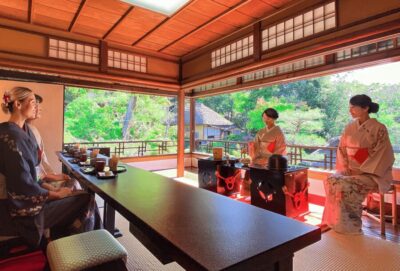
Tea Ceremony in a Traditional Tea House in Kiyomizu
Read our review →
Arashiyama Bamboo Forest, Monkeys, Matcha & Temple Tour
Read our review →
Tea Museum Tickets and Matcha Grinding Experience
Read our review →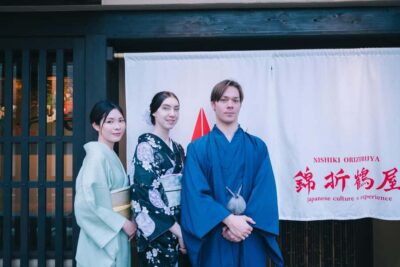
Browse the lists this tour appears in