
Reviewed · WALKING TOURS
Half-Day Private Walking Tour in Kyoto
Kyoto clicks faster with a good guide. This half-day private walking tour stitches together Kyoto’s big sights, from Kiyomizu-dera to Nishiki Market, with stories you can actually use while you walk. You get a planned route, but you’re not stuck in a rigid bus tour rhythm.
I love that the guide turns famous places into real-life moments, like the Otowa Falls choice at Kiyomizu and straightforward how-to prayer steps at Yasaka Shrine. I also love the human touches that show up in the tour style, from guides tailoring the walk to your interests (like Karou and Hiro did) to practical takeaway help, such as maps, Google pins, and even photo sharing at the end.
One drawback to plan for: this is a lot of walking on uneven ground, and Kiyomizu-dera entrance is not included. If you need low-impact pacing or full transfers from hotel to the first stop, budget and plan carefully.
Key highlights you should care about
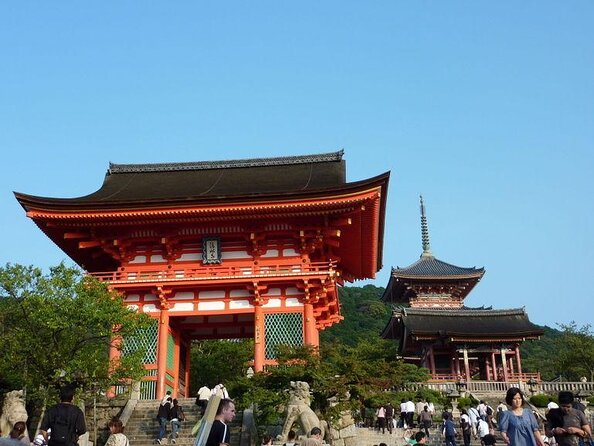
- Pick-your-moment at Kiyomizu-dera: you’ll get the Kiyomizu stage question and then choose an Otowa Falls stop
- Food and souvenir streets on purpose: Sannenzaka and Ninenzaka are built for shop browsing, snack tasting, and great photo lanes
- How to pray at Yasaka Shrine: you’re shown proper shrine behavior instead of guessing
- Gion with cultural context: matcha shopping tips plus kabuki history touchpoints, including Izumo no Okuni and Minamiza
- Nishiki Market with a sample-ready mindset: you’ll pass and sample foods like karaage, takoyaki, pickles, and green tea
- Private group energy: only your group participates, so questions and timing feel natural
The route that makes Kyoto feel doable in 3.5 hours
Kyoto can overwhelm you fast. This tour avoids that by doing five top areas in one half-day, moving you through a classic west-to-east arc: Kiyomizu-dera, then the old-street lanes of Sannenzaka and Ninenzaka, across to Yasaka Shrine, into Gion, and ending near Nishiki Market.
The “private” part matters. You’re not dealing with a dozen voices trying to be heard over one another. It also means your guide can adjust pacing if your group includes slower walkers, photo-stoppers, or people who want more time to browse side streets.
A good half-day tour is not about checking boxes. It’s about getting you oriented fast so the rest of your Kyoto days feel easier. This one tries to do that by mixing big-name landmarks with the in-between lanes, the tea shop stops, and the shopping streets where you’ll otherwise drift past without direction.
More Walking Tours in Kyoto
- Kyoto Geisha Walking Tour: Gion District & Hidden Gems
★ 4.7 · 3,273 reviews - Kyoto: Gion Magical Night Walking Tour with Geisha Trivia
★ 4.9 · 2,393 reviews - Kyoto: Gion Geisha District Walking Tour – Stories of Geisha
★ 4.7 · 2,187 reviews
Kiyomizu-dera and the Otowa Falls choice at the main stage
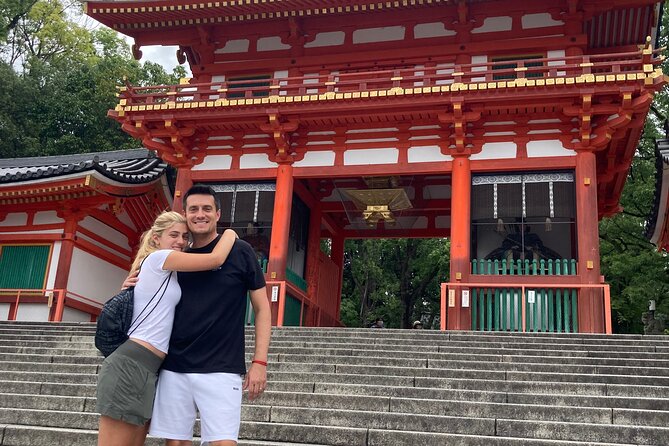
Kiyomizu-dera is the obvious reason you’re here, but what makes this tour’s stop special is how you approach it. Before you get there in full, the guide cues up the famous idea people mention about the Kiyomizu stage, then asks you what it means. That sets your brain in “story mode,” so the place becomes more than a photo backdrop.
At the Kiyomizu stage, you’ll have a moment where the guide prompts a choice tied to the Otowa Falls. The tour runs about an hour at this stop, and you’re set up to visit one of the Otowa Falls options. Even if you’ve heard of the falls before, having a guide explain the meaning as you face the scene helps you remember it later.
Practical reality check: Kiyomizu-dera entrance is not included. The tour also notes that transportation from your hotel to Kiyomizu-dera is not included, even if pickup is offered. In plain terms, you should plan for some extra costs and some transit time.
Wear shoes with grip. The ground can be busy, and your day will get easier if you don’t start it with sore feet.
Sannenzaka and Ninenzaka, where the shops and snacks make sense
After Kiyomizu, you shift from temple space to old-street Kyoto. Sannenzaka and Ninenzaka are known for shopping streets, but this tour uses them for something specific: browsing unique shops and finding places for food tastings you might otherwise walk right past.
This stop is about 50 minutes. That’s long enough to feel the streets instead of rushing through them, but short enough that you don’t lose the momentum of the morning. The goal here is not to buy everything. It’s to learn what kinds of souvenirs and snacks make sense in Kyoto, then leave you confident for later shopping on your own.
If you’re someone who gets tired of “guided shopping” that feels forced, you’ll likely like this part more. The streets here are simply designed for wandering, and your guide can steer you toward the kind of shops that match your interests.
Also, the streets are narrow and packed at peak times. Going with a private guide helps you move with less stress, and it saves you from the constant question of which turns are worth it.
Yasaka Shrine prayer steps, plus an easy entry to eastern Kyoto
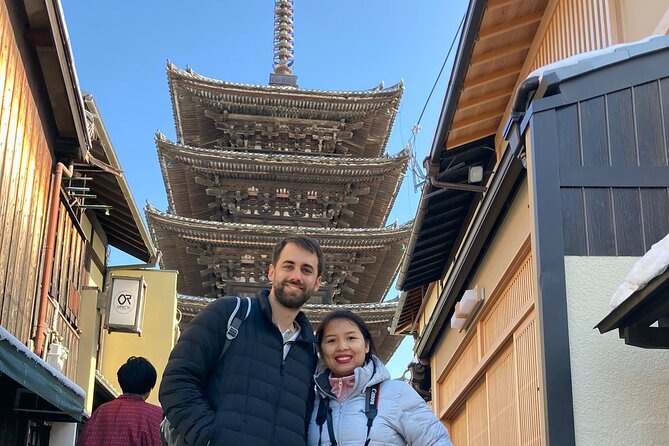
Yasaka Shrine is the tour’s short stop, around 10 minutes, but it’s positioned well. The timing gives you a quick cultural reset before you head into Gion.
The highlight is simple: your guide shows you how to pray properly in a Japanese shrine. That matters because shrines are not “just pretty.” If you do the steps correctly, you feel like you belong there, not like you’re speed-running a landmark.
Even in a short time, you’ll learn the basic flow of what to do and how to behave. It’s the kind of guidance that improves every future shrine visit you make in Japan.
Drawback to note: this stop is brief by design. If you want a long, quiet shrine experience, you’ll get the starter kit here, then you can come back on your own time to slow down.
Same corner of Japan, a different kind of day:
- PERFECT KYOTO 1-Day Bus Tour
★ 5.0 · 13,518 reviews - Kyoto: Fushimi Inari, Kinkakuji, Bamboo Grove 1 Day Bus Tour
★ 4.8 · 4,316 reviews - Kyoto: Tea Ceremony in a Traditional Tea House in Kiyomizu
★ 4.9 · 3,519 reviews - Kyoto: Tea Ceremony Ju-An at Jotokuji Temple
★ 4.9 · 3,207 reviews
Gion, matcha shopping, kabuki history, and a calmer pace near the theaters
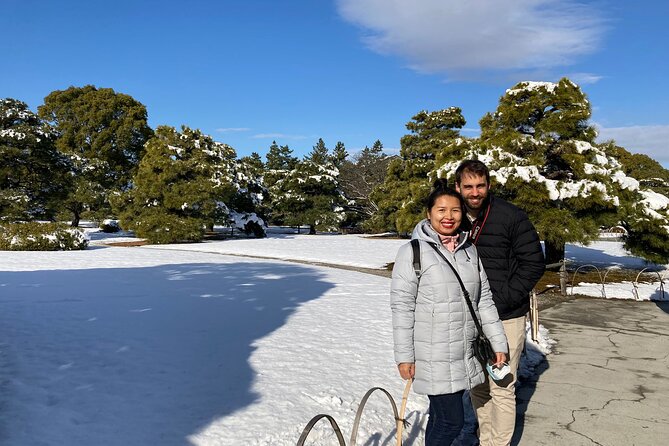
Gion can feel like two different Kyoto cities. One version is loud and photo-heavy. The other is quieter and more intimate, especially when you’re shown where to look and what to notice.
In this tour, the Gion portion runs about 30 minutes and includes a few standout story beats. You’ll stop by local tea shops where you can find a matcha souvenir. That’s not just a shopping mention. Matcha is one of the easiest edible gifts to understand and pick well, and a guide can point you toward something that fits your tastes and budget.
You’ll also hear about Izumo no Okuni, the historical figure associated with the start of kabuki. Plus, you’ll get a reference point for Minamiza kabuki theatre. Even if you do not attend a show, understanding the theater connection helps Gion feel less like a theme district and more like a place with working cultural roots.
The tour also mentions hearing about the history and life of maiko and geisha in a quieter area. That’s valuable because it pushes you past the surface glamor and into the idea that these traditions are part of a living cultural system.
From a practical angle, expect walking. This is a “see it while moving” style tour, and Gion is one of the areas where you’ll want to keep your camera ready without letting it slow you to a crawl.
Pontocho street on the way out, your night plan for later
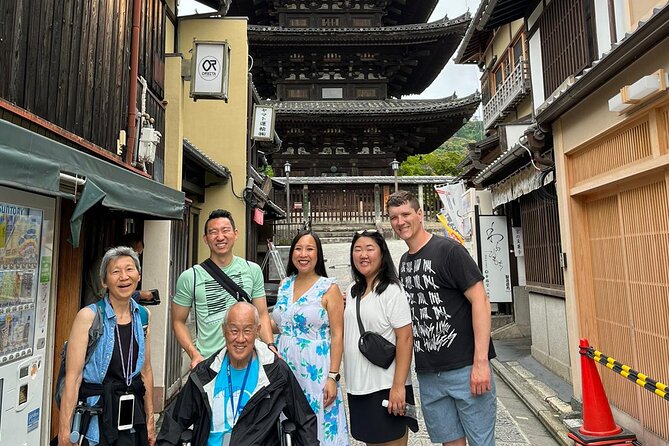
You’ll walk past Pontocho street, a great corridor lined with restaurants and bars. This tour doesn’t try to force you into a nightlife plan. Instead, it gives you an easy landmark so you know where to return after the tour ends.
That matters if you’re trying to use your time well. A half-day tour can leave you hungry, wired, and ready to explore. Pontocho is a simple next step, and the fact you pass it during daylight means you can later compare the vibe at night.
Tip: keep your expectations flexible. Even if the street is busy, you’ll have a “where am I” advantage once you’ve already walked it once.
Nishiki Market shopping district, food scanning that saves you time
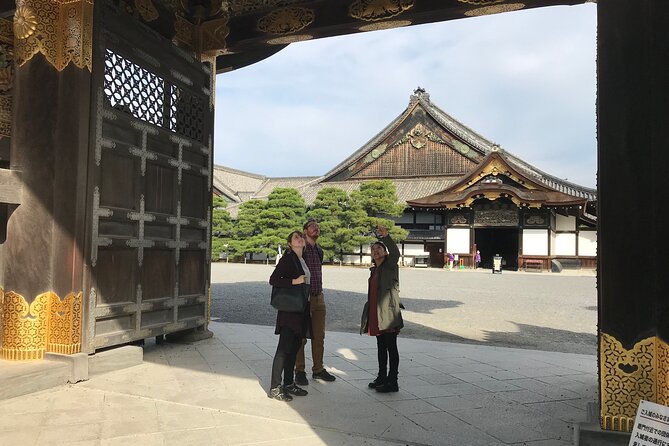
The tour ends at Nishiki Market shopping district, about one hour. This is where Kyoto gets tasty in a very real way, and it’s why ending here works.
You’ll see a variety of foods, including seafood, deep-fried snacks, Japanese pickles, karaage, takoyaki, Japanese spice, ice cream, green tea, and even egg dishes. You’re not locked into any one stall. Instead, you’re shown the overall rhythm of the market so you can pick what you want when you’re there.
This is where I think the private guide format is worth the money. Markets can be chaos for first-timers. A good guide helps you scan quickly, avoid getting stuck in lines you did not need, and focus on what fits your tastes.
The entrance and tasting costs are on you, but the value is in knowing what you’re looking at. You’ll leave with a mental map of what you liked, and that makes your next meal in Kyoto easier.
Price and value: what $95.77 really buys you
The price is $95.77 per person for a 3 hours 30 minutes experience. On paper, that might sound steep, but here’s the practical value side.
You’re paying for the guide fee, and you’re getting a true private route that covers five major areas. In addition, group discounts are listed as available, and a mobile ticket is used. So if you’re traveling with others, your per-person cost can feel more reasonable.
What is not included:
- Kiyomizu-dera entrance fee
- Transportation costs from hotel to Kiyomizu-dera (even though pickup is offered)
Those two items can add up, depending on where you stay.
So the real question is: do you need a guide to make Kyoto make sense quickly? If this is your first Kyoto visit, or you only have limited time, the structure is a good deal. If you already know Kyoto well and just want free roaming, you might feel you could do it cheaper on your own.
Also, the average booking window is about 65 days in advance, which tells you this route is popular. If your dates are flexible, you can shop around. If your dates are fixed, you’ll want to book early.
Who this tour suits best (and who might want a different plan)
This is best for:
- First-time visitors who want the biggest highlights without mapping chaos
- People who want shrine and temple context, not just photos
- Travelers who prefer a private walk with room for questions
It also fits well if you enjoy walking between areas, then eating your way through a market. Ending at Nishiki Market is a strong move for most food-focused visitors.
It may be less ideal if:
- You have very limited mobility or want minimal stairs and uneven surfaces
- You’re hoping entrance fees and transit are fully covered
- Your group wants a long temple linger at every stop, because the rhythm is efficient by design
A smart planning note: the tour states a moderate physical fitness level is recommended. If you’re on the edge, wear supportive shoes and build in rest breaks as you go.
The human factor: why guides like Philip, Reiko, and Rika change the feel
The tour quality is not just about places. It’s about how the guide guides.
Many reviews highlight that guides were friendly and attentive, with strong explanations of architecture and culture. Names that come up include Philip, Karou, Akiko, Kaoru, Hiro, Chicks, Rika, and Reiko, plus Yuka. That matters because it signals consistent performance across different guides.
What I find especially practical are these guide behaviors mentioned in the feedback:
- Customizing the route based on your interests, like Karou and Hiro did
- Sharing specific recommendations for what to do after the tour, like Reiko did
- Providing helpful take-home items, including maps and Google pins, like Karou and Hiro mentioned
- Helping with shopping, even speaking with vendors on your behalf, like Hiro did
- Taking and sharing photos at the end, such as one guide air-dropping photos after the walk
- Being flexible and patient with pacing, including time for pictures and shopping, like Philip and Rika were noted for
That kind of real-world support is hard to quantify before you book. But once you’re in Kyoto, it turns into something you can feel: less guessing, fewer dead ends, and a smoother day.
Should you book this Kyoto half-day walking tour?
Book it if you want Kyoto to feel organized fast. This tour hits five major areas you’ll likely want anyway, and it adds behavior guidance at shrines plus context in Gion and kabuki-related stops. The private format is a big part of the value, especially if you’re traveling as a small group or you like asking questions.
Skip it or reconsider if you’re not comfortable with a fairly walking-heavy plan, or if you are hoping the price covers everything like entrance fees and all transit from your hotel. Kiyomizu-dera entrance is not included, and transportation from hotel to Kiyomizu-dera is listed as not included, even with pickup offered.
If you’re new to Kyoto or short on time, this is a strong way to get your bearings and then enjoy the rest of your days with far less stress.
FAQ
How long is the Half-Day Private Walking Tour in Kyoto?
It lasts about 3 hours 30 minutes.
Is this tour private or shared?
It is private. Only your group participates.
Is pickup included?
Pickup is offered, but transportation cost from your hotel to Kiyomizu-dera is listed as not included.
Are entrance fees included?
No. Kiyomizu-dera entrance fee is not included. The other stops listed (Sannenzaka Ninenzaka, Yasaka Shrine, Gion, Nishiki Market) are listed as free.
What’s included in the price?
The guide fee is included.
What should I expect in terms of walking?
The tour requires a moderate physical fitness level and involves a lot of walking.
Is a mobile ticket used?
Yes, it uses a mobile ticket.
What happens if the weather is bad?
The experience requires good weather. If it is canceled due to poor weather, you will be offered a different date or a full refund.
What is the cancellation policy?
Free cancellation is available up to 24 hours in advance for a full refund. If you cancel less than 24 hours before the start time, the amount paid is not refunded.
Fresh options around Kyoto
- Kyoto Aquarium Admission Ticket★ 4.7 · 12 reviews
- Kyoto Gion Photoshoot – Private Session | Pro Photographer★ 5.0 · 12 reviews
- Gyoza Cooking Class in Kyoto: Traditional Japanese Dumplings★ 5.0 · 12 reviews
- Kyoto: Guided Food Tour with 12 Dishes & 3 Drinks★ 5.0 · 12 reviews
- Kyoto: Avoid the Crowds at the Hidden Gems of Arashiyama★ 4.9 · 13 reviews
- Kyoto Early Bird English Tour: Gion & Higashiyama(Private opt)★ 5.0 · 13 reviews
- Otsu-e Folk Art Workshop & Local Culture Walk Near Kyoto★ 5.0 · 13 reviews
- Kyoto, Osaka, Nara Full Day tour by Car English speaking Driver★ 3.5 · 13 reviews
Walking Tours, compared.
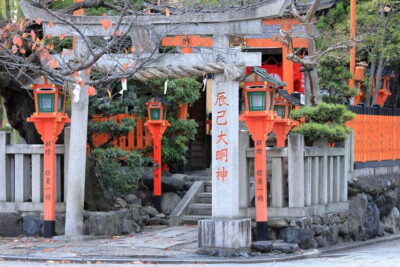
Kyoto Geisha Walking Tour: Gion District & Hidden Gems
Read our review →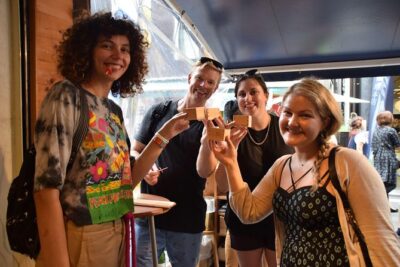
Tokyo Tsukiji Fish Market Food and Culture Walking Tour
Read our review →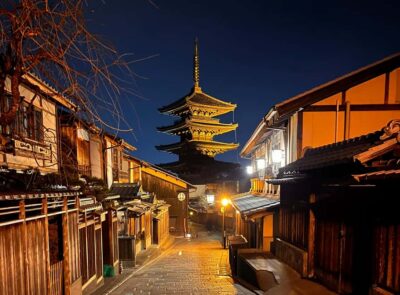
Gion Magical Night Walking Tour with Geisha Trivia
Read our review →
Imperial Palace and Shogun Historical Walking Tour
Read our review →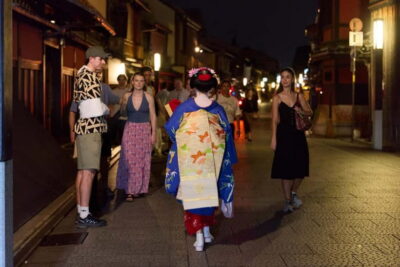
Gion Geisha District Walking Tour – Stories of Geisha
Read our review →
Shinjuku Local Bar and Izakaya Guided Walking Tour
Read our review →
Browse the lists this tour appears in