
Reviewed · WALKING TOURS
Kyoto: Gion Magical Night Walking Tour
Gion gets quieter at night. This Kyoto Gion Magical Night Walking Tour gives you a focused look at geisha heritage when daytime crowds thin out, with a small-group pace that keeps the experience personal. I love how the guide connects famous street corners to real geisha customs and street etiquette, and I love that the walking route leads to the kind of lantern-lit corners you cannot really find on your own. The main drawback is that the route includes slopes and stairs, so you will want comfortable shoes and a steady pace.
For me, the best part is that you are not just sightseeing. You are learning how to behave in a neighborhood where geisha and maiko culture is still part of daily life, including what to do if you spot a maiko or geiko on the street. Guides I saw mentioned by name include Karen, Ricky, Hina, May, Sho Hamada, Pam, and Sho, and the recurring theme is lively storytelling plus plenty of time to look and take photos.
You also start and end in a way that makes sense for a half-evening out. The walk runs about 1 hour 40 minutes, and it uses a mobile ticket. Just remember the tour depends on good weather, because the route is outdoors the whole time.
Key highlights worth knowing before you go
- Gion before the crush, when the streets feel more like a neighborhood than a theme park
- Small group cap (stated as max 8, and also noted as up to 10) for easier questions and calmer pacing
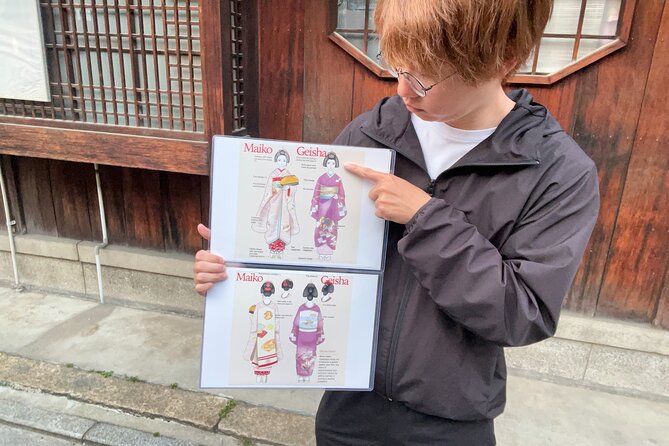
- Geisha and maiko street etiquette, including how to greet if you see one up close
- Free entry stops, so you pay for the guide and the timing, not admissions
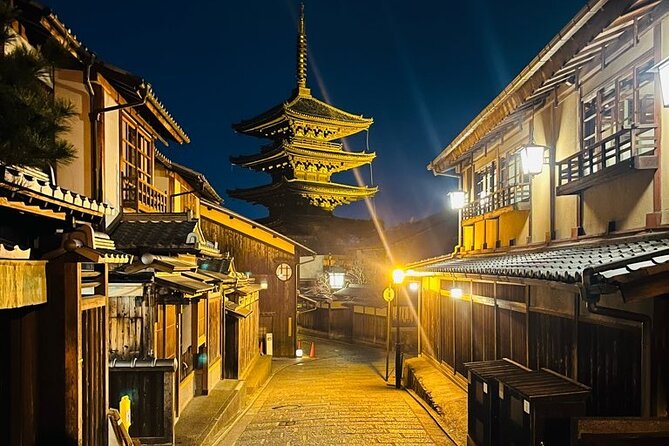
- Night lighting photo stops, including shrine and pagoda views that look best after dark
- A route with real walking, including some uphill sections and stairs, so wear shoes you trust
Why night in Gion changes everything
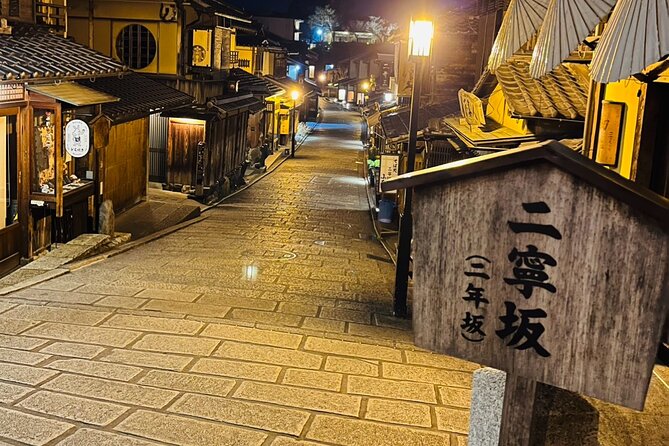
Daytime Gion can feel like a slow-moving parade. At night, streetlights take over, lanterns glow near shrines, and the mood shifts from crowded sightseeing to something closer to how the streets actually feel after hours.
That is why this tour works so well. You are out early enough to catch the quiet phase, and the guide helps you see details you would otherwise miss. Instead of just walking through famous lanes, you learn what they represent, from Gion street culture to the meaning behind small shrines.
Also, the “magical” part is not hype. It is practical. You get better photo conditions, less jostling, and more room to pause when something grabs your attention, like an illuminated sign, a family-run storefront, or a shrine lantern line that leads your eye forward.
More Walking Tours in Kyoto
- Kyoto Geisha Walking Tour: Gion District & Hidden Gems
★ 4.7 · 3,273 reviews - Kyoto: Gion Magical Night Walking Tour with Geisha Trivia
★ 4.9 · 2,393 reviews - Kyoto: Gion Geisha District Walking Tour – Stories of Geisha
★ 4.7 · 2,187 reviews
Price that mostly pays for the guide, not tickets
The price is $29.60 per person for about 1 hour 40 minutes of guided walking. That is not a bargain in the “cheap for everything” sense, but it is strong value if you think about what you are paying for.
Here is the key: the stops are built around places where entry is free, so the cost is mainly for the guide’s context and for getting you to the right corners at the right time. When you pay for a good guide here, you are not just buying directions. You are buying the story that turns a street name into an actual living tradition.
And the group size matters. Small-group tours tend to run more smoothly when you can hear the guide and ask short questions without feeling like you are interrupting a bus full of people.
Meeting point, timing, and how to prepare
You meet at Minamiza Theater (松竹南座, 2F West Lobby), in the Higashiyama Ward area. The tour ends at Gionmachi Kitagawa, Higashiyama Ward.
Plan on a half-evening, not a quick stroll. Even if the advertised duration says around 1 hour 40 minutes, one common theme is that time feels closer to a full walk when you add photo stops and frequent explanation at each pause.
What to wear is simple: comfortable shoes. This tour is not recommended for people who are not comfortable with slopes and stairs. The best move is to dress for night walking, bring a light layer, and keep your phone charged for pictures.
If you are sensitive to weather, check forecasts. The experience requires good weather. If conditions are poor, you are offered another date or a full refund.
Stop 1: Gionmachi Minamigawa and the maiko or geiko moment
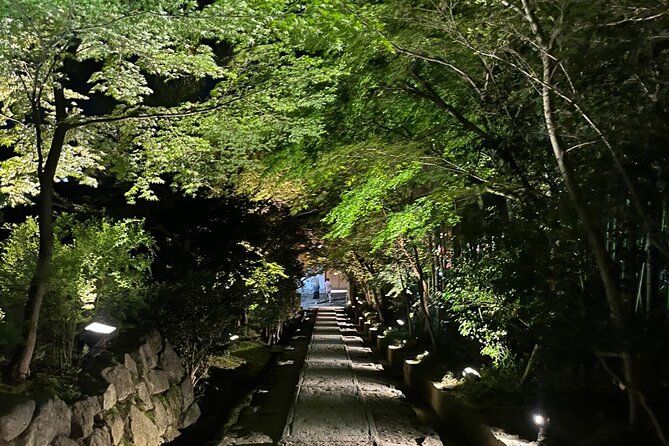
Your first major “Gion classic” stop is Gionmachi Minamigawa. This street is one of the most famous in Gion, and it is the kind of place where you might see a maiko (younger apprentice) or a geiko (older professional). Of course, sightings are never guaranteed, but the location is chosen because the odds are good.
The guide’s etiquette tip here is practical and respectful: if you see a maiko or geiko, greet them with a smile and say Konnichiwa. That small action keeps your interaction polite. The larger rule is to avoid blocking their path or turning it into a performance.
Even if you do not spot anyone, this stop still earns its place. You get your bearings in Gion, learn how the street layout connects to Gion identity, and you start seeing “why this lane matters” instead of just “what this lane looks like.”
More geisha experiences in Kyoto:
- Best of Kyoto: Gion, Geisha, Pagodas & Cobblestones
★ 4.9 · 2,058 reviews - Night Walk in Gion: Kyoto’s Geisha District
★ 4.5 · 2,003 reviews - Kyoto Night Foodie Tour in Gion (9+ dishes + 6 Sake tastings)
★ 5.0 · 1,762 reviews - Kyoto Gion Geisha District Walking Tour – The Stories of Geisha
★ 5.0 · 1,441 reviews
Stop 2: Yasui-Konpiragu, love prayers, and relationship symbolism
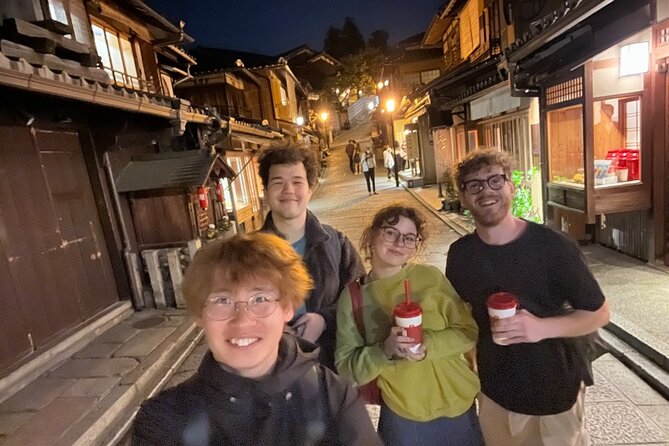
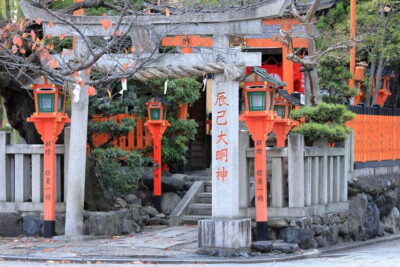
Next comes Yasui-Konpiragu, a shrine known for a very specific theme: helping men and women meet and helping people cut off bad relationships. For couples, the message is that bonds become stronger.
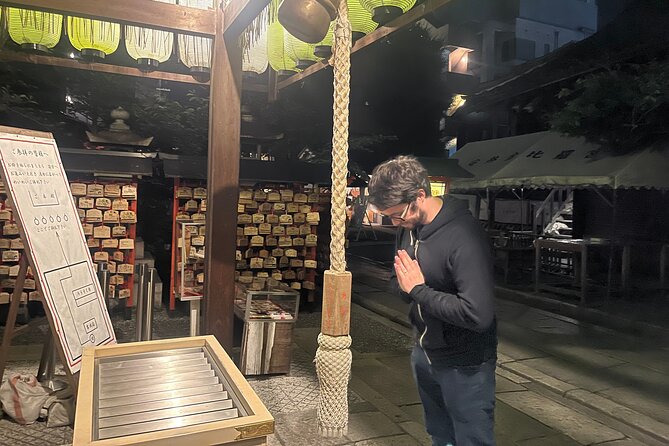
I like how this stop adds depth without getting heavy. Shrines in Japan often have a clear focus, and learning those themes makes the whole district feel less random. You stop seeing shrines as decorative stops and start seeing them as local tools people use for real-life concerns.
This is also a good moment to slow down. The group stays here about 10 minutes, which keeps you from rushing. You can look at the shrine area calmly, then get back into moving without feeling like you are stuck waiting for the next photo.
If you are the kind of traveler who likes meaning behind rituals, this stop will be one of the more memorable parts of the walk.
Stop 3: Sannenzaka Ninenzaka, Yasaka-no-to, and traditional townscape at night
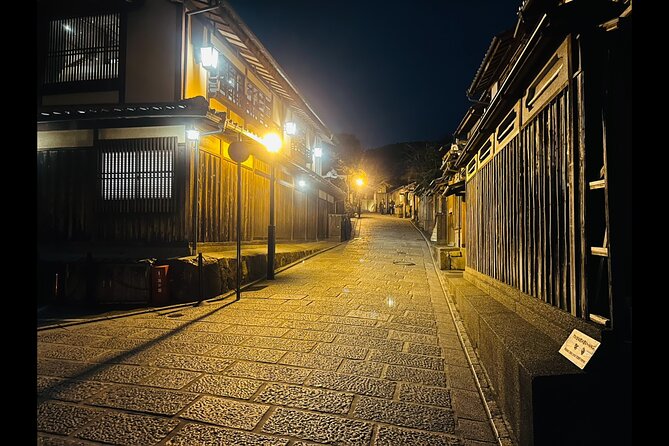
The tour then heads to Sannenzaka and Ninenzaka, the lanes known for their traditional streetscape near Kiyomizu-dera Temple. This is exactly the kind of area where night changes everything, because the stone and wooden facades catch light in a softer way than under midday sun.
About 20 minutes here gives you time to walk, look up, and find angles for photos. One landmark that often draws attention is Yasaka-no-to, the pagoda you can spot in the area.
One practical consideration: older-stone lanes can be uneven, and your pace will matter. Keep your steps short, watch your footing, and give yourself a few seconds before you stop for a picture.
If you care about photography, this is where you will likely feel happiest. Streetlights, lantern glow, and the quieter evening atmosphere help your photos look like the district, not like a crowd.
The WW2 memorial with a large Kannon statue, built in 1955
Between the classic lanes and the larger shrine finale, the route includes a quieter stop built in 1955 to pray for the repose of the souls of victims of World War II. The standout feature is a very large Kannon statue.
I appreciate that this stop adds a solemn note without dragging the tour into a lecture. It grounds the night walk in Kyoto’s real layers of memory and care, not just postcard scenery.
Because this section is brief, it is best to treat it like a pause for reflection. Look at the statue, notice how people behave in front of it, and let the moment reset your head before the last stretch.
It is the kind of stop that can shift your whole view of a neighborhood from “old streets and aesthetics” to “places with responsibilities and stories.”
A shogun’s wife’s mourning garden, with a 400-year-old tea house and bamboo
Another standout stop on the route is a place built about 400 years ago by the wife of a shogun, created to mourn the death of her husband.
This stop is about atmosphere and memory, and you get several different elements in one area:
- a beautiful garden
- a 400-year-old tea ceremony house
- a bamboo grove
Even if you are not a “garden person,” it is still worth it because the tea house and bamboo create a calm pocket that feels far from street noise. At night, bamboo can look almost sculptural under the light.
One caution: since the tour is walking-heavy overall, you will still want to manage your energy. Plan to slow down here and enjoy the stillness rather than trying to race through for one quick photo.
Yasaka Shrine, Gion-san, and the meaning behind the bows
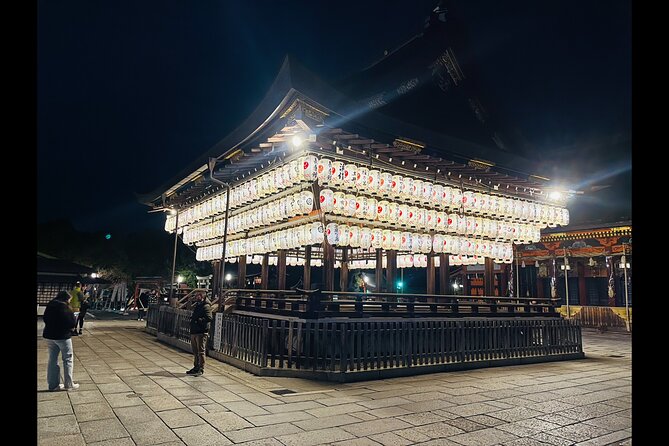
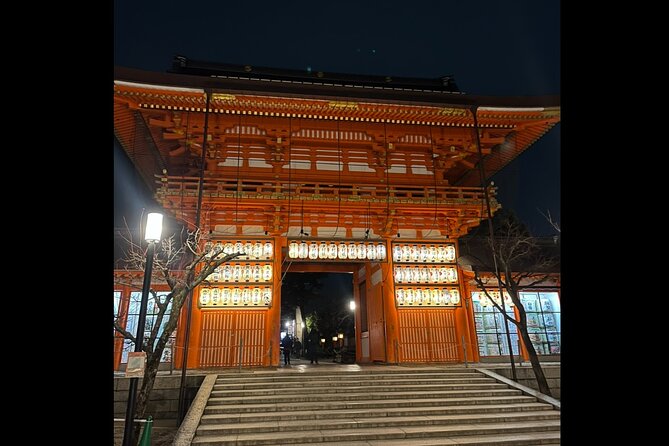
You end at Yasaka Shrine. This shrine is the head shrine of about 2,300 related shrines across Japan, which tells you how important the site is beyond just the Gion area.
The shrine is known as Gion-san, and it is associated with blessings that ward off bad luck, bring good luck, and promote beauty.
I like the way a night tour helps you experience Yasaka Shrine. At night, you can feel how the shrine works as a living place, not just a landmark. You can watch how people pause, bow, and move through the space with intention.
This is also a great final stop because it ties together themes from earlier parts of the walk. You saw love prayers at Yasui-Konpiragu, you saw traditional lanes at Sannenzaka and Ninenzaka, and then you finish with a shrine that symbolizes luck and beauty for a broad network of related sites.
Geisha culture and etiquette tips you can actually use
This tour’s biggest promise is geisha history and culture, plus etiquette. That is also what most people value most, because it changes how you look at Gion the rest of your trip.
Here are the kinds of lessons the guide brings into focus on this walk:
- How to behave respectfully if you spot a maiko or geiko on the street
- How the district’s lanes connect to geisha life and old Kyoto social customs
- What to look for as you walk, so you notice details tied to tradition rather than just crowds and buildings
Some guides bring a personal angle too. One guide shared a family connection, including a great-grandmother who was a geisha, and even showed photos. That kind of background makes the stories feel less like theater and more like real life.
Also, the pace helps. With a cap of up to 8 or 10, you can ask questions and get answers that fit your interests, instead of feeling rushed through a script.
Who should book this Gion Magical Night Walk
I think this tour fits best if you want:
- a focused introduction to Gion and geisha culture
- a night walk where you do not have to fight crowds
- photo opportunities tied to meaningful stops
- a guide who can answer questions and keep the mood upbeat
It is also a good pick for people with limited time in Kyoto, because you cover multiple meaningful places in about 1.5 to 2 hours. You get variety without spending half the day commuting between attractions.
The big mismatch is mobility. If you do not do well with stairs and hills, skip this one. It is not built for slow wheelchair-style pacing.
And if you strongly need perfect English for every question, it is worth noting that one guide experience reported occasional English limits. If your goal is mostly visual and cultural context, that is usually fine.
Should you book Kyoto’s Gion Magical Night Walking Tour?
Yes, if you want a calmer, smarter way to experience Gion at night. For $29.60, you are paying for timing, a small-group walk, and a guide who explains geisha etiquette and the meaning behind shrines and street scenes. You also get free-entry stops, which means your money stays focused on the human part of the trip.
Book it if you are comfortable walking and you care about culture, not just photos. It is the right kind of outing for your first or second evening in Kyoto, when you still want guidance to help the city click.
If you are worried about last-minute weather, have a flexible plan for that evening. Also, because there is one serious reported case of meeting point confusion and lack of communication, I would keep it simple and double-check your confirmation details and meeting address before you leave. Bring a phone, and arrive a few minutes early.
If you want, tell me your travel dates and whether you prefer a faster pace or a slower one. I can help you decide which evening slot makes the most sense in your schedule.
FAQ
How long is the Kyoto Gion Magical Night Walking Tour?
It lasts about 1 hour 40 minutes (approx.).
What is the group size limit?
It is described as small-group with a maximum of eight travelers, and it is also noted that the tour can have a maximum of 10 travelers.
Where is the meeting point?
The start is at Minamiza Theater, Kyoto 605-0075 (Higashiyama Ward, Nakanochō, address listed in the meeting details). The end point is at 625 Gionmachi Kitagawa, Higashiyama Ward, Kyoto.
Are admission tickets required for the stops?
The stops listed include admission ticket free entries.
Is this tour ticketed digitally?
Yes. It uses a mobile ticket.
Is the tour suitable if I have trouble with stairs and slopes?
No. Due to slopes and stairs, it is not recommended if you are not comfortable with walking.
What is the cancellation policy?
You can cancel for free up to 24 hours in advance for a full refund. If you cancel less than 24 hours before the start time, the amount you paid will not be refunded.
More Evening Experiences in Kyoto
- Kyoto Gion Night Walk & Geisha District Guided Tour
★ 5.0 · 786 reviews - Kyoto Ghost Tour: Dark Tales, Urban Legends, Bamboo Forest Night
★ 5.0 · 625 reviews - Kyoto Bar Hopping Night Tour
★ 5.0 · 613 reviews - Kyoto Night All-Inclusive Eats and Streets, Gion and Beyond
★ 4.7 · 601 reviews
Fresh options around Kyoto
- Kyoto: Quiet and Graceful Tea Ceremony★ 4.5 · 19 reviews
- Oboro | Mindful Tea Ceremony in a 100-Year-Old Kyoto Teahouse★ 5.0 · 19 reviews
- Ikebana Traditional Japanese Art of Flower Arranging★ 4.5 · 19 reviews
- Kyoto Satoyama Cycling with Lunch and English Guide★ 5.0 · 19 reviews
- Kyoto International Party Solo Friendly Expats and Locals★ 5.0 · 19 reviews
- Tea Ceremony Experience in Traditional Kyoto Townhouse★ 5.0 · 19 reviews
- Kyoto: Amanohashidate Ine Funaya Tour★ 4.4 · 19 reviews
- Kyoto Private Food Tours with a Local Foodie: 100% Personalized★ 4.5 · 19 reviews
Walking Tours, compared.
Kyoto Geisha Walking Tour: Gion District & Hidden Gems
Read our review →
Tokyo Tsukiji Fish Market Food and Culture Walking Tour
Read our review →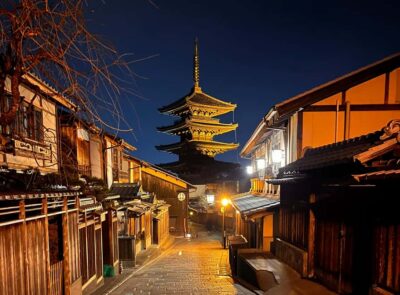
Gion Magical Night Walking Tour with Geisha Trivia
Read our review →
Imperial Palace and Shogun Historical Walking Tour
Read our review →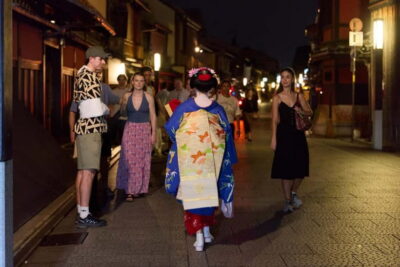
Gion Geisha District Walking Tour – Stories of Geisha
Read our review →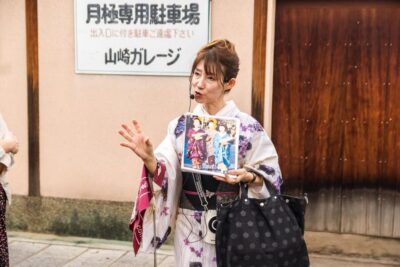
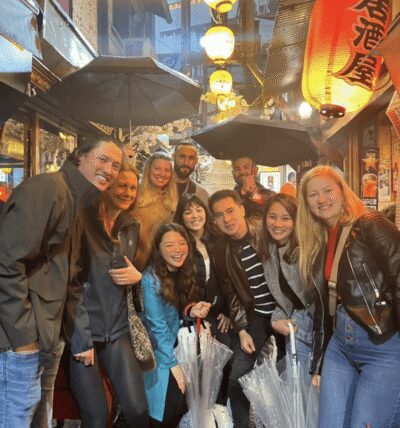
Shinjuku Local Bar and Izakaya Guided Walking Tour
Read our review →
Browse the lists this tour appears in