
Reviewed · KIMONO EXPERIENCES IN KYOTO
Elegant Tea Ceremony While Wearing Kimono Experience in Kyoto
Kimono time turns Kyoto into a slow dream. At Nishiki Orizuruya, you get a kimono rental and a guided tea ceremony right by Nishiki Market, then choose what you do next. You’ll learn the tea steps, whisk your own matcha, and wrap the whole experience around Kyoto’s hands-on traditional crafts.
Two things I love here are the styling help and the structure. The staff handles the kimono setup and, for women, includes free hair styling, plus the option to pick out your own kimono and accessories. Then, in the tea room, you don’t just watch, you actually make a cup of matcha using a bamboo whisk, with seasonal wagashi served alongside.
One consideration: the ceremony can feel more like a practiced ritual than a long, lecture-style history lesson. If you’re hoping for deep, step-by-step background on every move, you may find the explanations a bit more compact than you want.
Key highlights worth planning for
- Kimono rental plus hair styling for women: You get dressed by the experts, and it’s built for great photos.
- English guidance throughout: Clear coaching for the tea ceremony and whichever add-on you choose.
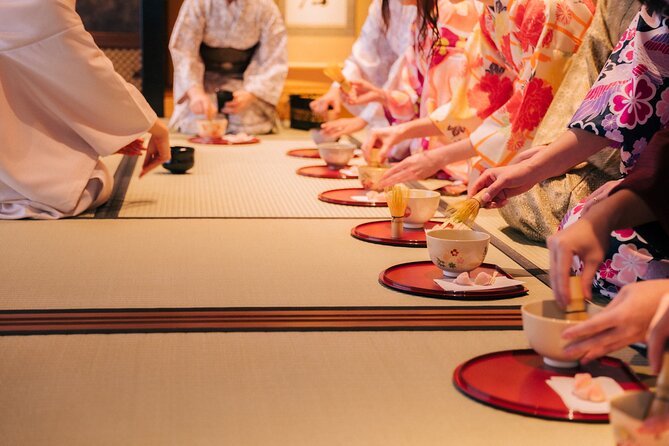
- You whisk the matcha: A hands-on bamboo whisk moment, not just a demonstration.
- Seasonal wagashi from a 100-year-old confectionery: Traditional sweets paired with the tea.
- Pick your “after” activity: Calligraphy keepsake, gold leaf plate souvenir, or a Nishiki Market walking guide.
- Small group size: Maximum of 10 travelers keeps it intimate.
Why this Nishiki Orizuruya tea ceremony works so well
Kyoto can be a lot, even on a good day. This experience gives you a time pocket where you slow down on purpose, in a proper tea setting, while still keeping you close to the city’s famous shopping area.
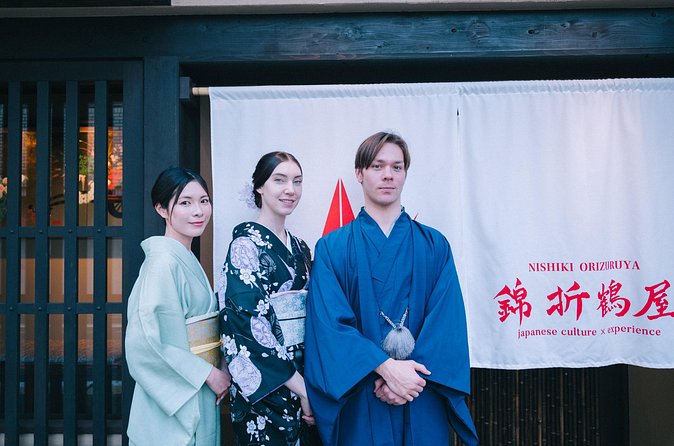
It starts at Nishiki Orizuruya, about a minute walk from Nishiki Market. You’ll dress in kimono, then settle into a calm tea room with an English-speaking guide and a tea master. The tone is formal, but the staff makes it feel welcoming and manageable, even if you’ve never done tea ceremony before.
Also, there’s real value in the way the experience is bundled. For one set price, you get the kimono experience, the guided tea ceremony basics, and a second activity option that gives you a take-home result or a Kyoto walk with context.
More Kimono Experiences in Kyoto
- Kimono Tea Ceremony at Kyoto Maikoya, NISHIKI
★ 5.0 · 911 reviews - Kyoto: Kimono Rental with Hairstyling and Accessories
★ 4.8 · 653 reviews - Kyoto: Kimono Tea Ceremony at Orizuruya Gion
★ 4.9 · 618 reviews
Getting dressed in kimono, and why the details matter
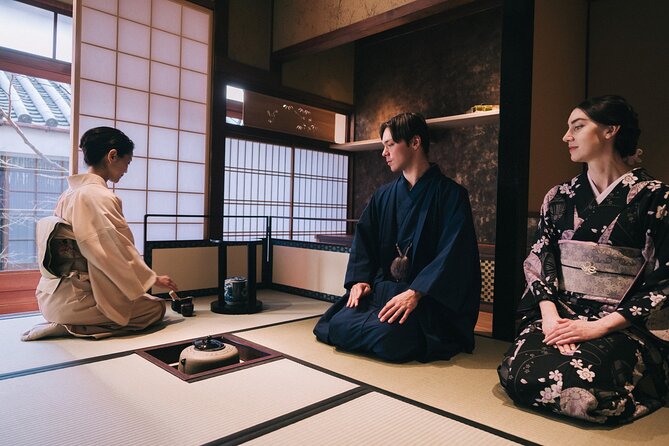
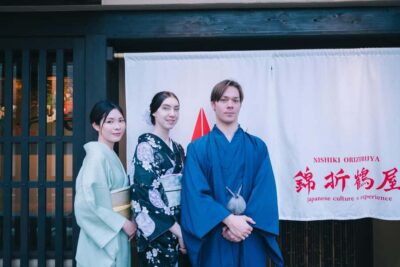
The prep time is part of the experience, not filler. You start by choosing a kimono and accessories, and the staff then helps you get properly dressed. A number of people note how patient the dressing team is with different sizes, and how they’ll make adjustments as needed.
If you’re a woman, hair styling is included for free. That small detail makes a big difference in how the whole day feels, because the kimono looks right when the hair matches the look. The result is also great for photos, and you’ll notice the staff actively supports picture-taking.
If sitting on the floor is not your thing, you’ll be glad to know a chair can be provided. That matters more than you’d think when you’re waiting during demonstrations and then doing your own tea steps.
One practical note: kimono choice tends to feel more exciting for women, because the women’s selection and styling typically get more focus. Men can still participate, but the “pick your look” part may not feel as flashy.
Inside the tea room: matcha, wagashi, and the bamboo whisk lesson
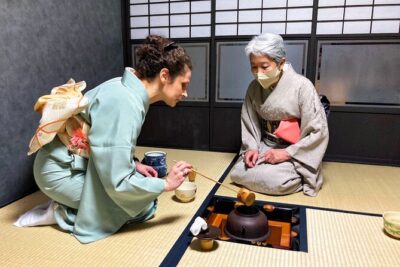
The tea ceremony portion runs about 90 minutes, with the overall tour time depending on what add-on you pick. The sequence is simple and effective: you watch a demonstration, then prepare your own matcha using a bamboo whisk.
You’ll also taste seasonal wagashi, traditional sweets designed to pair with tea. One of the most appealing details is that these sweets come from a 100-year-old confectionery, so you’re not just getting any cookie-like snack. The pairing is part of how Japanese tea culture stays balanced, sweet and bitter in the right moments.
During the ceremony, you’ll learn what to do and when to do it. The staff and tea master, including hosts named Ruriko and guides such as Lina in the market portion, are clear in English and provide context for the meaning behind the ritual.
If you’re someone who loves learning by doing, this is a good match. A lot of people walk away with a new appreciation for matcha after tasting it in the ceremony format, not just as a drink from a café.
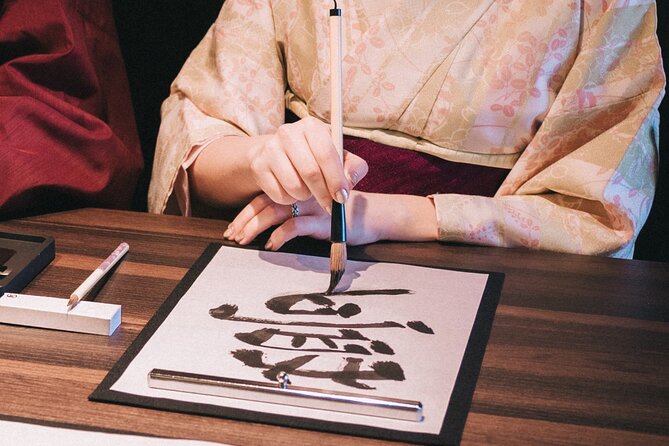
Calligraphy keepsake: writing your favorite kanji
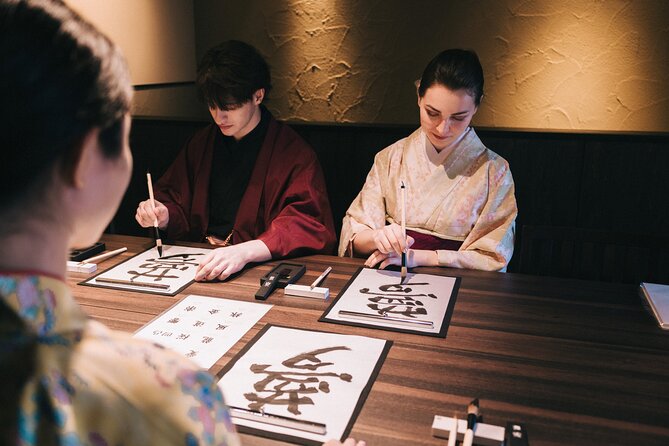
If you choose the tea ceremony plus calligraphy plan, you’ll add a hands-on workshop after the matcha and sweets. This part focuses on brushwork, ink, and writing a kanji you choose.
The practical value here is that you leave with something personal. You’re not taking a generic souvenir, you’re making a one-off keepsake tied to what you picked as your kanji. That alone is worth considering if you like crafts that feel meaningful rather than decorative.
Calligraphy is also a good “energy level” choice after tea. Tea is quiet and structured, and calligraphy keeps that focus going. You’ll have the tools you need, and you’ll get guided practice using brush and ink on washi paper.
The only possible downside is timing. Calligraphy is an extra add-on, so if you’re short on time you’ll need to decide whether you want calligraphy depth or more time in the market area.
More Tea Ceremonies in Kyoto
- Kyoto: Tea Ceremony in a Traditional Tea House in Kiyomizu
★ 4.9 · 3,519 reviews - Kyoto: Tea Ceremony Ju-An at Jotokuji Temple
★ 4.9 · 3,207 reviews - Kyoto: 45-Minute Tea Ceremony Lesson Experience
★ 4.3 · 2,378 reviews - Kyoto: Table-Style Tea Ceremony at a Kyo-Machiya
★ 4.9 · 1,211 reviews
Gold leaf art: decorating a plate with high-purity gold
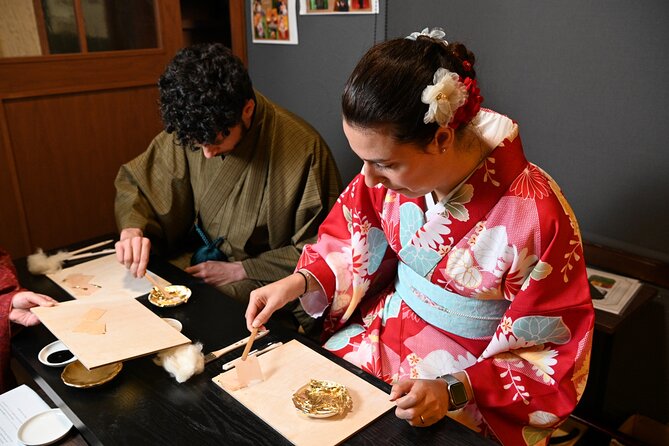
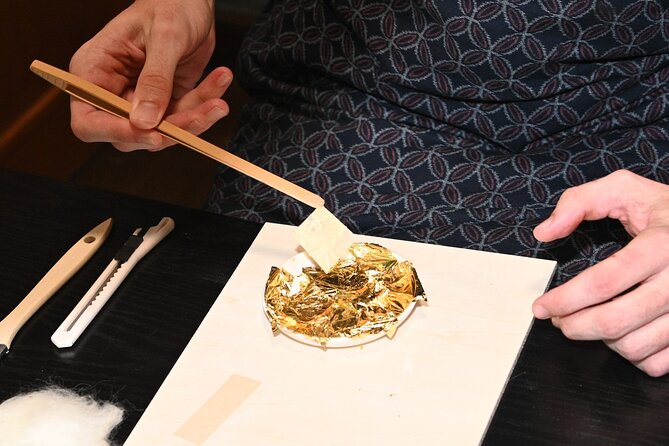
Prefer something shiny and hands-on? The tea ceremony plus gold leaf plan includes a workshop where you apply delicate gold leaf to a small plate. You’ll be working with high-purity gold leaf and get to take your handmade souvenir home.
Gold leaf is one of those materials that looks instantly “Kyoto,” so it’s a fun way to make your experience feel special in a way you can see every day later. It also gives you a satisfying break from sitting, because applying gold leaf is practical, detail-oriented work.
This option is especially good if you’re traveling with someone who wants a craft that’s visually impressive even if they’re not an artist. You won’t need prior experience, and the point is making something you can keep.
Nishiki Market walking tour: food culture, shrines, and shop streets
If you pick the tea ceremony plus Nishiki tour plan, you’ll swap crafts for a guided walk after your tea. The goal is to connect tea culture to Kyoto food culture and everyday sights in the area.
Nishiki Market is often described as Kyoto’s kitchen, and walking it with an English-speaking guide helps you connect what you see with why it matters. The tour also includes nearby local shrines and shopping streets, so you get variety without needing to plan a route yourself.
The most helpful part is that a guide can interpret the area while you’re still there. If you’re trying to decide what’s worth tasting or browsing, having a local voice makes the walk feel less like wandering and more like targeted exploration.
One thing to keep in mind: the area can get crowded on weekends, holidays, and special event days. That doesn’t ruin the experience, but it can affect how comfortable the walking portion feels and how quickly you can move through smaller streets.
Timing, group size, and making photos easy
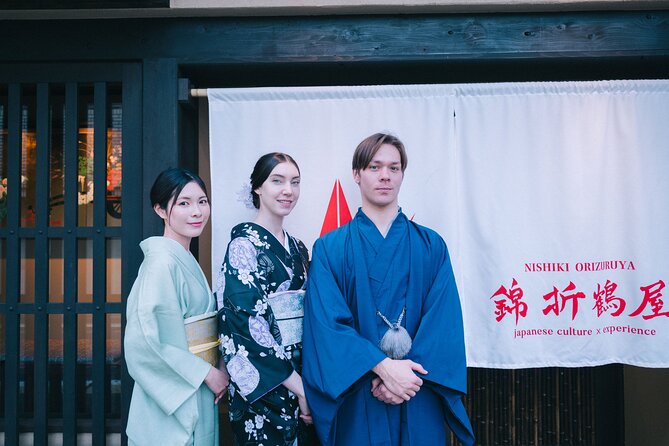
This experience has a maximum of 10 travelers, so it won’t feel like a conveyor belt. A smaller group also helps during the kimono and tea steps, because staff attention is easier to manage and questions get answered.
It runs about 2 hours 30 minutes for the basic combo, plus additional time for calligraphy or gold leaf, or for the Nishiki market walk. Plan for the fact that getting dressed and styled takes real time, and the tea ceremony itself is paced at a formal rhythm.
Arrive at least 10 minutes before your scheduled reservation time. That extra buffer helps you avoid rushing during dressing and keeps the session smooth.
Photo lovers will be happy. Many people mention multiple photo opportunities while they’re dressed and during ceremony moments. You’ll likely want to bring a power bank or charging plan, because kimono looks good on camera, and you’ll use your phone a lot.
One extra nice bonus mentioned in the experience details is that some sessions allow you to keep the kimono on later to walk around Kyoto streets for a few hours, with one note of up to around 6pm. That turns the outfit into an extension of your day, not something you change out of immediately.
Price and value: why $50.58 can be a smart buy
At $50.58 per person, the best way to judge value is by what you’re getting bundled together.
You’re not only paying for the tea lesson. You’re also paying for:
- Kimono rental with staff dressing help
- Free hair styling for women
- Guided tea ceremony in English
- Matcha you make yourself, plus seasonal wagashi
- An additional cultural add-on option (calligraphy, gold leaf, or Nishiki walking guide)
That mix is why this tends to feel like more than a standard tour ticket. Many Kyoto experiences charge separately for outfit rentals, for crafts, and for guided explanations. Here, you’re getting those elements as one package, and you’re in a location that lets you keep going afterward nearby.
If you want one “signature Kyoto” activity that looks great, feels authentic, and still includes practical guidance, this is priced like a strong option.
Who should book this Kyoto kimono tea ceremony?
This is a great fit if you want hands-on culture that isn’t just a museum walkthrough. You’ll like it if:
- You want to wear a kimono without dealing with the rental logistics yourself
- You enjoy guided explanations and learning by doing
- You want a craft result, like calligraphy or gold leaf, or you want a guided food and shop walk at Nishiki Market
It’s also a solid choice for couples and families. People specifically mention how kind staff were, including with kids, and the experience allows children age 5 and above (no child discount).
If you’re traveling solo and want calm, structured time, this can be a refreshing break from fast-paced sightseeing. If you’re traveling with friends and want everyone to leave with something different, the add-on choices help you customize the day.
Should you book this elegant kimono tea ceremony experience?
If you want Kyoto flavor with real hands-on participation, I’d say yes. Kimono dressing plus matcha whisking is already a standout combo, and the optional add-ons give you a reason to choose this over a basic tea ceremony only. The small group size and English guidance make it feel approachable, even if you’re new to Japanese rituals.
The main reason to hesitate is if you strongly want a long, detailed historical lecture during every step. This experience leans practical and guided rather than academic.
If you can handle a bit of formality and you’re excited to make something with your own hands, this one is worth putting on your Kyoto shortlist.
FAQ
How long is the Kyoto kimono tea ceremony experience?
The tea ceremony part is about 90 minutes. Total duration depends on your plan: about 2 hours 30 minutes, about 130 minutes with gold leaf, or about 150 minutes with the Nishiki market tour.
Where does the experience start?
It starts at Nishiki Orizuruya, 452 Jūmonjichō, Nakagyo Ward, Kyoto, 604-8121, Japan, and ends back at the meeting point.
Is kimono rental included?
Yes. All plans include kimono rental. Women also receive free hair styling.
Is there an English guide?
Yes. The tour is guided in English.
What do you do after the tea ceremony?
You can choose one option after tea: calligraphy, gold leaf art, or a guided Nishiki Market walk with shrines and shopping streets.
How many people are in the group?
The group is capped at a maximum of 10 travelers.
Are children allowed?
Children aged 5 and above may join. There is no child discount.
Can you keep the kimono on after the ceremony?
Some sessions allow you to keep the kimono on to walk around the Kyoto area later. One note in the information mentions walking until about 6pm.
Does the experience accommodate allergies?
There is mention that the venue can accommodate allergies for the sweets and tea.
What is the cancellation and refund policy?
It is non-refundable and cannot be changed for any reason. If severe weather or a natural disaster causes cancellation (for example, a typhoon), the tour is canceled and fully refunded.
Fresh options around Kyoto
- Kyoto Adventures Private English Tour With Hotel Pick Up★ 4.5 · 22 reviews
- Private Tour to Monkey Park and Arashiyama Highlights★ 5.0 · 22 reviews
- Kyoto Japanese Tea Ceremony Experience in Ankoan★ 5.0 · 22 reviews
- Kyoto Ramen Tour★ 5.0 · 22 reviews
- Private Nara Tour from Osaka – Meet at Your Hotel★ 5.0 · 22 reviews
- Kyoto to Arashiyama Day Trip – Private & Personalized★ 4.3 · 22 reviews
- Kyoto Matcha Green Tea Tour★ 4.5 · 23 reviews
- Tea Ceremony in 150 Years Old Townhouse with Tables and Chairs★ 5.0 · 22 reviews
Kimono Experiences in Kyoto, compared.
KYOTO Tea Ceremony with kimono near by Imamiya Jinjya Shrine
Read our review →
Kimono and Tea Ceremony Experience at Cultural Asset
Read our review →
Family-Friendly Kimono & Yukata Experience at WARGO
Read our review →Browse the lists this tour appears in