
Reviewed · WALKING TOURS
Tokyo Castle & Imperial PalaceーShogun Walking Tour
Edo Castle is gone, but its geometry still runs Tokyo. This 2-hour Shogun Walking Tour connects the samurai era to the Imperial Palace you see today. You’ll get a small group up to 10, so questions actually land and you are not just herded from sign to sign.
I love how the tour frames Edo Castle as a real fortress, not a vague “cool old castle.” I also love the shift from hard defenses to soft beauty at the Imperial Palace East Gardens, including special koi fish and carefully tended garden scenes.
One consideration: a security check applies when entering the Imperial Palace grounds, and the walk is outdoors for a big chunk of the time. Dress for the weather, and keep items like knives and alcohol out of your bag.
Key things that make this tour worth your time
- Up to 10 people means a more personal pace and easier photo moments.
- English-only guidance keeps the story clear, from samurai hierarchy to imperial continuity.
- Edo Castle defenses come alive as you see gates, moats, and surviving traces around the Imperial Palace area.
- Ninomaru Garden and seasonal views add calm after the fortress talk.
- Koi fish plus trees from across Japan make the East Gardens feel intentionally curated by nature.
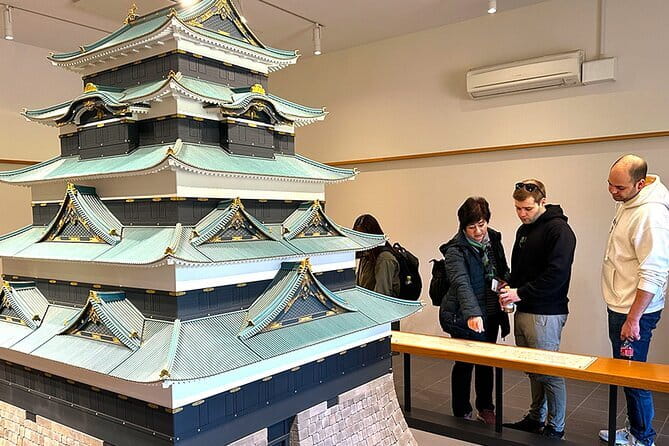
- Miniature structure of the former palace helps you picture the big picture fast.
How Edo Castle Still Lives Inside Tokyo Today
Tokyo’s Imperial Palace area is one of those places where you can stand in modern calm and feel the old machinery underneath. Edo Castle was massive, and even though most of it is gone, the layout still influences how the neighborhood works and where key walls and gates sit.
What you really gain on this tour is context. You do not just look at stones and greenery. You learn why the city was built this way, and how defense shaped everyday life. The guide ties it to the shogun era, when samurai power kept order for generations.
And because the tour includes both fortress elements and garden stops, it avoids the common problem of “all history, no atmosphere.” You get smart facts, plus the kind of quiet scenery that makes you slow down and notice details.
More Castle Tours in Tokyo
- Tokyo Castle & Imperial PalaceーShogun Walking Tour
★ 5.0 · 724 reviews - Imperial Palace East Garden and Edo Castle Walking Tour in Tokyo
★ 5.0 · 510 reviews - Tokyo Castle, Imperial Palace, Shogun & Garden Walking Tour
★ 5.0 · 211 reviews
Meeting at Starbucks, Then Getting Oriented in Real Time
Your day starts at Starbucks Coffee Kōkyo Gaien Wadakura Fountain Park Store. Go in front of the shop and look for the guide holding a sign that reads Local Guide Stars.
This is practical for two reasons. First, it is an easy meetup point in a busy area of central Tokyo. Second, you start walking right away, so you build spatial sense before the story gets complicated.
The overall time commitment is 2 hours, and the pace feels designed for absorbing details rather than sprinting through checkpoints. Since the group can be up to 10, you can also ask about what you are seeing in the moment, like why a gate matters or what a particular garden section symbolizes.
Sakurada Tatsumi Yagura: A Photo Stop That Explains a Fortress
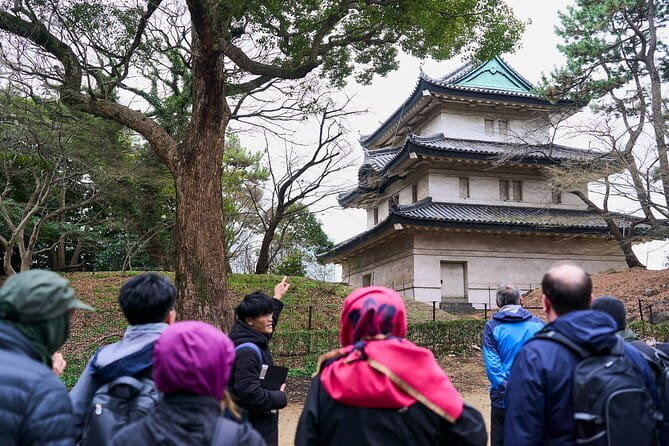
One of the early stops is Sakurada Tatsumi Yagura, with a short photo, visit, guided walk-through, and just enough time to look closely. You get a quick lesson in what yagura actually means in a castle system, and how structures like this fit into defense.
This stop is only a few minutes, so it can feel brief if you treat it like a typical quick snapshot. But with a guide, it becomes a decoding moment. You start noticing that the “castle ruins” around the Imperial Palace area are not random. They are fragments of a much larger defensive plan.
If you like understanding architecture, this is a good opening. It sets you up so later stops do not become a blur of gates and walls.
Ote-Mon Gate: Where Rules and Power Were Designed
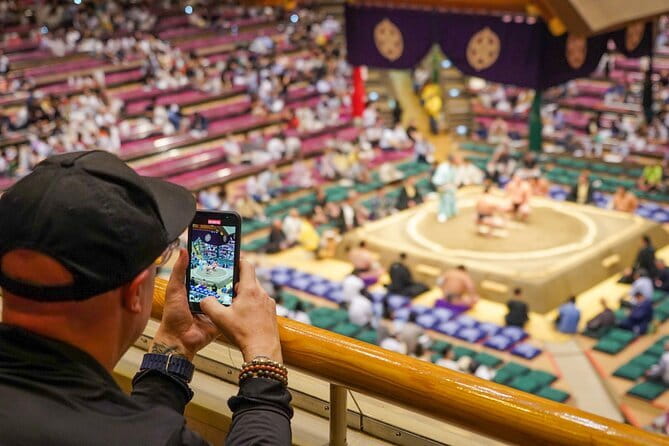
Next comes Ote-Mon Gate, another photo and guided sightseeing stop with time to pause and listen. This is where the tour’s story about samurai governance becomes physical.
Edo Castle was built to be difficult to attack, and gates were part of that layered idea. You learn how people moved, how the castle controlled entry, and why defenses were designed to slow an enemy down rather than meet them in a single dramatic battle.
This is also a good spot for your camera. The gate area gives you classic Tokyo-meets-history angles, and the guide will point out what to look for so you do not miss the “why” behind the view.
More Walking Tours in Tokyo
- Tokyo Tsukiji Fish Market Food and Culture Walking Tour
★ 5.0 · 3,184 reviews - Tokyo: Imperial Palace and Shogun Historical Walking Tour
★ 5.0 · 2,251 reviews - Tokyo: Shinjuku Local Bar and Izakaya Guided Walking Tour
★ 4.9 · 1,794 reviews - Tokyo: Tsukiji Fish Market Food and Walking tour
★ 5.0 · 1,724 reviews
Tokyo Imperial Palace Grounds: Security Check and Serious Storytelling

The Imperial Palace stop is a highlight because it is the “now” built on top of the “then.” You’ll spend around 20 minutes in the Tokyo Imperial Palace area with a guided explanation and photo opportunities.
Important practical point: there is a security check when entering the Imperial Palace grounds. The tour notes that you should not bring knives or alcohol. It is best to travel light, with what you need for walking and photos, and avoid anything that could slow you down.
What you learn here is how the imperial system has continued for about 2,600 years, even as political power structures shifted. The tour connects that continuity to the space you are walking through, so it does not feel like a disconnected lecture.
You also get a “feel” for how rulers and retainers might have experienced the grounds. Even when areas look calm today, the guide explains how the design supported authority and order.
Ninomaru Garden: Calm, Composition, and Emperor-Admired Beauty
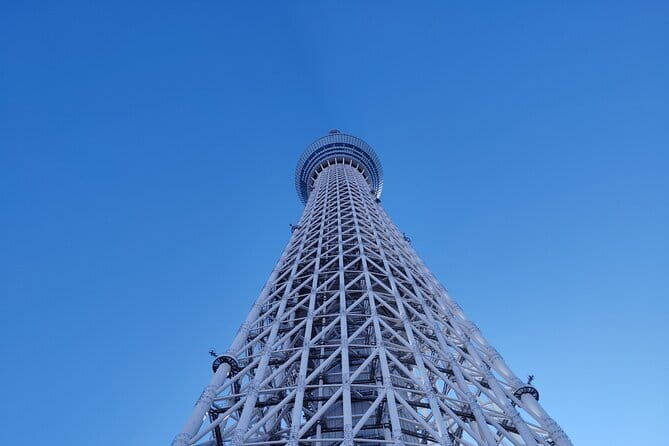
Ninomaru Garden is one of the most soothing moments of the walk. You’ll have time for photos and guided sightseeing, around 15 minutes, plus a chance to appreciate the garden as more than decoration.
The tour describes this garden as one that the Emperor admired, which matters because it frames the space in Japanese cultural terms. Gardens are not just “pretty.” They communicate taste, control, and patience, and they echo the same values you hear tied to governance and hierarchy in earlier stops.
You will also get ideas for what to notice while looking. The guide points out how the garden supports the mood of the palace grounds, and how it contrasts with the fortress lessons earlier in the tour.
If you are the type who thinks a palace tour should include peaceful scenery, this is your payoff.
Edo Castle Ruins: Seeing the Layers Without Getting Lost
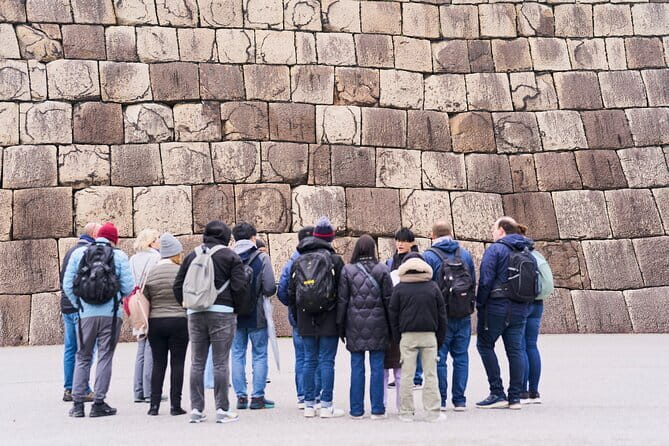
Next you hit Edo Castle Ruins, a shorter stop of about 10 minutes, but it carries weight. The guide helps you interpret the ruins as part of a larger defensive system rather than a single surviving wall section.
This is where the tour’s “hidden world” theme becomes clear. Edo Castle traces show up throughout Tokyo, but you often only notice them if someone helps you see the logic in the layout. You learn how moats, gates, and stonework functioned as layered defenses, and why that mattered for a long peace period.
Even though you are walking outdoors and the timing is tight, this stop is not just about looking at old stones. It is about connecting what you see to a bigger model of how Edo Castle worked.
East Gardens: Koi Fish, Trees From Japan, and Panoramic Pause Time
The tour ends with Imperial Palace East Gardens, another longer stop around 20 minutes. This is the calm finale that sticks in your memory, mostly because it gives you both visual beauty and a grounded explanation.
Included in the experience are encounters with special koi fish and diverse trees from across Japan. That detail helps the garden feel alive, not like a static museum set. You might also notice how the guide uses the garden’s small moments, like water and plant variety, to connect back to cultural thinking and careful stewardship.
You may also see a miniature structure of the former palace. That is hugely helpful because it gives your brain a reference point. When you have walked through pieces of a big place, a model helps you stop imagining the palace as a vague idea and start picturing it as a real built system.
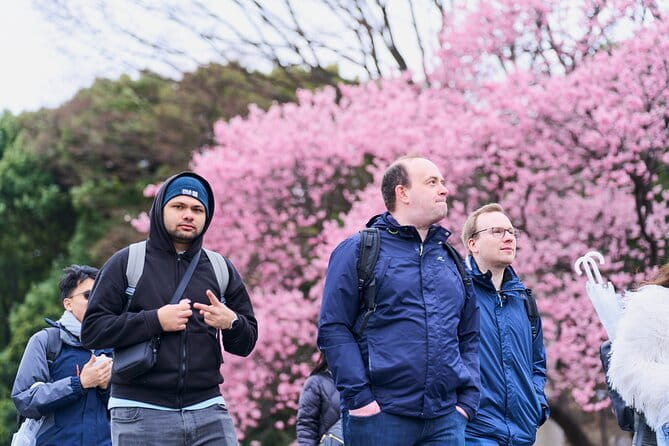
This stop also offers great photo opportunities, including seasonal garden views. If the weather behaves, you can often get some of the best light of the day right here.
What You Learn Here, Beyond “Samurai Stuff”
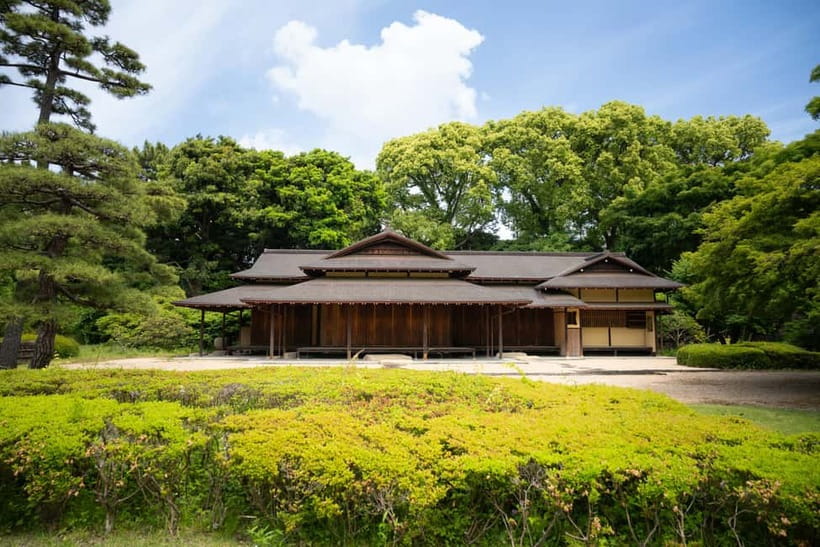
The tour blends two storylines that many visitors treat separately: samurai power in the Edo period and the long continuity of the imperial system.
On the samurai side, you learn about the shogun and how the castle supported a peace that lasted for about 260 years. The guide explains how defenses were meant to discourage disruption, not just fight wars. That framing helps you understand why samurai governance could last as long as it did.
On the imperial side, you learn why the imperial system endured for about 2,600 years. Instead of treating it as pure mythology, the tour connects it to the palace grounds and the way institutions survive through time.
You also hear lots of “small facts” that make the big story more believable. That includes the idea that Edo Castle was the largest in Japan, plus the practical detail that traces of it are still found throughout Tokyo.
And one more thing. The guide style seems to matter a lot. In the guide reviews, people consistently praise clear explanations and a patient pace, with examples like Yuuka, Tomo, Fuma, and Anju. When you land with a guide like that, the tour feels like a conversation, not a one-way lecture.
Price and Value: What $23 Buys You in Real Life
At $23 per person for a 2-hour small-group walk, this tour feels like strong value if your goal is understanding. You are paying for an English-speaking guide who interprets the area for you, not for a checklist of stops.
The “value” here is partly the structure. Two hours is long enough to explain systems like defense and governance, but short enough that you do not burn a whole day in one area. That matters in Tokyo, where travel time and lines can eat your energy.
It is also value because the tour includes more than just walking past the scenery. You get guided time at multiple points, plus the included miniature structure, plus time for koi fish and garden trees from across Japan.
If your budget is tight and you want a guided experience that turns a well-known site into something you actually understand, this price makes sense.
Who Should Book This Tour (and Who Might Skip It)
This tour is a great fit if you:
- Want samurai and shogun history tied to real places you can stand in
- Appreciate gardens but do not want a garden tour with no context
- Prefer small groups and English-only explanation
- Like photo stops that are guided, not random
You might consider skipping if you:
- Want a long, inside-only palace experience (this is mainly outdoors, and you are dealing with a security check)
- Dislike weather-based walking and would rather sit for most of the time
- Expect an unlimited wandering experience with no guidance
The people getting the most out of it tend to be those who enjoy connecting history to physical layout, and who like hearing how everyday design choices supported political power.
Quick Practical Tips So You Enjoy It More
A few things to do before you go:
- Wear comfortable walking shoes, because you will be on your feet.
- Dress for the weather. A large portion is outdoors.
- Bring a camera. Photography is encouraged.
- If you use a wheelchair, it is available for use within the Imperial Palace grounds, but some slopes and areas require walking or going down on foot.
Also, keep your bag simple for the security check. No knives or alcohol. If you are unsure about something in your luggage, leave it behind.
Should You Book This Tokyo Castle and Imperial Palace Shogun Tour?
If you want a straightforward, 2-hour English guided walk that connects Edo Castle defenses to the Imperial Palace grounds, I think you should book it. The small-group limit of up to 10 is a real advantage, and the mix of gates, garden calm, koi fish, and a miniature palace model gives you both story and scenery.
I would book it especially if you watched Shōgun and want the real-world geography behind what you saw. It is not just a “look around” tour. It is a guided explanation of how the space shaped power, and how that legacy still shows up in Tokyo’s layout.
If you are the type who likes your history explained in a way you can point to with your feet, this one fits.
FAQ
Is the Tokyo Castle and Imperial Palace Shogun Walking Tour offered in English?
Yes. The tour is English only, and Japanese language support is not available.
How long is the tour?
The duration is 2 hours.
What is the group size?
The tour is a small group limited to up to 10 participants.
Where do I meet the guide?
Meet in front of Starbucks Coffee Kōkyo Gaien Wadakura Fountain Park Store, at the address 3-1 Kōkyo Gaien, Chiyoda City, Tokyo. The guide will be holding a sign that says Local Guide Stars.
Is there a security check at the Imperial Palace?
Yes. There is a security check when entering the Imperial Palace. The tour asks you not to bring knives or alcohol.
Will I be outside most of the time?
Yes. A large portion of the tour takes place outdoors, so you should dress appropriately for the day’s weather.
Is photography allowed?
Yes. Photography is encouraged, so bring your camera.
Are there wheelchair accommodations?
Wheelchairs are available and can be used within the Imperial Palace grounds. However, there are some slopes and areas where guests may need to walk or go down on foot.
What’s included in the tour price?
Included are an English guide, the Imperial Palace grounds and eastern garden, insights into the history of the samurai and the development of Tokyo, viewing of a miniature structure of the former palace, and encounters with special koi fish and diverse trees from across Japan.
More Castle Tours near Tokyo
- Tokyo: Edo Castle & East Garden of the Imperial Palace Tour
★ 4.7 · 112 reviews - Tokyo Private Tour! Edo Castle & Imperial Palace East Gardens
★ 5.0 · 105 reviews - Tokyo: Pvt. Tour – Edo Castle & Imperial Palace East Gardens
★ 4.8 · 63 reviews - Kyoto: Nijo Castle World Heritage Guided Tour with Admission
★ 4.9 · 37 reviews
Fresh options around Tokyo
- Tokyo: Nagano Snow Monkeys and Zenkoji Tour with Temples★ 4.9 · 19 reviews
- Yokohama Port: Private Customizable Tour with Transfer★ 5.0 · 19 reviews
- Explore Unique Tokyo Streets / Learn with a Pro Photographer★ 5.0 · 19 reviews
- Sushi Making with Interactive Samurai Experience at JIN-ASAKUSA★ 5.0 · 19 reviews
- DAIKOKU excursion by car DRIFT automobile encounter★ 4.5 · 19 reviews
- Official Street Go Kart Tour Akihabara 2nd★ 5.0 · 19 reviews
- Cosplay Experience with Professional Makeup and Photo Shoot!★ 5.0 · 19 reviews
- Tokyo: Name Seal & Pouch or Tote Bag Making Experience★ 4.5 · 19 reviews
Walking Tours, compared.
Kyoto Geisha Walking Tour: Gion District & Hidden Gems
Read our review →
Tokyo Tsukiji Fish Market Food and Culture Walking Tour
Read our review →
Gion Magical Night Walking Tour with Geisha Trivia
Read our review →
Imperial Palace and Shogun Historical Walking Tour
Read our review →
Gion Geisha District Walking Tour – Stories of Geisha
Read our review →
Shinjuku Local Bar and Izakaya Guided Walking Tour
Read our review →
Browse the lists this tour appears in