
Reviewed · COOKING CLASSES
Small-Group Wagyu Beef and 7 Japanese Dishes Tokyo Cooking Class
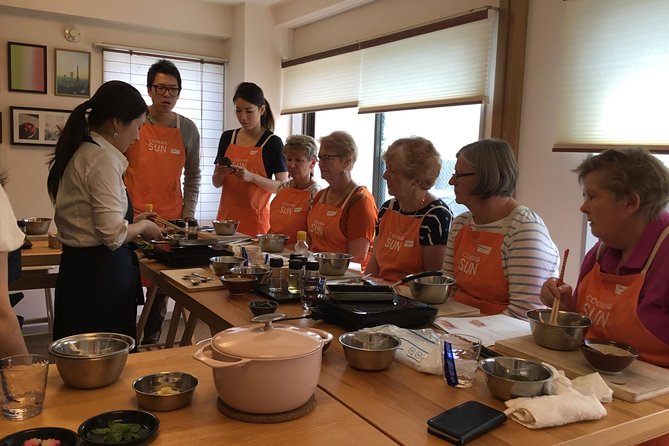
Wagyu and dashi start everything. In Tokyo, you learn a kaiseki-style flow: make stock first, cook up to eight Japanese dishes, then sit down to a full-course lunch with sake and green tea. It is a small-group class, so you are not standing around.
I love the hands-on rhythm, you chop and prep alongside friendly instructors like Aya and Hidemi, and you get real feedback as you cook. I also love the dashi-first approach, because the class teaches you how one ingredient supports the whole meal, from appetizers to dessert.
One possible drawback: the meeting building can be a little tricky to spot. The area is residential and quiet, so take your time with Google Maps and plan a few extra minutes.
Key things that make this Wagyu Tokyo cooking class worth your morning
- Dashi is first, taught as the backbone of Japanese flavor
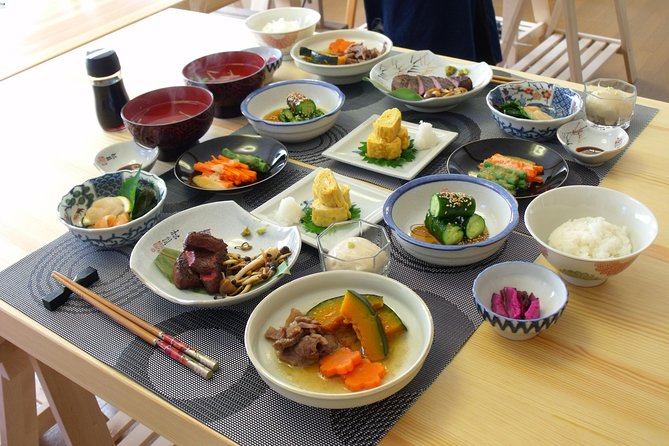
- Up to eight kaiseki-style dishes, including a tender Wagyu main
- Max 8 people, so you have enough stations time to actually cook
- English instruction with local instructors, including Aya and Hidemi (and other instructors you might meet)
- A full-course lunch you eat right away, paired with sake and green tea
Finding Cooking Sun Tokyo without losing your morning
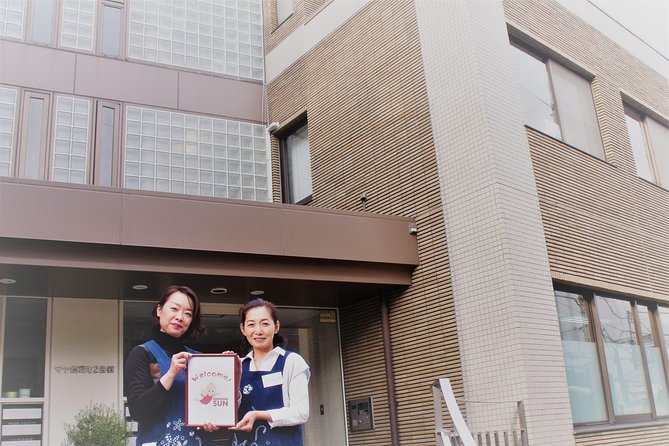
The class starts at Cooking Sun Tokyo in Shinjuku City, Shinanomachi (18-39 Shinanomachi, Shinjuku City, Tokyo). There is no hotel pickup, so you will want to arrive under your own steam, then relax once you find the studio.
The big practical tip here is simple: the building can be hard to locate at first. People often recommend using Google Maps and walking in from nearby public transit, since the surrounding neighborhood feels more like calm residential Tokyo than a big tourist strip. The upside is that once you are there, the space tends to feel orderly and clean, with a low-pressure, homey vibe.
Plan for a little extra walking time. A cooking class goes faster than you think, and it is nicer to settle in than rush at the start.
More Cooking Classes in Tokyo
- Ramen & Gyoza Cooking Class in Tokyo with Local Supermarket Visit
★ 5.0 · 823 reviews - Tokyo: Easy Ramen Cooking Experience in Kabukicho, Shinjuku
★ 4.6 · 321 reviews - Ramen and Sushi Cooking Class with Sake Pairing Set in Tokyo
★ 5.0 · 291 reviews
Dashi, seasonings, and the reason Japanese flavor feels so connected
Every session begins the same way: with dashi. You are not just learning one recipe, you are learning a base. Dashi is the fundamental soup stock in Japanese cooking, and getting comfortable with it is the shortcut to better results at home.
Your instructor also sets the stage by walking you through common Japanese seasonings and what they do in the flavor chain. This matters because Japanese cooking often uses fewer ingredients than many Western meals, so balance and timing do a lot of heavy lifting.
What I like about this is that the class is not teaching “random dishes.” You start with stock, then later you see how that same dashi shows up in other components. By the time you reach the main dishes, the meal feels like one coordinated menu instead of separate recipes.
The hands-on kaiseki prep: what you do (and what the kitchen helps with)
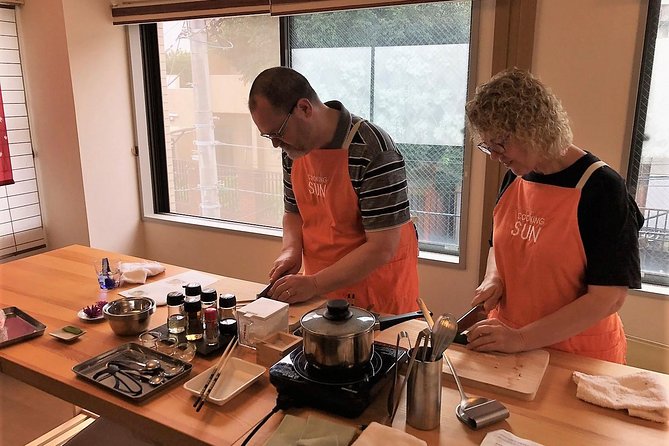
This is a small-group class limited to eight people, and that size changes the experience. You get an instructor close enough to notice your cut size, your mixing pace, or how you are finishing a sauce.
You also get the practical supplies you need, including an apron and towel, plus ingredients for the dishes. You will work through classic and modern techniques, including cutting styles, presentation details, and how to use those traditional seasonings in a way that tastes right.
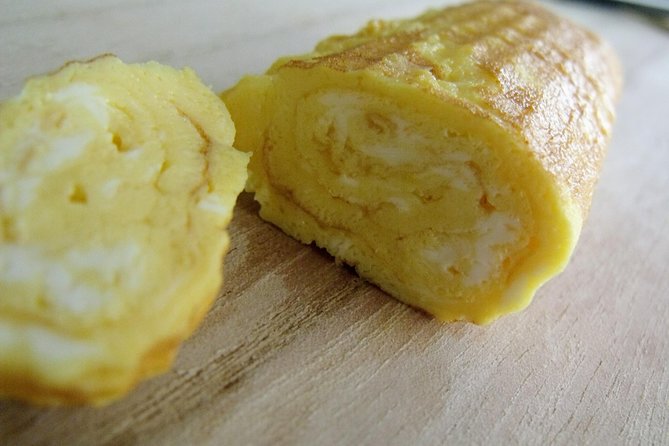
A realistic heads-up: you do a lot of chopping and mixing dressings, while other parts of the meal are handled by the staff so the class can stay on schedule. You might see things like miso soup, rice, and potatoes prepared in the background, and some items may be prepped ahead of time. For example, you will still cook key elements like an egg, and you may do searing steps for a lotus root preparation that includes minced chicken. But the goal is learning technique, not spending three hours doing every single scratch-cooking task.
Even with that support, the class still feels hands-on. The instructors keep explanations short, clear, and approachable in English, and you can ask questions while you are actively cooking.
Wagyu beef and Japanese vegetables: the star dishes you’ll learn
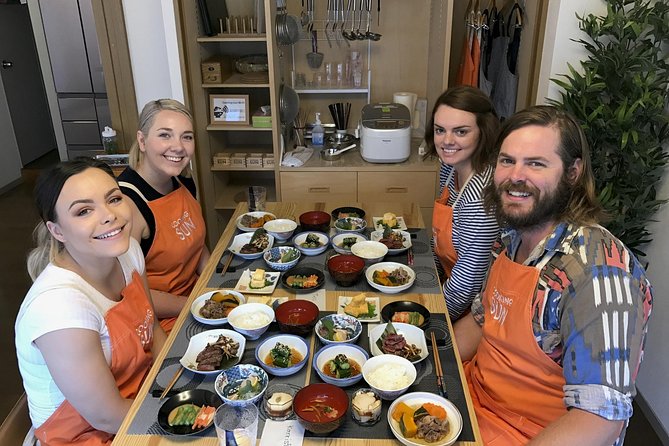
You cook a full lunch made up of multiple dishes, often described as up to eight, with a focus on seven Japanese dishes plus a full-course structure from starters through dessert. The main highlight is Wagyu beef, handled in a way that keeps it tender and satisfying.
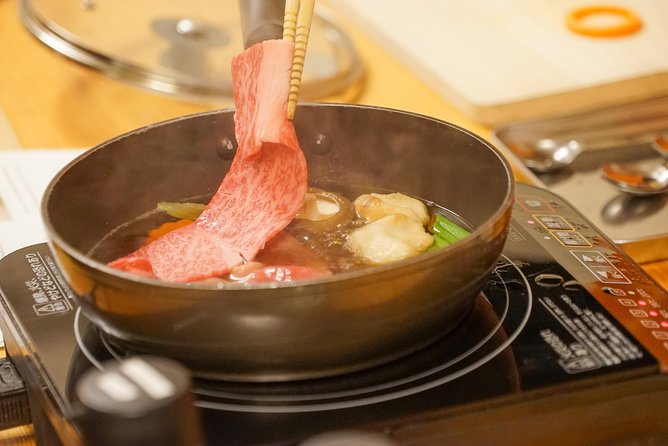
The Wagyu dish often comes through as sukiyaki with Wagyu beef. This style is not just about the beef, it is about how the sauce and ingredients work together. You learn the practical rhythm of putting everything in place, cooking it correctly, and finishing it so it tastes clean and not heavy.
Around the Wagyu main, you also work with Japanese vegetables and sides that show how Japan handles freshness and texture. Expect attention to details like cutting, seasoning, and plating. One of the most useful parts of the class is learning how to make vegetables taste more interesting without turning them into a Western-style “side dish.” Japanese technique treats them as part of the flavor structure.
You will also learn staple ingredients in Japanese cuisine, and the instructors connect what you are holding in your hands to what makes it work in the final dish. That translation is what helps you actually recreate these results later, rather than just following a list.
A few more Tokyo days worth comparing
- Tokyo Night Foodie Tour in Shinjuku – Seasonal Sushi, Wagyu Beef
★ 5.0 · 1,161 reviews - Tokyo: Wagyu and 7 Japanese Dishes Cooking Class
★ 4.9 · 273 reviews - Wagyu & Sake Pairing in Shinjuku – Steak, Shabu-Shabu & More
★ 5.0 · 112 reviews - Tokyo Wagyu & Sake Pairing Tasting Experience with Local Flavors
★ 5.0 · 108 reviews
Lunch, sake, and the moment you say Itadakimasu
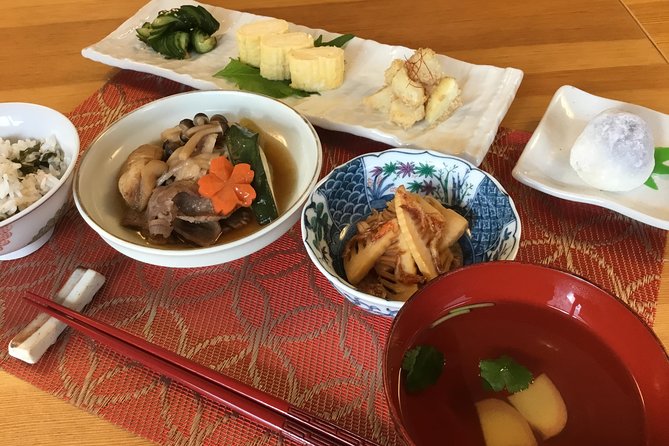
After cooking, you sit down and eat everything you made. That is the fun part, but it also helps you learn. When you taste each dish, you feel the impact of dashi, seasoning, and how each step connects.
Your meal includes sake and green tea. If you want a more thoughtful food experience than just a quick snack, this pairing helps you slow down and appreciate what you made. It is also a great time to chat with your instructors while the meal is still hot and fresh.
The end moment is built into the flow: when everyone is ready, you say Itadakimasu! It is simple, but it cues the shift from work mode to eating mode, and it makes the meal feel like a real Japanese lunch, not a demo.
Value, take-home recipes, and who this Tokyo class suits best
At $72.96 per person for an approx. three-hour small-group class, the price makes sense because you are getting more than a meal. You are getting ingredients, recipe materials, and step-by-step instruction with feedback, plus a structured menu that includes Wagyu beef.
The value is biggest if you want technique. A lot of cooking classes teach one dish well. This one teaches you how Japanese cooking thinks: start with dashi, connect flavors across dishes, and treat presentation as part of taste. You also leave with recipes, so you can recreate the menu at home instead of guessing what you did.
You should also know this is designed for different comfort levels. You get English instructions and ongoing help while you cook. If you are a confident home cook, you will still learn because the class teaches Japanese cutting, seasoning logic, and a kaiseki-style pacing you might not use on your own.
Dietary options are part of the plan. A vegetarian option is available, and you should advise any specific dietary requirements when you book. That is important because Wagyu is central to the menu, so the kitchen will need a clear heads-up to adjust the menu properly.
Other practical perks:
- You get a studio time limit that is long enough to feel productive, not rushed.
- It is a small group, so you will have a real chance to ask questions.
- You start and end at the same meeting point, so your schedule stays simple.
Should you book the Small-Group Wagyu and 7 Japanese Dishes Tokyo Cooking Class?
I think this is a strong pick if you want a Tokyo cooking experience that feels authentic, structured, and genuinely useful at home. The combination of dashi-first teaching, Wagyu technique, and a full-course lunch gives you more than “a fun activity,” it gives you a repeatable method.
Book it if:
- you want hands-on instruction in English
- you like kaiseki-style menus and Japanese flavor basics
- you want recipes you can actually use later
- you prefer small groups (max 8)
Consider another option if:
- you dislike walking a bit to find a residential studio building
- you want a cooking class that is purely freestyle with no schedule pacing
If you are on the fence, go anyway with one mindset: you are not just eating in Tokyo, you are learning how to build Japanese flavor from the ground up.
FAQ
How long is the Tokyo Wagyu cooking class?
The class runs for about 3 hours.
How many people are in each class?
The class is limited to a maximum of 8 people.
What language are the instructions in?
The instructions are in English.
Is there a vegetarian option?
Yes, a vegetarian option is available. You should advise this when you book.
What is included in the price?
Included are the local cooking instructor, recipes, ingredients, and apron and towel rental.
Is hotel pickup included?
No, hotel pickup and drop-off are not included.
Fresh options around Tokyo
- Tokyo: Nikko Kegon Falls Lake Chuzenji Toshogu Temple & More★ 4.9 · 12 reviews
- Tokyo: Samurai History Walking Tour★ 5.0 · 12 reviews
- Harajuku: Kawaii Fashion and Pop-Culture Tour★ 4.7 · 12 reviews
- Tokyo: Mt. Fuji & Lake Kawaguchi Instagram Full Day Trip★ 4.1 · 12 reviews
- Shibuya Tokyo: Modern Kintsugi Workshop in Shibuya★ 5.0 · 12 reviews
- Tokyo: GTR Guided Daikoku Experience at Night★ 5.0 · 12 reviews
- Tokyo: Daikoku JDM Car Culture Tour★ 4.6 · 12 reviews
- Mt Fuji Private Day Trip from Tokyo with English speaking driver★ 5.0 · 13 reviews
Cooking Classes, compared.
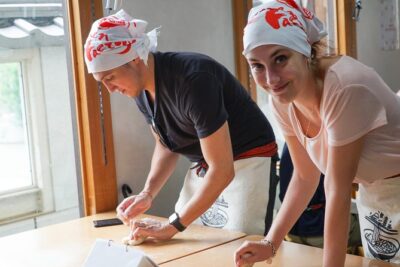
Ramen Cooking Class at Ramen Factory in Kyoto
Read our review →
Ramen & Gyoza Cooking Class in Tokyo with Local Supermarket Visit
Read our review →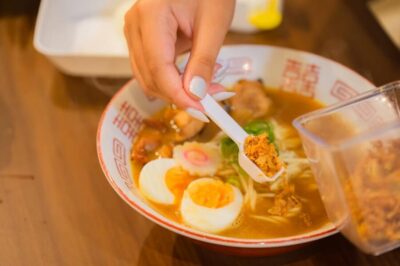
Ramen Cooking Class at a Ramen Factory with Souvenir
Read our review →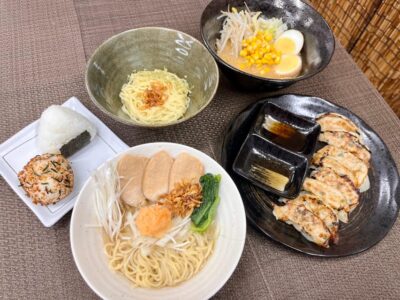
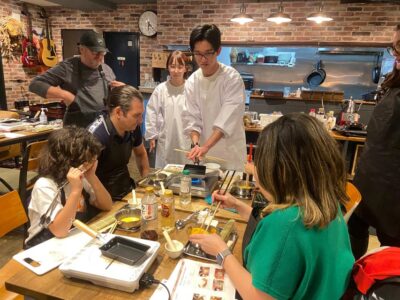
Japanese Washoku Bento Small Group Cooking Class
Read our review →
Easy Ramen Cooking Experience in Kabukicho, Shinjuku
Read our review →
Ramen and Sushi Cooking Class with Sake Pairing Set in Tokyo
Read our review →Browse the lists this tour appears in