
Reviewed · CYCLING TOURS
Slow Cycling Tour at Uji’s Matcha Green Tea Fields and Heritage
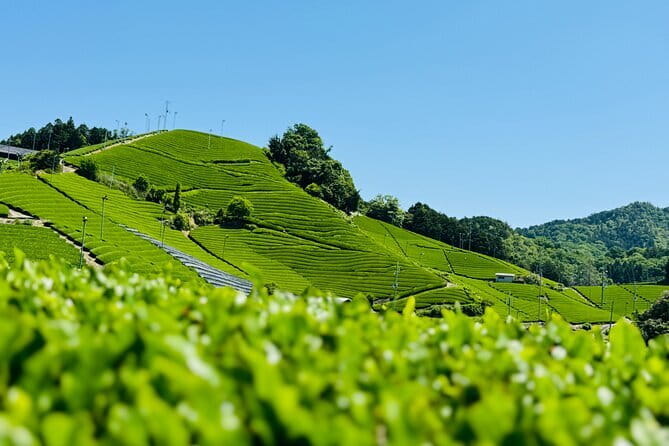
Uji looks different from a bike saddle. This half-day, slow cycling tour rolls through matcha-town streets, tea culture stops, and historic shrines with a local navigator. You get to do it on a sleek Brompton bike, which makes the whole day feel a bit more like moving with the town than checking boxes.
I love how relaxed the pace is, so you can enjoy the ride even if you are not training for a long-distance day. I also love the human part, an English-speaking guide (I’ve heard from guides like Takashi) who connects what you see with Uji’s matcha and heritage.
The one thing to watch is add-on cost and timing, Chazuna and Byodo-in Phoenix Hall have optional entrance fees, and the tour depends on good weather. If that matters to you, plan to keep some flexibility in your Uji day.
Key highlights you’ll feel immediately
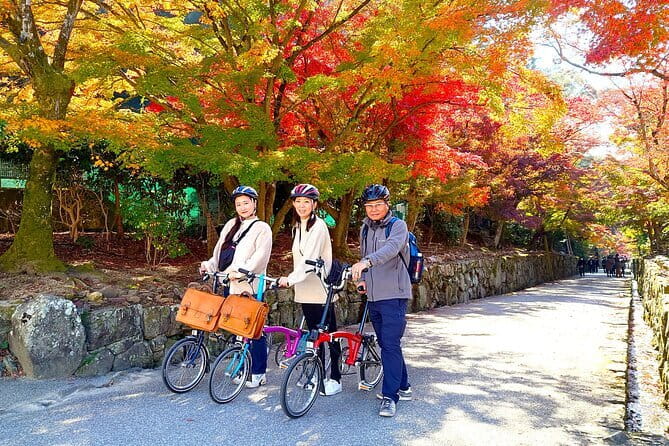
- Brompton bikes + a navigator: small-group riding with local help for the quieter roads
- Tea culture first at Chazuna, before you hit shrines, temples, and river views
- Historic stops with meaning like Uji Shrine and Ujigami Shrine, tied to Uji lore
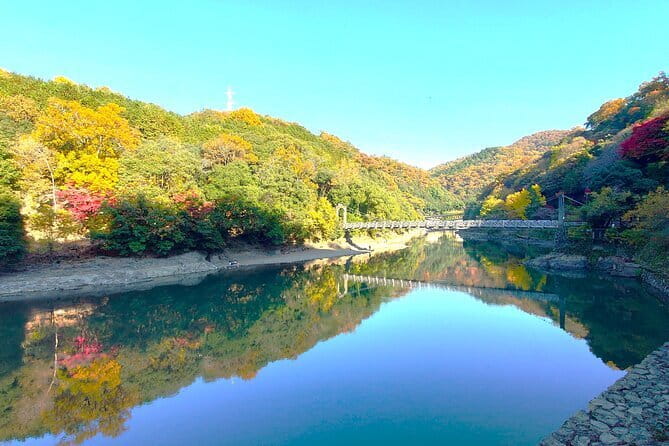
- River-time at Amagase with calm views from the Amagase Bridge area
- Photo-friendly moments including Asagiri Bridge and your Brompton along the route
- Flexible food breaks suggested by your English guide based on what you want to eat
Uji at half-day pace: matcha, shrines, and a real ride
Uji is small, but it can feel big in the details. This tour is built for a slow, comfortable rhythm, so you are not sprinting between sights. You start at Chatsubo PostboxJapan by Uji Station at 10:00 am and cycle for about 4 hours 30 minutes, then come back to the same meeting point.
The practical magic is the pacing. Slow cycling means you can actually look around, pause for photos, and absorb the atmosphere around temples and tea shops. It also keeps the day from turning into a nonstop walking tour with sore legs before lunch.
And yes, you are riding a Brompton. That sounds like a fashion detail, but it changes the feel of the day. The bike is easy to handle, and it makes photo stops like Asagiri Bridge feel more like a memory than a quick snapshot.
More Bike Tours in Kyoto
- Hidden Kyoto E-Biking tour
★ 5.0 · 1,843 reviews - Bike Tour Exploring North Kyoto plus Lunch
★ 5.0 · 1,087 reviews - Arashiyama Bamboo Forest & Hidden Gems Bike Tour (Early Bird)
★ 5.0 · 613 reviews
Price check: what $130.46 really covers
At $130.46 per person, this tour is not the cheapest thing you could do in Kyoto’s orbit. What makes it feel fair is that your core costs are covered in the price.
You get bicycle rental, helmet and riding gear, and a navigator who takes care of the route. You also get an English guide fee included. In plain terms, you are paying for transportation plus the local brains that help you move through Uji efficiently, without feeling lost.
Two costs can add up depending on your choices. Entrance to Chazuna (Tea and Uji Town Exchange Centre) is optional at 600 yen, and Byodoin Phoenix Hall is optional at 700 yen. If you take both, you are adding entrance fees on top of the base tour price, so it’s worth deciding early what matters most for you.
Getting started at Uji Station, and how the bike day works
Your meeting point is Chatsubo PostboxJapan, located at 611-0021 Kyoto, Uji, Umonji 1716, right by Uji Station. You meet at 10:00 am, and the tour ends back at the meeting point, so you can plan your next step without guessing transit.
You do not need to bring riding equipment. The tour includes helmets and bicycle equipment like bags for wheeled transport. That matters because the day is not just about riding, it’s about being comfortable enough to enjoy temples and river stops at a relaxed pace.
The group is kept small, up to 6 travelers. That size helps the guide keep an eye on everyone’s comfort level and keeps the tour from feeling like a train of strangers. It also makes photo moments easier because you are not constantly waiting for the next person to catch up.
Chazuna first: tea culture you can use while you walk
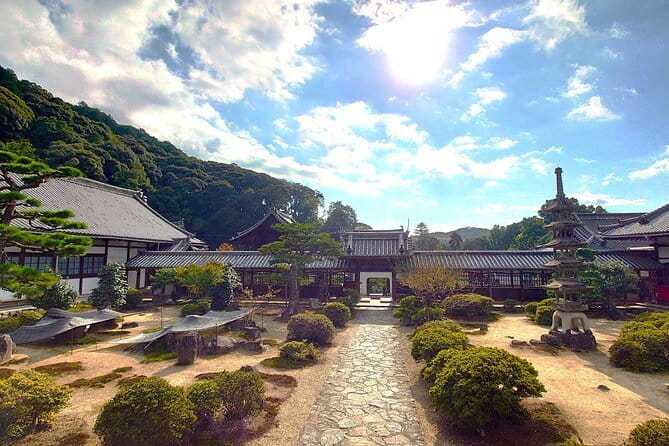
Stop 1 is Tea and Uji Town Exchange Centre Chazuna, about 45 minutes. This is where you learn how Uji’s tea culture and history connect to what you’ll see later in the day. It’s an ideal first stop because it gives you context before the shrines and scenic views start stacking up.
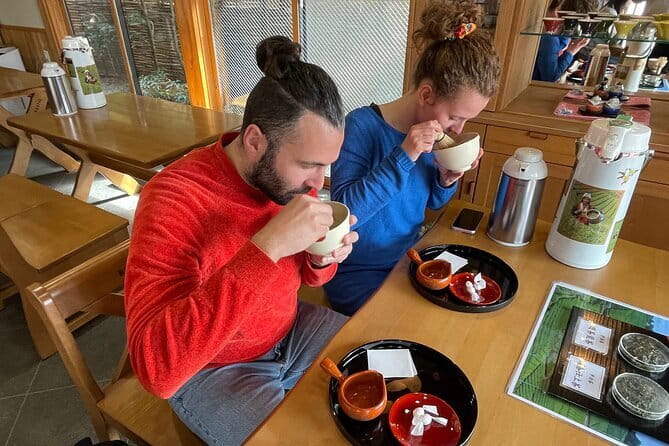
Chazuna entrance is optional at 600 yen, so you have a decision to make. If matcha is your main reason for coming to Uji, I think this is the easiest add-on to justify. Even if you are not a hardcore tea person, knowing a bit about how the culture is framed helps your later temple and tea-shop moments make more sense.
One more practical point: since this is time inside a tea-oriented facility, it can be a nice pace reset if the weather is warm or the morning starts a little early. It also gives you a place to slow down, look around, and then head out to the open-air parts of the route.
More Tea Ceremonies in Kyoto
- Kyoto: Tea Ceremony in a Traditional Tea House in Kiyomizu
★ 4.9 · 3,519 reviews - Kyoto: Tea Ceremony Ju-An at Jotokuji Temple
★ 4.9 · 3,207 reviews - Kyoto: 45-Minute Tea Ceremony Lesson Experience
★ 4.3 · 2,378 reviews - Kyoto: Table-Style Tea Ceremony at a Kyo-Machiya
★ 4.9 · 1,211 reviews
Uji Shrine and Ujigami Shrine: calm, old stories, and a meaningful spring
Next you visit Uji Shrine for about 30 minutes. The shrine has a history of more than 1,700 years, and it’s believed to be beneficial for academic success and childbirth. Even if you do not plan to participate in prayers, I like how the guide explains why these beliefs matter locally.
After that is Ujigami Shrine for about 30 minutes. This shrine is paired with the neighboring Uji Shrine, and the spring called Kirihara Water still gushes from the grounds. Kirihara Water is noted as one of the seven famous waters of Uji, which turns a quick stop into something more specific than a generic shrine photo.
What to watch for here: these are sacred places, so the quiet rules apply. Bring your photo habits down a notch. I find the best photos come when you pause, look, and let people flow naturally around you.
These shrine stops are also a good example of why a navigator helps. Uji’s streets and paths are not designed for big groups to move smoothly. With the guide managing the timing, you stay in sync with the route instead of constantly checking where to go next.
Asagiri Bridge: the quick photo pause that feels worth it
Stop 4 is Asagiri Bridge for about 15 minutes. It’s a straightforward stop, but it hits the right spot in the day. You get a chance to photograph over the Uji River without turning the day into one long travel stretch.
This is also a good time to breathe. After shrines and temple paths, a river view gives you a reset. If you like cinematic photos, this is where you will want to step into position early because the good angles can fill in.
Fifteen minutes sounds short, but the tour has enough rhythm that this does not feel rushed. It’s more like a breath between bigger moments.
Koshoji Temple and the stone-walled path up to Zen
Stop 5 is Koshoji Temple, about 30 minutes. Koshoji is a Zen temple with a history of around 800 years. The standout feature is the Kotosaka slope from the stone gate to the temple grounds, a path made with stone walls.
If you enjoy walking through spaces with texture and intention, this stop can be a highlight. Stone-wall paths have a way of slowing you down naturally, and you end up noticing details instead of just glancing and moving on.
What I like about this part of the day is the balance. You are cycling between stops, so the temple visit is not a strenuous hike. Yet you still get that sense of arriving, entering, and shifting your pace into something calmer.
Amagase Dam to Amagase Bridge: a quiet hour on the Uji River trails
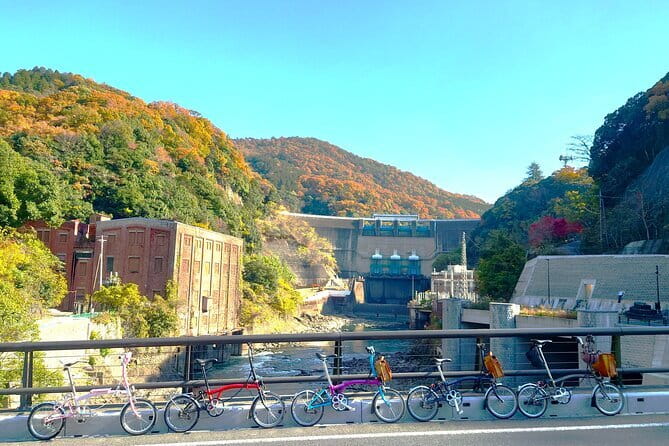
The longest single block is Stop 6, about 1 hour at the Amagase Dam area. The route includes a nature trail along the Uji River, leading to the wooden Amagase Bridge. The view is described as tranquil, and it’s easy to feel like you’ve stepped away from the bustle people associate with Kyoto.
This is a great time slot for the slow-cycling promise. Instead of racing from sight to sight, you get enough time to walk a little, pause, and take in the valley views. It also helps if you like wildlife or just the softer sounds of moving water and trees.
Practical note: this part is nature-focused, so wear shoes that work well for outdoor paths. Even though it’s not described as a hike, you will still be on trails, and comfort matters.
Also, if you’re a photo person, bring your patience. River views are best when you wait for the light and angles to agree with your camera settings.
Byodo-in Omotesando: your choice between UNESCO time and tea-shop time
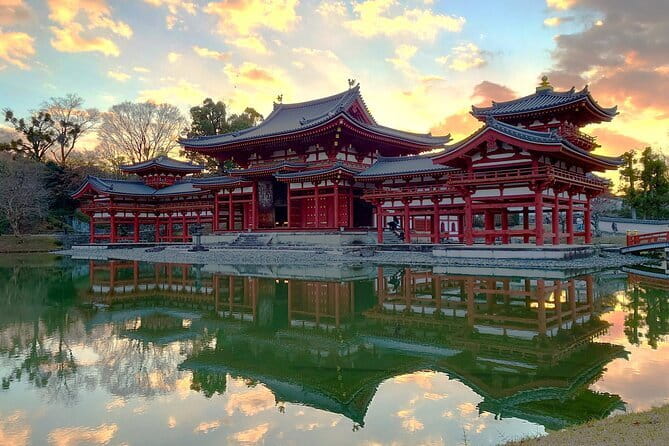
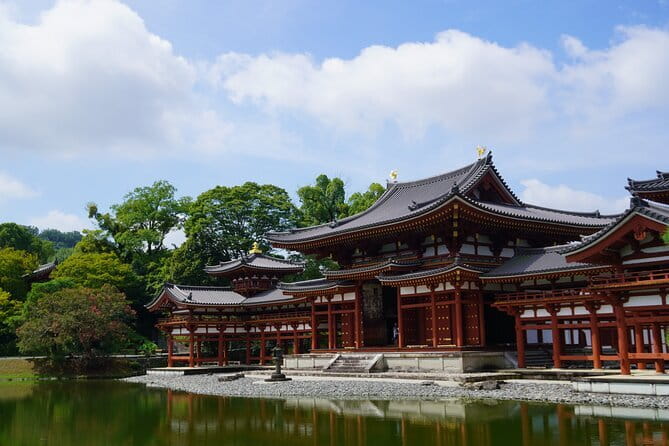
Stop 7 brings you back toward the city area with an hour at Byodoin Omotesando. This is where the tour gives you options. You can visit the Byodoin Phoenix Hall, a UNESCO World Heritage Site, with an optional 700 yen entrance fee. Or you can stop for tea in Uji’s unique tea shops.
This is one of the smartest design choices in the day. It respects different travel styles. If you want the big landmark, you can go for it. If you’d rather spend time eating and sipping locally, you can do that without feeling like you missed the main event.
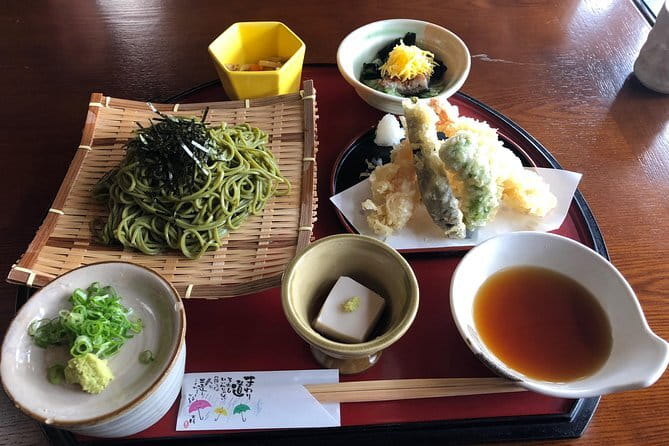
Either way, this final hour helps you end the day feeling like Uji clicked for you, not just that you completed a route. And yes, in at least one recent experience described, the day ended with a matcha drink, which is exactly the kind of satisfying closer that makes the whole tour feel cohesive.
Food breaks you can actually steer: lunch and snacks on your terms
Lunch is not included, but the navigator suggests places according to what you want. This is a big value point if you travel with dietary needs or you want specific flavors.
One example from a reported outing included a vegan restaurant stop with gluten-free options, and the lunch was described as delicious. That tells me the guide pays attention to preferences and can shift the plan when you say you need something specific.
My advice: decide before you go how you want lunch to feel. If you want a sit-down meal, tell the guide. If you prefer something lighter, say so early. With a small group, the guide can adjust suggestions without creating chaos.
How hard is the ride, honestly?
This tour is explicitly set up as slow cycling for people who are not confident about their physical fitness. The pacing is easy, and the time distribution across stops helps you avoid that “all energy, no recovery” feeling.
At the same time, do not treat it like a chair tour. You will still be riding a bike for parts of the day, and you will still walk at shrines, temples, and trail sections. If you can handle gentle walking and short bike segments, you will probably be fine.
This is also one reason why the small group size matters. A guide can slow down when someone needs a breather and keep the day comfortable instead of pushing everyone to keep up.
Who should book this and who might skip it
Book it if you want a matcha-focused day that includes more than just tea shops. The pairing of tea culture, historic shrines, Zen temple atmosphere, and river calm is a strong mix for a half-day format.
It’s also a good fit if you like photography but want to avoid crowds. Small group timing helps you spend time at key views like Asagiri Bridge without feeling like you are fighting for angles.
You might skip it if you only want one landmark, because this is a multi-stop experience. You will be doing several places in one day, and it’s designed for variety rather than a deep-only focus on one site.
Practical tips to make your Uji day smoother
First, plan for optional entrances. If Chazuna and Byodoin Phoenix Hall are both on your wish list, budget for those extra 600 yen and 700 yen options.
Second, remember this tour requires good weather. If the forecast is shaky, keep your schedule flexible on the day you book. When weather hits, nature portions like the Amagase trails are the whole point.
Third, book ahead if you have fixed travel dates. On average, this tour is booked about 49 days in advance, so planning early gives you better chances of getting the day you want.
Lastly, bring energy for short pauses. The tour succeeds because you are not rushing, and that works best when you stay in the “slow down and look” mindset.
Should you book this Uji slow cycling matcha tour?
I’d book it if you want a calm, well-paced way to see Uji without turning your trip into a sweaty sprint. The combination of English guidance, Brompton riding, tea culture context at Chazuna, and a full hour near the Amagase Bridge area is a strong value for the time.
Skip it only if you hate optional add-ons, because entrances at Chazuna and Byodoin Phoenix Hall can change your total cost. Also skip if your schedule cannot handle weather-dependent timing, since the experience requires good conditions.
If your ideal day is moving gently through Uji, learning why matcha matters, and ending with a tea moment, this is an easy yes.
FAQ
What is the duration of the Uji slow cycling tour?
The tour runs for about 4 hours 30 minutes.
How much does the tour cost per person?
The price is $130.46 per person.
Where do I meet for the tour?
You meet at Chatsubo PostboxJapan, 611-0021 Kyoto, Uji, Umonji 1716 (near Uji Station). The tour ends back at the same meeting point.
What time does the tour start?
The tour starts at 10:00 am.
What is included in the price?
Included are bicycle rental, an exclusive navigator fee, riding equipment such as helmets and bags for wheeled transport, and an English guide.
What is not included?
Not included are optional insurance (500 yen), snacks during the tour, Chazuna entrance (option 600 yen), and Byodoin Phoenix Hall entrance (option 700 yen).
Do I need to bring my own bike or helmet?
No. The tour provides the bicycle rental and bicycle equipment including helmets.
How large is the group?
The tour has a maximum of 6 travelers.
What if the weather is bad?
This experience requires good weather. If it is canceled due to poor weather, you will be offered a different date or a full refund.
Is it easy to join if I am not very fit?
The tour is described as slow cycling and aimed at people who are not confident about their physical fitness, and most travelers can participate.
More Historical Tours in Kyoto
- Kyoto Gion: 2-Hour Geisha Culture & History Walking Tour
★ 5.0 · 1,186 reviews - Kyoto Gion Historical Walking Tour
★ 5.0 · 188 reviews - Historical Kyoto E-Bike Tour
★ 5.0 · 181 reviews - Kyoto: Nijo Castle World Heritage Guided Tour with Admission
★ 5.0 · 128 reviews
More Cycling Tours in Kyoto
- 5 Top Highlights of Kyoto Full Day Bike Tour (E-bike option)
★ 5.0 · 511 reviews - Full Day Biking Tour Exploring the Best of Kyoto
★ 5.0 · 498 reviews - E-Bike Tours of the highlights of Kyoto!!!
★ 5.0 · 291 reviews - Afternoon Kyoto Bike Tour: Bamboo Forest, Monkeys & Hidden Spots
★ 5.0 · 283 reviews
Fresh options around Kyoto
- Kyoto Aquarium Admission Ticket★ 4.7 · 12 reviews
- Kyoto Gion Photoshoot – Private Session | Pro Photographer★ 5.0 · 12 reviews
- Gyoza Cooking Class in Kyoto: Traditional Japanese Dumplings★ 5.0 · 12 reviews
- Kyoto: Guided Food Tour with 12 Dishes & 3 Drinks★ 5.0 · 12 reviews
- Kyoto: Avoid the Crowds at the Hidden Gems of Arashiyama★ 4.9 · 13 reviews
- Kyoto Early Bird English Tour: Gion & Higashiyama(Private opt)★ 5.0 · 13 reviews
- Otsu-e Folk Art Workshop & Local Culture Walk Near Kyoto★ 5.0 · 13 reviews
- Kyoto, Osaka, Nara Full Day tour by Car English speaking Driver★ 3.5 · 13 reviews
Cycling Tours, compared.
3h Tokyo E-Bike Tour: Hidden Gems, and Local Life with guide
Read our review →
Arashiyama Bamboo Forest & Hidden Gems Bike Tour (Early Bird)
Read our review →
Hiroshima in a Nutshell: Morning Bike Adventure
Read our review →Browse the lists this tour appears in