
Reviewed · FOOD & DRINK
Kyoto Food Tour of 10 Tastings with Wagyu, Mochi & More Surprises
Kyoto’s best bites come with a walk. On this 3.5-hour small-group tour, you cover the stretch from Karasuma to Gion while sampling Kyoto favorites, plus a few surprises. It is also well organized, with an easy meeting spot and a guide you can spot fast.
I especially like the focus on Kyoto specialties, like yuba tofu and Wagyu sushi, instead of generic sushi and snacks. The other big plus is the relaxed pacing, so you can actually enjoy the food and the sights. One potential drawback to consider: the level of meal detail and English can vary by guide, and some people find the tour a bit more about eating than deep history.
Key things I’d plan around
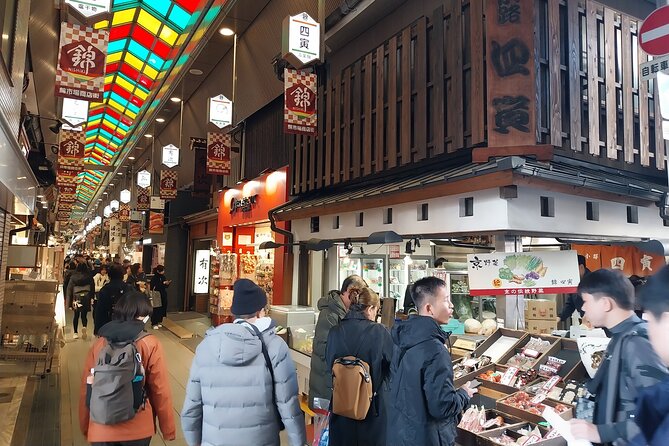
- Karasuma to Gion route: you taste and sightsee on the same walk, finishing near Minami Gion and Yasaka Shrine
- Spot-your-guide start: meet at Starbucks by Karasuma Oike Station, and the guide wears an orange umbrella
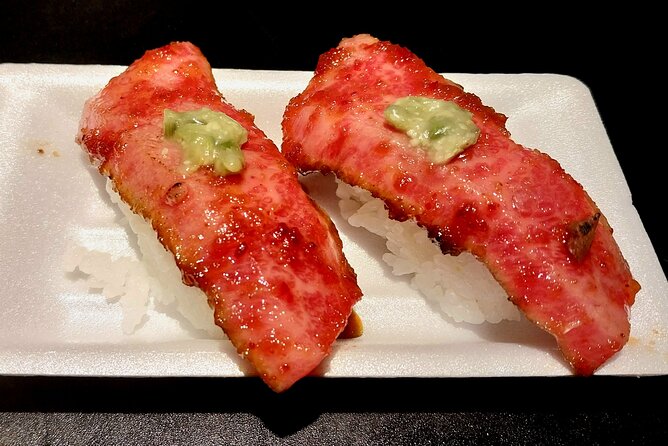
- 10 tastings with real Kyoto hits: think yuba tofu, Wagyu sushi, katsudon with a sweet twist, and okonomiyaki in the Kyoto way
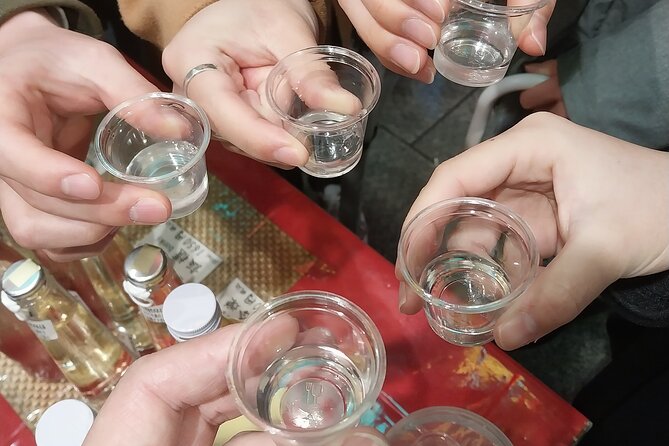
- Drinks are part of the price: a draft beer glass plus a Kyoto sake tasting and a Japanese tea (hot or cold)
- Max 10 travelers: a group size small enough to feel laid-back, not crowded
Karasuma-to-Gion walking tour, not just a food checklist
This is a classic first-timer-friendly Kyoto setup: you start in the Karasuma area and end in Gion, walking through the city while eating your way through Kyoto flavors. The tour runs about 3 hours 30 minutes, and you should expect a fair amount of walking, so comfy shoes matter.
What makes it practical is that it mixes food and scenery without making you choose. You get Kyoto street life, plus the sights around Pontocho and the Kamo River as you work your way into Gion.
The big “value” angle is that the experience includes a lot more than food. Along with the 10 tastings, you also get a glass of draft beer, a sake tasting flight, and a matcha-style tea stop at the end. For $142 per person, that matters because those drinks and extra tastings are usually the first things to rack up your spending when you explore on your own.
More Food Tours in Kyoto
- Kyoto Night Foodie Tour in Gion (9+ dishes + 6 Sake tastings)
★ 5.0 · 1,762 reviews - 3-Hour Kyoto Insider Sake Brewery Tour with Tastings & Pairings
★ 5.0 · 917 reviews - Arashiyama Bamboo, Temple, Monkeys, or Secret Sake Brewery
★ 4.8 · 886 reviews
Meeting at Starbucks, finding your guide, getting moving fast
Stop 1 is set up for an easy start: meet in front of a Starbucks across the street from exit 5 of the Subway Karasuma Oike Station. The guide will be wearing an orange umbrella, which is a small detail that can save a lot of stress in a city where signs can blur together when you are hungry.
You also get a quick intro before the first food hit, so you know what to expect. And because the meeting point is near public transit, you can handle it without needing hotel pickup.
If you arrive a few minutes early, you’ll avoid the “I am standing here trying to look casual” moment. This tour is designed for a smooth start, not for last-second scrambling.
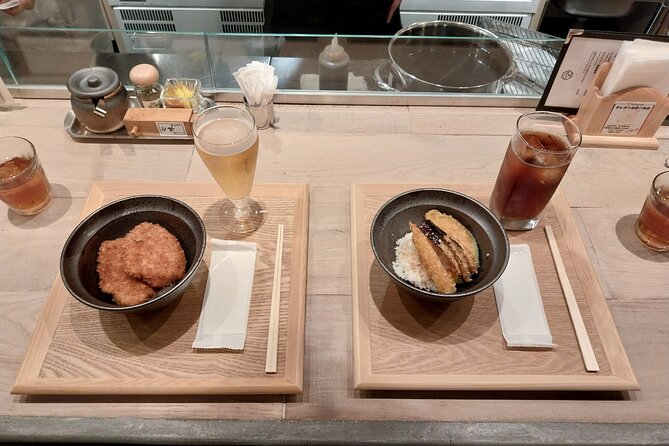
Katsudon and tonkatsu, with a Kyoto-style twist
The first proper meal stop is at Kyoto Tonkatsu Katsuda Shijo Kawaramachi, where you try a traditional pork katsu dish with a regional flavoring twist. This is a smart choice early in the walk, because katsudon is filling and comforting after you get out of the train.
You should expect a straightforward, savory start: crunchy pork, rice, and sauce, with the Kyoto twist handled by the shop. It is not the kind of dish that needs long lectures to appreciate, which helps if your guide is more low-key.
If you are the type who likes to “warm up” with something familiar before you go adventurous, this stop makes sense.
Nishiki Market: yuba tofu, sake, fish cakes, and Kyoto craft energy
Nishiki Market is one of those Kyoto places where the senses get busy fast, and this tour gives you a guided way to enjoy it. You get a walk along the market street, around 400 meters, and you learn about local artisans and their trades while tasting Kyoto specialties.
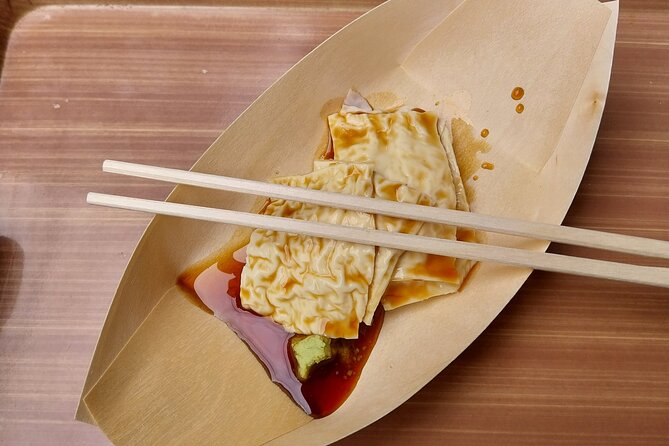
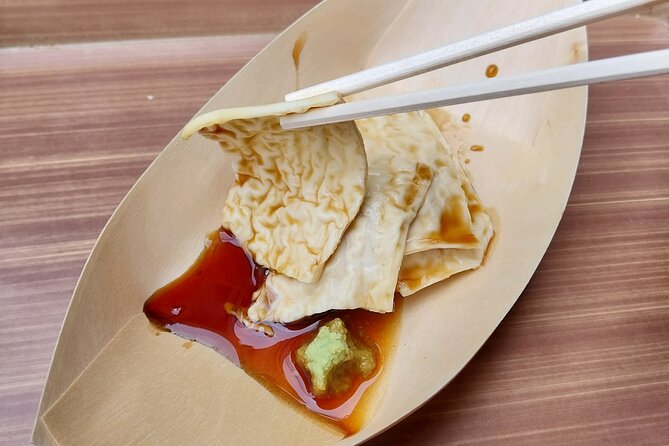
This is where the yuba tofu focus really shows up. Yuba is Kyoto’s famous specialty made from the skin that forms on heated soy milk, and it has a texture that feels different from typical tofu. If you have never tried it, this is one of the most efficient ways to do it because you get context plus tastings in one area.
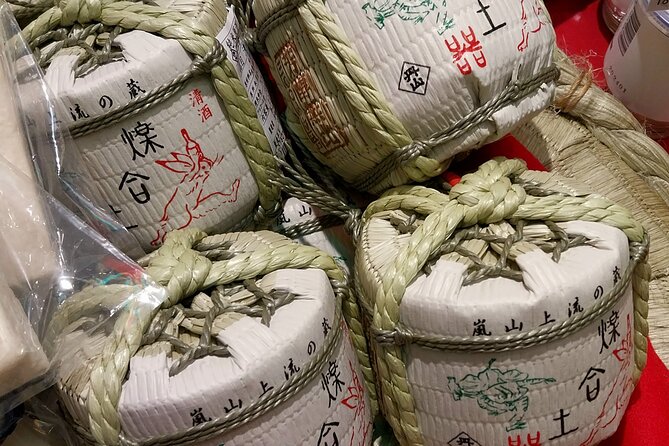
You also get sake and fresh fish cakes with different flavors. That tasting approach is a big part of why tours like this can feel worth it: market items are easy to buy on your own, but sampling the range with a guide can help you avoid blind spots, like ordering one thing that is good but not the right representative choice.
Timing note: the market portion is longer than a typical “one counter and done” stop. It is built in so you can actually browse and eat without feeling rushed.
A few more Kyoto days worth comparing
- Tokyo Night Foodie Tour in Shinjuku – Seasonal Sushi, Wagyu Beef
★ 5.0 · 1,161 reviews - Tokyo: Wagyu and 7 Japanese Dishes Cooking Class
★ 4.9 · 273 reviews - Small-Group Wagyu Beef and 7 Japanese Dishes Tokyo Cooking Class
★ 5.0 · 190 reviews - Wagyu & Sake Pairing in Shinjuku – Steak, Shabu-Shabu & More
★ 5.0 · 112 reviews
Gion and the Kamo River views, plus a walk that feels like Kyoto
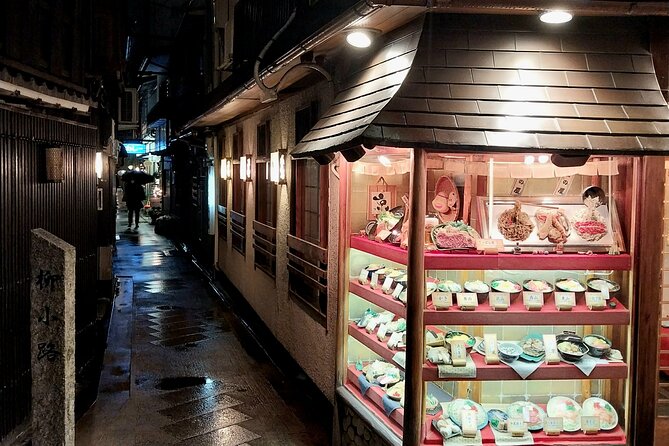
After Nishiki, you shift into the Gion approach. You walk through Kyoto streets and enjoy the views of Pontocho and the Kamo River before reaching the Gion area.
This portion matters because it breaks the tour up. You are not eating non-stop for 3.5 hours, and the scenery makes the whole thing feel more like Kyoto, not like a restaurant crawl with legs.
Then you get time in Gion itself, including a resting stretch where a hearty bite is served next. This pacing is one of the reasons people call the vibe laid-back, especially with groups of up to 10.
Okonomiyaki in the Kyoto way, hearty and very practical
One of the tour’s mid-route food moments is okonomiyaki in a quaint restaurant in the Gion area. You get the break, the seating, and the kind of warm savory comfort food that keeps your energy steady for the final tea stop.
Okonomiyaki is often associated with Osaka, but Kyoto versions exist and taste different depending on shop style. The point here is that you get a Kyoto presentation, not just the idea of a pancake.
If you are worried about the tour being too snacky or too light, this stop helps balance it out. It also gives you a chance to slow down if the market was intense for your senses.
The matcha/tea finish, where the last sip feels like Kyoto
The last stop is a Kyoto tea-ceremony themed experience, stopping by one of the more renowned matcha venues depending on the season. You get a Japanese tea tasting, hot or cold, with a selection.
This ending is a nice way to wrap up a food-heavy walk, because tea clears the palate and helps you reset flavors after sweets like daifuku mochi are part of the included lineup.
Even if you do not go full tea-nerd, this is still useful. Matcha is one of those Kyoto markers that can be easy to buy later, but harder to evaluate without tasting it in a setting that explains what you are drinking.
What the 10 tastings actually mean for your appetite and your budget
The included lineup is the heart of the tour. You can plan around this set of items:
- Yuba tofu, Kyoto’s signature preparation
- Katsudon with a sweet local twist
- Okonomiyaki, Kyoto-style savory pancake
- Wagyu sushi, seared to perfection
- Fresh fish cakes, handmade and flavored
- Daifuku mochi with seasonal fruit filling
- A delicious secret dish
- A glass of draft beer
- A tasting of various Kyoto sakes
- Japanese tea tasting (hot or cold)
Because all of that is included, the price becomes more reasonable than it first looks. If you tried to replicate it yourself, market snacks and drinks add up fast, especially if you include sake and a tea tasting.
The “secret dish” bit also matters. It creates an element of surprise, which you do not always get when you self-plan in Kyoto.
The one caution is about your preferences. One of the less-positive experiences involved people feeling there was too much fried food and not enough fresh options, so if your diet is picky or you want a lighter menu, you should consider that possibility.
Guides, English, and the relaxed pace you should expect
This tour is small-group, and that usually means a more human experience. Guides can make it feel personal, and some of the friendliest energy in the feedback centers on guides like Yuma and Tomoro, who were described as very nice and friendly while walking through markets and sharing food moments.
Still, there is a realistic variation. A couple of people found their guide soft-spoken with English that was not strong enough to provide deep meal detail. If you care a lot about explanations of what you are eating and why it matters historically, you might want to keep your expectations flexible.
In practice, it helps to bring the right mindset: you are here to eat and walk, not to sit through a full lecture. When that matches your style, the tour tends to land well.
Who should book this Kyoto food tour
I think this works best for:
- First-time visitors who want a simple route from Karasuma to Gion
- Food lovers who want multiple tastings without committing to a long list of reservations
- People who like markets, street food style bites, and a relaxed group vibe
- Travelers who want sake and tea included, not added later
It might be less ideal if:
- You dislike fried foods or you want mostly fresh, light bites
- You prefer very detailed narration and history on every dish
- You do not like walking, since the tour includes a fair amount of it
If you fall somewhere in the middle, you are still probably fine. The menu is Kyoto-forward and drink-inclusive, and the pacing gives you chances to reset.
Tips to make the tour feel worth every yen
A few practical moves can improve your experience a lot:
- Go hungry, but not empty. These are tastings plus hearty stops, and you will enjoy it more if you have eaten a simple breakfast or early snack.
- Wear shoes you can walk all day in. The route is from Karasuma to Gion, and you will be on your feet for a while.
- If you have dietary needs, contact the provider in advance. They explicitly note that you should reach out so they can cater as best as possible.
- Take your time in Nishiki Market. The point is tasting range and learning the basics while you browse.
Also, the tour uses a mobile ticket, which is convenient. Just make sure you can access it on the day.
Should you book it?
If you want a Kyoto food walk that delivers 10 tastings, includes sake and tea, and ends in Gion near Yasaka Shrine, I say it is a strong choice. The tour’s structure, small group size, and the fact that drinks are part of the deal help it feel like more than a simple snack stop.
I would book it especially if this is your first Kyoto visit or if you want a clear route that combines food with sights like the Kamo River and Pontocho area. If you are very sensitive to fried foods, or you need heavy guide narration, keep expectations flexible and double-check that the tour’s pace and menu align with what you enjoy.
Overall, the balance of tastings plus drinks plus a real Kyoto walking route is what makes this one easy to recommend. If you like eating and walking, this is the kind of tour you will remember long after the last sip of tea.
FAQ
How long is the Kyoto food tour?
The tour lasts about 3 hours 30 minutes. It involves a fair amount of walking, so comfortable shoes are recommended.
What food and drinks are included in the price?
The tour includes yuba tofu, katsudon with a sweet local twist, Wagyu sushi, okonomiyaki, fresh fish cakes, daifuku mochi with seasonal fruit filling, and a secret dish. It also includes a glass of draft beer, a tasting of various Kyoto sakes, and a Japanese tea tasting (hot or cold).
Where do I meet the guide, and where does the tour end?
You meet in front of Starbucks across the street from exit 5 of the Subway Karasuma Oike Station, in the Kyoto Sanjo Karasuma Building area. The tour ends at the entrance of Minami Gion, near Gion Shijo Station on the Keihan Line and a few steps from Yasaka shrine.
How big is the group?
The group maximum is 10 travelers. The tour is described as a small-group experience.
Can the tour accommodate dietary requirements?
You should contact the provider in advance for any dietary requirements so they can cater for them as best as possible.
What is the cancellation policy for a full refund?
Free cancellation is available up to 24 hours in advance for a full refund. If you cancel less than 24 hours before the experience starts, the amount paid is not refunded.
Fresh options around Kyoto
- Kyoto Aquarium Admission Ticket★ 4.7 · 12 reviews
- Kyoto Gion Photoshoot – Private Session | Pro Photographer★ 5.0 · 12 reviews
- Gyoza Cooking Class in Kyoto: Traditional Japanese Dumplings★ 5.0 · 12 reviews
- Kyoto: Guided Food Tour with 12 Dishes & 3 Drinks★ 5.0 · 12 reviews
- Kyoto: Avoid the Crowds at the Hidden Gems of Arashiyama★ 4.9 · 13 reviews
- Kyoto Early Bird English Tour: Gion & Higashiyama(Private opt)★ 5.0 · 13 reviews
- Otsu-e Folk Art Workshop & Local Culture Walk Near Kyoto★ 5.0 · 13 reviews
- Kyoto, Osaka, Nara Full Day tour by Car English speaking Driver★ 3.5 · 13 reviews
Food & Drink, compared.
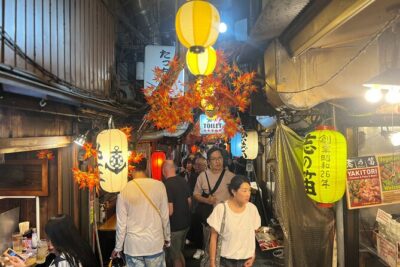
Shinjuku Food Tour (13 Dishes at 4 Local Eateries)
Read our review →
Tokyo Tsukiji Fish Market Food and Culture Walking Tour
Read our review →
Shinsekai Food Tour with 13-15 Dishes at 5 Eateries
Read our review →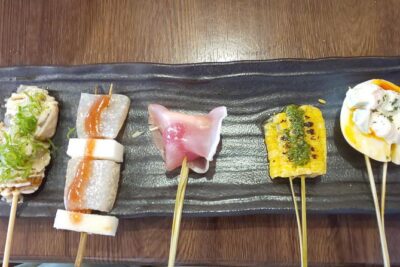
Osaka Food Tour: 13 Dishes at 5 Local Eateries
Read our review →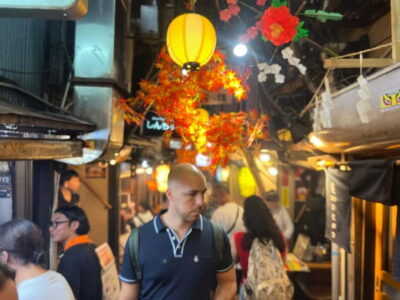
Shinjuku Food Tour (15 Dishes and 4 Eateries)
Read our review →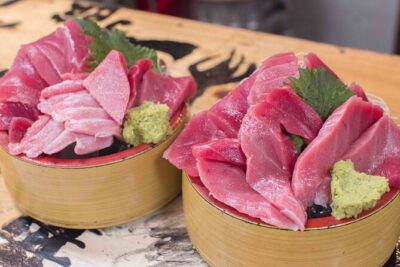
Best of Shinjuku: Izakaya Food Tour (4 Stops, 14+ Tastings)
Read our review →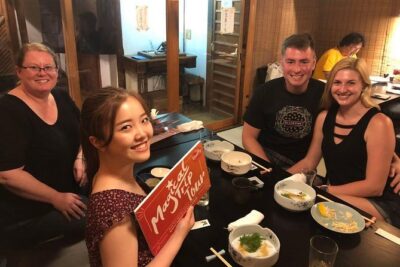
Kyoto Night Foodie Tour in Gion (9+ dishes + 6 Sake tastings)
Read our review →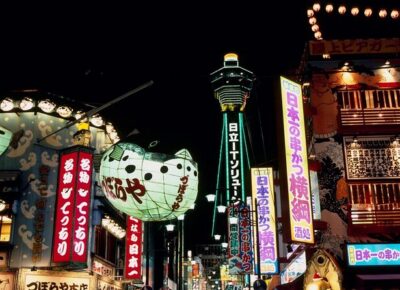
Hungry Osaka Street Food Tour:15 Tastings & 3 Drinks with a Local
Read our review →Browse the lists this tour appears in