Reviewed · KYOTO TOURS
Explore Hidden Alleyway with a Local Expert (Afternoon Tour)
Kyoto has lanes most people miss. This 3-hour bike tour with a local guide slips you through quiet backstreets, then lands you back in classic Kyoto scenes. Quiet backstreets and a 3-hour ride are the whole point, and the route changes the feel of the city fast.
I love the way the stops swing from calm alley neighborhoods to Gion’s well-known geisha-district atmosphere without wasting time on logistics. I also like that the guide training covers traffic safety and local etiquette, so the biking feels guided and controlled rather than random.
One thing to consider: you are on a bicycle for the whole outing, so you need real comfort riding on city roads. The tour also has a rain plan, but either way, your legs are part of the experience.
Key things to know before you ride
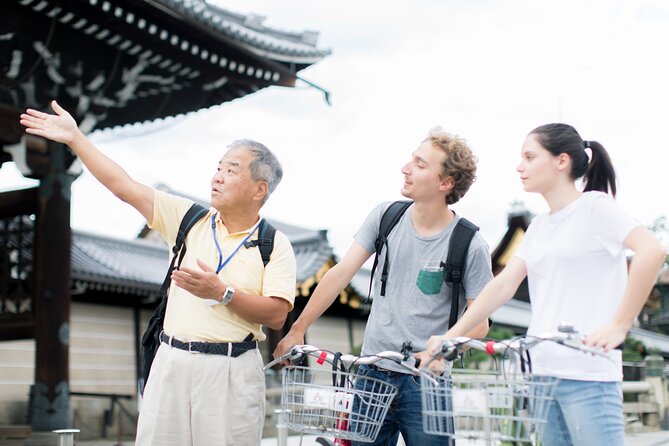
- E-bike convenience for cruising narrow streets with less effort
- Guide training for traffic safety and group cycling, plus local etiquette
- Geisha districts and river time in one compact afternoon circuit
- Well-timed stop lengths (mostly 15 to 20 minutes), great for tight schedules
- Rain options: poncho biking as usual or a walking tour using public transportation
- Small private groups (2 to 6 per guide, with an extra guide for larger groups)
Kyoto’s hidden alley feeling is real, and the bike makes it work
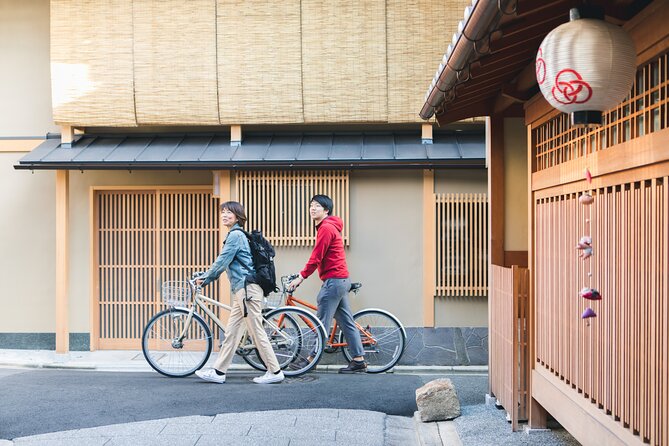
Kyoto is best understood by pace. On a bike, you move with the city instead of fighting it, and small turns become big mood shifts. One minute you’re in a quieter pocket with traditional houses, the next you’re close to the life you see in photos.
This tour leans into that contrast on purpose. You start in calmer lanes, where the scents, light, and street sounds change from block to block, then you reconnect with the Kyoto people come to see. It is a simple formula, but it works.
You’ll also get the benefit of local route choices. The guide knows where alleyways run together and where it’s smarter to link short scenic moments with bigger landmarks. That saves you energy for looking, not guessing.
A few more Kyoto days worth comparing
- PERFECT KYOTO 1-Day Bus Tour
★ 5.0 · 13,518 reviews - Kyoto: Fushimi Inari, Kinkakuji, Bamboo Grove 1 Day Bus Tour
★ 4.8 · 4,316 reviews - Kyoto: Tea Ceremony in a Traditional Tea House in Kiyomizu
★ 4.9 · 3,519 reviews
Meeting at 2:00 pm and using a 3-hour window well
The tour starts at 2:00 pm and returns to the same meeting point, so you do not have to build your day around a new drop-off. With about 3 hours total, you’re getting a structured loop rather than an all-day wandering plan.
Stop times are short and purposeful, especially at the early parts of the ride. You’ll spend around 15 minutes at the first three moments, then about 20 minutes at the Kyoto Imperial Palace area and the Kamo River break. That means you see a lot, but it also means you get less time for long photos or extended wandering inside each site.
This is a strength if you are trying to hit major neighborhoods without burning your whole afternoon. It can feel a little fast if you want slow, deep staring at every detail. Think of it as guided sampling, with enough time to remember what each place felt like.
Miyagawacho Kaburenjo: the calm side of old Kyoto streets
Your first stop is Miyagawacho Kaburenjo, set in Miyagawacho, the second largest of Kyoto’s five geisha districts. The street atmosphere here is the first clue that you are not doing the typical photo loop.
The lane is lined with traditional wooden houses on both sides, so the street feels like a corridor. Even before you reach the more famous names, you get that older Kyoto vibe: quieter, more framed, and built for walking and careful passing.
What I like about this stop is how it sets the tone for the rest of the ride. You start with a mood that slows you down, then the guide later steers you into places that are busier. The result is contrast you can actually feel.
A practical note: since this is a narrow alley setting, pay attention to instructions on where to position yourself and how to move as a group. On a bike tour, your best photos usually happen when you are stable and following the guide’s flow.
Gion: geisha district elegance, seen from the inside of the day
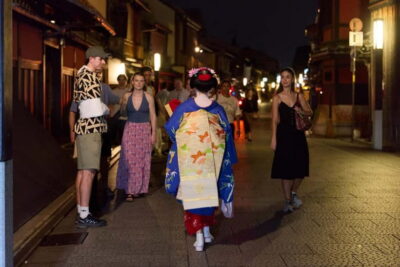
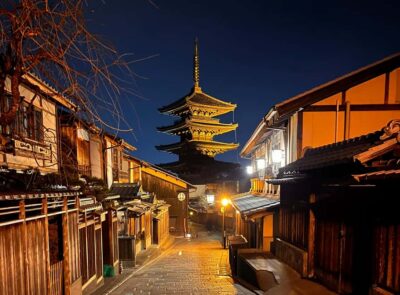
Next is Gion, and yes, this is Kyoto in the classic sense. The area developed as a major geisha district with maiko girls and geiko women, and the refined atmosphere from earlier times still lingers.
What matters on this tour is not just the name. It’s the way the guide brings you through the district’s rhythm after you’ve already experienced the calmer backstreet feeling nearby. You’re not suddenly dropped into chaos. You’re transitioning with context.
You also get a quick introduction to what you’re seeing culturally, not just visually. The tour focuses on local etiquette, and that shows up in how you’re guided to behave in historic neighborhoods where people live and work.
Possible drawback here: if you expect lots of time to stand and watch from one corner, this is not that kind of stop. You get about 15 minutes, which is enough for orientation and a short look, but not enough to settle in for an extended scene.
Same corner of Japan, a different kind of day:
- Kyoto Geisha Walking Tour: Gion District & Hidden Gems
★ 4.7 · 3,273 reviews - Kyoto: Tea Ceremony Ju-An at Jotokuji Temple
★ 4.9 · 3,207 reviews - Kyoto: Gion Magical Night Walking Tour with Geisha Trivia
★ 4.9 · 2,393 reviews - Kyoto: 45-Minute Tea Ceremony Lesson Experience
★ 4.3 · 2,378 reviews
Tatsumi Bridge: a willow-lined reset along the water
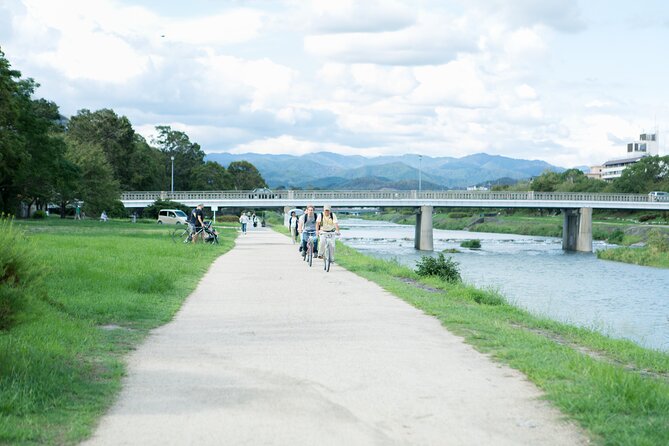
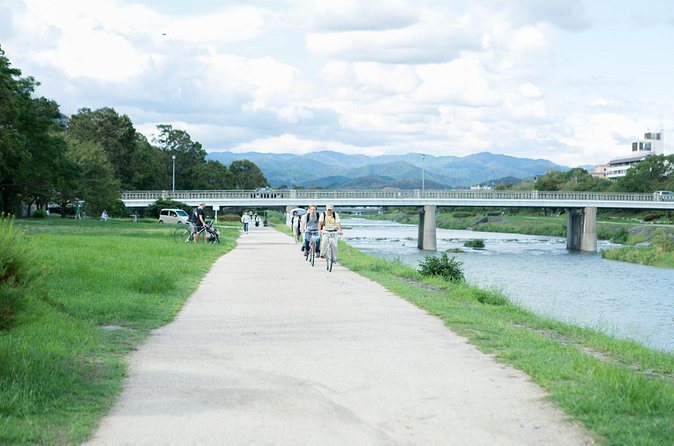
Then you move to Tatsumi Bridge, and this stop is a breather. The path goes alongside a limped stream, and there’s something about that water-and-walk combo that resets your attention.
The willows swinging in the breeze add a softer, slower feeling, especially after you’ve been moving through streets and crossing from one neighborhood to the next. It’s the kind of moment that makes Kyoto feel seasonal without needing a perfect weather forecast.
This is also a good stop for a different kind of seeing. On the bike, you take in street patterns. Along this bridge area, you slow your scanning and start noticing sound, water movement, and the way trees shape the air.
If you like taking photos: this is a better place for them than it sounds. Water reflections and willow branches tend to show up well even in normal daylight, and the bridge gives you natural framing.
Kyoto Imperial Palace: gravel paths, seasonal gardens, and an older scale
After the river-side reset, you shift to Kyoto Imperial Palace, which used to be the residence of Japan’s Imperial Family. Today, it’s open to the public as a national garden with seasonal flowers.
Cycling through this kind of space changes the feel again. Instead of lane walls, you’re dealing with a larger, more landscaped area, and you cycle along the gravel paths. That alone makes the outing feel like more than just city neighborhoods.
The 20-minute time window is enough to get oriented, enjoy the garden setting, and see how the grounds sit within Kyoto’s urban fabric. It’s not enough to do a full garden-only day, but that’s not the point here.
Value tip: if you are trying to decide between a palace garden visit and a neighborhood-focused day, this tour gives you a bit of both. You keep moving while still getting a true public-garden atmosphere.
One more thing I appreciate: this stop is a reminder that Kyoto isn’t only alleys and districts. It also has ceremonial space, and the bike pace helps you connect that larger scale to what came before.
Kashiwayacho and the Kamo River break for a real local pause
Your final stop is Kashiwayacho, where you can relax at a river that locals love, the Kamo River. This part of the tour feels less like sightseeing and more like taking a breath where people actually hang out.
River time changes your body after hours of riding. It’s also a smarter end-of-tour move than another landmark sprint. Your eyes get a rest, your legs get a reset, and you’re not forced into a long sit in a crowded interior.
The tour includes an admission ticket at this stop, so you know there’s a defined experience here rather than an optional wander. Even with that, the vibe is still “pause and watch,” which is exactly what you want after city cruising.
Who this ending suits: if you end your Kyoto days feeling like your brain is overloaded, this river break helps you close the loop with something calm.
E-bikes, guide style, and why small groups matter
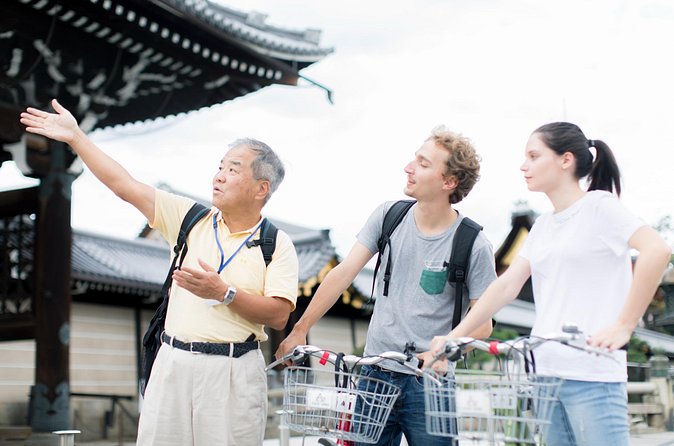
The big practical win here is how the bikes handle Kyoto’s street layout. One review calls it the E-bike hype, and once you’re pedaling through narrow lanes and uneven city rhythm, you’ll understand why electric help matters.
Even if you’re a confident rider, E-bike assistance reduces fatigue, especially when routes include repeated starts and stops. That means you can focus on the guide’s cues and look around more naturally instead of saving energy for the next hill or tight corner.
The group size is capped for a reason. You can have up to 6 guests per guide, and for groups 7 to 12 an extra guide can be arranged. That keeps the riding feel manageable, and it also means the guide can actually help people stay positioned and safe.
One guide name came up clearly: Yuichi. The praise was strong for his personality and the way he mixed information with humor. That matters because a tour like this lives or dies on the guide’s pacing. If the guide keeps things smooth, you feel like you’re part of the city loop rather than being herded.
Value check: is $102.47 for 3 hours actually fair?
At $102.47 per person for about 3 hours, you’re paying for three things at once: a local guide, guided bike logistics, and a route that strings together multiple neighborhoods and viewpoints.
If you compare that to renting a bike plus trying to build your own loop, the price starts to look less surprising. Here, you get a trained approach to traffic safety and group cycling, plus cultural guidance at places like Gion. You’re not just paying for movement, you’re paying to not waste time guessing.
You also get a route that covers variety in a short window. The tour hits geisha-district mood, a calm bridge moment, a major garden setting at Kyoto Imperial Palace, and a river pause at Kamo River. Most stops list free admission, and there is at least one included ticket at the river stop, so the pricing supports a real plan rather than optional add-ons.
Booked about 13 days in advance on average, this is the kind of tour people plan for, not something you casually grab at the last minute. If you’re in Kyoto during a busy stretch, booking sooner helps.
Who should book this Hidden Alleyway bike tour
This works best if you want:
- A structured afternoon that still feels local
- Bike-based access to neighborhoods that would be annoying to string together on foot
- Cultural context for places like Gion and Kyoto Imperial Palace, not just landmark checklists
- A small-group pace that keeps the day from feeling like one long transit grind
It might not be your best fit if:
- You’re not comfortable riding a bicycle on city streets
- You want long, slow time at fewer sites rather than short guided stops
- You hate any cycling component, even with E-bike assistance
If you’re traveling with family, note the tour says children must be at least 10 years old, 145 cm or above, and able to ride a bicycle safely on the road unassisted. That’s a real constraint, so it’s worth being honest about skill level before you book.
What to expect in rain: poncho on the bikes or switch to walking
This tour operates in rain. You get a choice: you can continue on bikes with a rain poncho at no extra cost, or switch to a walking tour using public transportation, with that included in the tour fee.
That choice matters. If your priority is staying on the bike and seeing the route as planned, poncho biking keeps you on track. If you prefer less slip and better mobility through damp streets, the walking-public-transport option can make the day feel more comfortable.
Either way, expect the guide to keep the schedule moving. The whole point of the 3-hour format is that you see a lot without needing ideal weather.
Should you book this tour or go DIY?
I’d book it if you value smart route planning, small-group riding, and getting to feel the contrast between quiet alley Kyoto and the more famous districts. The combination of geisha-district streets, Tatsumi Bridge scenery, Kyoto Imperial Palace gardens, and a Kamo River wind-down gives you a full Kyoto afternoon in one package.
Go DIY instead if you want long hours at one or two sites, or if you’re uncomfortable riding anywhere near traffic. Also, if you prefer to control your pacing completely, the guided stop windows may feel short.
My final take: this is one of those tours where the guide’s training and the bike pace do the heavy lifting. You spend less time figuring out where to go and more time actually noticing the city.
FAQ
How long is the afternoon hidden alleyway bike tour?
The tour lasts about 3 hours.
What time does it start, and where does it meet?
It starts at 2:00 pm. The meeting point is 552-13 Higashiaburanokōjichō, Shimogyo Ward, Kyoto, 600-8235, Japan, and the activity ends back at the meeting point.
Is this a private tour?
Yes. It’s private, and only your group will participate.
How many people ride with each guide?
You can have a minimum of 2 and a maximum of 6 guests per guide. If your group is 7 to 12 people, an extra guide can be arranged.
Is the cost $102.47 per person, and what’s included?
The price is $102.47 per person. You’ll have a guided bike experience, and at least one stop includes an admission ticket. Other listed stops have free admission.
Does the tour run in rain?
Yes, it runs in rain. You can choose to continue on bikes with a rain poncho (free of charge) or switch to a walking tour using public transportation, which is included in the tour fee.
What is the cancellation and refund situation?
The provided details are not perfectly consistent. One part says you should cancel at least 3 days prior for a refund, while the cancellation policy section states it is non-refundable and cannot be changed. Check the exact terms shown at booking and in your confirmation message before you pay.
Fresh options around Kyoto
- Uji: Private immersion into Kyoto’s tea and reglious culture★ 5.0 · 17 reviews
- Kyoto Full Day (8 hours) Ultimate Sightseeing Private Tour★ 4.5 · 17 reviews
- Kyoto Guided Walking Tour: Secret Zen Garden and Fushimi Inari★ 5.0 · 17 reviews
- Kyoto/Nara/Osaka: Highlights Custom Tour with Hotel Pickup★ 4.0 · 17 reviews
- Japanese Traditional Sweets ”Nerikiri” making★ 4.3 · 17 reviews
- Inside of Fushimi Inari – exploring and lunch with locals★ 4.5 · 17 reviews
- Authentic Maiko Experience&Kyoto Dinner (Free drink) at Noh Stage★ 5.0 · 17 reviews
- Taste of Nishiki Market Walking Food Tour with Local guide★ 5.0 · 17 reviews
Kyoto Tours, compared.
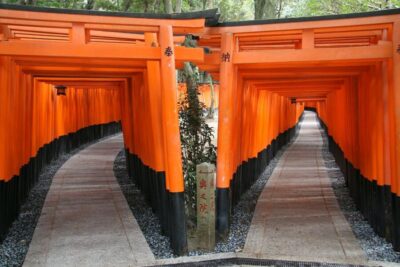
Fushimi Inari, Kinkakuji, Bamboo Grove 1 Day Bus Tour
Read our review →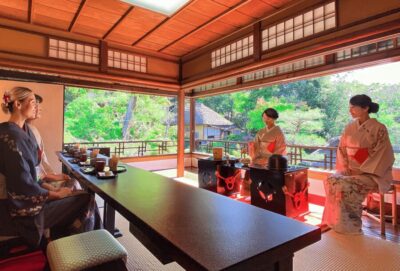
Tea Ceremony in a Traditional Tea House in Kiyomizu
Read our review →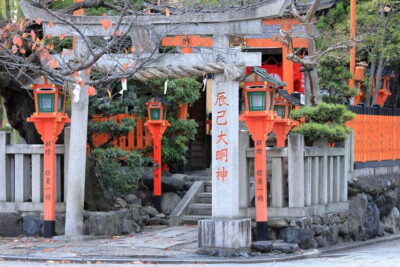
Kyoto Geisha Walking Tour: Gion District & Hidden Gems
Read our review →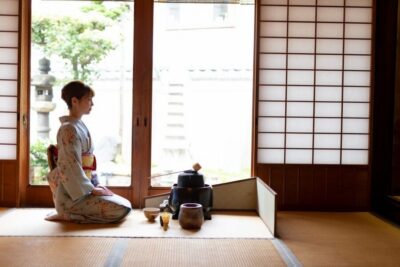
Gion Magical Night Walking Tour with Geisha Trivia
Read our review →