
Reviewed · CYCLING TOURS
Discover Kyoto by Bike Full Day Tour
Kyoto looks better from the saddle. This full-day bike loop mixes the big-name hits with calmer backstreets you normally only spot on foot, guided by Jaime for a steady, no-rush pace. E-bikes keep the day manageable, and the route is built to weave between sights and mellow stretches so you can actually enjoy the city.
I like the way this tour blends famous stops with calmer neighborhoods like Miyagawacho and the riverside Kamo River ride. I also like that it includes multiple photography moments and that Ginkaku-ji admission is included, while many other temple and park stops are free.
One thing to plan for: you need real bike comfort, because you’ll ride about 32 kilometers and maneuver on narrow paths.
Key highlights you’ll feel on the ride
- E-bike assistance makes a long day doable (about 32 km), even when you hit slower, traffic-adjacent lanes.
- Quiet backstreets are a major part of the value, especially on the way to and through areas near Gion.
- Kyoto’s religious sites in smart order, starting with Toji and ending at the Silver Pavilion and Gion.
- Riverside and canal-style scenery, especially the Kamo River segment and the Philosopher’s Path walk.
- Jaime’s guiding style, with friendly explanations and clear on-the-ground direction.
- Ginkaku-ji ticket included, which helps you avoid one more payment decision mid-day.
From Toji to the quieter parts of Kyoto
This is a full-day Kyoto bike experience, starting at 9:00 am and running about 7 to 8 hours. The day begins at a very practical meeting spot, a 7-Eleven near Higashikujō Kamitonodachō in Minami Ward, and you end back at the same place. That matters in Kyoto because transit and timing can get tricky, especially when you’re adding a lot of walking and temple stops.
The tour is set up for a relaxed, ride-focused pace. You’re not just hopping from gate to gate. You’ll also spend time on two wheels moving through parts of the city that feel different from the main tourist corridors. In plain terms, you get the convenience of a guide for the important navigation pieces, plus the freedom of bike travel when you want to slow down for photos or simply watch daily life go by.
You also get a strong mix of “iconic Kyoto” and “I didn’t know this existed” Kyoto. Toji and Gion are famous for a reason, but the route also takes you through places like Honen-in and the Philosopher’s Path area, plus calmer districts near Gion that feel more like lived-in Kyoto than a theme park.
More Bike Tours in Kyoto
- Hidden Kyoto E-Biking tour
★ 5.0 · 1,843 reviews - Bike Tour Exploring North Kyoto plus Lunch
★ 5.0 · 1,087 reviews - Arashiyama Bamboo Forest & Hidden Gems Bike Tour (Early Bird)
★ 5.0 · 613 reviews
Why an e-bike helps more than you’d think
The tour includes a bicycle e-bike, and that’s not just a comfort perk. It changes the whole rhythm of the day.
Kyoto is full of short rises, stop-and-go traffic, and sections where you’d normally want to pause. A regular bike would make you think about distance first and enjoyment second. With an e-bike, you can focus on the route and the details: temple textures, alley architecture, and riverside views. You still need to be comfortable enough to ride around and maneuver safely on narrow paths, but the assistance means you’re less likely to end the day exhausted before you reach the best segments.
And because you’re covering roughly 32 kilometers, this kind of help is the difference between a fun long day and a “why did I do this” day.
The start at Toji, Kyoto’s big wooden pagoda
The tour kicks off at Toji, a UNESCO World Heritage Site known for its famous five-story pagoda. This is the kind of landmark you don’t forget once you see it, especially because the pagoda’s scale makes the surrounding temple grounds feel both structured and peaceful at the same time.
In a day packed with stops, I like having a strong first anchor like Toji. You get your bearings fast. You also get an early taste of temple atmosphere before the city rhythm ramps up later.
Expect a calm, purposeful stroll through the temple grounds, with time to learn about what role Toji plays and what makes the pagoda so notable. Even if you’re not a hardcore architecture person, the sheer “how is that wood still standing?” factor hits quickly.
Umekoji Park and a look at modern Kyoto life
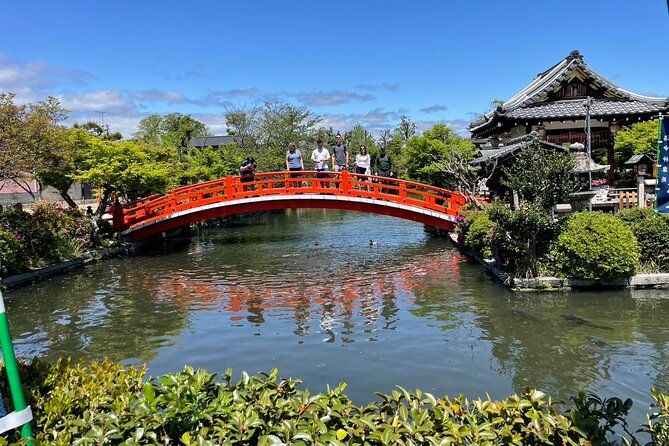
After Toji, the route shifts to Umekoji Park, where the mood changes from dense city energy to open green space. This is one of those stops that works as a reset. You’re not racing forward to the next postcard. You get a breather by the pond and seasonal plantings.
Then it’s over to Ryukoku University Omiya Campus. This is the tour taking you out of pure tourist mode and into daily Kyoto. You’re passing a campus connected to a long-standing Buddhist tradition, and the value here is simple: you see how Kyoto students and city life share space with heritage sites.
If you like travel moments where you can watch ordinary life without planning it, this stop is worth it.
Same corner of Japan, a different kind of day:
- PERFECT KYOTO 1-Day Bus Tour
★ 5.0 · 13,518 reviews - Kyoto: Fushimi Inari, Kinkakuji, Bamboo Grove 1 Day Bus Tour
★ 4.8 · 4,316 reviews - Kyoto: Tea Ceremony in a Traditional Tea House in Kiyomizu
★ 4.9 · 3,519 reviews - Kyoto Geisha Walking Tour: Gion District & Hidden Gems
★ 4.7 · 3,273 reviews
Nishi Honganji’s courtyard scale
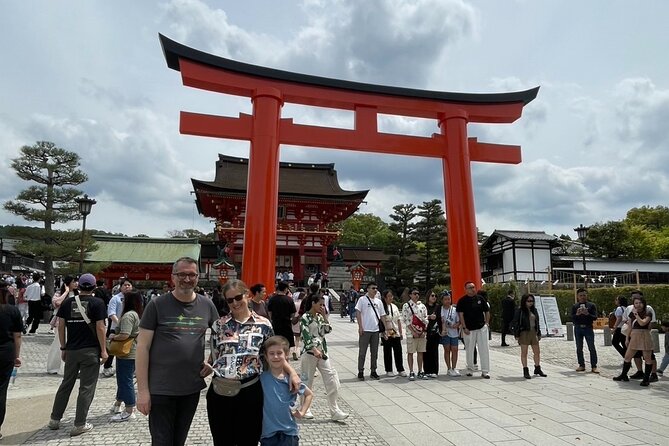
Next comes Nishi Honganji, a major Jodo Shinshu Buddhism temple and another UNESCO site. The highlight is the temple’s courtyard scale and the wooden architecture. This is one of the stops where a guide makes the difference, because you’re not just walking around buildings. You’re learning how the temple’s influence shaped religious life over time and what you’re looking at when you’re standing in the big open areas.
This kind of stop also helps balance the day. Later, you’ll be thinking about Gion lanes and the Silver Pavilion’s look. Nishi Honganji gives you a grounded, serious setting that feels distinct from the more photo-friendly areas.
Kamo River riding, the city’s breathing space
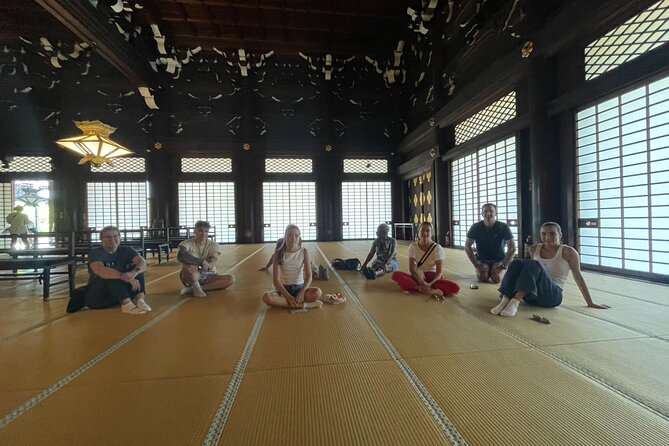
From there, you cycle along the Kamo River, a favorite local route for jogging and relaxing. The advantage of riding here is that you get a smoother, more scenic segment of the day. Instead of constantly negotiating arrivals and exits, you can settle into a steady rhythm while the river carries your attention forward.
This also helps avoid “tour bus only” scenery. You’re moving at a human speed, so you can notice small details, like where locals pause and how the river path changes character by the minute.
Near-Gion without the worst crowds
The tour then heads to a lesser-known area near Gion: a quiet district often associated with geisha culture, reached by going through beautiful alleys at a calm pace. This is a smart strategy for Kyoto.
Gion is famous, and some parts can be crowded. The key here is that the bike route favors quieter lanes and uses the timing and movement to keep you away from the busiest bottlenecks for most of the day. You still get the cultural atmosphere of traditional machiya-style streets, but with less stress.
You’ll explore with a focus on how the streets work, and your guide will help you understand what you’re seeing as you pass through.
Heian Shrine’s big gate and palace-style design
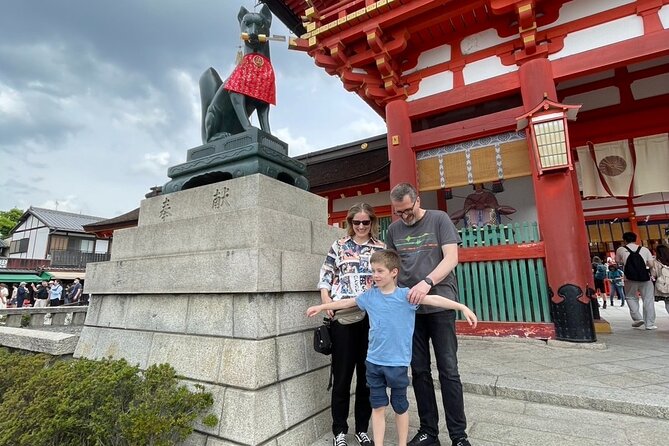
After the Gion-area riding, you reach Heian Shrine, built in 1895 to mark Kyoto’s 1,100th anniversary. The shrine’s vermilion gate is the obvious photo draw, but I also like the story behind the architecture. The buildings are modeled after the ancient Imperial Palace, so it gives you a sense of Kyoto imagining itself in the past.
There’s also a nearby large torii that you’ll see down the road, which adds another distinct visual stop without adding a long walking detour.
Lake Biwa Canal and the Biwa Aqueduct Museum break
Next is the Lake Biwa Canal theme, plus a visit to the Biwa Aqueduct Museum. This is not the kind of stop everyone expects in a bike tour, and that’s exactly why it’s valuable.
You get a quick engineering story about the 1890s project that helped bring water and new life to Kyoto. It’s a different type of Kyoto context, one that makes the city feel connected to the larger region, not just the old temples within its borders.
The museum time is short, which is ideal in a day like this. You come away with a useful backdrop, and you don’t lose precious hours that could go toward the bigger religious and historical scenes.
Nanzen-ji: gates, gardens, and that red brick aqueduct
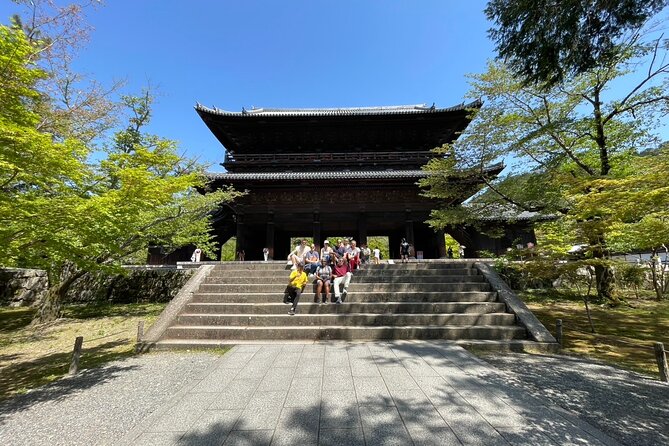
Then you arrive at Nanzen-ji, one of the most important Zen temples, founded in the 13th century. This stop is built for variety. You’re looking at the massive wooden Sanmon gate, Zen gardens, and a striking red brick aqueduct that runs right through parts of the temple grounds.
This is where the tour feels especially “Kyoto.” The architecture, the garden atmosphere, and that aqueduct crossing the scene all mix tradition with infrastructure in a way that’s hard to replicate elsewhere.
You’ll spend enough time here to actually see it, not just snap and leave. If you enjoy temple photography and quiet garden spaces, this is a peak moment on the route.
Philosopher’s Path as a meditative walking break
After Nanzen-ji, you’ll get a walk along the Philosopher’s Path, a stone walkway that follows a canal lined with cherry trees. It’s also tied to Kyoto University and Professor Nishida Kitaro, who is connected with walking there while meditating on his ideas.
Even if you’re not traveling in cherry season, the shape of the path and the canal line give it a calm, intentional feel. It’s a good mid-to-late-day pause, especially since biking segments can be a bit mentally tiring. Walking here brings your pace down again.
Honen-in: quieter temple time in the hills
Next is Honen-in, tucked into the hills and founded in the 1600s to honor the Buddhist priest Honen and the Pure Land sect. The mood here is different from the more famous Zen spots.
You’ll find a mossy gate and white sand elements, and the overall vibe feels more like you’re stepping into a quieter corner of Kyoto rather than a major attraction. It’s the kind of stop that helps the day feel less like a checklist.
If you like those moments where you slow down and actually look, this is one to savor.
Ginkaku-ji, the Silver Pavilion, and what to notice
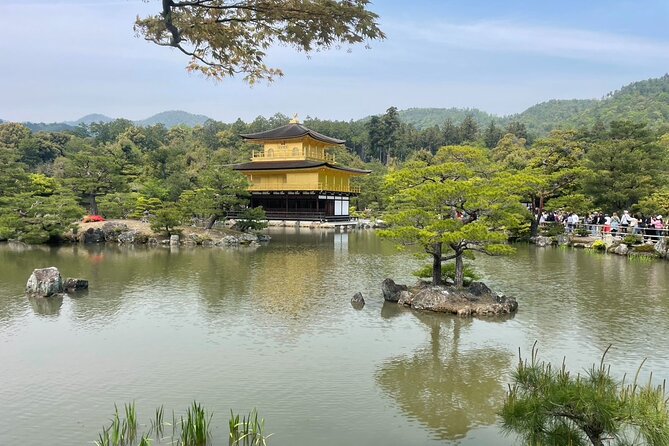
The tour ends at Ginkaku-ji, the Silver Pavilion. It was built in the late 1400s by shogun Ashikaga Yoshimasa. Important detail: despite the nickname, it was never actually covered in silver.
The time here is built for a short walk and a proper look. This is a good moment to focus on textures and surfaces, not just icons. You’re likely to see how the pavilion design fits into its gardens and how the atmosphere changes as you move around the site.
Also, this stop includes the admission ticket, which is a nice value add because you’re already paying once for most of the day.
Gion at the end, when it feels most like the movies
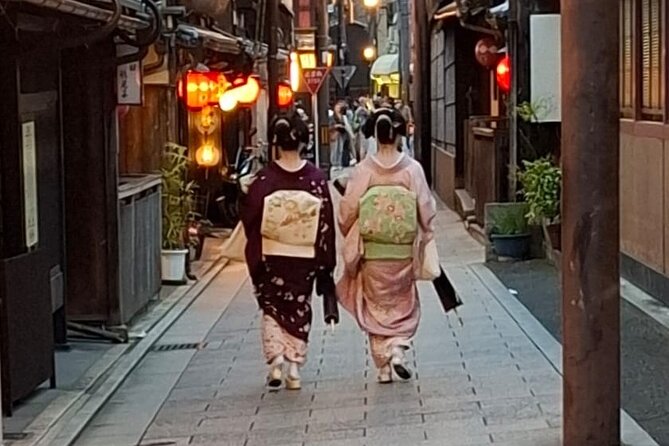
Finally, you head into Gion, Kyoto’s best-known geisha district. You’ll ride through traditional machiya-style lanes and get time to learn about geiko and maiko culture while you’re on the move through the lantern-lit streets.
Ending the day in Gion is smart for two reasons. First, it’s an atmospheric finish. Second, you’re already trained by earlier stops to notice architecture and street layout, not just signage. By this point, the city feels coherent.
Price and value, what you’re really paying for
The tour costs $128.48 per person for a full day of guided routing in Kyoto, with an included e-bike and about 7 to 8 hours total time.
Here’s why that price can make sense:
- You get a lot of included value because many listed stops have free admission, and Ginkaku-ji ticket is included.
- You’re also paying for local navigation and stop-to-stop pacing. In Kyoto, knowing where to cycle, where to slow down, and how to reach calmer lanes can be the difference between a “fun plan” and a stressful day.
- The e-bike reduces the friction of covering roughly 32 km, so you can spend more mental energy on sights rather than on bike fatigue.
The main trade-off is that lunch is not included. You’ll want to plan a quick meal break during the day, and you’ll likely get better results if you eat somewhere convenient to your route so you do not lose cycling time.
Who this tour is best for
This bike tour fits best if you want Kyoto to feel like a local city, not just a museum line.
You’ll probably love it if:
- you’re comfortable riding a bike for most of a full day
- you like a mix of famous highlights and calmer streets
- you want a guide named Jaime who helps you connect what you see
You might hesitate if:
- you’re not confident on narrow paths
- you prefer slow sightseeing with lots of long stops and minimal movement
Also, since it’s private for your group, it can be a great option if you want a tailored pace while still following an expertly planned route.
Practical tips to get the most out of the day
Bring yourself prepared for a long ride: water, sun protection, and comfortable clothing you can move in. Even with an e-bike, you’ll be on the road long enough that small comfort choices matter.
If you’re planning photos, remember that some of the day includes areas that can be busier than others. Start with patience. The route is designed so you spend much of your time in calmer stretches, but Kyoto’s famous zones still have their peaks.
And about weather: the experience requires good weather, so if skies turn rough, you should expect changes to the schedule.
Should you book this Kyoto e-bike tour?
I’d book it if you want the best “Kyoto blend” for one day: a UNESCO start at Toji, Zen temple variety at Nanzen-ji, the Silver Pavilion finish at Ginkaku-ji, and Gion for the closing atmosphere, all connected by bike segments that take you past the busiest areas more efficiently.
I’d think twice if you’re unsure about cycling 32 km or if you want lunch and long breaks handled for you, because lunch is not included and the day moves at a bike-friendly pace.
If your goal is to see Kyoto beyond the biggest ticket lines, this tour has the right ingredients.
FAQ
How long is the Discover Kyoto by Bike full-day tour?
It runs about 7 to 8 hours.
What time does the tour start, and where does it meet?
It starts at 9:00 am at the 7-Eleven at 44-1 Higashikujō Kamitonodachō, Minami Ward, Kyoto.
Is lunch included?
No, lunch is not included.
What’s included in the tour besides the guide?
The tour includes use of an e-bike. You’ll also receive a mobile ticket.
How much riding do you do?
You need to be fit enough to ride 32 kilometers and maneuver safely on narrow paths.
Are tickets required for the temples and sights?
Many stops have free admission, and Ginkaku-ji admission is included. A mobile ticket is provided.
Is this tour private?
Yes, it’s a private tour/activity, so only your group participates.
Is it good for beginners or only experienced cyclists?
The tour is listed as requiring moderate physical fitness and comfort riding a bike for a long day on narrow paths.
What happens if weather is bad?
The experience requires good weather. If it’s canceled due to poor weather, you’ll be offered a different date or a full refund.
How late can I cancel for a full refund?
You can cancel up to 24 hours in advance for a full refund.
Fresh options around Kyoto
- Kyoto Aquarium Admission Ticket★ 4.7 · 12 reviews
- Kyoto Gion Photoshoot – Private Session | Pro Photographer★ 5.0 · 12 reviews
- Gyoza Cooking Class in Kyoto: Traditional Japanese Dumplings★ 5.0 · 12 reviews
- Kyoto: Guided Food Tour with 12 Dishes & 3 Drinks★ 5.0 · 12 reviews
- Kyoto: Avoid the Crowds at the Hidden Gems of Arashiyama★ 4.9 · 13 reviews
- Kyoto Early Bird English Tour: Gion & Higashiyama(Private opt)★ 5.0 · 13 reviews
- Otsu-e Folk Art Workshop & Local Culture Walk Near Kyoto★ 5.0 · 13 reviews
- Kyoto, Osaka, Nara Full Day tour by Car English speaking Driver★ 3.5 · 13 reviews
Cycling Tours, compared.
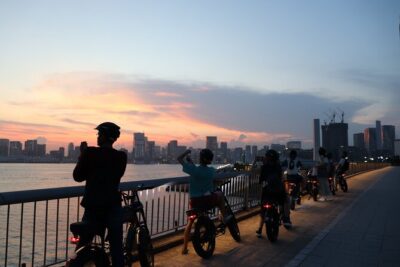
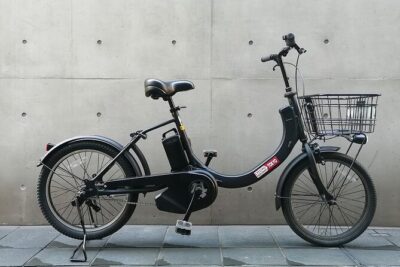
3h Tokyo E-Bike Tour: Hidden Gems, and Local Life with guide
Read our review →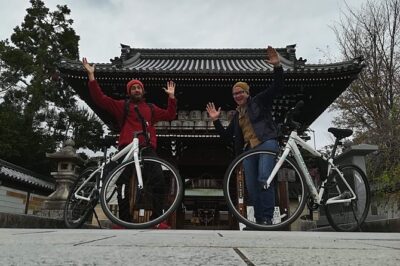
Arashiyama Bamboo Forest & Hidden Gems Bike Tour (Early Bird)
Read our review →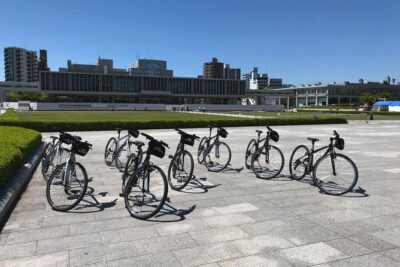
Hiroshima in a Nutshell: Morning Bike Adventure
Read our review →Browse the lists this tour appears in