Reviewed · SAKE TASTING
Cozy Tokyo Class: Ramen, Sushi, Sake Pairing & Cultural Exchange
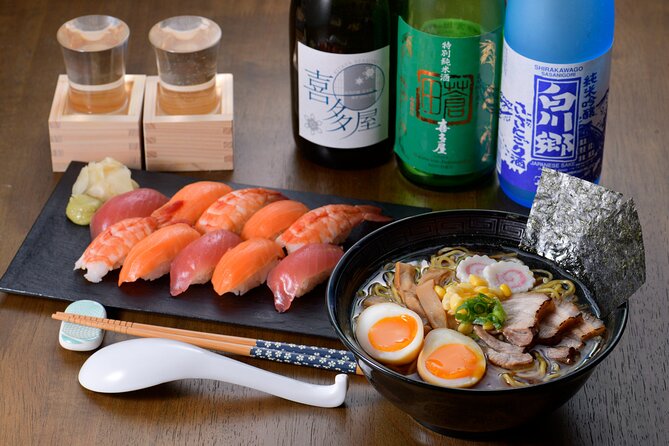
Ramen tastes better when you made it. This cozy Tokyo cooking class mixes hands-on ramen and sushi (or optional gyoza) with cultural conversation in a very small setting. You cook from scratch, eat what you make, and leave with a recipe gift for later.
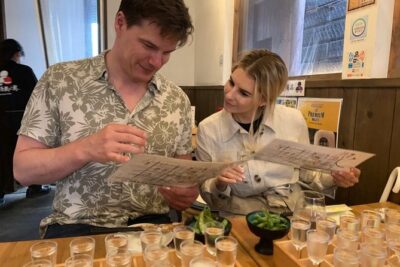
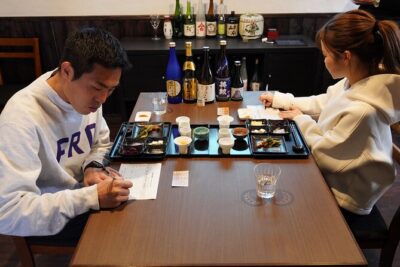
Two things I really like: you get focused instruction because the group is capped at four, and you also get unlimited sake pairings (plus Japanese beer or non-alcoholic options). The vibe is warm, social, and practical, with hosts like Umi San, Kou San, Namiko, Komi, Alissa, and others keeping the energy light while explaining the how and why.
One possible drawback is that the menu can vary. Some sessions center on ramen and sushi, while gyoza may be optional, so check what you will specifically make before you book, and be ready for an active 3-hour cooking block.
Key highlights worth planning around
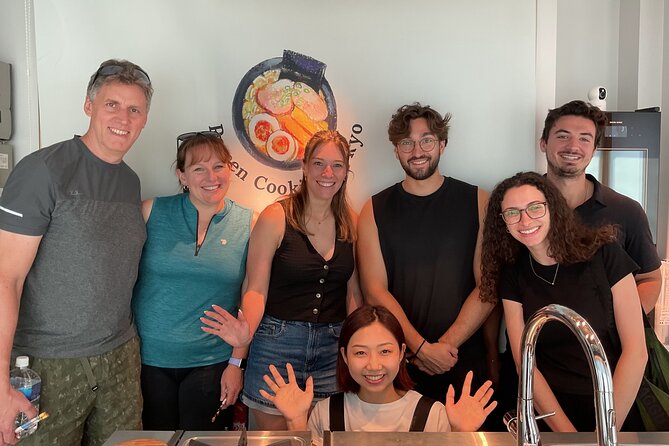
- Small group size helps you actually hear the instructor and ask questions
- Ramen plus sushi, with optional gyoza so you learn more than one classic dish
- English-friendly hosts make the cultural exchange easy to join
- Unlimited sake pairings (plus beer and non-alcoholic) keep the meal fun
- Recipe gift included so you can recreate your food at home
- Cultural stories during cooking give you context beyond just following steps
A Cozy, Small-Group Cooking Class in Tsukishima
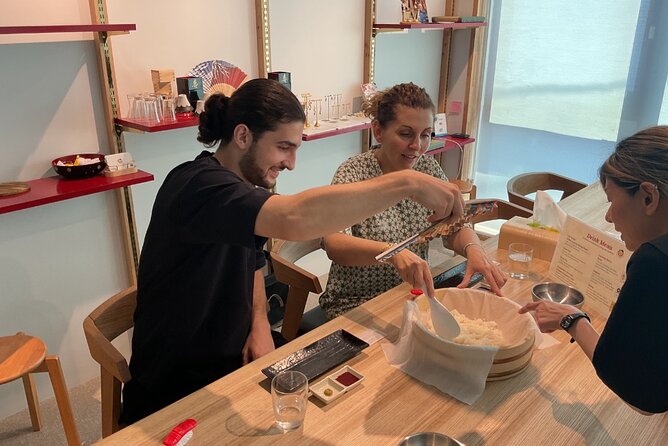
If you want a Tokyo experience that feels like a meal with friends, not a factory tour, this is the kind of class to choose. The setting is small and comfortable, and the staff greet you warmly and keep the class easy to follow, especially if your Japanese is basic.
Location-wise, the meeting point is in Chuo City, Tsukishima, at HAUS Tsukishima. It’s listed as near public transportation, so you can likely piece it into a day of sightseeing without a complicated plan. If you are arriving from further out, build in a little extra buffer for transit and finding the exact meeting spot.
The biggest practical advantage is the group size. The overview says the class is capped at four people, while the additional info lists a maximum of 8 travelers for the activity. Either way, you should expect an intimate experience, not a crowded room where you spend half the time trying to hear.
More Food Tours in Tokyo
- Tokyo: Shinjuku Food Tour (13 Dishes at 4 Local Eateries)
★ 5.0 · 6,603 reviews - Tokyo Tsukiji Fish Market Food and Culture Walking Tour
★ 5.0 · 3,184 reviews - Tokyo: Shinjuku Food Tour (15 Dishes and 4 Eateries)
★ 4.9 · 2,033 reviews
What You Really Learn: Ramen Basics and Sushi or Gyoza Skills
This class is designed around teaching two iconic dishes, with ramen as your anchor. You will learn how to make ramen and then either sushi or gyoza depending on how the session is structured. Either way, you are not just watching, you are cooking.
Here is why that matters for your real-world results. Ramen can feel intimidating because people assume it is all about the broth and secret techniques. In a focused cooking class, you can start by mastering the components and the basic flow, then put them together with confidence. Sushi and gyoza give you a different set of skills, so you leave with range, not just one dish.
The experience is described as inclusive for beginners and experienced cooks. That usually means the instructors explain at a pace that helps you understand what you are doing and also offers guidance if your skills are already decent. You also get a detailed recipe as a gift, which is the difference between remembering food and actually reproducing it later.
If you are deciding between sessions, think about what you crave after your Tokyo trip. If you want something you can make for a cozy at-home dinner, ramen and gyoza are very friendly. If sushi is more your thing, you can choose the ramen plus sushi version and focus on technique you can use again.
The Flow of the 3-Hour Class, From Welcome to Tasting
The class runs about 3 hours, and it is structured to keep momentum. You start with a welcome and quick orientation, then you move into hands-on cooking, and you finish with tasting. Along the way, the theme is Beyond Cooking, Feel the Connection, which is basically a fancy way of saying you are learning food and also learning the people and traditions around it.
During the cooking, you get stories about Japanese culinary traditions. That is valuable because it turns the class from recipe reading into real understanding. When you know why a technique matters, you can troubleshoot at home. You do not just copy the steps, you learn the logic behind them.
At some point, you will taste what you made. That is not just about being polite. It helps you calibrate what the dish should feel like, so you can adjust seasoning, texture, and balance later. If you have ever followed a recipe that tasted different at home, you know how much tasting in the right context helps.
You also receive a detailed recipe gift. For me, this is where the class pays off most. You are not relying on memory after jet lag and sightseeing. You take home a practical guide you can use the next time you want Japanese comfort food.
Sake Pairing, Beer, and the Social Side of Japanese Food
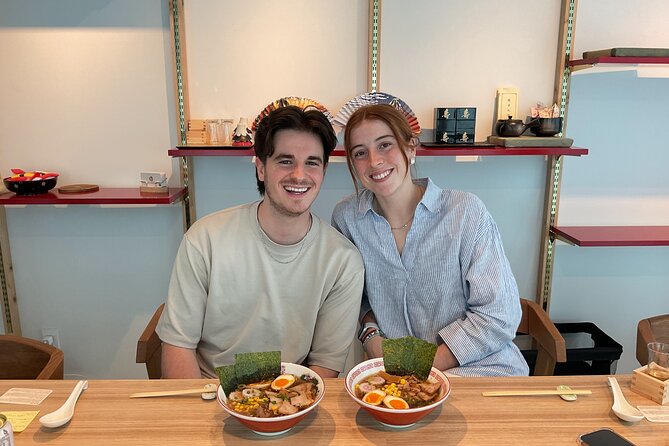
Food classes can be either stiff or fun. This one aims for fun, and the drinks help. You can enjoy unlimited sake pairings, Japanese beer, or non-alcoholic beverages during the experience.
This matters for your enjoyment, especially in a small group. It lowers the pressure, makes conversation feel natural, and turns the class into something closer to a shared meal than a school assignment. If you prefer not to drink alcohol, the non-alcoholic options are included, so you can still participate in the flow of pairing and tasting.
One nice detail from the review vibe is that the instructors seem happy to keep things generous and social. People commonly mention that the hosts made the experience warm and that the sake portion felt plentiful. That does not mean you have to drink, but it does signal that hospitality is part of the package.
More Ramen Tours in Tokyo
- Eat and Drink Like a Local: Tokyo Ueno Food Tour-Taverns&Ramen
★ 5.0 · 957 reviews - Ramen & Gyoza Cooking Class in Tokyo with Local Supermarket Visit
★ 5.0 · 823 reviews - Tokyo: Ramen Tasting Tour with 6 Mini Bowls of Ramen
★ 4.9 · 432 reviews - Tokyo: Easy Ramen Cooking Experience in Kabukicho, Shinjuku
★ 4.6 · 321 reviews
Instructors and Conversation: Umi San, Kou San, and the Team Energy
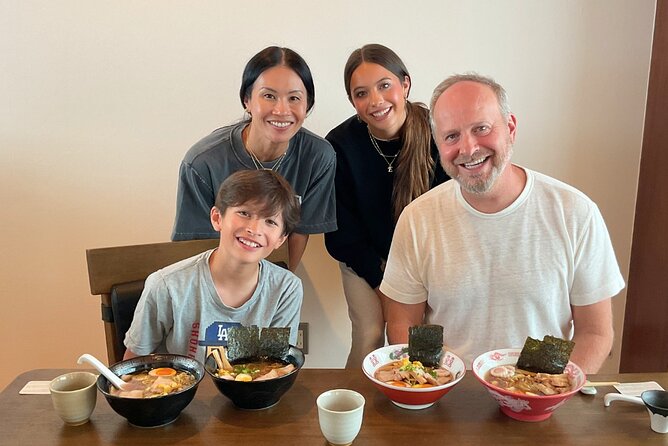
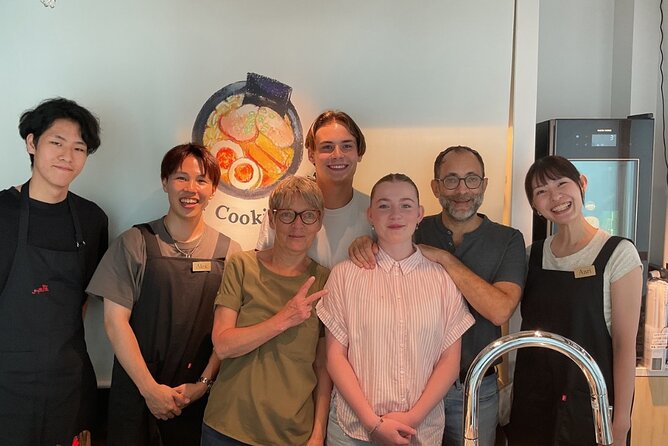
A cooking class is only as good as the people guiding it. The standout theme here is how welcoming and involved the hosts are. You will meet English-friendly Japanese hosts, and names that show up in the experience include Umi San and Kou San. Other instructors you may work with include Namiko, Komi, Alissa, and more, depending on the session.
Why this is more than just a nice detail. When instructors take the time to explain things clearly and answer questions, you actually learn. Several people highlight that the pace feels good, the instructions are easy to follow, and the staff are kind and supportive. In a small group, that kind of back-and-forth can make your dish turn out well even if you are not confident in the kitchen.
The cultural exchange angle is also real. The class encourages conversation while you cook, so you get to ask questions about ingredients, cooking habits, and food traditions. That is the kind of interaction that makes the dishes feel more alive.
And if you are visiting with family, this style matters even more. The atmosphere described is friendly and engaging, with room for kids and adults to participate. It is not just a couples date night, it can work as a shared activity.
Value for $79: What You Get and How It Pays Off at Home
At $79 for about 3 hours, this is not a budget bargain, but it is also not overpriced for what you get. The biggest value point is that the price includes all fees and taxes, and the class includes the teaching, the food you prepare, and the included drinks.
You also get a recipe gift, which is a big deal for long-term value. A meal you cannot repeat at home is fun, but a skill you can practice is better. With a written recipe in your pocket, you can recreate your ramen and sushi or gyoza without starting from scratch.
The small group factor is also part of the pricing. You pay for instruction time, ingredients, and hands-on guidance. If you have ever done a large group cooking class where you feel lost, you will understand why this is worth it.
One more practical value check: transportation is not included. That is normal, but it means the final cost depends on how you get there. Since the meeting point is near public transportation, you can likely keep the added expense manageable.
Overall, the value gets stronger if you are in Tokyo for a short window. A cooking class like this gives you a clear outcome, a cultural experience, and a dish you can make again later.
Good to Know Before You Go, Especially With Ramen and Sake
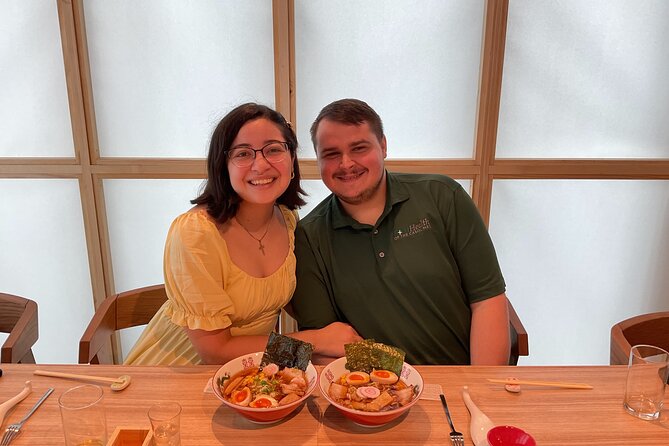
I like to treat cooking classes like a mini workshop: show up ready to focus, and you will leave with real results.
First, plan for the time. About 3 hours is enough time to learn, cook, eat, and relax. But it is long enough that you should avoid cramming in a stressful plan right before and after.
Second, be mindful of what you will actually cook. The overview mentions ramen and gyoza, while the expectations describe ramen and sushi, with gyoza as optional. That just means sessions can be set up differently. When you book, confirm whether you will be making ramen and sushi, or ramen plus gyoza.
Third, the drinks are included. Unlimited sake pairings and beer plus non-alcoholic options can make the experience feel more like a celebratory meal. If you are not drinking alcohol, you will still have options, and you can keep enjoying the social part.
Finally, know that the class emphasizes cultural conversation. If you like asking questions and learning context, you will get more out of it than someone who wants only strict instructions.
Who This Class Suits Best
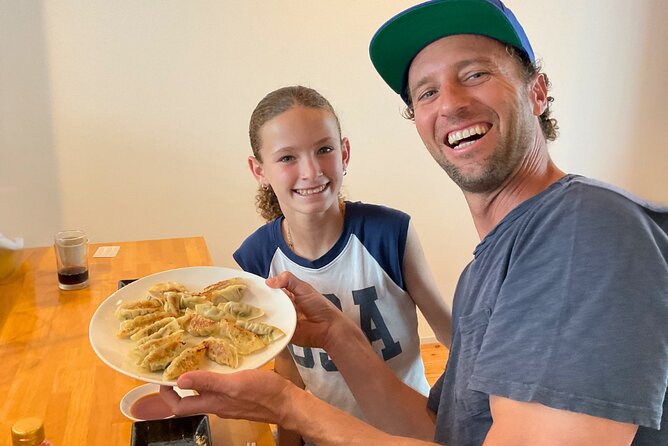
This is a great match for a wide range of visitors.
If you are a beginner, the focus on easy-to-follow guidance and a supportive pace is exactly what you need. The recipes you take home help you practice after the trip.
If you are already comfortable cooking, you still gain value because you get hands-on time with classic dishes and you hear about Japanese culinary traditions while you work. That context can be the difference between cooking by habit and cooking with intention.
If you are traveling in a small group with friends, couples, or family, the social setup makes it feel personal. The class format is friendly for mixed skill levels, so not everyone has to be a kitchen expert for it to work well.
And if you are short on Tokyo time, this is a practical use of an evening or afternoon. You get a full experience without needing to coordinate multiple stops, and you leave with something tangible, your recipe.
Should You Book This Cozy Tokyo Cooking Class?
Book it if you want a hands-on experience that gives you skills, not just photos. The small group size, the ramen and sushi or gyoza focus, the English-friendly hosts, and the included recipe gift are a strong package for learning something you can repeat.
You should be a little cautious if you have a strict expectation about exactly which second dish you will make. Because sessions can include ramen and sushi with optional gyoza, or ramen and gyoza as a primary plan, check the specific session details when booking.
One last trust signal: the class has a 5-star rating based on 74 reviews and a 100% recommendation rate in the summary data. That lines up with what matters most in a cooking class, clear teaching, good pacing, and staff who are genuinely invested in helping you succeed.
If that sounds like your kind of Tokyo day, this cozy cooking class is a smart bet. And if you want a meal memory you can recreate at home, it is hard to beat.
FAQ
What dishes will I learn to make?
You will learn to create ramen and sushi, and gyoza may be included as an optional option depending on the session.
How long is the class?
The class is about 3 hours.
How big is the group?
The experience is described as small group with a maximum of four people capped, and the activity lists a maximum of 8 travelers.
Is the class beginner-friendly?
Yes, it is suitable for all ages and skill levels, including beginners and experienced cooks.
Are drinks included?
Yes. Unlimited sake pairings are included, and you can also have Japanese beer or non-alcoholic beverages.
Do I get a recipe to take home?
Yes. You receive a detailed recipe as a gift so you can recreate the dishes at home.
Where does the class meet?
The start location is HAUS Tsukishima, 2-chōme135, Tsukuda, Chuo City, Tokyo 104-0051.
Is transportation included in the price?
No, private transportation is not included.
Is the price all-inclusive?
The listing says all fees and taxes are included.
What is the cancellation policy?
Free cancellation is available. You can cancel up to 24 hours in advance for a full refund, but cancellations less than 24 hours before the start time are not refunded.
More Sushi Making Classes in Tokyo
- Sushi Making Tokyo Roll and Authentic Japanese Sushi Class
★ 5.0 · 3,971 reviews - Tokyo: Roll and Authentic Sushi Making Class in Asakusa
★ 4.9 · 1,957 reviews - Make Sushi and Create Unforgettable Memories in Tokyo
★ 5.0 · 1,413 reviews - Tokyo: Sushi Making Class in a Happi Coat near a Famous Spot
★ 4.9 · 1,377 reviews
More Sake Tastings in Tokyo
- Ramen and Sushi Cooking Class with Sake Pairing Set in Tokyo
★ 5.0 · 291 reviews - Sake Tasting Masterclass in Shinjuku (8+ Varieties with a Pro)
★ 5.0 · 271 reviews - Sake Omakase in Tokyo: Guided Tasting by Certified Sommeliers
★ 5.0 · 239 reviews - Tasting All Types of Sake with Sommelier
★ 5.0 · 151 reviews
Fresh options around Tokyo
- Tokyo: Nikko Kegon Falls Lake Chuzenji Toshogu Temple & More★ 4.9 · 12 reviews
- Tokyo: Samurai History Walking Tour★ 5.0 · 12 reviews
- Harajuku: Kawaii Fashion and Pop-Culture Tour★ 4.7 · 12 reviews
- Tokyo: Mt. Fuji & Lake Kawaguchi Instagram Full Day Trip★ 4.1 · 12 reviews
- Shibuya Tokyo: Modern Kintsugi Workshop in Shibuya★ 5.0 · 12 reviews
- Tokyo: GTR Guided Daikoku Experience at Night★ 5.0 · 12 reviews
- Tokyo: Daikoku JDM Car Culture Tour★ 4.6 · 12 reviews
- Mt Fuji Private Day Trip from Tokyo with English speaking driver★ 5.0 · 13 reviews
Sake Tasting, compared.
Kyoto Night Foodie Tour in Gion (9+ dishes + 6 Sake tastings)
Read our review →
1-Day Snow Monkeys, Zenko-ji Temple & Sake in Nagano
Read our review →
3-Hour Kyoto Insider Sake Brewery Tour with Tastings & Pairings
Read our review →
Arashiyama Bamboo, Temple, Monkeys, or Secret Sake Brewery
Read our review →
Nagano: Snow Monkeys, Zenkoji Temple & Sake Day Trip
Read our review →
Insider Sake Brewery Tour with Sake and Food Pairing
Read our review →