
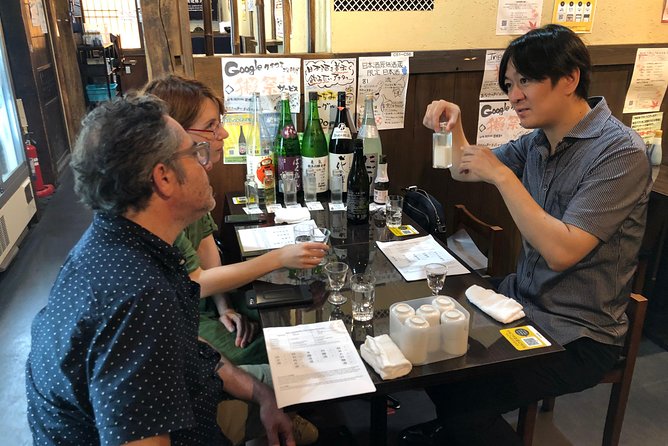
Reviewed · SAKE TASTING
Tasting All Types of Sake with Sommelier
Sake stops feeling mysterious fast. In Shinjuku, you get a guided tasting with a sommelier and you learn how to read a sake label so ordering becomes simple. It is built for curious first-timers, but it still gives real depth.
I love two things most: you taste 6-7 different types with clear explanations, and you get practical guidance on how to decode the label so you can buy or order with confidence. One drawback to plan for, Shinjuku is busy and the meeting area can feel crowded, so arriving a few minutes early helps.
Key highlights you will actually use
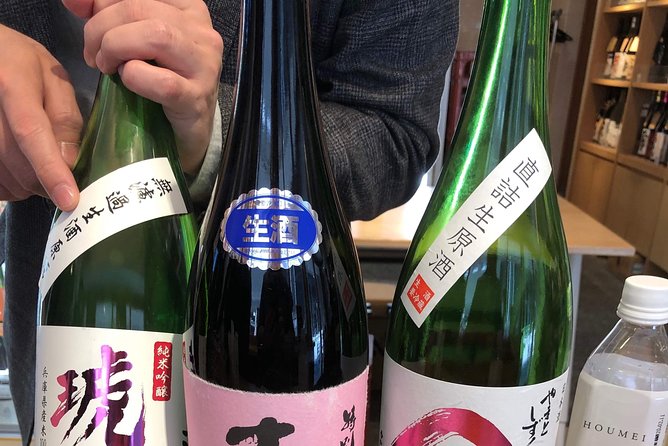
- 6-7 sake types explained step by step, with tips on how to drink each one
- Label decoding for real-world ordering, not just trivia
- Q&A with the sake expert, so you can ask what you are truly wondering
- Special Japanese-only sakes that can be hard to find back home
- A small group size (max 12), which makes it easier to get answers
Meeting Aki-san in Shinjuku at 4:00 pm
This is a Tokyo experience with a simple rhythm. You start in Shinjuku, with an official start time of 4:00 pm, and the tour runs about 1 hour 30 minutes (some tastings run closer to 2 hours depending on questions). You use a mobile ticket, and the meeting point is in the Shinjuku San-chōme area at Frente Shinjuku San-chōme, 3-chōme-4-8, Shinjuku City, Tokyo 160-0022.
What makes this setting useful is that Shinjuku is a great place to learn drinking habits you can use later. After the tasting, you are already in the kind of neighborhood where you will see sake on menus and in store windows. If you ever get stuck asking, what is sweet, what is dry, what should I try first, this format helps.
The tour also adds short neighborhood context. You get a few quick orientation stops covering Shinjuku, Shinjuku 3-chōme, and later Kabukicho and Golden Gai. It is not a lecture on Tokyo geography. It is just enough to help you connect the dots when you wander off afterward.
More Food Tours in Tokyo
- Tokyo: Shinjuku Food Tour (13 Dishes at 4 Local Eateries)
★ 5.0 · 6,603 reviews - Tokyo Tsukiji Fish Market Food and Culture Walking Tour
★ 5.0 · 3,184 reviews - Tokyo: Shinjuku Food Tour (15 Dishes and 4 Eateries)
★ 4.9 · 2,033 reviews
Why the Louis Vuitton sake-bar location matters
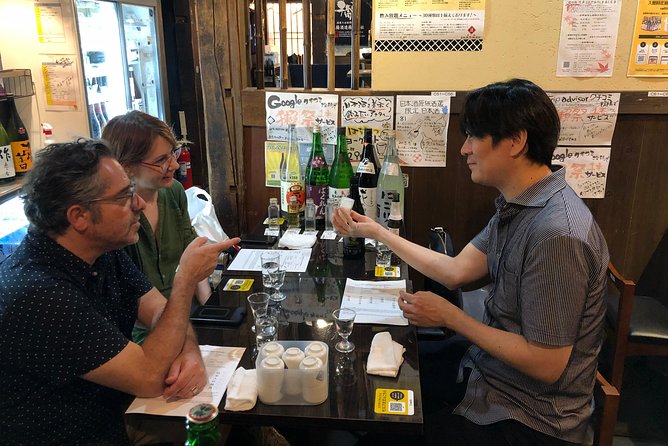
The tasting happens right by a major landmark, which is oddly helpful. The tour heads to a sake bar next to Louis Vuitton Shinjuku, and that matters because it reduces the common Tokyo problem: you are stuck trying to locate a tiny place while your brain is buffering in a sea of signs.
Your guide serves the tasting lineup at that bar, and he talks through what he feels from each sake. That might sound casual, but it is actually a good teaching technique. Instead of treating tasting notes like poetry, you hear practical impressions, and then you taste with those cues in mind.
You should also know this is a night-life flavored walk. Even if you do not plan to party, Shinjuku is where you can immediately apply what you learn. You will likely finish with a clearer sense of what kind of sake pairs well with what you might eat next, and you will know what to look for on the menu.
The sommelier format: tips, pamphlet, and real Q&A
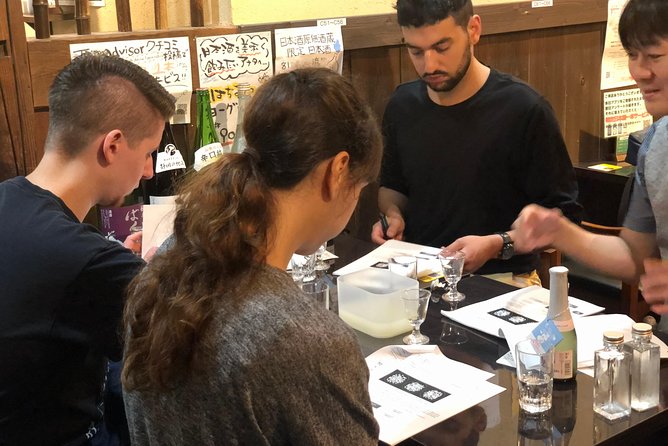
A big reason this tour scores so high is how the guide teaches. Your sommelier, Aki-san (also seen as Akira in some notes), uses a mix of explanation and conversation. In the tasting room, he provides a pamphlet or leaflet that covers how sake is made and how to better understand what you see on a bottle.
You also get time for questions. That is where the experience becomes more than sampling. If you care about how sake changes from one type to another, or you want help choosing something that fits your taste, you can ask directly. The group size is small, up to 12 people, so it does not feel like you get one scripted answer and then move on.
One detail I like is that the guide keeps it fun. Several people mention that Aki-san is engaging and even funny, which matters because tasting can get serious fast. You want to learn without feeling tested.
Decoding the sake label so you can order with confidence
Sake labels can look like a secret code. This tour gives you a set of practical ways to translate what you see into taste expectations, so you are not stuck guessing.
The core skill you build is matching bottle language to what you will actually taste. Aki-san focuses on helping you understand the categories that matter to most people:
- whether it is sweet vs dry
- whether it is sparkling vs still
- whether it is suited for hot drinking
- what changes with pasteurized vs unpasteurized sake
You are not just handed a list of terms. You learn how to use that information as a decision tool. Afterward, you can walk into a restaurant, point at a bottle, and make a choice based on your preferences instead of taking whatever is easiest to pronounce.
This is also why doing the tasting earlier in your trip can help. If you learn the label logic on day one, you carry it into every izakaya stop after.
More Sake Tastings in Tokyo
- Ramen and Sushi Cooking Class with Sake Pairing Set in Tokyo
★ 5.0 · 291 reviews - Sake Tasting Masterclass in Shinjuku (8+ Varieties with a Pro)
★ 5.0 · 271 reviews - Sake Omakase in Tokyo: Guided Tasting by Certified Sommeliers
★ 5.0 · 239 reviews - Wagyu & Sake Pairing in Shinjuku – Steak, Shabu-Shabu & More
★ 5.0 · 112 reviews
The 6-7 pours you try, and what each teaches your palate
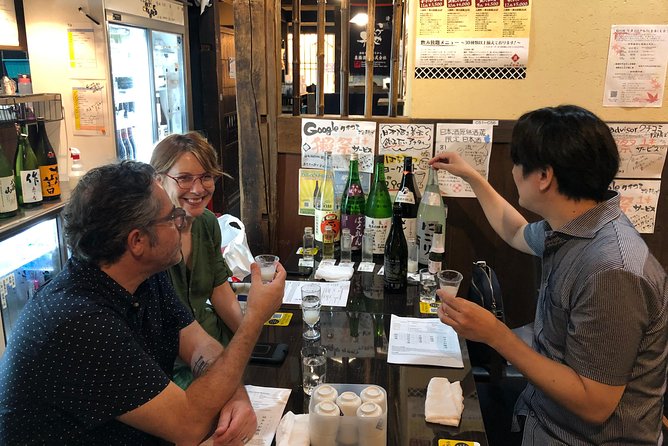
The tasting includes all different types of sake in the lineup, typically 6-7 varieties, plus a welcome sake. You will sample multiple styles so you can taste the range, not just one safe crowd-pleaser.
Here is how that range helps you, in plain terms. Each style trains a different part of your palate and your brain:
Sparkling and light styles
Sparkling sake shows you how sake can feel airy and fresh rather than heavy. It helps if you usually think of sake as only warm and comforting. With this pour, you learn that sake can be lively, and that changes what you should pair it with at dinner.
Dry vs sweet
Expect contrast. Dry sake teaches you how umami and rice character can feel clean and structured, while sweeter sakes teach you how fruitiness or softness can show up in the finish. When you taste both in a row, it becomes much easier to describe what you like.
Hot drinking vs chilled drinking
You will likely encounter hot styles as well. Hot sake can read as more rounded and soothing, and it can make aroma feel more present. If you plan to order seasonally or try sake in different temperatures in Japan, this gives you a grounded reference point.
Pasteurized and unpasteurized differences
One of the more special parts is that you might try both pasteurized and unpasteurized sake. Some people specifically highlight that this is harder to ship internationally. That means your tasting is not just a fun class, it can also be a chance to taste versions that feel more direct and alive compared to what is commonly available elsewhere.
How the guide helps you taste, not just drink
A key moment is when Aki-san explains what he detects from each sake before you finish the pour. Then you get to compare your reaction to his. That makes the learning stick.
If you have ever tried to copy tasting notes and failed, this method is better. You are not trying to invent fancy vocabulary. You are just learning to connect taste to label cues.
Pairing sake with food: what to eat next
You also get guidance on food pairings. The tour focuses on how to match sake with the kinds of flavors people are eating in Japan, not just generic wine-style advice.
Here is what you can take into your next meal:
- If you try a dry sake, it often works well with savory dishes because it keeps the palate clear.
- If you try a sweeter sake, you can lean into richer flavors or foods that benefit from a softer finish.
- If you try a sparkling style, it can work like a reset button between bites, which is handy when you are eating multiple things quickly.
Even if you do not remember the exact pairing map, the skill is learning how your palate reacts and then choosing accordingly. That is what makes the tour useful after the tasting ends.
Shinjuku night-life context, Kabukicho and Golden Gai
This tour does not stay inside the bar the whole time. You also get a quick look at the Shinjuku area, including mentions of Kabukicho and Golden Gai.
Why that matters for you is practical. If you want to explore after drinking, you need a sense of where you are. Golden Gai in particular is known for tiny bars and tight spaces, so it helps to have some orientation first. Even if you only stop for one drink, knowing what the neighborhoods feel like makes you less lost.
The tour includes short walking segments and city talk. You are not going deep into history. You are getting just enough context to move around with confidence.
Group size and pacing: small, social, and not rushed
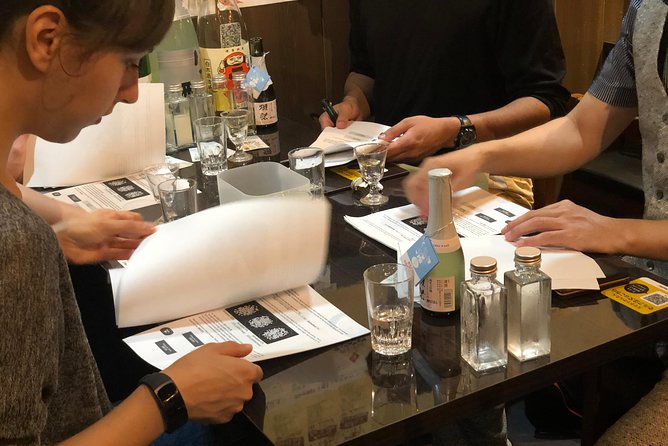
With a maximum of 12 travelers, this feels more like a guided tasting session than a mass bus tour. That usually means:
- you hear the explanations clearly
- you can ask questions without shouting
- you are not constantly waiting for the group
The pacing is also friendly. You meet, do quick orientation stops, then settle into the sake bar and taste across styles. The whole experience is short enough to fit into a travel day, especially if you start at 4:00 pm and still have time afterward for dinner.
The only practical caution is crowding around the meeting area. Shinjuku can be loud and busy. Give yourself a few extra minutes to arrive, find the meeting spot, and settle in.
Price and value for $62.76 in Tokyo
At $62.76 per person, this is not the cheapest thing in Tokyo. But it is priced like a guided tasting, and that is the right lens.
You are paying for:
- multiple sake pours across different styles, not one or two
- sommelier-led explanations that help you decode labels
- pairing guidance so you can apply it immediately
- a small-group setting where questions are welcome
- the chance to try Japanese-only special sake styles that may not be easy to find back home
If you love drinks but hate guessing, the value is in learning how to choose. One good tasting tour can save you from wasting money on bottles you would not enjoy. It also makes your future restaurant orders smoother, which adds value fast over several meals.
Who this tour is best for (and who should skip)
This tour fits best if you are:
- a first-time sake drinker who wants a gentle start
- someone who likes learning how products are made, not just drinking them
- a food-minded traveler who wants pairing advice
- a group of friends or family who want a fun Tokyo afternoon without a big production
It may be less ideal if you are:
- only interested in drinking and do not want explanations
- someone who dislikes busy city areas like Shinjuku
- short on time and hate any walking at all
My decision rule: should you book this Tokyo sake tasting?
Book it if you want a fast path from confusion to confidence. The biggest win is not the number of sips. It is the combination of tasting variety and label decoding, plus Q&A with Aki-san in a small group.
Skip it only if you are already a confident sake shopper and you do not need guidance. If that is you, you might prefer a self-guided crawl. But if sake feels like a locked door, this tour gives you the key.
FAQ
FAQ
What is the duration of the sake tasting?
It runs for about 1 hour 30 minutes.
Where does the tour start?
It starts at Frente Shinjuku San-chōme, 3-chōme-4-8 Shinjuku, Shinjuku City, Tokyo 160-0022, Japan.
When does the tour begin?
The start time listed is 4:00 pm.
How much does it cost per person?
The price is $62.76 per person.
How many people are in the group?
The tour has a maximum of 12 travelers.
Is this experience in a specific area of Tokyo?
Yes, it is based in Shinjuku, with talks that include Shinjuku 3-chōme, Kabukicho, and Golden Gai.
What do I actually do during the tour?
You meet your guide, learn tips on how to decode a sake label, and taste multiple types of sake with an expert.
Do I get to try more than one kind of sake?
Yes. The experience includes tasting about 6 to 7 types of sake.
Is the tour suitable for beginners?
Most travelers can participate, and the tasting is designed to help outsiders understand the different types of sake.
How does cancellation work?
Free cancellation is available if you cancel up to 24 hours in advance for a full refund. Changes within 24 hours are not accepted.
More Drinking Tours in Tokyo
- Tokyo Bar Hopping Tour in Shinjuku (All-You-Can-Drink + Dinner)
★ 5.0 · 3,587 reviews - Best of Shinjuku: Izakaya Food Tour (4 Stops, 14+ Tastings)
★ 5.0 · 1,863 reviews - Tokyo: Shinjuku Local Bar and Izakaya Guided Walking Tour
★ 4.9 · 1,794 reviews - Shibuya Meltdown Nightlife Tour: All-You-Can-Drink Bar Hopping
★ 5.0 · 1,058 reviews
Fresh options around Tokyo
- Tokyo: Nikko Kegon Falls Lake Chuzenji Toshogu Temple & More★ 4.9 · 12 reviews
- Tokyo: Samurai History Walking Tour★ 5.0 · 12 reviews
- Harajuku: Kawaii Fashion and Pop-Culture Tour★ 4.7 · 12 reviews
- Tokyo: Mt. Fuji & Lake Kawaguchi Instagram Full Day Trip★ 4.1 · 12 reviews
- Shibuya Tokyo: Modern Kintsugi Workshop in Shibuya★ 5.0 · 12 reviews
- Tokyo: GTR Guided Daikoku Experience at Night★ 5.0 · 12 reviews
- Tokyo: Daikoku JDM Car Culture Tour★ 4.6 · 12 reviews
- Mt Fuji Private Day Trip from Tokyo with English speaking driver★ 5.0 · 13 reviews
Sake Tasting, compared.
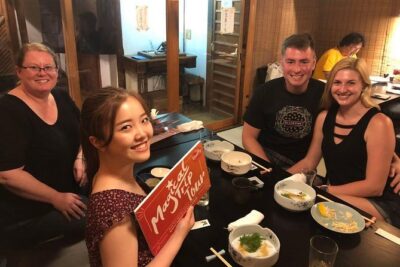
Kyoto Night Foodie Tour in Gion (9+ dishes + 6 Sake tastings)
Read our review →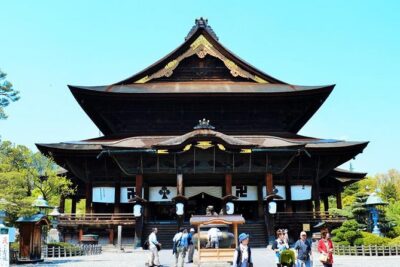
1-Day Snow Monkeys, Zenko-ji Temple & Sake in Nagano
Read our review →
3-Hour Kyoto Insider Sake Brewery Tour with Tastings & Pairings
Read our review →
Arashiyama Bamboo, Temple, Monkeys, or Secret Sake Brewery
Read our review →
Nagano: Snow Monkeys, Zenkoji Temple & Sake Day Trip
Read our review →
Insider Sake Brewery Tour with Sake and Food Pairing
Read our review →
1.5-Hour Kyoto Insider Sake Experience with 7 Tastings & Pairings
Read our review →Browse the lists this tour appears in