Reviewed · KYOTO TOURS
Authentic Knife Making Experience at a Blacksmith in Kyoto
Hammering hot steel is oddly calming. In Kyoto, Atelier NIN turns Japanese knife making into a guided, hands-on workshop where you forge the blade yourself and shape it with the tools used for traditional kitchen knives. I also like the small group size because you get quicker help when your technique goes off track.
The best part for me is the training feel, not the museum vibe, plus the staff and English support can keep you safe while you work. You’ll dress in a uniform that makes you look the part, and the instruction often gets called out as particularly friendly, including with guides like Diaki. One consideration, though, is that forging takes real effort, so plan for the moderate physical work of hammering and grinding.
Key highlights you’ll feel fast
- A true take-home souvenir: you make a Japanese-style knife, not a tiny trinket
- Forging is the main event: hammering, shaping, and learning the process in-depth
- Small group help: max 6 people, so corrections come quickly
- Uniform provided: no need to hunt down protective clothes before you go
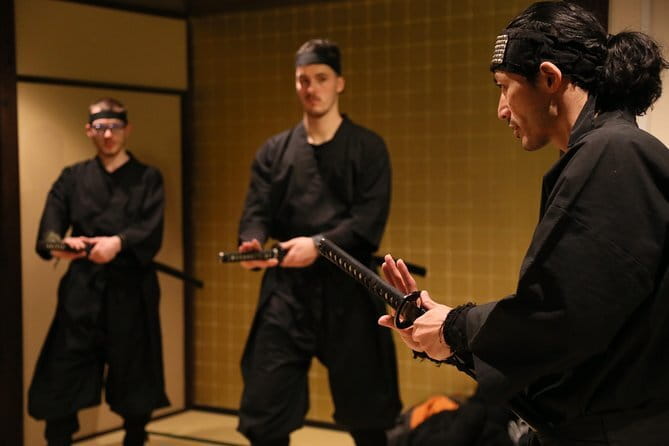
- Traditional style workshop: you dress in a goldsmith outfit and work with a simple, practical method
- Functional finishing: sharpening and polishing so the result is ready to use
Kyoto knife making at Atelier NIN: what you actually create
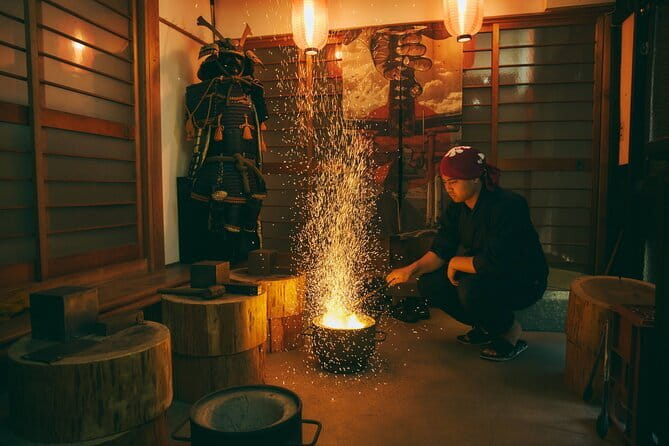
This is a hands-on Kyoto workshop focused on making a Japanese kitchen knife. The goal isn’t just to watch metal get worked. You’ll work with your own hands through key steps: forging, then sharpening and polishing. If you like seeing how things are made, this hits that sweet spot, because the end product is something you can use long after the class is over.
The knife size is about 13 to 15 cm, and since it’s handmade, yours may vary a bit depending on what you choose and how your work comes out. That matters, because your knife is sized for everyday kitchen tasks, not for show-and-tell.
And it is worth understanding why the class stays short. Proper full-size knife work can take more than 5 hours and can cost more than $400. Atelier NIN keeps the experience around 2.5 to 3 hours so more people can try forging, then finish enough to bring home a real knife. For the price, you’re buying training time plus materials plus a functional souvenir.
A few more Kyoto days worth comparing
- PERFECT KYOTO 1-Day Bus Tour
★ 5.0 · 13,518 reviews - Kyoto: Fushimi Inari, Kinkakuji, Bamboo Grove 1 Day Bus Tour
★ 4.8 · 4,316 reviews - Kyoto: Tea Ceremony in a Traditional Tea House in Kiyomizu
★ 4.9 · 3,519 reviews
Your goldsmith outfit, tools, and the small-group advantage
The workshop handles the stuff that can turn a good idea into a stressful morning. You get a uniform, you get an English guide, and you get a set of tools used to make knives. You do not need to show up hunting for protective gear, and you don’t need to bring your own supplies.
That uniform part sounds silly until you see what it does for the experience. It signals you’re not doing a casual craft class. You’re doing a real metalwork session with safety rules and a serious workflow. One more practical win: if you’re traveling light in Kyoto, not having to pack gloves or protective clothing makes this feel easy.
Group size is max 6 travelers, and that changes how the lesson feels. When you’re hammering, it helps to get quick correction before you lock in a mistake. You also spend less time waiting and more time making. This is one of the most consistently praised reasons people enjoy the workshop.
The forging portion: what to expect in the hot-metal stage
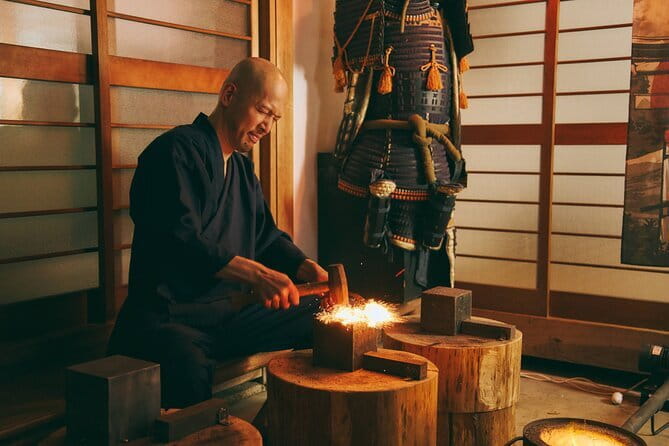
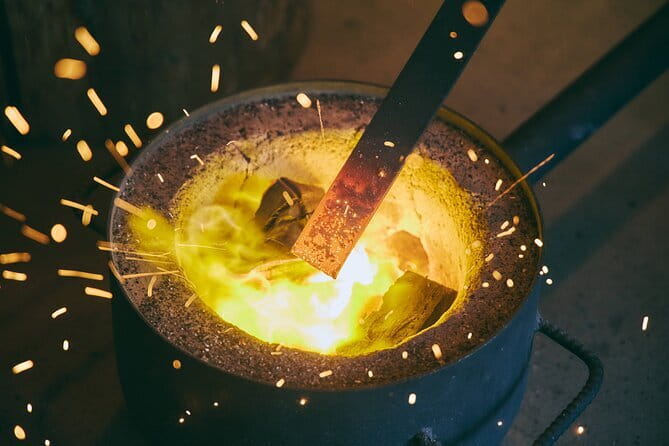
Forging is the core of the experience, and you’ll spend a good chunk of time hammering and shaping the blade. The class is structured so even if you have never made anything before, you still get a clear path: learn how to use the tools, then forge your knife blade using a process aligned with traditional Japanese kitchen knife making.
Here is what that means for you in real terms:
- You’ll learn basic tool handling first, then apply it while the steel is being worked.
- You’ll move from shaping a metal billet or strip into a knife-like profile.
- You’ll see how forcing the metal into shape changes how it behaves later during grinding and sharpening.
From the way the class is described, the forging block is not just a demo. People call it strenuous in a very honest way, because hammering takes effort, especially in a tight workspace. Your best move is to treat it like a workout for your shoulders and forearms, not like a sit-back-and-watch activity.
Safety is part of the package. Staff teach you safe hammering technique, and the room setup is designed for guided practice. Still, come with a steady mindset: you are working with hot metal and sharp tools, and attention matters.
Also note the workshop timing: you may spend about an hour forging initial work, then you shift to grinding and finishing. That pacing keeps the class from dragging, but it also means you’ll be active the whole time.
Grinding, sharpening, and polishing: turning your shape into an edge
After forging, the work switches from hammering to finishing. This is where your knife changes from a shaped piece of metal into something that looks and behaves like a kitchen tool.
You’ll follow a sequence that typically includes:
- grinding and refining the blade shape so it becomes clean and usable
- sharpening to create an edge
- polishing for the final feel and presentation
One useful thing to know is that the finishing stages can make or break your result. Some people feel they needed more guidance on the grinding angle and sanding belt technique, especially if they were trying to rush. The good news is that staff guidance is a major strength, with instructors stepping in when needed and correcting amateur attempts without taking the joy away.
If you’re prone to impatience, slow down mentally. In metalwork, small changes add up. A careful stance and steady pressure help more than speed.
By the end, you get a wrapped take-home knife presented in a gift bag. That matters for travel because you’ll want it protected and contained for the ride back.
Same corner of Japan, a different kind of day:
- Kyoto Geisha Walking Tour: Gion District & Hidden Gems
★ 4.7 · 3,273 reviews - Kyoto: Tea Ceremony Ju-An at Jotokuji Temple
★ 4.9 · 3,207 reviews - Kyoto: Gion Magical Night Walking Tour with Geisha Trivia
★ 4.9 · 2,393 reviews - Kyoto: 45-Minute Tea Ceremony Lesson Experience
★ 4.3 · 2,378 reviews
Knife size, handle options, and what to do when you get home
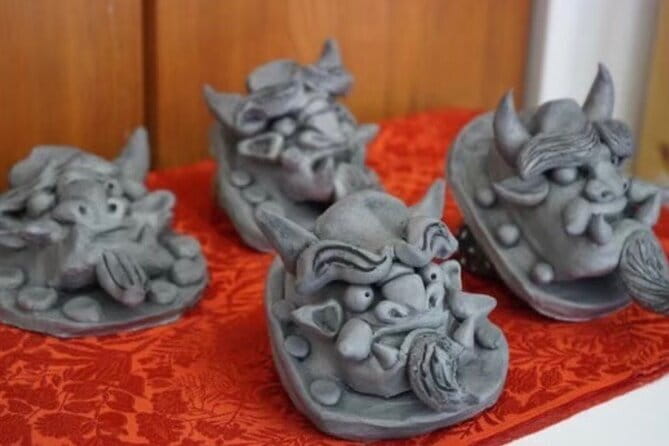
The baseline knife you make has an iron handle, and the workshop description says there are no wooden handles in the standard process. At the same time, one participant mentioned an option to add a wooden handle for an extra fee (they cited ¥5000) that you attach yourself later.
So here’s the practical way to think about it:
- Expect your knife to be functional as a made product, with handle work addressed within the workshop flow.
- If there is a handle upgrade you want, plan for extra steps back home.
Also think about luggage rules. Japanese blades are taken seriously, even when the class gives you a finished product. One practical tip from the experience writeups is that if you’re flying, you may need to check a bag because carry-on restrictions can apply based on blade length. Your knife is about 13 to 15 cm, which can still cause issues depending on your airline and security rules.
Finally, don’t treat this like a disposable souvenir. The class is built so you leave with a knife that can actually be sharp. People describe it as a real tool, so you should handle it with care right away, even while it’s wrapped.
Meeting point and Rurikoin: navigating the Kyoto route without stress
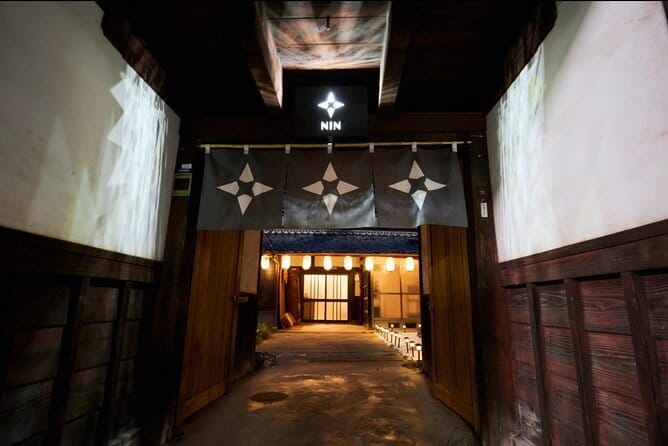
You start and end at studio NIN in Kyoto: studio NIN 八瀬168-1 Yasenosechō, Sakyo Ward, Kyoto, 601-1254, Japan. The activity includes a stop listed at Rurikoin, and the session ends back at the meeting point, so you’re not left guessing how to get back to town.
Getting there is described as near public transportation, but it can involve a local train ride and then a walk. One person noted phone signal trouble at the train station area and advised having a plan B. So I’d do the simple modern thing: download maps ahead of time, screenshot the meeting location, and confirm the last step of the route so you are not hunting in a residential area.
A small but important travel note: the location can involve walking, and you may be carrying your own things before you change into the uniform. Wear comfortable shoes for the approach, and keep your hands free.
Price and value: why $158.52 can make sense in Kyoto

At $158.52 per person, this workshop is not cheap in the way that some Kyoto craft activities can be. But the value comes from what you get for that price:
- Forge time using metalwork steps, not a quick demo
- Sharpening and polishing so you leave with a knife designed for use
- A uniform and a guide in English
- Tools and materials included so you can focus on the process
- Small group instruction, which lowers the chance you leave with something you hate
The price also becomes easier to justify when you compare it to the scale of professional or longer workshop options. The class description points out that bigger knives typically take over 5 hours and cost over $400, which is the reality check you need. Atelier NIN is essentially packaging a shortened version of the traditional workflow into a format that is accessible.
If you are the type who will actually use a kitchen knife every week, the math changes even more in your favor. This isn’t only about the photo. It’s also a practical tool and a story you can tell in the kitchen.
Who should book this workshop, and who should think twice
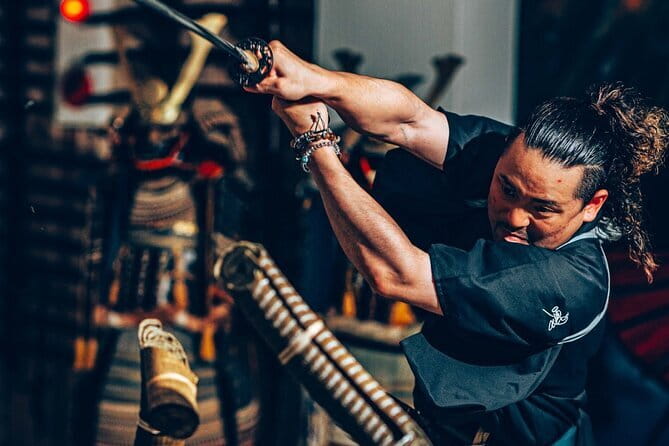
This is a great fit for:
- People who want a hands-on Kyoto experience where you do the making, not just watch
- Food folks and home cooks who like Japanese kitchen tools
- Adults and kids who can follow safety instructions and handle physical work
- Couples who want a shared project, especially since many people describe it as a memorable activity for two
Who should think twice:
- If you want a low-effort, purely relaxing activity, forging and grinding may be too physical for your taste
- If you dislike working with sharp tools, or you need constant reassurance, you’ll still be guided, but the activity is still hands-on and physical
One more practical thought: the workshop provides a uniform, but you should still wear shoes that help you stay stable and keep your footing steady during the class.
Should you book Atelier NIN for your Kyoto days?
If you want Kyoto to feel real, book this. The workshop teaches a craft skill through the full arc of the process: tool handling, forging, then sharpening and polishing, ending with a take-home knife around 13 to 15 cm. For the time and price, it’s one of the more focused experiences in town because the result is not just a memory, it’s a useful object.
I’d book it especially if you have only a few days in Kyoto and you want something that is both practical and deeply hands-on. If your schedule can handle walking to the rural-feeling studio and you’re okay with physical work, this belongs on your list.
FAQ
How long is the knife making experience?
It runs about 3 hours (approx.), and the workshop is described as a roughly 2.5 to 3 hour format.
What group size is this workshop?
The experience has a maximum size of 6 travelers, which keeps the instruction more personalized.
What is included in the price?
Included are the uniform, an English guide, and a set of tools used to make knives.
Do I need to bring protective clothing or special gear?
No protective clothing is required, because a uniform is provided and materials are handled for the class.
What size is the knife you make?
The knife is approximately 13 to 15 centimeters, and because it is handmade it may vary.
Can I get a refund if my plans change?
Yes. You can cancel for a full refund up to 24 hours in advance of the experience start time.
Fresh options around Kyoto
- Kyoto Gion Photoshoot – Private Session | Pro Photographer★ 5.0 · 12 reviews
- Kyoto Aquarium Admission Ticket★ 4.7 · 12 reviews
- Gyoza Cooking Class in Kyoto: Traditional Japanese Dumplings★ 5.0 · 12 reviews
- Kyoto: Guided Food Tour with 12 Dishes & 3 Drinks★ 5.0 · 12 reviews
- Kyoto: Avoid the Crowds at the Hidden Gems of Arashiyama★ 4.9 · 13 reviews
- Kyoto Early Bird English Tour: Gion & Higashiyama(Private opt)★ 5.0 · 13 reviews
- Otsu-e Folk Art Workshop & Local Culture Walk Near Kyoto★ 5.0 · 13 reviews
- Kyoto, Osaka, Nara Full Day tour by Car English speaking Driver★ 3.5 · 13 reviews
Kyoto Tours, compared.

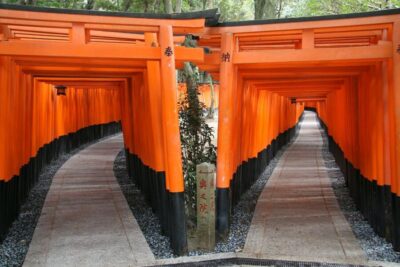
Fushimi Inari, Kinkakuji, Bamboo Grove 1 Day Bus Tour
Read our review →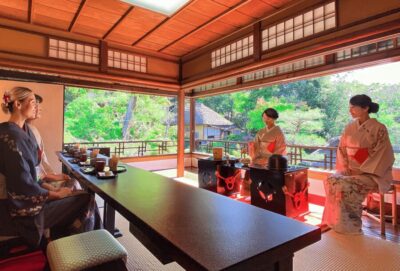
Tea Ceremony in a Traditional Tea House in Kiyomizu
Read our review →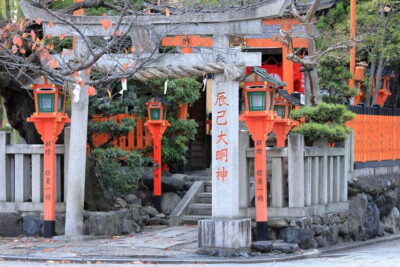
Kyoto Geisha Walking Tour: Gion District & Hidden Gems
Read our review →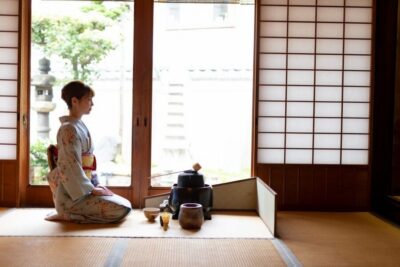

Gion Magical Night Walking Tour with Geisha Trivia
Read our review →